Women artists have been marginalized for centuries. Social conventions limited their training, the subjects they could render, and the ways they could market art to patrons. Gender bias is less overt today, however women and nonbinary artists still face obstacles and disparities. Their works are persistently underrepresented in museum collections and exhibitions worldwide. This historic bias of underrepresentation extends to photography, even though there are many examples of women as pioneers of the medium.
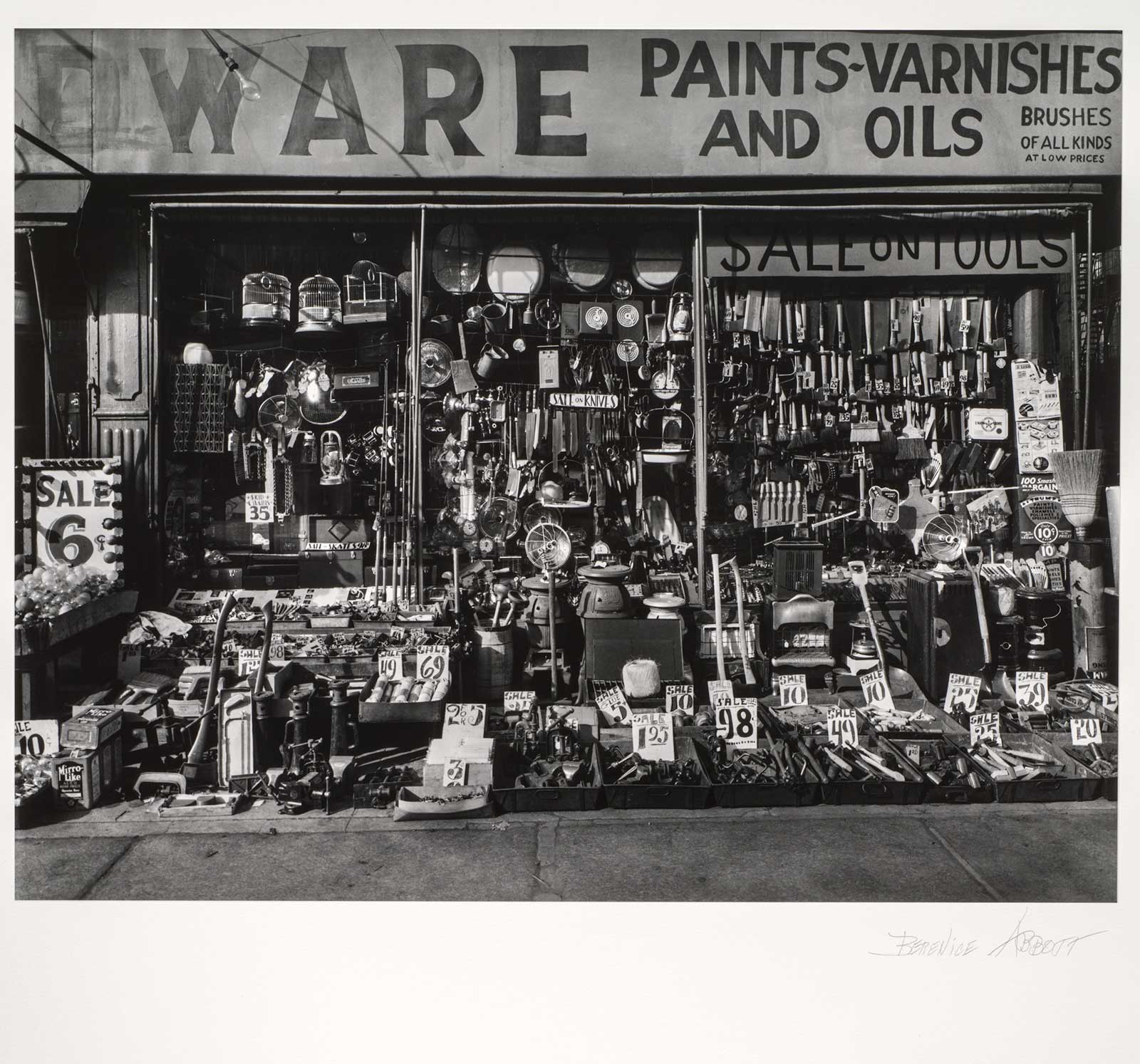
Berenice Abbott (1898-1991), Hardware Store, 316-318, Bowery, New York, 1938. Gelatin silver print, 153/16 x 191/4 in. National Museum of Women in the Arts, Gift from the Trustees of the Corcoran Gallery of Art (Gift of Mr. Ronald Kurtz) Photo by Lee Stalsworth.
A self-taught photographer, San Francisco-born Louise Dahl-Wolfe (1895-1989) initially wanted to be a painter. A meeting with Anne W. Brigman (1869-1950), famed for her evocative photographs of female nudes in natural landscapes, inspired Dahl-Wolfe’s early experiments with a camera. She cobbled together her first darkroom enlarger using a tin can, an apple crate and a reflective Ghirardelli chocolate container. Best known today for her innovative fashion photography, Dahl-Wolfe enjoyed her earliest professional success with documentary imagery. Living in Gatlinburg, Tennessee, with her husband in the early 1930s, the artist created compelling images of rural life and poverty during the Great Depression. Mrs. Ramsay, Tennessee, her first published photograph, appeared in Vanity Fair in 1933. Dahl-Wolfe’s earliest color images for Harper’s Bazaar appeared in 1937, making her one of the first fashion photographers to embrace the newly available Kodachrome film. She also proved among the most skilled practitioners of the medium. The artist credited her formal training in painting, color theory, and design with honing her eye for color and contrast. During her 22 years at Harper’s Bazaar, Dahl-Wolfe portrayed many young movie stars, including Vivien Leigh and Bette Davis, as well as emerging writers like Eudora Welty. A 1943 cover by Dahl-Wolfe is credited with helping launch the Hollywood career of 17-year-old model Betty Joan Perske—a.k.a. Lauren Bacall.
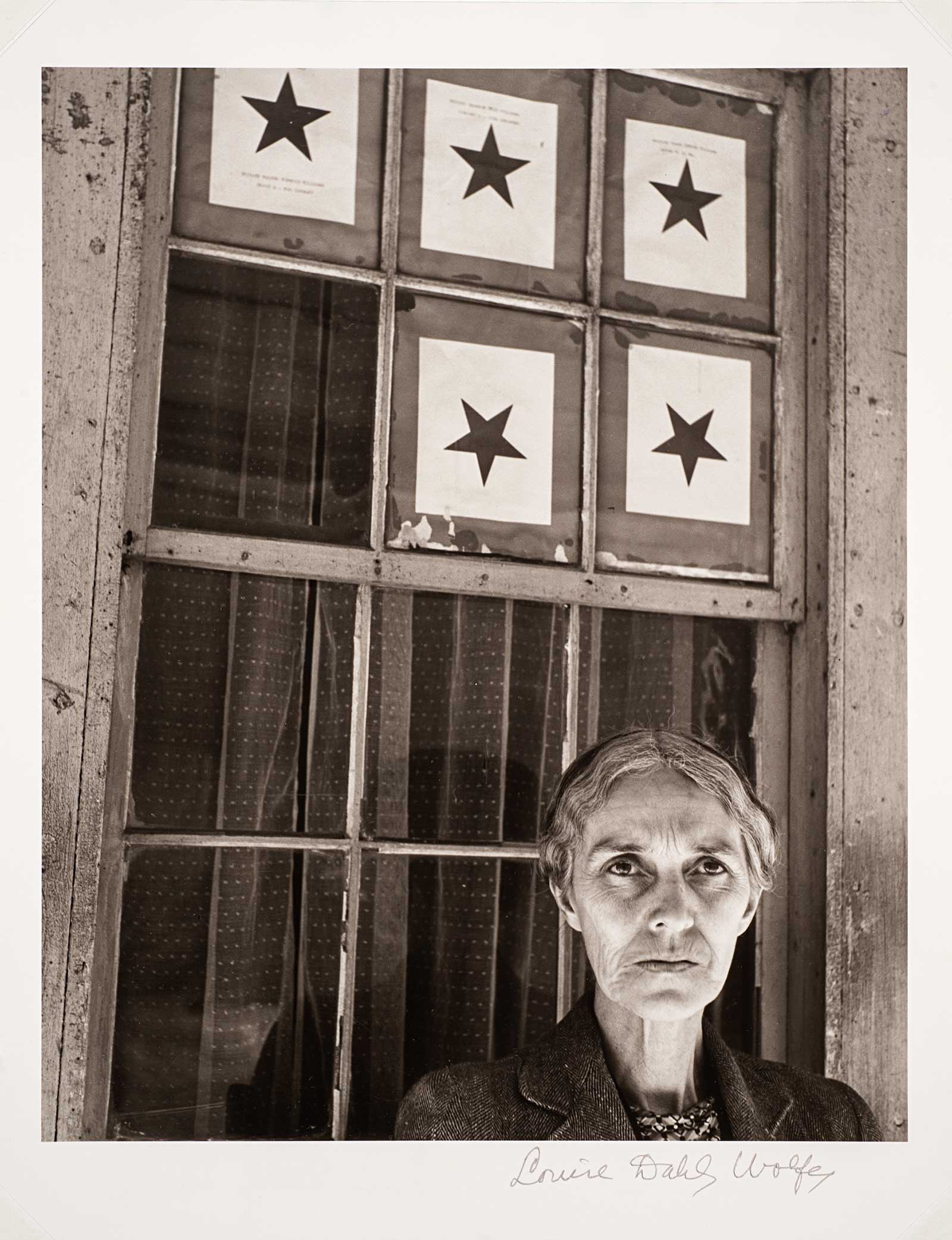
Louise Dahl-Wolfe (1895-1989), Five Star Mother, Nashville, ca. 1943. Gelatin silver print, 14 x 11 in. National Museum of Women in the Arts, Gift of Helen Cumming Ziegler. Photo by Lee Stalsworth.
In 1920s Paris, Springfield, Ohio-born Berenice Abbott (1898-1991) became a sought-after photographer of progressive American women expatriates, including gallerist and artist Betty Parsons (1900-1982); Djuna Barnes (1892-1982), author of the lesbian cult classic Nightwood (1936); and poet Edna St. Vincent Millay (1892–1950), who coined the phrase “burn the candle at both ends.” Abbott completed Changing New York (1939), now considered the quintessential photographic record of 1930s New York City with funding from the Federal Art Project. Abbott captured New York City’s highs and lows. She perched atop the newly completed Empire State Building and climbed into the depths of construction excavation for Rockefeller Center. She pictured struggling storefronts and shantytowns during the Great Depression with the same reverence as posh hotels and private residences. Art critic Elizabeth McCausland (1899-1965), Abbott’s life partner, contributed text. In 1951, the FBI placed Abbott under surveillance as a “concealed communist” with “homosexual tendencies.”
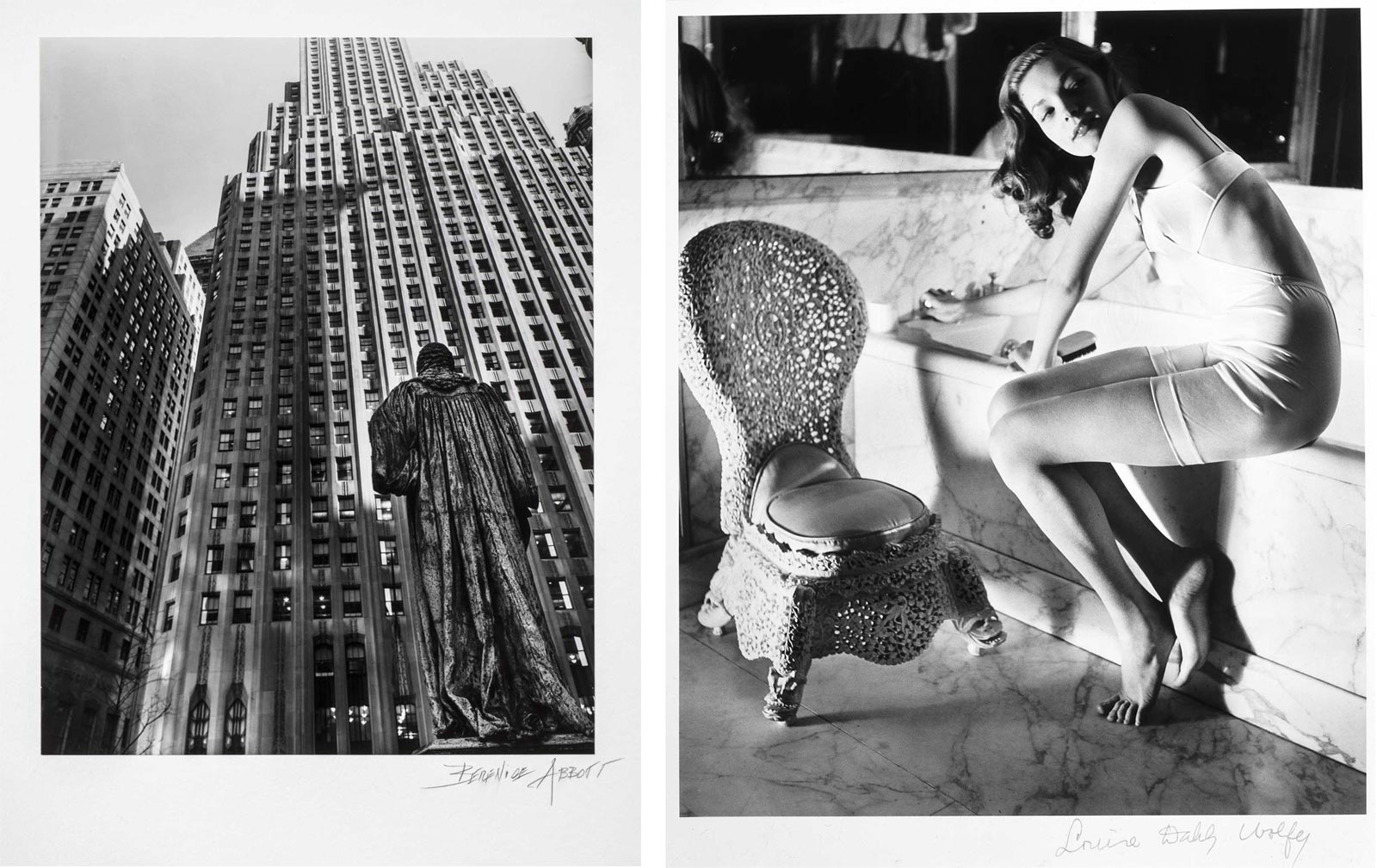
Left: Berenice Abbott (1898-1991), John Watts Statue, From Trinity Church Looking Toward One Wall Street, New York, 1938. Gelatin silver print, 133/8 x 109/16 in.; National Museum of Women in the Arts, Gift from the Trustees of the Corcoran Gallery of Art (Gift of Mr. Ronald Kurtz). Photo by Lee Stalsworth. Right: Louise Dahl-Wolfe (1895-1989), Lauren Bacall in Helena Rubinstein’s Bathroom, 1943. Gelatin silver print, 14 x 11 in. National Museum of Women in the Arts, Gift of Helen Cumming Ziegler; Photograph by Louise Dahl-Wolfe © 1989 Center for Creative Photography, Arizona Board of Regents.
In her first job, the German American photographer Ruth Bernhard (1905-2006) assisted darkroom staff at The Delineator (1869-1937), an American women’s magazine. There, she learned the basics of photography—but was not an enthusiastic employee. The publication let her go within six months, and Bernhard used the severance pay to purchase her own camera and equipment. Bernhard’s education and career took her from Berlin to New York City and Los Angeles before she settled in San Francisco. In each city, she found herself among like-minded artists including fellow trailblazing American photographers Imogen Cunningham (1883-1976), and Dorothea Lange (1895-1965). First recognized for her still lifes, Bernhard was hired by the Museum of Modern Art to photograph their 1934 Machine Art exhibition for its catalog. While working on this project, a dancer friend posed nude inside of a large, stainless steel bowl. The resulting photograph is the first example of the black-and-white images she’s best known for today. Bernhard created another memorable piece, In the Box—Horizontal (1962), after receiving a new photographic enlarger. When a model arrived at the studio, the artist could not resist asking her to lie in the empty delivery box. Starting in 1943, Bernhard spent two harvest seasons in the Women’s Land Army to replace male farmers drafted during World War II. To prepare, she took a two-month course in animal husbandry.
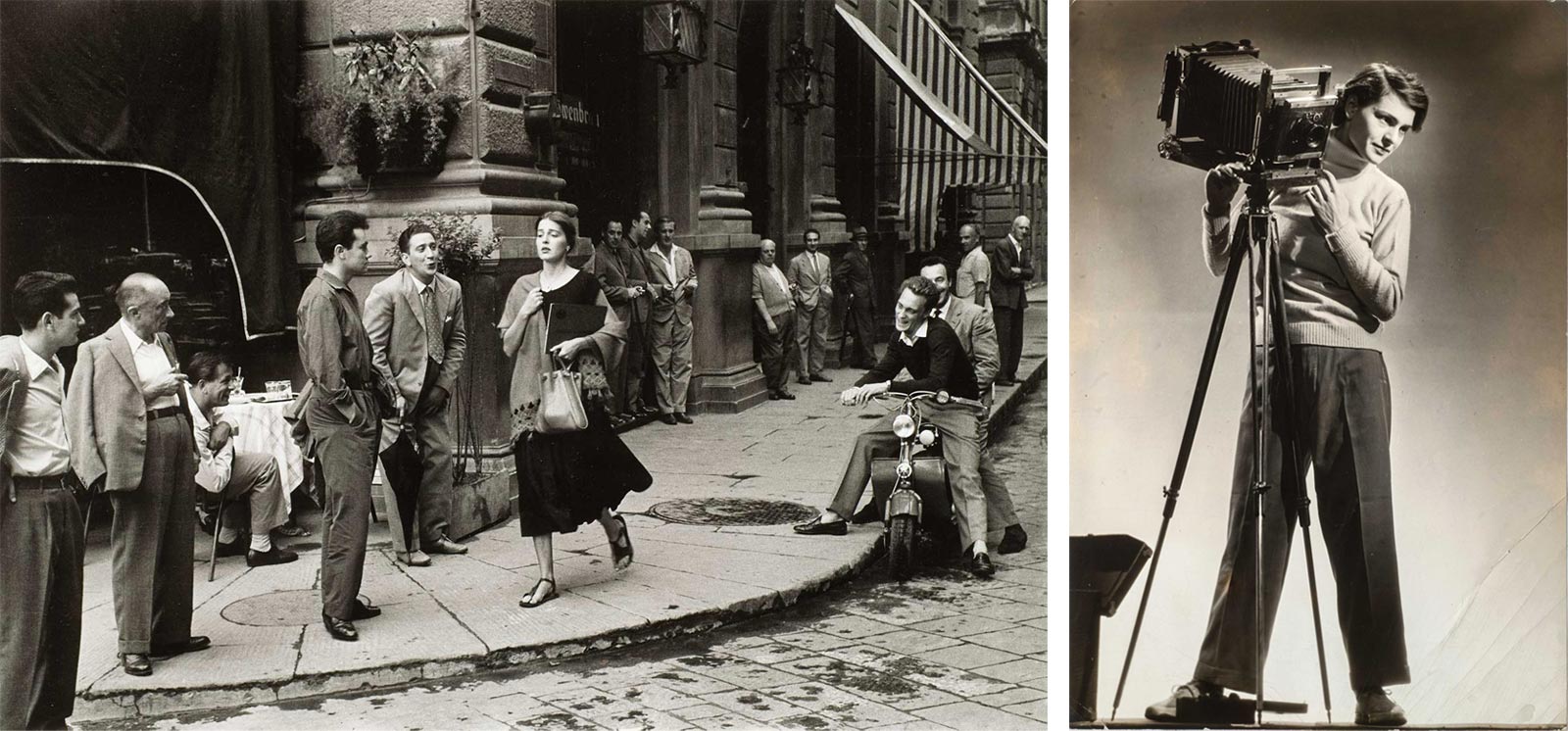
Left: Ruth Orkin (1921-1985), American Girl in Italy, 1951 (printed 1980 by Ruth Orkin Estate). Gelatin silver print, 23 x 28 in. National Museum of Women in the Arts, Promised gift of Steven Scott, Baltimore, in honor of NMWA Director Susan Fisher Sterling. Photo by Lee Stalsworth. Right: Margaret Bourke-White, Self Portrait with Camera, ca. 1933. Gelatin silver print, 135/8 x 91/2 in. National Museum of Women in the Arts, Gift of the collection of Susie Tompkins Buell; © 2023 Estate of Margaret Bourke-White/Licensed by VAGA at Artists Rights Society, New York. Photo by Lee Stalsworth.
One of the most famous photojournalists of the 20th century, Margaret Bourke-White (1904-1972) united innovative viewpoints, camera angles, and lighting with a keen sense of narrative to capture some of the most significant people, places and events of her lifetime. Born in New York and raised by free-thinking parents in New Jersey, Bourke-White credited her father with fostering her future fascination with photography and factories. He designed printing equipment and saw beauty in industrial architecture and machinery. He also introduced her to cameras, often snapping pictures of the family, though Bourke-White was in college before she turned to photography herself. In 1927, Bourke-White moved to Cleveland, Ohio, and tenaciously lobbied for access to the Otis Steel Company. The company initially denied permission, presuming a woman lacked sufficient fortitude to traverse the hot, hazardous industrial plant. Bourke-White defied those expectations, spending months in the infernal environment, ignoring the perils of fiery furnaces and molten metal to secure the perfect shot.
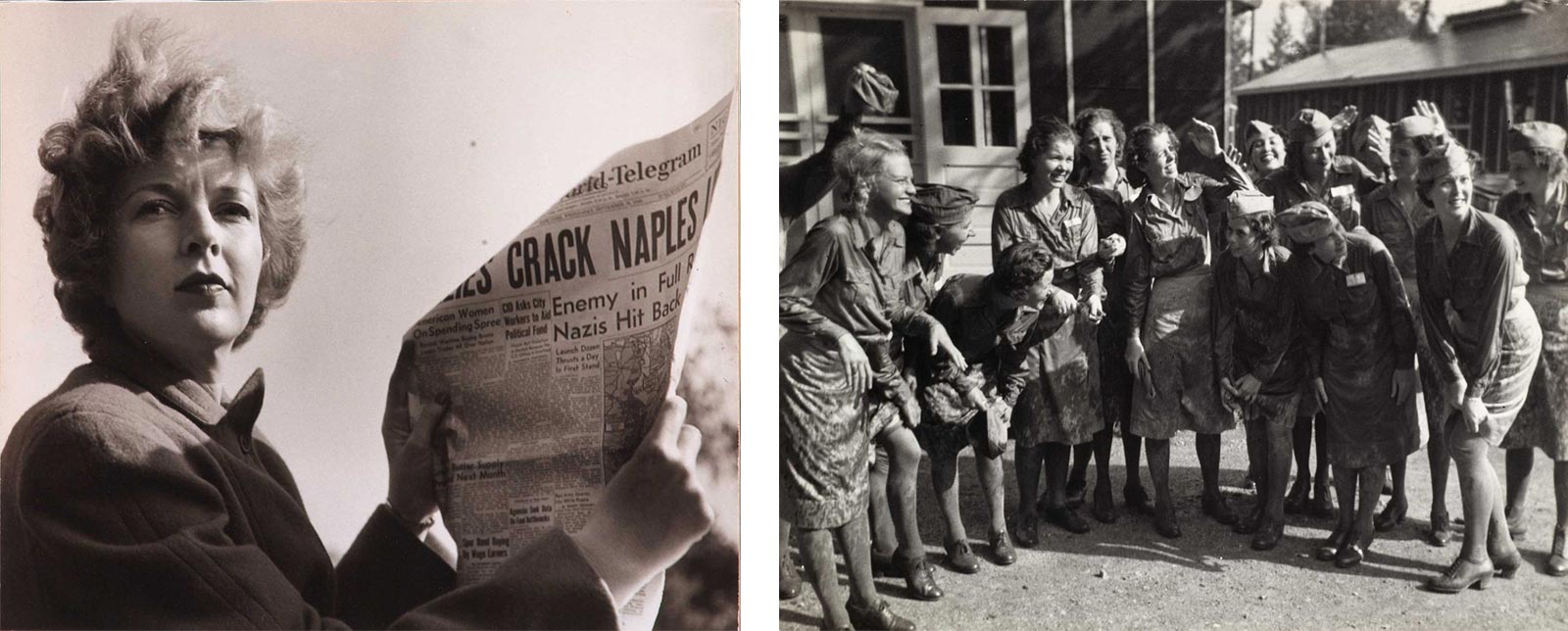
Left: Louise Dahl-Wolfe (1895-1989), Margaret Bourke-White, ca. 1940. Gelatin silver print, 10 x 101/2 in. National Museum of Women in the Arts, Gift of Helen Cumming Ziegler; Photograph by Louise Dahl-Wolfe © 1989 Center for Creative Photography, Arizona Board of Regents. Right: Ruth Orkin (1921-1985), Miscellaneous (Waac. Monticello, Ark.), 1943. Vintage gelatin silver print, 73/4 x 95/8 in. National Museum of Women in the Arts, Gift from the collection of Charles S. and Elynne B. Zucker. Photo by Lee Stalsworth.
In 1929, Bourke-White was hired as Fortune Magazine’s first photographer. She traveled to the Soviet Union the following year—the first Westerner allowed to document its rapid industrialization under Stalin. A self-portrait from the period captures Bourke-White’s confidence as her photojournalism career gained momentum. The camera’s position mirrors the artist’s commanding pose, emphasizing her professional prowess. Bourke-White’s image of Montana’s Fort Peck Dam graced Life magazine’s inaugural cover on November 23, 1936. Her photo essays in its pages revealed triumphs and atrocities during World War II. She was the only foreign photographer in Moscow during Germany’s bombardment in July 1941, and she also witnessed U.S. troops liberating Buchenwald survivors in April 1945. Before Bourke-White, no woman had ever been accredited as a war correspondent in combat zones or accompanied bombing missions. Colleagues at Life magazine, where Bourke-White worked for more than two decades, deftly dubbed her “Maggie the Indestructible.” The apt moniker acknowledged her tenacious endurance in pursuit of a story. She survived a torpedo in the Mediterranean, a helicopter crash in Chesapeake Bay and bombings by the Luftwaffe, as well as being stranded on an Arctic island.
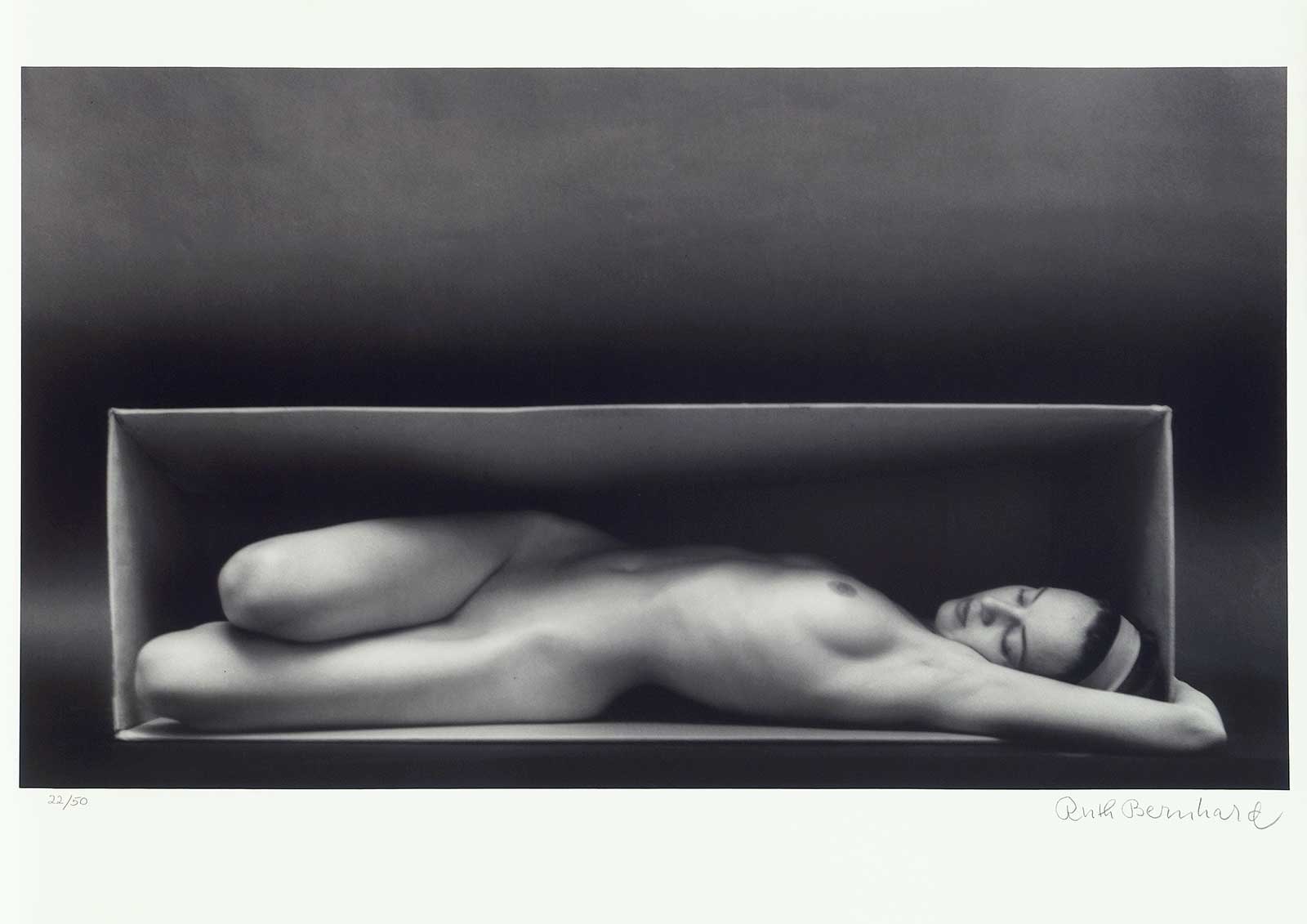
Ruth Bernhard (1905-2006), In the Box—Horizontal, 1962 (printed 1992). Gelatin silver print, 18 x 24 in. National Museum of Women in the Arts; Ruth Bernhard Archive, Princeton University Art Museum; © Trustees of Princeton University.
Ruth Orkin (1921-1985) was an award-winning photojournalist and filmmaker, and is the subject of an exhibition at the National Museum of Women in the Arts that opens in December. Orkin discovered her passion for photography as a young girl when thumbing through family scrapbooks filled with snapshots of Old Hollywood (her mother was a silent film actress and the reason Boston-born Orkin grew up in California). At 10 years old, Orkin received her first camera, a modest 39-cent device that helped develop her extraordinary career. Ninalee Craig, the subject of one of Orkin’s most famous series, American Girl in Italy, 1951, befriended the photographer in Italy during a solo trip to Europe. Together they staged photographs addressing challenges and surprises that women faced when traveling alone. Cosmopolitan published Orkin’s images in the article “Don’t Be Afraid to Travel Alone.” Known for capturing the individual and collective human spirit, Orkin was particularly adept at picturing remarkable women at remarkable moments. She photographed the renowned singer Marian Anderson (1897-1993) rehearsing with conductor Leonard Bernstein at Lewisohn Stadium in New York City in 1947. This intimate image was taken eight years after Anderson’s famous Lincoln Memorial concert for a desegregated audience, and eight years before she became the first black singer to perform at the Metropolitan Opera. Orkin photographed Kathrine Switzer the day she became the female winner of the 1974 New York City Marathon. Before this victory, Switzer broke gender barriers in the running world. In 1967, she was the first woman to officially run the Boston Marathon, only possible because her registration name, K.V. Switzer, didn’t reveal her gender. Women were banned from running the Boston race until 1972, the same year their results were officially recognized in the New York City Marathon.
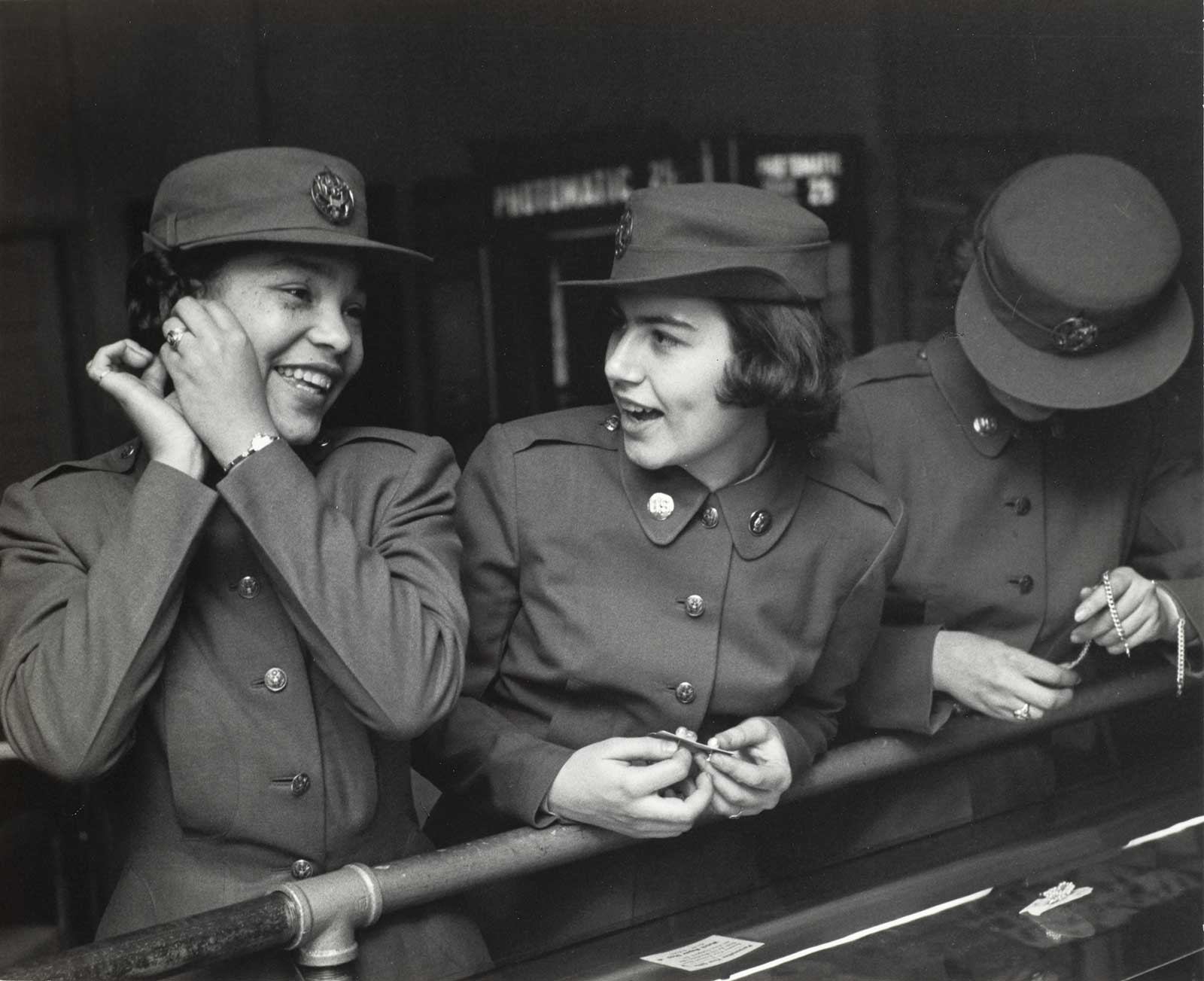
Ruth Orkin (1921-1985), Miscellaneous, 1950s. Vintage gelatin silver print, 8 x 10 in. National Museum of Women in the Arts, Gift from the collection of Jeffrey Hugh Newman. Photo by Lee Stalsworth.
There are many other groundbreaking American women photographers of note, from Esther Bubley (1921-1998), a photojournalist best known for her revealing profiles of the United States and its people, to Barbara Morgan (1900-1992), acclaimed for her iconic images of experimental dancers such as Martha Graham (1894-1991) and Hanya Holm (1893–1992). As we take the time to reflect on great artists across American history, we must remember the women who were part of innovating a medium, while also capturing the complex and evolving world around them. —
December 12, 2025-March 29, 2026
Ruth Orkin: Women on the Move
National Museum of Women in the Arts
1250 New York Avenue NW, Washington, D.C. 20005
t: (202) 783-5000, www.nmwa.org
Powered by Froala Editor