The Amon Carter Museum of American Art brings together 75 works from the Charles Butt Collection in the first public exhibition dedicated to the Texas businessman and philanthropist. American Modernism from the Charles Butt Collection includes paintings and works on paper from the early 20th century through the 1970s by major artists that include Romare Bearden, Edward Hopper, Stuart Davis, Thomas Hart Benton, Georgia O’Keeffe, Winslow Homer, Arthur Dove, Charles Sheeler, Marsden Hartley, Andrew Wyeth, and many others, many of which have never been exhibited.
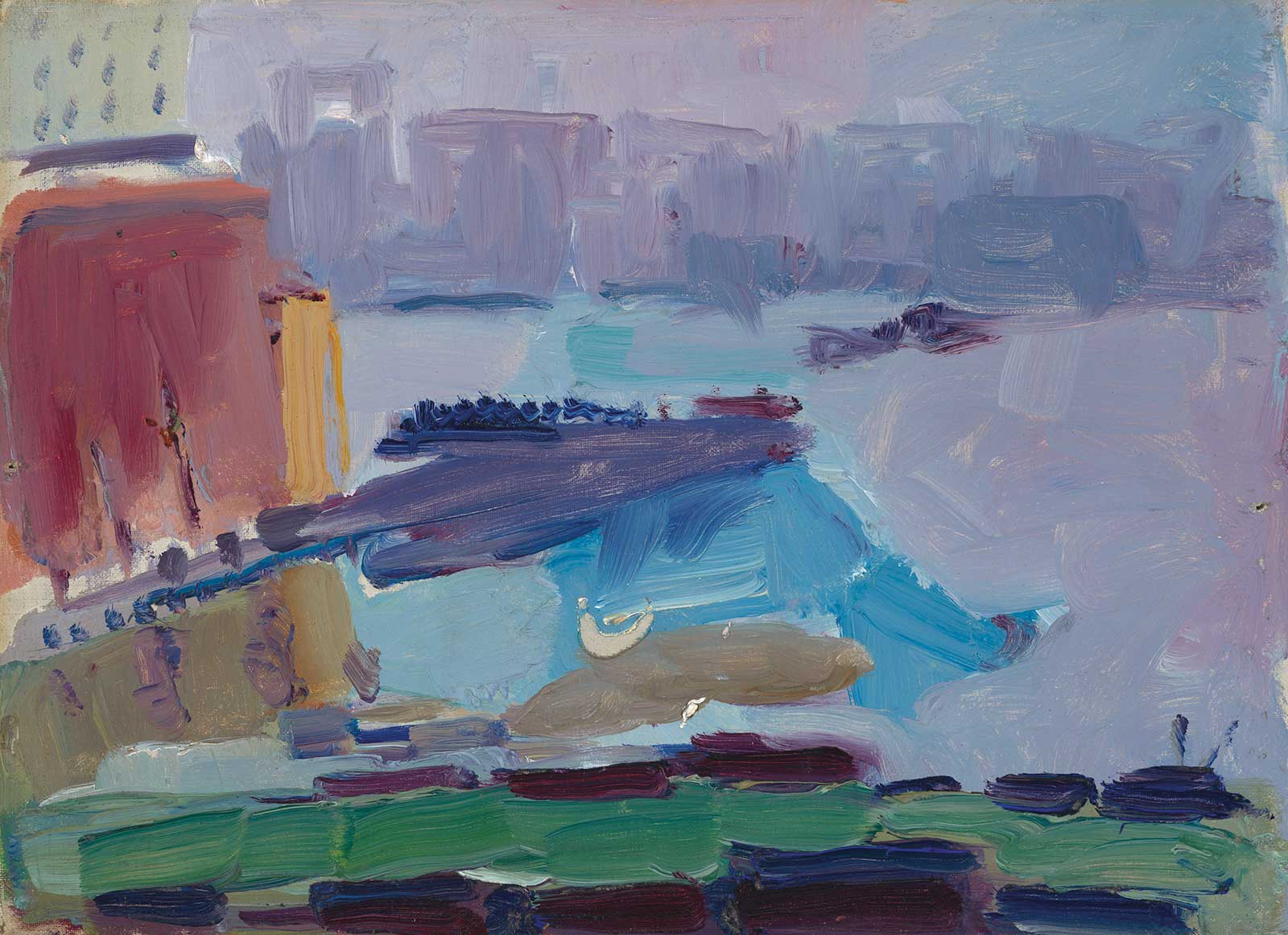
John Marin (1870-1953), Weehawken Sequence, ca. 1916. Oil on canvas board. Collection of Charles Butt.
Representative of only a slice (albeit a large one) of Butt’s collection, “The exhibition highlights the expansive and pluralistic nature of American modernism, demonstrating how artists’ shared drive for innovation and departure from tradition gave rise to a wide array of styles and visual expressions,” says Amon Carter curator Shirley Reece-Hughes. “Through works spanning all the standard genres—portraiture, landscape, seascape, and narrative scenes—the collection reveals how artists reimagined these forms using new approaches to subject matter, color, shape, and brushwork to engage with the social, political and aesthetic complexities of the 20th century.”
The exhibition is organized in four thematic sections that highlight throughlines that run through Butt’s collection of modernist works. “Intimate Perspectives” pairs works by artists who had close relationships such as Hopper and Guy Pene Du Bois; John La Farge and Homer, Benton and Jackson Pollock. “The Language of the Sea” showcases the breadth of Butt’s holdings of maritime paintings, a lifelong passion of his.
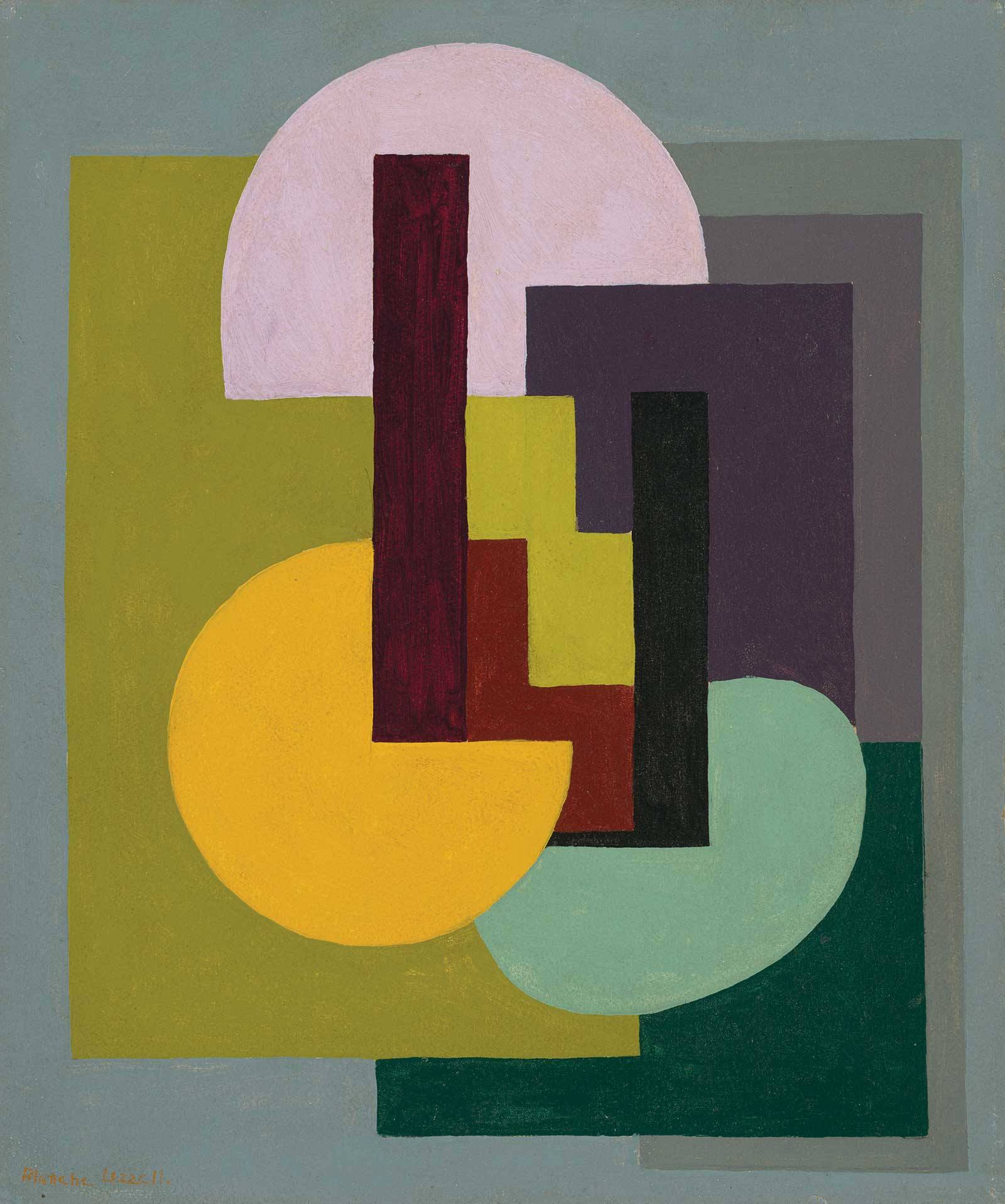
Blanche Lazzell (1878-1956), Abstraction, ca. 1925. Oil on board. Collection of Charles Butt. © Estate of Blanche Lazzell.
“Having grown up in Corpus Christi, spending part of the year in Maine, and being a mariner himself, Mr. Butt has assembled an extraordinary range of coastal and oceanic scenes,” explains Reece-Hughes. “These works span from representational depictions of the perils of sea travel to bold, abstract interpretations of the ocean’s vastness.”
In addition to Thomas Moran’s 1907 watercolor Smoking Ships at Sea, other examples in the show include Homer’s Along the Road, Bahamas, one in a series of watercolors of the Caribbean for Century Magazine in 1885. According to Reece-Hughes, “This work not only expanded appreciation for the watercolor medium but also broadened the range of acceptable subjects in early 20th century American art [and] helped lay the groundwork for first-generation modernists like John Marin…Within the broader context of Charles Butt’s collection…Along the Road, Bahamas serves as a pivotal link between 19th-century realism and the emergence of early 20th-century modernist experimentation. Mr. Butt acknowledges the continuity between Homer’s late works and the bold explorations of modernists like John Marin, Arthur Dove and others whose roots trace back to Homer’s innovations in watercolor.”
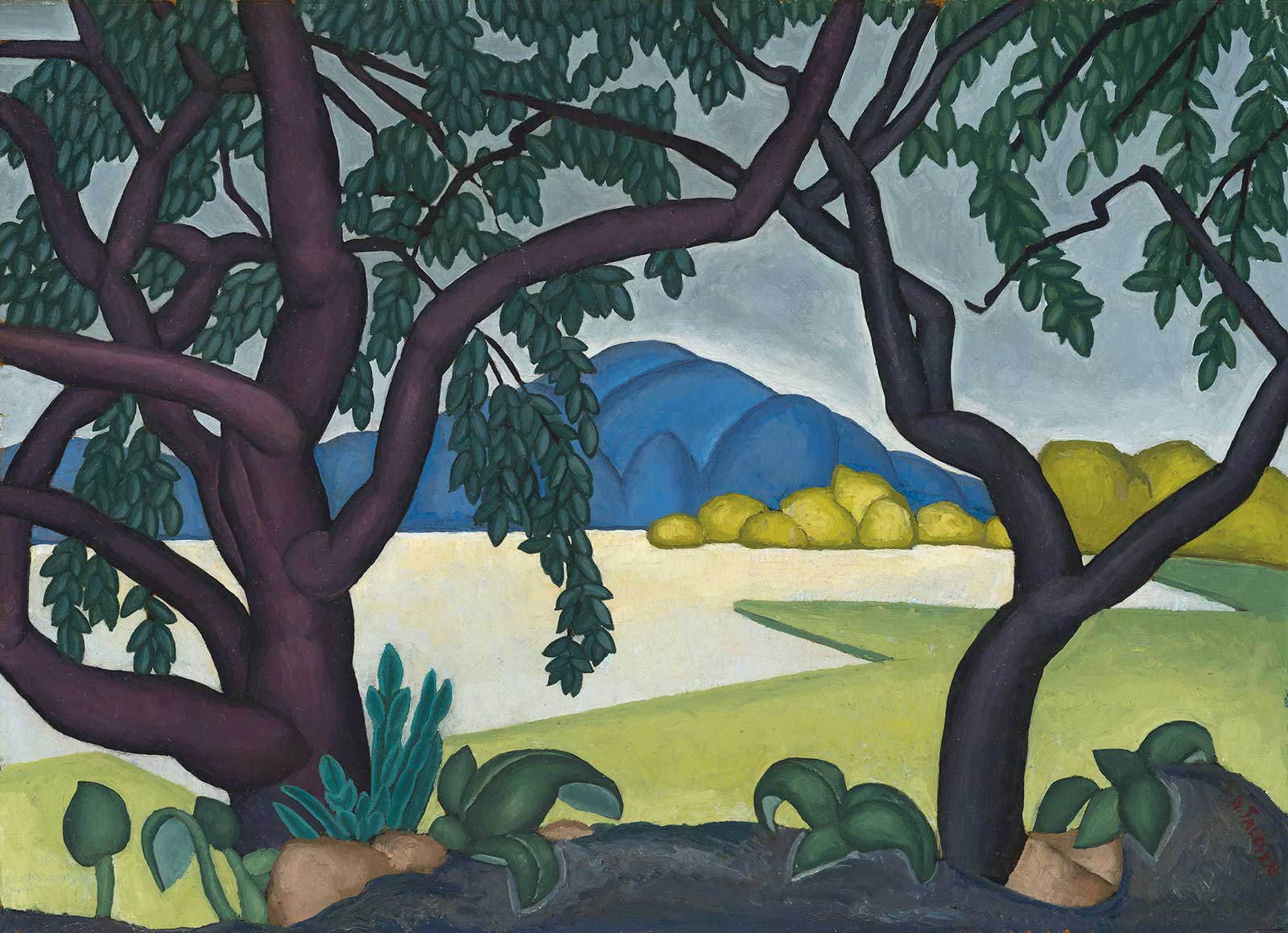
Everett Gee Jackson (1900-1995), Chapala, 1926. Oil on panel. Collection of Charles Butt. © Everett Gee Jackson Estate.
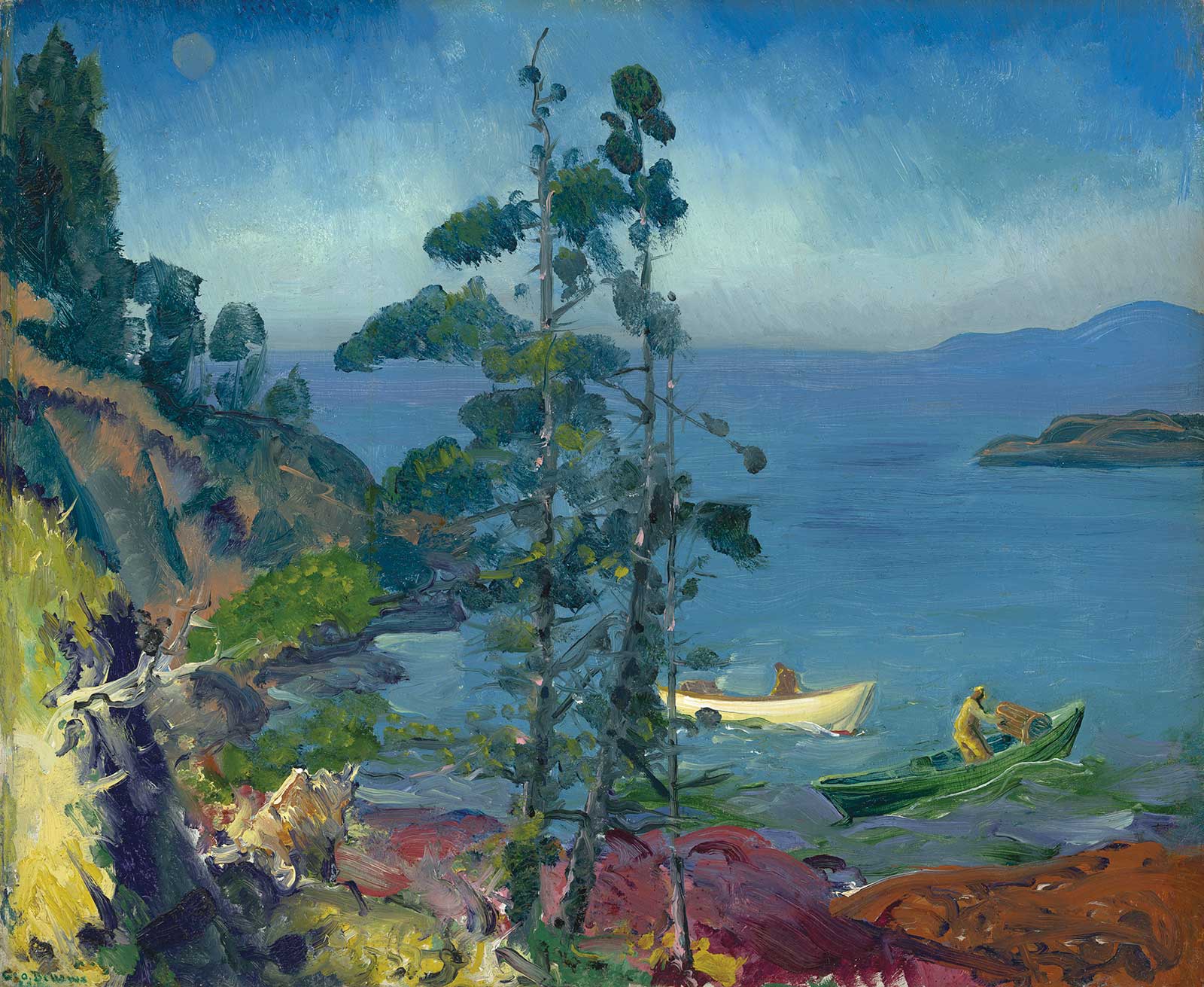
George Bellows (1882-1925), Evening Blue (Tending the Lobster Traps, Early Morning), 1916. Oil on panel. Collection of Charles Butt.
The third part of the exhibition is “Land Progressions,” which focuses on the significance, and myriad styles of landscape painting in the modernist movement. Works from various stages of Hartley’s career illustrate the dramatic evolution of his style over time and place; and Marin’s Weehawken Sequence reflects the effects of industrialization on the artist’s New Jersey hometown.
“Weehawken Sequence represents Marin’s progressive experimentation during his early career, when the artist was honing his skills with merging abstraction and realism,” says Reece-Hughes. “In the context of Butt’s broader collection, Marin’s Weehawken Sequence highlights Mr. Butt’s deep appreciation for artists who used place-based experience to explore America’s radically changing times through innovative technique and personal vision.”
The exhibition concludes with “Geometric Utopias/Dystopias,” which includes angular abstractions alongside paintings of urban and rural post-industrial scenes. Prominent in this section are trailblazing female artists like Blanche Lazzell and Alice Trumbell Mason who broke out of representationalism and helped usher in another visual language of American modernism.
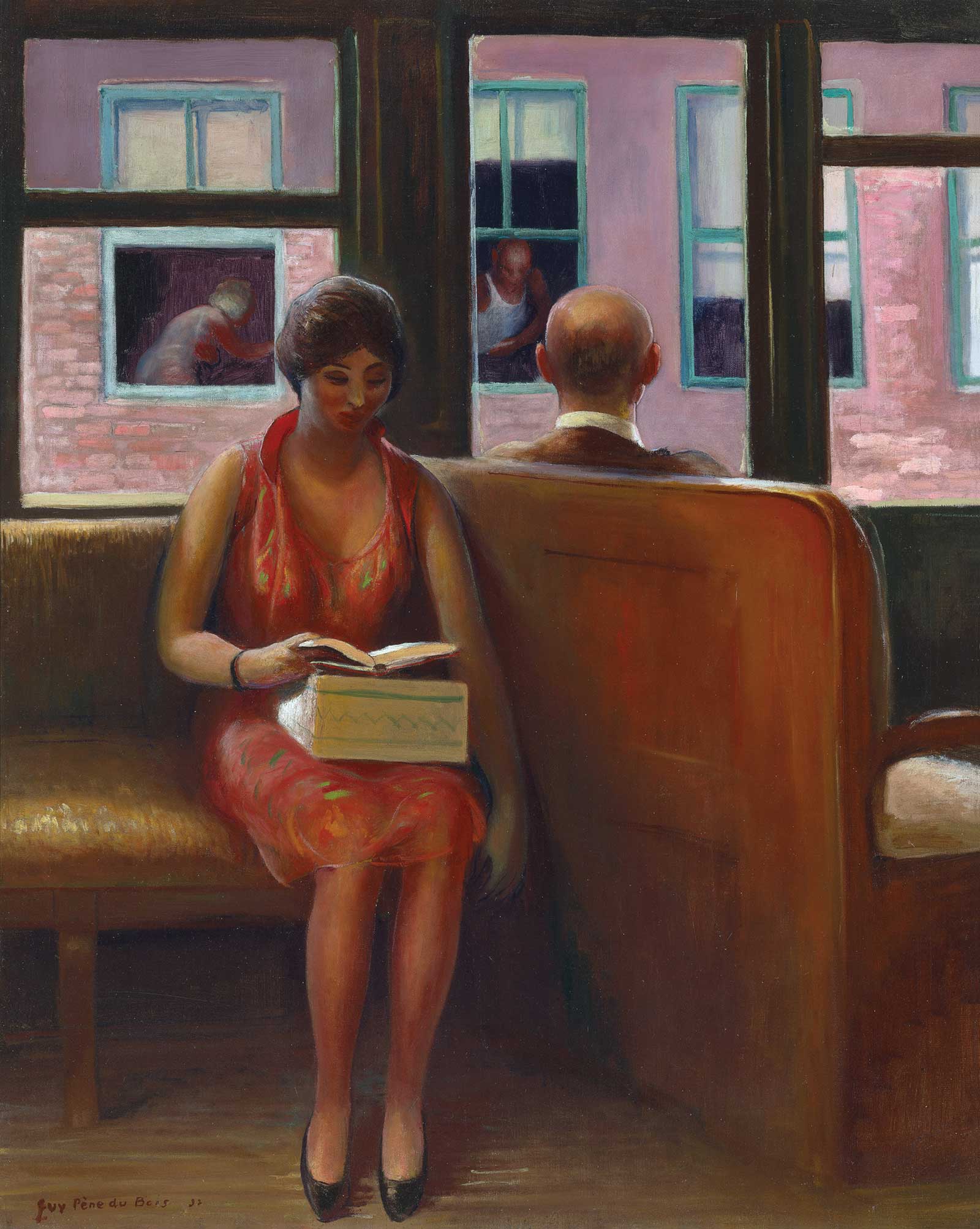
Guy Pène du Bois (1884-1958), Third Avenue El, 1932. Oil on canvas. Collection of Charles Butt, © Estate of Yvonne Pene du Bois McKenney.
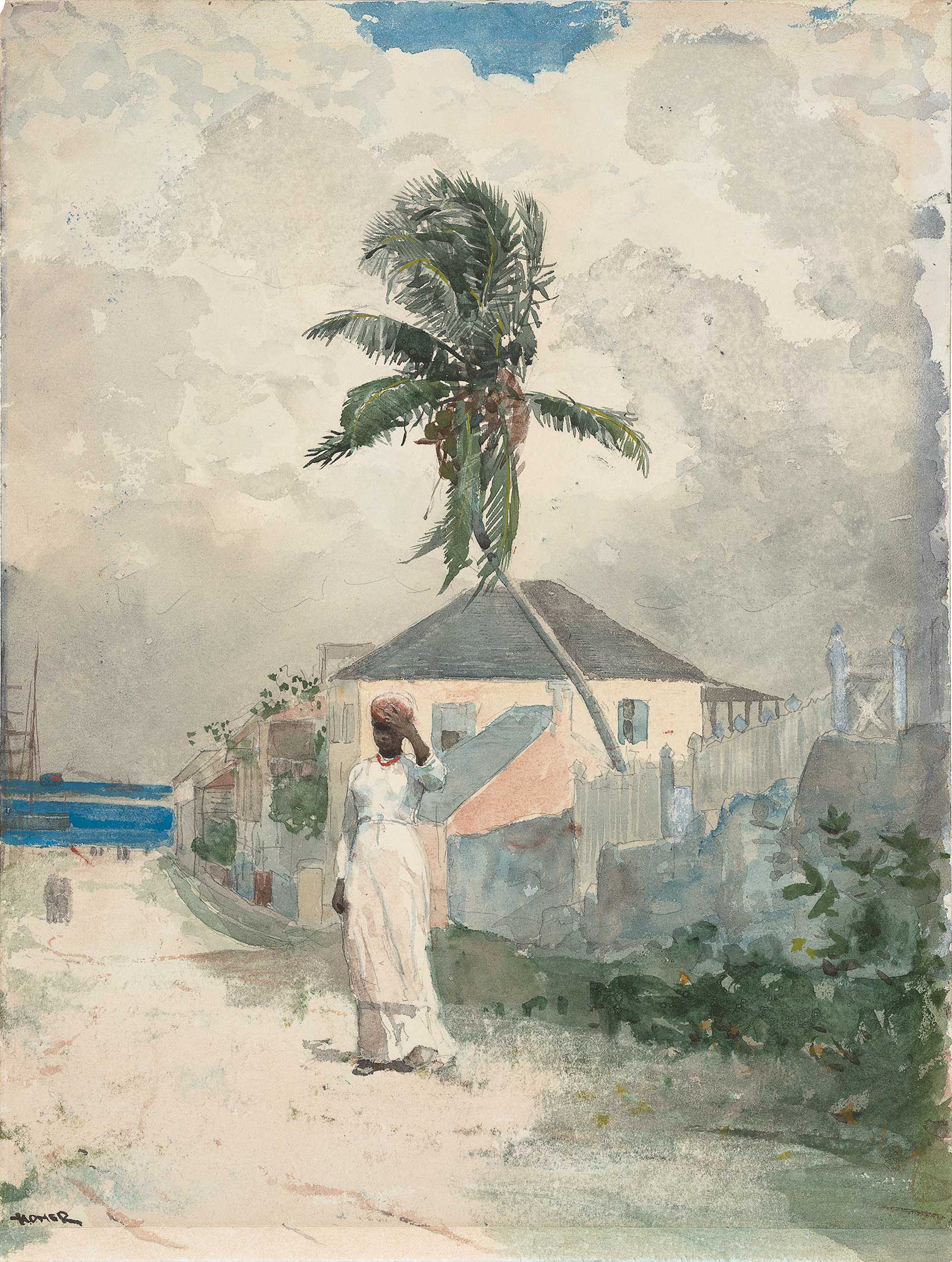
Winslow Homer (1836-1910), Along the Road, Bahamas, 1885. Watercolor on paper. Collection of Charles Butt.
“I hope visitors come away from this exhibition with a deeper understanding of the diverse ways artists interpret the world around them—through personal vision, cultural identity, and a drive to innovate,” says Reece-Hughes. “The works on view range from emotionally intense to coolly abstract, and from intimate depictions of people and places to broader visual stories. More than anything, I hope the show encourages visitors to slow down, relax, and engage thoughtfully with each piece—not as isolated artworks, but as part of a larger conversation about who we are and the many ways we see and experience life.”
After American Modernism from the Charles Butt Collection closes at the Amon Carter Museum on January 25, 2026, the exhibition will travel to the Blanton Museum of Art in Austin, Texas; the Museum of Fine Arts, Houston; and the McNay Art Museum in San Antonio. —
Powered by Froala Editor