In August 1850, Herman Melville (1819-1891) and Nathaniel Hawthorne (1804-1864) met in the Berkshires of Western Massachusetts, marking the beginning an intense friendship. Hawthorne had written a review of Melville’s first book, Typee and, shortly after their meeting, Melville wrote an anonymous review of Hawthorne’s Mosses from an Old Manse, stating “…it is that blackness in Hawthorne, of which I have spoken, that so fixes and fascinates me.” He was in the process of writing Moby-Dick: or the Whale ich Hawthorne would have a great influence. The novel, published in 1851, bears the dedication: “In Token of My Admiration for His Genius, This Book is Inscribed to Nathaniel Hawthorne.”
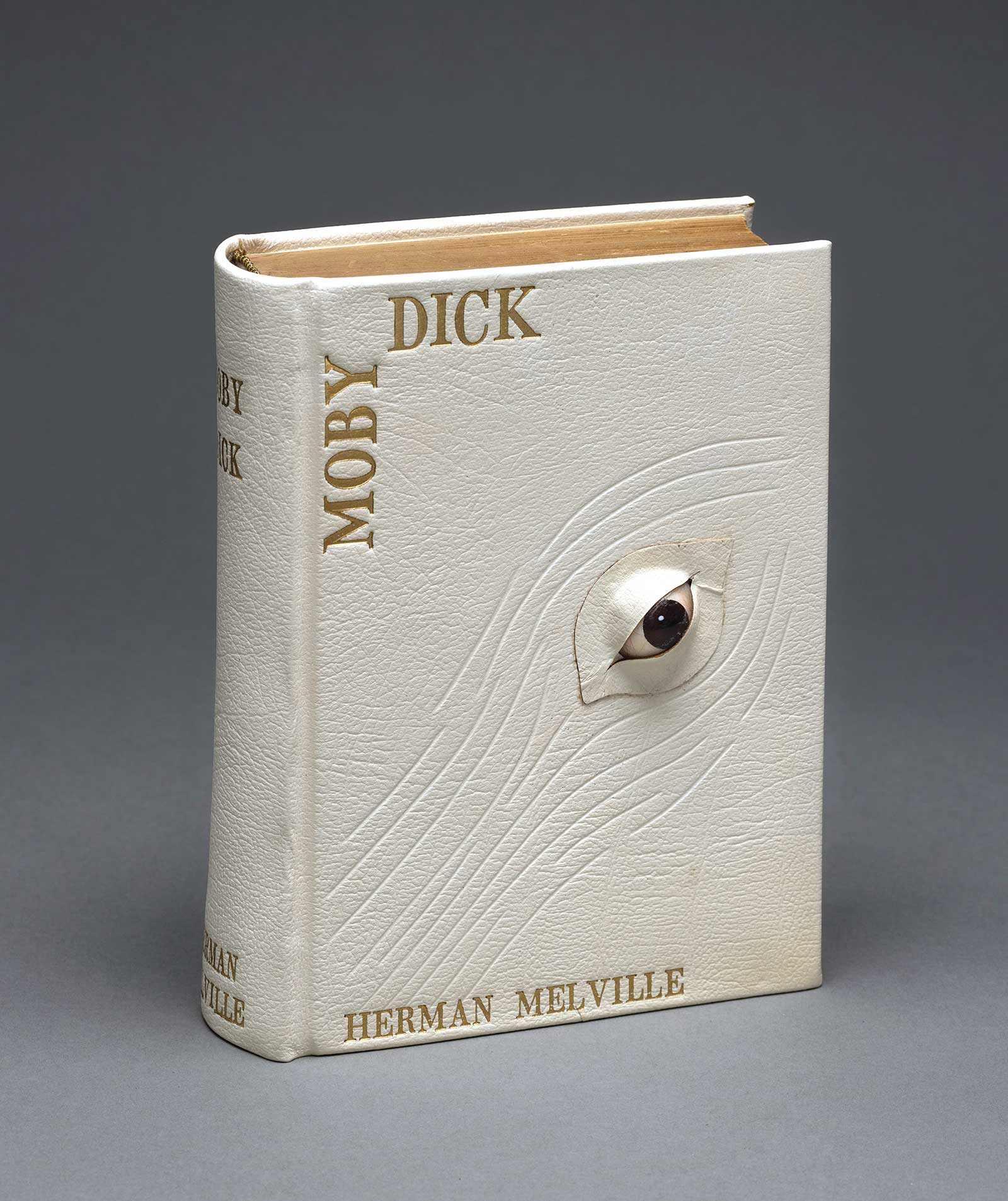
Chaim Ebanks, bookbinder, and Susan Ebanks, designer, of Exeter Bookbinders (Devon, England). Moby Dick: or, The Whale, published 1930. Custom binding in white Chieftain goatskin leather with blind tooling, gilt lettering, and glass prosthetic eye, 2023. Purchase, Library Acquisition Fund, made possible by Arthur and Judi Rubin, 2023. Phillips Library, Peabody Essex Museum. PS2384.M6 E23 1930. Photo by Kathy Tarantola/PEM.
The Peabody Essex Museum (PEM) in Hawthorne’s native Salem, Massachusetts, is presenting the exhibition Draw Me Ishmael: The Book Arts of Moby Dick through March 29, 2026. It is “the first exhibition to focus on the illustrations, binding designs, typography and physical forms that Moby Dick has taken over time,” and is drawn almost entirely from PEM’s Phillip’s Library Collection. The exhibition’s title is inspired by the opening sentence of the novel, spoken by its narrator, “Call me Ishmael.”
Dan Lipcan, the library’s Ann C. Pingree Director, writes, “Full of humor, poetry, philosophy and sound, Moby-Dick and its timeless themes continue to inspire artists, designers and creatives of all types…In this exhibition, we will think nontraditionally and independently about the novel and appreciate the variety of artist imaginings and approaches to visualize it anew.”
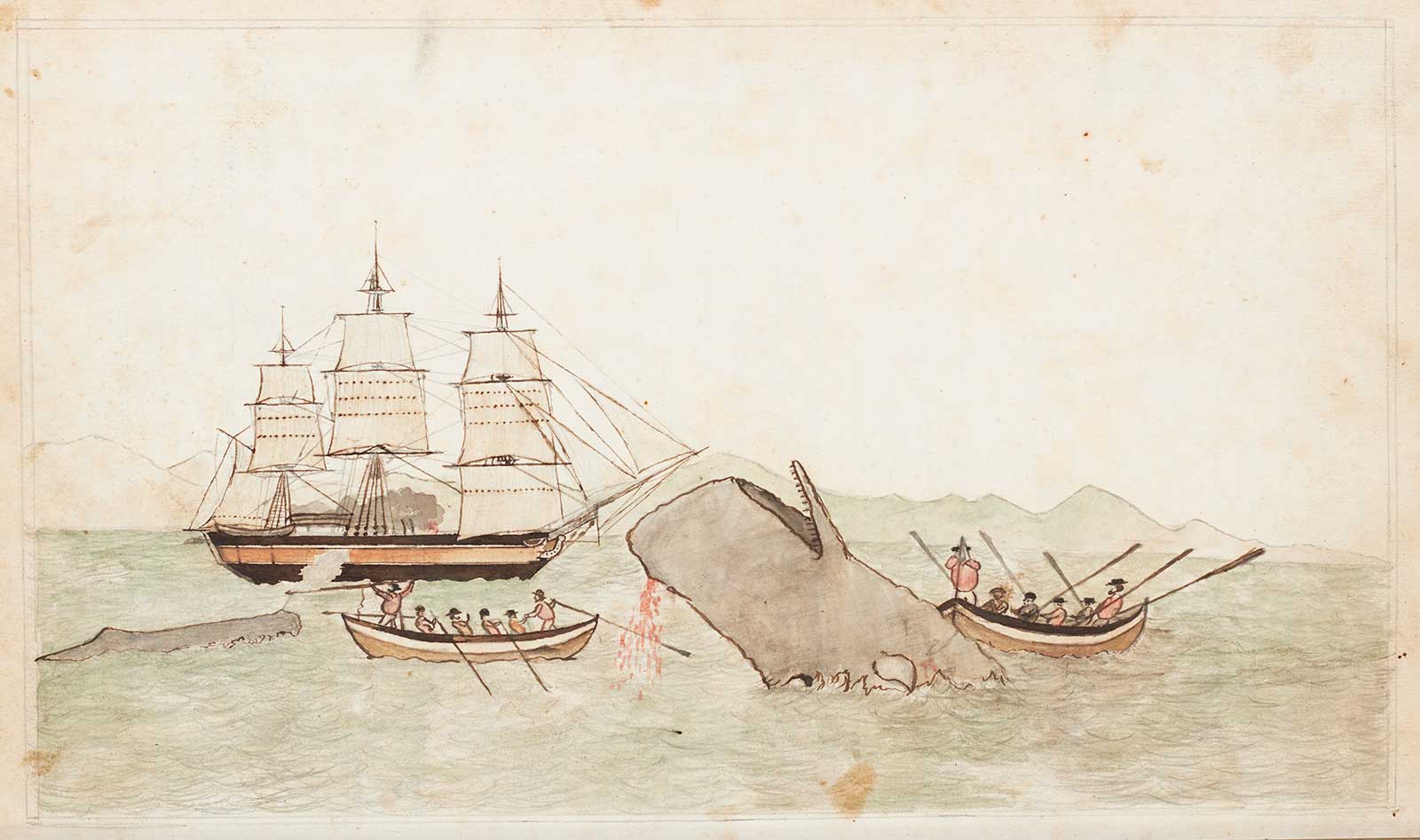
Henry M. Johnson, Acushnet (Whaler) logbook, 1845-1847. Log 1234. Ink, pencil and watercolor on paper. Gift of Augustus P. Loring, 1957. Phillips Library, Peabody Essex Museum.
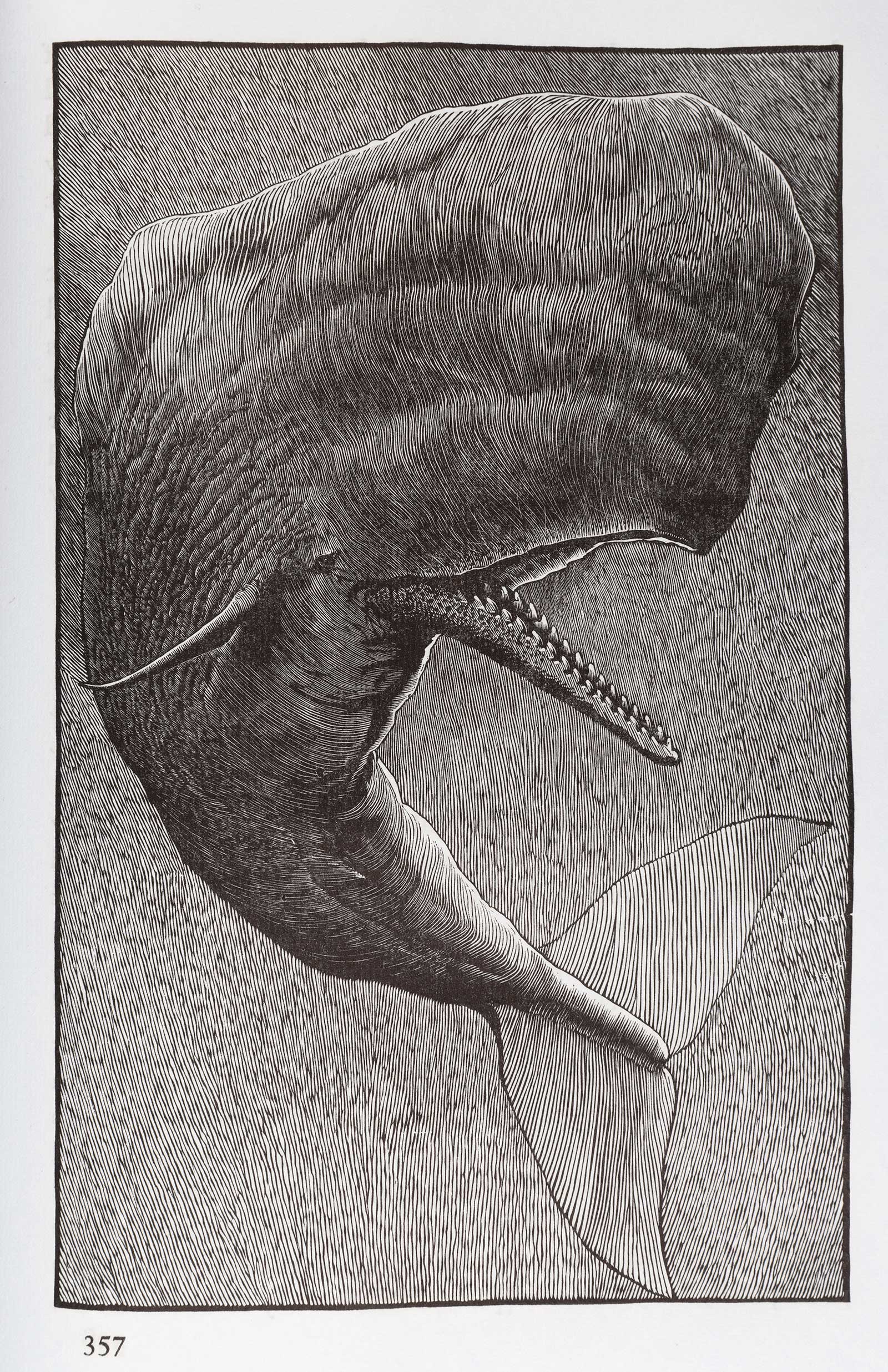
Herman Melville, author; Barry Moser, illustrator, Moby Dick: or, The Whale, 1979. Arion Press. Purchase, the Elizabeth Rogers Fund, 2023. Phillips Library, Peabody Essex Museum. PS2384 .M6 1979 +. © Barry Moser, with permission from the artist. Photo by Kathy Tarantola/PEM.
The exhibition also contains the logbook of the whaleship Acushnet that Melville served on for 18 months. A classic publication is Barry Moser’s Moby-Dick: or, the Whale, 1979, published by Arion Press. Lipcan notes, “Barry Moser’s 100 intricate boxwood engravings focus on whaling and natural history, rather than Moby-Dick’s narrative or characters. His many hours of research at maritime museums in New England and San Francisco result in authentic depictions of an industry that is less familiar to us today.”
Captain Ahab of the whaleship Pequod pursued the white whale in revenge for it having taken his leg in an earlier encounter. Moser’s engraving depicts the enormous size of the whale and suggests the enormity of Ahab’s maniacal hatred of the whale, and of nature itself that led to his death, as well as to the loss of his ship and its crew.
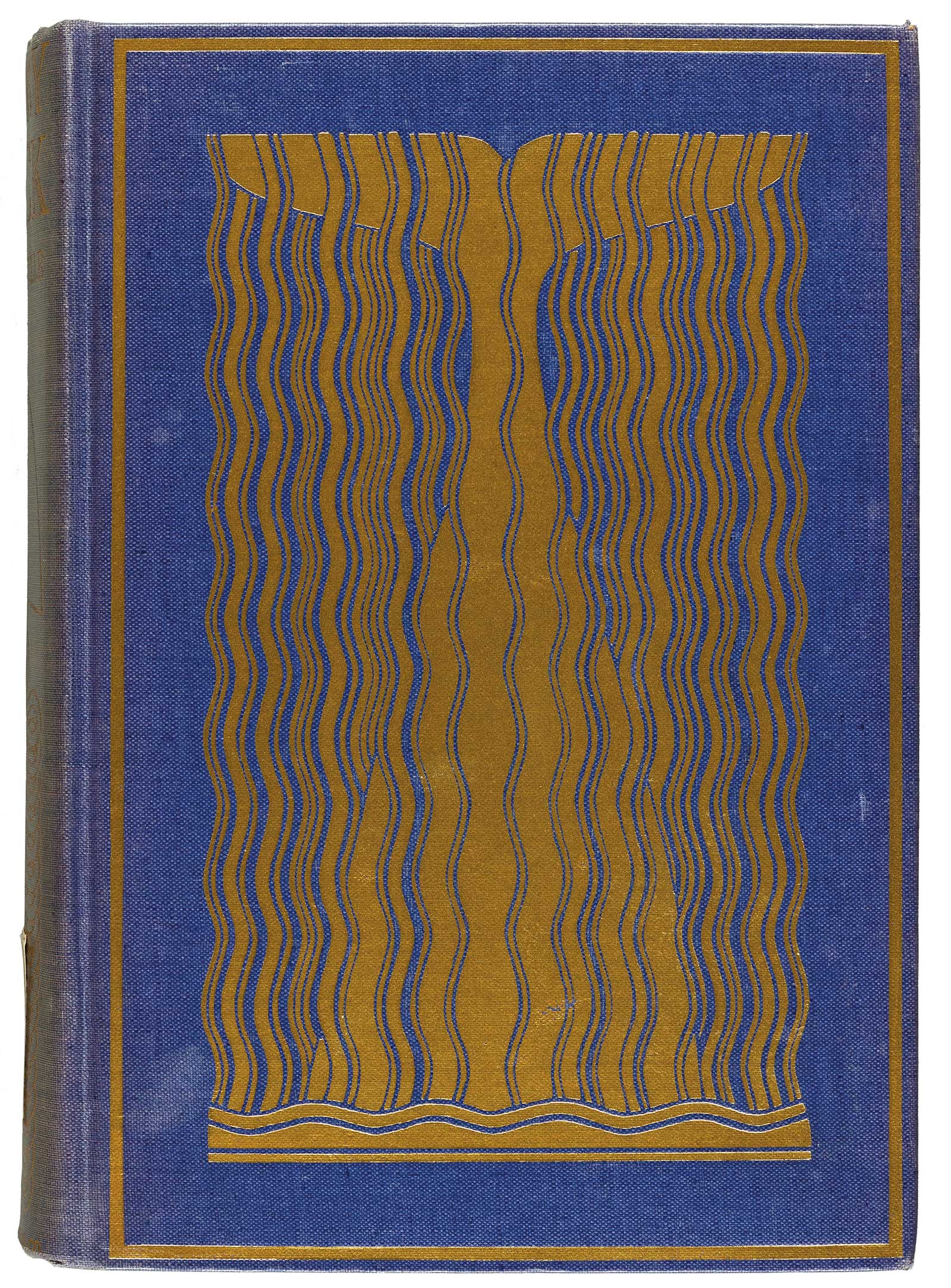
Rockwell Kent, illustrator, and Herman Melville, Moby Dick: or, the Whale, 1937. Book. Garden City Publishing Company. Gift of William P. Hunnewell. Phillips Library, Peabody Essex Museum. PS2384 .M639 1937. Rights courtesy of Plattsburgh State Art Museum, State University of New York, USA, Rockwell Kent Collection, Bequest of Sally Kent Gorton. All rights reserved.
A binding designed by Susan Ebanks and executed by Chaim Ebanks, features a glass eye peering out from “blind-tooled wrinkles in the leather around the eye and the reference to a being of enormous scale: the whale is so gigantic that we can take in only a small part of his body,” Lipcan writes. —
Powered by Froala Editor