As part of its Year of Women Artists programming, the Westmoreland Museum of American Art is presenting the intimate exhibition Cecilia Beaux: Inventing the Modern Portrait, on view through June 7, 2026.
Beaux (1855-1942) was already earning a living through commercial art by the age of 18, and went on to become one of the most prominent portraitists of her time, painting distinguished writers, politicians and other artists. She was also the first woman to teach at the Pennsylvania Academy of Fine Arts, which she did for many years. During her lifetime, her work was exhibited widely in the United States and abroad with her popularity hitting its peak in the early 1930s, during which time First Lady Eleanor Roosevelt presented Beaux with a medal for “the American woman who had made the greatest contribution to the culture of the world.”
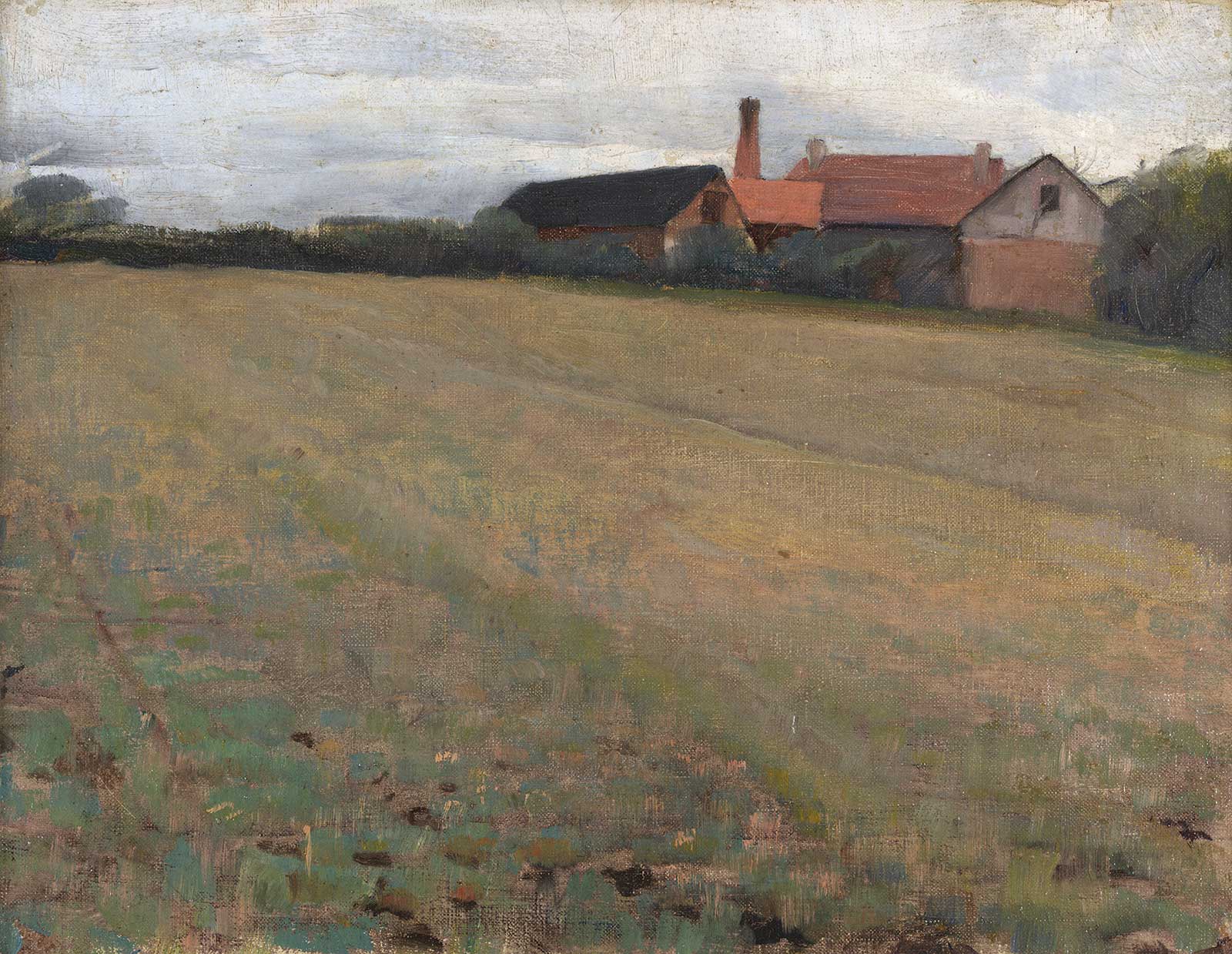
Cecilia Beaux (1855-1942), Landscape with Farm, Building, Concarneau, France, 1888. Oil on canvas, 111⁄16 x 143⁄16 in. Gift of Henry Sandwith Drinker PL.2024.1.1. Pennsylvania Academy of the Fine Arts
“Beaux’s importance is deeply tied to her success,” says guest curator Hannah Turpin. “She established her career at a time when women rarely had the autonomy, opportunity or respect to build a prosperous business. While her practice is a facet of American art history and exemplary of the core artistic genre of portraiture, it was also a service to paying clientele and dependent on being hired. Beaux’s decades-long success as a leading portraitist of her time is a testament to not only her creative talents but also her entrepreneurial prowess.” Turpin adds that based on research into her personal relationships, it is likely Beaux would identify with what today we understand to be the LGBTQ+ community. “Thus, her legacy grows as one of the few queer female artists of that time who we today know by name and reputation.”
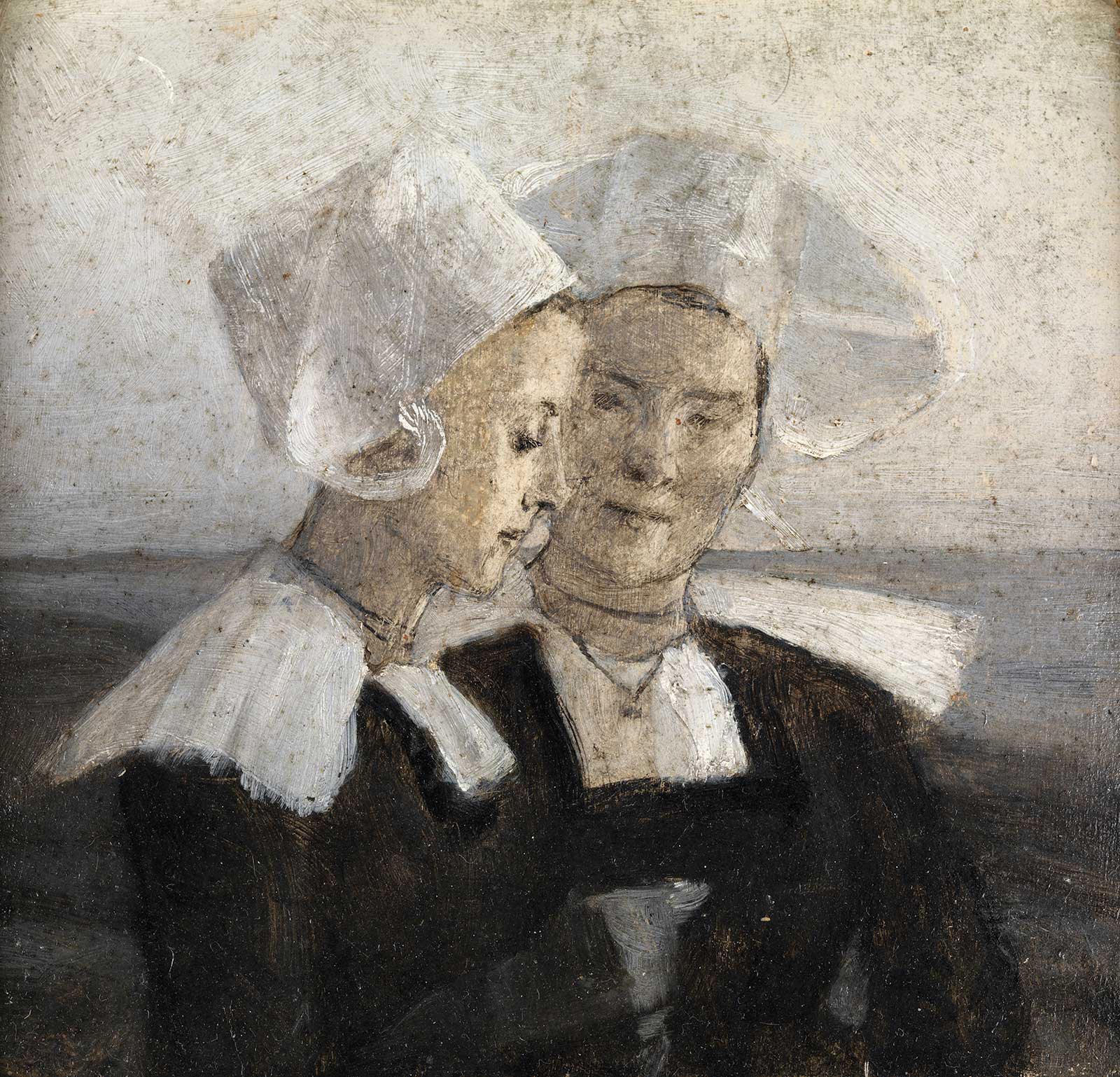
Cecilia Beaux (1855-1942), Study for Twilight Confidences, 1888. Oil on cardboard (grisaille), 5½ x 57⁄8 in. Gift of Henry Sandwith Drinker. PL.2024.1.2 Pennsylvania Academy of the Fine Arts
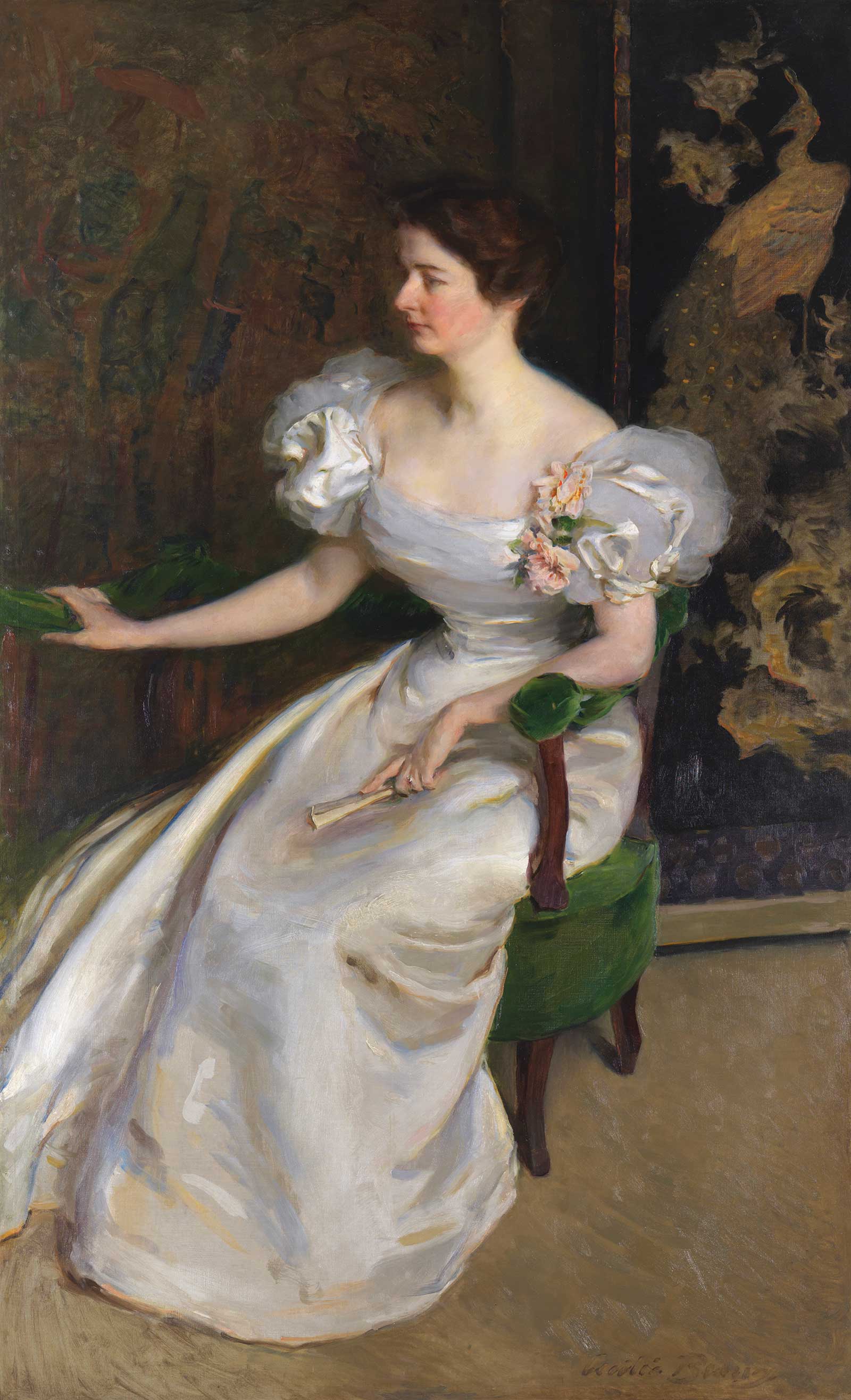
Cecilia Beaux (1855-1942), Mrs. Clement B. Newbold, 1896. Oil on canvas, 78½ x 48 in. Gift of Clement B. Newbold, PL.2024.1.3. Pennsylvania Academy of the Fine Arts
The exhibition includes nine paintings by Beaux, with examples spanning 1885 to roughly 1918, each one key in showcasing her artistic evolution. Two early works from 1888 that Beaux created while studying in France, Landscape with Farm, Building, Concarneau, France, and Study for Twilight Confidences, convey the influence of French impressionism on her handling of light and atmospheric elements, and her loosening brushstrokes, a departure from her style when just starting out.
One of Beaux’s most powerful—and personal—works in the show is the 1885 portrait Mrs. John Wheeler Leavitt, Cecilia Kent Leavitt. It depicts Beaux’s grandmother, who Beaux called “the strongest and most beneficent influence” in her life, in profile at the age of 87. The sitter is portrayed against the backdrop of her Philadelphia home, her head bowed and hands clasped, as if in prayer.
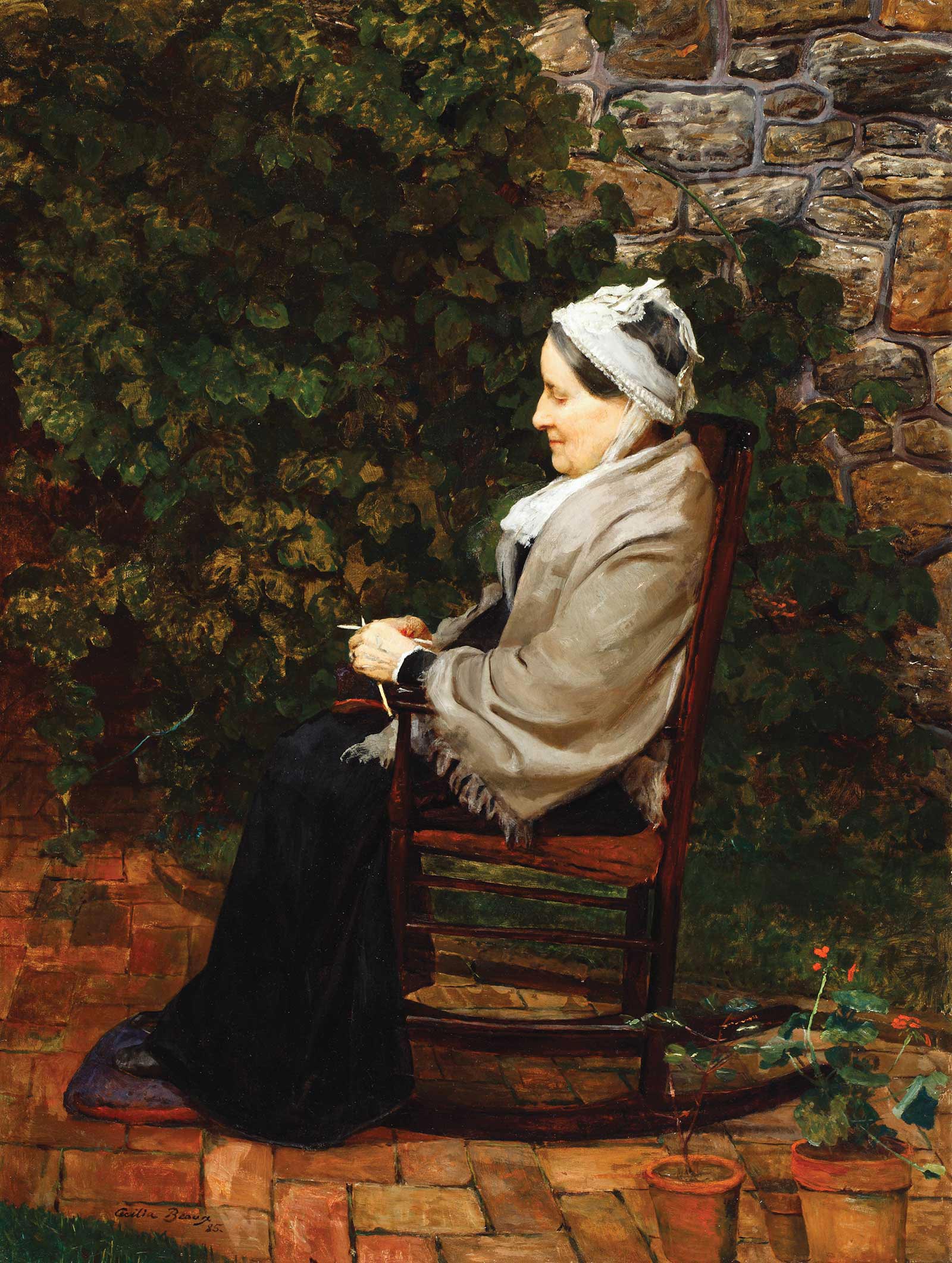
Cecilia Beaux (1855-1942), Mrs. John Wheeler Leavitt, Cecilia Kent Leavitt, 1885. Oil on canvas, 45½ x 34 in. The Westmoreland Museum of American Art, In honor of Philip Drinker and Susan Aldrich Drinker as a gift from Mary Eliza Drinker Scudder and Thayer Scudder.
The museum notes, “While a deeply religious person, Mrs. Leavitt was also hard-working and dedicated to maintaining the family’s aristocratic reputation despite the reality of their financial hardship. She instilled a sense of pride and creative drive in Beaux who, along with Beaux’s sister, Mrs. Leavitt raised after the passing of their mother,” when Beaux was 12.
Beaux’s technical prowess in on full display in later portraits, such as Mrs. John Frederick Lewis from 1906, and Clement B. Newbold, 1912. In the former, Beaux captures the wealth and sophistication of her sitter, not only in her dress and accessories, but in her surroundings, an example of the elite class with which Beaux wanted to be associated, if not socially, then through her paintings. Rendered with more simplicity compositionally, her portrait of Clement Newbold focuses on his youthful physical characteristics like his rosy complexion, shiny hair and candid hands holding a cigar.
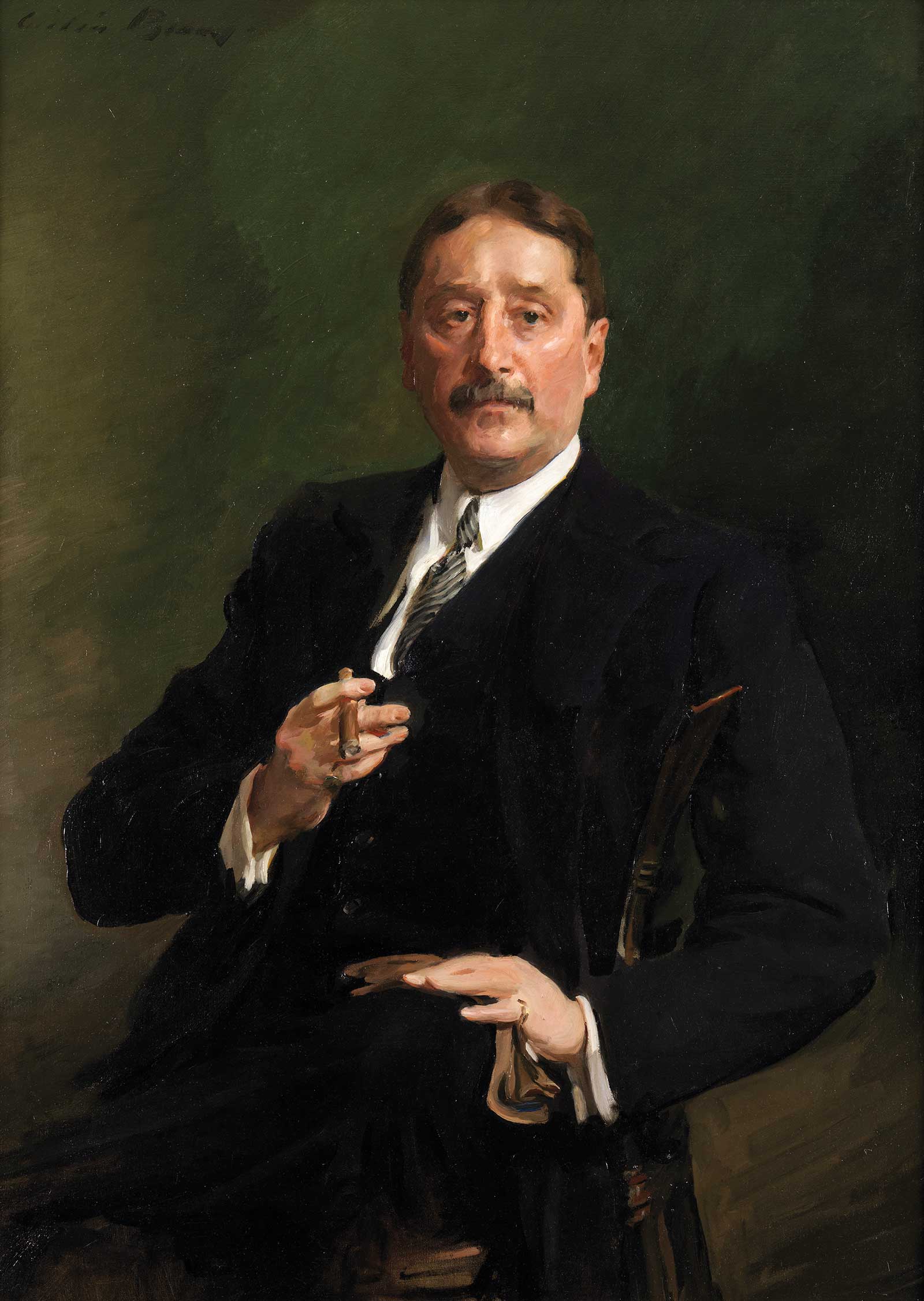
Cecilia Beaux (1855-1942), Clement B. Newbold, 1912. Oil on canvas, 473/8 x 45 in. Gift of Clement B. Newbold, PL.2024.1.6. Pennsylvania Academy of the Fine Arts
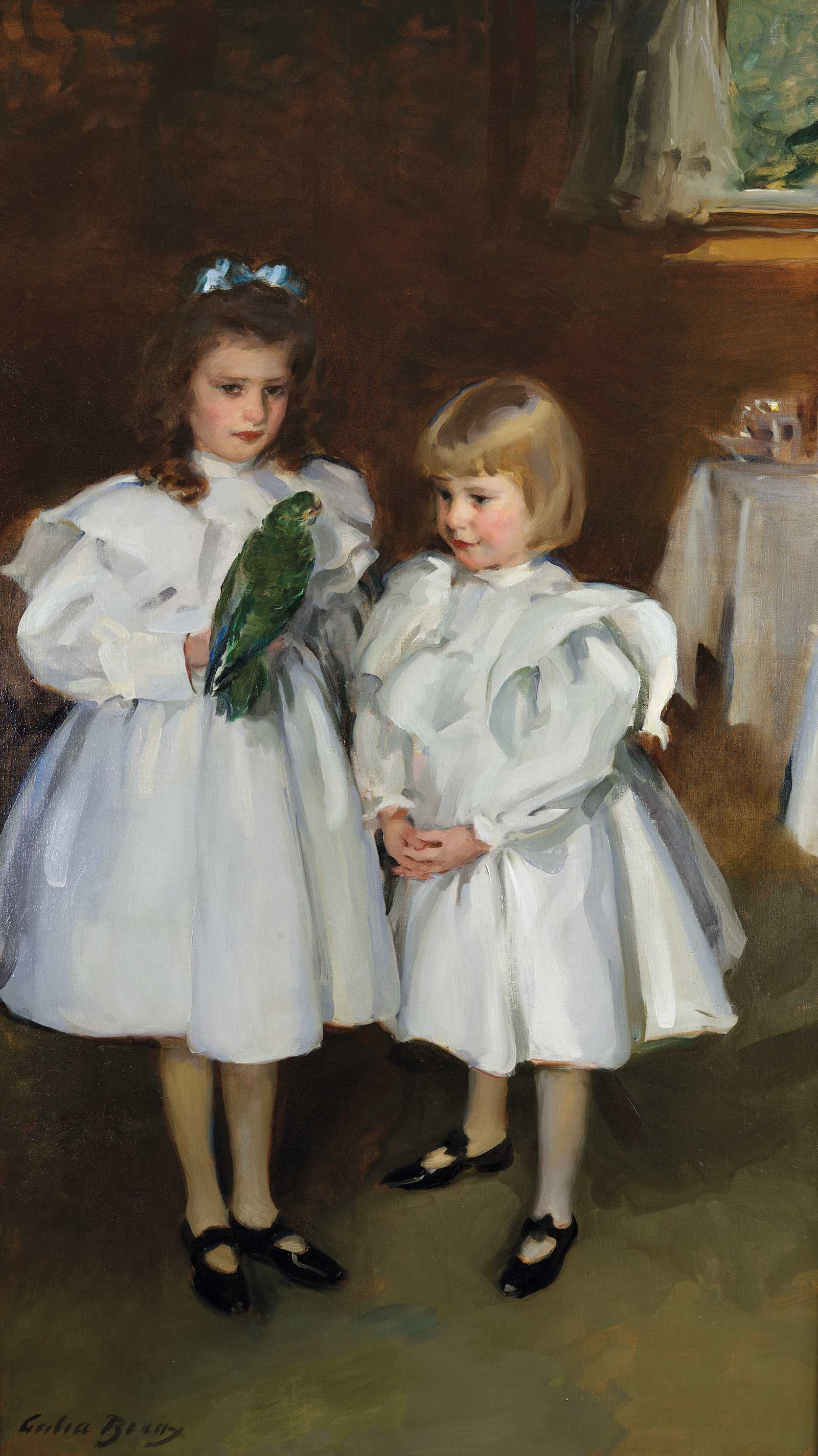
Cecilia Beaux (1855-1942), Gertrude and Elizabeth Henry, 1898-99. Oil on canvas, 64 x 37¼ in. Funds provided by the descendants and relatives of Gertrude and Elizabeth Henry and by the Pennsylvania Academy, PL.2024.1.4.Pennsylvania Academy of the Fine Arts
“Art historically-speaking, portraiture is one of the oldest forms of creative expression and necessary to comprehending the full role that an artist plays in their social, cultural and political witnessing,” explains Turpin. “Beaux’s work within this particular field is prolific and irreplaceable. Her skills were at the highest level due to her commitment to formalist traditions, and her capacity to intimately see and capture a humanist perspective of her sitters was unmatched…Beaux’s legacy in greater American art history has been somewhat forgotten. But that is partly why this exhibition is so meaningful as it sheds light on a figure who was formidable for her time, celebrated by peers, sought after by clientele, and the epitome of one of art history’s greatest forms.
“In 1915, over one hundred years ago, Beaux said, ‘I predict an hour when the term ‘Women in Art’ will be as strange sounding a topic as the title ‘Men in Art’ would be now.’ It is unfortunate that we still need to frame Beaux’s success within the confines of her identity,” says Turpin, “and yet by building awareness of her life and work, we can hopefully move the needle closer to achieving her dream.” —
Powered by Froala Editor
Powered by Froala Editor
Powered by Froala Editor
Powered by Froala Editor
Powered by Froala Editor
Powered by Froala Editor
Powered by Froala Editor
Powered by Froala Editor
Powered by Froala Editor
Powered by Froala Editor
Powered by Froala Editor
Powered by Froala Editor
Powered by Froala Editor
Powered by Froala Editor
Powered by Froala Editor
Powered by Froala Editor