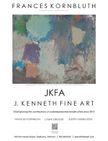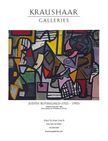
Through February 1, 2026, J. Kenneth Fine Art is showcasing the abstract expressionist works of Frances Kornbluth, marking the first major posthumous exhibition of the artist’s body of work from the 1950s and ‘60s. Initially, Kornbluth (1920-2014) wanted to be a composer and graduated from Brooklyn College in 1940 with a degree in music, but by the 1950s, she shifted her focus to painting.
In 1955, Kornbluth enrolled in the Brooklyn Museum School, where she studied for four years with William Kienbusch and Reuben Tam, painting local landscapes in the studio, and in plein air. Over time, her work became increasingly abstract. Tam encouraged Kornbluth to exhibit her work and, perhaps most importantly, introduced her Maine’s Monhegan Island in 1957, where she would find a collective of New York artists that included Lynne Drexler, Michael Loew, Nicholas Luisi, Alexander Minewski and Morris Shulman. Finding compelling subject matter in the natural world and an active community of artists, Kornbluth would spend the next 57 summers on the island. She would later credit Tam with “defining me as the artist I had never envisioned becoming.”
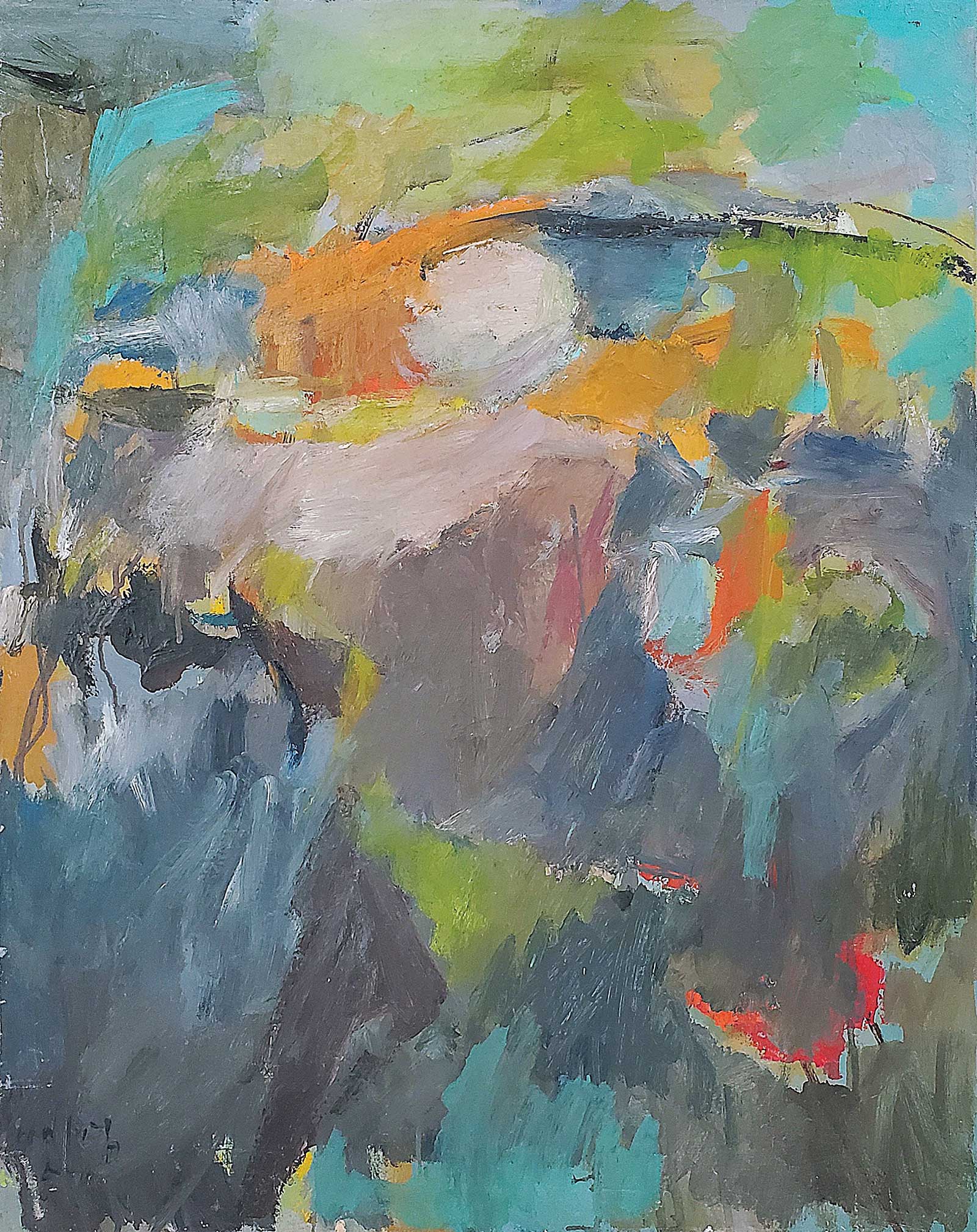
Frances Kornbluth (1920-2014), Untitled, 1957. Oil on canvas, 30 x 24 in.
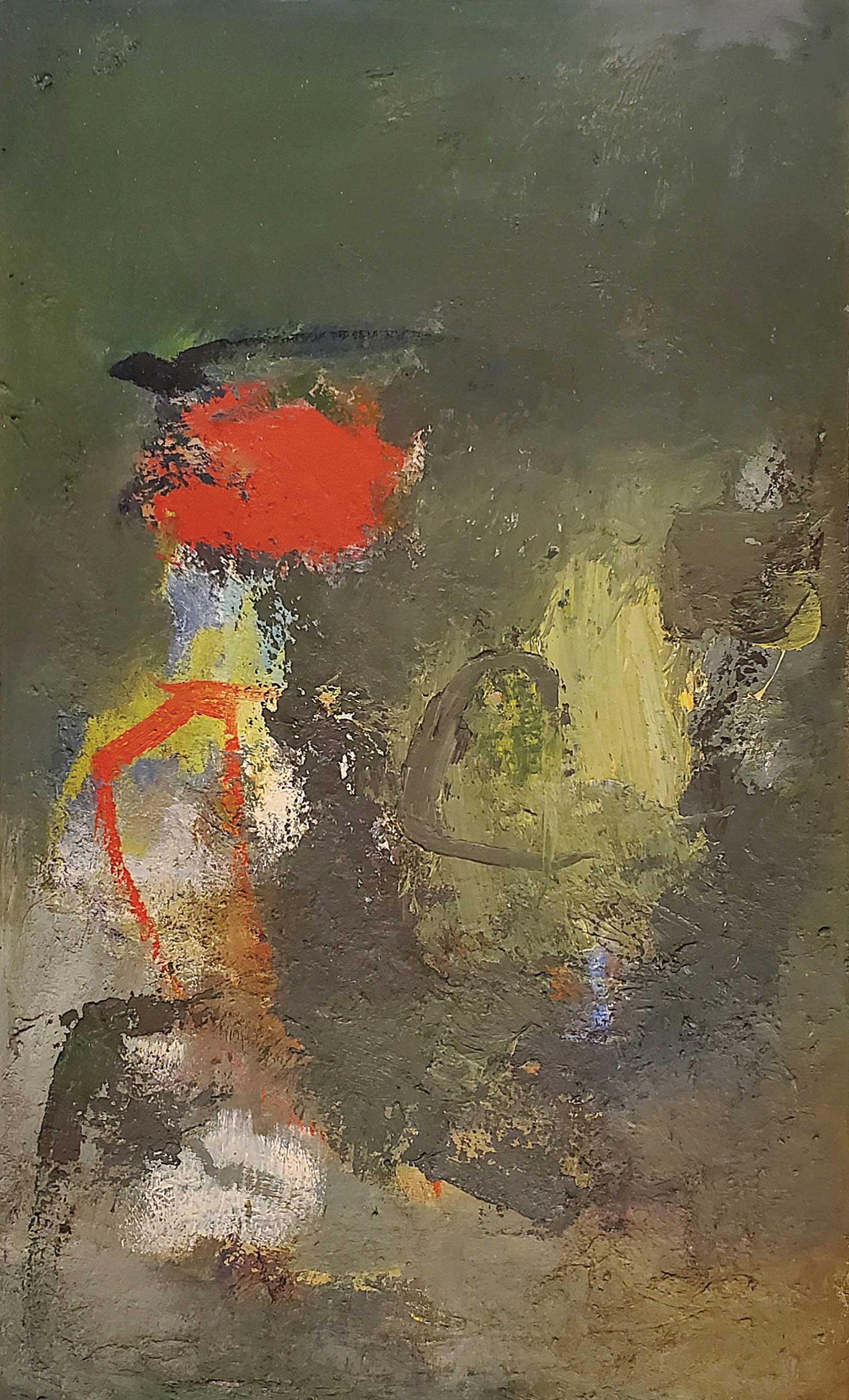
Frances Kornbluth (1920-2014), Red Rock, Green Sea, 1963. Oil on panel, 37 x 22½ in.
“Kornbluth stands at the intersection of abstract expressionism and the modernist landscape tradition,” explains gallerist John Alexander. “On Monhegan, Kornbluth developed a visual language that combined gestural abstraction with an intimate response to nature—connecting her to the New York School while extending the Maine modernist lineage of Hartley, Kienbusch, and Tam. Frances Kornbluth sustained a six-decade practice in abstraction, beginning in the 1950s when abstract expressionism was at its height and continuing long after it fell out of fashion. Even though Kornbluth had been active in the New York art scene and the abstract expressionist movement, she has become known more as a regional New England artist…As a regional painter, Kornbluth’s focus on the natural world and sense of place reflects the values embraced by many New Englanders, including the importance of the region’s unique environment, especially the coastal landscape.
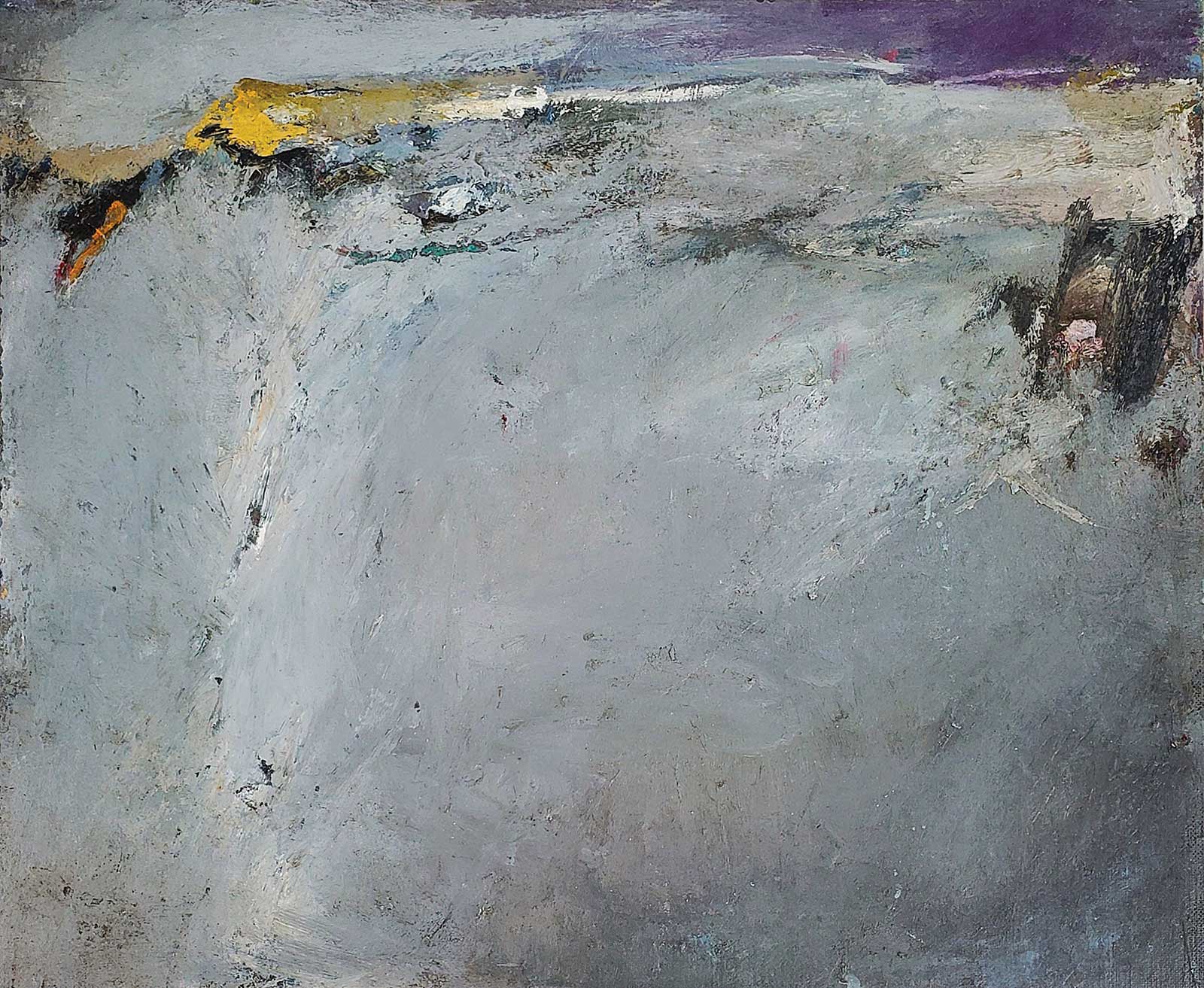
Frances Kornbluth (1920-2014), Untitled, ca. 1959. Oil on panel, 24½ x 297/8 in.
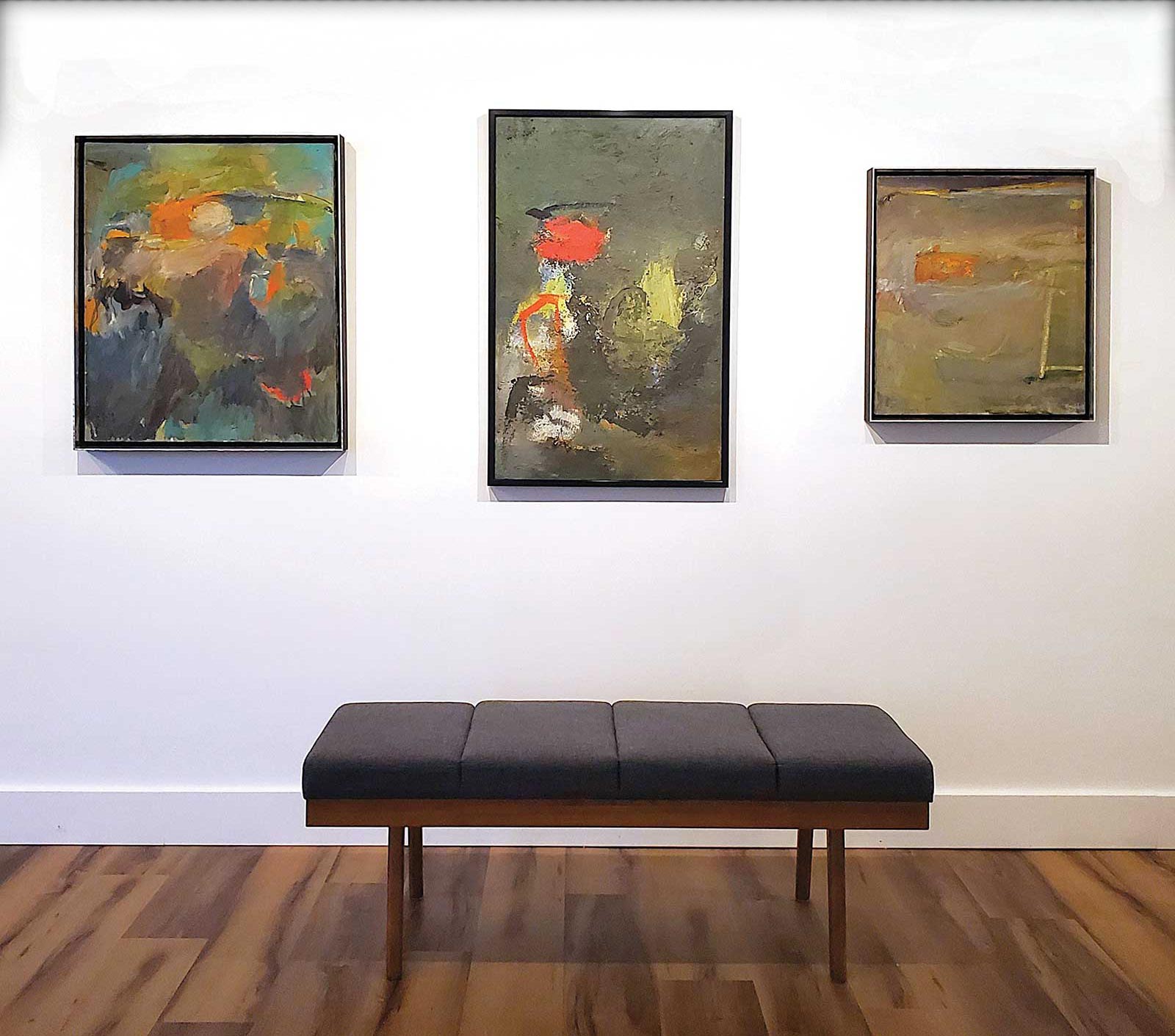
Installation view of the Kornbluth exhibition at J. Kenneth Fine Art.
“Even in her 1950s abstract expressionist paintings, the landscape is implied by use of her own distinctive motifs and visual language such as a ‘horizon line’ frequently seen as an unusual vanishing point at the top of her paintings, reenforcing the illusion of spatial depth.”
Kornbluth’s work continued to evolve over the course of her career. After the 1960s she worked extensively in collage and other media, and leaving New York in 1969 reduced her visibility one of the world’s major art centers. “Kornbluth’s story reflects both the challenges and accomplishments of being a female artist in the male-dominated art scene of the ‘50s and ‘60s. The bias against women who were talented and well-educated members of the art movements emanating out of New York has been well-documented in recent years. Kornbluth’s career as an artist remained consistent. She met the challenges of being a wife and mother throughout the 1950s, 1960s and 1970s while maintaining her commitment to fine art. She pursued her vision while raising a family and building a career largely outside the art market’s center. Her persistence places her within the broader history of women artists in post-war American abstraction.” —
Powered by Froala Editor