The New York-native artist Carolyn Campbell Mase (1858-1948), was a woman of many talents and achievements, as well as a person of influence throughout her career. She was an accomplished Cos Cob Art Colony impressionist painter in Connecticut, a key member of Maine’s Ogunquit Art Colony and a founding member of the Greenwich Art Society. She exhibited in the 1913 Armory Show, and made strides in her work as a suffragist and promoter of the arts at her home on Staten Island. These are but a few of Mase’s contributions to the artworld.
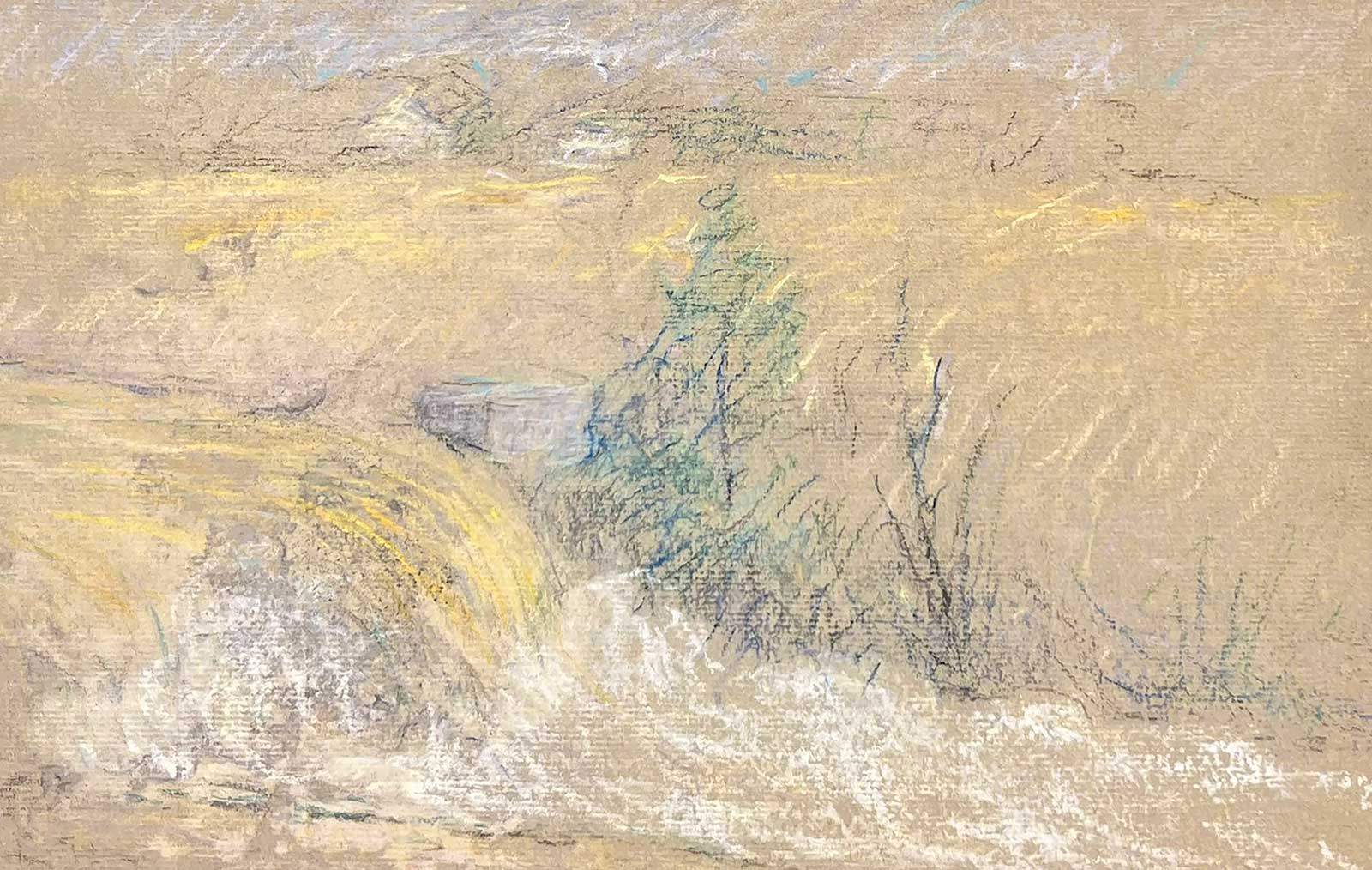
Carolyn Mase (1858-1948), Waterfall, Greenwich, CT. Pastel on paper mounted on board, 7½ x 12¼ in. (paper) and 97⁄8 x 15½ in. (board), signed lower left.
In honor and celebration of Mase, Hawthorne Fine Art in New York City exhibits 20 of her landscapes, marine scenes and figurative works—executed in oil, watercolor and pastel—in a virtual showcase.
Jennifer C. Krieger, Hawthorne Fine Art managing partner, explains that a gallery client presented the estate to the gallery. “We were thrilled with the opportunity to handle it,” she adds. “Understanding Mase’s biography, the places that inspired her, such as Cos Cob, Ogunquit and Staten Island, helped us locate the works and understand their chronology.”
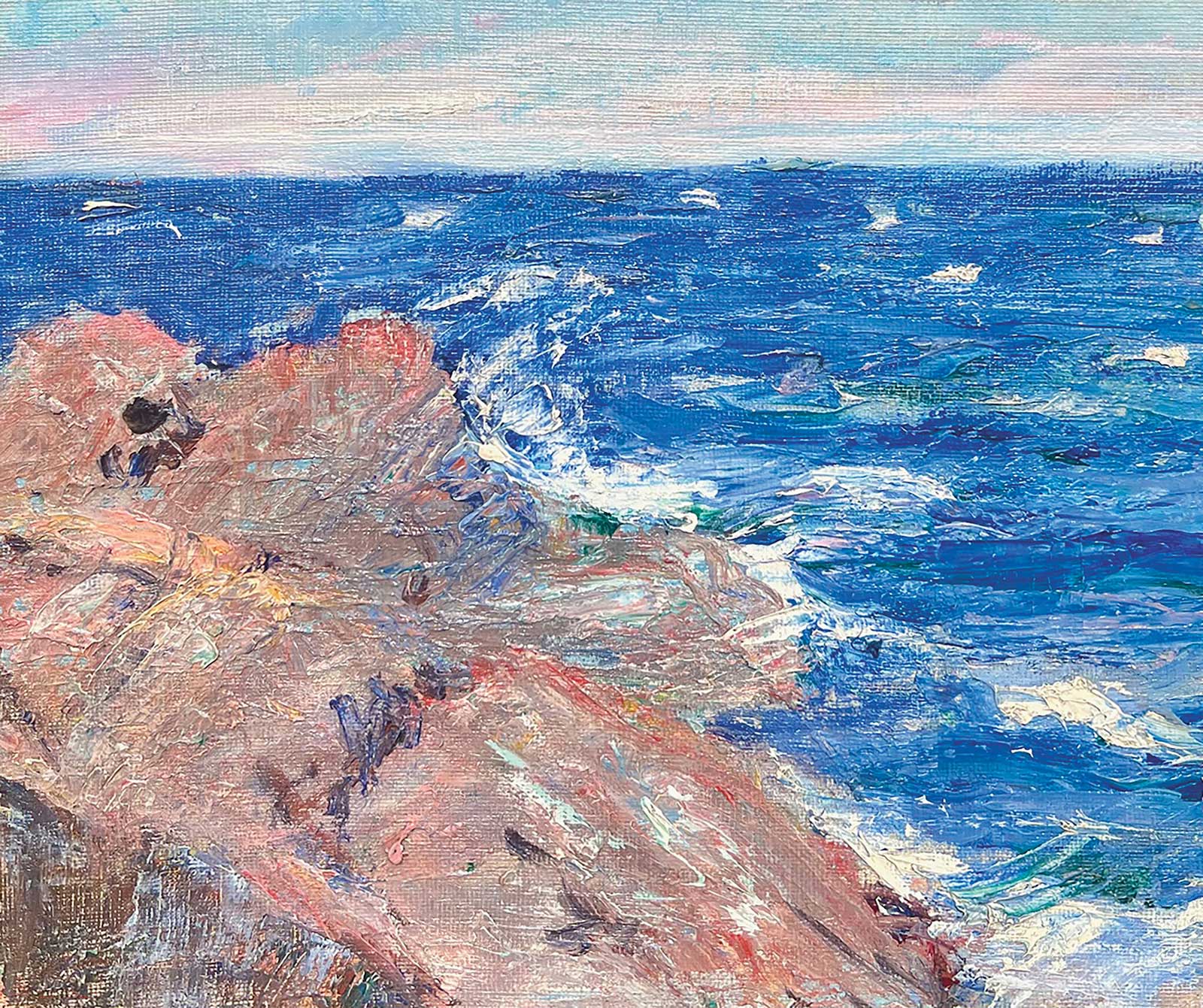
Carolyn Mase (1858-1948), Rocky Coast. Oil on canvas board, 101⁄8 x 121⁄8 in. Estate of the artist.
Mase was born and raised in the Hudson Valley, the area we know today as Beacon, and went on to study at the Art Students’ League with John Henry Twachtman, and for two years in Paris. “She absorbed her lessons from Twachtman to capture nature poetically in the moment but also experimented with a modern sense of form, movement, space and texture that bordered abstraction,” says Krieger.
The virtual exhibition is organized into seascapes, harbor scenes, works influenced by Twachtman—executed on his Greenwich property—and some figural works. The painting Waterfall, Greenwich, CT, is a major highlight stemming from the Twachtman section.
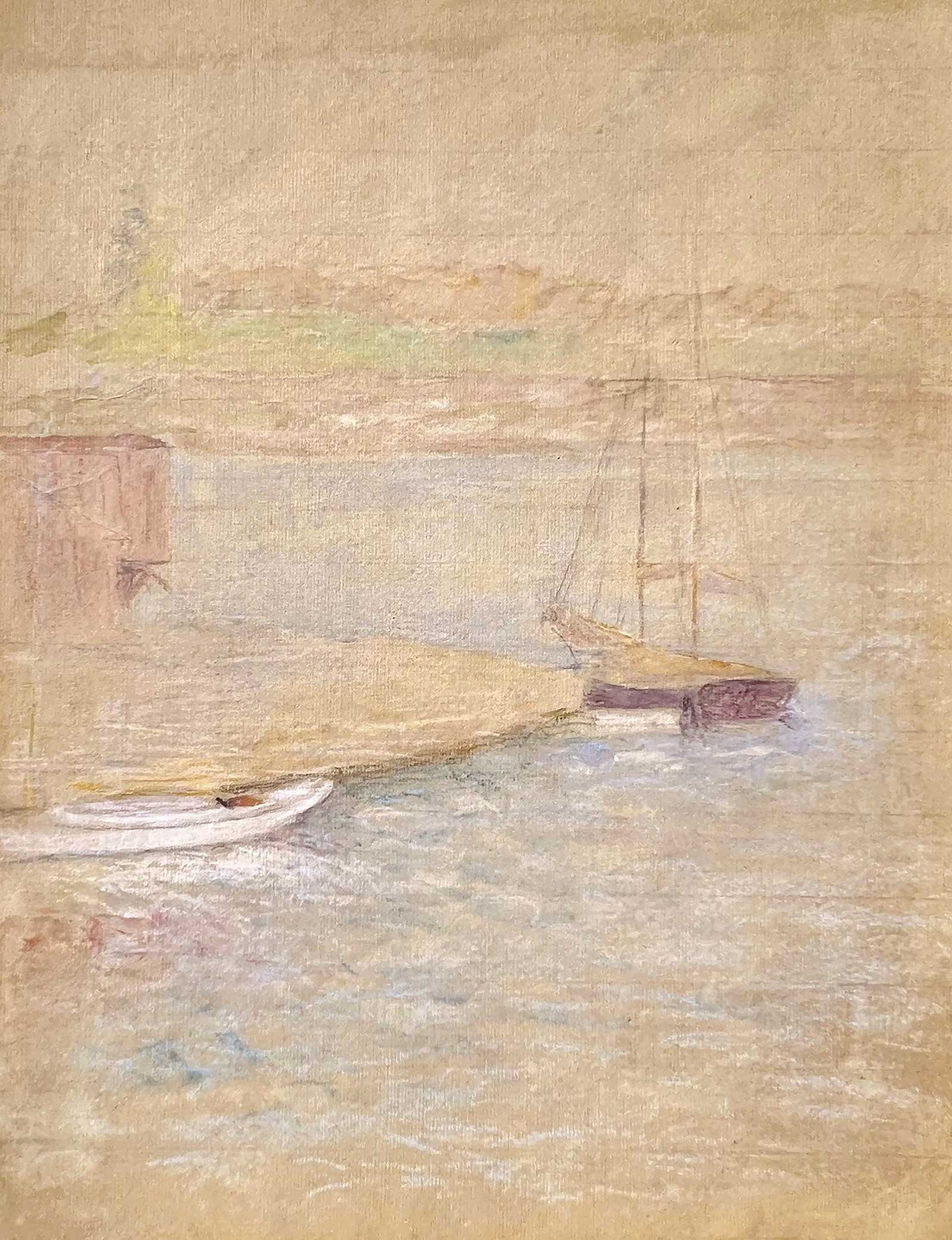
Carolyn Mase (1858-1948), Boats at Dock. Watercolor and pastel on paper mounted on board 17¾ x 133⁄8 in. Estate of the artist.
“Twachtman’s influence is apparent [in this piece],” Krieger shares. “Mase worked in pastels to capture Horseneck Falls, a small waterfall on Twachtman’s Greenwich property. Twachtman’s house, sparsely rendered in strokes of white, can be seen in the distance. Twachtman featured the falls and the surrounding landscape in many of his own paintings…It offers a wonderful window to compare the work of master and student.”
Krieger notes that Mase often depicted river views from her Staten Island neighborhood, and traveled to beach and harbor towns from New Jersey to Maine, seeking out inspiration for her seascapes and harbor scenes. “Mase’s watercolors Boats in the Harbor and Boats at the Dock recall the Gloucester scenes of her teacher,” says Krieger. “Likely painted in Ogunquit, Maine, where she spent several summers, Mase’s oil paintings Rocky Coast and Crashing Waves depict a focused view of the tides and waves as they break against the rocks.”
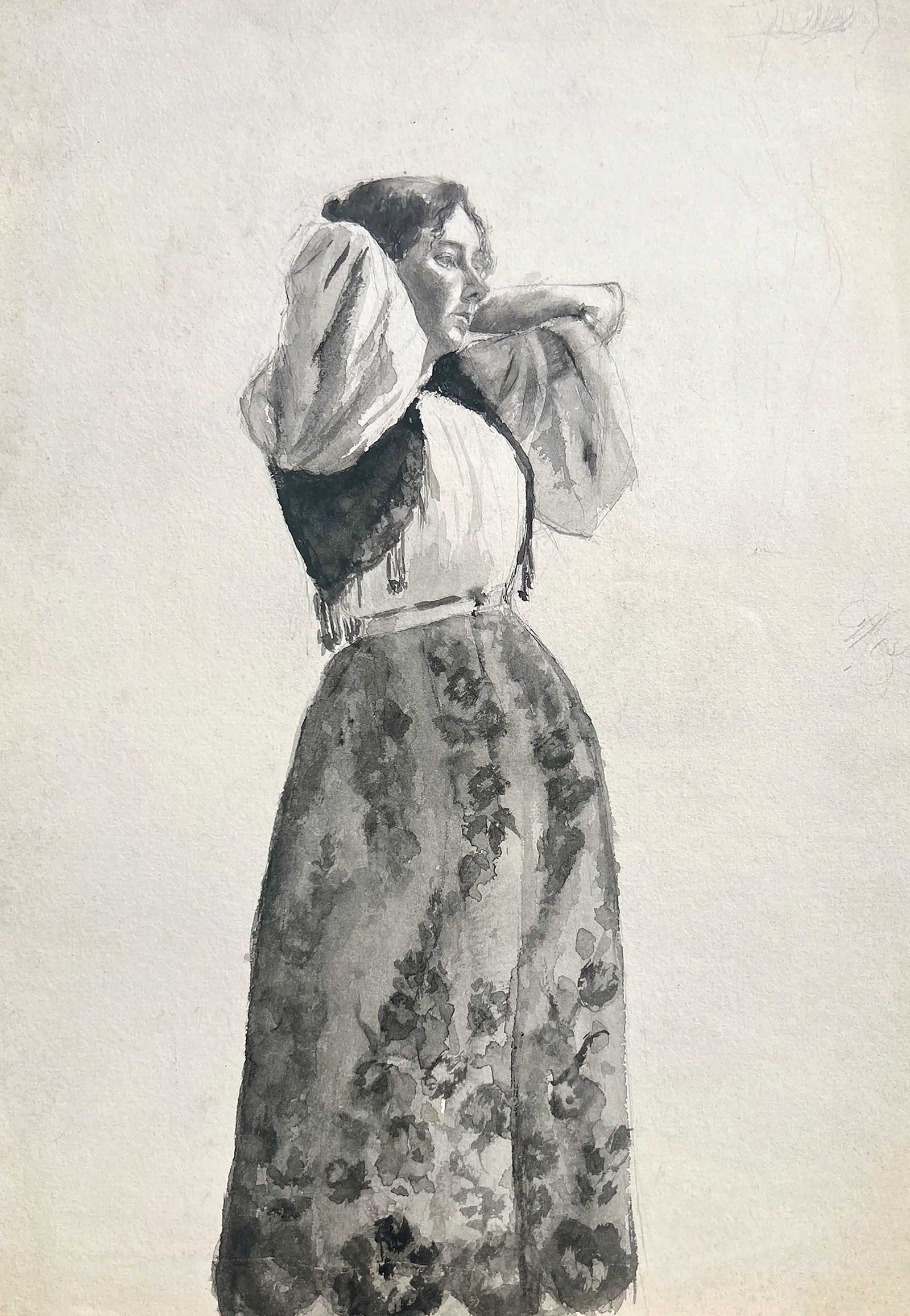
Carolyn Mase (1858-1948), Portrait of a Woman in Patterned Skirt. Watercolor and pencil on paper, 14 x 10 in., signed center right.
Krieger continues, “Rocky Coast displays the artist’s keen use of color which prompted one critic of American Art News to write: ‘Mase’s work is high in key and joyous in color. She is especially successful in getting atmospheric effects and in the massing of color.’”
As for Mase’s figurative works, the exhibition highlights Portrait of a Woman in a Patterned Skirt. “There are a pair of works of this same subject/sitter,” Krieger expounds. “One is executed in watercolor on paper and the other as graphite on canvas. Together, they show how Mase honed the medium to describe her subject in different but equally beautiful ways.”
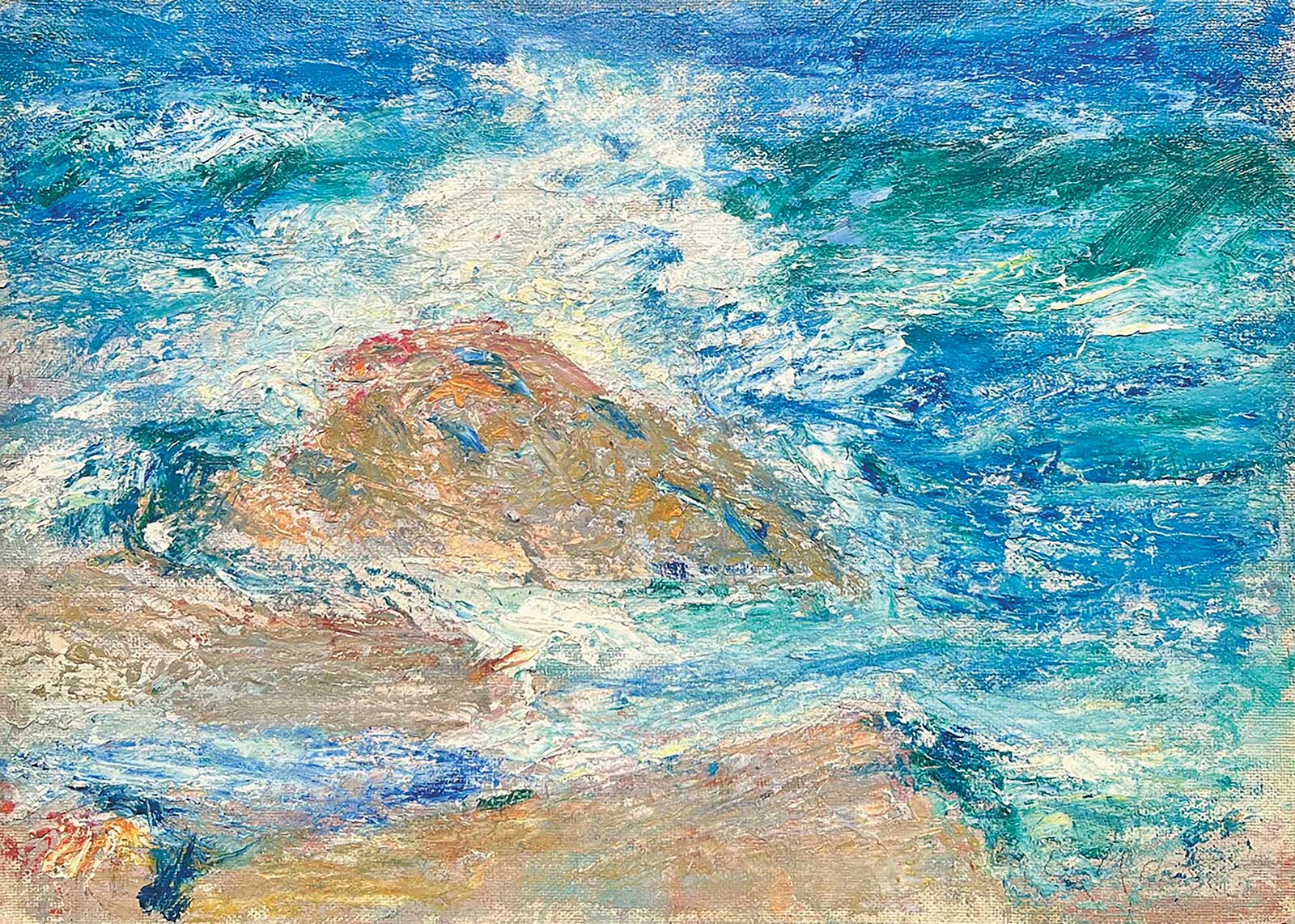
Carolyn Mase (1858-1948), Crashing Waves against Rocks. Oil on canvas board, 915⁄16 x 1315⁄16 in., signed in pencil at lower right
For the virtual exhibition, which can be viewed on the gallery’s website from through January 1, 2026, Krieger’s hope is that collectors feel as if they discovered a highly talented artist who was central to the American impressionist movement. She adds, “Muse worked and exhibited among prominent masters of her time including Twachtman, Frederick Carl Frieseke and Jane Peterson, and stood on equal footing with them technically and aesthetically.” —
Powered by Froala Editor