From the 17th through the early 19th centuries, watercolors were largely used by artists and explorers for the practical purposes of mapping and documenting the American landscape. Eventually, artists began employing watercolors to create larger, more “finished” pieces that were soon regarded as works of art in their own right.
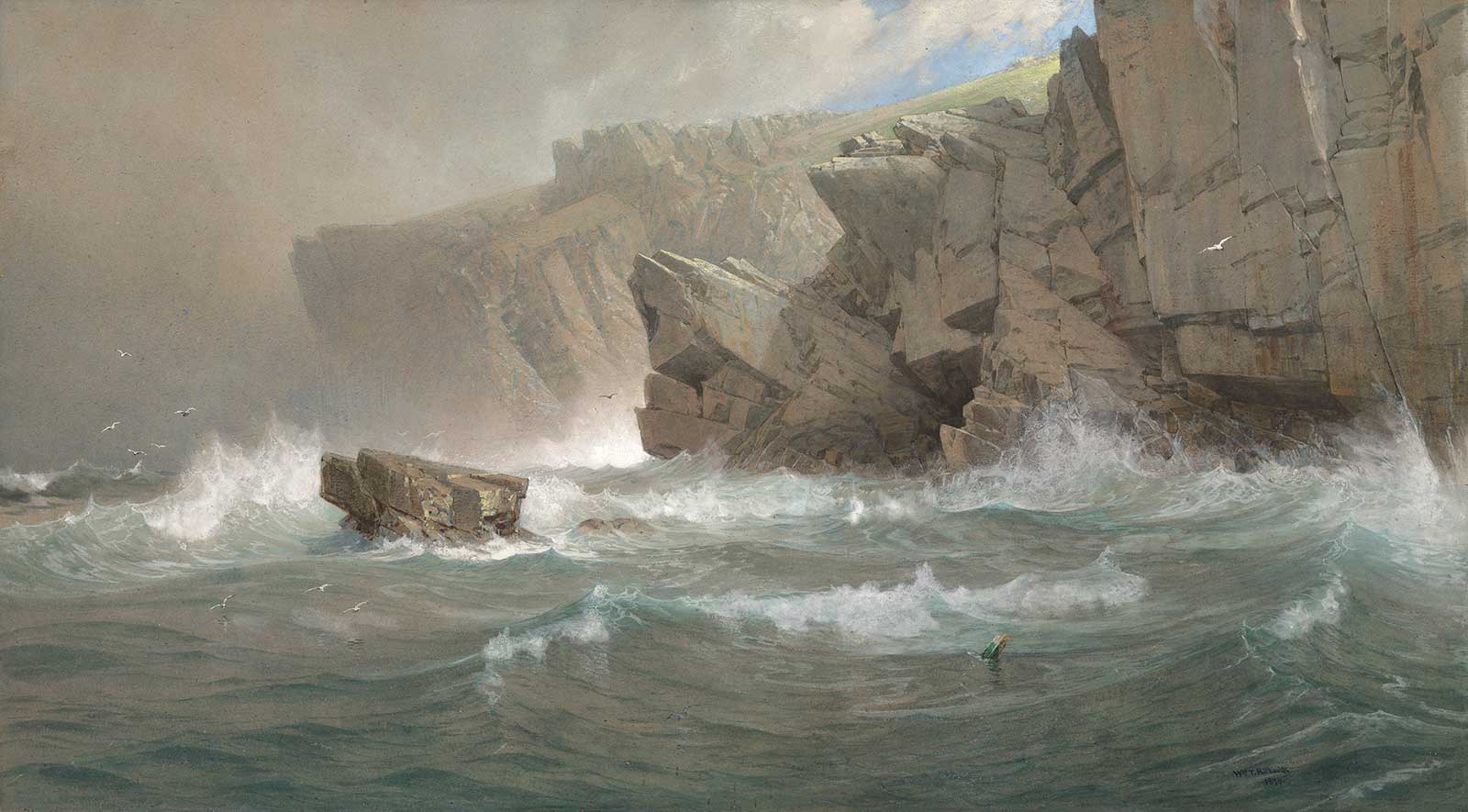
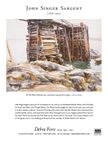
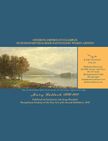
William Trost Richards (1833-1905), South-West Point, Conanicut, 1878-79. Watercolor and gouache on fibrous brown paper, 33 x 59 in. National Gallery of Art, Gift of Mr. and Mrs. J. B. Riggs Parker, honoring their children.
Through a collection of 30 watercolors, a new exhibition at the National Gallery of Art explores how a diverse group of artists depicted the landscape across two centuries.
“Printmakers and explorers found watercolors to be an inexpensive and portable material apt for mapping and documenting what they saw on the spot,” explains Amy Johnston, National Gallery of Art associate curator of collections, department of old master drawings. “Artists such as Seth Eastman and William Russell Birch were able to quickly work out their ideas in small sketchbooks, later using these drawings as source material for larger, finished works back in the studio. For example, this exhibition features two pages from Eastman’s sketchbook from West Point, New York; and one sketch by William Russell Birch of Potomac Falls, all drawn in situ.”
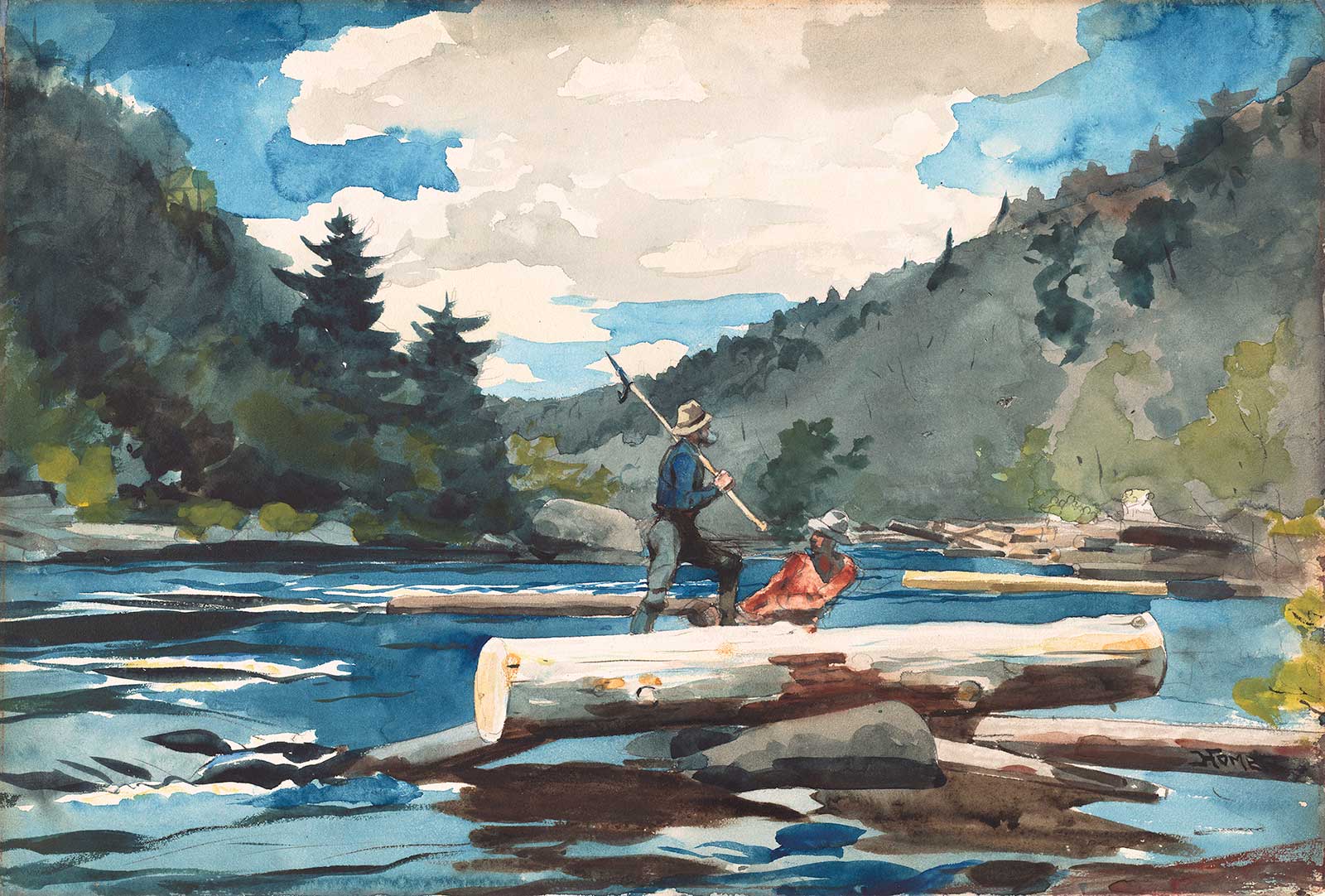
Winslow Homer (1836-1910), Hudson River, Logging, 1891-92. Watercolor over graphite on wove paper sheet, 14 x 205/8 in. National Gallery of Art, Corcoran Collection (Museum Purchase).
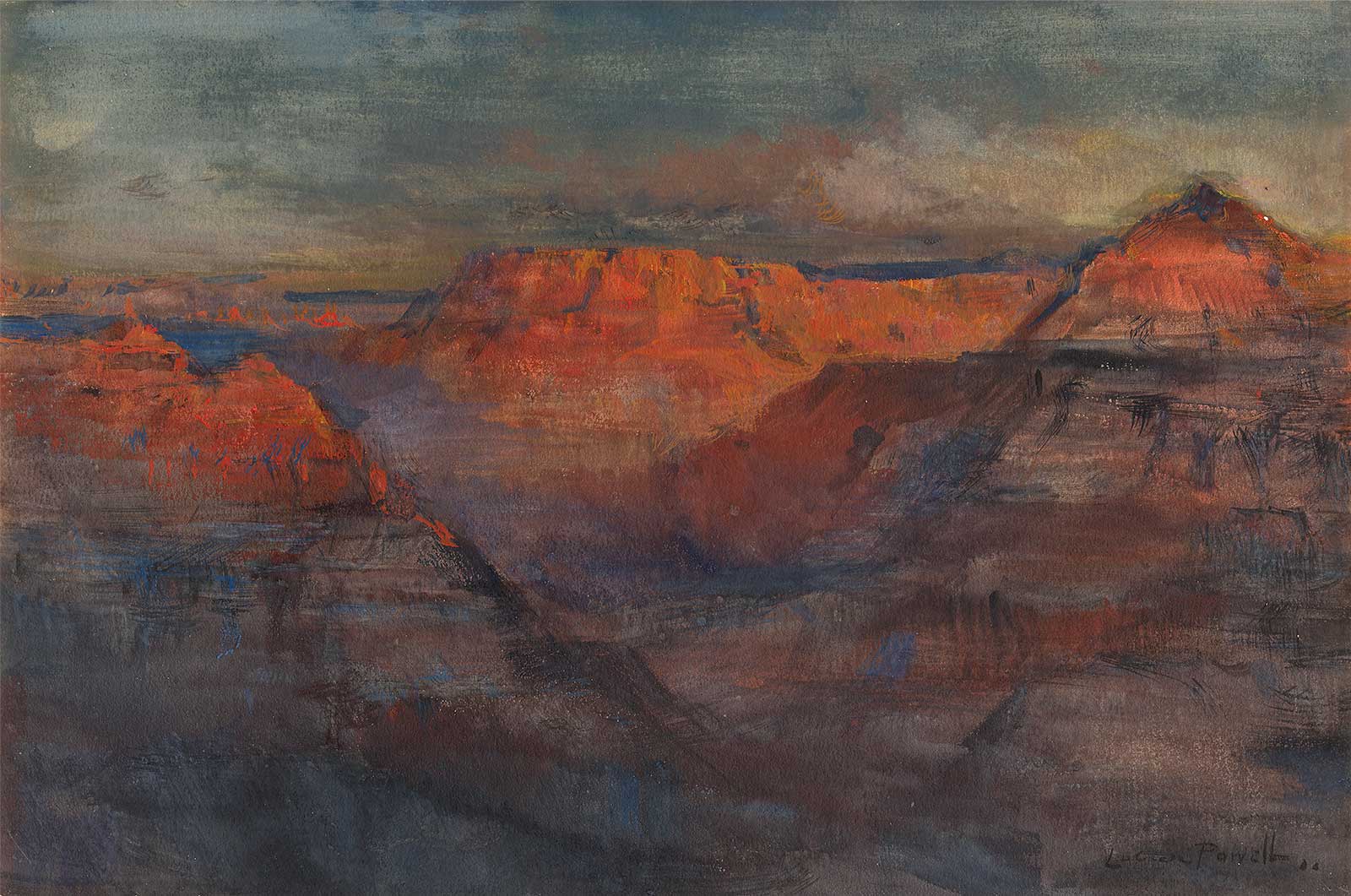
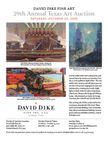
Lucien Whiting Powell (1846-1930s), The Afterglow, Grand Canyon, Arizona, ca. 1904. Watercolor and gouache on paperboard, 201/8 x 30 /8 in. National Gallery of Art, Corcoran Collection (Museum Purchase).
American Landscapes in Watercolor from the Corcoran Collection covers a lot of terrain, from the Washington Monument to the New England coastline, the Grand Canyon and Yosemite National Park to the Hudson River Valley, as well as intimate garden scenes. It includes early examples of works more utilitarian in nature from the early 1800s, as well as fully-developed studio pieces from as late as the 1990s.
Johnston points to William Trost Richards’ South-West Point, Conanicut, from 1878-79, as one of the most significant works in the exhibition, it being one of the largest American watercolors made in the 19th century. “It was meant to rival an oil painting in size and wall power,” says Johnston. “Standard artists’ papers were not offered in such large sizes, so Richards opted for a unusual industrial paper. This work is a recent gift to the National Gallery, and we are delighted to hang it adjacent to three watercolor studies of the ocean by Richards from the Corcoran Collection.”
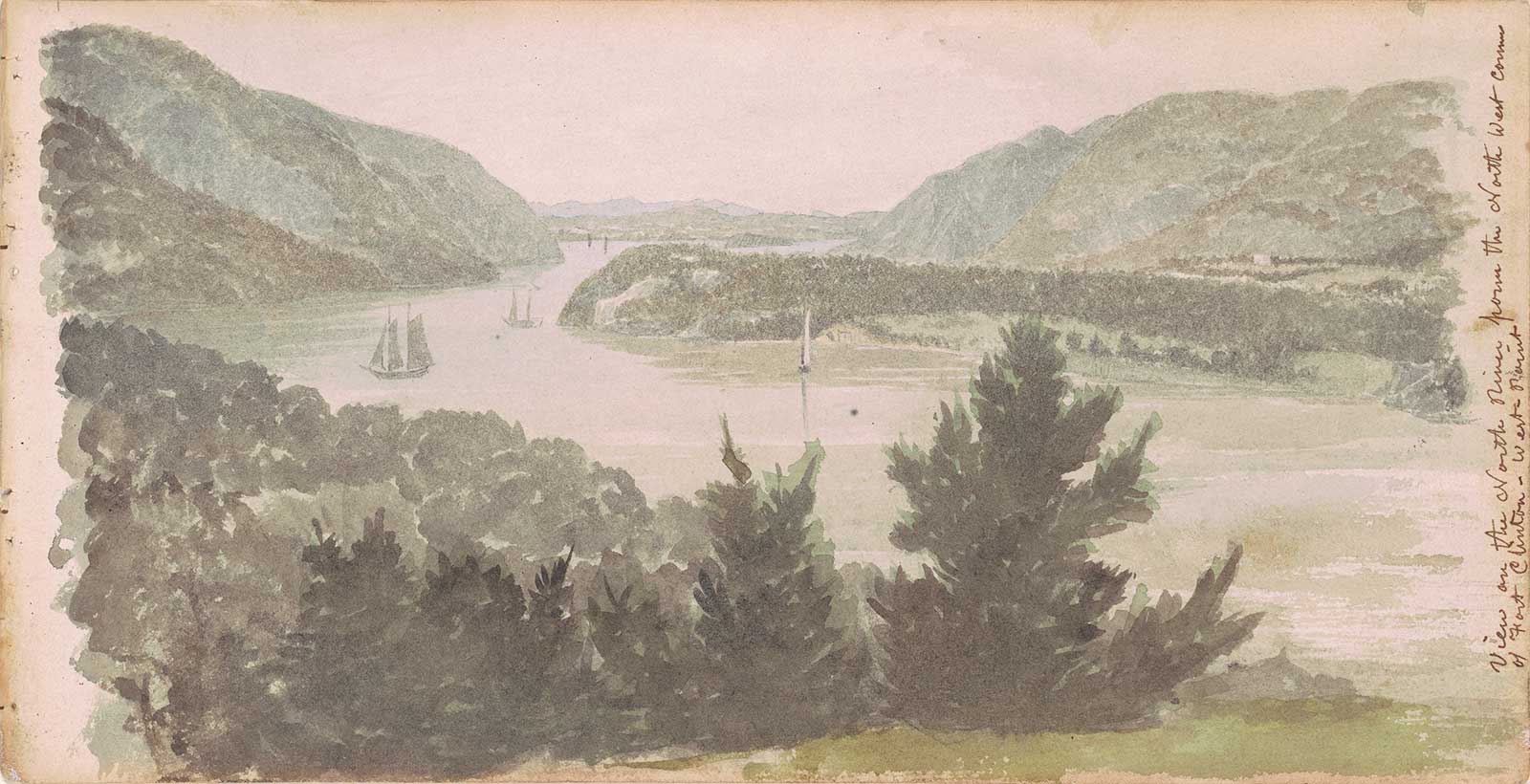
Seth Eastman (1808-1875), View of the North River from the North West Corner of Fort Clinton-West Point, ca. 1837. Watercolor on wove paper, 43/4 x 91/4 in. National Gallery of Art, Corcoran Collection (Museum Purchase, Membership Association Fund).
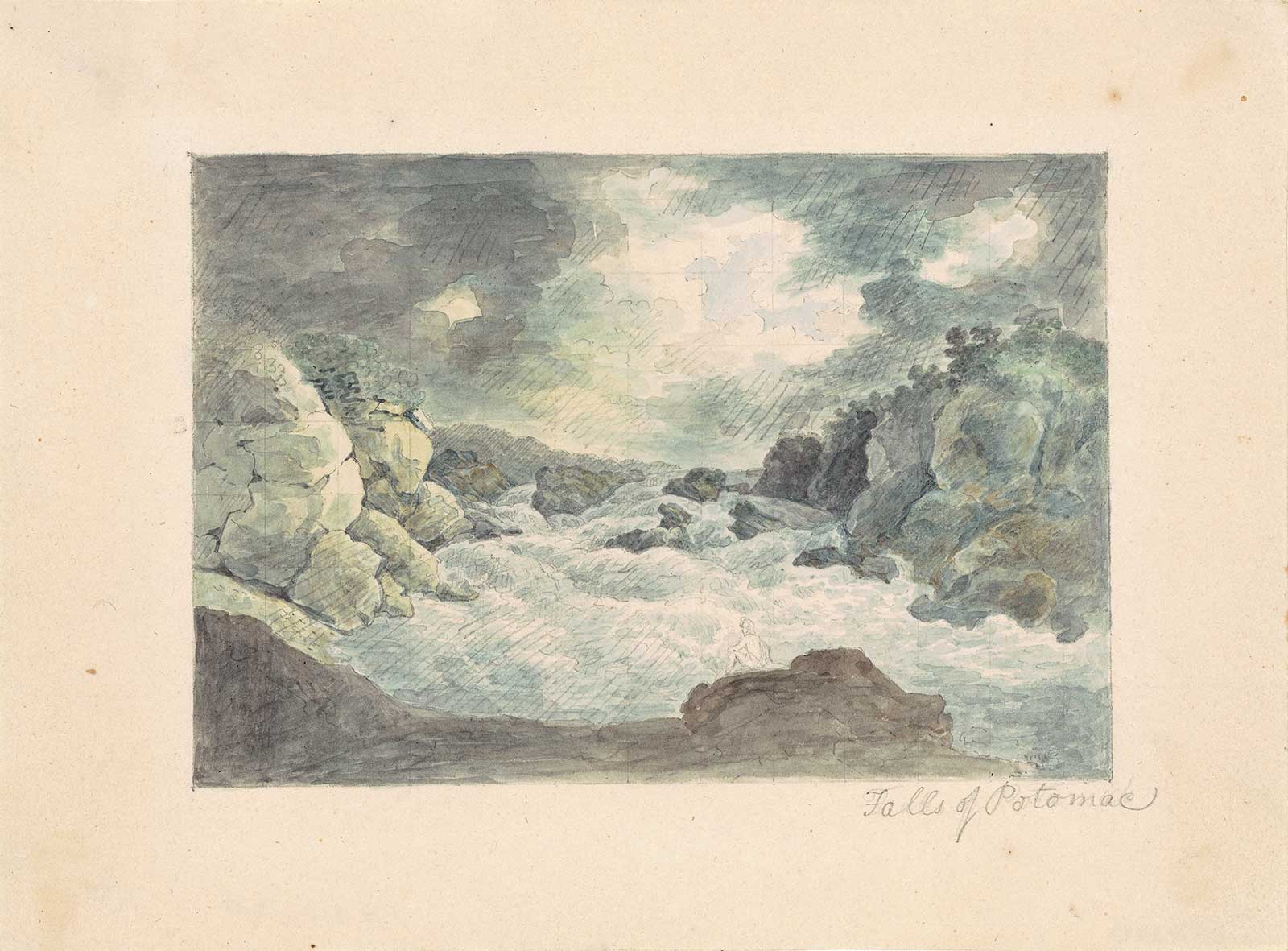
William Russell Birch (1755-1834). Falls of the Potomac, 1800-1810. Watercolor and graphite on wove paper, 6 x 81/8 in. National Gallery of Art, Corcoran Collection (Museum Purchase through a bequest of Mr. and Mrs. Frank B. Kellogg.
Lucien Whiting Powell (1846-1930) created the sweeping vista titled The Afterglow, Grand Canyon, Arizona, circa 1904. Whiting Powell was a renowned landscape painter with Virginia roots. After serving with the Confederate Army in the Civil War, he studied with Thomas Moran at the Pennsylvania Academy of the Fine Arts, an influence that can be seen in the present piece. Following in Moran’s footsteps, Powell accompanied a geological survey expedition to the Grand Canyon in 1901, and in all likelihood, was the inspiration for The Afterglow.
Another work of note is Winslow Homer’s vibrant Hudson River, Logging, from the early 1890s. Drawing a comparison between Richards’ South-West Point Conanicut, and Homer’s river logging scene, Johnston says, “While the two works were painted less than 15 years apart, they exemplify two very different approaches to watercolor painting. Richards painted this dramatic Rhode Island seascape with great care, building up the image with many small brushstrokes of opaque watercolor (gouache) on the tan-colored paper.
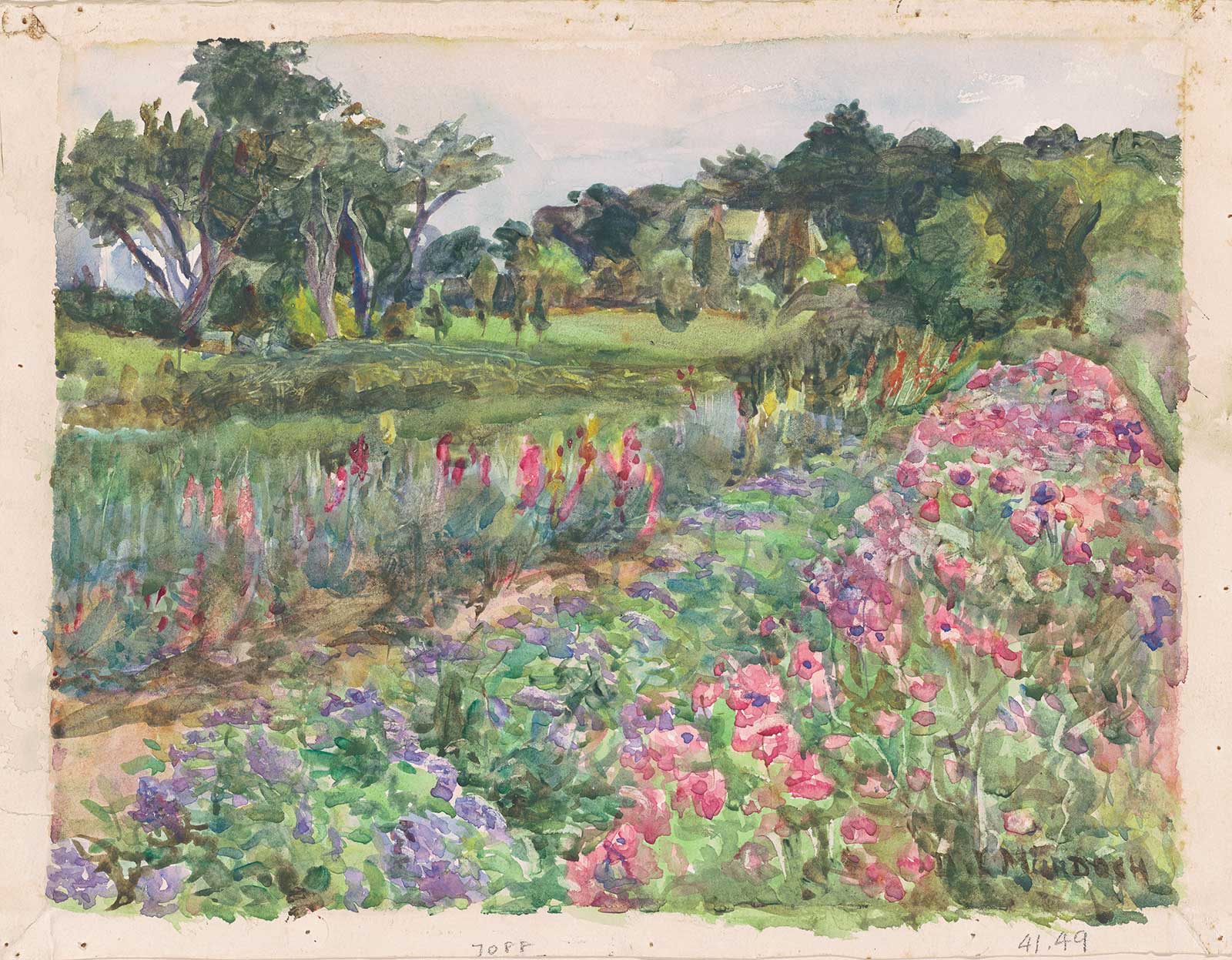
Dora Louise Murdoch (1857-1933), Parmelee Estate in Bloom, ca. 1920. Watercolor on wove paper, 10¼ x 13 in. National Gallery of Art, Corcoran Collection (Bequest of James Parmelee).
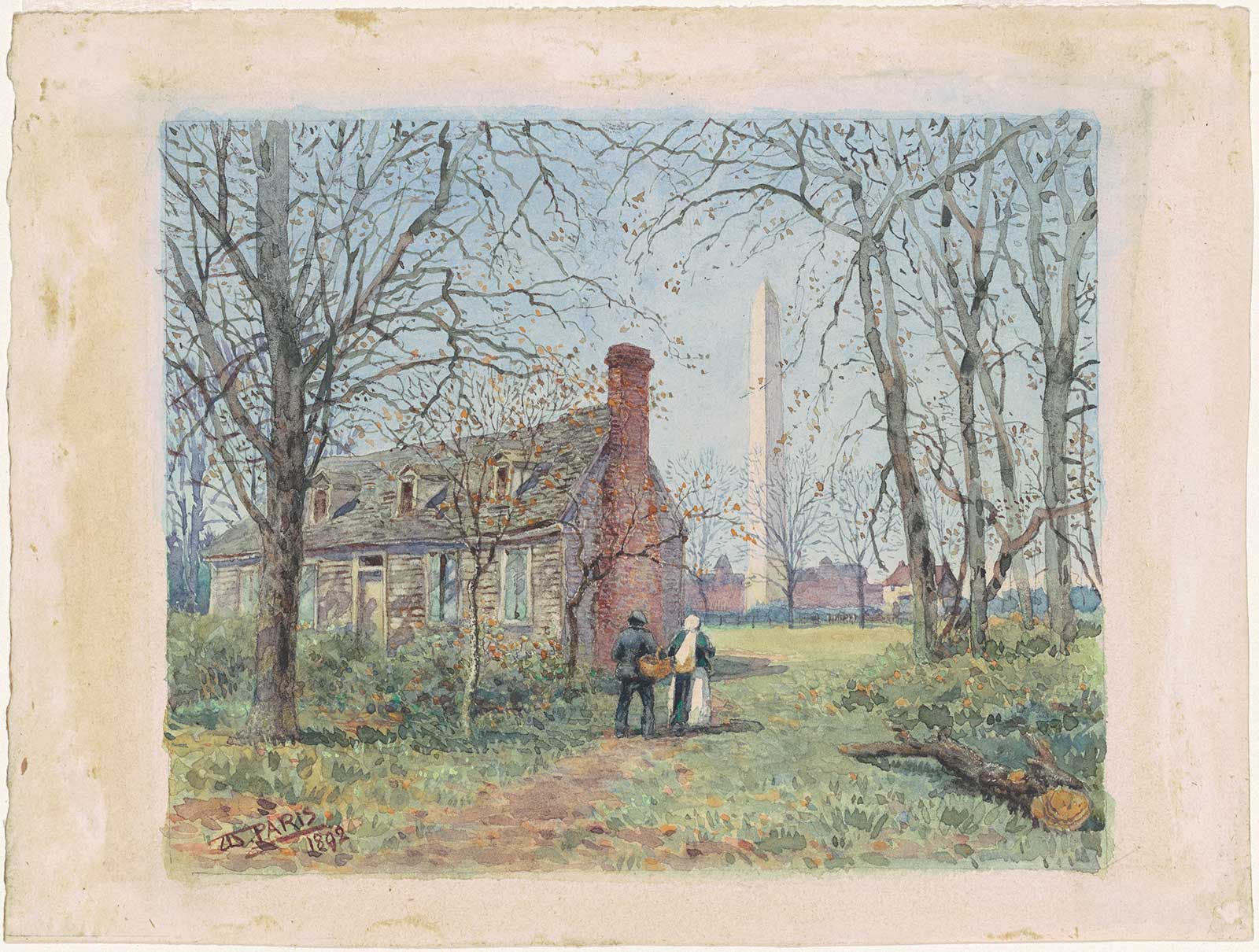
Walter Paris (1842-1906), David Burns’s Cottage and the Washington Monument, 1892. Watercolor over graphite on wove paper, 5¾ x 75/8 in. National Gallery of Art, Corcoran Collection.
“Homer on the other hand, was a more independent artist, interested in pushing watercolor to new limits,” Johnston continues. “He applied broad strokes of color with a wet brush, sometimes mixing colors on the paper.”
The exhibtion remains on view through February 1, 2026. —
Powered by Froala Editor