A new exhibition currently on view at the Amon Carter Museum of American Art delves into a long timeline of Asian American art, spanning the 1860s to present day. Featuring 31 artists in total, East of the Pacific celebrates the longstanding artistic influence of people of Asian descent, as well as their role in shaping American art and culture at large.
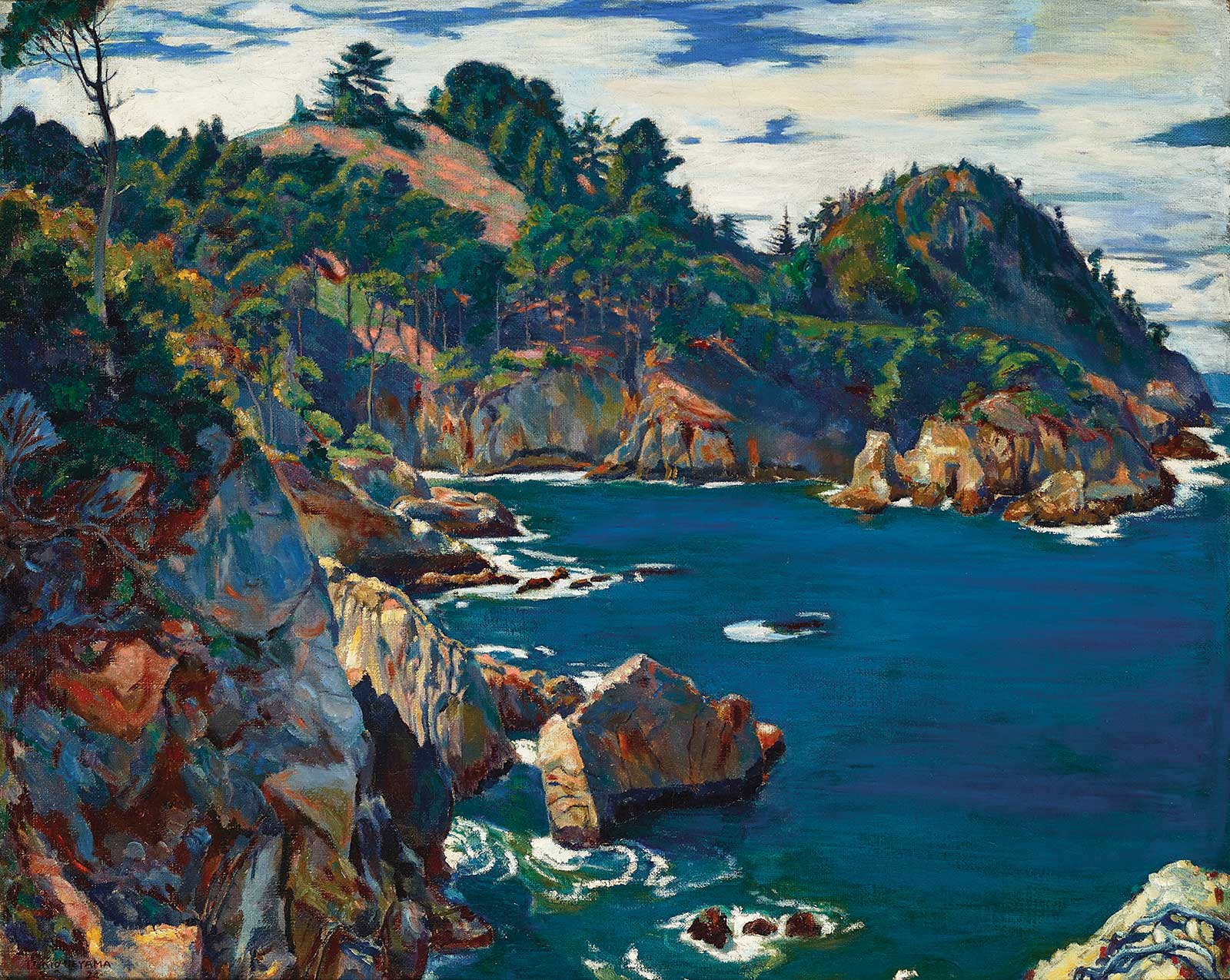
Tokio Ueyama (1889-1954), Monterey Cove, 1924. Oil on canvas. Cantor Arts Center, Stanford University. The Michael Donald Brown Collection, made possible by the William Alden Campbell and Martha Campbell Art Acquisition Fund and the Asian American Art Initiative Acquisitions Fund, 2020.129.
“The exhibition centers on a foundational question: What might American art history look like if we positioned the United States as not just west of the Atlantic, but east of the Pacific? So much of U.S. history is oriented around the Atlantic and the migration of people across it. But by flipping this geographic orientation, the exhibition opens up understudied stories of transpacific migration and highlights the rich creativity of the Asian diaspora in the U.S.,” says curator Michaela Haffner. “Since the mid-19th century, artists of Asian descent have been influential in shaping American art. Because of racial exclusion and systemic marginalization—as well as geographic distance from the East Coast art world while working on the west coast—their contributions have often been overlooked. This exhibition is one step toward correcting that imbalance, and expanding the canon of American art.”
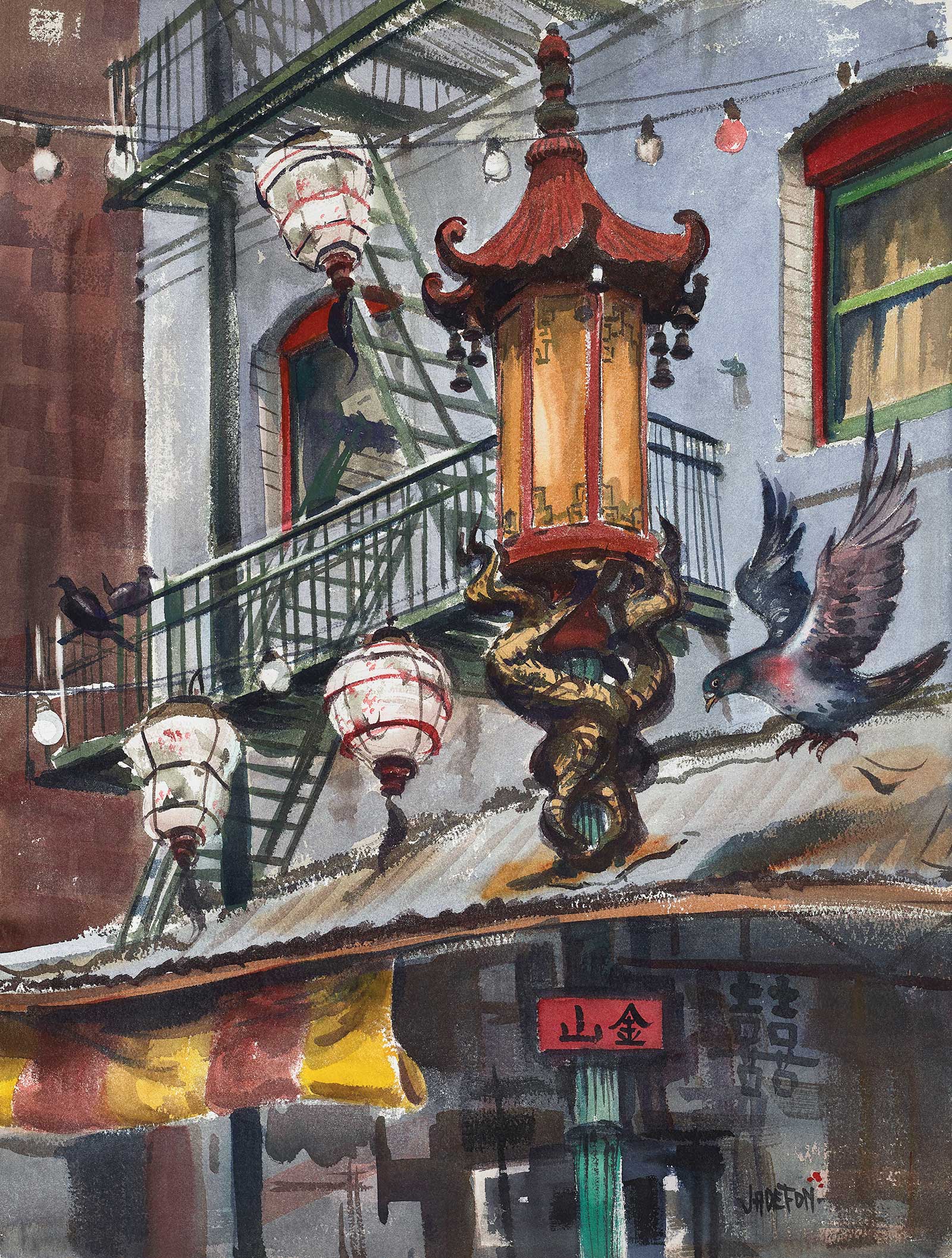
Jade Fon Woo (1911-1983), Lanterns-S.F. Chinatown, ca. 1943-49. Watercolor on paper. Cantor Arts Center, Stanford University. The Michael Donald Brown Collection, made possible by the William Alden Campbell and Martha Campbell Art Acquisition Fund and the Asian American Art Initiative Acquisitions Fund, 2020.146, © Jade Fon Woo Estate.
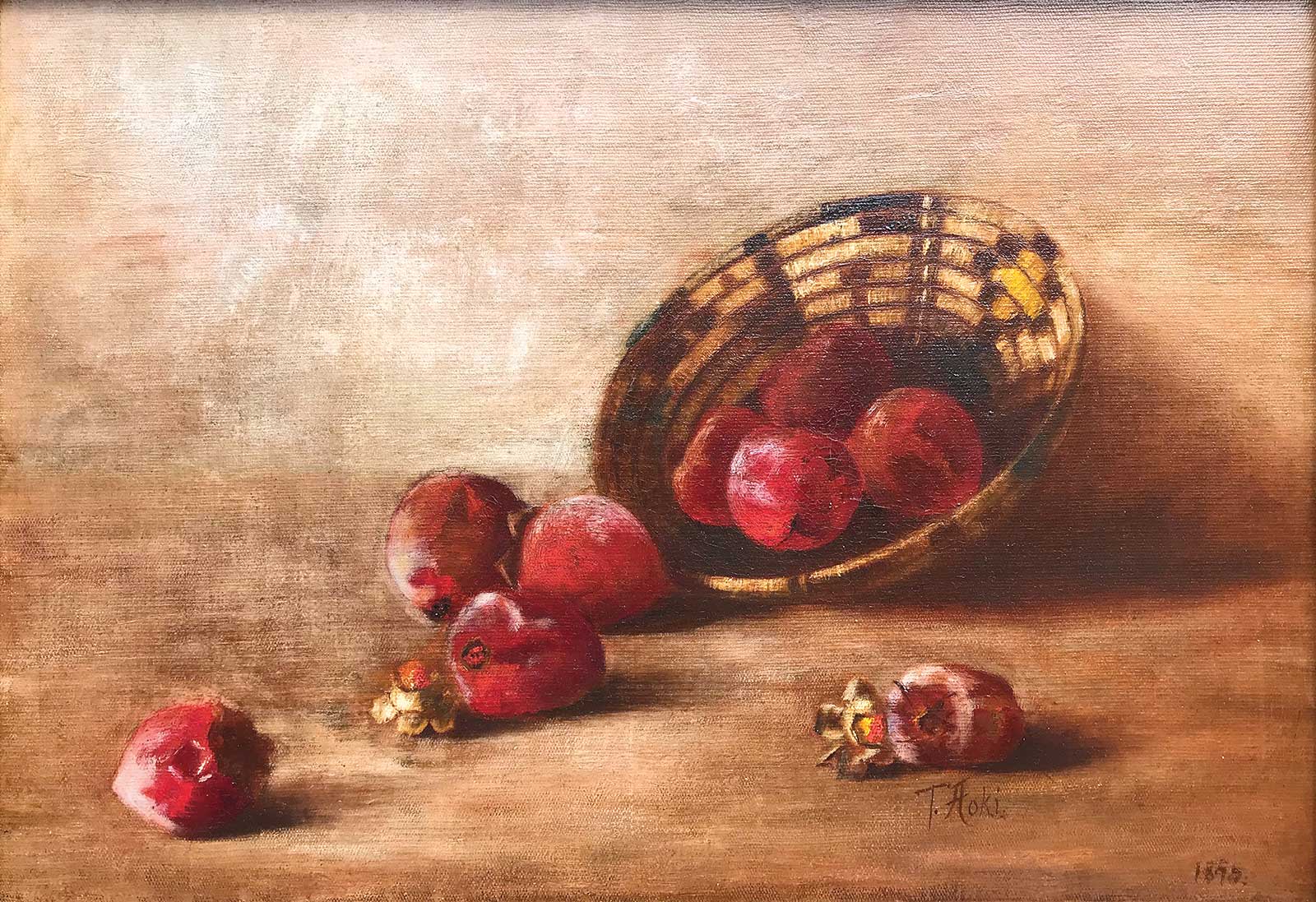
Toshio Aoki (1854-1912), Persimmons in an Indian Basket, 1895. Oil on canvas. Cantor Arts Center, Stanford University. The Michael Donald Brown Collection, made possible by the William Alden Campbell and Martha Campbell Art Acquisition Fund and the Asian American Art Initiative Acquisitions Fund, 2020.21.
Visitors to the Carter will be able to dive into six different thematic sections within the exhibition, each of which highlight important periods in Asian American history: Points of Contact; The East West Art Society; Visions of Chinatown, After Executive Order 9066; Histories of Abstraction; and Revisiting Other Sources: An American Essay.
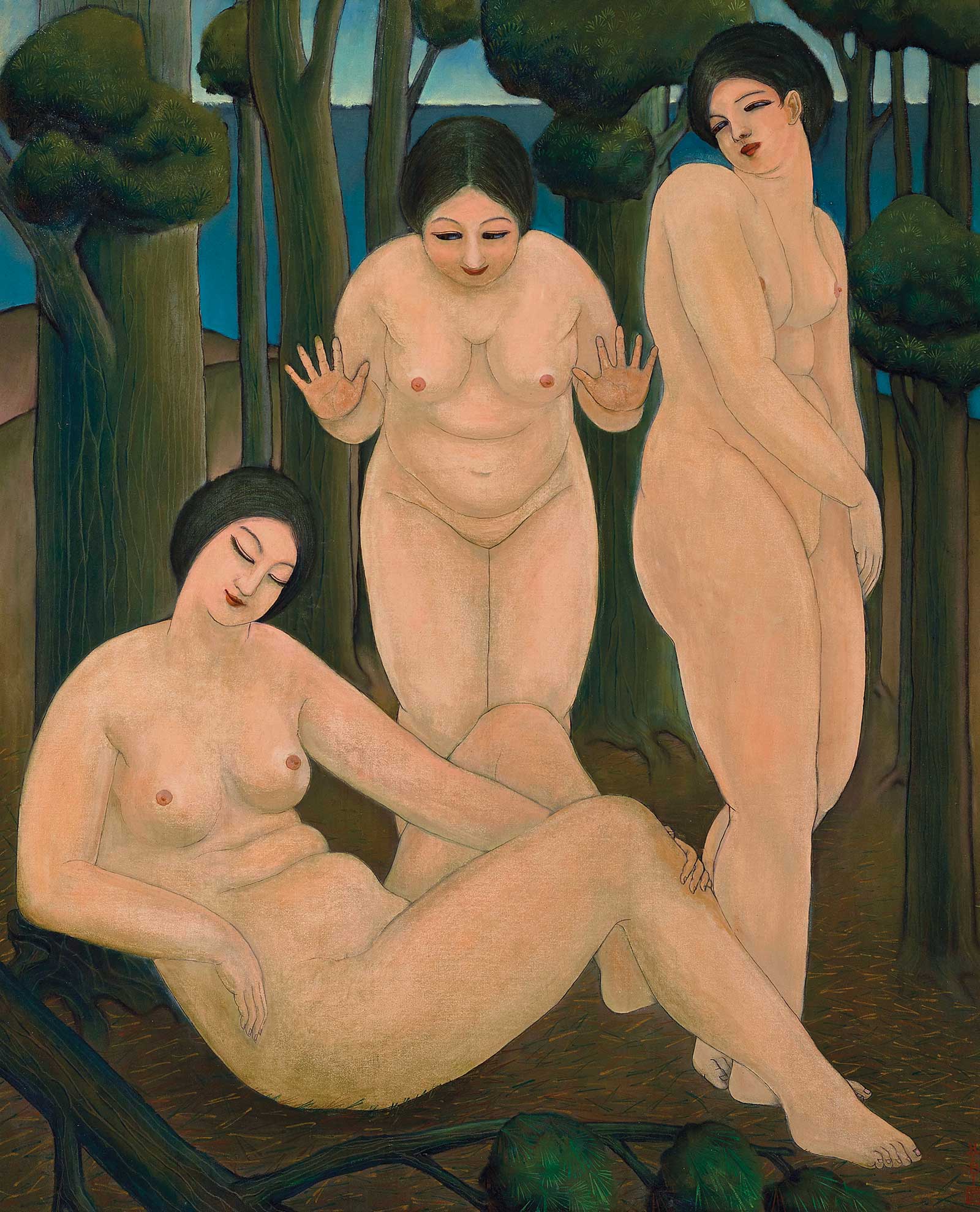
George Matsusaburo Hibi (1886-1947), Three Muses, 1930. Oil on canvas. Cantor Arts Center, Stanford University. The Michael Donald Brown Collection, made possible by the William Alden Campbell and Martha Campbell Art Acquisition Fund and the Asian American Art Initiative Acquisitions Fund, 2020.54.
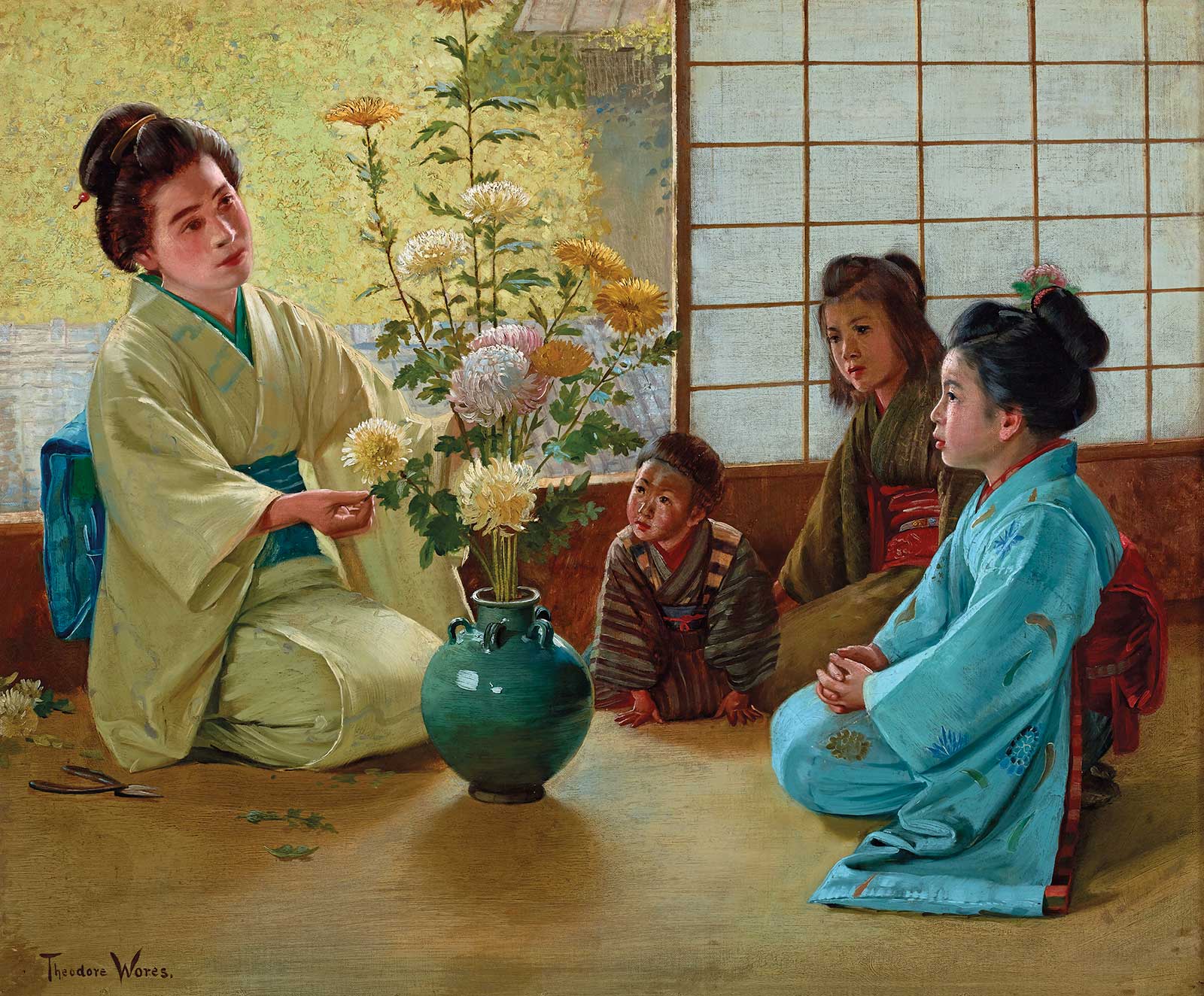
Theodore Wores (1859-1939), A Lesson in Flower Arrangement, ca. 1893. Oil on canvas, Cantor Arts Center, Stanford University. Gift of Drs. A. Jess and Ben Shenson, 1995.163.
“[These] sections explore a breadth of subjects, styles, artistic contexts and historical moments in which Asian American artists worked,” Haffner adds. “While visitors may be more familiar with work by artists like Roger Shimomura, who explores the lived experience and legacies of Japanese incarceration during WWII, the exhibition highlights many lesser-known artists and bodies of work as well. The work of some of the earliest Asian American artists to work in the U.S., such as Toshio Aoki or Tameya Kagi, is particularly revelatory, showing that these artists participated in dominant American art movements, painting landscapes and still lifes similar to their Euro-American counterparts. But a work like Aoki’s Persimmons in an Indian Basket [from] 1895 also reveals an important story of cross-cultural contact: the subject, persimmons, was a new fruit imported from Japan to the U.S. in the 19th century. The inclusion of the Indigenous basket also speaks to the syncretic nature of art and culture in California in the 19th century.”
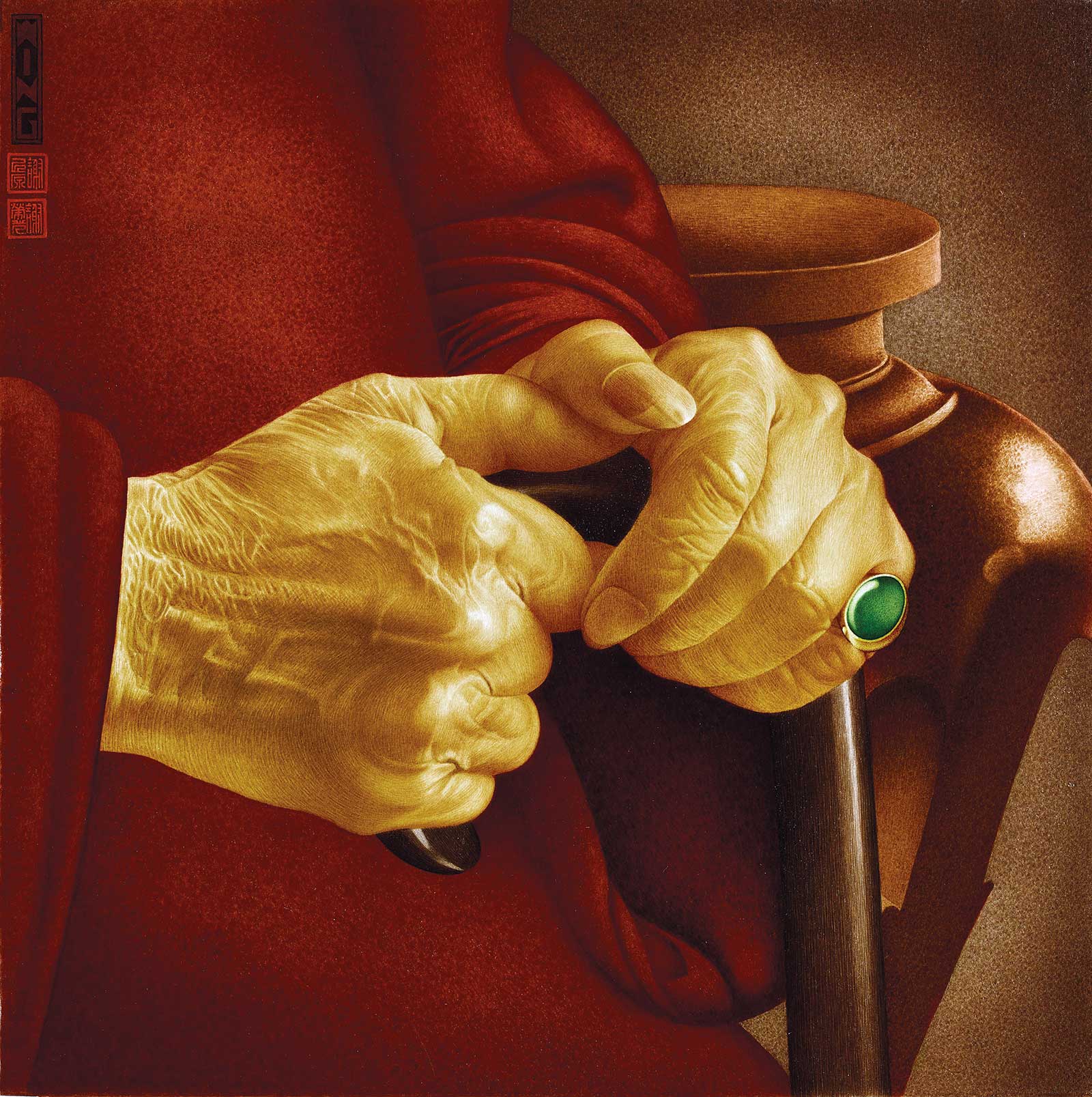
Wing Kwong Tse (1902–1993), Hands, ca. 1970s. Watercolor on paper, Cantor Arts Center, Stanford University. The Michael Donald Brown Collection, made possible by the William Alden Campbell and Martha Campbell Art Acquisition Fund and the Asian American Art Initiative Acquisitions Fund, 2020.123, © Wing Kwong Tse Estate.
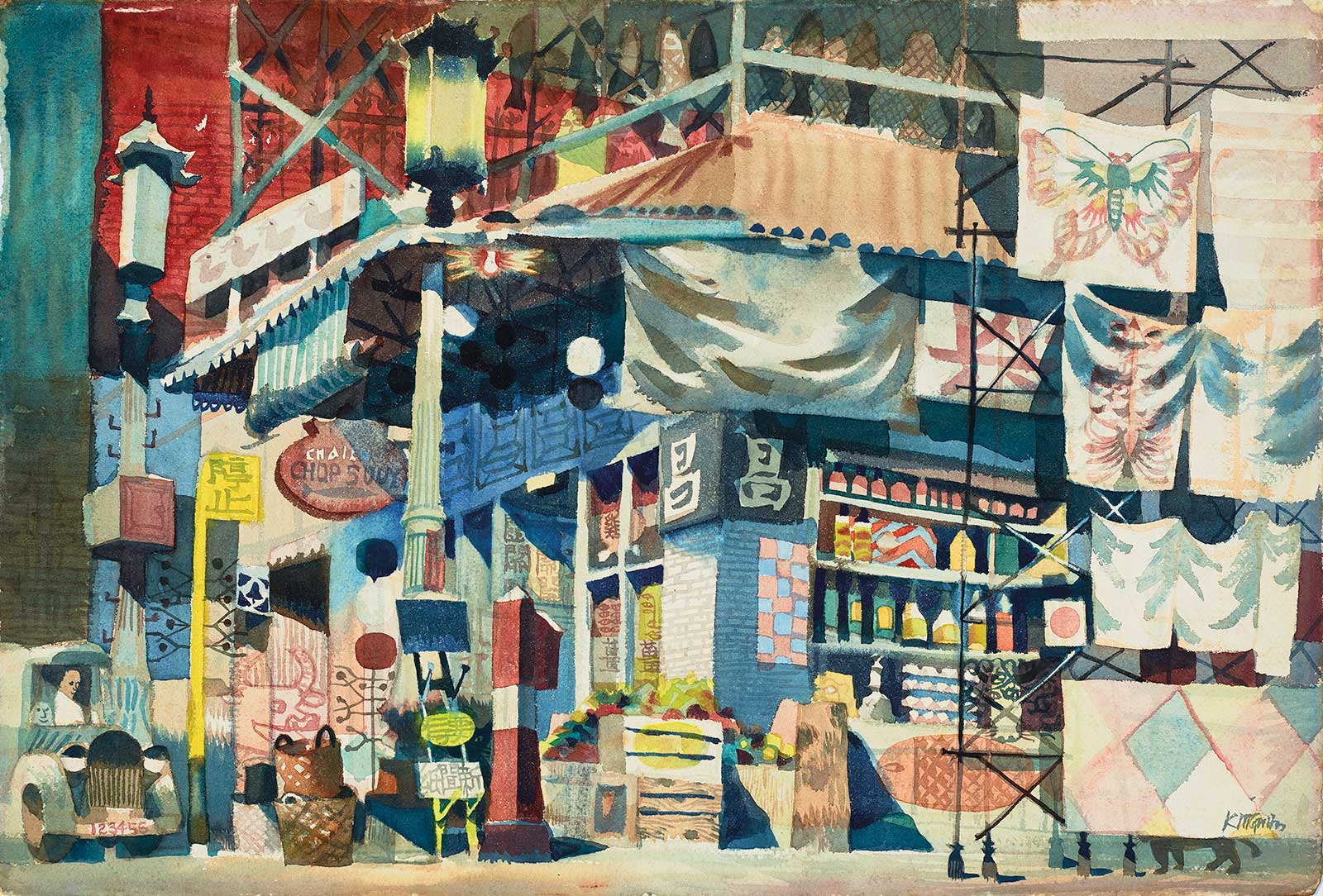
Dong Kingman (1911–2000), Chinatown, Clay and Grant, ca. 1950. Watercolor on paper, Cantor Arts Center, Stanford University. The Michael Donald Brown Collection, made possible by the William Alden Campbell and Martha Campbell Art Acquisition Fund and the Asian American Art Initiative Acquisitions Fund, 2020.71, © Dong Kingman Estate.
East of the Pacific: Making Histories of Asian American Art is organized by the Cantor Arts Center at Stanford University and will be on view through the end of November.—
Powered by Froala Editor