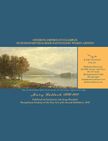
Manhattan-based Hawthorne Fine Art is holding a new online exhibition centered on late 19th- and early 20th-century works by women tonalists. The exhibition will feature nearly a dozen paintings by historic women artists who were influenced by the French Barbizon school and its American exponents like William Morris Hunt.
“In the post-Civil War years, many American artists captivated by the French Barbizon school began to turn away from the grand and highly detailed vistas of the Hudson River School toward a more subdued, quiet, and personal expression of the landscape,” says Megan Bongiovanni, senior researcher at Hawthorne Fine Art. “This is evident in the expressive brushstrokes of Maria a’Becket, the atmospheric effects of Charlotte Buell Coman, and the mood and tonality in the work of Mary Loring Warner. These works provide a link between the Hudson River School and the American modernist movement.”
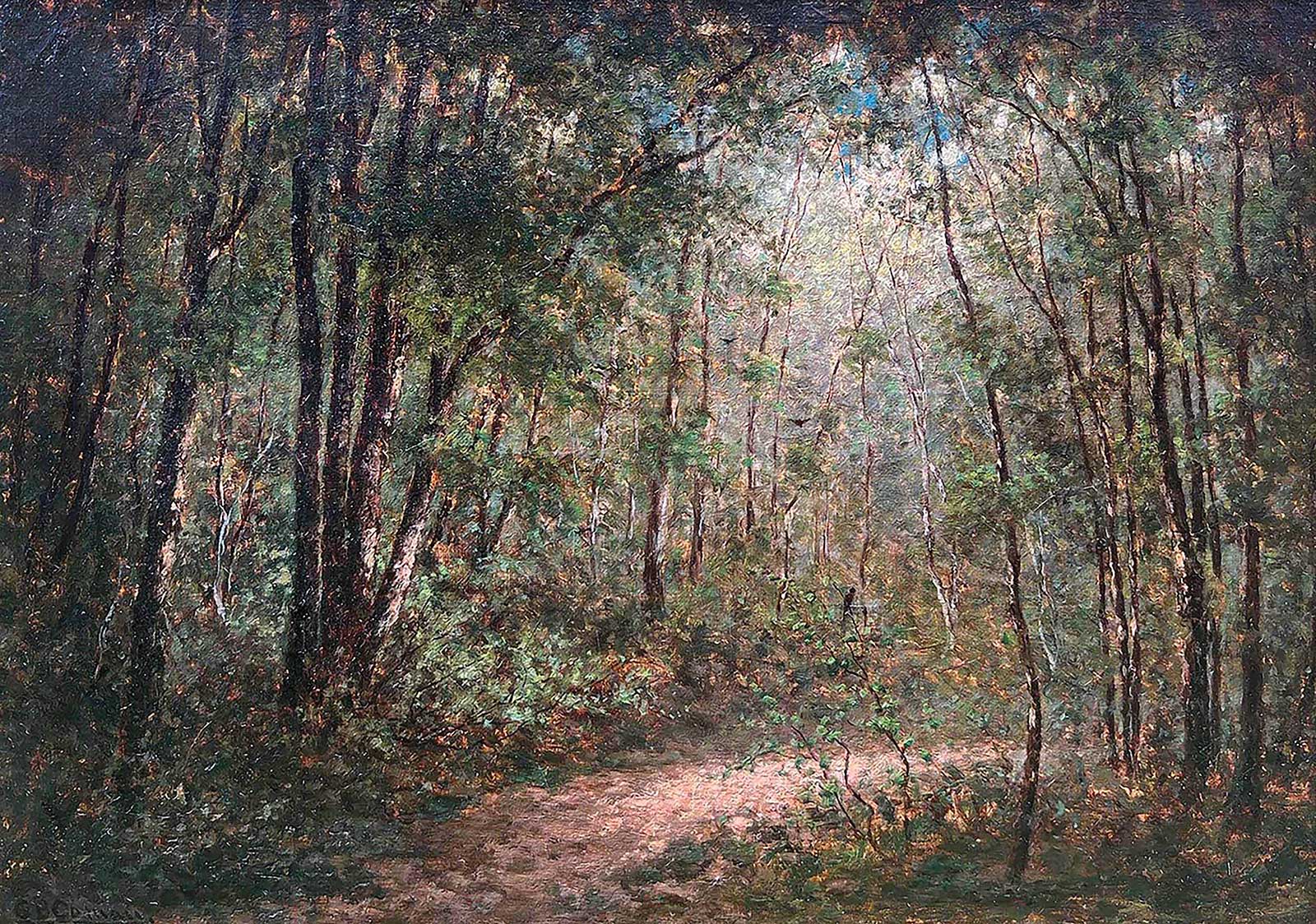
Charlotte Buell Coman (1833-1924), Flight through the Woods. Oil on canvas, 15 x 22 in., signed lower left.
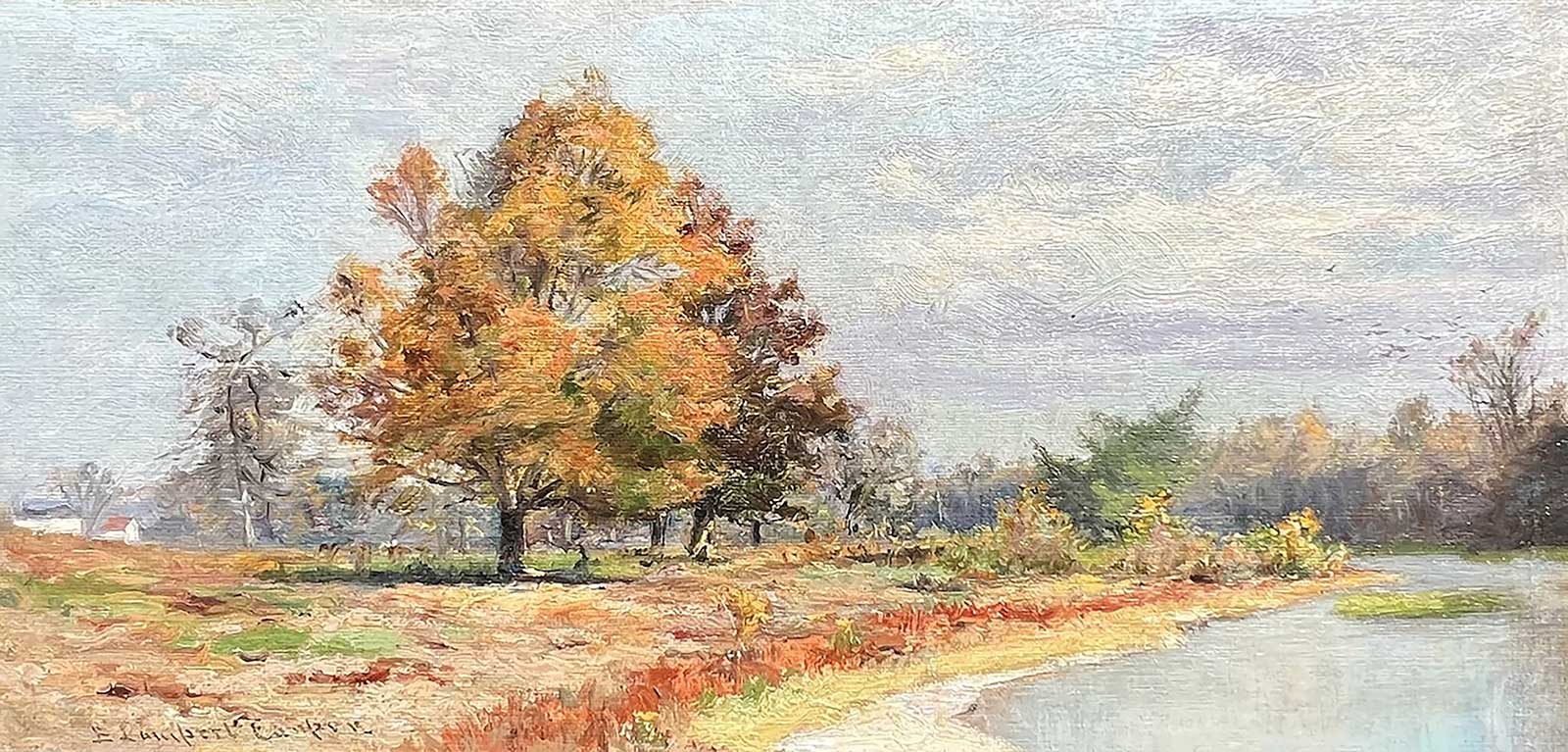
Emma Lampert Cooper (1855-1920), Autumn Lake. Oil on canvas mounted on board, 77/8 x 161/8 in., signed lower left.
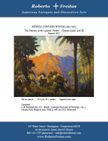
Among the highlights in the upcoming exhibition is an oil on canvas by Coman titled Flight through the Wood, depicting a dim forest path. “A New York native, Coman studied for six years in Paris making frequent trips to the French Countryside and to Holland,” the gallery notes. “Known at one time as the Dean of American Women Painters and lauded for her mastery of atmospheric effects, Coman depicts a well-worn forest path illuminated by sunlight filtering through a dense canopy. Upon closer viewing, one can see a blackbird perched on a branch as others take flight into the depths of the forest.”
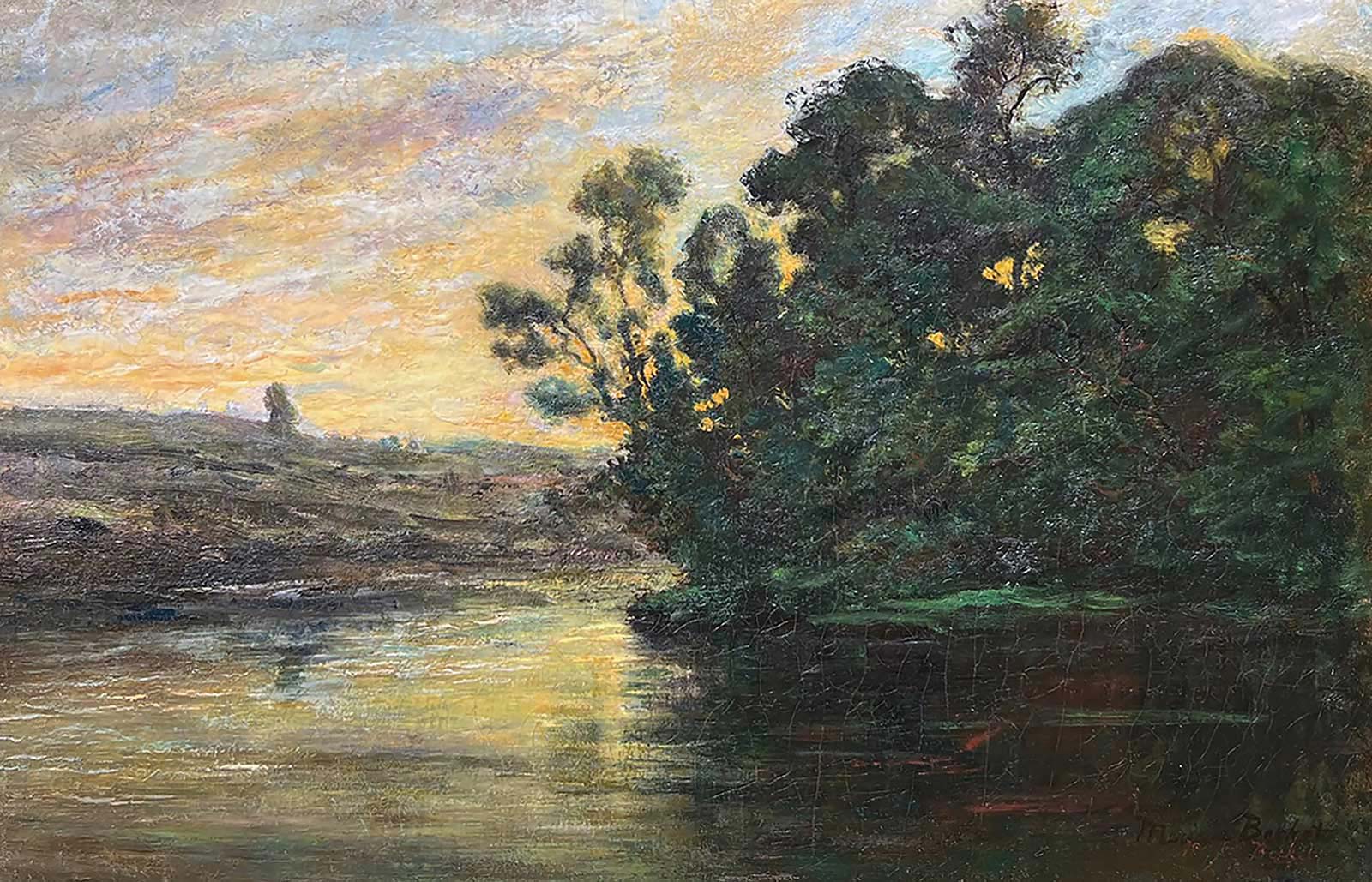
Maria a’Becket (1839-1904), Moonrise. Oil on canvas, 20 x 30 in., signed lower right.
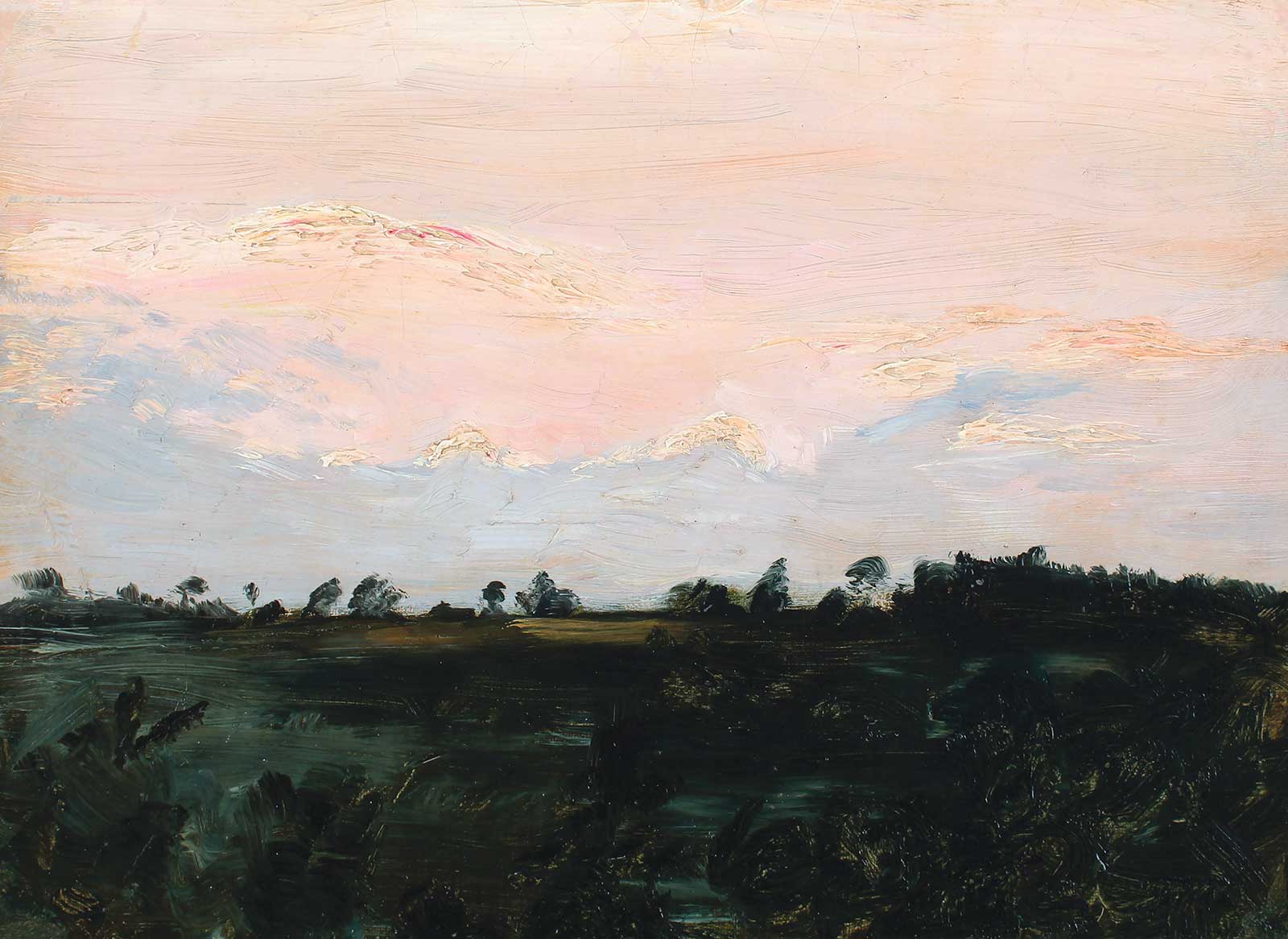
Zoe Worthington Fiske (1864-1942), Sunset Study 2. Oil on canvas, 9½ x 13 in., signed on verso.
Maine-born artist a’Becket’s Moonrise captures a twilit scene on the Swannanoa River near the Biltmore estate, the gilded age mansion of George Washington Vanderbilt. The artist studied in Boston under William Morris Hunt, an instrumental figure in the development of the American Tonalist movement, and in France, studied under Barbizon school painter Charles-Francois Daubigny.
Another highlight is Emma Lampert Cooper’s Autumn Lake, which depicts trees in shades of flax, rust and gold. The New York-born artist studied in Paris and traveled throughout Germany, Holland and England.
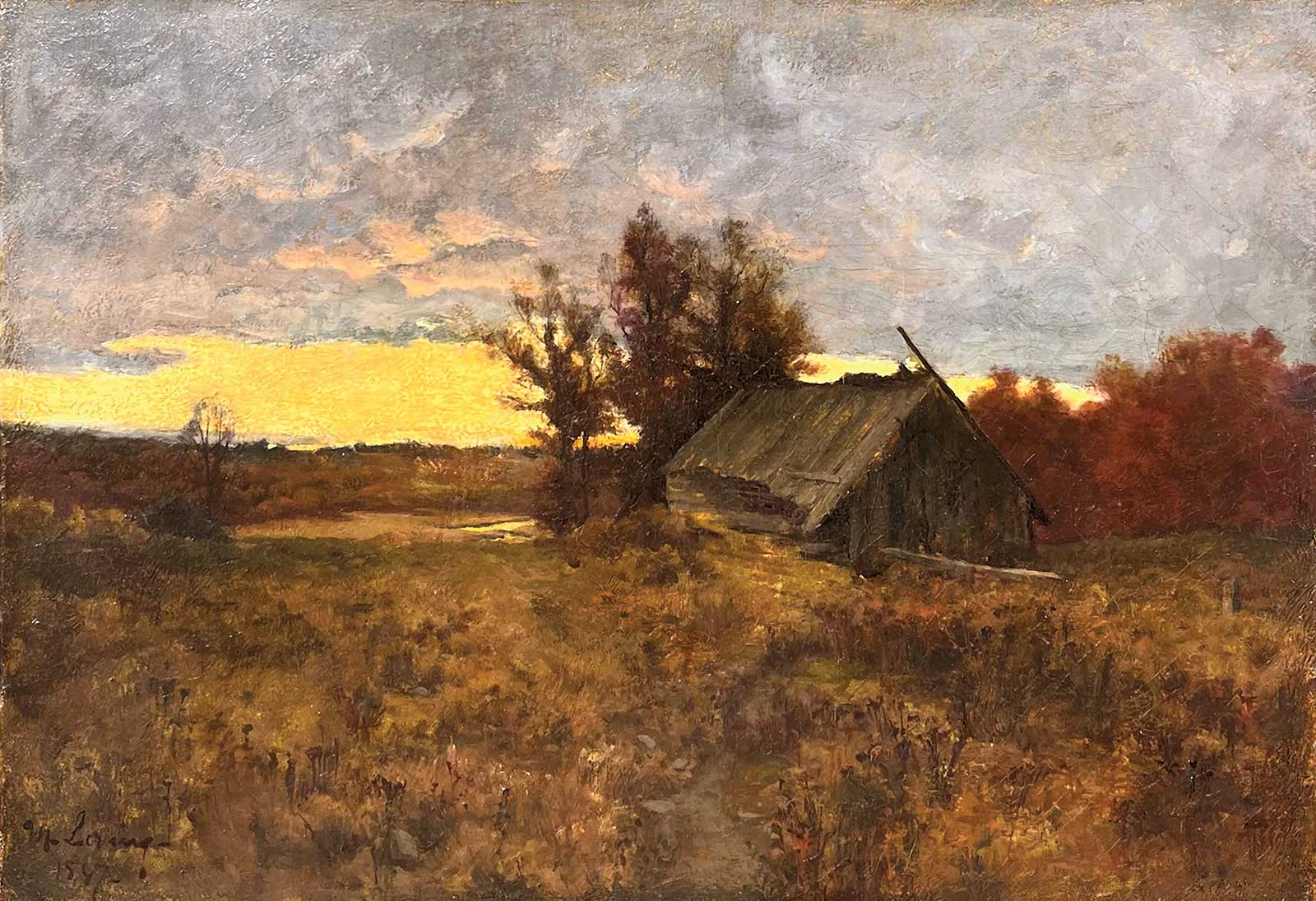
Mary Loring Warner (1860-1950), Barn at Sunset. Oil on canvas, 14 x 20 in., signed and dated lower left: ‘1887’; inscribed on verso.
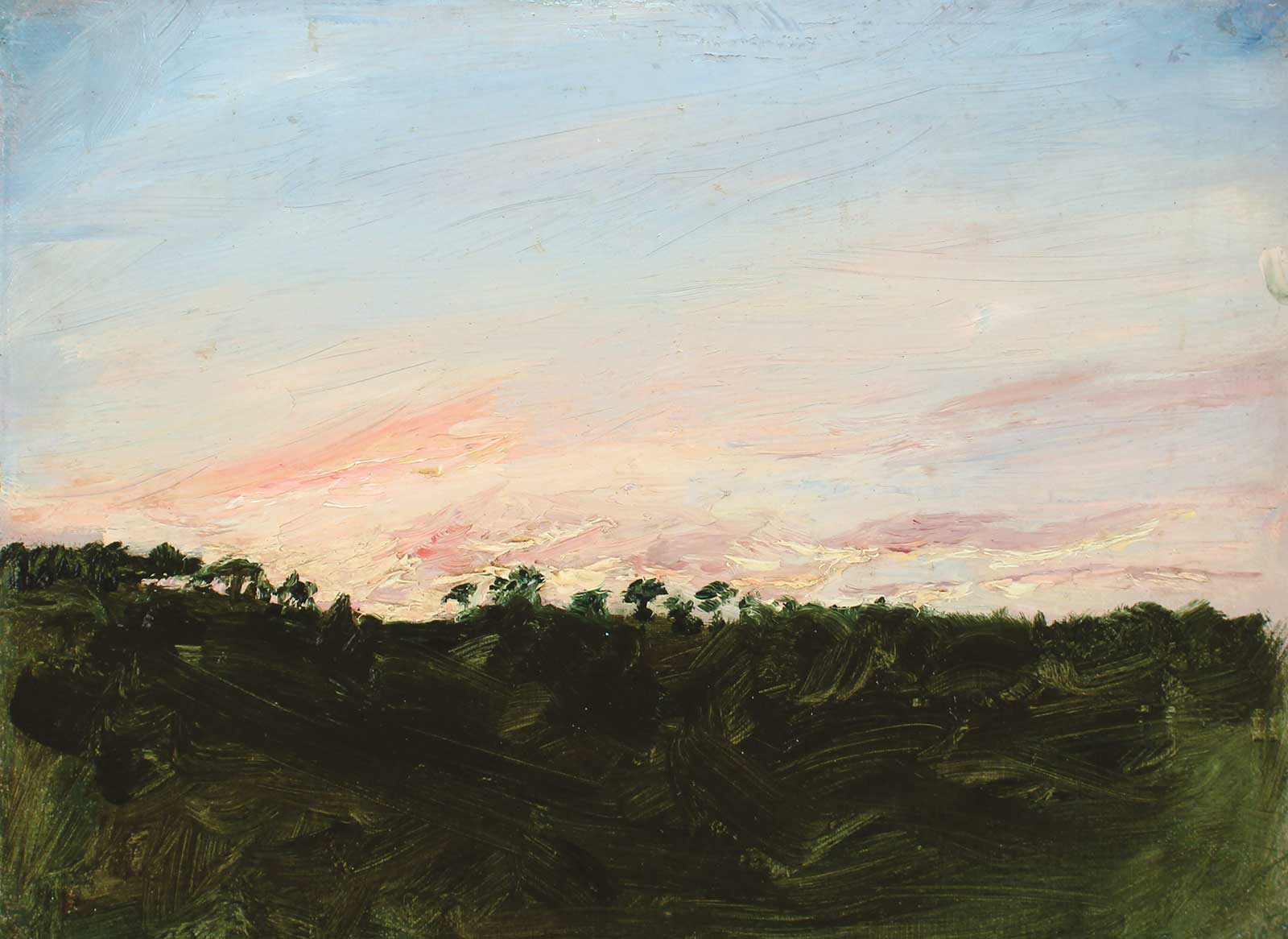
Zoe Worthington Fiske (1864-1942), Sunset Study 1. Oil on canvas, 9½ x 13 in., signed on verso.
“Painted in 1887, Mary Loring Warner’s (1860-1950) Barn at Sunset captures the day’s end with the rich tones of autumn and a striking swath of yellow sunlight across the horizon,” the gallery notes. “The work is inscribed ‘DeHaven’ on its verso, a nod to her teacher, Franklin DeHaven, who she studied with in Milford, Pennsylvania. Born in Massachusetts, Warner also studied in New York City at the Cooper Union and at the Art Students League.”
In Harmony: American Women Tonalists (1880-1920) will be available to view online at www.hawthornefineart.com through September 30. —
Powered by Froala Editor