Earlier this year, the National Gallery of Art launched Across the Nation, a lending program that sent key American and European artworks in its permanent collection to 10 regional museums around the country. The works are on view now at all participating museums and will remain so through early 2027, as part of the National Gallery’s commemoration of the 250th anniversary of the United States.
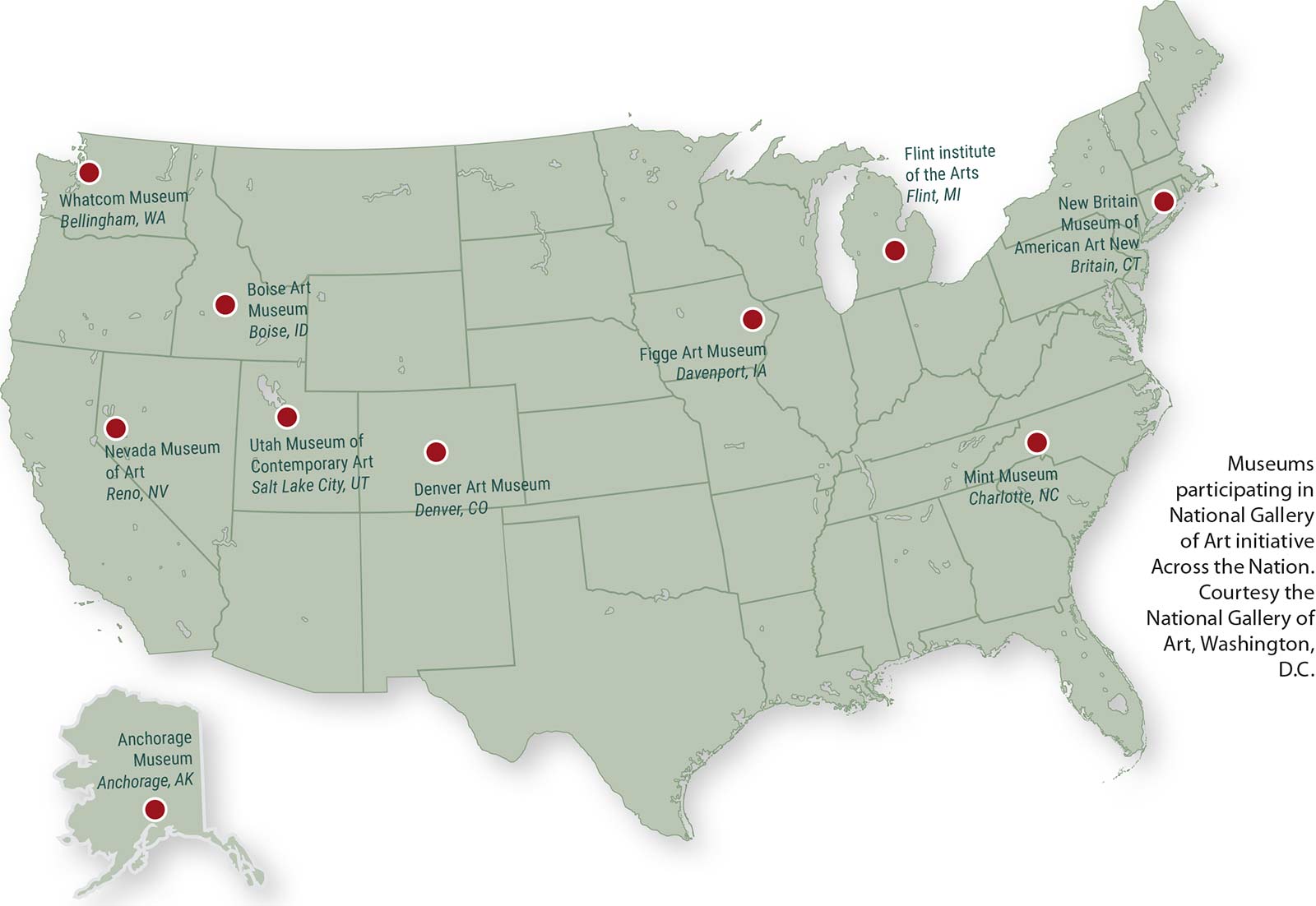
Participating institutions were intentionally chosen to reach as many geographic regions of the United States as possible to make the nation’s art collection accessible to the greatest number of Americans. They include Anchorage Museum in Alaska, Boise Art Museum in Idaho, Denver Art Museum, Iowa’s Figge Art Museum, Flint Institute of Arts in Michigan, Mint Museum in North Carolina, Connecticut’s New Britain Museum of Art, Utah Museum of Contemporary Art in Salt Lake City, and Whatcom Museum in Washington state. The Nevada Museum of Art in Reno is presenting an iteration of the National Gallery’s 2023–2024 exhibition Dorothea Lange: Seeing People through early 2026.
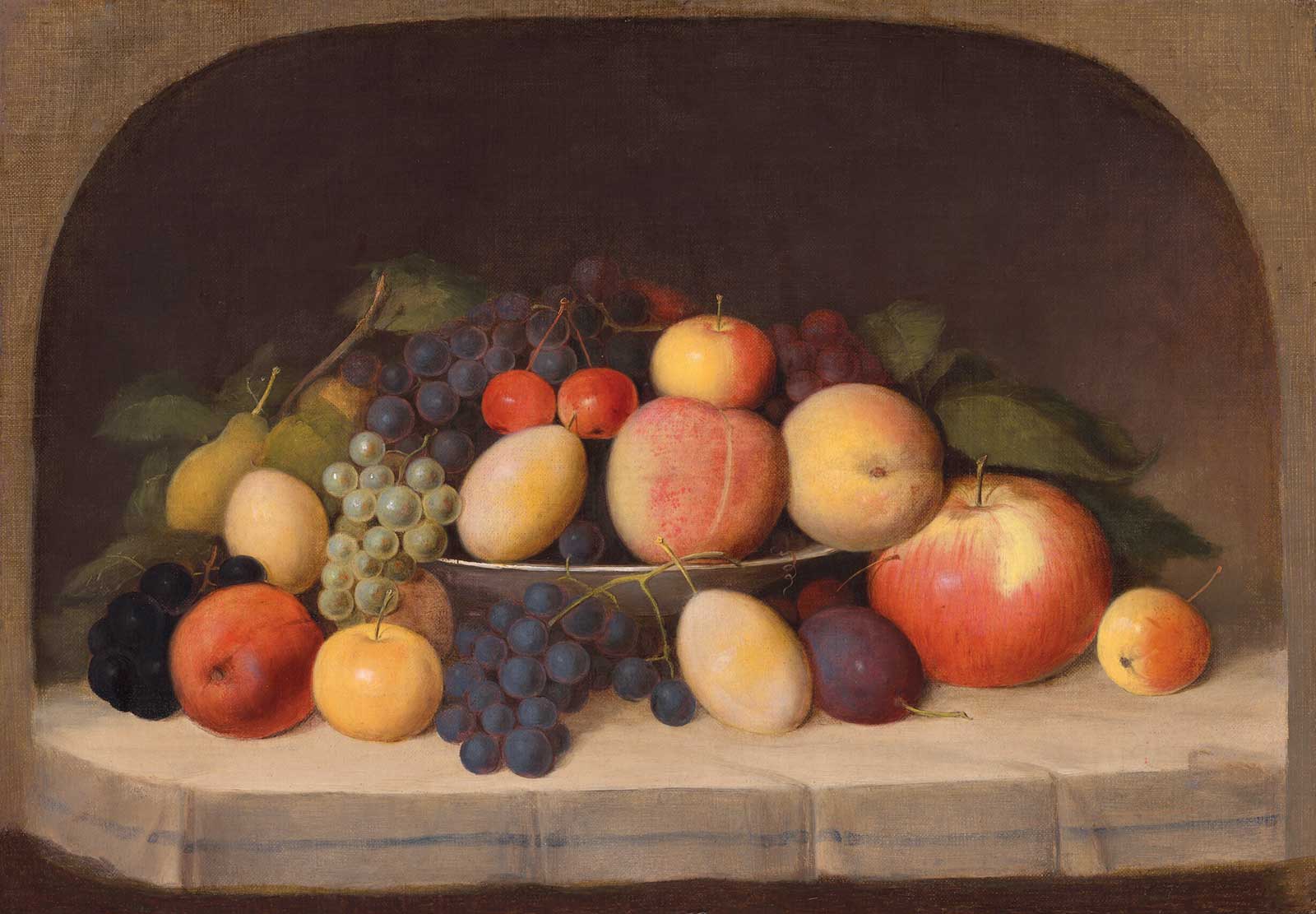
Robert Seldon Duncanson (1821-1872), Fruit Still Life, ca. 1849. Oil on canvas, 13 ½ x 19 in. National Gallery of Art, Corcoran Collection (Museum Purchase through a gift from the Reserve for Purchase of Works of Art)v 2014.136.106. On view at New Britain Museum of Art, New Britain, CT.
“The National Gallery of Art is the nation’s art museum, and an important part of our mission is helping the whole of America to connect with art and the nation’s collection,” says Kate Haw, the museum’s executive officer of programs, exhibitions, and audience engagement. “While we welcome more than four million visitors to our D.C. campus annually, we wanted to extend the reach of our collection to share exceptional works of art directly with peer institutions around the country, in keeping with this mission. This program significantly increases access to our collection for audiences in other states, some of whom may not be able to travel to Washington, D.C., by bringing art directly to their communities.”
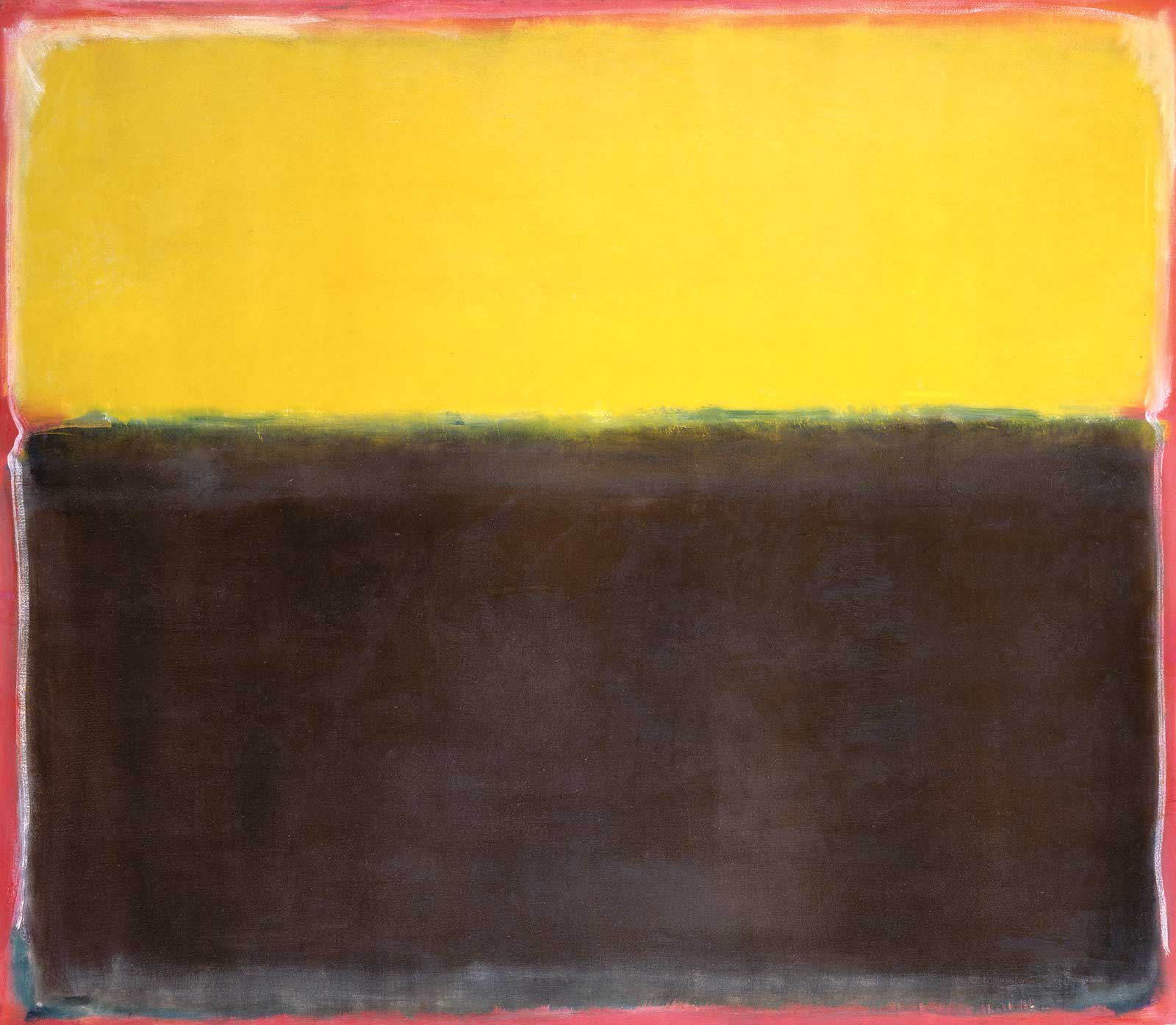
Mark Rothko (1903-1970), Untitled, 1950. Pigmented hide glue and oil on canvas, 431/8 x 495/8 in. National Gallery of Art, Gift of The Mark Rothko Foundation, Inc. 1986.43.159. On view at Boise Art Museum, Boise, ID.
Each museum was able to hand-pick between one and 10 artworks—spanning painting, photography and installation—from the National Gallery’s collection, approximately 120 in all, a large portion of which is the Lange material.
On loan are pieces by Georgia O’Keeffe, Andy Warhol, Winslow Homer, Sandro Botticelli, Rembrandt van Rijn, Henri Matisse and other major French Impressionists, as well as Mark Rothko, Sol Lewitt, Thomas Eakins and many more.
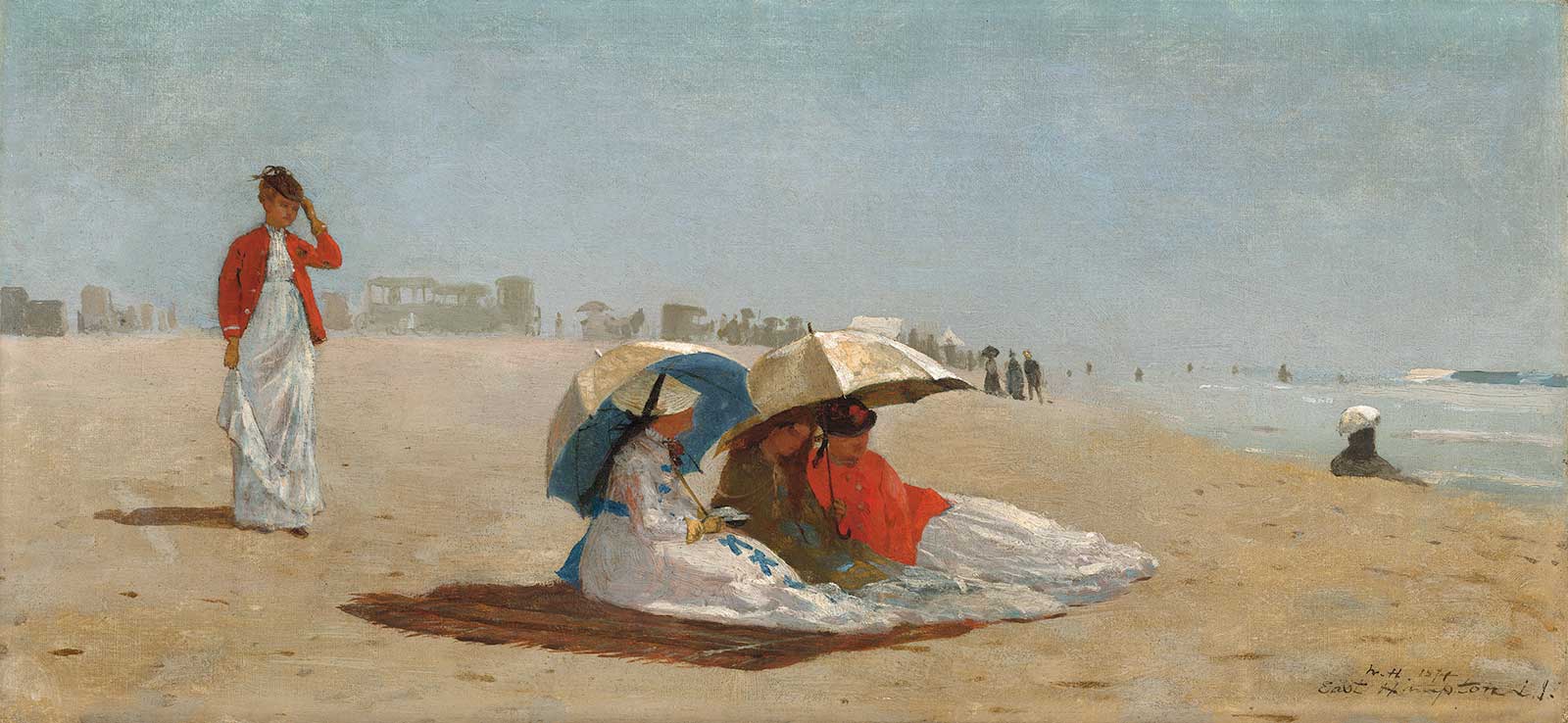
Winslow Homer (1836-1910), East Hampton Beach, Long Island, 1874. Oil on canvas, 103/16 x 2111/16 in. National Gallery of Art, Collection of Mr. and Mrs. Paul Mellon 2012.89.2. On view at New Britain Museum of Art, New Britain, CT.
Each museum will curate special programming around their chosen artworks. The Figge Art Museum, in collaboration with the National Gallery, Mint Museum, New Britain Museum of American Art and the Flint Institute of Arts, is hosting a regional institute for educators that will explore the role of art in cognitive development and social-emotional wellness. Haw adds, “We are also excited to be working with several of our museum partners (Whatcom Museum, Mint Museum, Utah Museum of Contemporary Art, and Anchorage Museum) to highlight artists and artistic traditions from their areas through our ongoing West to East series of articles and videos exploring artmaking from communities across the U.S. Some of the regional artists who will be featured in this series include Barbara Earl Thomas, Sonya Kelliher-Combs, and the Cole family of North Carolina potters.
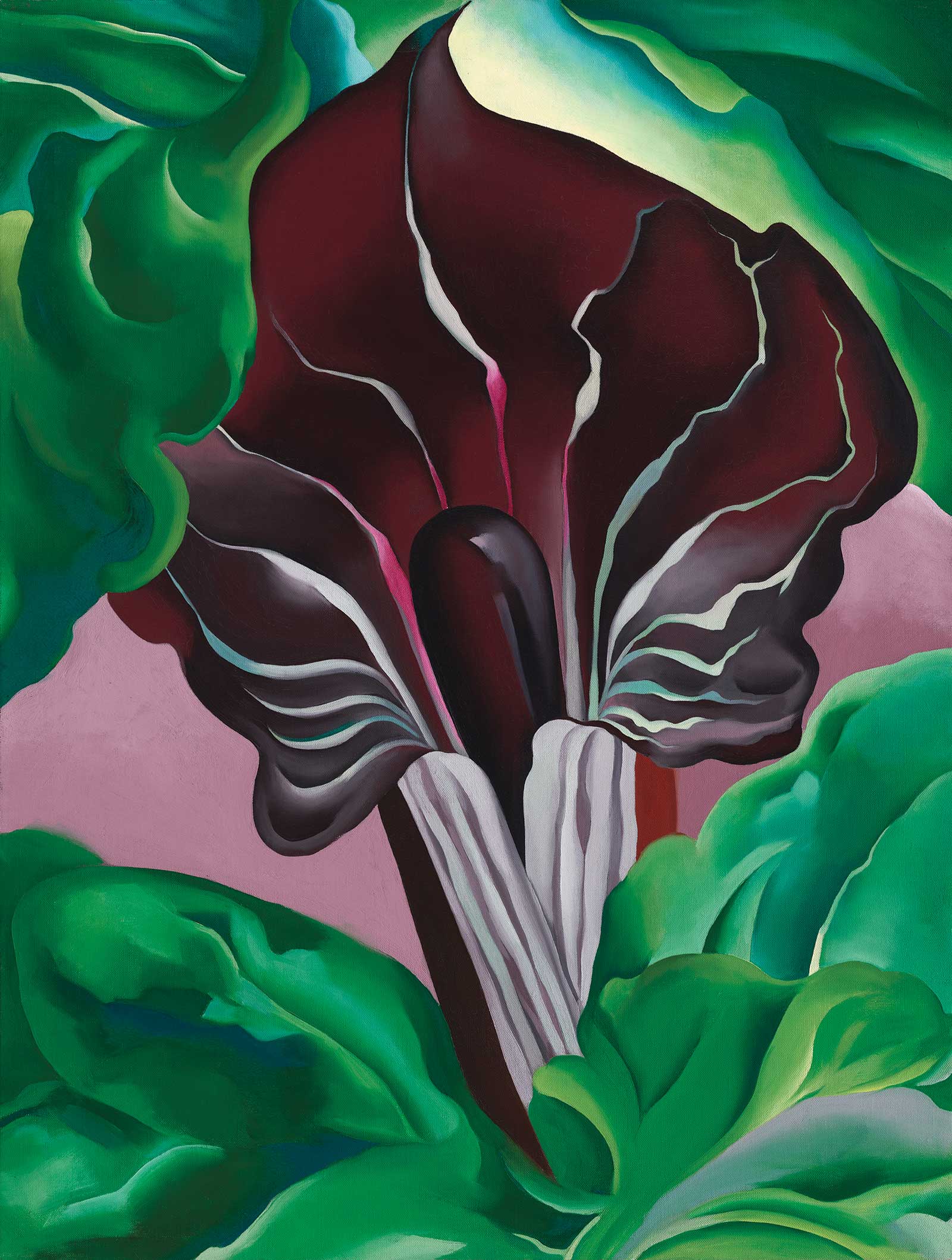
Georgia O’Keeffe (1887-1986), Jack-in-Pulpit - No. 2, 1930. Oil on canvas, National Gallery of Art, Alfred Stieglitz Collection, Bequest of Georgia O’Keeffe, 1987.58.1. On view at Mint Museum Uptown, Charlotte, N.C.
“Given the nature of the works of art being loaned, including masterworks by some of the world’s most renowned artists…they can also serve as a draw for visitors to the regional museums,” says Haw. “We’ve already seen positive results in terms of attendance at our partner museums…For example, the Whatcom Museum saw its total number of visitors more than double in the first six weeks of its Across the Nation installation. In the first six months of the program, over 260,000 people have visited the works on loan across the 10 partner museums.”
The New Britain Museum of American Art (NBMAA) in New Britain, Connecticut, received two particularly significant historic American artworks on loan: Robert Seldon Duncanson’s Fruit Still Life, circa 1849, and Winslow Homer’s East Hampton Beach, Long Island, 1874.
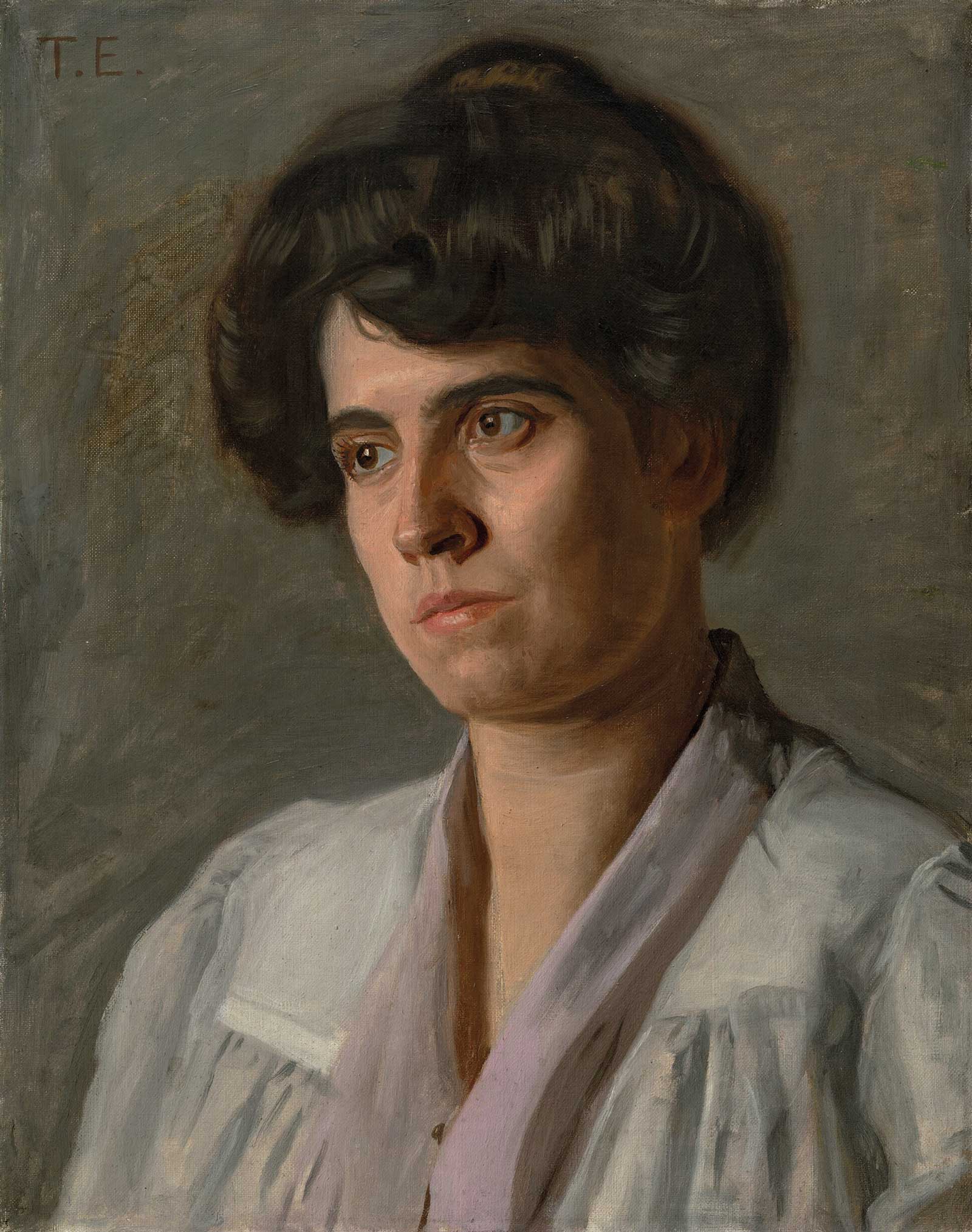
Thomas Eakins (1844-1916), Harriet Husson Carville (Mrs. James G. Carville), 1904. Oil on canvas, 201/16 x 16 in. National Gallery of Art, Gift of Elizabeth O. Carville 1976.27.1. On view at Boise Art Museum, Boise, ID.
Stephanie Heydt, NBMAA’s director of collections and exhibitions says, “As one of the few commercially-successful African-American painters in 19th-century America, Duncanson is best known for his work in landscape. One of Duncanson’s rare still lives, Fruit Still Life, will join the NBMAA’s major landscape painting by the artist—offering an opportunity to feature a fuller perspective on Duncanson and his oeuvre within the context of the NBMAA’s rich collection of historical American painting.
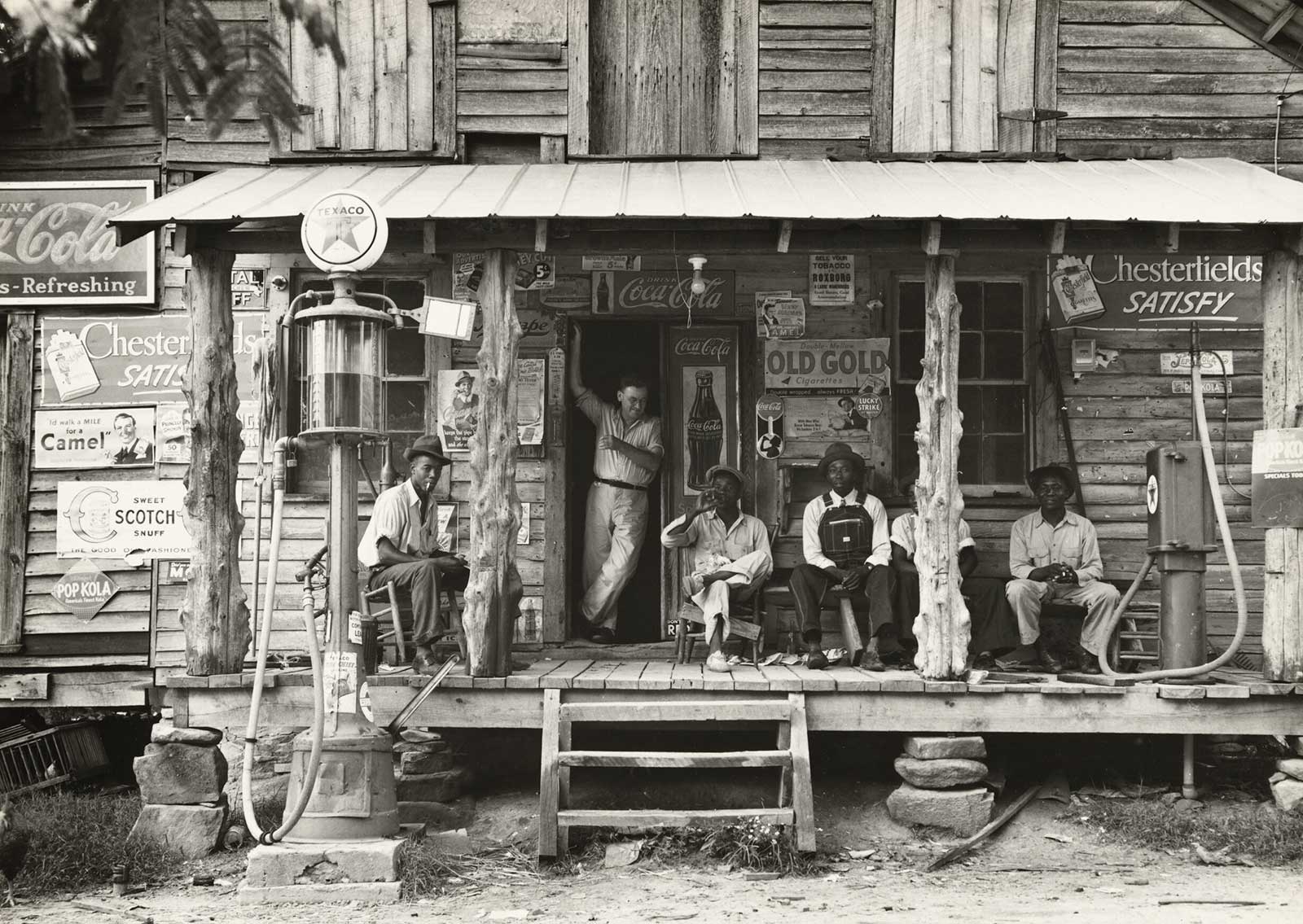
Dorothea Lange (1895-1965), Country store on dirt road. Sunday afternoon. Note the kerosene pump on the right and the gasoline pump on the left. Rough, unfinished timber posts have been used as supports for porch roof. Black men are sitting on the porch. Brother of store owner stands in doorway, Gordonton, North Carolina, July 1939, printed later. Gelatin silver print, 95/8 x 13½ in. National Gallery of Art, Washington, Gift of Daniel Greenberg and Susan Steinhauser, 2018.189.14. On view at Nevada Museum of Art, Reno, NV.
“Homer’s East Hampton Beach, Long Island captures the spirit of the fastmoving social changes that prevailed in the final decades of the 19th century,” Heydt continues. “Paired with NBMAA collection works such as Eastman Johnson’s Hollyhocks (1876), Homer’s Butterflies (1874), and a suite of illustrations by Homer featuring adventure-seeking middle-class women, East Hampton Beach and its companion works in the NBMAA galleries will foreground the changing ways in which American women experienced leisure time in the post-Civil War years.”
In addition to an abstract by Alma Thomas from the late ’60s, and a 19th century painting of dancers by Edgar Degas, the Mint Museum Uptown is in temporary possession of Georgia O’Keeffe’s floral from 1930, Jack-in-Pulpit - No. 2. In her youth, O’Keeffe had been particularly fascinated by the flower and, in 1930, she executed a series of six paintings of the plant at Lake George in New York. In this one, O’Keeffe has set the deep purple blossom against a pale mauve background, bright green foliage filling out the corners of the canvas.
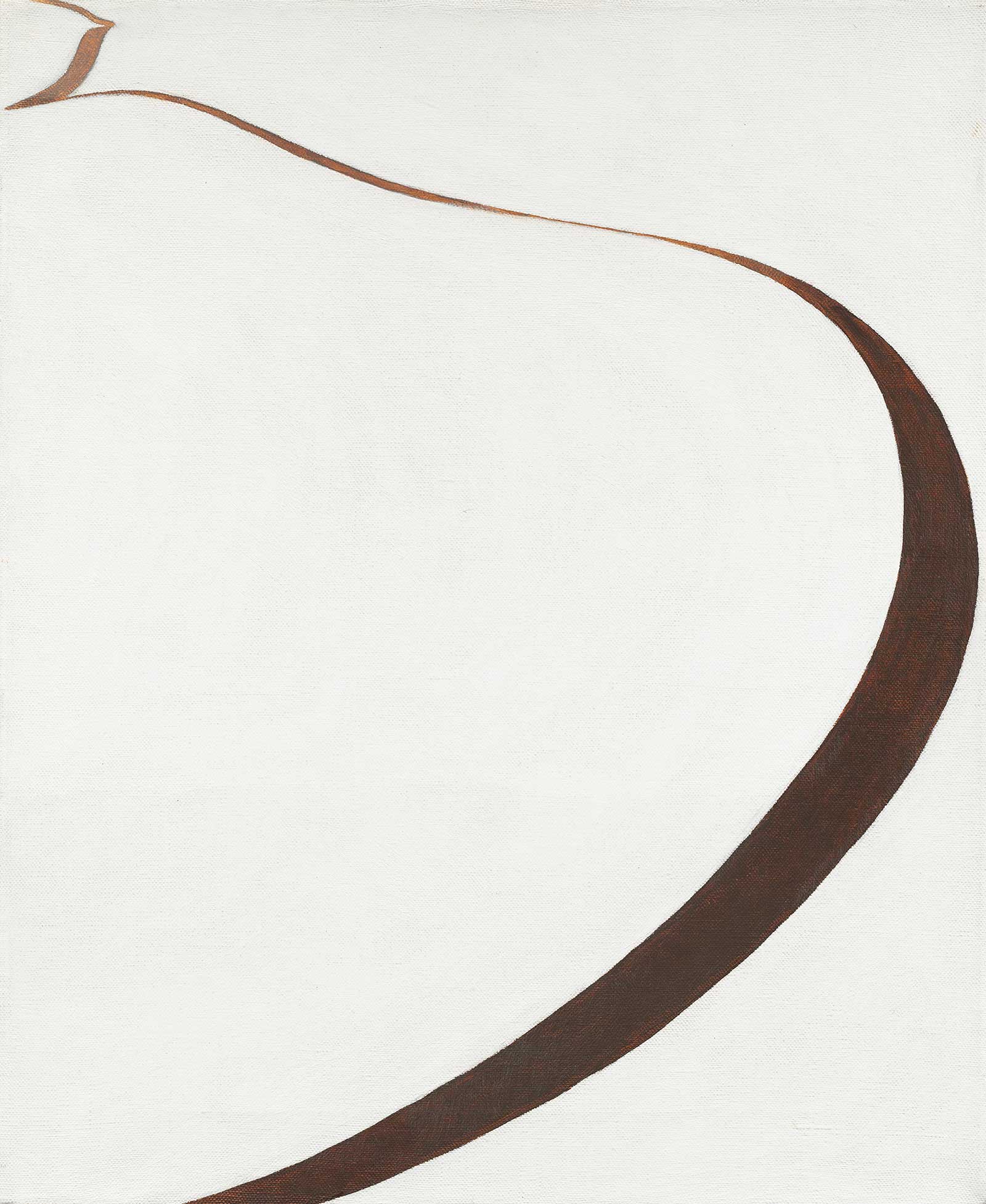
Georgia O’Keeffe (1887-1986), Winter Road I, 1963. Oil on canvas, 22 x 18 in. National Gallery of Art, Gift of The Georgia O’Keeffe Foundation. On view at Anchorage Museum, Anchorage, AK.
“The large, magnified representations of flowers that O’Keeffe embarked upon in the 1920s became her most famous subjects,” notes the National Gallery. “Although such images had antecedents in the photographs of Paul Strand and Edward Steichen and were to some extent paralleled in the paintings of Charles Demuth, O’Keeffe rendered them at an unprecedented scale. She ultimately became more closely associated with flower imagery than her male peers.”
The pieces were carefully chosen by the Mint Museum to encourage conversations about the American experience, each reflecting a distinct perspective on identity, culture and artistic expression. “The selection of these works is both thoughtful and significant,” says Jonathan Stahlman, senior curator of American art at the Mint Museum. “These loans will bring important works by artists Georgia O’Keeffe, Alma Thomas, and Edgar Degas into dialogue with our existing collections, offering a powerful example of the ways in which art transcends time and place to inspire meaningful conversations about American creativity, different ways to see the world, and identity.”
Haw concludes, “We hope these loans will bring these communities together to enjoy art. It is only fitting that as we celebrate the 250th anniversary of our country that our collection, the nation’s art collection, is able to be celebrated and enjoyed by our fellow Americans in their own communities.” —
To learn more, visit www.nga.gov/artworks/across-nation.
Powered by Froala Editor