On June 2, 1863, in the midst of the Civil War, Harriet Tubman became the first woman to lead a major military operation in the United States. Under the command of Union Colonel James Montgomery, she and 150 Black Union soldiers helped liberate 756 slaves in the Combahee Ferry Raid—more than 10 times the number of people Tubman rescued during her decade of work on the Underground Railroad.
The heroic raid is the subject of an immersive multimedia exhibition at the Gibbes Museum of Art, on view through October 5. Picturing Freedom: Harriet Tubman and the Combahee River Raid is inspired by the Pulitzer Prize-winning book by Dr. Edda L. Fields-Black, Combee: Harriet Tubman, the Combahee River Raid, and Black Freedom during the Civil War, which details the relatively unknown event in our country’s history.
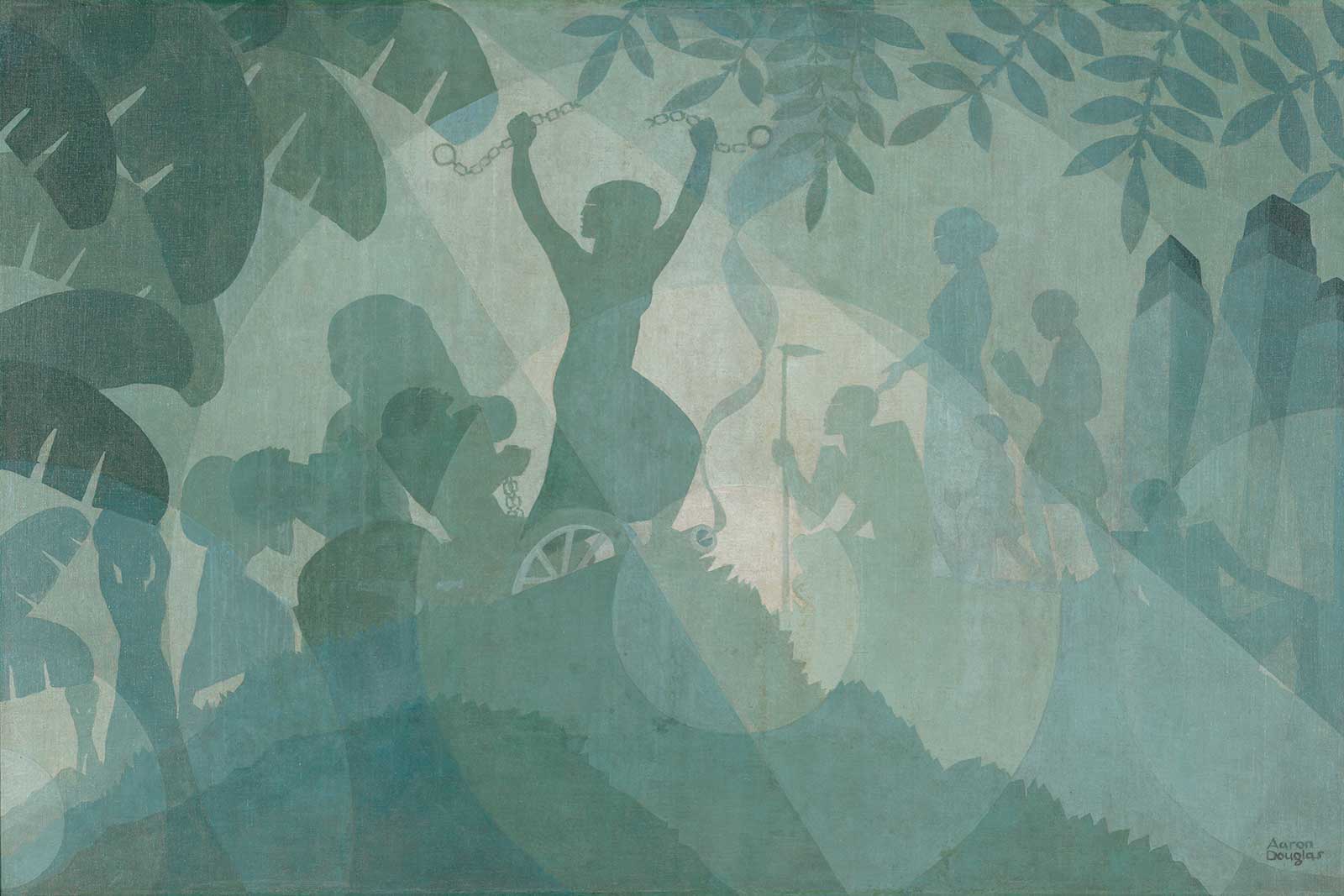
Aaron Douglas (1899-1979), Harriet Tubman, 1931. Oil on canvas, 54 x 72 in. Bennett College, Greensboro, NC. © 2025 Heirs of Aaron Douglas / Licensed by VAGA at Artists Rights Society (ARS), NY).
As the guest curator for Picturing Freedom, Dr. Vanessa Thaxton-Ward, director of Hampton University Museum in Virginia, selected nearly 50 paintings, sculptures and mixed media works from institutions and private collections across the United States. Spanning the late 1800s to 2022, the exhibition features pieces by major artists such as Jacob Lawrence, Faith Ringgold and William H. Johnson, and by emerging contemporary artists including Stephen Towns, Terry Plater and Kevin Pullen. The artworks are supplemented with photographs of the region by J Henry Fair, video and audio installations, historic images and other objects of relevance.
Gibbes Museum of Art president and CEO H. Alexander Rich says, “The Combahee River Raid was the largest slave rebellion in the history of our country, marking a seminal moment in Black, American, and world history that has been left out of (or traced out far too minimally in) textbooks for far too long. Moreover, the pivotal role that Tubman played in the Combahee freedom raid—hired by the Union Army to gather intelligence, lead a liberating crew into Confederate territory, and literally help free those enslaved in the region—has also been too little featured in the story of Tubman’s own much-studied life.
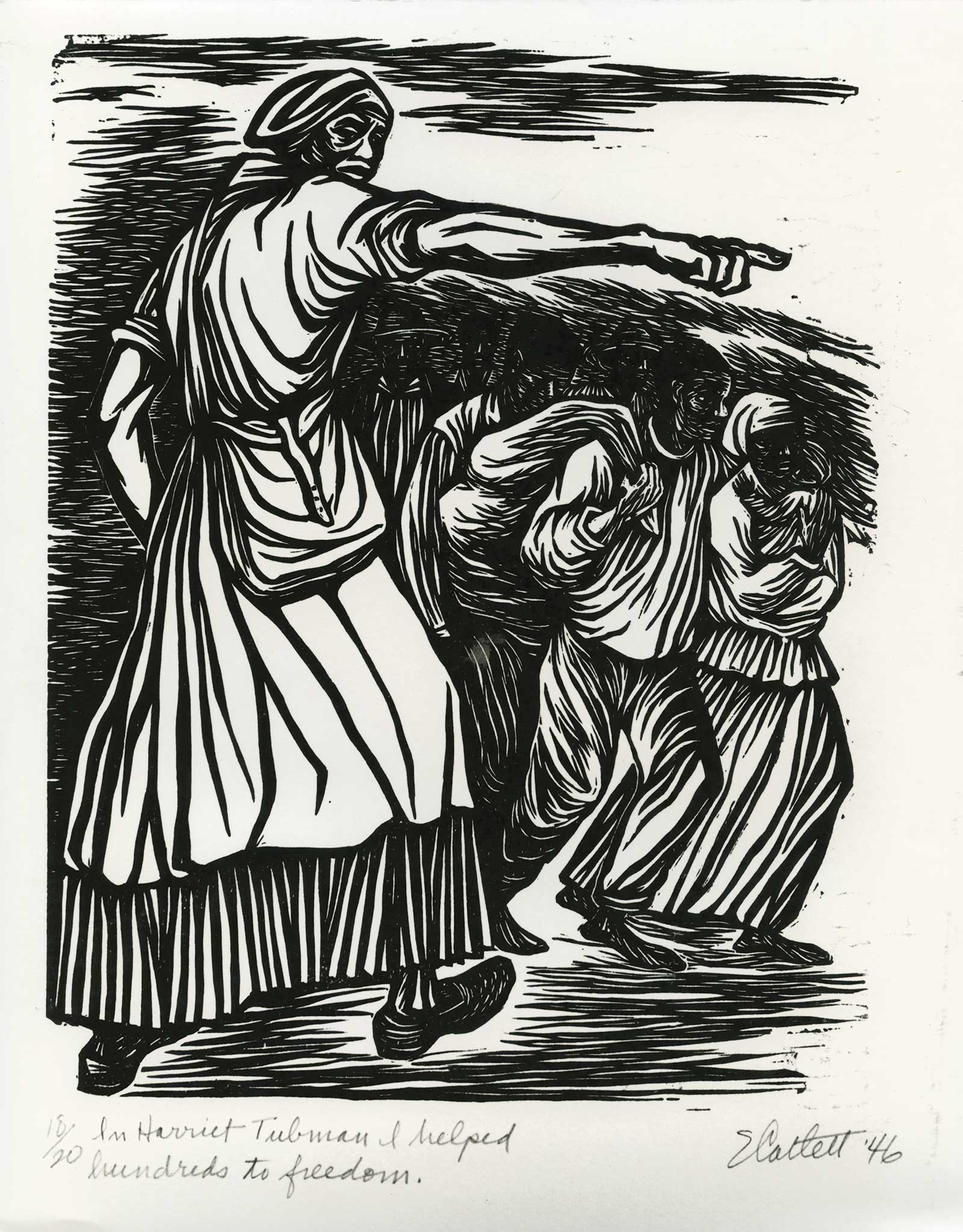
Elizabeth Catlett (1915-2012), In Harriet Tubman I Helped Hundreds to Freedom, 1946 (reprinted in 1989). Linocut ed. 18 of 20, 15 x 11 in. Collection of the Hampton University Museum, Hampton, VA. © 2025 Mora-Catlett Family / Licensed by VAGA at Artists Rights Society (ARS), NY.
Rich continues, “Thanks to the incredible work of Dr. Edda L. Fields-Black…the door has finally opened for a wider audience of readers—and now, of museum-goers—to appreciate a more holistic vision of Tubman and the ordeals and hard-won freedoms of the…enslaved Americans liberated by Tubman and her team of heroic raiders.
“Accordingly, the exhibition—expertly guest curated by Dr. Vanessa Thaxton-Ward—looks both backward and forward, situating art made in the decades following the Civil War in a centuries-long conversation with art made in the American South in recent years.”
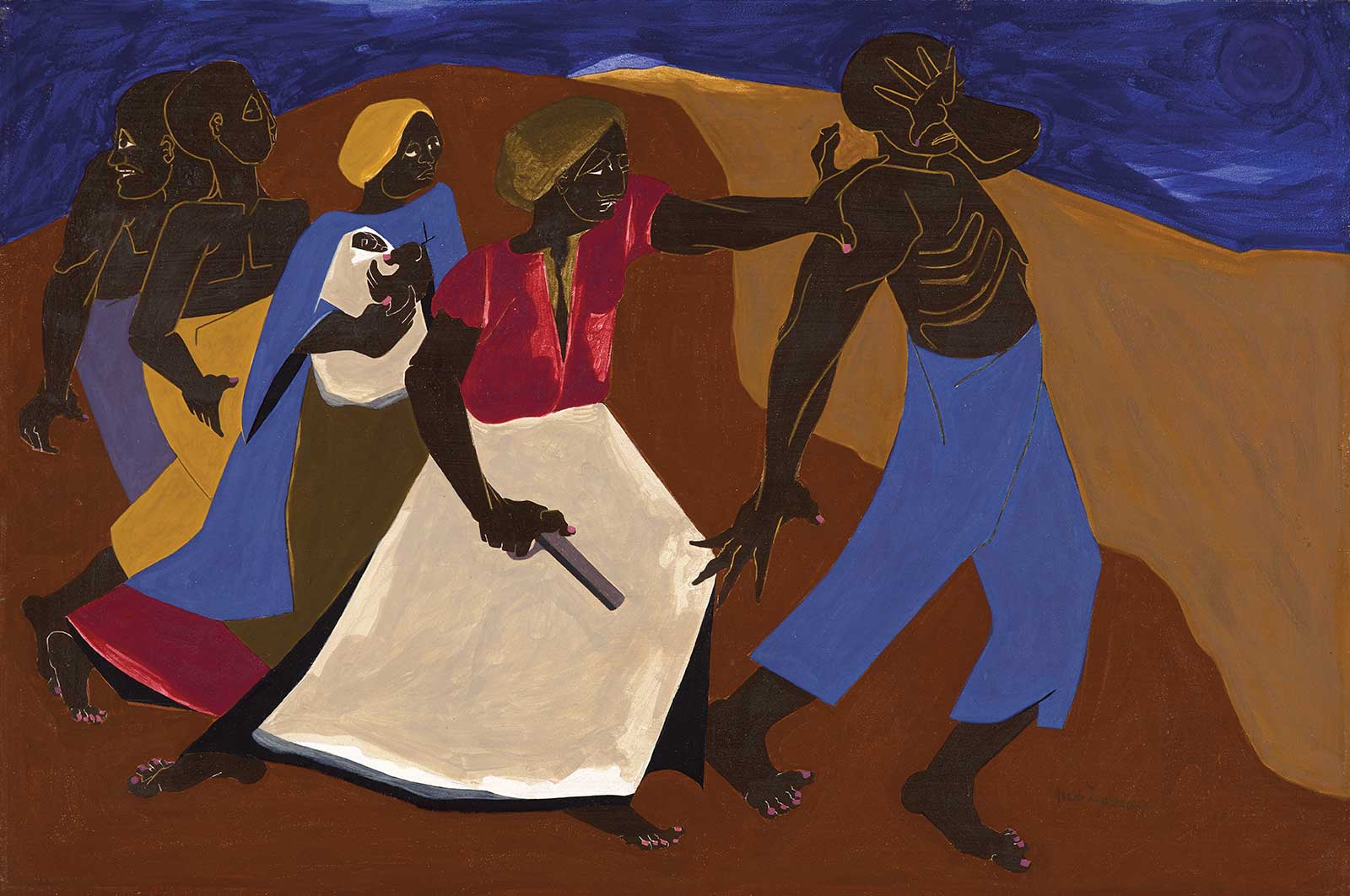
Jacob Lawrence (1917-2000), Forward, 1967. Tempera on Masonite panel, 237/8 x 3515/16 in. North Carolina Museum of Art, purchased with funds from the State of North Carolina. © 2025 The Jacob and Gwendolyn Knight Lawrence Foundation, Seattle / Artists Rights Society (ARS), NY.
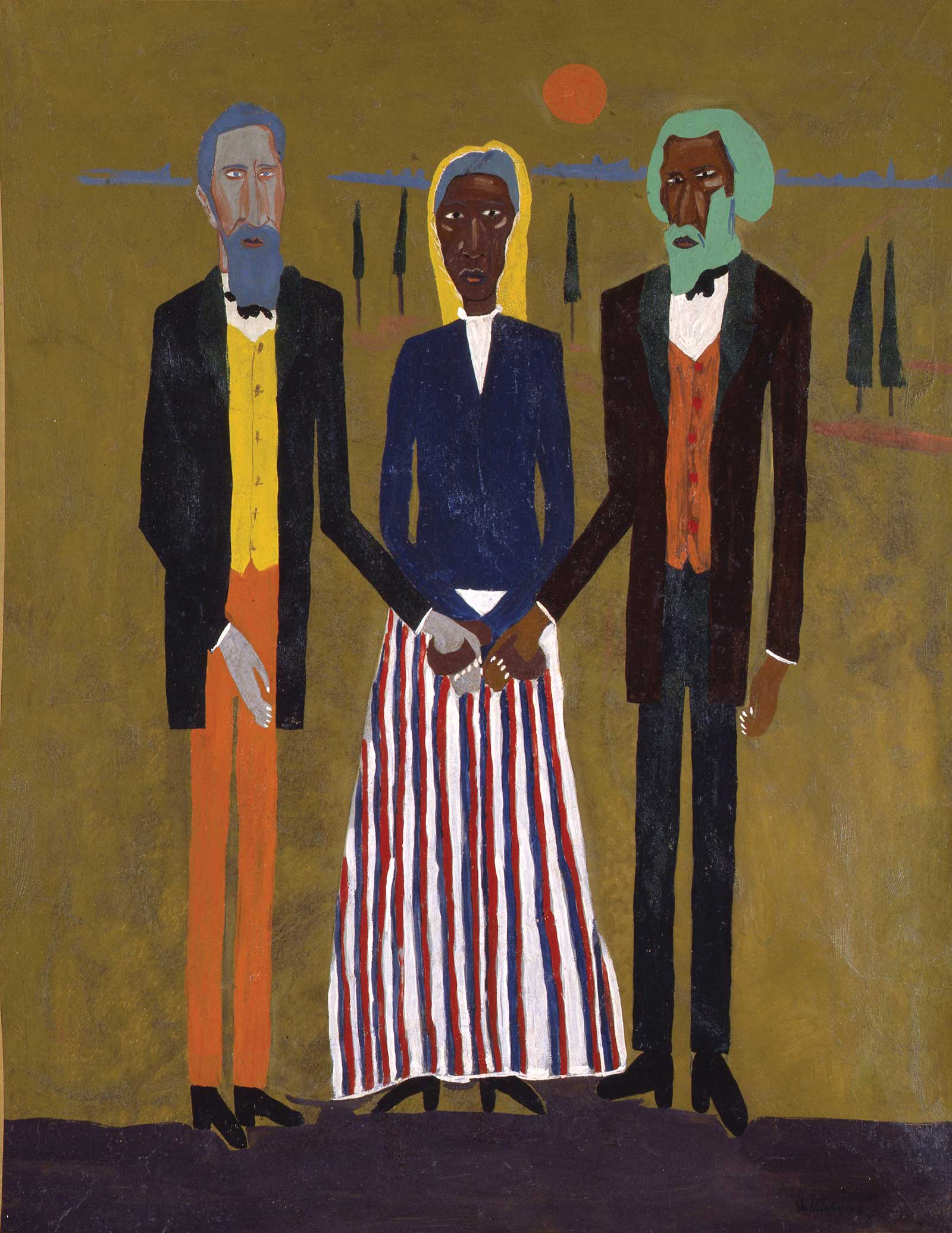
William H. Johnson (1901-1970), Three Freedom Fighters, ca. 1945. Oil on
paperboard, 41½ x 333/8 in. Collection of the Hampton University Museum, Hampton, VA.
In the historic category, Rich points to several key artworks on loans for the show including Aaron Douglas’ 1931 oil Harriet Tubman, which Rich describes as a “classic Douglas in every aspect of its composition including its central ray of light shining upon a silhouette of Tubman with broken shackles in either hand.” Another work of note is a linocut by Elizabeth Catlett from 1946, In Harriet Tubman I Helped Hundreds to Freedom. Through minimalistic linework, Catlett powerfully distills the import of Tubman’s legacy. The show also includes a 1967 tempera by Jacob Lawrence. Titled Forward, it portrays Tubman both as a leader, encouraging the enslaved she helped free to continue onward despite their fear.
Contemporary works like Plater’s 2021 oil Harriet (née Araminta Ross) and Lori Kiplinger Pandy’s bronze Fierce - The Triumph of Harriet Tubman, among many others, provide modern interpretations of Tubman’s legacy and underscore the lasting impact of her life and deeds.
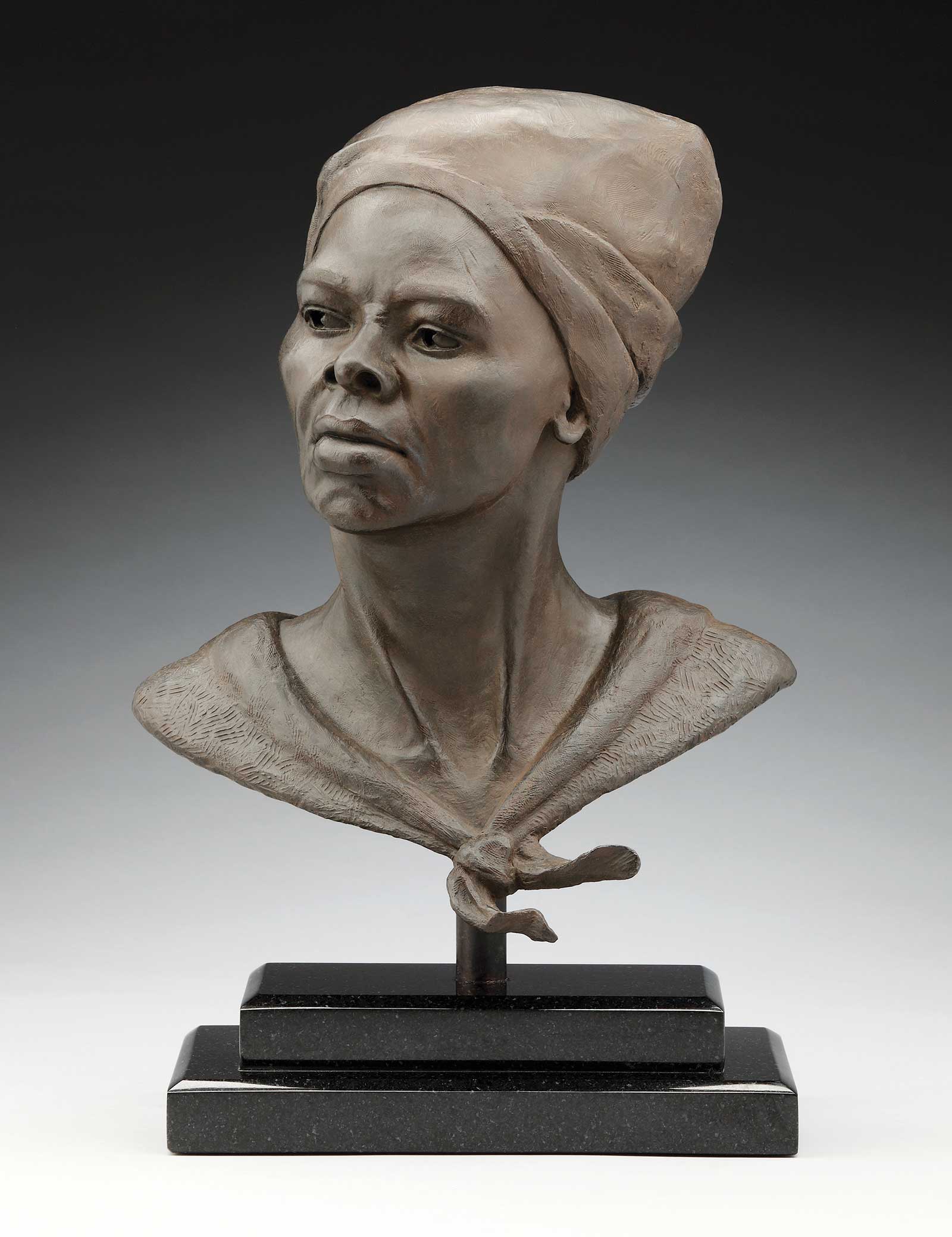
Lori Kiplinger Pandy, Fierce - The Triumph of Harriet Tubman. Bronze, 15¼ x 10 x 7½ in. Courtesy of Tubman African American Museum, Macon, GA.
“History can and should be told in so many ways, but visual art—and fine art exhibitions in the space of museums—can take each of us on a different (and many might say more impactful) journey,” says Rich. “What can be imagined from text comes to vivid life via the interpretations, reinterpretations and reimaginings of artists from throughout time.
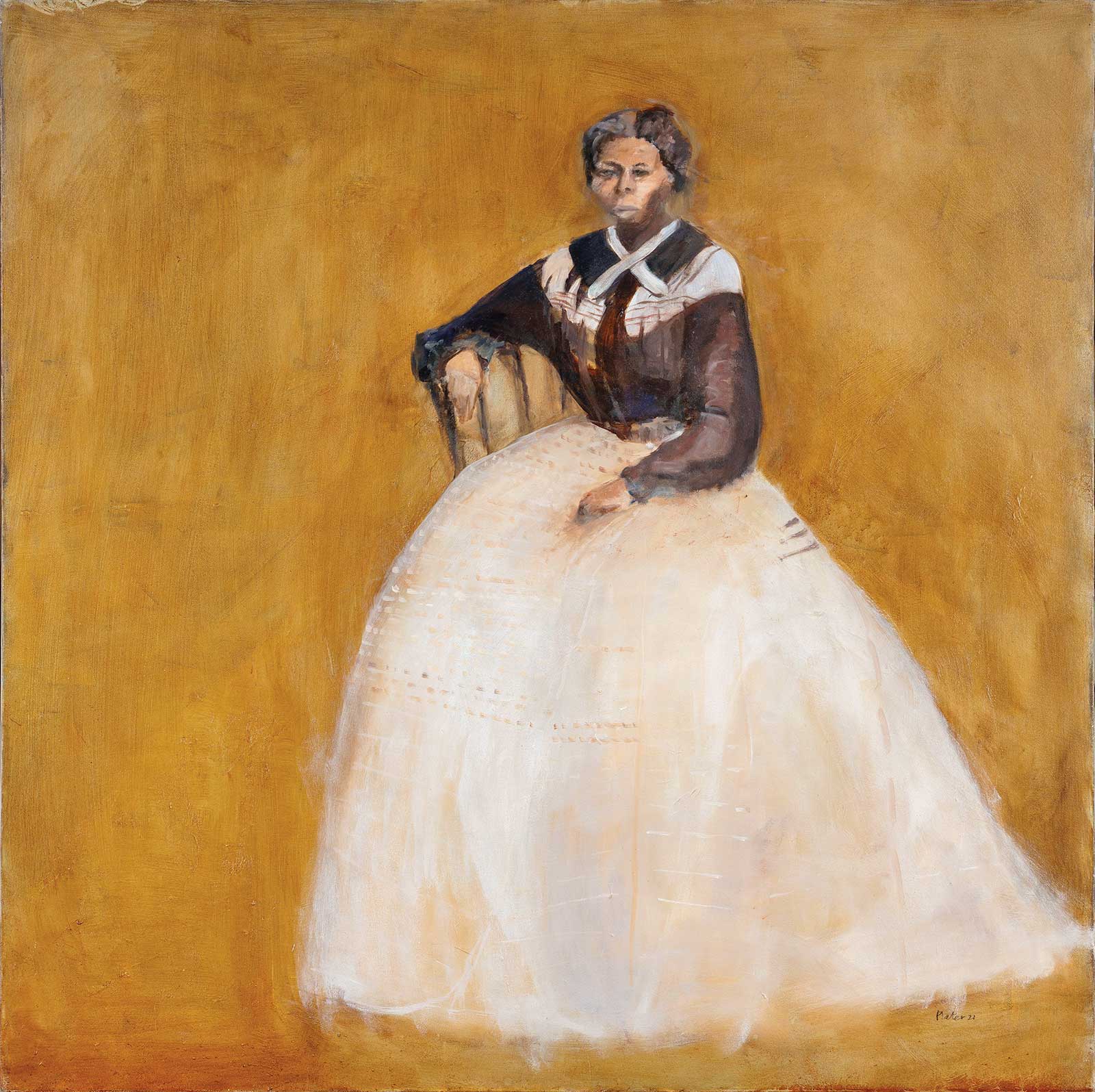
Terry Plater, Harriet (née Araminta Ross), 2021. Oil on canvas, 36 x 36 in. Private Collection.
“When it comes to the story of Tubman and the Combahee River Raid, this exhibition celebrates the multitude of ways in which this particular history can be revisited, even despite its being so relatively unsung or unheralded,” continues Rich. “The revelation of this show…is that there is so much history waiting to be told and to be told more honestly through the lenses of artists of the past and present. We also hope our visitors may be inspired by this show to seek out the stories that need to be told and to become the next generation of narrators of more complete histories into the future.” —
Powered by Froala Editor