In 1920, Marvin Cone (1891-1965) and his lifelong friend Grant Wood (1891-1942) went to Paris to improve their painting skills and to pursue their interest in impressionism and plein air painting. Both went on to develop their own distinctive style of painting in American regionalism.
Cone wrote, “The purpose of art is not to reproduce life, but to present an editorial, a comment on life...The artist does not set out to imitate nature. What would be the purpose of that? Let the camera with its clever mechanism imitate. Art, such as poetry, music, and painting, is simply a portion of the experience of the artist. When we actually see ideals, they become real to us. Art traces an abstraction and makes it audible or visual. It symbolizes the whole of life. We believe in something we can see.”
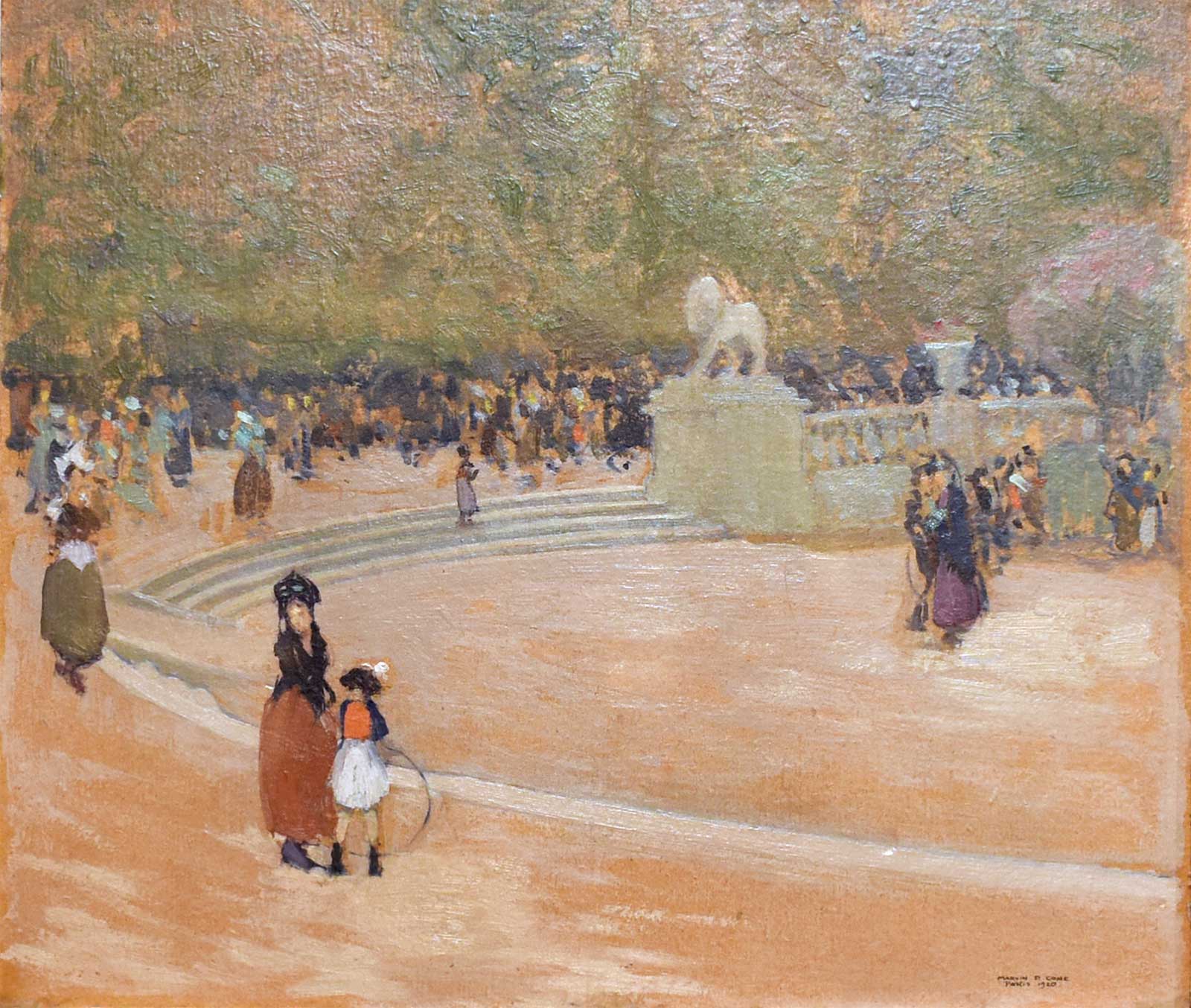
Marvin Cone (1891-1965), Around the Pool (Luxembourg Gardens), 1920. Oil on board, 12¾ x 14¾ in. Cedar Rapids Museum of Art, Museum purchase, Dorothy Houts Fund with gift of Winnifred Cone and the Marvin Cone Trust, 86.1.1. Courtesy Figge Art Museum, Davenport, IA.
The exhibition, Marvin Cone: Painter, continues at the Figge Art Museum in Davenport, Iowa, through June 8. The museum explains that Cone “was much more than a regional artist. Over the course of his career, he carved a distinctive artistic path, exploring new ideas and styles. From his dreamlike depictions of domestic interiors to his forays into abstract forms, Cone’s work reflects an artist in constant evolution, unafraid to challenge convention.”
In 1914, Cone earned a degree from Coe College in Cedar Rapids, Iowa. He studied at the School of the Art Institute of Chicago and at L’Ecole des Beaux-Arts de Montpellier, France, before returning to Coe College where he taught for 40 years.
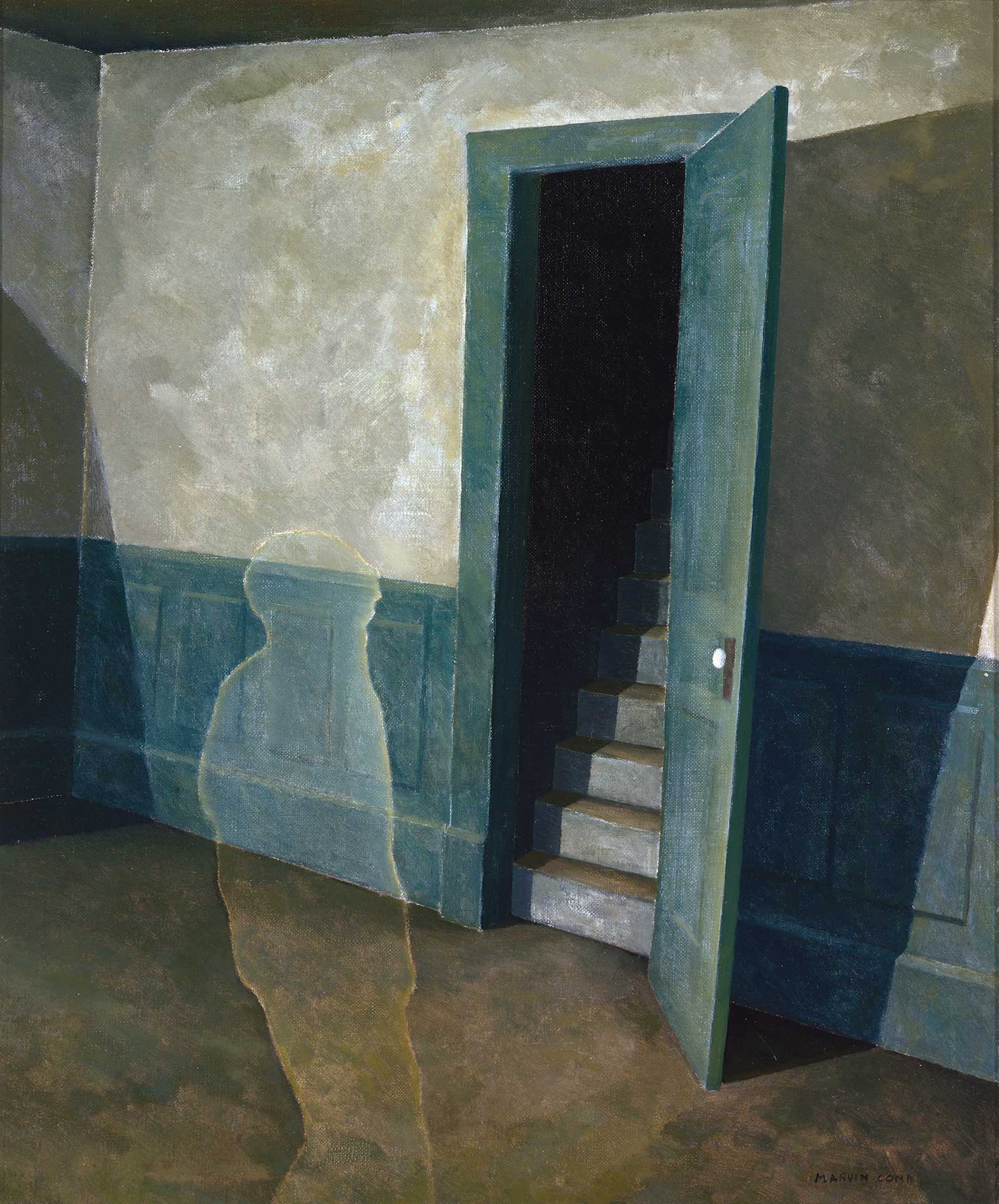
Marvin Cone (1891-1965), Green Ghost, ca. 1940. Oil on canvas, 235/8 x 195/8 in, Figge Art Museum, City of Davenport Art Collection, Gift of the estate of Gordon Fennell, 1990.27. Courtesy Figge Art Museum, Davenport, IA.
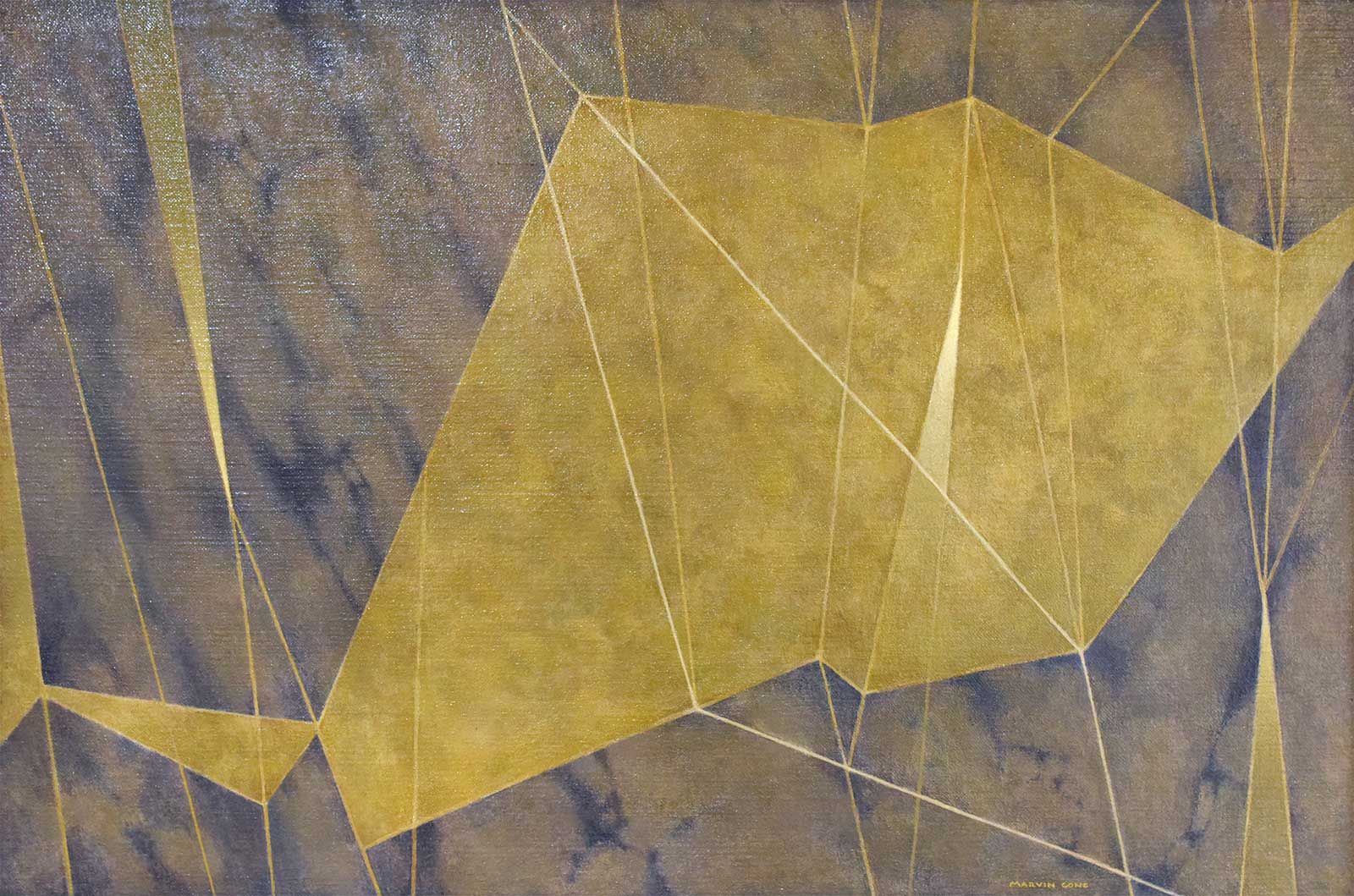
Marvin Cone (1891-1965), Golden Object Suspended, 1959. Oil on canvas, 19¾ x 29¾ in. Cedar Rapids Museum of Art, Gift of John S. Vavra in memory of Adeline T. Vavra, 83.3. Courtesy Figge Art Museum, Davenport, IA.
On a sabbatical from teaching, he began a series of nearly surrealistic interiors among which were his “ghost” paintings. Green Ghost, 1940, depicts the strong geometries of the wall, floor, door, stairway and shadows, as well as a subtle apparition. He remarked, “I have been painting haunted houses for the last 10 years. I paint them mainly for shows, not to sell…I don’t think a ghost is a trivial matter. People all over the world know about ghosts. A ghost is international. I have never seen a ghost. But I like ghosts.” One of his later stylistic shifts is the abstract canvas, Golden Object Suspended, 1959.
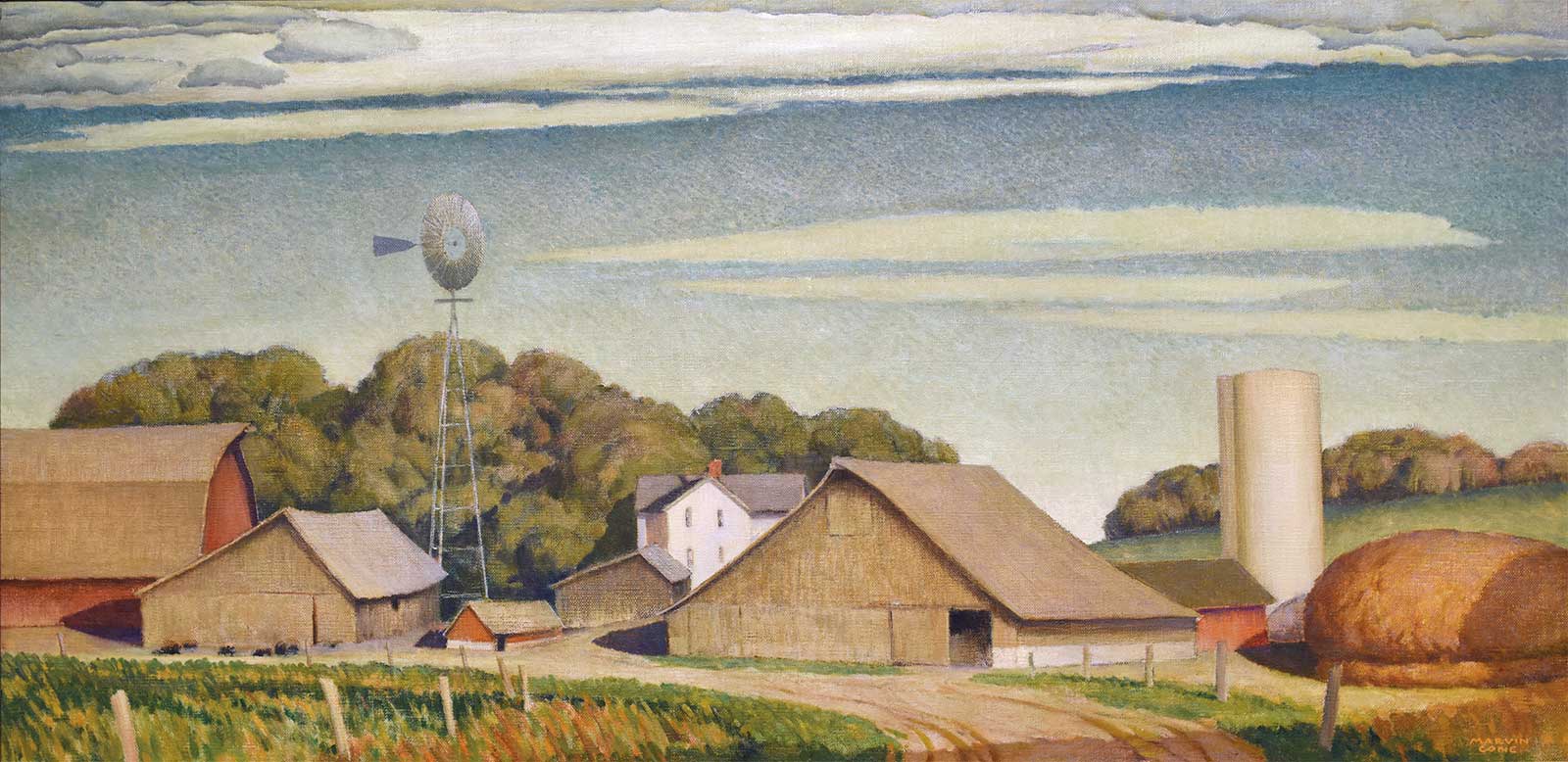
Marvin Cone (1891-1965), From Iowa, 1940. Oil on canvas, 15¼ x 31 in. Cedar Rapids Museum of Art, Bequest of John B. Turner II, 83.1.7. Courtesy Figge Art Museum, Davenport, IA.
Cone didn’t attain the fame of his friend Grant Wood, although his paintings are the proud possessions of collectors and museums across the country. The Figge’s senior co-curator, Vanessa Sage, remarks, “This exhibition is a celebration of an artist whose exceptional body of work deserves renewed attention. Marvin Cone’s legacy endures as a testament to the power of creativity, and we are delighted to share his story with our visitors.” —
Powered by Froala Editor