Beginning June 12, the Wadsworth Atheneum Museum of Art is hosting (Un)Settled: The Landscape in American Art, a collaborative exhibition among four participating museums in the Art Bridges Cohort Program’s American South Consortium.
Laura Leonard, Art Bridges project coordinator and curatorial researcher on the final artist selection and interpretative materials, explains, “This project was enriched by the dialogue we had with our partners and sharing different viewpoints on the topic. As a result, the exhibition includes several regional artists to expand beyond the familiar and expected.”
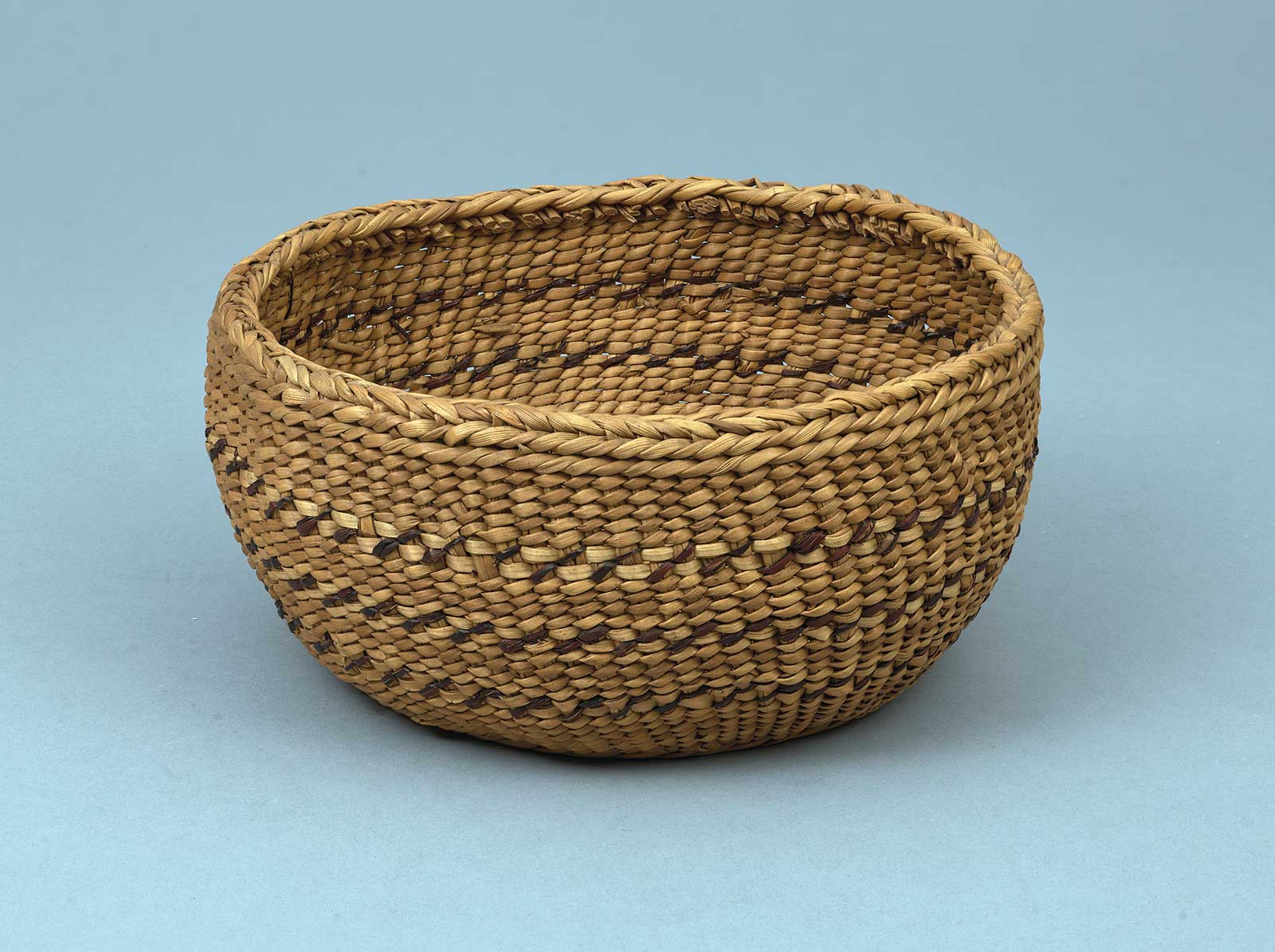
Puget Sound Salish / WA, Round Bowl, ca. 1900. Twine. Wadsworth Atheneum Museum of Art, bequest of Mrs. Constance S. Mead, 1918.759.
Expanding beyond the familiar and expected are a Puget Sound Salish, Washington, woven round bowl, circa 1900; and Aunt Fran’s Basket, 2019, a blown glass bowl by Dan Friday (Lummi Nation).
Erin Monroe, Krieble Curator of American Paintings and Sculpture at the Wadsworth Atheneum Museum of Art, shares, “This pairing means so much to our intention to go beyond the expected notion or concept of a depicted landscape.”
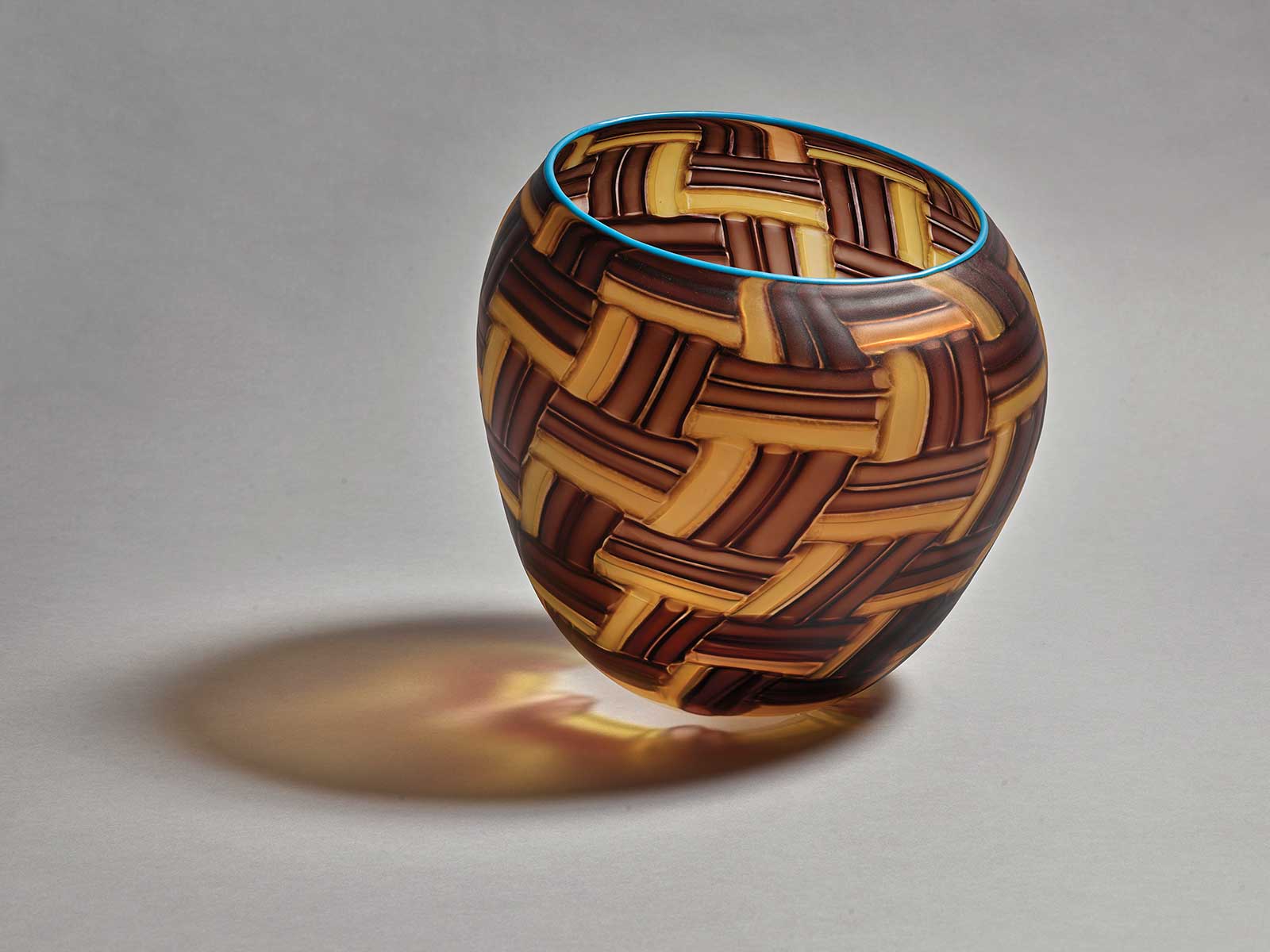
Dan Friday (Lummi Nation), Aunt Fran’s Basket, 2019. Blown glass. Wadsworth Atheneum Museum of Art, purchased through the gift of the family of Leta Marks in her honor, 2023.17.1 © Dan Friday.
In the second episode of the (Un)Settled podcast, a presentation of the American South Consortium, Monroe spoke with Drew Baron, executive producer and content strategist at the Columbia Museum of Art. She explained to him, “The idea of landscape has been somewhat birthed out of a [narrower] representation, mostly oil paintings, beginning in the 19th century. We wanted to really expand that concept. And when you think about the materiality of earth—nature—as an element that is within landscape, [we thought] what about objects made from the earth? That’s how we got to baskets specifically. So, in the exhibition you’ll see there’s a 19th-century/early 20th-century Coast Salish basket, which is a kind of jumping off point for Friday’s works, and the idea that he’s taking a very traditional, longstanding art form in the terms of basketry and reimagining it in glass was exactly what we wanted to really define our understanding of landscape.”
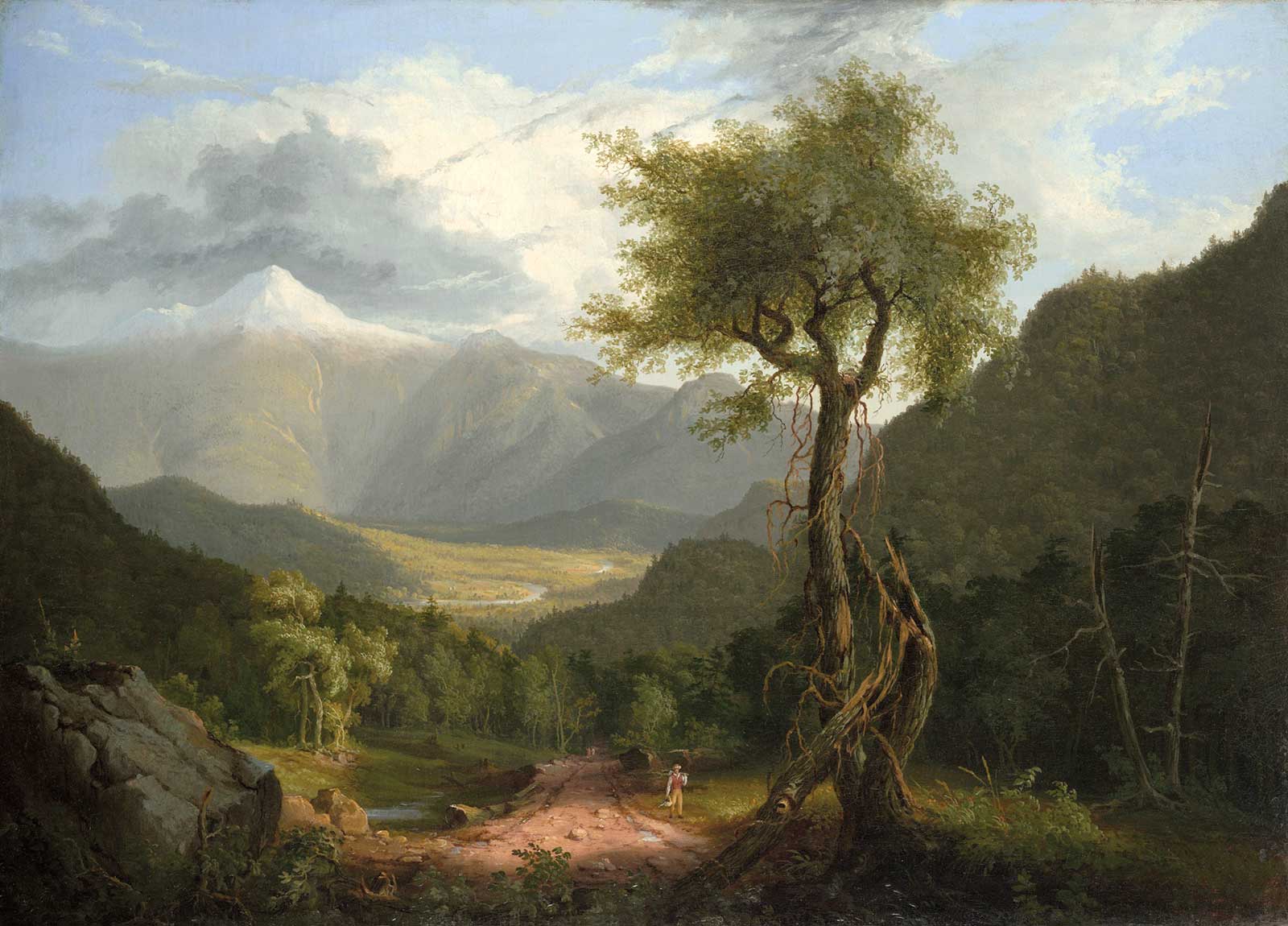
Thomas Cole (1802-1848), View in the White Mountains, 1827. Oil on canvas. Wadsworth Atheneum Museum of Art, bequest of Daniel Wadsworth, 1848.17.
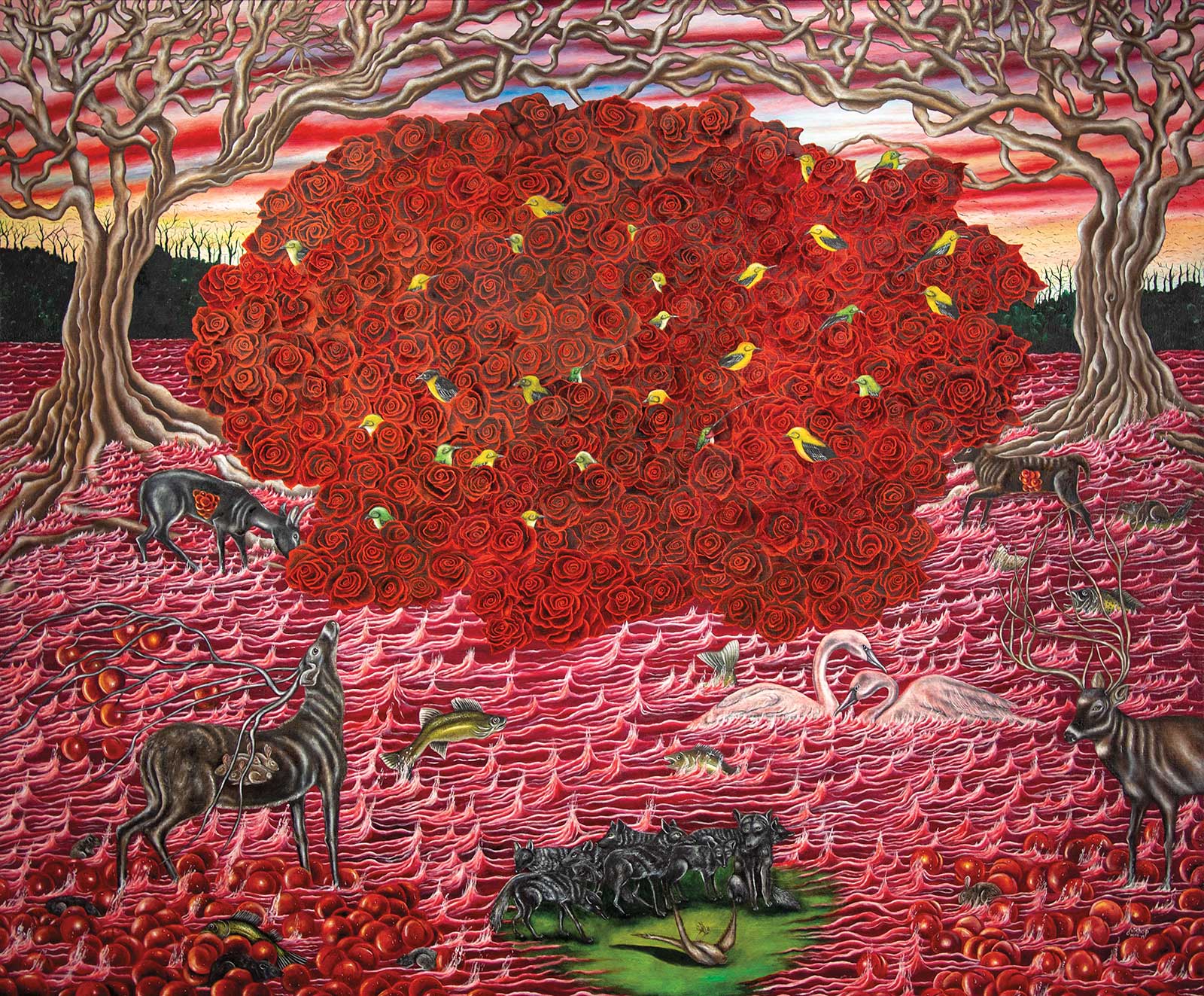
Above: Jacqueline Bishop, After the Rain (Methane), 2014-2015. Oil on linen. Montgomery Museum of Fine Arts Association purchase, 2018.7 © Jacqueline Bishop.
The exhibition features over 60 works of art including baskets, ceramics, glass, photography and paintings. It is divided into five thematic sections: The Beaten Path, Expanding Horizons, Counterpoints, seminatural and (Un)Settled. Each section “opens with an artwork from the 19th century with modern and contemporary interpretations,” the museum explains. It draws from the collections of the Wadsworth, the Columbia Museum of Art in South Carolina, and the Montgomery Museum of Fine Arts in Alabama. Together, the four form the American South Consortium.
Drawing from its own collection of Hudson River School paintings, the Wadsworth includes View in the White Mountains, 1827, by Thomas Cole (1802-1948). Cole was an early environmentalist, writing in his 1835 “Essay on American Scenery,” “I cannot but express my sorrow that the beauty of such landscapes are quickly passing away—the ravages of the axe are daily increasing—the most noble scenes are made desolate, and oftentimes with a wantonness and barbarism scarcely credible in a civilized nation. The wayside is becoming shadeless, and another generation will behold spots, now rife with beauty, desecrated by what is called improvement.”
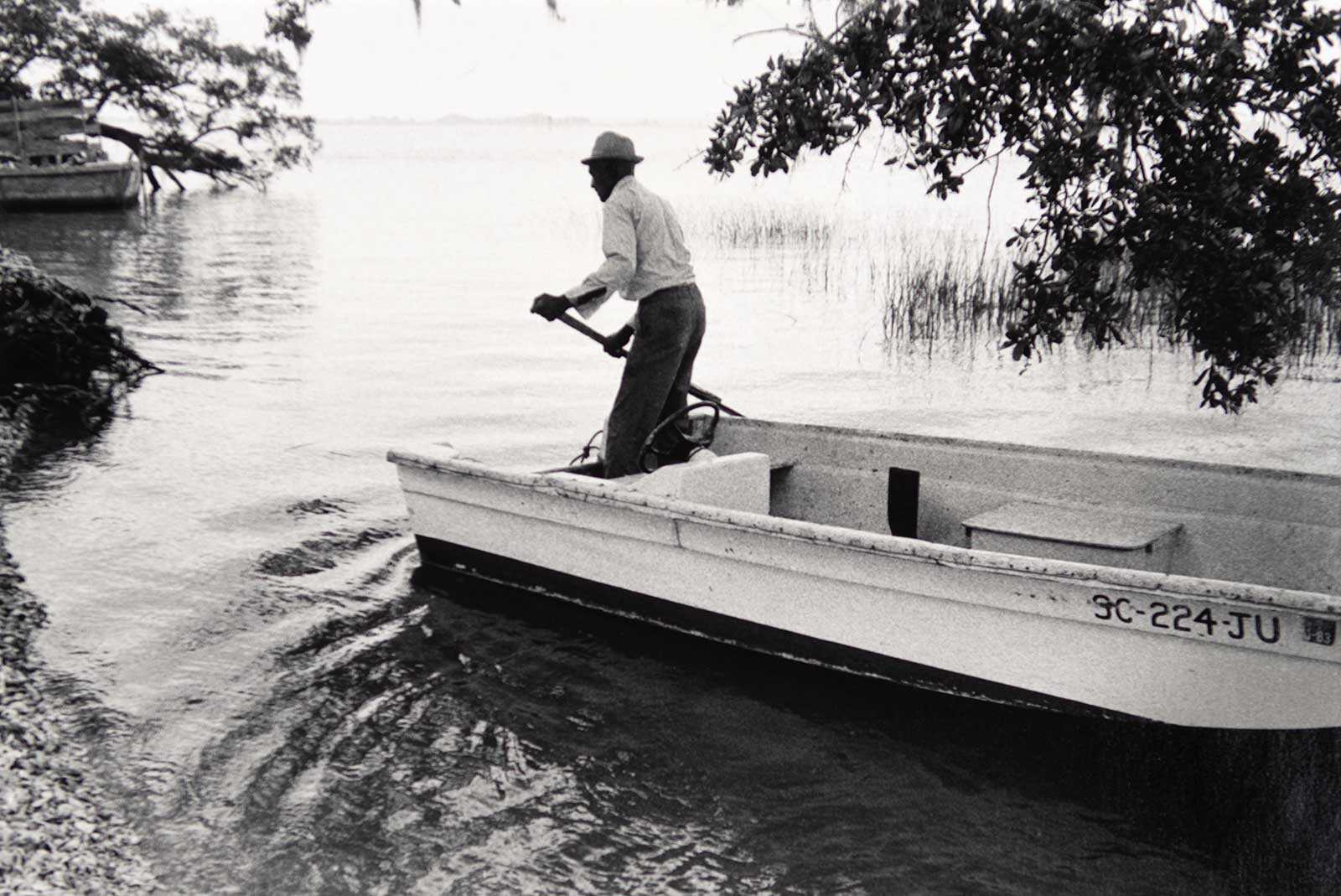
Right: Jeanne Moutoussamy-Ashe, Jake with his boat arriving on Daufuskie’s shore, 1978. Gelatin silver print. Columbia Museum of Art, gift of Jeanne Moutoussamy-Ashe, 1985.4.38 © Jeanne Moutoussamy-Ashe.
Jacqueline Bishop’s After the Rain (Methane), 2014 to 2015, is from the collection of the Montgomery Museum of Fine Arts. Bishop also comments on the beauty of the natural world and the negative impact of human habitation. The Montgomery Museum comments on “the ancient, gnarled trees, the masses of red roses, the finches that take refuge there, and the wave-like forms of water that increasingly are encroaching on the Gulf Coast landscape. The brilliant colors reflect the majesty of a sunset, but also the chemical residues in the atmosphere that produce those sunsets. Her emaciated animals allude to the impact of our industrialized society on the ecosystem and suggest the consequences for mankind’s future.”
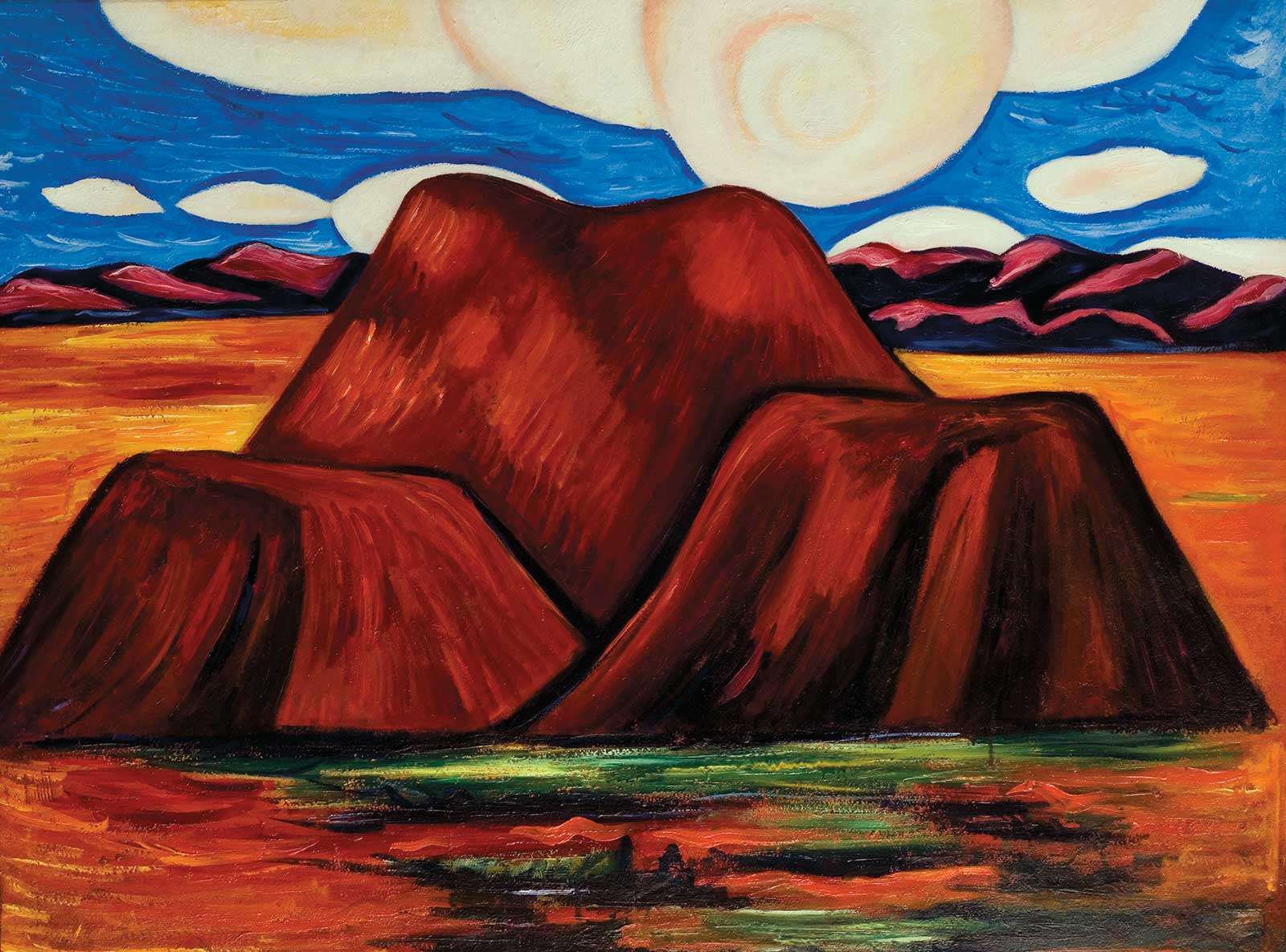
Marsden Hartley (1877-1943), Earth Warming, 1932. Oil on paperboard. Montgomery Museum of Fine Arts, the Blount Collection, 1989.2.15.
Jeanne Moutoussamy-Ashe’s gelatin silver print, Jake with his boat arriving on Daufuskie’s shore, 1978, is part of her series documenting the Gullah Geechee who are descendants of enslaved Africans who acquired land from white plantation owners after the Civil War. Their isolation on Daufuskie Island, South Carolina, and other coastal plantations helped preserve their culture. Moutoussamy-Ashe said her photographs were to “keep for the eyes of history the way Daufuskie was.”
The exhibition’s final venue is at the Wadsworth in Hartford, Connecticut, where it closes on September 14. —
Powered by Froala Editor