Based in the Pittsburgh area, the O’Brien Art Foundation’s mission “is to foster the preservation, understanding and appreciation of 20th-century American art beyond the accepted canon” through its efforts “to acquire, research, conserve, exhibit and loan works of art—in addition to supporting education, scholarship and publishing.” The foundation is a charitable organization formed in 2019 by long-time collector Marty O’Brien, whose vision is to create an encyclopedic repository of works across a variety of media by American artists from the late 19th century through 1985. The foundation believes that a 40-year historical reflection is helpful to contextualizing the art of any era. Rather than focusing on the most prominent artists as defined by today’s standards, the foundation acquires and presents the best examples of art produced by artists who were significant during their lifetime, but who have fallen outside the current art historical canon. The foundation maintains its own collection and represents Mr. O’Brien’s personal collection. Together, the two collections contain over 1200 objects with many of the works being housed in original or period frames, which is a point of emphasis for the foundation.
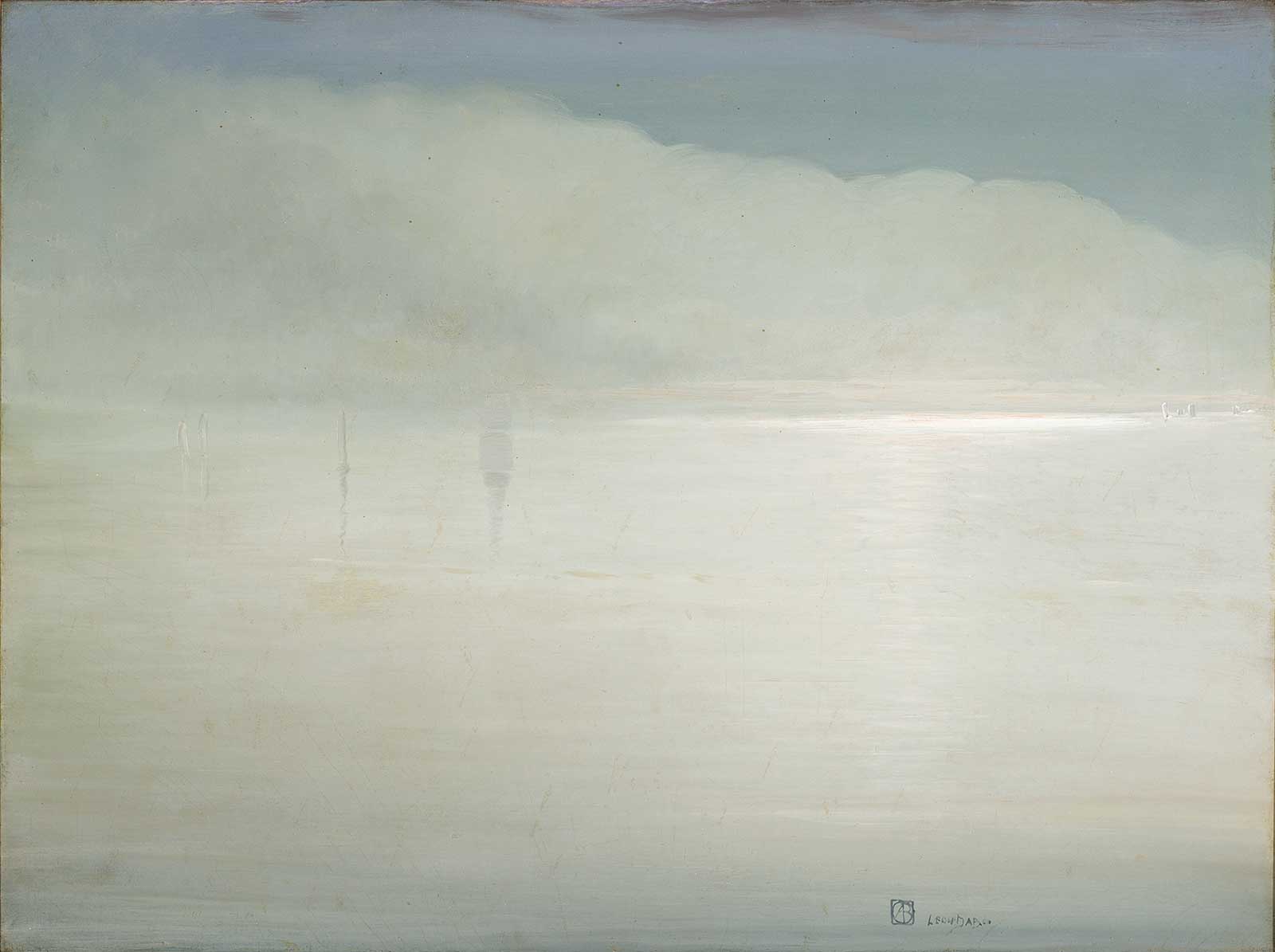 Leon Dabo (1864-1960), The Calm. Oil on canvas, 27 x 36 in. The Marty O’Brien Collection of American Art.
The foundation’s focus coincides with the development of modernism in the United States. As an encyclopedic endeavor, the collections include prime examples across all major genres of modernism from its beginnings in the 1880s through the 1950s. The roots of American modernism are found in tonalism. Comprised principally of quiet, sometimes intimate landscapes, tonalism offered a contemplation on what was seen as the nation’s lost idyllic agrarian past contrasting deeply with rapid urbanization and industrialization of the last two decades of the 19th century. Leon Dabo’s (1864-1960) tonalist masterpiece The Calm, pushes the boundaries of representation toward abstraction. Typical of what art historian David A. Cleveland characterizes as tonalism’s “emphasis on the broad, graphic, ultimately abstract reading of major forms,” the work eschews narrative for a focus on nature’s symbolic and perceptual capacity.
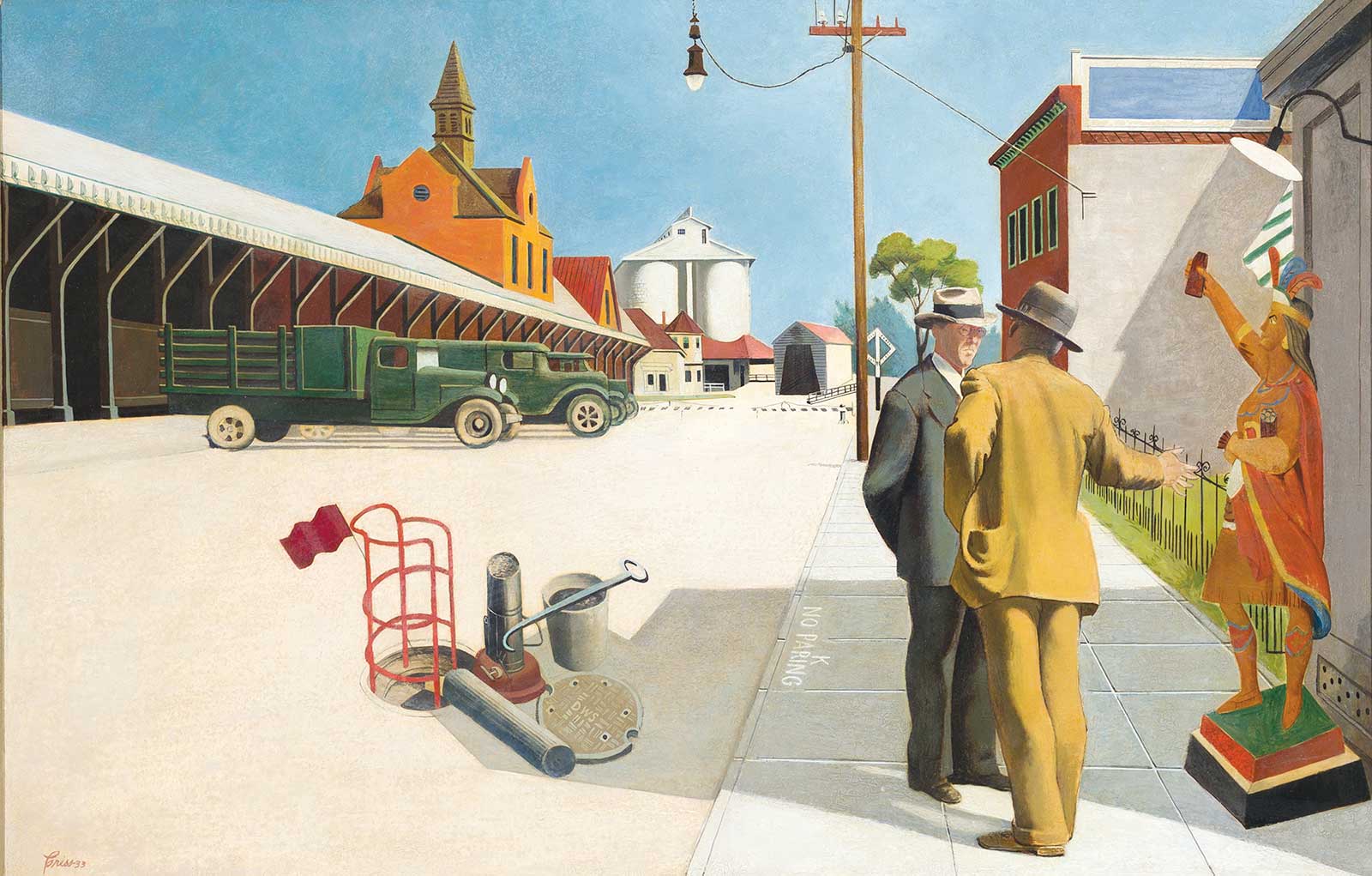 Francis Criss (1909-1973), Americana, 1933. Oil on masonite, 21½ x 33¼ in. The Marty O’Brien Collection of American Art.
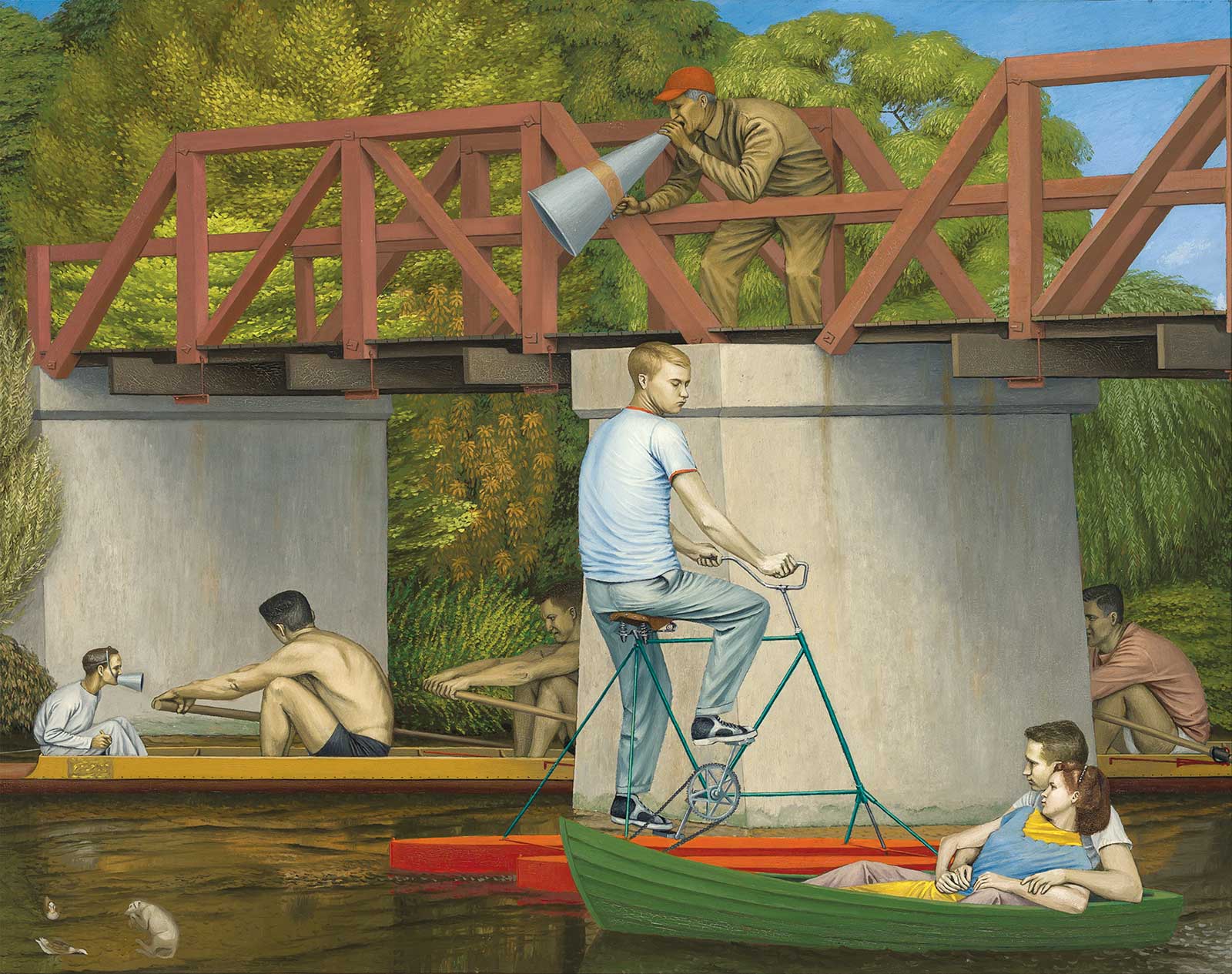 Henry Koerner (1915-1991), The River 1949. Oil on masonite, framed: 38 x 46 in. The Marty O’Brien Collection of American Art.
Francis Criss (1901-1973) is an artist who was core to the precisionist and magic realist impulses of modernism during the 1930s and 1940s. His Americana, 1933, is a precisionist icon that presages his later magic realist works. The flattened planes of bright colors, careful rendering, rakish angles, and focus on the built environment exemplified by Americana, are classic precisionist concerns. The choice of subject matter, particularly the depictions of silos, automobiles, electricity and modern tools, reflects the desire of artists of this time to emphasize that which was thought to be truly American. In this work, a wooden figure based on stereotyped images of Native Americans, is seemingly engaged in conversation with the machined and nearly faceless businessmen, adding a sense of ambiguity that makes the picture seem simultaneously real and unreal. Henry Koerner’s The River, 1949, is similarly characterized by meticulous rendering, sleek forms and unusually clear but off-kilter perspectives, all positioned around a sturdy bridge with its solid support structures, speaking to Lincoln Kirstein’s observation that magic realism was a “frank, cool art” in which artists created an alternate reality simply by depicting it as if it existed.
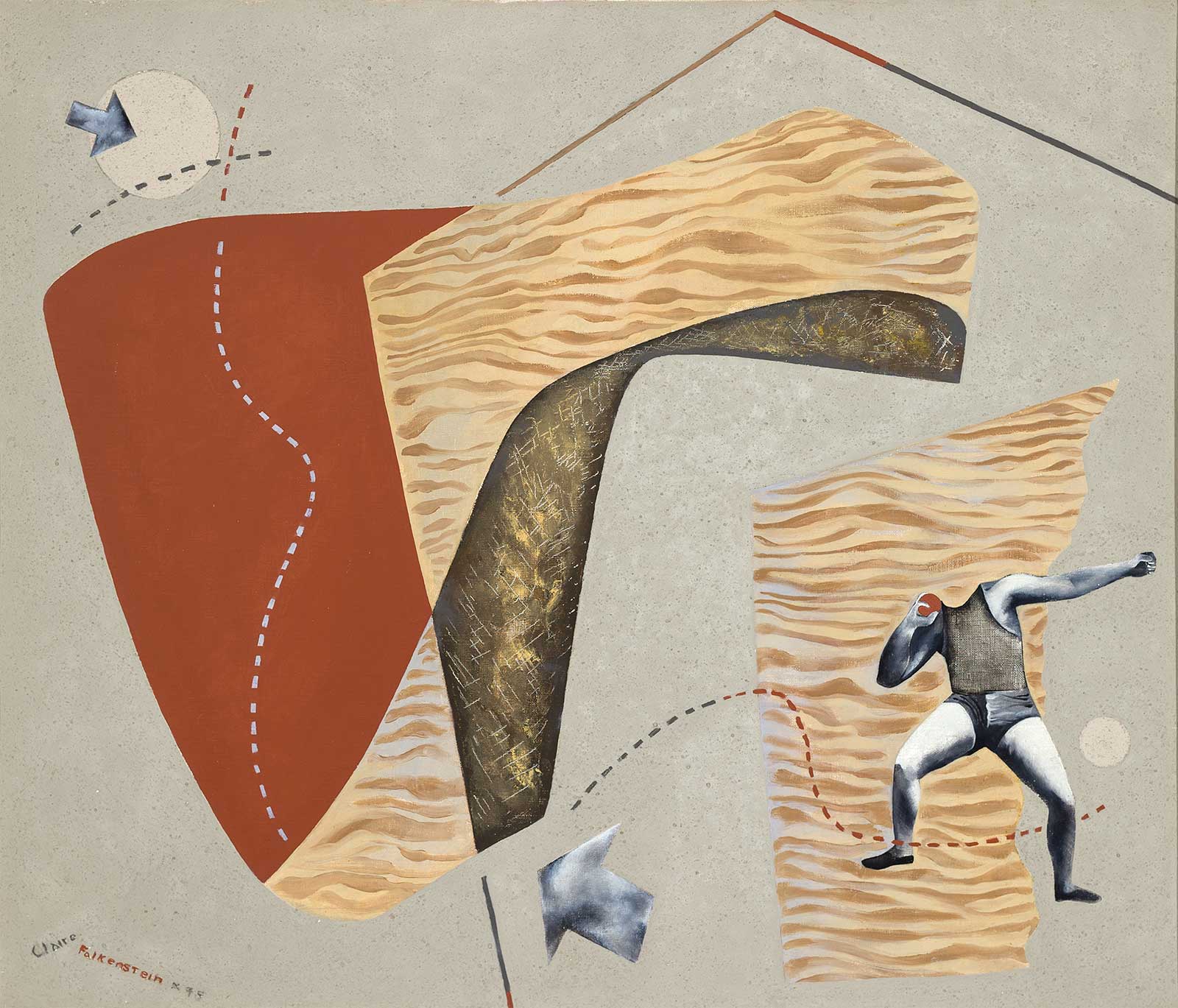
Claire Falkenstein (1908-1997), Values. 1945. Oil on linen, framed: 35¼ x 30¼ in. The Marty O’Brien Collection of American Art.
Strong examples of surrealism from the collections include a pair of works by California-based artists Claire Falkenstein and Knud Merrild, whose Alpha & Omega from 1935 consists of oil cloth, magazine clippings and newspaper, recalling the popular collage technique of Dada as a means to engage the constructions of mass media and consider the relationship of fine art to lesser recognized forms of art, such as handcraft. Falkenstein’s Values, 1945, also references Dada as well as cubism. Charles Howard’s (1887-1950) The Mother (Makes the Son) Plants the Seed, 1937, exemplifies disturbing imagery of disfigured human bodies and deconstructed environments that developed within surrealism, and reflected on fear and existential dread as societies moved toward the conflagration of World War II.
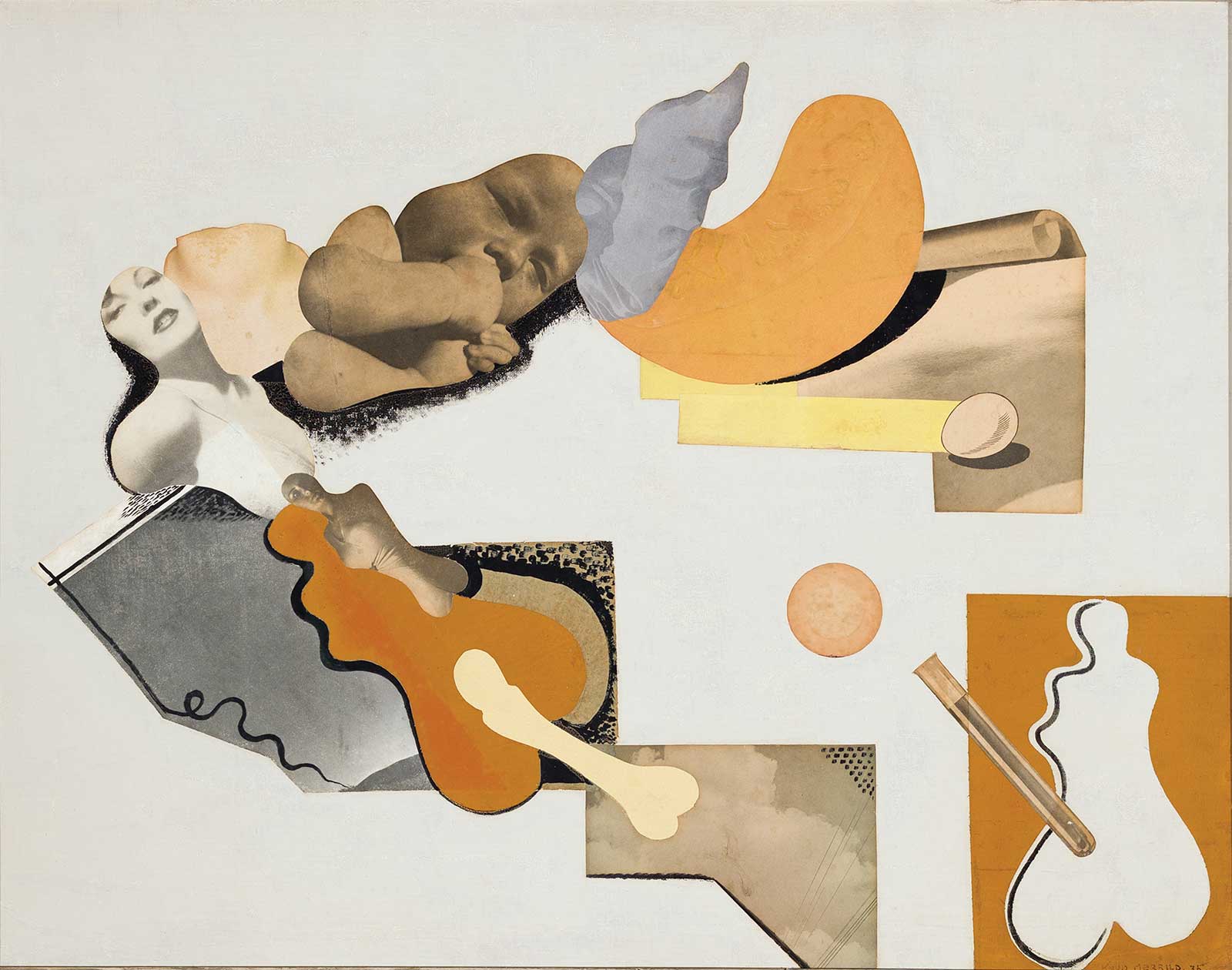
Knud Merrild (1894-1954), Alpha & Omega, 1935. Oil cloth, paper, magazine and newspaper cutouts, pen and ink on board, 24 x 30 in. O’Brien Art Foundation.
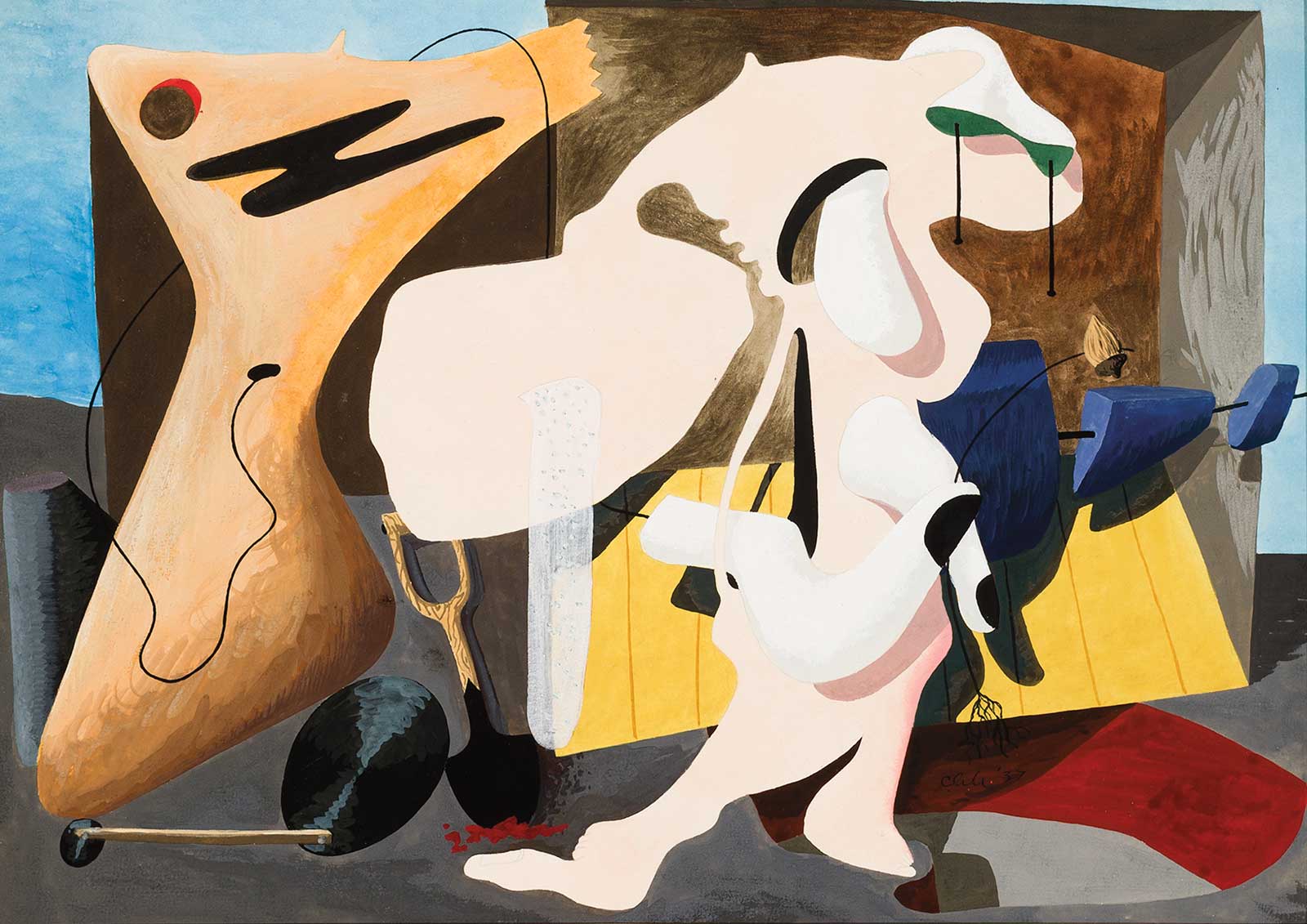
Charles Howard (1899-1978), The Mother (Makes the Son) Plants the Seed,1937. Gouache and pencil on paper, framed: 16¾ x 21 in. The O’Brien Collection of American Art.
The collections include a large body of works tracing the development of expressionism in the United States, including prints from the 1930s through the 1950s, which explored the American scene. Contrary to conventional expectations of women to remain focused on domestic activities, many female printmakers, including Louise Freedman (1915-2001) used advances in serigraphy (a process commonly used in the WPA poster sections) to develop expressionist scenes of American industrialization and the workers who participated in it, as in the case of Palmerton, Pennsylvania, circa 1941. Another printmaker, Alice Trumbull Mason (1904-1971), worked at the influential Atelier 17 and is represented by Suspension, 1946. From the following decade, the foundation collection includes Portrait of Tom Hess, 1956, by Elaine de Kooning (1918-1989), a key practitioner of expressionist portraiture. Hess himself was an important art leader, serving for over 20 years as editor of ARTNews where de Kooning worked as a writer and critic.
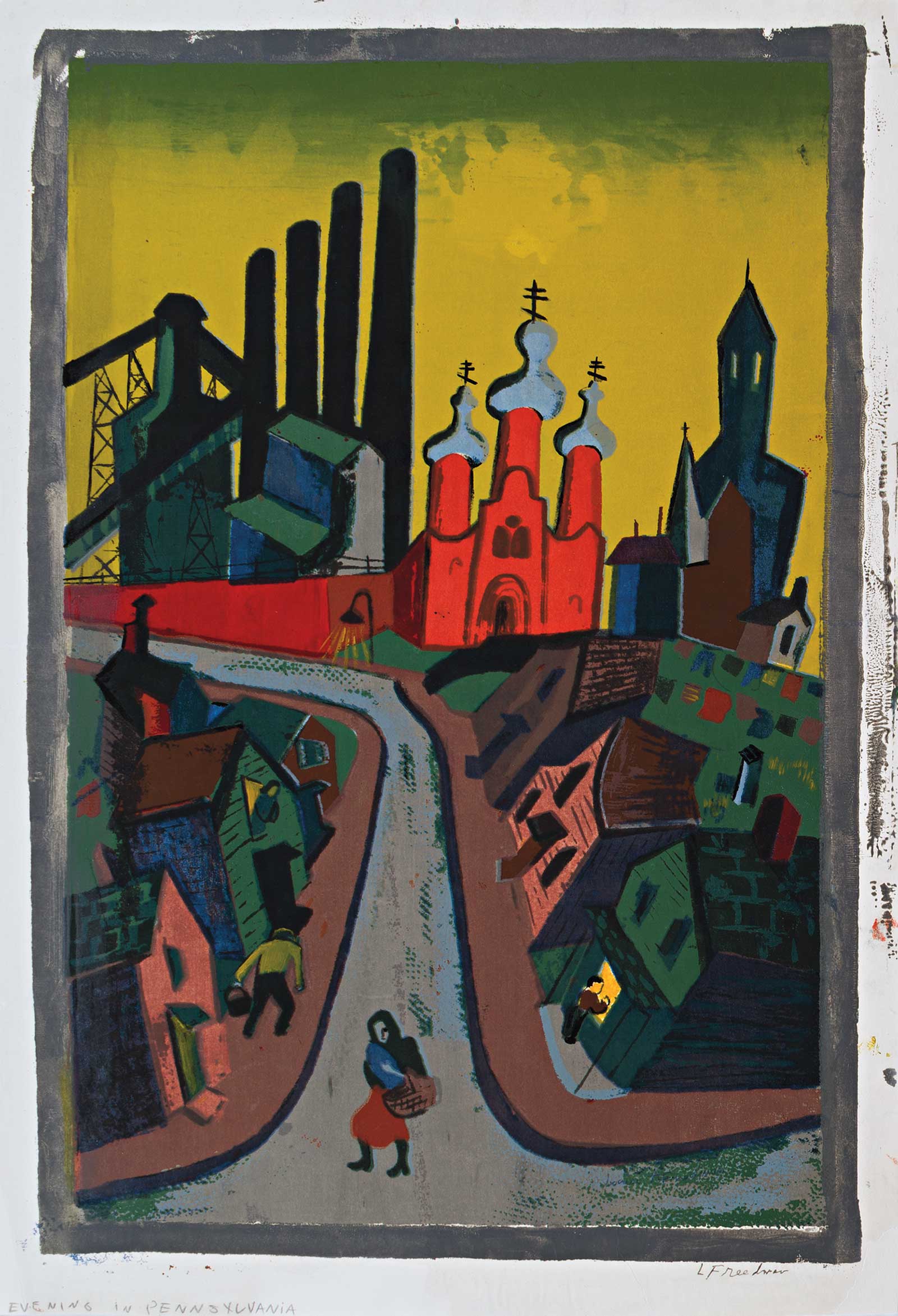
Louise Freedman (1915-2001), Palmerton Pennsylvania, ca. 1941. Serigraph, 19 x 12¾ in. The Marty O’Brien Collection of American Art.
A core function of the foundation is to lend works to other institutions and support research and publishing related to underappreciated artists. Harold Cousin’s (1916-1992) Plaiton, Long, Standing, 1958, from the foundation collection recently returned from the traveling exhibition Americans in Paris: Artists Working in Postwar France, 1946–1962. The foundation is currently sponsoring a monograph on the modernist printmaker Fred Becker (1913-2004) and what promises to be the most complete publication on the development of serigraphy in the United States during the 1930s through the 1950s.
The foundation welcomes inquiries related to financial support and the donation of artwork. It can be reached at info@obrienartfoundation.org and via its website at obrienartfoundation.org. The foundation looks forward to opening its new headquarters in 2027.
Chris Walther is a private gallerist and art advisor based in Los Angeles. He serves on the board of directors of the O’Brien Art Foundation. —
Powered by Froala Editor