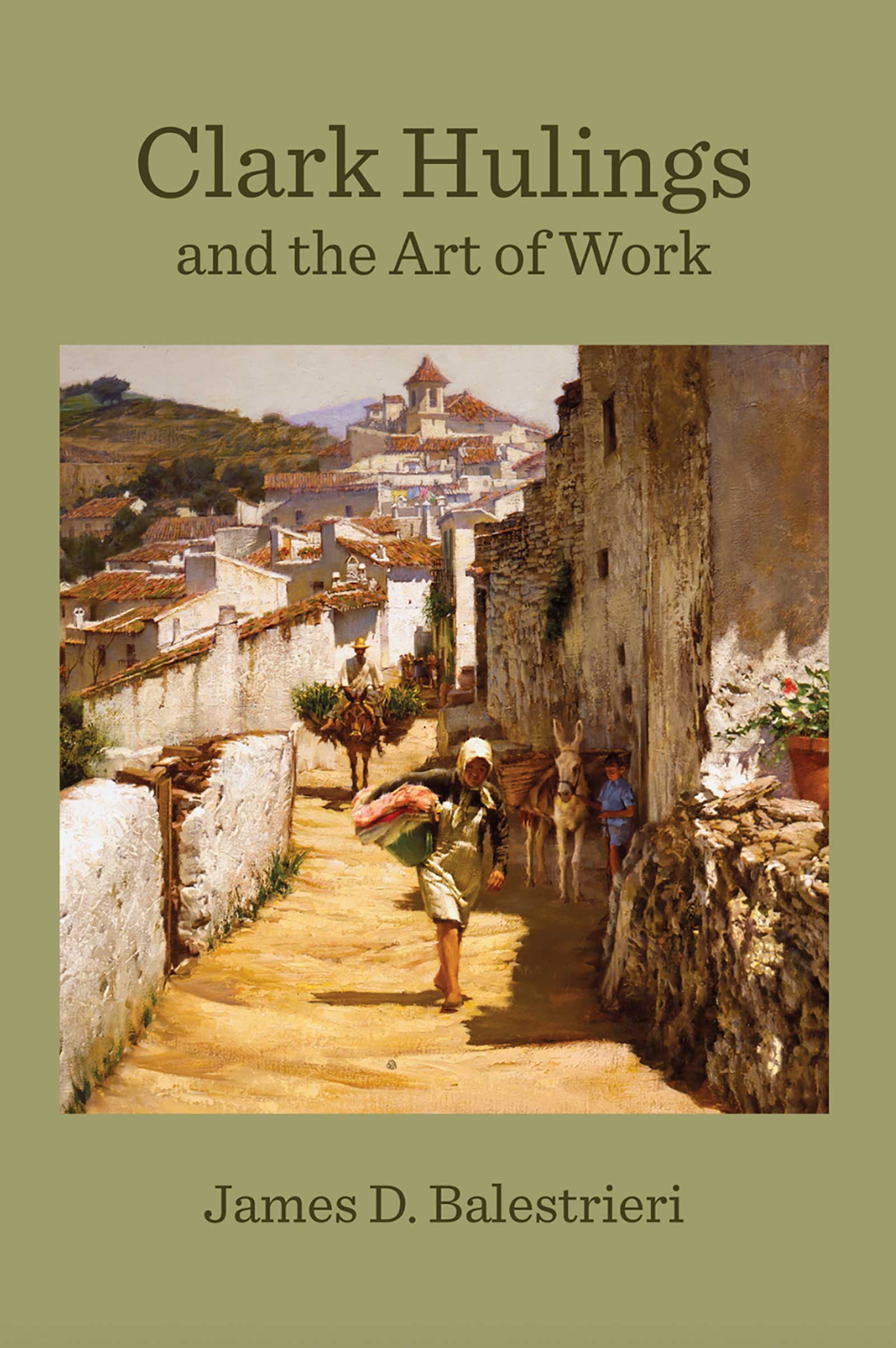
Clark Hulings and the Art of Work
By James D. Balestrieri (Cambridge Scholars, November 2024). Oversized softcover, 133 pages with over 200 illustrations, £66.99
American Fine Art Magazine: What prompted you to write this book?
James Balestrieri: I had written about Clark Hulings (1922-2011) many times before the Hulings Foundation asked if I would have interest in writing a book about him and his art. I’d met the artist a couple of times, most notably during what would prove to be his last major exhibition and I had always found his work wonderful, supremely accomplished, unusual and unique in the Western art world. The task intrigued me and when I learned that Elizabeth Hulings, Jack Morris and others associated with the artist wanted something more than the typical biographical monograph, something that would place Hulings in the continuum of American realism and allow me to examine the American art world he operated in, I eagerly accepted.
AFAM: What makes Clark Hulings an important American painter?
JB: Clark Hulings, in many ways, epitomizes his times. He started out with a degree in physics from Haverford College and had headed to Los Alamos to become part of the nuclear project. Tuberculosis, which ran in his family, set him on another course, one that would take him about as far from the nuclear age as he could imagine. Hulings began his career in portraiture, moved to illustration during the heyday of the paperback and magazine industries, and ended up as a superb easel painter after traveling and painting extensively in Europe, North Africa, the Near East, Scandinavia, Mexico and Central America. Hulings painted what he wanted and sold what he painted. What’s more, Hulings absorbed and transformed realist technique in ways few, if any, other artists can claim. From Vermeer to Van Gogh, from John Singer Sargent to John Sloan, from Barbizon France to Russian impressionism, spanning realism and abstraction, you can read the story of several centuries of Western painting in the works of Clark Hulings. And yet, Hulings developed a personal style all his own—his work is unmistakable. Others try to copy him to this day but he’s truly inimitable.
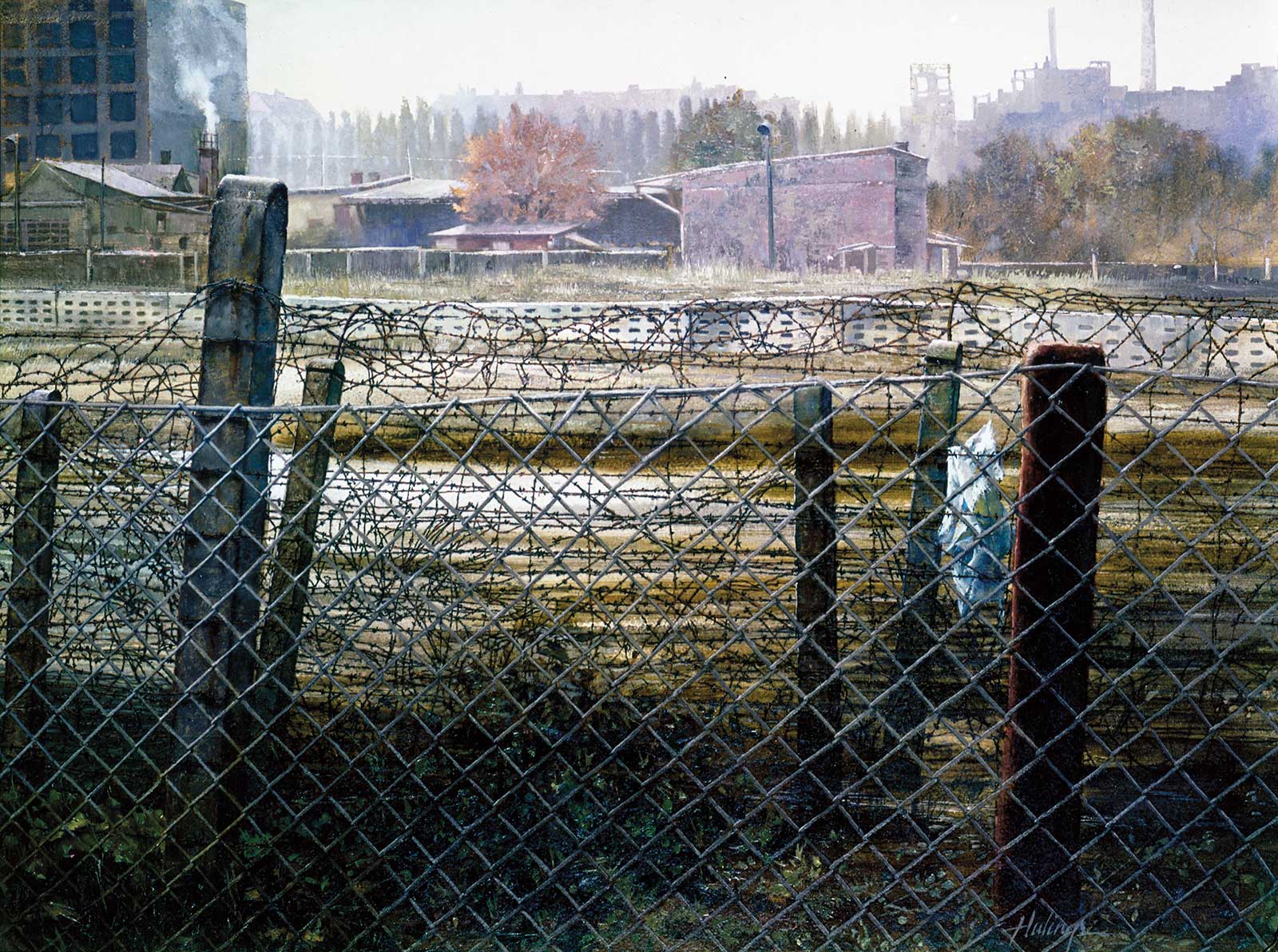
Clark Hulings (1922-2011), Berlin Wall, 1961. Watercolor, Department of the Air Force Art Collection.
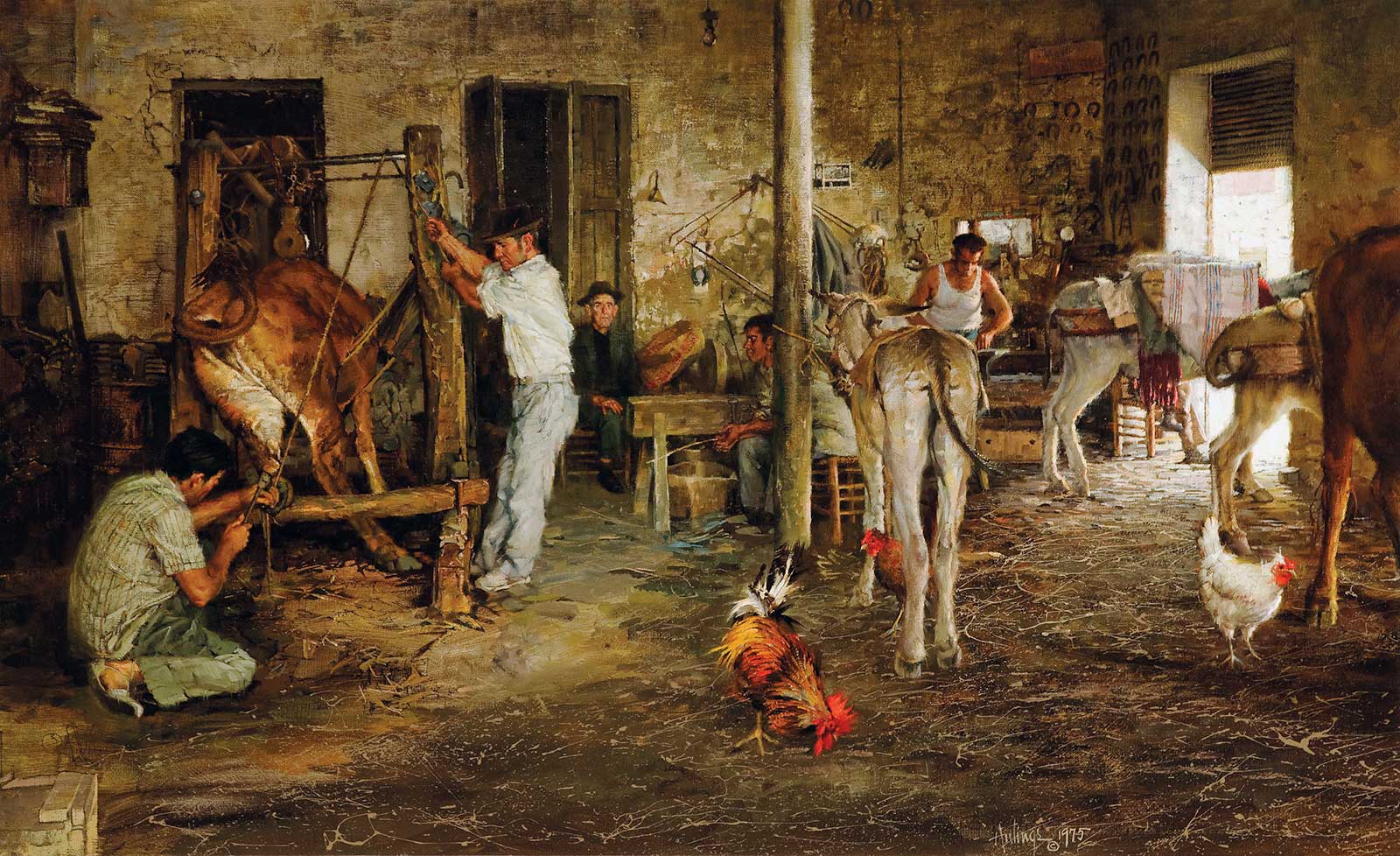
Clark Hulings (1922-2011), Blacksmith Shop, 1975. Oil, 21 x 34 in.
AFAM: The title of your book is Clark Hulings and the Art of Work. Why were themes of “work” so central to Hulings’ sense of self and artistic practice?
JB: Once Clark Hulings committed to the subject matter that would occupy him throughout his career, that is, the daily lives of working people in traditional cultures, cultures that were rapidly evaporating in the late 20th century, he seems to have made a decision to share in the rhythms— the circadian rhythms, perhaps—of their lives, putting in full days of photography, drawing and painting. In this way, he would understand, physically and emotionally, their exhilaration and their exhaustion; this understanding, in turn, would make its way into his practice as a painter.
AFAM: Why was it important to Hulings to emphasize his view of himself as not only an artist, but a working artist? What is the distinction?
JB: One of the key themes in the book is the notion of the artist—the successful artist—as someone who pays attention to the business of art, as Hulings did. Hulings was disciplined, kept meticulous records and cultivated clients. Rare in the art world, Hulings ultimately had no gallery representation, nor did he need any. I think this is an important corrective to the romantic notion of the misunderstood, suffering artist, and I think you’ll find that every successful artist has more than a passing understanding of the business of art.
AFAM: What is the most interesting discovery you made in the process of writing this book?
JB: Easily the most interesting discovery were the two Cold War paintings Hulings did for the U.S. Air Force. Hulings was put on a plane filled with artists and taken to Germany to paint as part of a government program. Hulings did two paintings, one of a line of soldiers disembarking at an airbase, the other an astonishing view of the Berlin Wall, not a wall at all, but a makeshift barrier of chicken wire and barbed wire, concrete and old wood in a muddy no-man’s land. The work is anti-everything Hulings sought to portray. It’s John Le Carre, Spy Who Came In From the Cold stuff. The colors are muted, but the eye wants to render the scene in noirish black and white…The touch of red we expect from Hulings is drained of color and life here in the dirty white rag, a fragment, perhaps, of the garment of some desperate soul who failed to make it across, blown against the wire like a shard of shroud.”
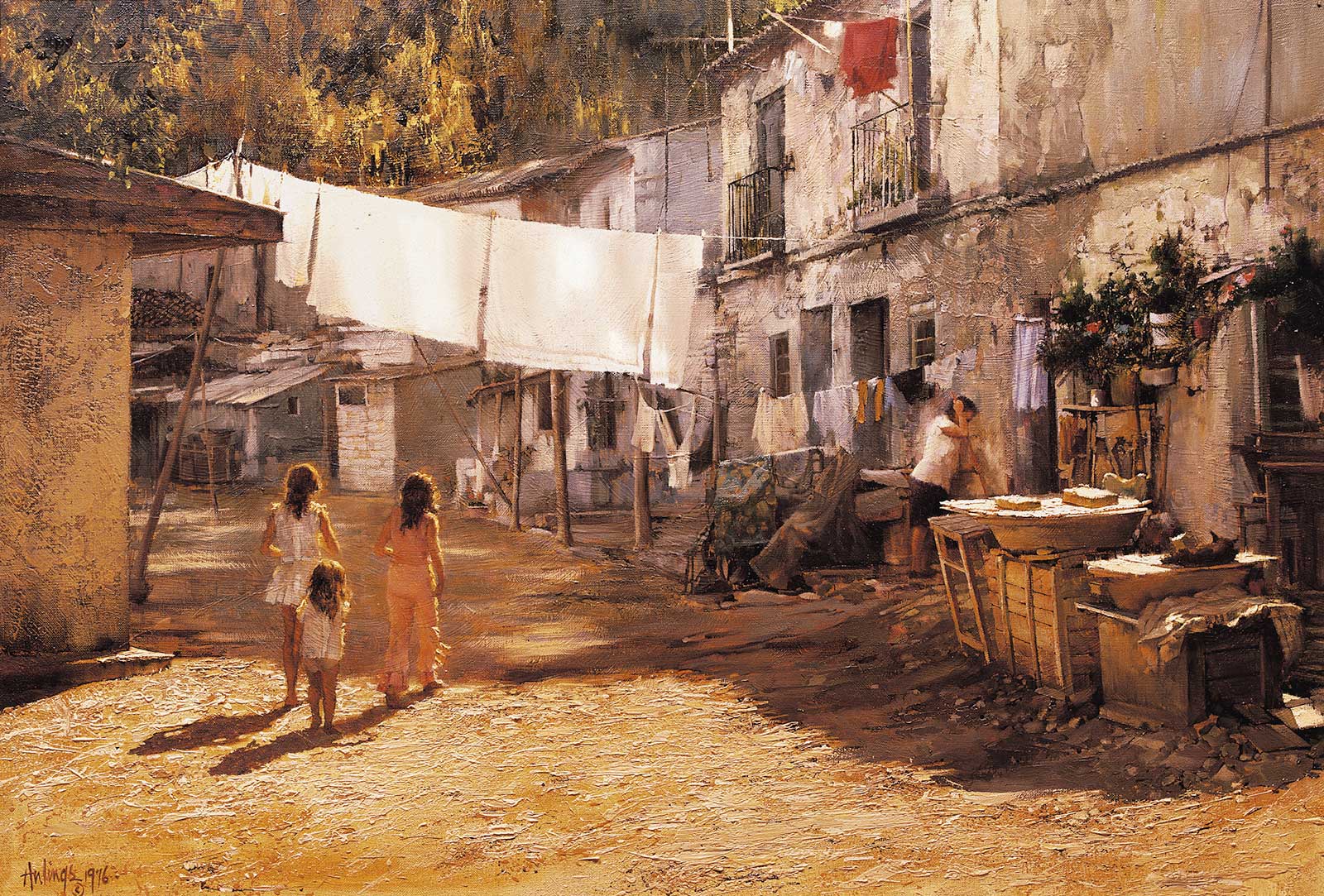
Clark Hulings (1922-2011), Málaga Barrio (Spain), 1975. Oil, 22 x 32 in.
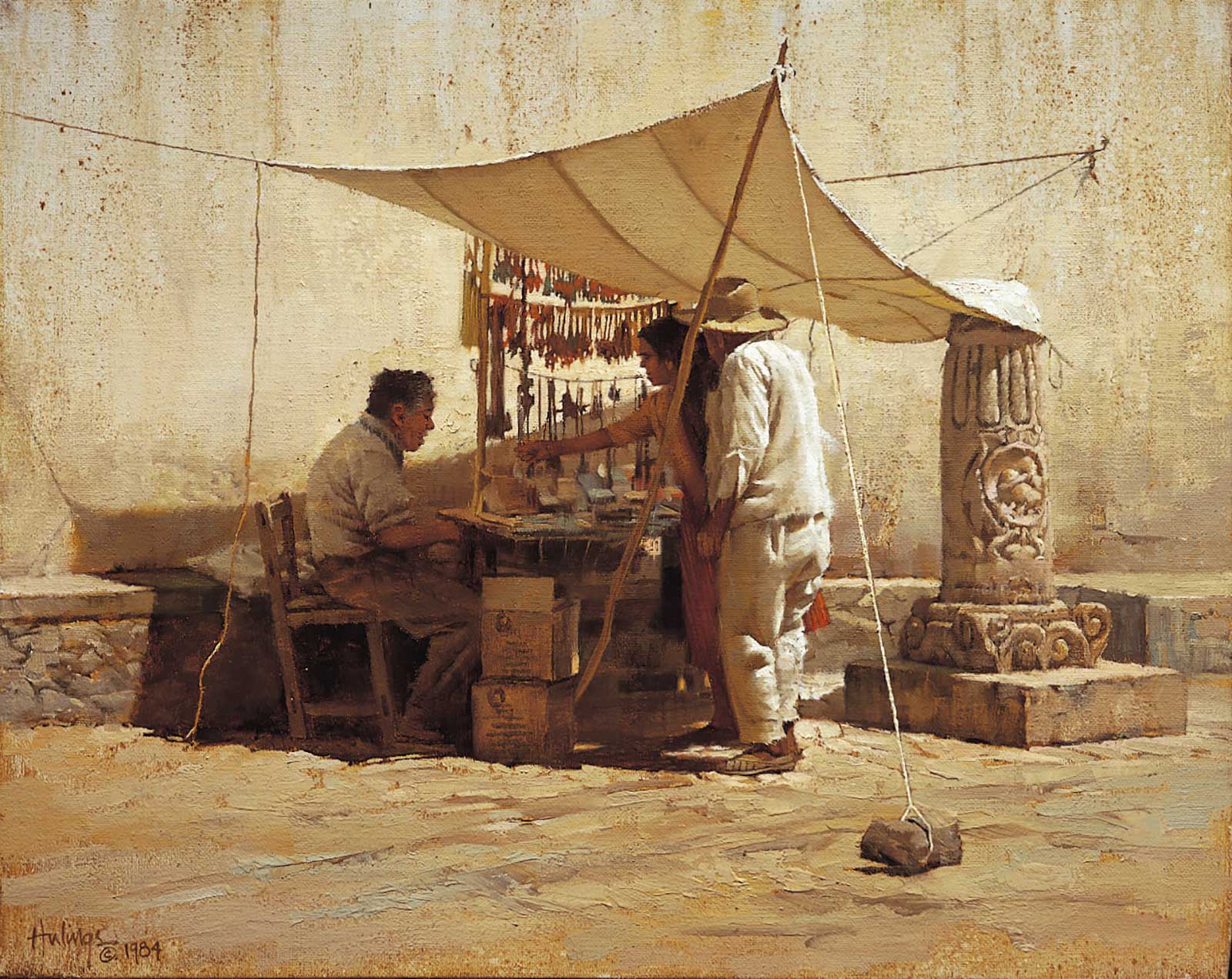
Clark Hulings (1922-2011), Mexican Rosary Man, 1984. Oil, 16 x 20 in.
AFAM: You write that Clark Hulings’ “rebellion rebelled against rebellion.” Can you elaborate on what you mean by that and the insight it provides into Hulings’ character?
JB: If Modernism is a rebellion against limiting art to the depiction of external surfaces, then Hulings’s insistence on realism—and on the beauty of surfaces—constitutes a rebellion against rebellion. Hulings really went his own way, danced to his own drummer, as they say.
AFAM: Why did Hulings remain committed to realism in an age where it had largely fallen out of favor?
JB: We have to remember that realism was still very much a part of American genre painting. It’s how Hulings becomes associated with and collected by patrons in the West and Southwest. More than that, however, plenty of other artists were playing in the realm of the realistic. Ed Ruscha’s gas stations, Fairfield Porter’s suburban and seashore scenes, Warhol’s entire oeuvre, Pop Art in general—all of these mark different sorts of returns to realism. Did Hulings view realism as superior? I don’t think so. Abstraction appears all over his work.
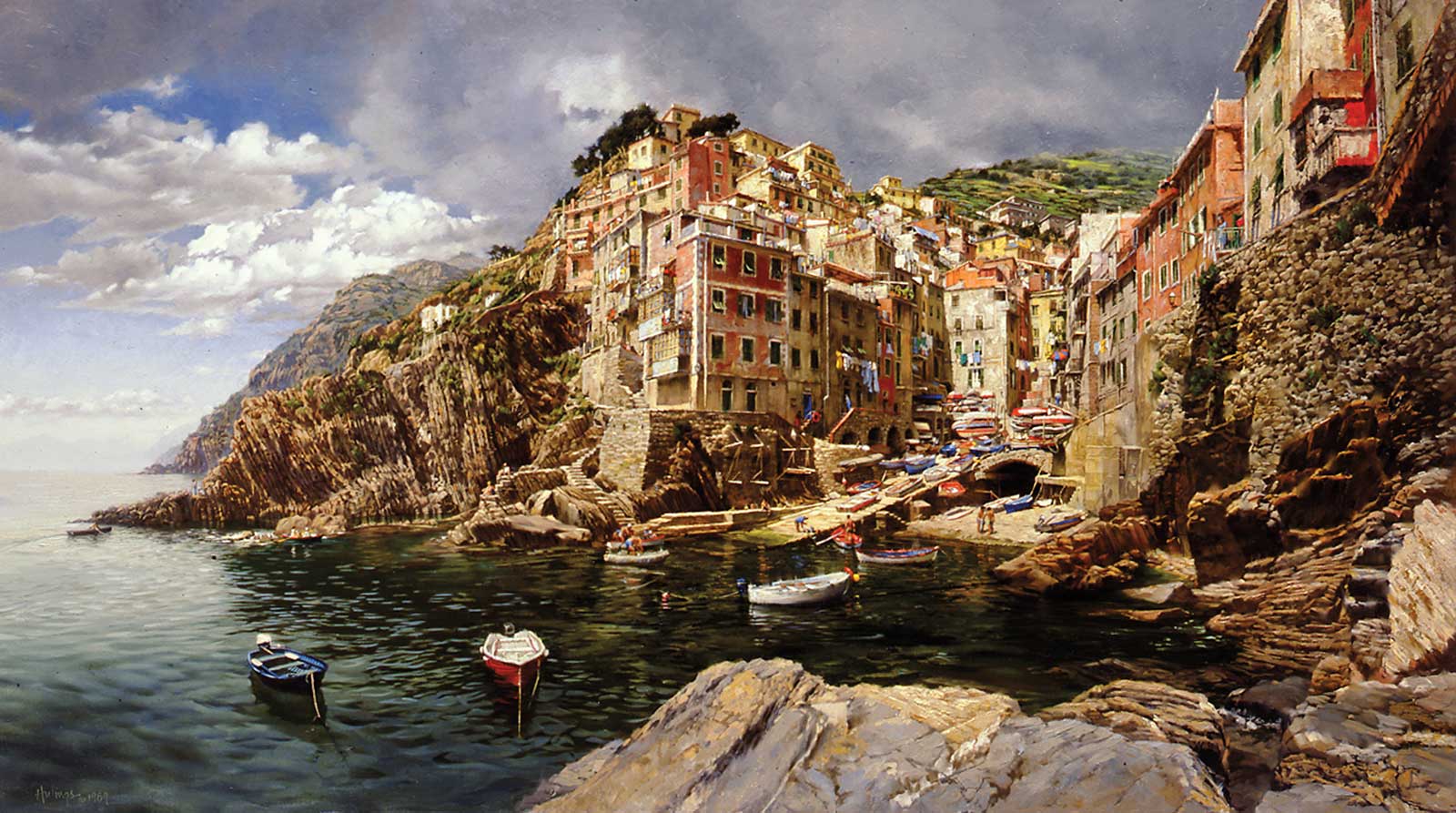
Clark Hulings (1922-2011), Riomaggiore—Sunday Afternoon, 1989. Oil, 27 x 48 in.
AFAM: Are there any misconceptions of Hulings that you would like to dispel?
JB: This imagined dichotomy—conflict—between realism and abstraction. The more I looked at Hulings’s work, especially certain paintings like Málaga Barrio, Mexican Rosary Man, Blacksmith Shop, and Yugoslavian Street Photographer, the more abstraction and modernist principles, if you will, I saw in the backgrounds, in the application of paint, and in the doubling and mirroring of elements. Even as you smell the stucco and hay and flowers, you should know that Hulings’s work is filled with subtle ideas and passages of great beauty and meaning. They repay viewing after viewing.
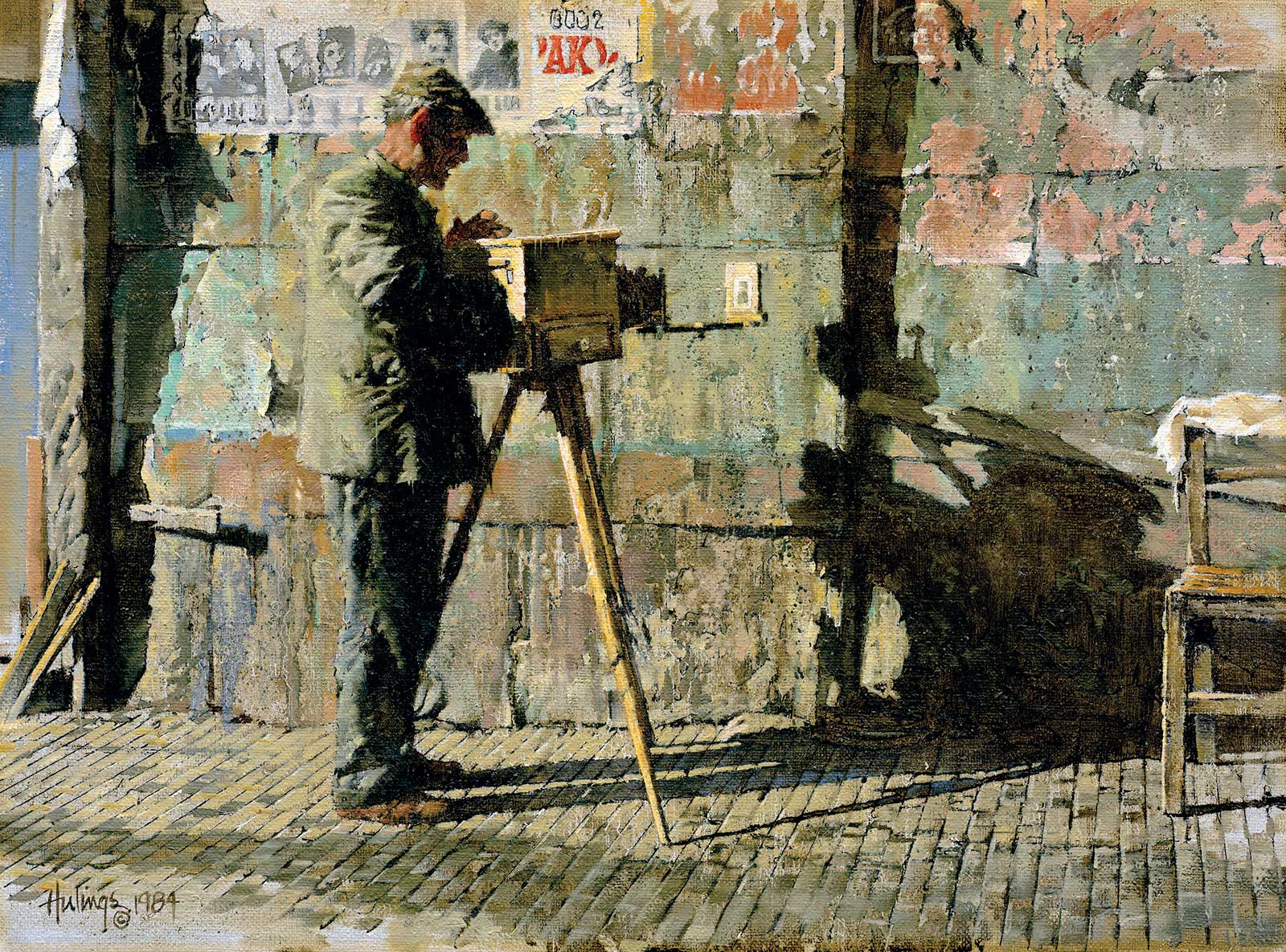
Clark Hulings (1922-2011), Yugoslavian Street Photographer, 1984. Oil, 12 x 16 in.
AFAM: What do you hope readers come away with after having read your book?
JB: I hope readers discover that there are whole worlds of American art that have yet to be explored. We know a great deal about American artists in Europe in the second half of the
19th century and in the years prior to World War II but the Golden Age of Illustration and the studies and travels of American artists in Europe and elsewhere after World War II have yet to receive much scholarly interest. Clark Hulings is a crucial American painter and I hope my book will make readers want to seek out his works and revel in their manifold wonders. —
Powered by Froala Editor