Those of us in the art business sure do love our -isms. We love our movements, schools, styles, influences, art colonies… In short, we love all manner of genealogies, tracing the cladistics of artists and artwork in immensely complex tree diagrams in our minds. It’s only human, this desire to make connections, to group things together, to reveal occult and obvious links over time and space. After all, it’s how we make sense of the world. But one wonders, after a time, if art historians—and even humble scribblers like me—don’t, on occasion, carry this game a bit too far. I won’t say we fabricate connections, but I suspect sometimes we make more out of them than is there. Like everyone else, we get excited. Rabbit holes are fun, but that doesn’t make what we find there true. Go ask Alice.
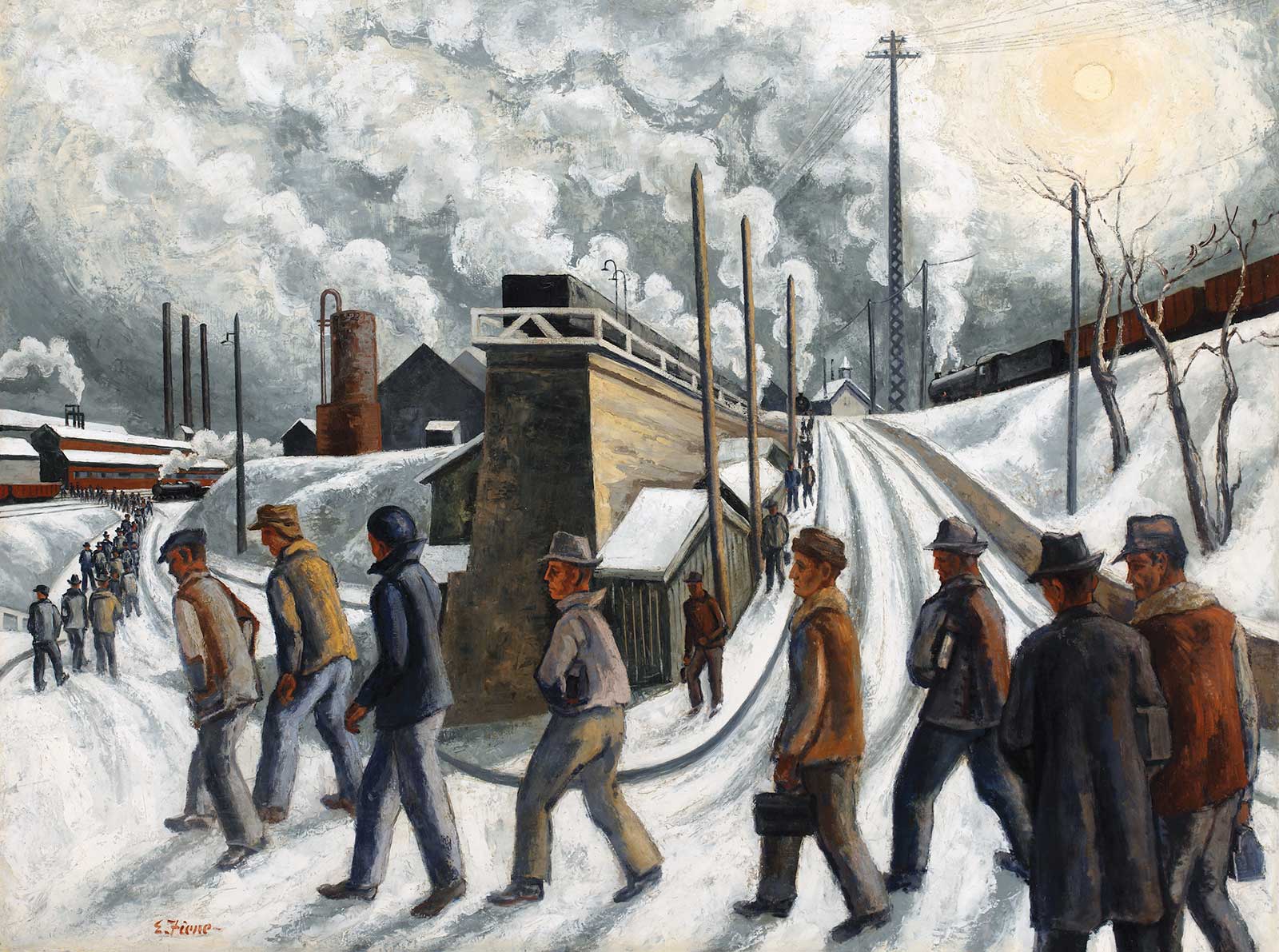
Ernest Fiene (1894-1965), Night Shift, Aliquippa, 1936. Oil on canvas. Museum Purchase with additional funds from the William W. Jamison II Art Acquisition Fund, Scott and Pam Kroh, Funds in Memory of David A. Ludwig.
Of late, and purely by accident, I’ve written extensively in this publication and others on the Dijkstra and Shogren-Meyer Collections of American art that focus on the years between the beginning of the Depression in 1928 to 29 and 1950, when the Korean and Cold Wars finally supplant World War II as a socio-political phenomenon. As a result, I have come to a new understanding about the Works Progress Authority (WPA), a New Deal program, patterned after the mural program in Mexico, that put American artists to work during the Depression. WPA is not a style. It’s not a school. It certainly isn’t an -ism. In fact, American modernism isn’t an -ism. This idea has been marinating in my mind for some time. Then, as is often the case in the arts, just when you think you might be alone in your thinking, you find that others have come to the same conclusions.
At the heart of The Great Search: Art in a Time of Change, 1928–1945 (Part Two), on view through September 21 at Pennsylvania’s Westmoreland Museum of American Art, is the central idea that there is no central idea in American modernism. That an incredible diversity of approaches to what it meant to be an American, what it meant to be an American artist, and what art meant—and was meant to be and do in a democracy—marked an era of rapid change and global turmoil that took the form of emerging dictatorships, severe economic hardship and environmental depredation.
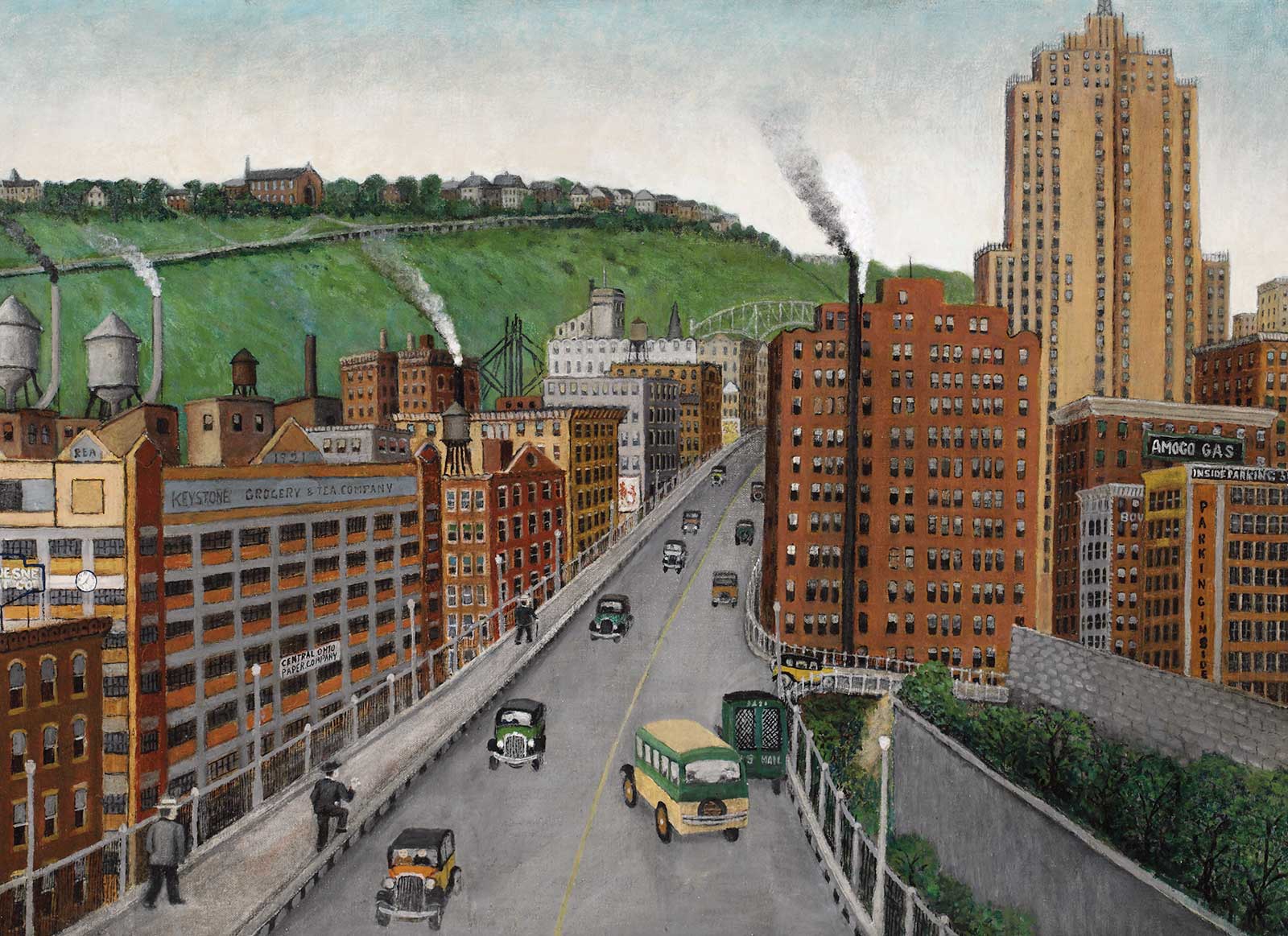
John Kane (1860-1934), Boulevard of the Allies, 1932. Oil on canvas attached to pressed-paper board mounted to a wooden panel with a cradle. Gift of the Estate of Richard M. Scaife, 2015.
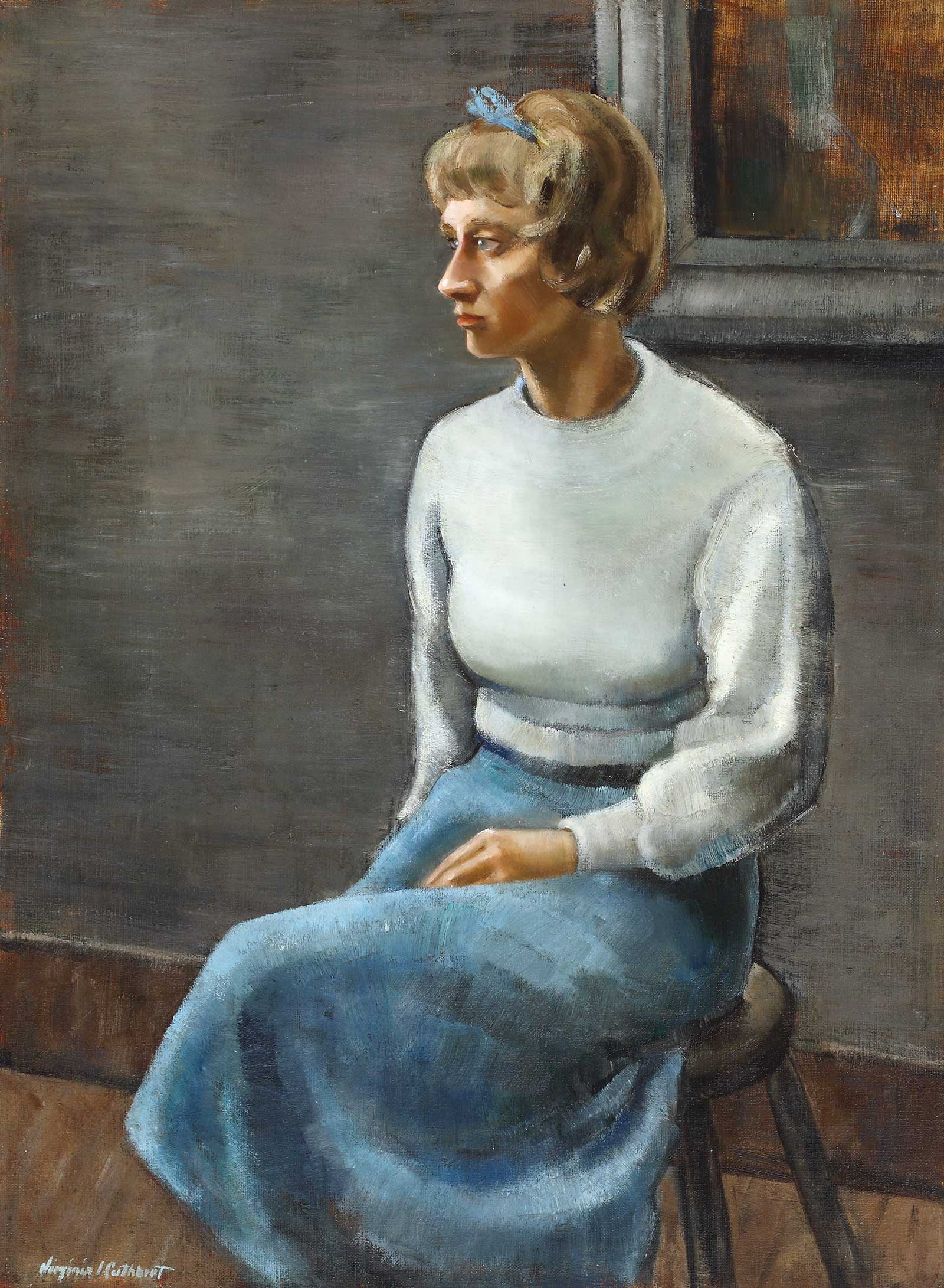
Above: Virginia Cuthbert (1908-2001), Virginia Lewis, 1934. Oil on canvas. Gift of Virginia Lewis. Opposite page: Ernest Fiene (1894-1965), Night Shift, Aliquippa, 1936. Oil on canvas. Museum Purchase with additional funds from the William W. Jamison II Art Acquisition Fund, Scott and Pam Kroh, Funds in Memory of David A. Ludwig.
The exhibition arrives at this conclusion through the evocation, as the exhibition text states, of “American Art Today, a monumental exhibition held at the 1939 New York World’s Fair, comprised of 1,200 artworks across all styles. The show was the result of the most extensive competition between 20th-century American artists that ever took place. More than 80 artist committees representing all regions of the continental United States juried over 25,000 entries to select the final checklist. The presentation offered quintessential examples of then-fully formed movements, such as regionalism, American scene painting, and surrealism, alongside nascent abstractions. It was the first time in the history of world’s fairs that artists had the final decision on what represented a nation’s creative expression. Organizer Holger Cahill, then-national director of the government-funded Federal Art Project of the WPA, summed up the variety of ideas on view as American art’s ‘search with many paths.’”
Many paths. A cursory glance at the art historical literature on the period will reveal a long list of approaches, some of them downright contradictory: Art Deco, surrealism, cubism, futurism, social realism, regionalism, American scene, muralism, precisionism, Ashcan School, dada, illustration, romantic realism, synchromism, expressionism. The Great Search takes note of all of these in works ranging from figurative, almost academically realistic renderings, to pure abstractions that foreshadow abstract expressionism.
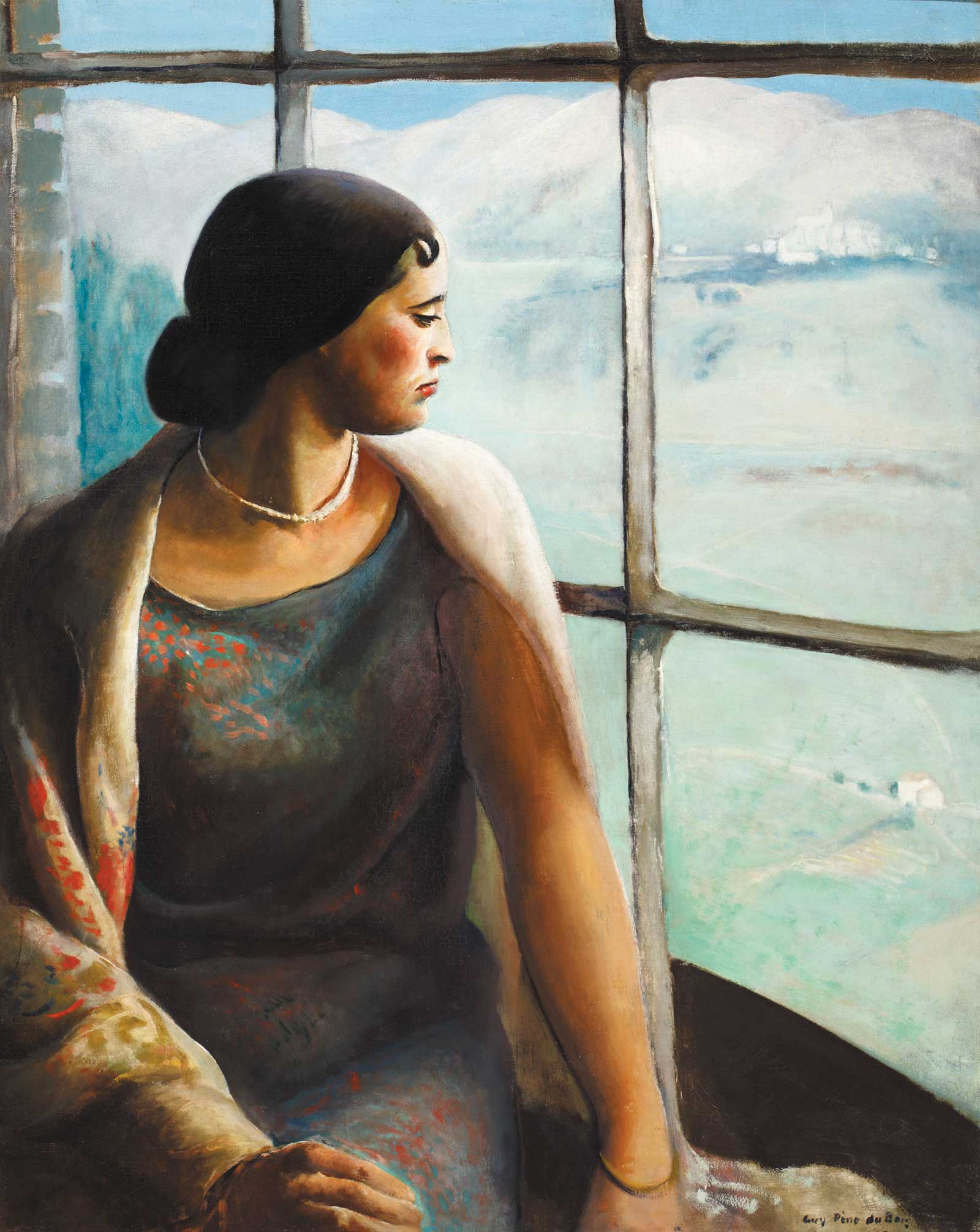
Guy Pène du Bois (1884-1958), Studio Window, Anicoli, 1928. Oil on canvas, 37 x 29 in. Westmoreland Museum of American Art: Gift of the William A. Coulter Fund.
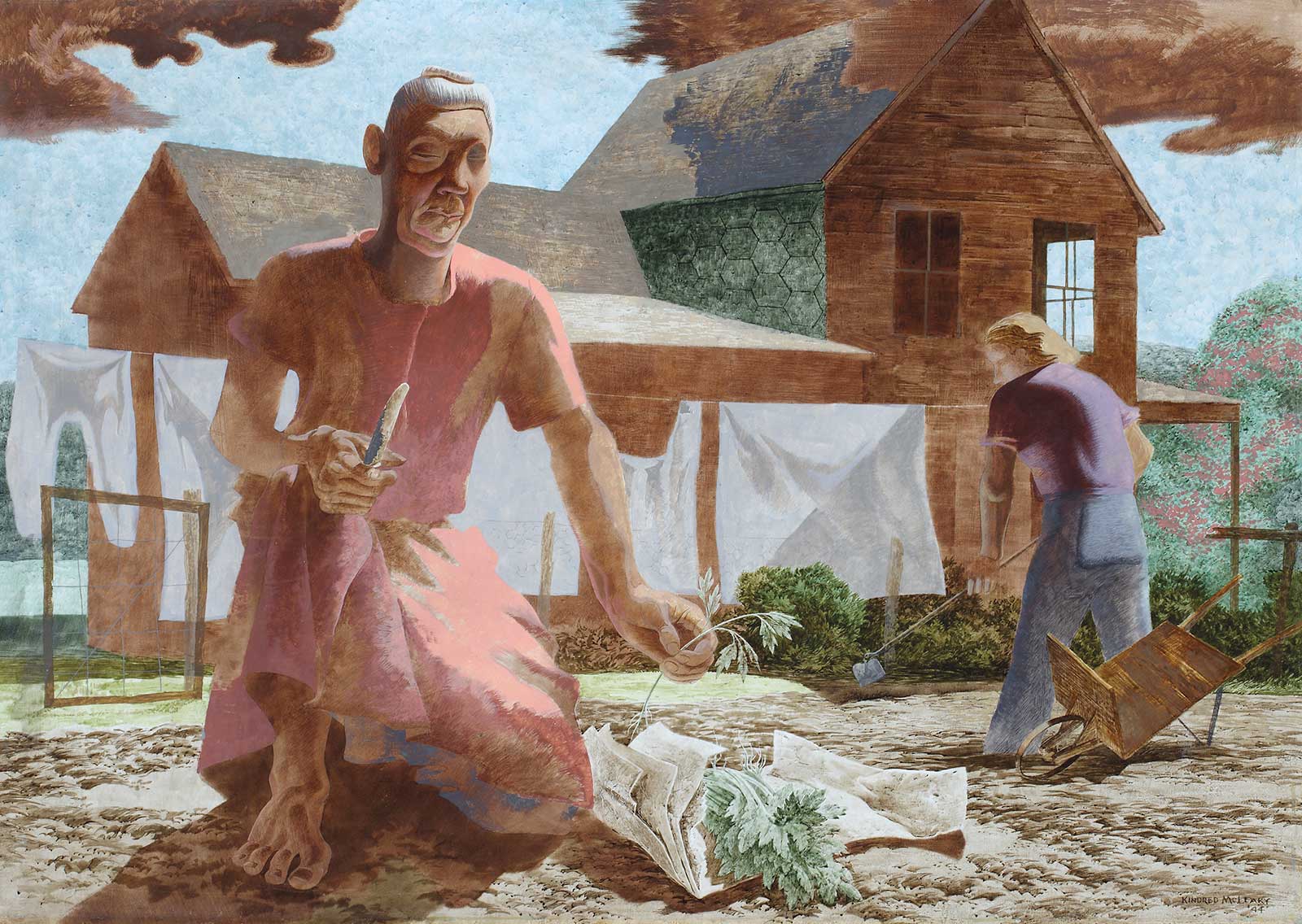
Kindred McLeary (1901-1949), Gramma’s Plant’n’, ca. 1940. Tempera and pencil on Masonite. Gift of Bill and Mimi Dobson.
One of the exhibition highlights is the Westmoreland’s own Night Shift, Aliquippa, executed in 1936 by Ernest Fiene. In his blog about the exhibition, chief curator Jeremiah William McCarthy writes that the painting “depicts a serpentine line of laborers as they enter a Jones & Laughlin steel mill during a pivotal moment in United States labor law. The previous year, the country passed the National Labor Relations Act allowing workers to unionize, and the year the work was painted, the Steel Workers Organizing Committee formed.”
As the men converge on the path to the mill doors, sliding down the steep, impossible, anti-perspective hill, their individuality, such as it is, gives way; in the distance, they become an unindividuated column, an “assembly line,” as McCarthy writes—raw materials, commodities, cogs in the industrial machine. And yet, they have jobs, they are working, which in 1936, might well have been a relief. The contradictions here are stark. Alienation—the workers’ sense of being detached from the means of production—extends from the workers depicted in the painting, to Fiene himself, and, finally, to us. None of us are quite sure what to make of this. How are any of us supposed to feel? Then the eye turns to the sky, to clouds that aren’t clouds at all but curlicues of smoke stack smoke from factory and trains obscuring a steel gray sky—even the sky is steel—while a feeble sun struggles to make its presence felt at all. Bleak as this is, step back and take in the romantic realism of Charles Burchfield, the beauty in the tight curls of smoke, echoing the hair of Botticelli angels. And the title, Night Shift, Aliquippa, is this the start of the night shift, just before dark? Or is it the end, dawn? Given the gray on gray on gray, who could tell? The painting alienates us, even from time itself.
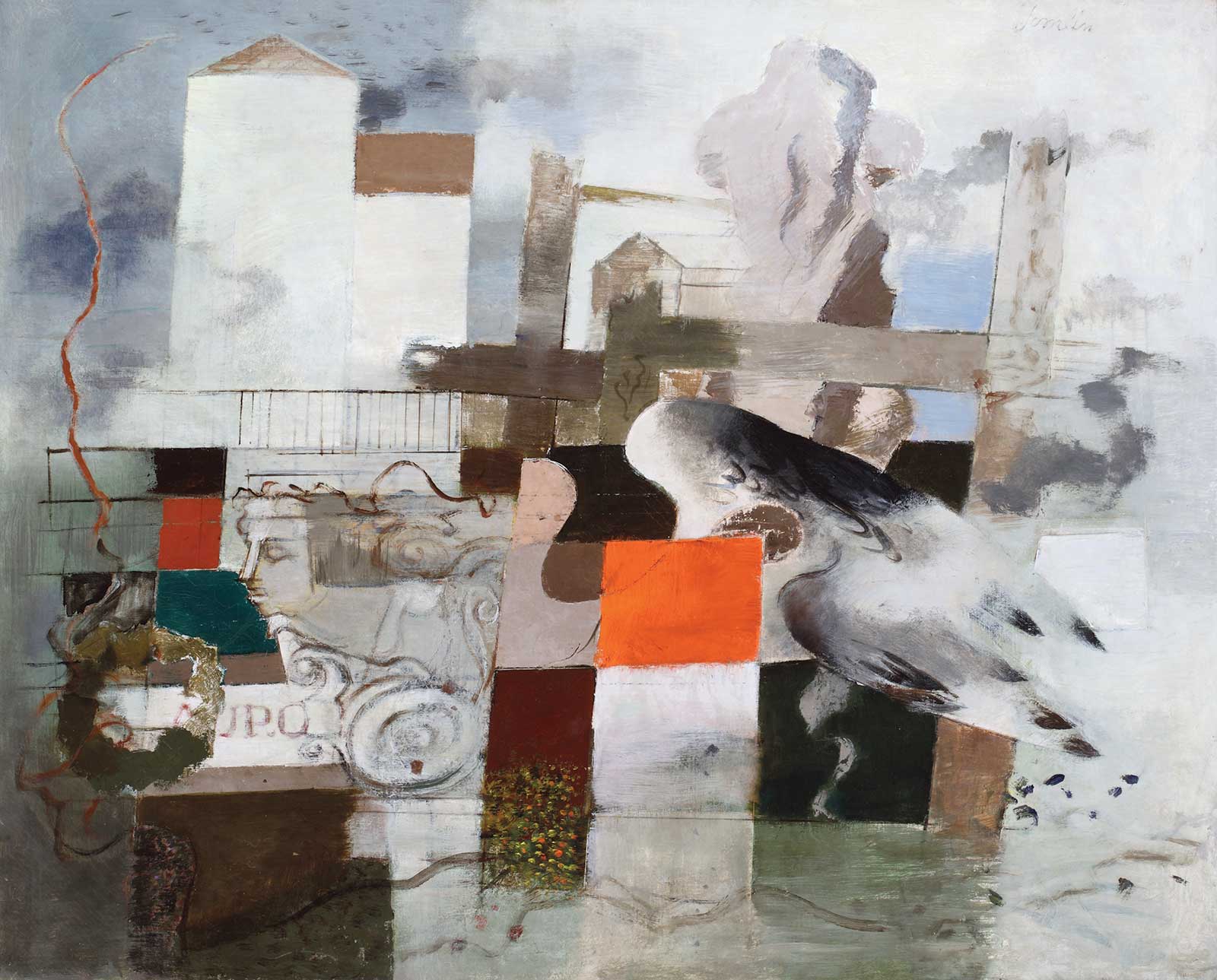
Bradley Walker Tomlin (1899-1953), To the Sea, 1942. Oil on canvas. Gift of Dr. Karl and Jennifer Salatka.
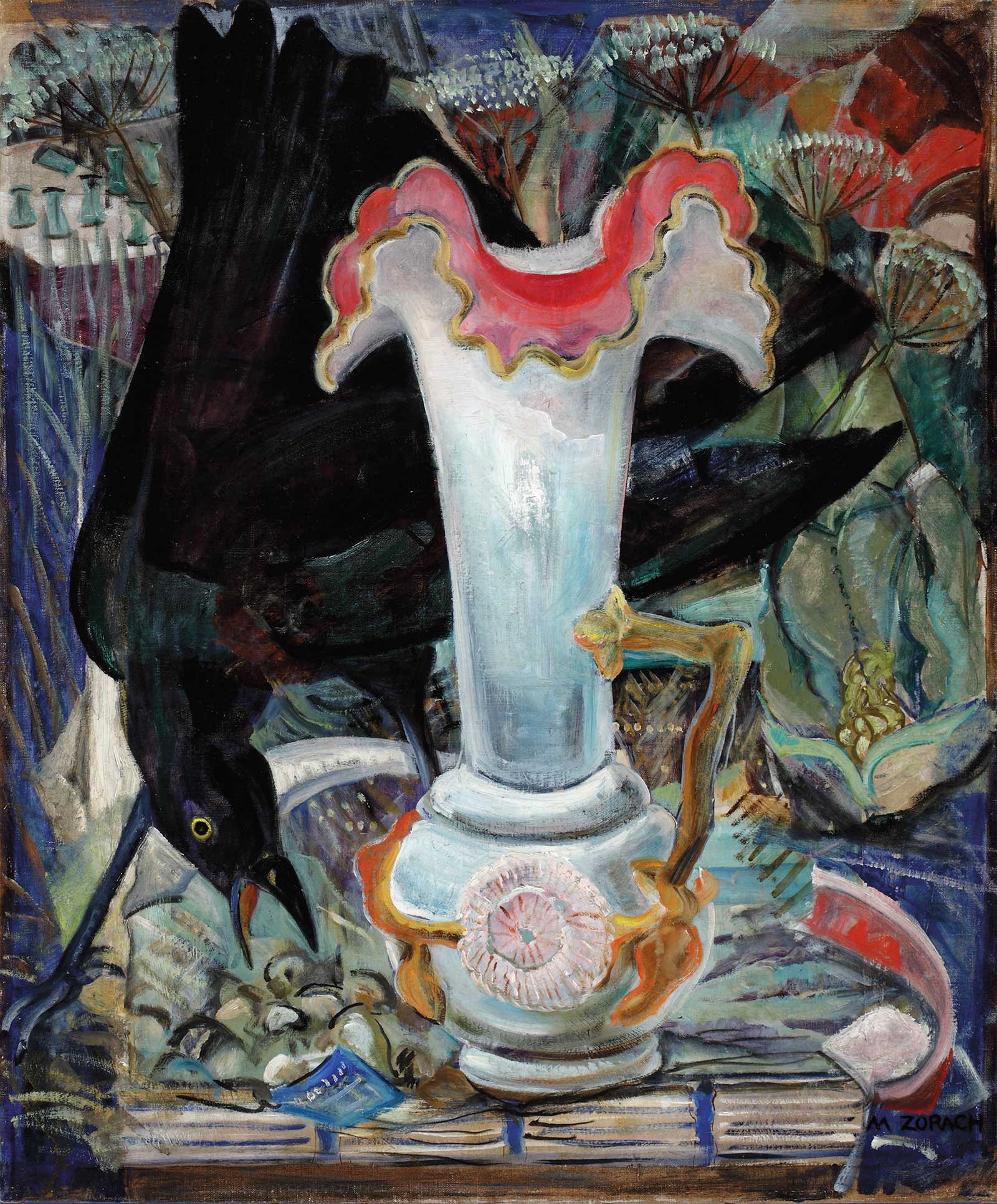
Marguerite Zorach (1887-1968), Wise Crow, ca. 1935. Oil on canvas. Gift of Richard and Lynda Leavengood, Lancaster, PA.
By contrast, there is nothing romantic or, at first, contradictory, in John Kane’s 1932 painting, Boulevard of the Allies, a faithful rendering of one of Pittsburgh’s principal thoroughfares. In the painting, Kane, who sought a draftsman’s precision in his art, renders each window in each building along the sides of the boulevard with exactitude. You can imagine the artist counting them, planning them out on the canvas. Vehicles ply the street. Only three people stroll the sidewalk. Above, at left, a green hill rises steeply to a residential neighborhood. Despite the artist’s intentions, there is a feeling of folk art here, even outsider art, in the close attention to some details and in the studious lack of attention to others. For instance, the three figures are outsized, out of proportion to the cars and buildings. As well, the hill is impossible, steeper even than the street in Fiene’s Night Shift, Aliquippa. The overwhelming sensation, however, is one of wondering what goes on behind those windows. How many people labor there? Who are they? Kane’s precision transforms the buildings into hives that converge at the vanishing point up and around the corner. The effect is claustrophobic.
Virginia Cuthbert’s 1934 portrait of her friend, fellow artist Virginia Lewis, and Guy Pene Du Bois’s Studio Window offer particular insight into figurative practice in American art at the time. Unlike other genres, there is, or appears to be, some connective tissue, even in otherwise disparate artists. First, the figures often exude a kind of heroic melancholy, a stoic stillness, if you will. They are often framed—by a window, a picture frame, or something that suggests longing for an elsewhere from a vantage point that may well be a trap. Last, figures of the period seem created from rounded forms, the cylinder in particular, which gives them pictorial weight and a subtle nod to the notion of human being as mechanism, as automaton. All of this is probably a consequence of the Depression zeitgeist working its way through visual culture. Move from these two works to Kindred McLeary’s Gramma’s Plant’n’, circa 1940, and portraiture, including the elements I just listed, plus context, results in a very melancholy and not at all heroic take on the American Scene.
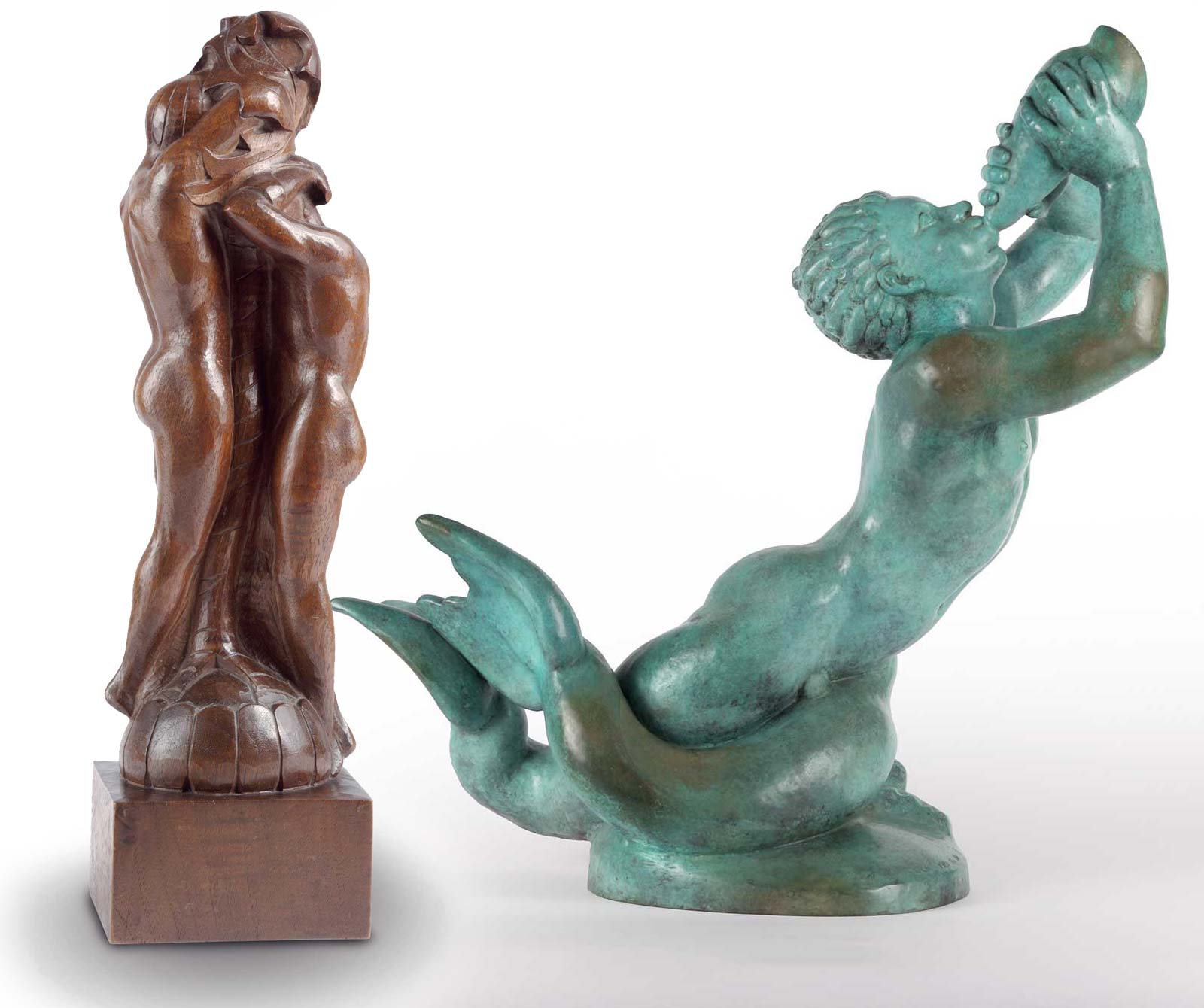
Left: Harriette G. Miller (1892-1971), Adam and Eve, ca. 1931. Bronze; Right: Walker Kirtland Hancock (1901-1998), Large Triton Fountain. 1939. Bronze, 25½ x 23 x 7 in.
Make the leap to Bradley Walker Tomlin’s anxiety-riddled abstraction To the Sea, which deconstructs the fear along the Eastern Seaboard when Nazi U-Boats, called Wolfpacks, devastated American shipping. The work is an assemblage of bits of boats, bits of news, rumors, terrors of the deep, the murk of unknowing. It is as if the symbolic elements in Marguerite Zorach’s 1935 painting, Wise Crow, suddenly shifted from the spiritually surreal, to the surreal as an aspect of wartime reality.
In the end, just as the artists of the era arrived at a variety of answers, many of them purely personal, The Great Search resists the temptation to draw any singular conclusions. Perhaps the operative word for the era is tension. To admit this level of diversity is also to acknowledge a fragmented culture, and to acknowledge a fragmented culture suggests a society that may also be fragmented. There is, when you step back, a recognizably Italian modernism, and a French modernism, and so on. Modernisms sprang up around the globe. Yes, they had strands and yes, there were conflicts. From the salons of Europe to the Armory Show of 1913, modernism met opposition everywhere. Still, perhaps you disagree, but to me, only here in the United States, does modernism in the visual arts fail to make meaning on a culture-wide, national scale. Instead of e pluribus unum, out of many, one, American art is e pluribus multis—out of many, many. Contrast this with film, music, theater and literature during the same period and you might see what I mean. It’s strange, and well worth thinking about. As with The Great Search, the great search for America is still very much with us. —
Through September 21, 2025
The Great Search: Art in a Time of Change, 1928–1945 (Part Two)
The Westmoreland Museum of American Art
221 N. Main Street, Greensburg, PA, 15601 t: (724) 837-1500 www.thewestmoreland.org
Powered by Froala Editor