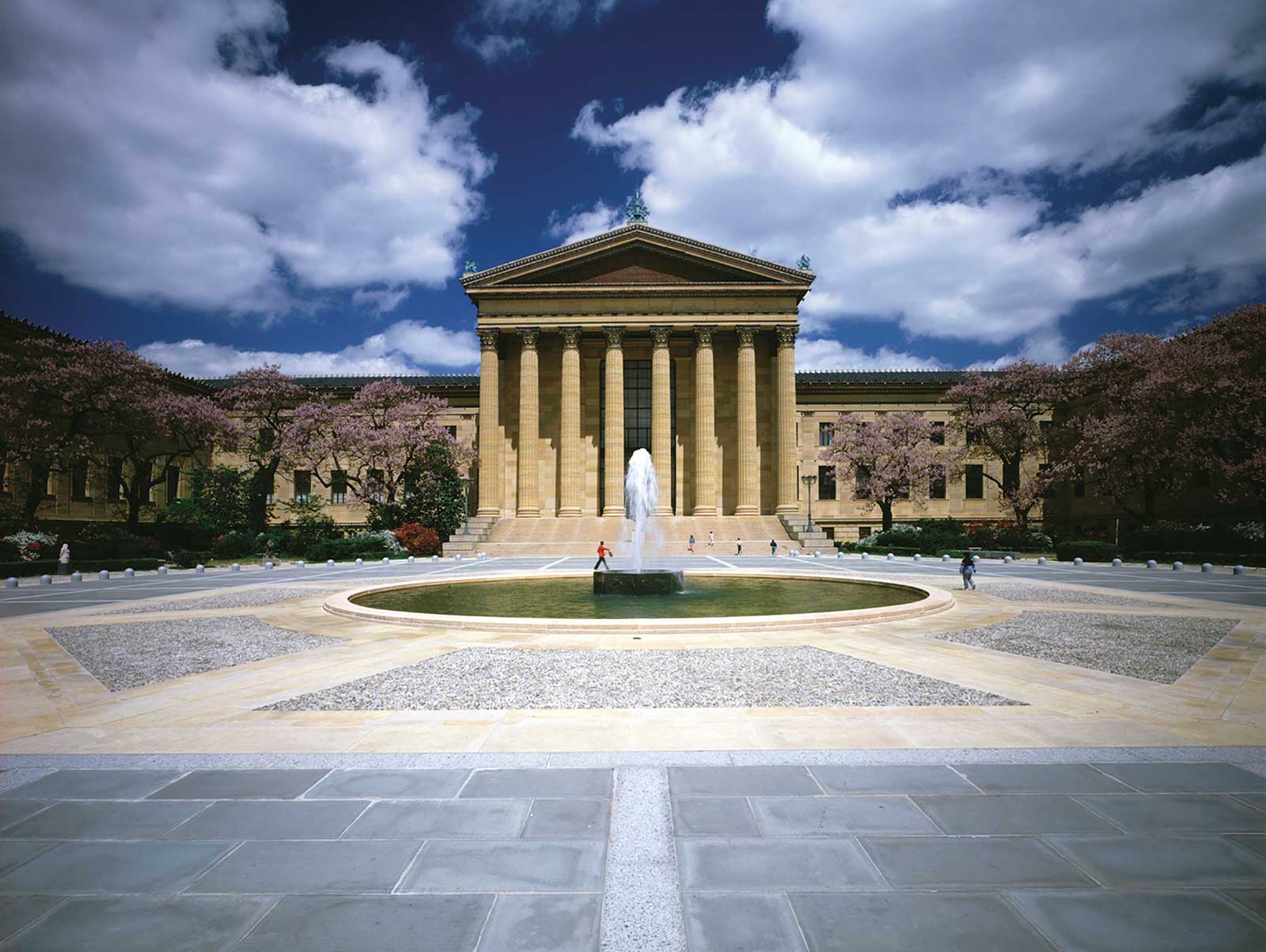
Exterior view of the Philadelphia Museum of Art, East Terrace.

What is your area of specialization within the Decorative Arts genre?
I focus primarily on furniture, upholstery and ceramics. I landed on American art because I wanted to knit together the artistic influences that impacted artists and artisans who created American art—our unique visual dialect. The influences of Italian, Native, Spanish, Swedish, Chinese, French and British art, to name a few, are often more readily discernible in decorative arts than painting, and so I chose to bring my traditional art historical foundation to the deeper study of American decorative arts.
What is your role in the department of American Art at the Philadelphia Museum of Art?
I oversee the museum’s early furniture and ceramics, upholstery, period rooms, and two historic houses, as well as manage storage issues. As curators, we are tasked with presenting our collections in ways that enhance the art, tell a visual and narrative story and captivate visitors. I love installing the collections, by placing the works of art in an exciting display (like the wall of chairs in the early American galleries) or by isolating a single work of art—like the early Philadelphia porcelain pickle stand—to generate a “wow” factor.
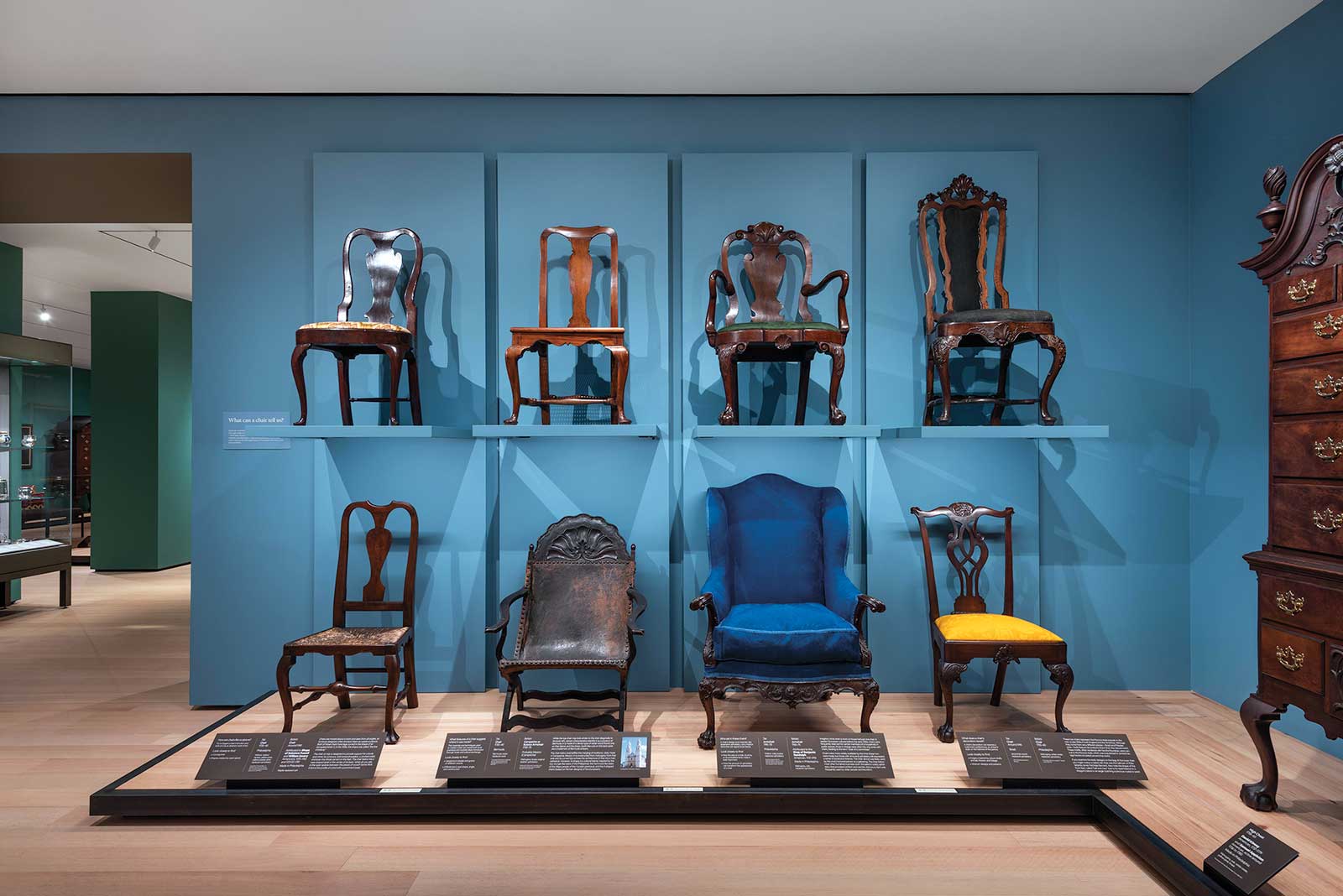
A display of chairs in the American Galleries at the Philadelphia Museum of Art. Photo: Joseph Hu © Philadelphia Museum of Art.
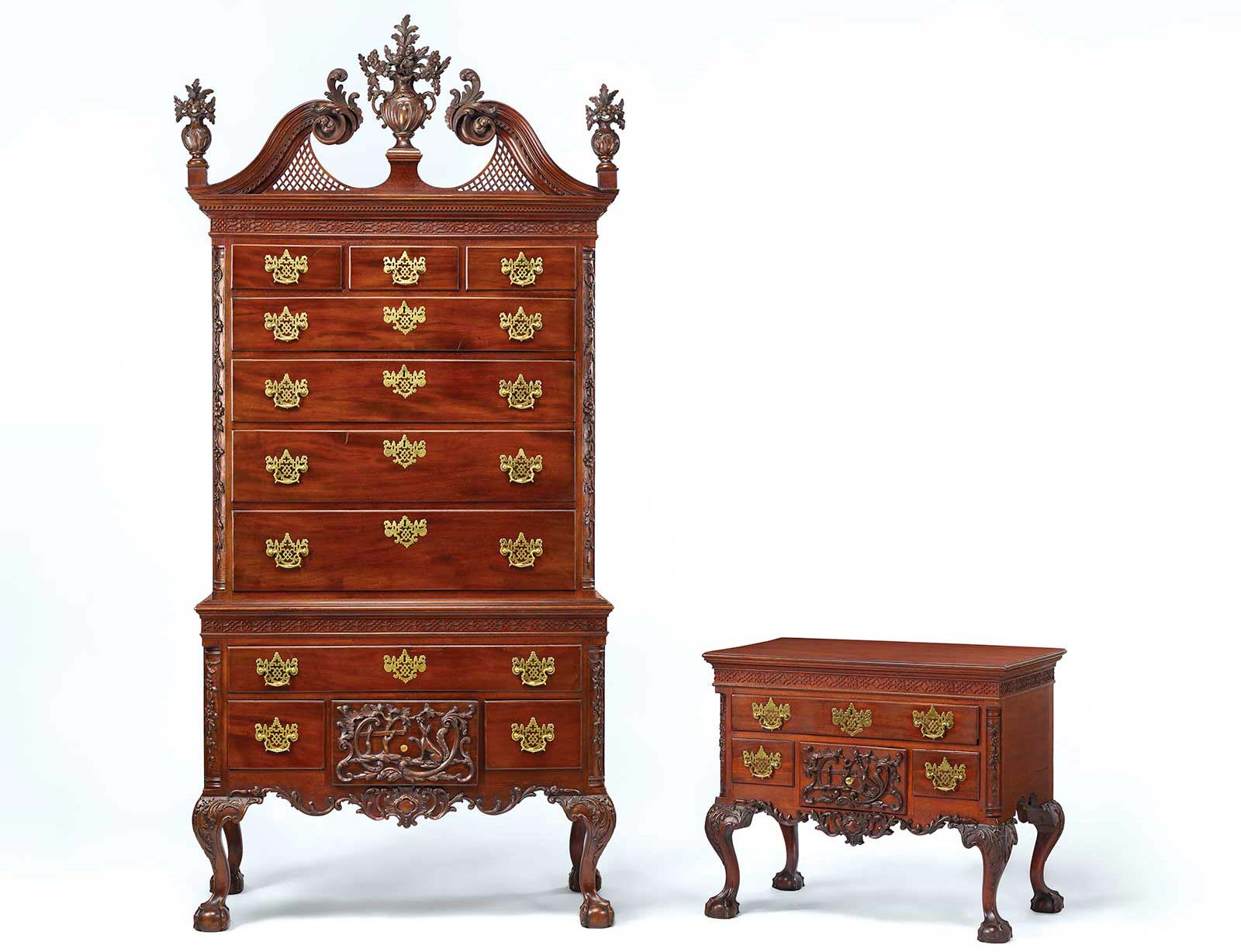
High Chest of Drawers and Dressing Table, 1765-1775, Unknown, Philadelphia. Mahogany, tulip poplar, white cedar, yellow pine and brass, (high chest) 8 ft. ¾ in. x 46½ in. x 25¾ in. Gift of Mrs. Henry V. Greenough, 1957. (dressing table) 297/8 in. x 35 in. x 23¼ in. Purchased with funds contributed by Leslie A. Miller and Richard B. Worley, Kathy and Ted Fernberger, The Ballinger Bequest, Marguerite and Gerry Lenfest, Mrs. J. Maxwell Moran, Lyn M. Ross, The Carey Bequest, an anonymous donor, Sarah Miller Coulson, Donna C. and Morris W. Stroud II, Mr. and Mrs. Frederick Vogel III, Dr. and Mrs. Robert E. Booth, Jr., and numerous other donors and with funds from the proceeds of the sale of deaccessioned works of art, 2012.
What are a few of the most significant pieces in PMA’s collection?
Throughout the early American galleries, we place works of art in a position that tells visitors of their importance. The strong blue reproduction upholstery of the bergère à oreilles (French chair) encourages questions about color—here, the oh-so popular indigo dye brought to North America by enslaved Africans. We have a nod to the colorful and exciting iconography that the Pennsylvania Germans maintained in their artisanal worlds, as seen in the walnut Kleiderschrank (clothes press) with sulfur inlay—juxtaposed with the more dominant British styles for case furniture (like the high chest and dressing table carved with Fox and Grapes) in mahogany—which German cabinetmakers often made.
Philadelphia’s profound cultural and economic ties with the South are highlighted in the 1743 signed and dated high chest that was made by the Philadelphia-born joiner Josiah Claypoole, who was excommunicated from the city for stealing silver and went on to make a living in Charleston and in America’s earliest porcelain (made by John Bartlam between 1765 and 1770), whose skilled artisans (including two enslaved African men) came to Philadelphia when Bartlam’s high-risk porcelain enterprise failed in 1770.
The long sightline for the set of painted furniture made in 1808, after the design of architect Henry Latrobe, beckons visitors—not even subtly—into the realm of neoclassicism. Around the corner is the French bedstead of Napoleon Bonaparte’s brother Joseph, who lived in Philadelphia for several decades after 1815. It provides a touchpoint for the boldness of French classicism that was embraced so eagerly throughout the U.S.—and of course here in Philadelphia too!
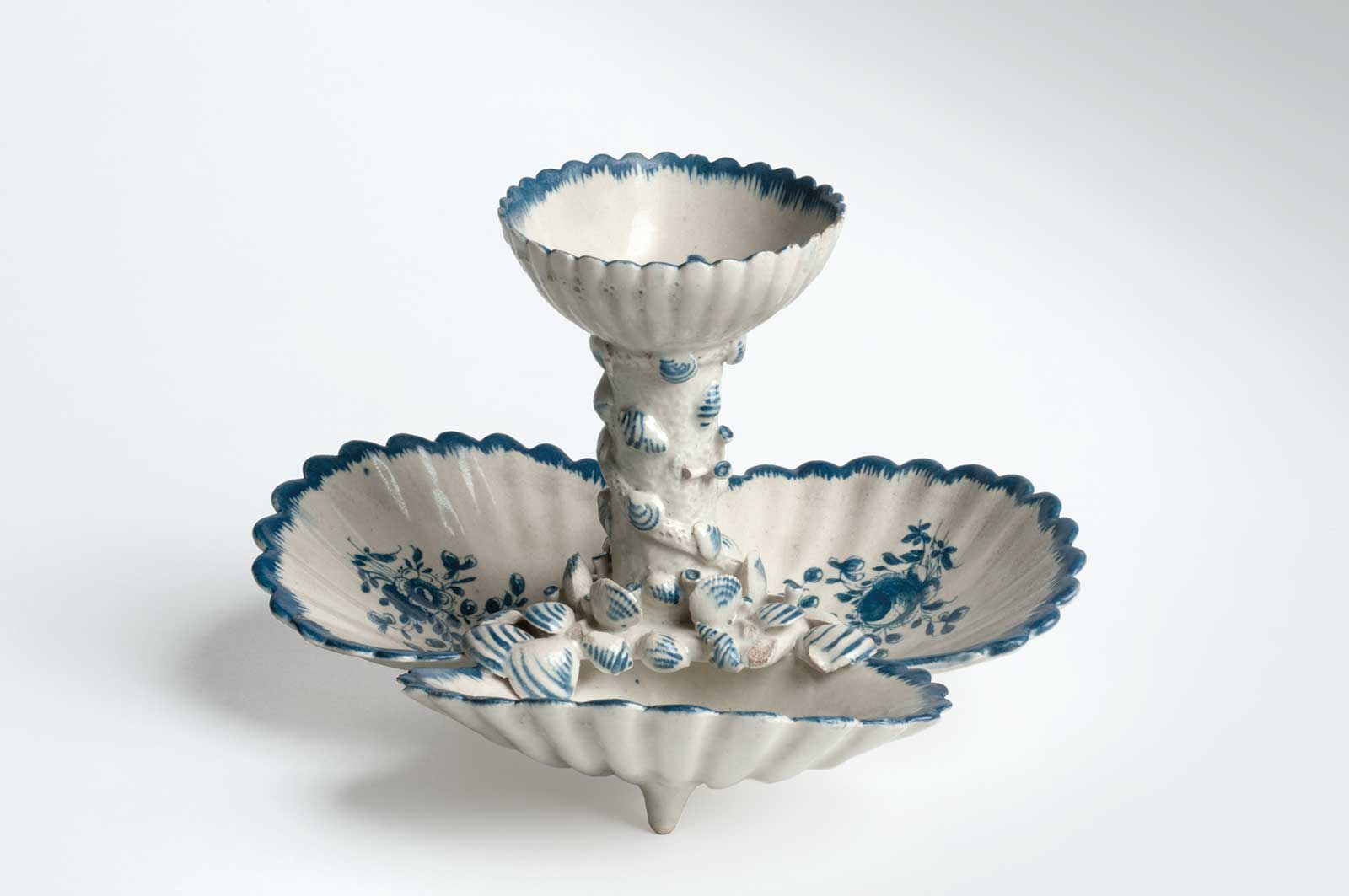
Pickle Stand, 1770-1772. Gousse Bonnin and George Anthony Morris, American China Manufactory, Philadelphia. Soft-paste porcelain with underglaze blue decoration, 51/8 in. x 7 in. Gift of a 7th-generation Philadelphian, 2014.
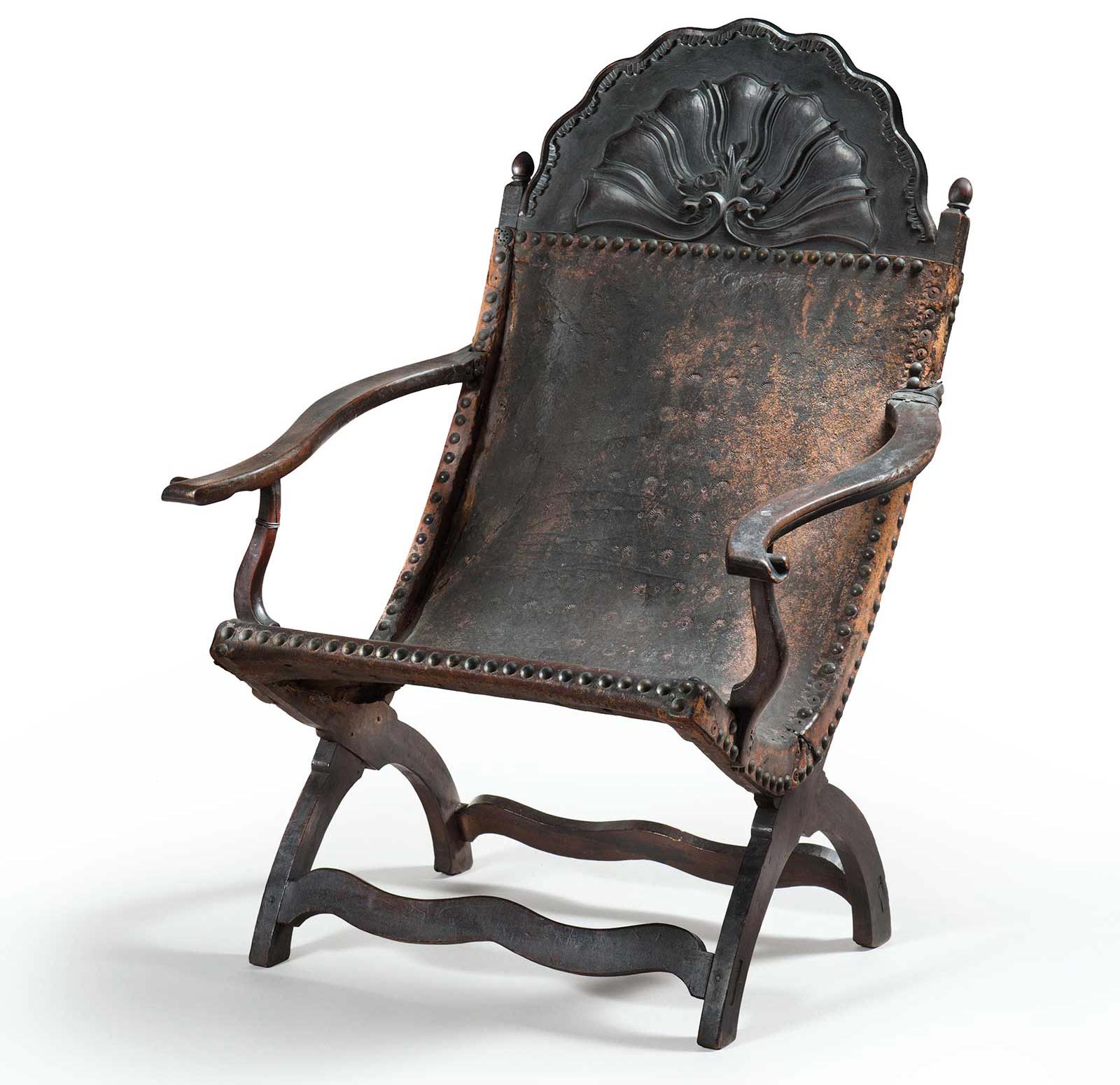
Butaca Chair, 1730-1770. Unknown, Campeche, Mexico. Mahogany, leather, and brass, 38¼ x 27¾ x 25¼ in. Partial gift of Bowman Properties and purchased with the Thomas Skelton Harrison Fund, 2012.
What kind of insight can decorative objects provide into the eras in which they were made and utilized?
What the artisans made—the functions, the materials used, the shapes and colors favored—provides an extraordinary window into cultural influences and aspirations. And often, the synergies between works of art show both commonalities and distinctiveness. In 2010, we were given the earliest known Butaca chair, a low armchair with a cross stretcher support and sling-like leather upholstery made in Campeche, Mexico, between 1730 and 1770. The form is a hybrid derived from Asian seating (such as the Philippine design of the arms), combined with Indigenous seating in the low, broad slung profile of the seat, and European (specifically Italian and Spanish) designs for the X-shaped supports and wavy cross stretchers. This amalgamation of designs suggests the collaborative spirit of the decorative arts, and it is evident throughout the artisanal shops in colonial British North America—where a chest in an overtly British design has Germanic construction techniques—and the early United States. Throughout our history, entrepreneurial artisans have borrowed designs and techniques from imported wares and newly arrived émigré artisans and patrons to constantly and consistently innovate and create unique works of art.
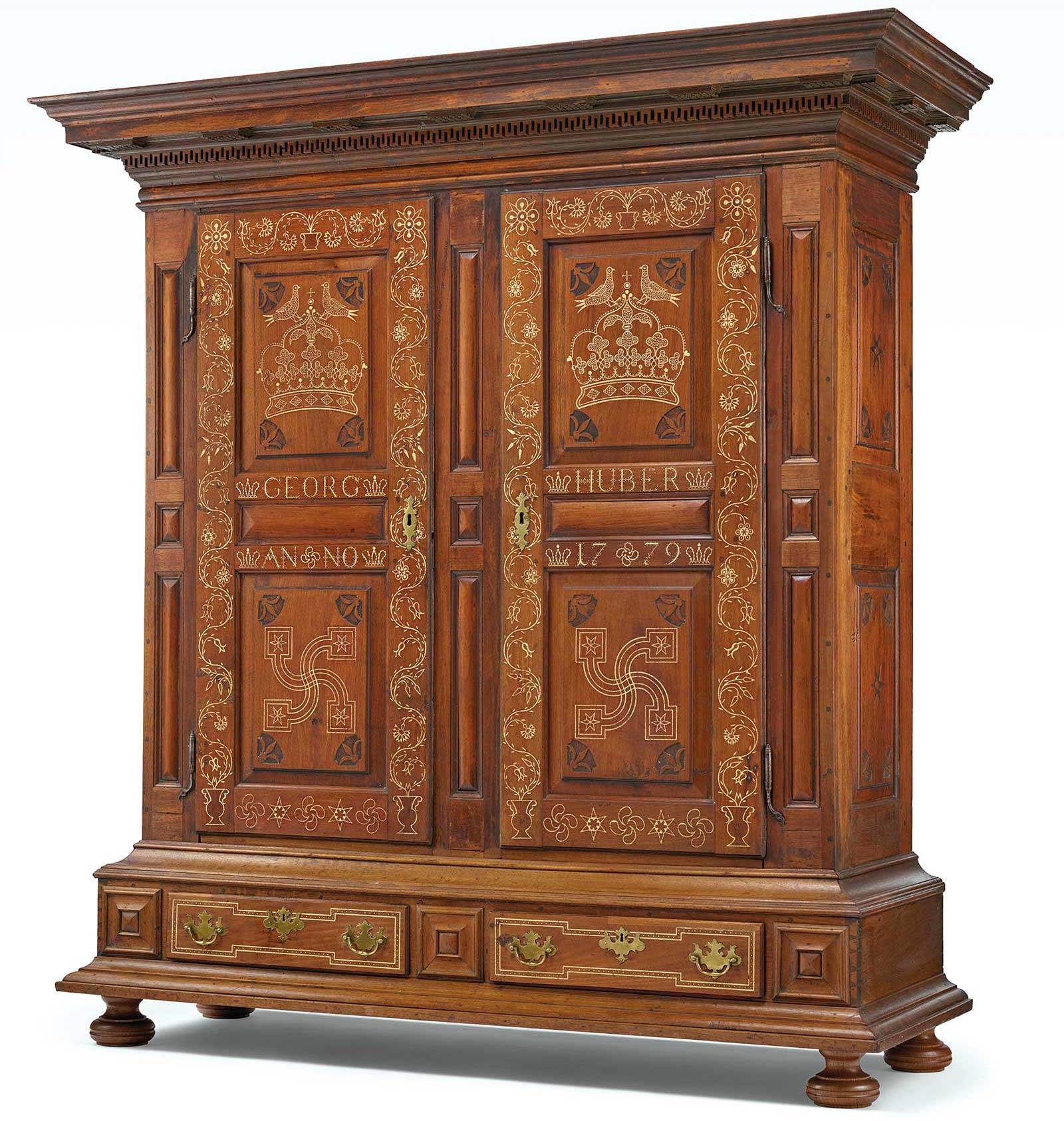
Clothes Press (Kleiderschrank), 1779. Unknown, Lancaster, PA. Walnut, yellow pine, oak, sulfur inlay; iron, replacement brass, 82¼ x 78 x 27½ in. Purchased with Museum funds, 1957.
Can you give us a preview of any upcoming exhibitions you’re working on now?
Construction has begun on the galleries for the American art collection dating from about 1850 to 1950, which we are aiming to reopen in the spring of 2026. This will be the first reinstallation of the art from that period since 1976. This is a period marked by the use of interior furnishings such as patterned and brightly dyed carpets, and upholstery dripping in elaborate trimmings. We will be creating several vignettes to create the settings—the contexts—for the outstanding paintings, sculpture and decorative arts in our collection. Our collections represent American art, but they are strongest in the arts of Pennsylvania artists and artisans. We showcase the finest works of art from the broad range of artists and artisans who made it and all of the cultural influences that shaped it, from the first encounters with the Lenape to the many immigrants (including women and enslaved and free Africans) and those who were academically trained and who were self-taught. It will be a rich presentation to complete the narrative of American art from the 1680s to the mid-20th century.
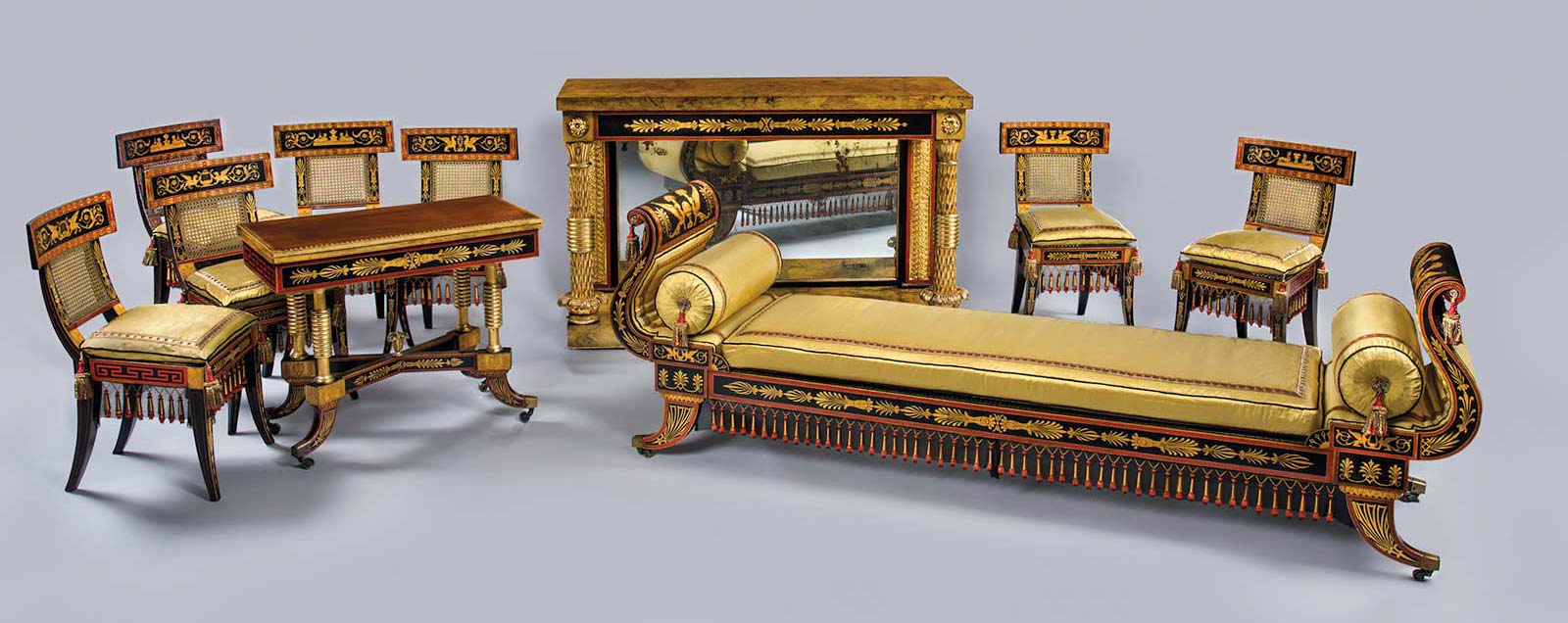
Furniture Group, 1808. Designed by Benjamin Henry Latrobe, made by John Aitken and painted by George Bridport, Philadelphia. Walnut, tulip poplar, oak, painted and gilded decoration, brass; replacement upholstery. Gift of Marie Josephine Rozet and Rebecca Mandeville Rozet Hunt, 1935. Purchased with the gift [by exchange] of Mrs. Alex Simpson, Jr., and A. Carson Simpson, and with funds contributed by Mr. and Mrs. Robert L. Raley and various donors, 1986. Gift of Mrs. Swan McLean Grant, 1991.
Why is the preservation of this form of art history important?
The works of art—the material culture—of our past can tell us about our forebears in exciting ways by revealing what interested artisans and patrons—from materials, colors and shapes to the visual aspects of nature (in, for example, the rococo) or earlier cultures (neoclassicism and neogothic). While we may have more concurrent styles today, it is difficult to think of any that don’t draw on or reference an earlier style, fashion or design. The past is always relevant to today, and to the future.
Powered by Froala Editor