In the third installment of its America Coast to Coast series, CW American Modernism is showcasing the depth and breadth of works created by artists in the Atomic Age of 1950s America. More than two dozen paintings across a wide array of art movements and styles will be on view by such artists as Robert Vickrey, George Marinko, Bendor Mark, Marshall Simpson, Roslynn Estelle Middleman, Ethel Polacheck Margolies, Karl Zerbe, William Thon and Clarence Holbrook Carter.
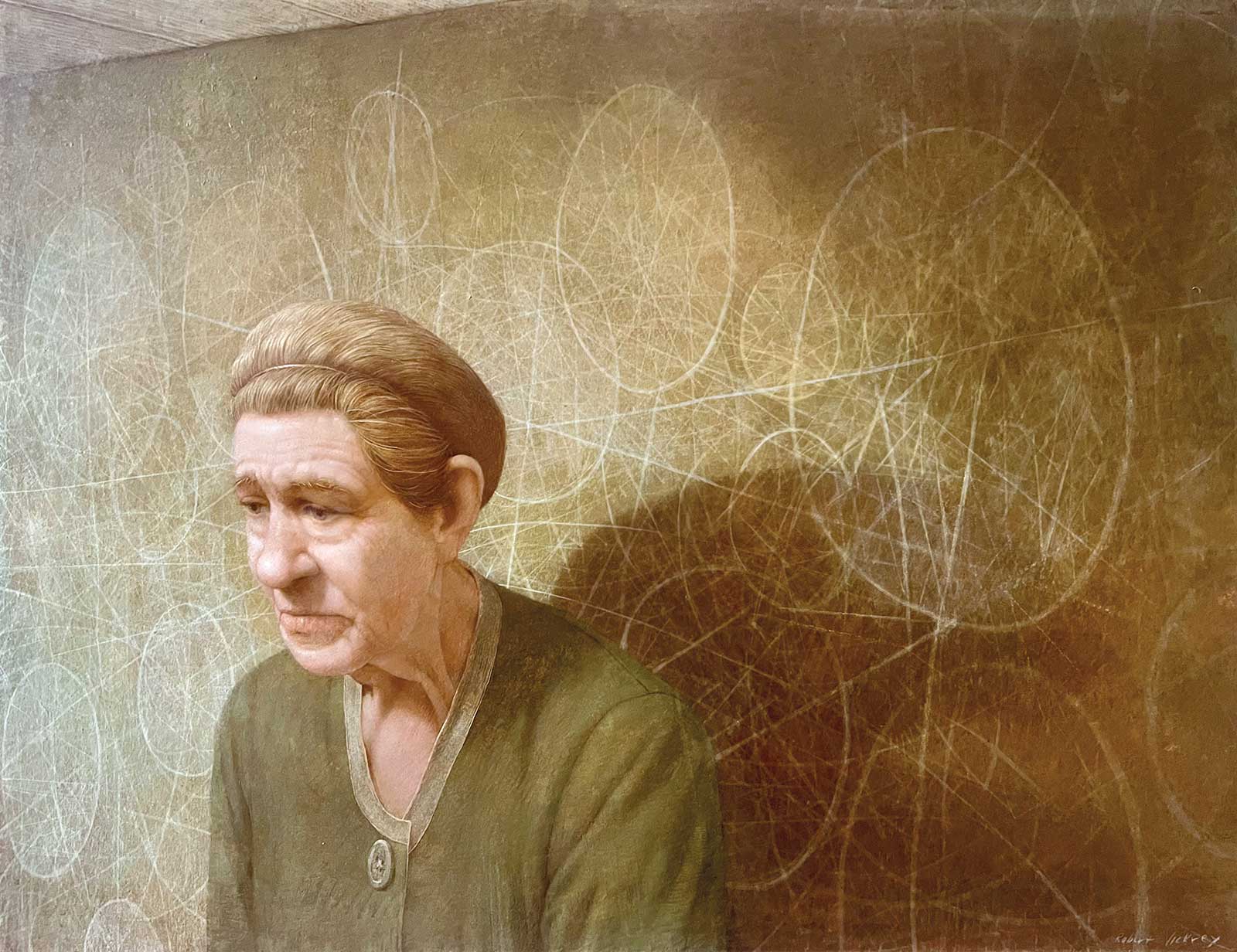
Robert Vickrey (1926-2011), Chrissie, ca. 1956. Tempera on Masonite, 23 x 30 in., signed lower right.
“American art in the 1950s is compelling because of its variety. Although typically characterized through the abstract expressionist paintings that made New York City the global artworld capital, the 1950s also saw a great diversity of styles, including various regional approaches from artists working across the United States,” says Chris Walther, owner of CW American Modernism. “American scene and social realist painters continued their traditions and confronted new challenges such as McCarthyism and the threats of global conflict in the Atomic Age. Hard-edged abstraction and updated forms of synchronism flourished in California, while many artists explored other modernisms such as magic realism and cubism. The decade also saw the advent of what would become op art and minimalism.”
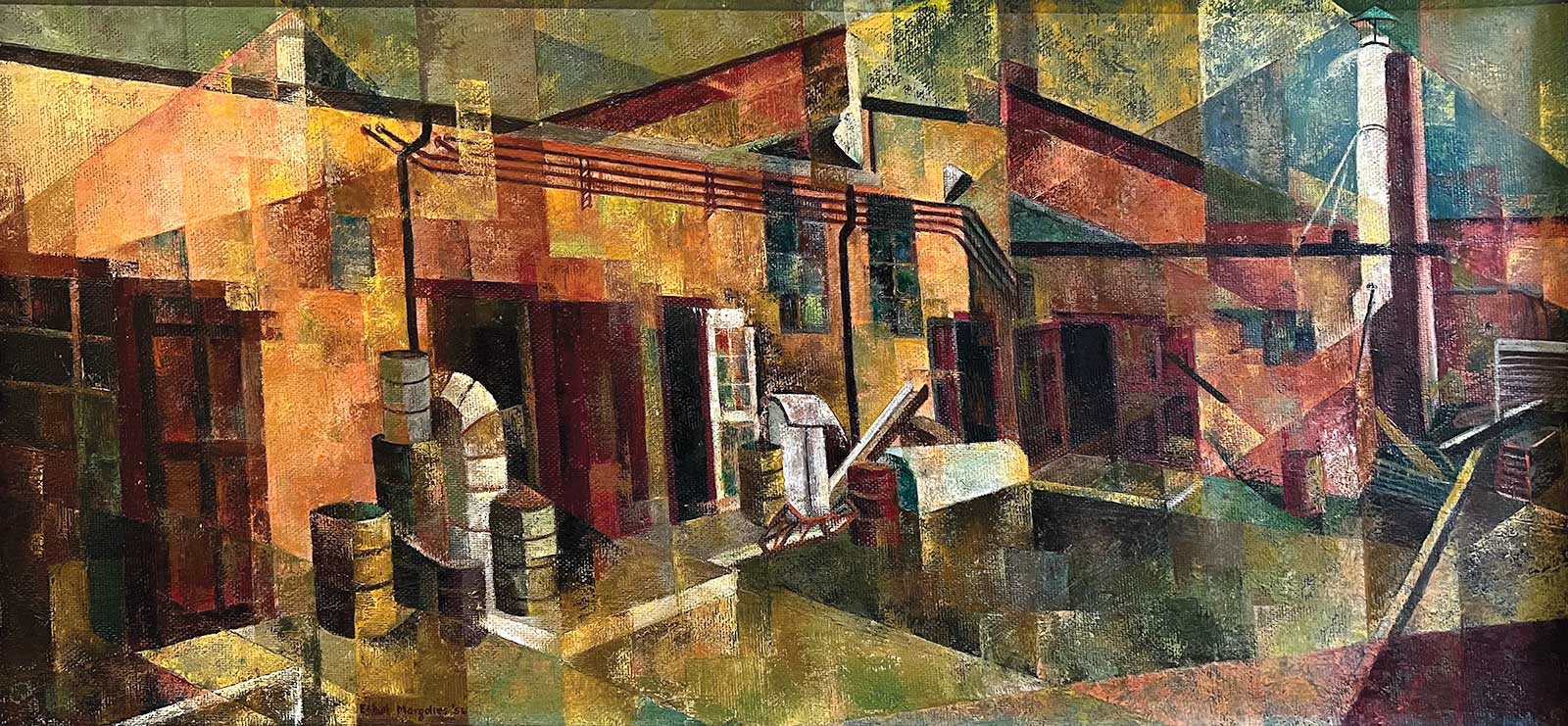
Ethel Polacheck Margolies (1907-1993), Three Chimneys, 1956. Oil on Masonite, 17 x 36 in., signed and dated lower left.
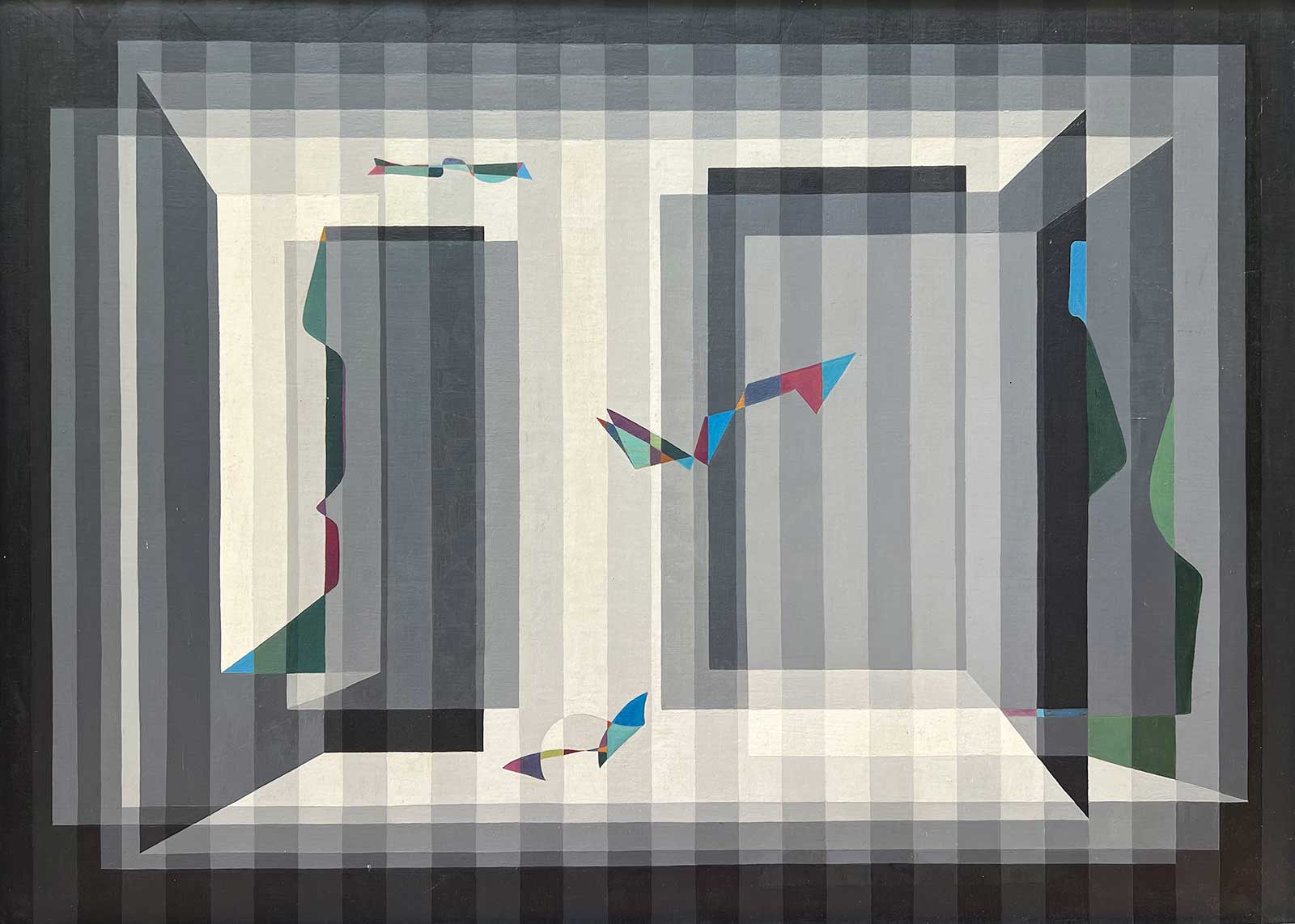
Marshall Simpson (1900-1958) and Roslynn Estelle Middleman (1929-2003), 100-10, by 1958. Oil on Masonite, 22 x 30 in., signed and titled on reverse.
A portrait painted by Vickrey around 1956, Chrissie features an elderly woman staring fixedly at a space out of view of the composition. “Chrissie is one of a group of paintings Robert Vickrey painted of his children’s nurse maid,” says Walther. “The artist’s son, Scott, recalls that his father liked the look of Chrissie’s face and painted her several times, primarily in the 1950s. One of the Chrissie paintings played a seminal role in TIME magazine’s decision to hire Vickrey as a cover illustrator, a position that made his work some of the most recognized images of the second half of the 20th century. Chrissie is a dramatic case study in Vickrey’s deep commitment to perfection.”
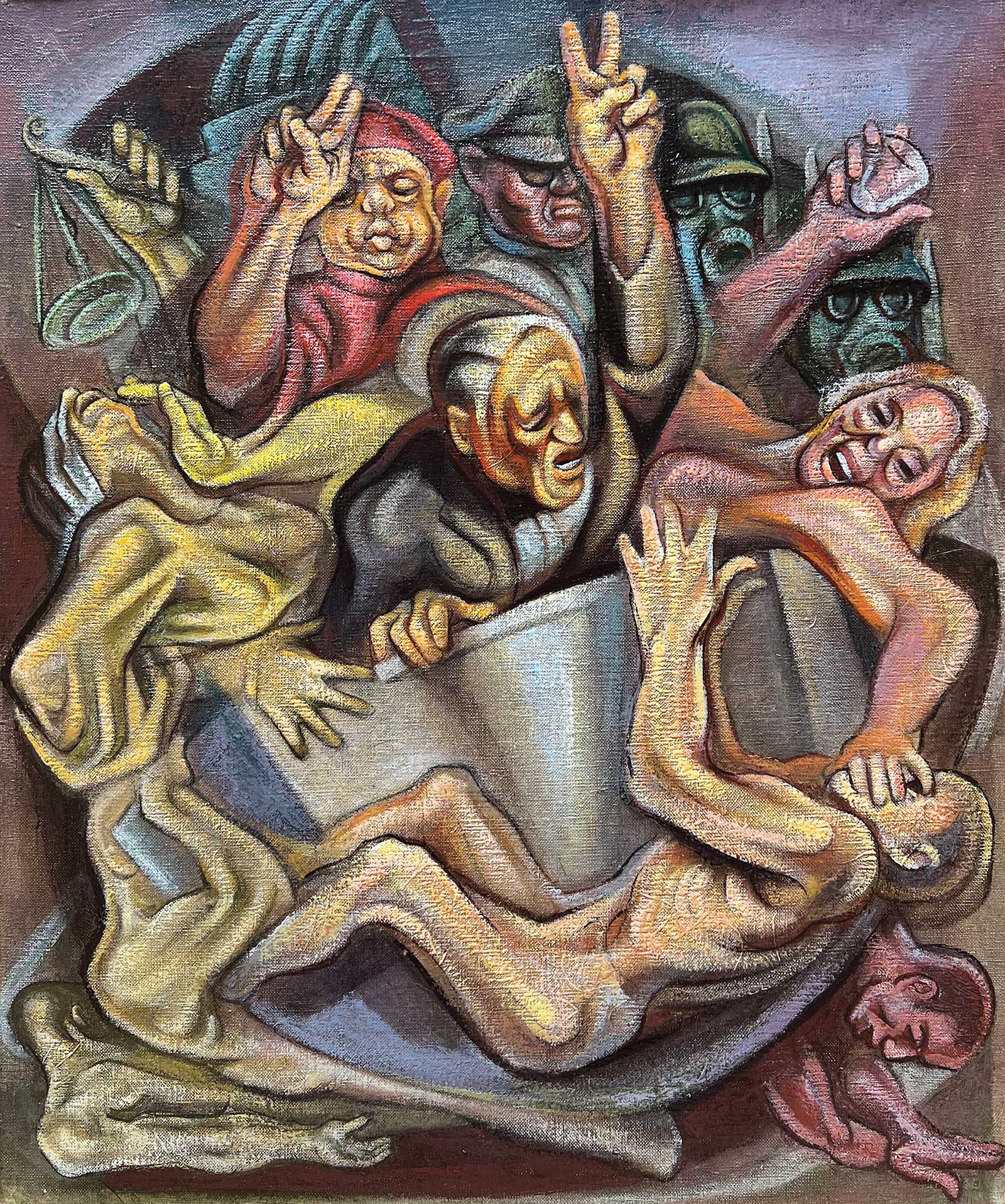
Bendor Mark (1912-1995), The Demagogue or Tale in a Tub, 1952. Oil on canvas, 24 x 20 in., signed, titled and dated on reverse.
Three Chimneys, a 1956 oil by Margolies featuring strong geometric forms, is a prime example of the artist’s precisionist-influenced industrial scenes. “Throughout the 1950s, Margolies made a name for herself by painting the Northeast’s factories, foundries and manufacturing plants,” Walther notes. “Although this subject matter is often associated with male artists, Margolies is part of an important lineage of female modernists who depicted symbols of America’s industrial might. Starting with artists like New Jersey’s Elsie Driggs and Chicago’s Yvonne Leduc Pryor, Margolies is part of a throughline of women precisionist painters that also included the West Coast’s Vanessa Helder. Whereas these artists tended towards a stark and pristine realism, Margolies seems to have been influenced by the likes of Charles Demuth’s, Charles Sheeler’s and Edmund Lewandowski’s highly designed paintings, as she adopted a cubo-futurist oriented brand of precisionism.”
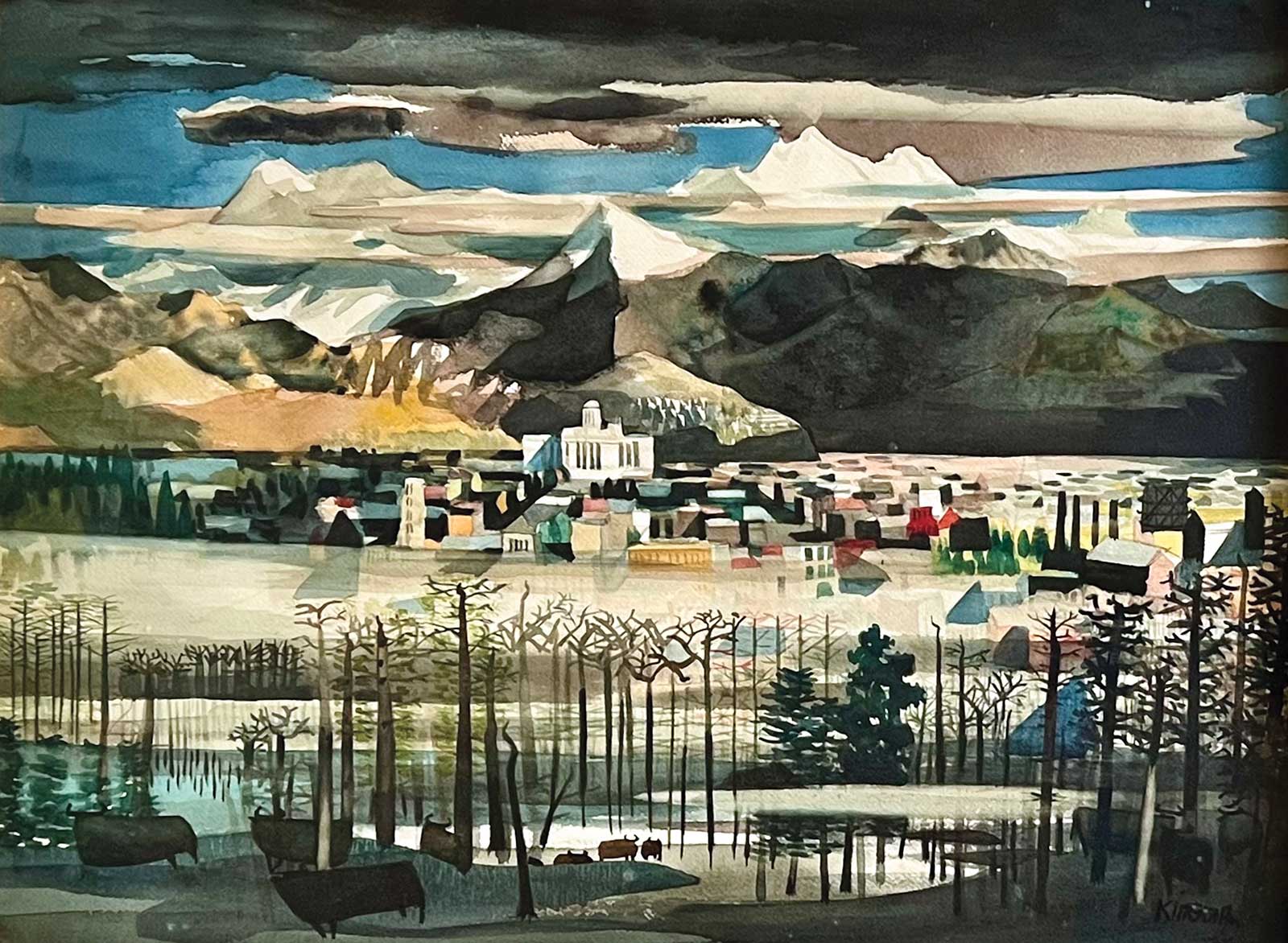
Dong Moy Chu Kingman, (1911-2000), Seoul, Korea, 1956. Watercolor on paper, 21 x 28 in., signed lower right.
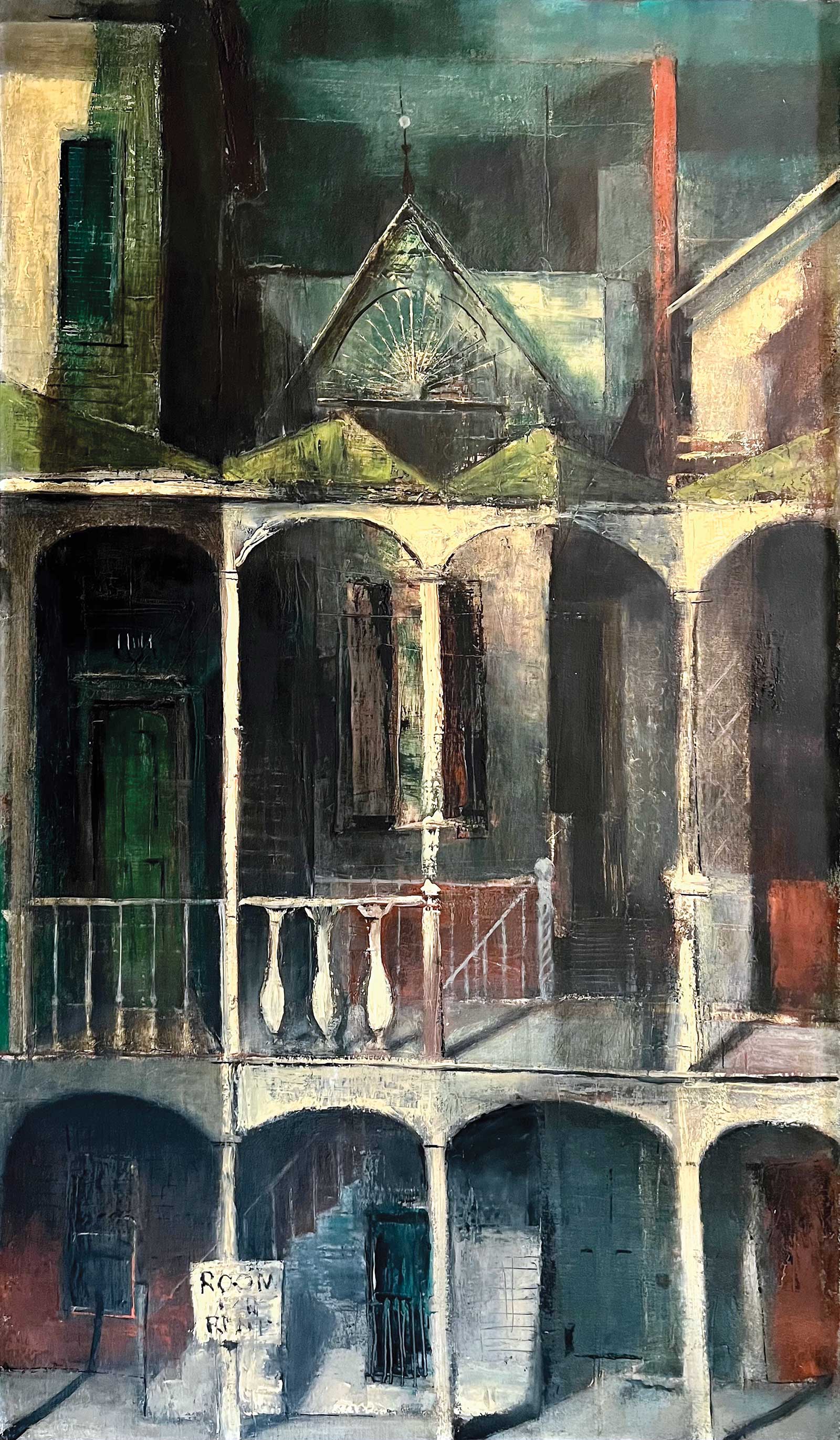
William Thon (1906-2000), Victorian Atlanta, by 1953. Oil on canvas, 34 x 21 in.
Explore all of the artwork included in America Coast to Coast: Artists of the 1950s at www.cwamericanmodernism.com through February 1, 2025. —
Powered by Froala Editor