Subtle color tones, expressive paint and soft-edged forms are used to achieve the atmospheric aesthetic we have come to know as Tonalism, a style that emerged in the 1880s in the aftermath of the Civil War.
The Mattatuck Museum is presenting a selection of roughly 20 American Tonalist works, most of which will be donated to the museum’s permanent collection exhibition by Frederic Thaler and Kathleen Love Mooney following the exhibition. The artworks featured in At First Light: American Tonalism, span from the early 1880s to the late 1910s.
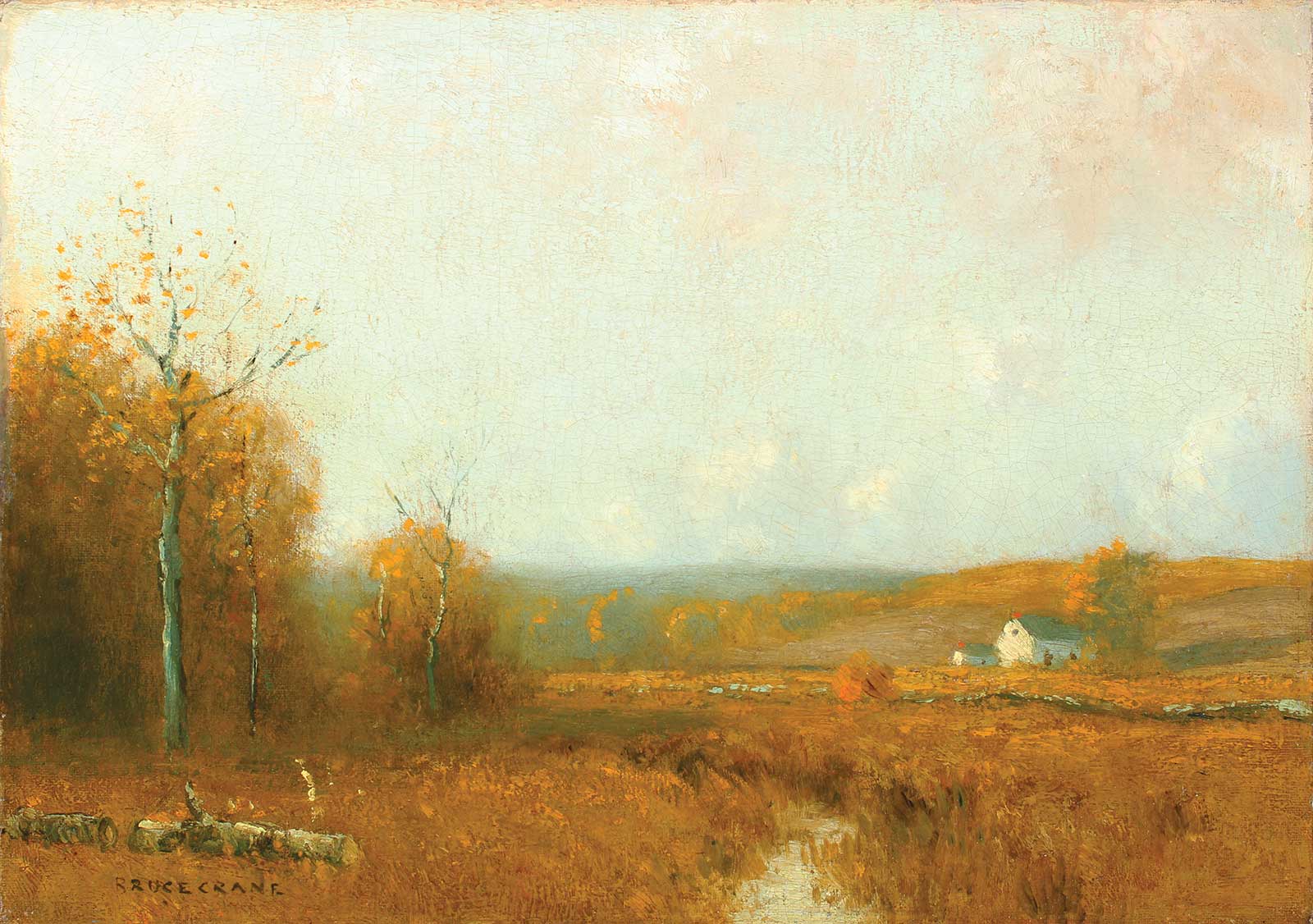
Bruce Crane (1857-1937), Golden Valley, after 1901. Oil on canvas. Mattatuck Museum Gift of Frederic Thaler and Kathleen Love Mooney, 2020, 2021.12.1.
“Tonalism was established during the Reconstruction Era in the aftermath of the American Civil War, which saw complete political, social and cultural upheaval throughout the country,” says assistant curator Becca Lo Presti. “This period also coincided with rapid industrialization. Tonalists sought solitude in the rural landscape, showing a reverence for the perceived simplicity and peace of these spaces. Tonalists were also possessive of the landscapes that they painted, believing themselves to be the second truly American art movement with a duty to portray the American landscape. These attitudes coincided with the larger efforts of the United States government to continue expanding westwards (despite the cost of Indigenous lives and land). Tonalists reimagined the American landscape in their art as the nation likewise altered its perception of the land.”
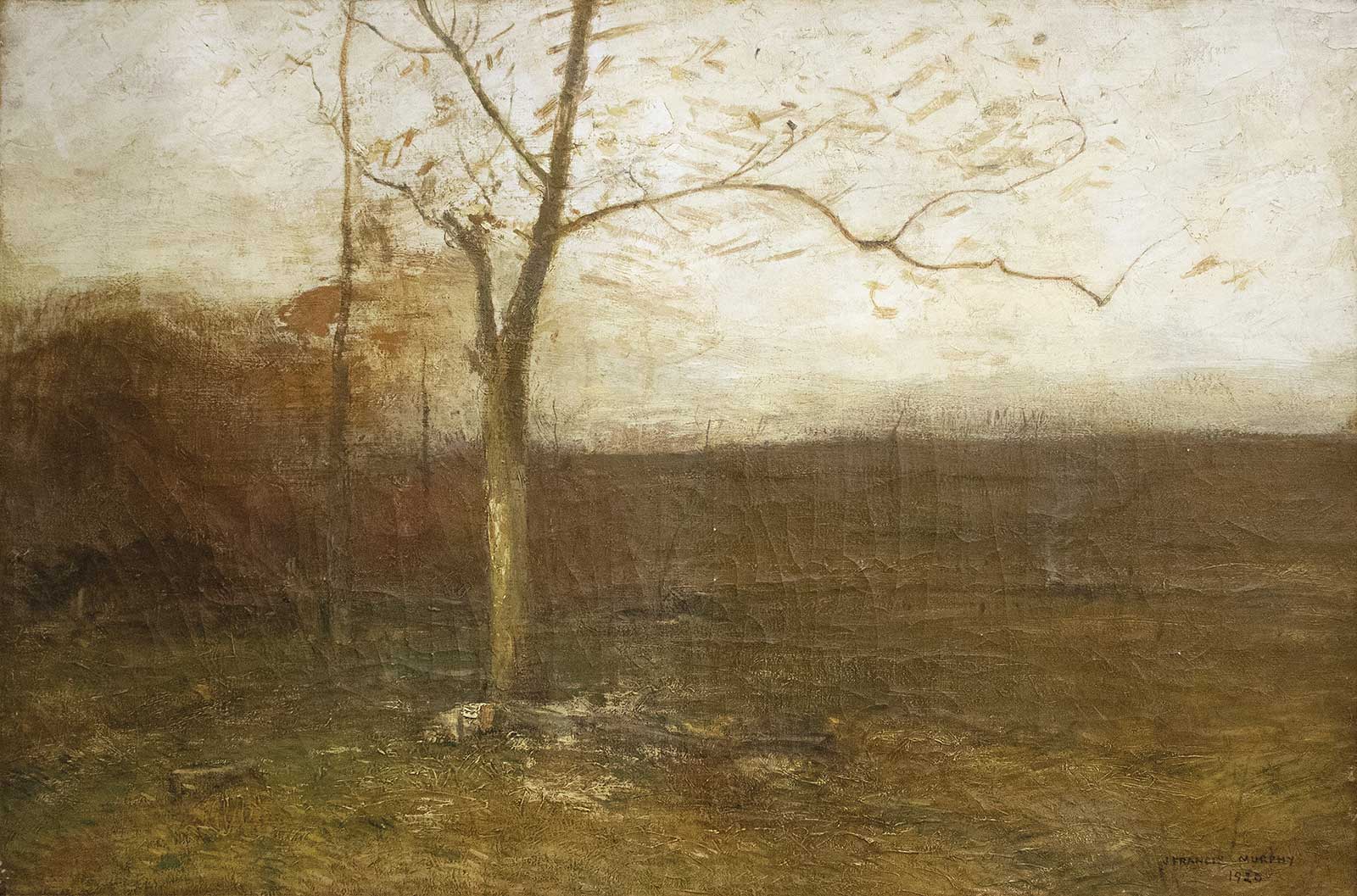
J. Francis Murphy (1853-1921), Farm Lands. Oil on canvas, 381⁄8 x 431⁄8 in. Courtesy Frederic Thaler and Kathleen Love Mooney.
Noting the technological advancements of photography at the time, Lo Presti. “Some Tonalists like Birge Harrison shunned the camera as an inaccurate representation of the human eye. He argued that the role of the artist was to capture ‘impressions’ of the landscape, rather than objective reality. However, Tonalist principles and aesthetics also heavily influenced the pictorialism movement that saw photographers embrace the tonality of film.”
While the majority of paintings in the exhibition depict New England landscapes, there are scenes of Manhattan amd one work by Connecticut-based Tonalist Addison Thomas Millar possibly of northern Europe, as the artist traveled extensively throughout his career.
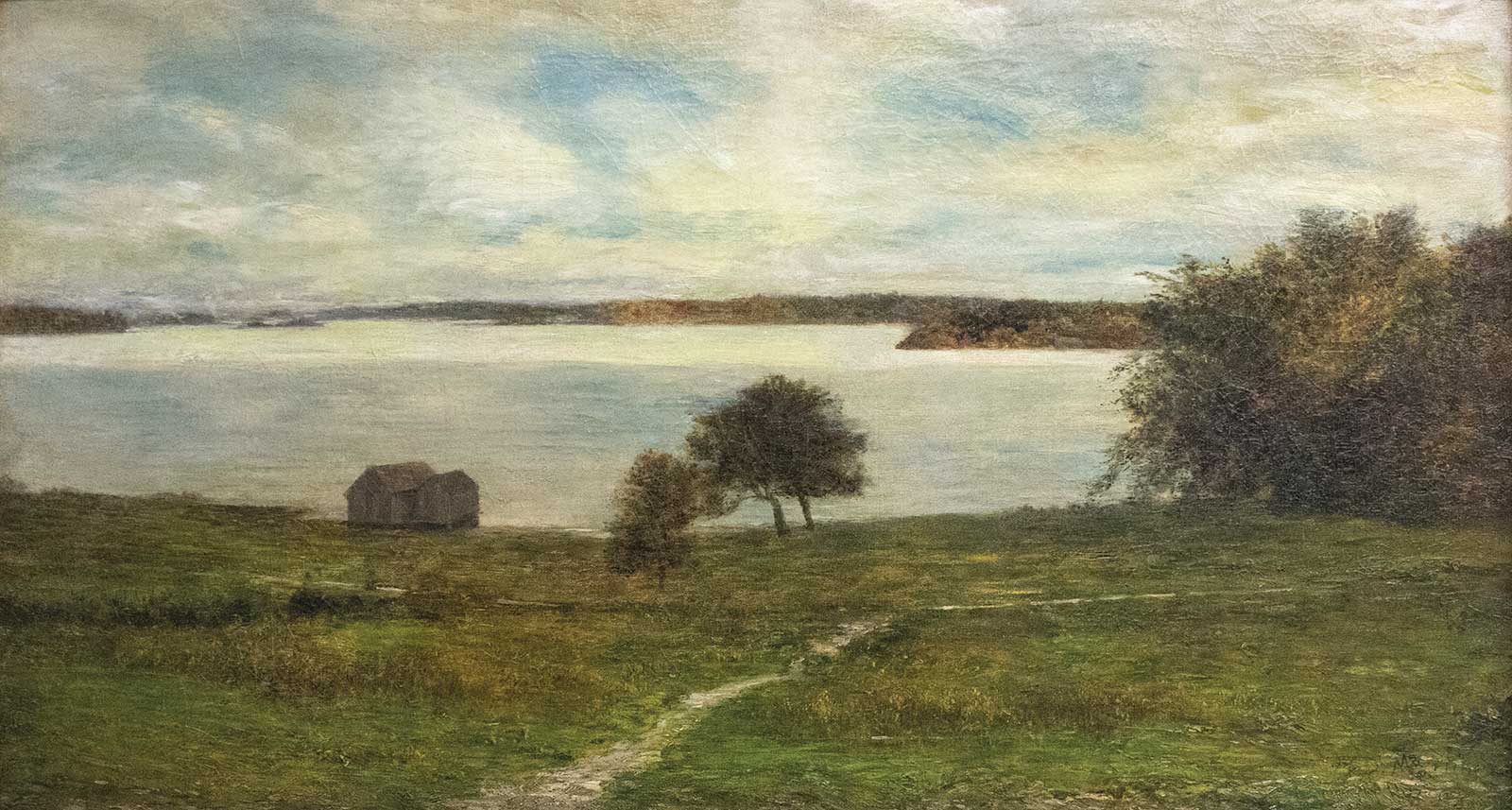
Homer Dodge Martin (1836-1897), The Saint Lawrence River. Oil on canvas, 29 x 45½ in. Courtesy Frederic Thaler and Kathleen Love Mooney.
Other artists with works in At First Light are Henry Ahl, George Bogert, Lewis Cohen, Bruce Crane, Charles Warren Eaton, Ben Foster, Birge Harrison, Arthur Hoeber, William Morris Hunt, Homer Martin, Robert Crannell Minor, J. Francis Murphy, Henry Rankin Poore, William Merritt Post, Henry Ward Ranger, Alexander Theobold Van Laer and Alexander Helwig Wyant.
Lo Presti points to Golden Valley, a painting made by Crane after 1901, as exemplary of Tonalists’ attempts to materialize air and light particles in their art. Another significant work is Murphy’s Farm Lands, that depicts a bare tree set against a muted landscape. “The French Barbizon School approach to painting is evident in this piece, which speaks to the international influences on Tonalist artists,” says Lo Presti. “Despite being a regional art movement largely embedded in New England, Tonalism emerged in response to other styles like the French Barbizon and Hudson River Schools. Farm Lands places Tonalism within larger international art movements and networks of travel and artistic exchange.”
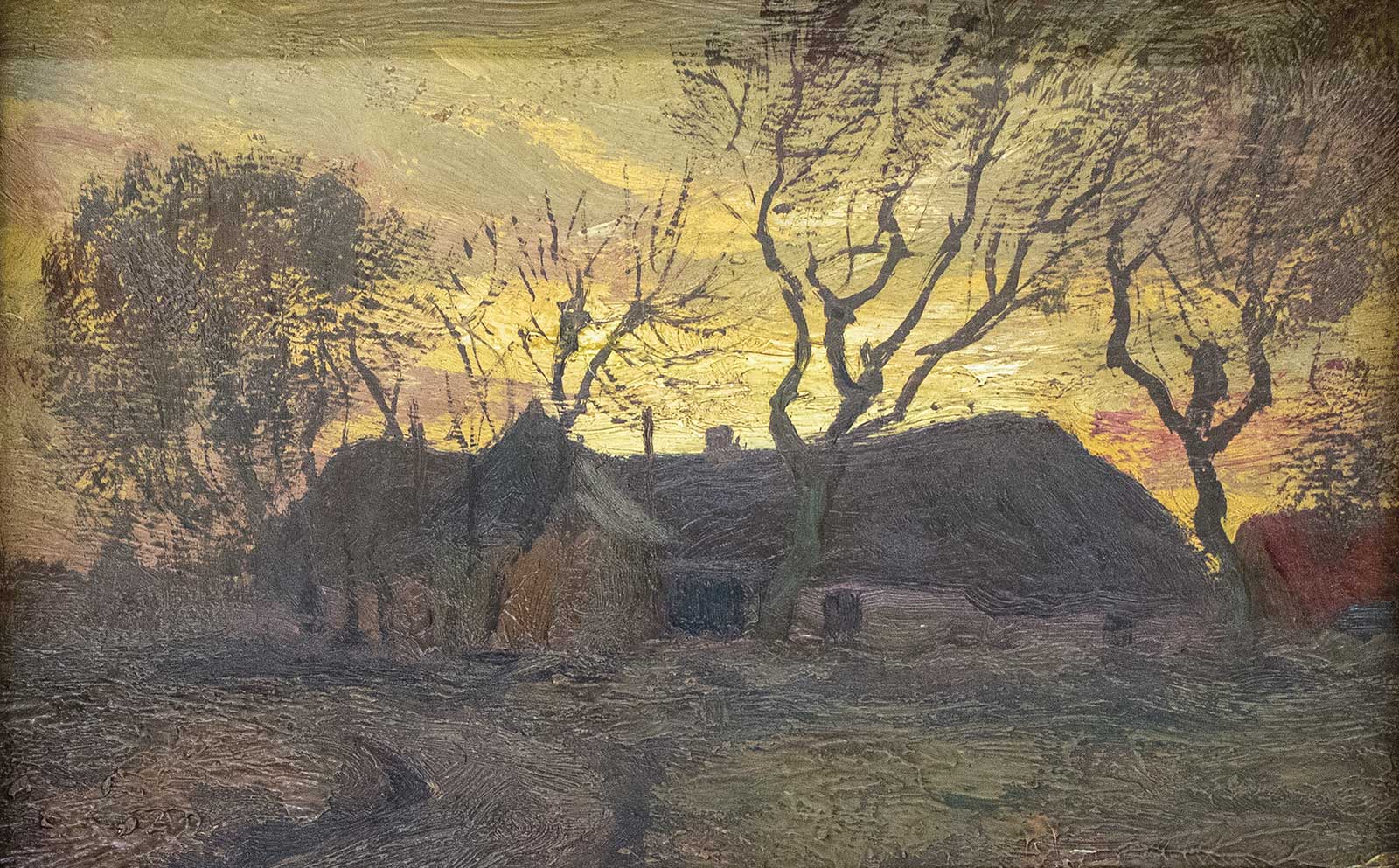
Addison Thomas Millar (1860-1913), Sunset Lane, North Holland. Oil on board, 121⁄8 x 15½ in. Courtesy Frederic Thaler and Kathleen Love Mooney.
Harrison and Ranger both wrote respected books about Tonalist techniques and landscape painting in the early-20th century. Lo Presti says, “Their perspectives on color theory and the rationale for Tonalist landscape paintings are articulated in the works themselves through subject matter and technique.”
In addition to archival materials related to the Civil War in Connecticut, the Mattatuck Museum also has a large collection of work by William Merritt Post, a New York-born Tonalist who relocated to nearby Bethlehem, Connecticut, in 1911. The exhibition features one of his paintings alongside three of his sketchbooks to give insight into his art-making process. —
Powered by Froala Editor