Lincoln Glenn and Graham Shay 1857 kick off the new year with another collaborative exhibition highlighting roughly 50 historic artists who taught at the Art Students League. Works by Frank Vincent DuMond, Adolph Gottlieb, Vaclav Vytlacil, Charles Alston, Charles Hawthorne, Wolf Kahn, Guy Pène du Bois, George Bellows, Augustus Saint-Gaudens, Jose de Creeft, William Zorach, Everett Shinn, Jacob Lawrence, Howard Chandler Christy, and many others will comprise Influential Instructors: Historical Teachers at the Art Student League, which opens at the galleries’ Upper East Side location on January 16.
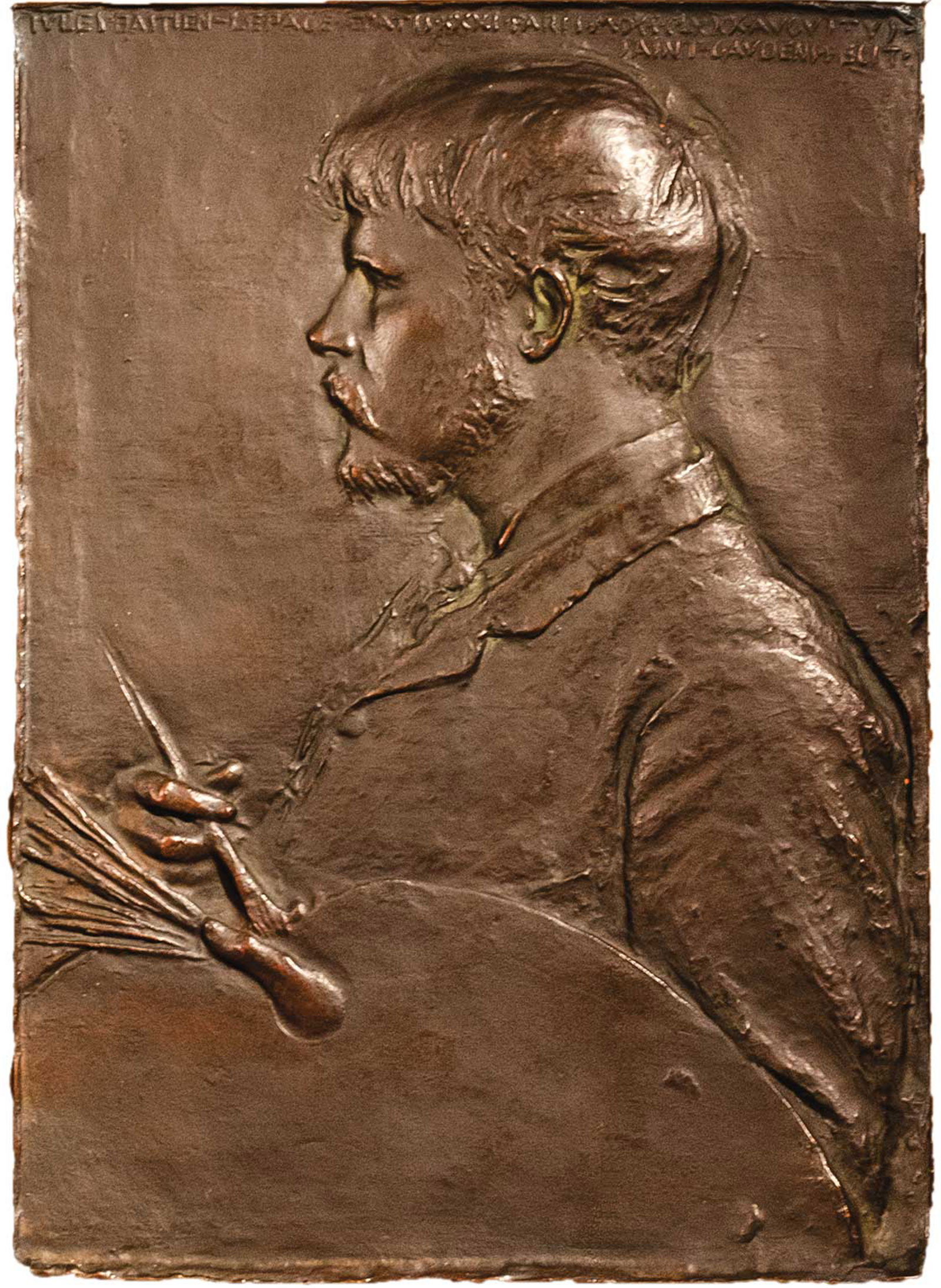
Augustus Saint-Gaudens (1848-1907), Jules Bastien LePage, 1880. Bronze, made by Magee Furnace Company of Chelsea, Massachusetts, 14¼ x 101/8 in., inscribed, dated and signed: ‘JULES BASTIEN-LEPAGE AETATIS XXXI · PARIS · MDCCCLXXX · AVGVSTVS · / SAINT-GAVDENS · FECIT’.
Founded in 1875 when a small group of artists influenced by the European modernists rejected the rigid tenets and teachings of the National Academy of Design, the Art Students League has been instrumental in shaping the trajectory of American art. Over the past 150 years, its famed instructors have included Thomas Hart Benton, Stuart Davis, Georgia O’Keefe, Jackson Pollock, Mark Rothko, to name just a few.
The roughly 50 works and artists in Influential Instructors will cover a wide range of distinct movements, mediums and a timeline that dates back to an 1880 bronze by Saint-Gaudens.
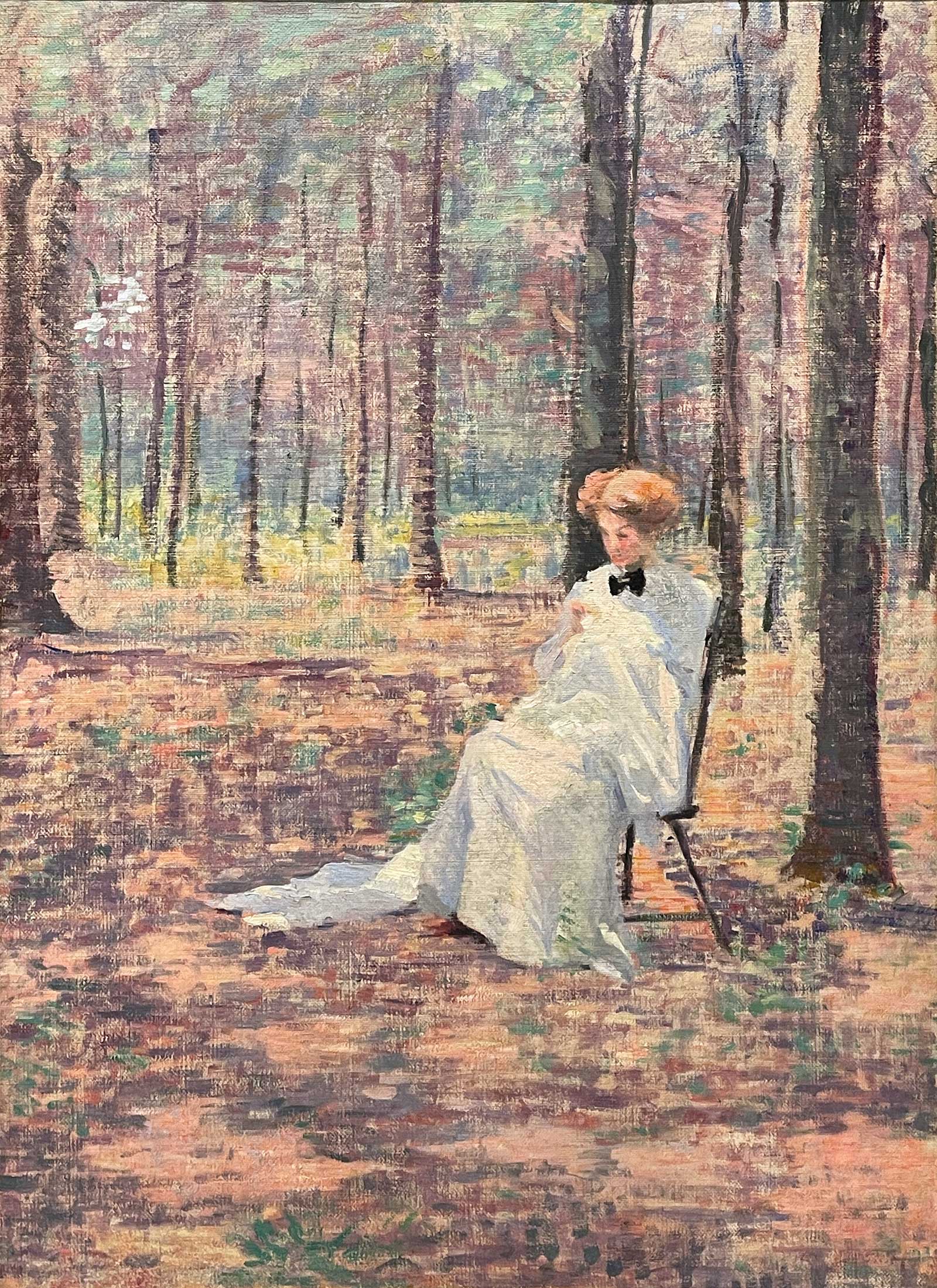
Robert Lewis Reid (1862-1929), Woman in a Forest Glade. Oil on canvas, 36 x 27 in.
“At the turn of the century, the League brought on painters who had studied impressionism alongside Monet and Degas,” explains Lincoln Glenn partner Eli Sterngass. “The urban realism rendered in Impressionist techniques crystallized around the classes of Robert Henri, this spirit that would later carry through in the studios of Thomas Hart Benton, Kenneth Hayes Miller, Reginald Marsh, and Yasuo Kuniyoshi. Following this evolution, the epochal Armory Show presented Modernism to American eyes in 1913, and the League’s artists were well-represented in its ranks.
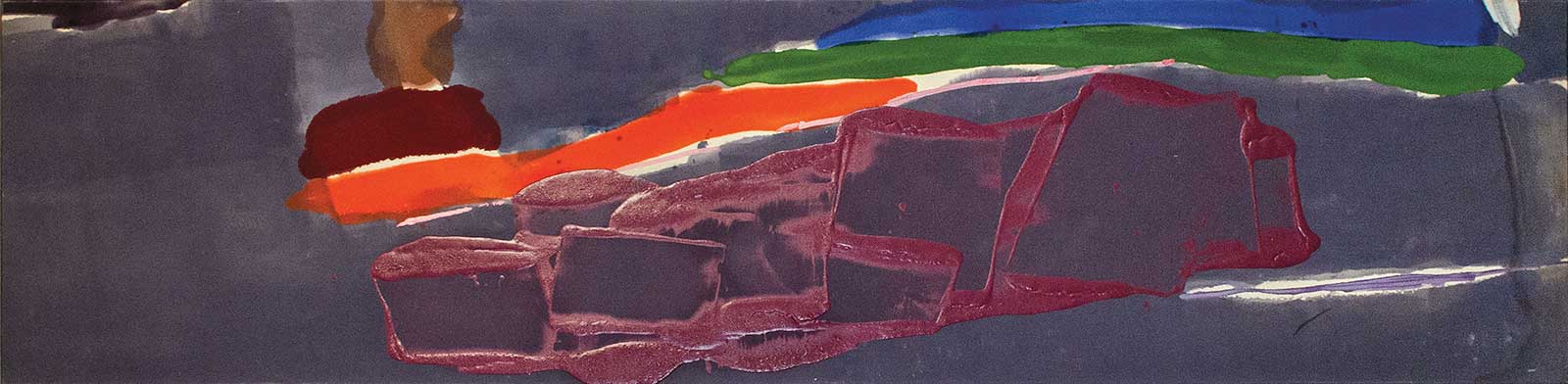
Kikuo Saito (1939-2016), Seven Causeways, 1977. Acrylic on canvas, 22 x 93 in., signed and dated on the reverse.
“After the war recipients of GI Bill benefits were able to apply their scholarships to the League in spite of its continued conference of no degrees—affording thousands of veterans the opportunity to study radical modern art in the legitimizing setting,” Sterngass continues. “Diversity increased as well: Because the army was racially integrated, GI-bill beneficiaries were, too. Romare Bearden, Norman Lewis, Joseph Delaney were among the leading Black artists that filled the League’s halls in the early post-war years.
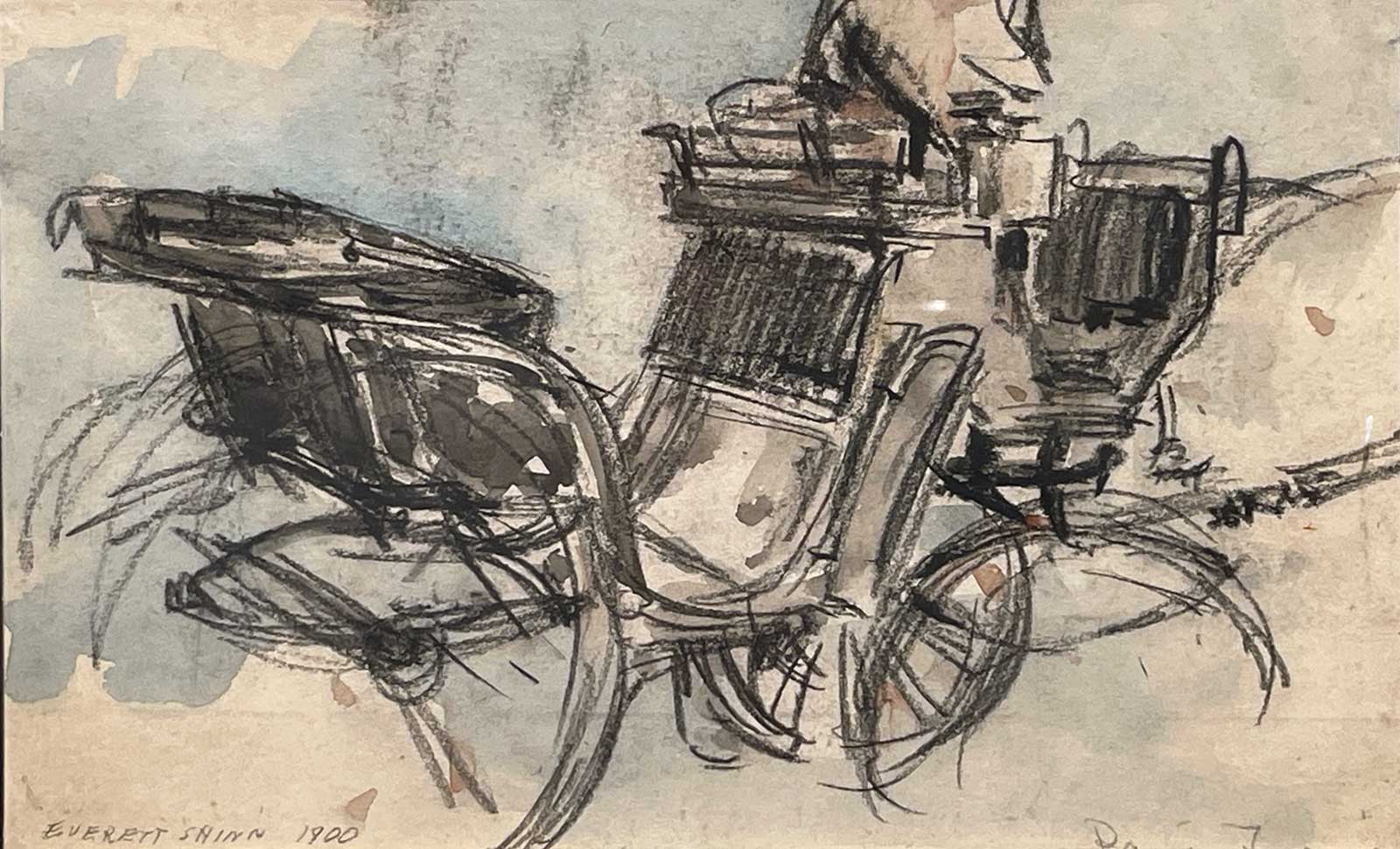
Everett Shinn (1876-1953), Carriage, Paris, 1900. Watercolor and pencil on paper, 4½ x 6¾ in., signed and inscribed: ‘Everett Shinn 1900 Paris, France’.
“Today, the Art Students League maintains the same philosophy and pedagogy as the moments it was founded, continuing to provide an environment for education, experimentation and freedom to artists, as well as artist-instructors, allowing them to apply their own individual perspectives in the classroom.”
A few standout works exemplary of the show’s scope include abstractionist Al Loving’s (1935-2005) piece Have a Nice Day, created for a benefit auction in 1992 for the Archives of American Art for which 100-plus artists used a mailbox as their “canvas.” Another abstract work of note, and Sterngass’ personal favorite is Kikuo Saito’s Seven Causeways from 1977. “The composition of many of Saito’s paintings was significantly influenced by his dance and theater productions, as well as contemporary movements such as the Gutai Group, the New York City art world and abstract expressionism, playing between the collaborative theater and the private realm of the painting studio. The combination of thick acrylic impasto over the stained canvas visible within the background color suggests movement, perhaps that of theater actors in an imagined dramatic production. It also reveals his work as a former assistant to Helen Frankenthaler, Kenneth Noland and Larry Poons.”
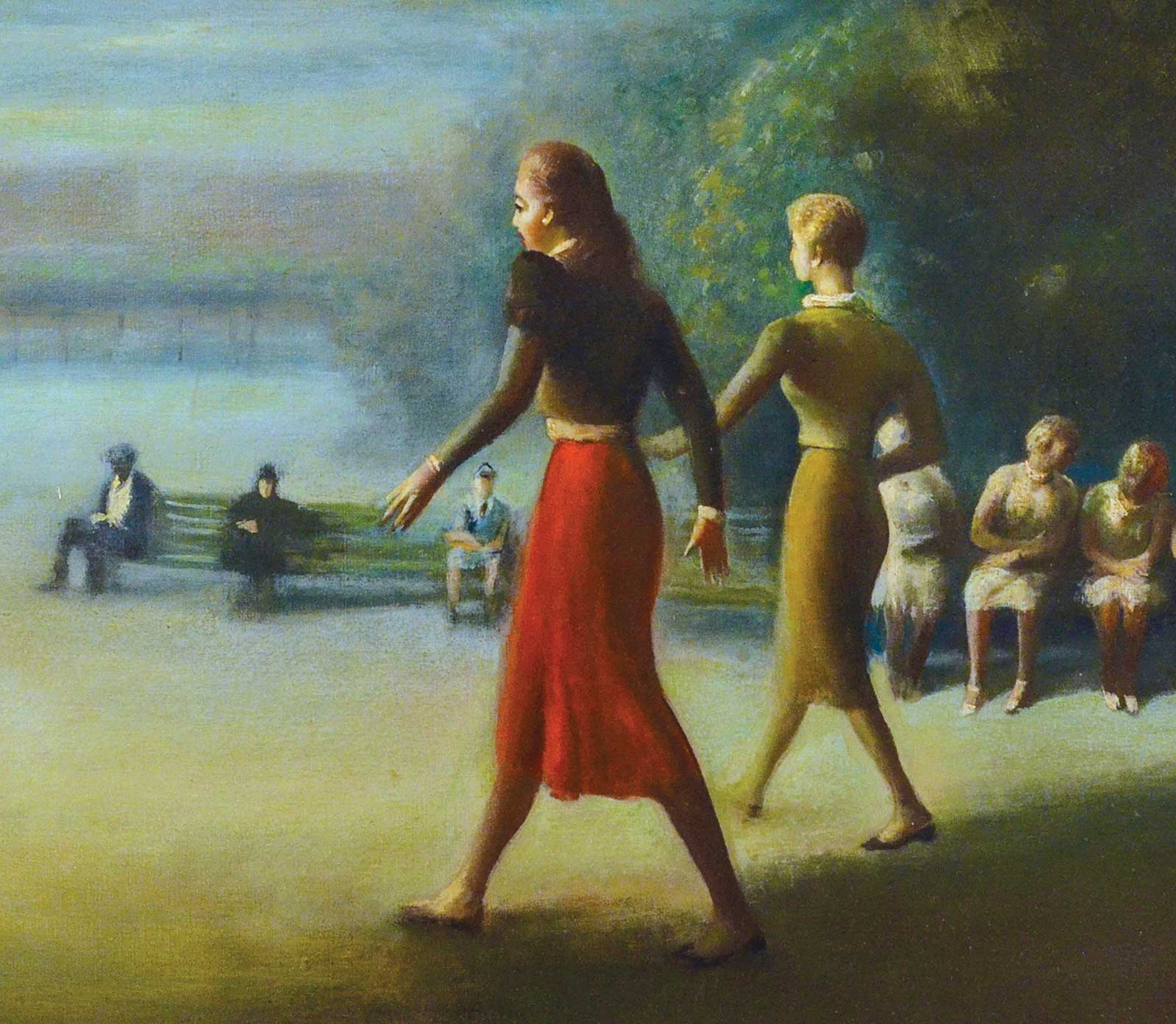
Guy Pène du Bois (1884-1958), Attention (detail), 1948. Oil on canvas, 20 x 30 in., signed lower right: ‘Guy Pène du Bois’.
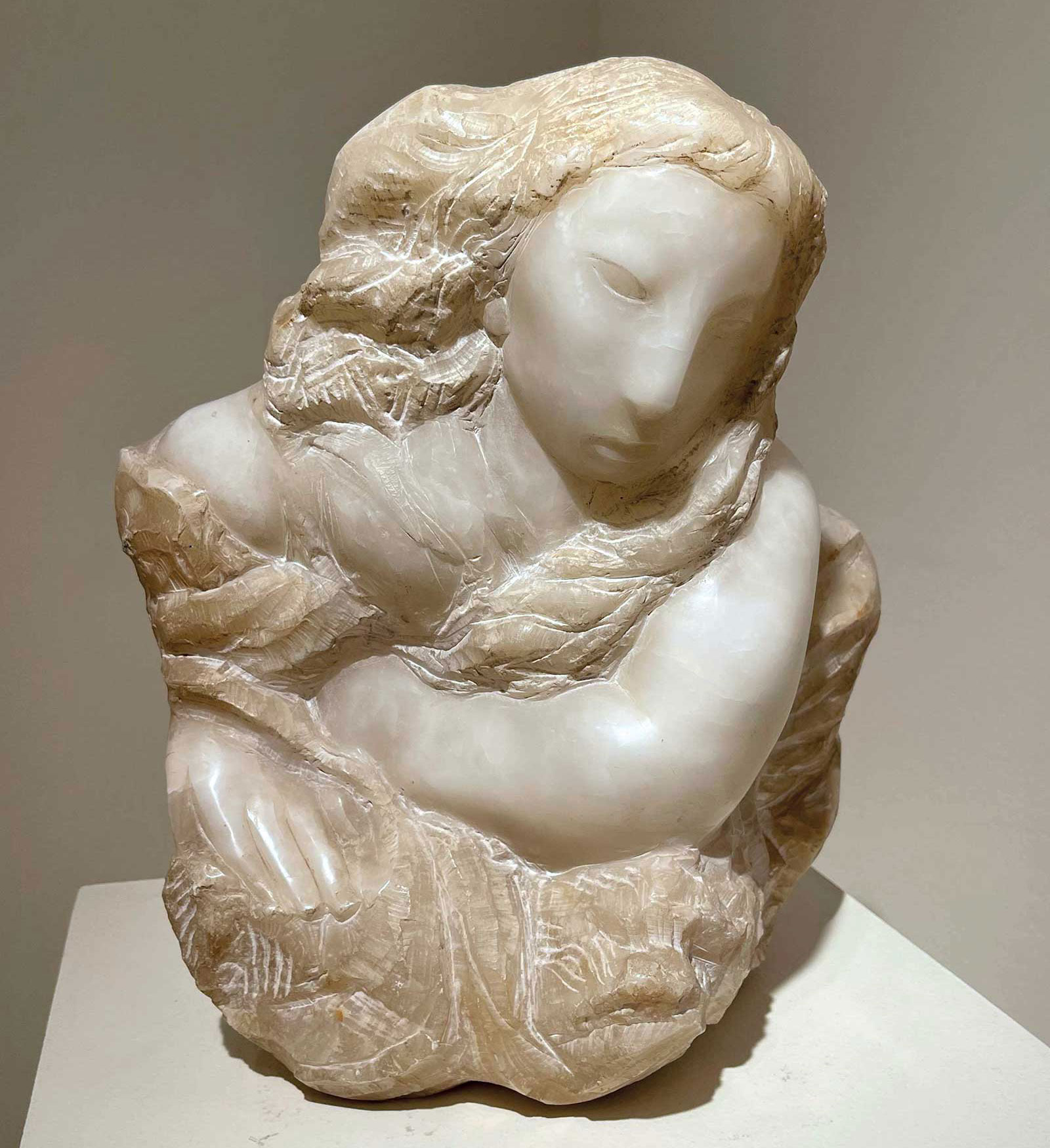
Jose de Creeft (1884-1982), Ecstasy, 1956. Alabaster, 14¾ x 11½ x 10 in., signed on reverse: ‘J de Creeft’.
Finally, Sterngass points to Robert Lewis Reid’s (1862-1929) painting, Woman in a Forest Glade. Born in Stockbridge, Massachusetts, Reid studied at the School of the Museum of Fine Arts, Boston, under Otto Grundmann, where he later became an instructor. In 1884, Reid moved to New York City, studying at the Art Students League, where he eventually taught from 1893 to 1896.
Sterngass adds, “Together, the lives of the three artists span more than 160 years and are associated with distinct artistic movements, illustrating the breadth of the League’s impact on art in the 19th and 20th centuries, as well as it’s innovative and revolutionary spirit.”
The exhibition, which hangs through February 28, will be accompanied by a complimentary catalog with an essay by Jonathan Spies. An opening reception will be held on January 16 from 5:30 to 7:30 p.m. —
Powered by Froala Editor