I wonder what would have happened had the United States not seen fit to uproot and incarcerate Japanese Americans—I should say, American citizens of Japanese descent—after Pearl Harbor and for the duration of World War Two. Apart from simply upholding the rights of citizens, whatever their origins, as the law of the land states, how would the cultural contributions of Japanese-Americans have changed? What if painters like Miki Hayakawa, Miné Okubo and Hisako Hibi, whose careers were on the rise prior to 1941, hadn’t been derailed by scaremongering, unfounded prejudice and, ultimately, Executive Order 9066, the Presidential mandate that allowed the army to detain and relocate Japanese Americans in concentration camps? Roll back to 1939: Hayakawa, Okubo, and Hibi are the sole female Japanese American artists to represent the United States at the Golden Gate International Exposition. What if they hadn’t been forced to rebuild their lives and careers from the ground up after 1945?
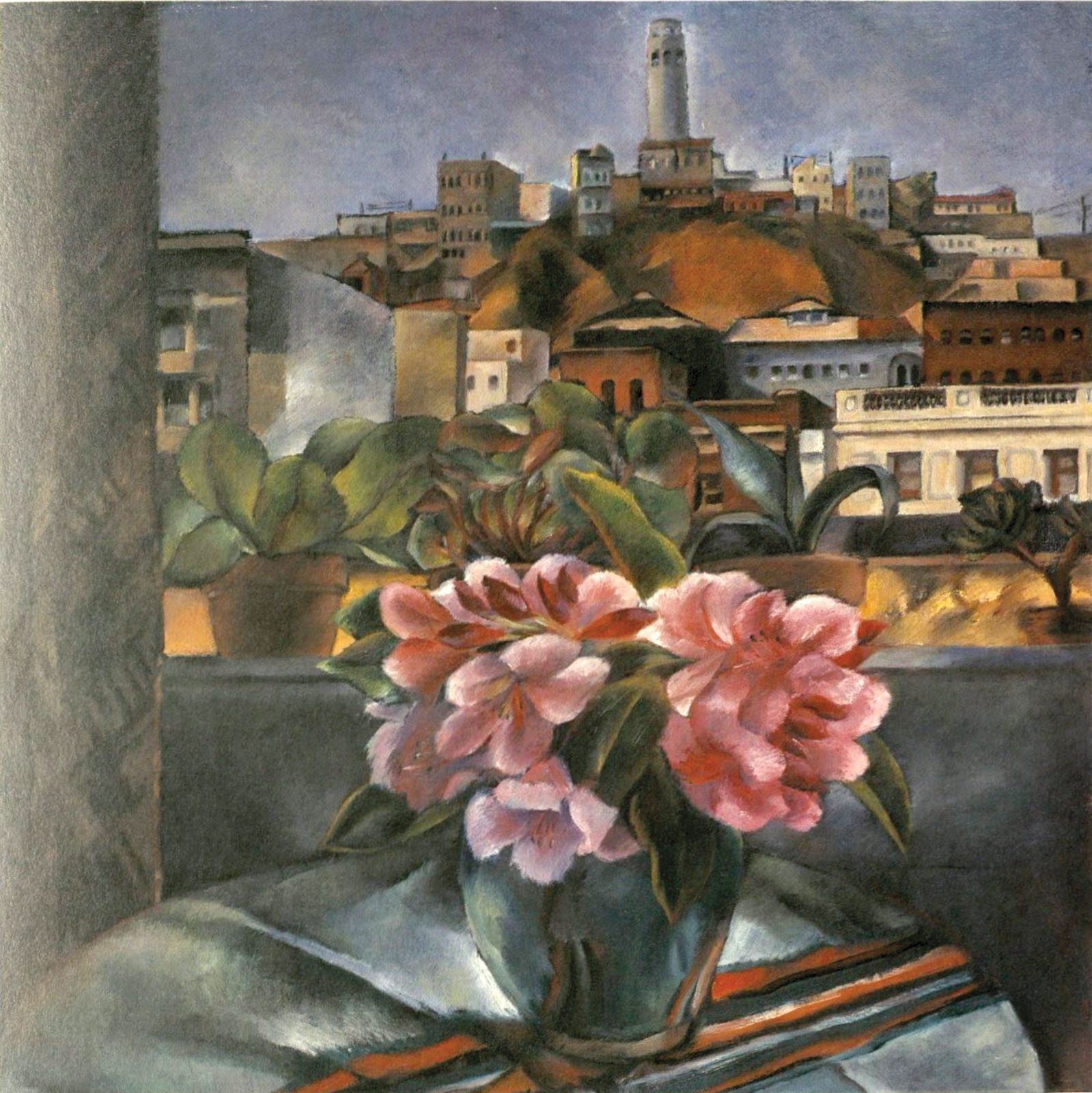 Miki Hayakawa (1899-1953), From My Window, 1935. Oil on canvas. Collection of Sandra and Bram Dijkstra on loan at the Huntington Library, Art Museum, and Botanical Gardens, Pasadena, California.
Pictures of Belonging: Miki Hayakawa, Hisako Hibi, and Miné Okubo, at the Smithsonian American Art Museum, reintroduces us to their work while reminding us what resilience—a word that is thrown around these days like so much tissue paper—really means. Because what is truly amazing about the exhibition, apart from the ambition and quality of the artwork, is that all three of them, despite numerous obstacles and hardships, picked up their work after the war and continued to paint for the rest of their lives.
One of the key questions the exhibition literature asks is this: “What does American art and being American mean in specific historical moments?” After looking at the works in the exhibition, I would add, what is American about American art? And what does it mean, if it means anything, to be an American artist?
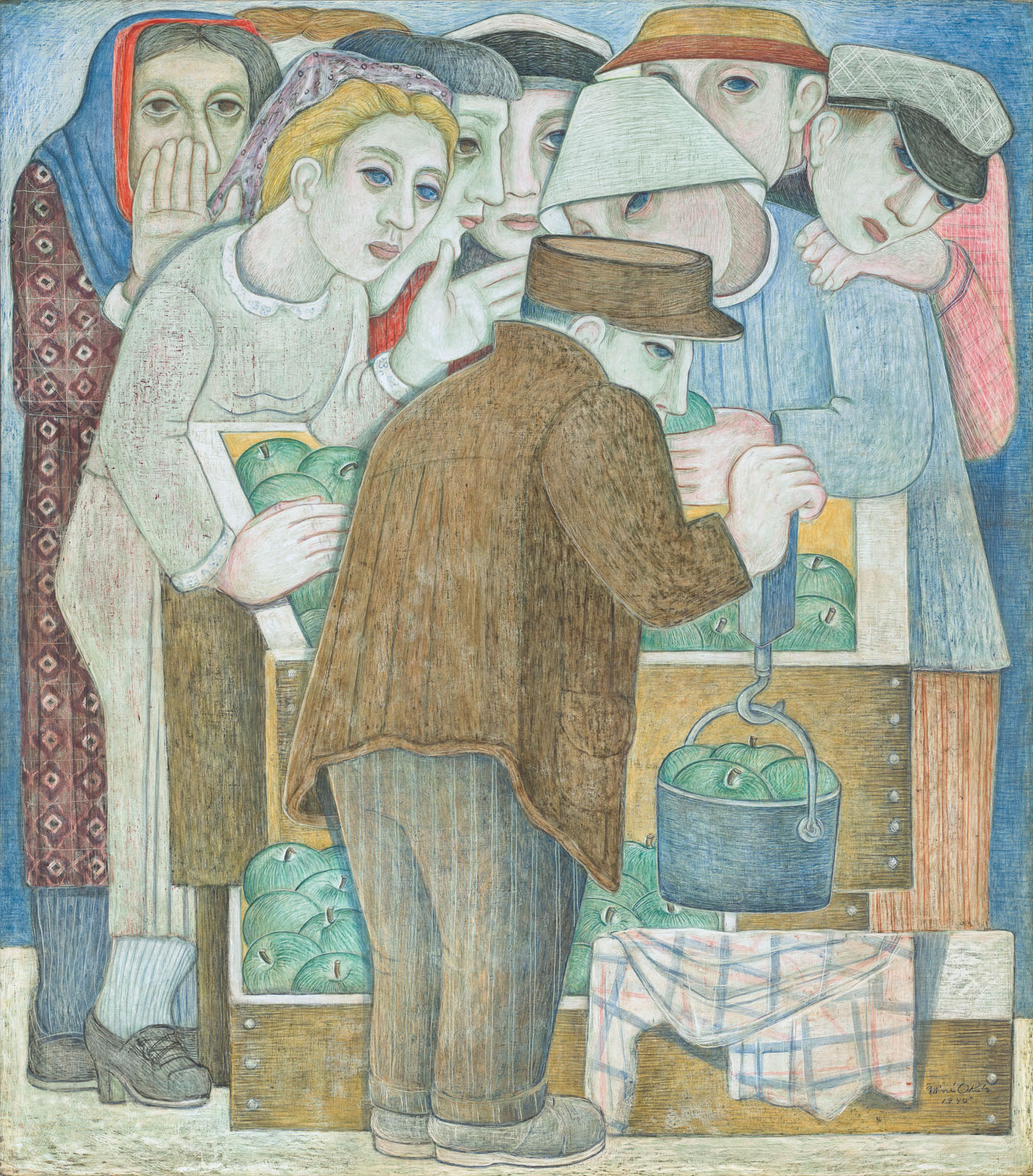 Miné Okubo (1912-2001), Grocer Weighing Produce, 1940. Tempera on hardboard. Smithsonian American Art Museum, Museum purchase through the Luisita L. and Franz H. Denghausen Endowment, 2023.46.2, © 2023, The Miné Okubo Charitable Corporation.
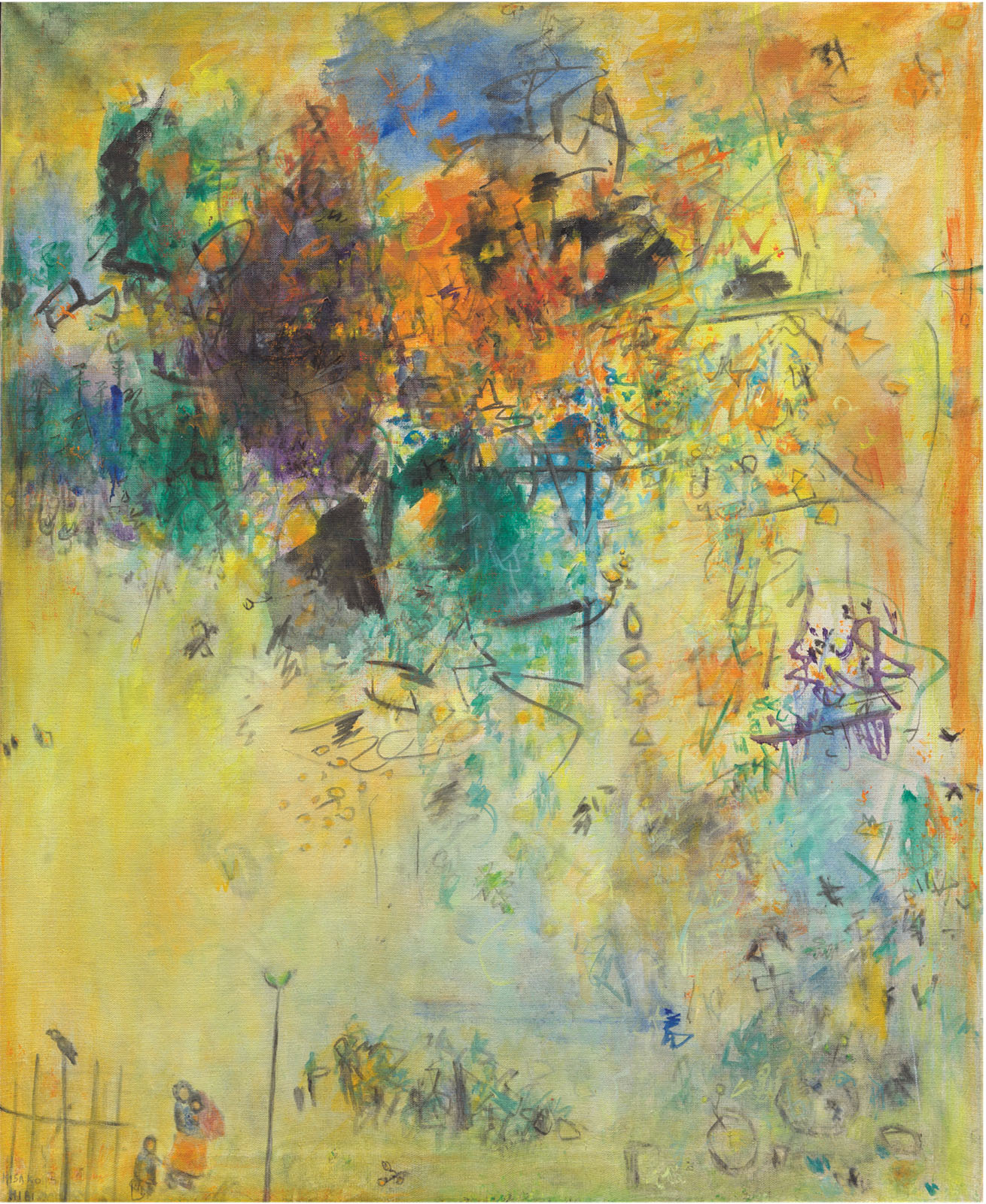 Hisako Hibi (1907-1991), Autumn, ca. 1967. Oil on canvas. Smithsonian American Art Museum, Museum purchase through the American Women’s History Initiative Acquisitions Pool, administered by the Smithsonian American Women’s History Initiative, 2023.6.3, © 2024, Ibuki Hibi Lee.
Hayakawa, Okubo and Hibi grew up in California and studied there. Paintings from the 1930s show the influence of Mexican Muralism and American Scene painting, the kind of realism we associate with the WPA artists. What you don’t see—not until later—is any trace of Japanese artforms like the woodblock tradition (this at a time when Japanese woodblock artists had turned their talents to scenes of Paris and Yosemite). In other words, what we are looking at are examples of exquisitely-rendered American art. For my money, the calla lilies in Hayakawa’s 1935 oil, From My Window, a clear nod to Diego Rivera, are far more interesting than his ever were. The whole rhythm of the painting, from the fruit at bottom left to the patterns on the trousers, floor, and wall that destabilize traditional perspective come across as if realism were seen through the lens of Cézanne and Juan Gris. And the young man, tousling his own hair as he scans the paper (I imagine him looking for a job) is beautifully composed. And yet, in a blink, Hayakawa, along with Okubo and Hibi, were treated not only as un- or anti-American, but as not-American.
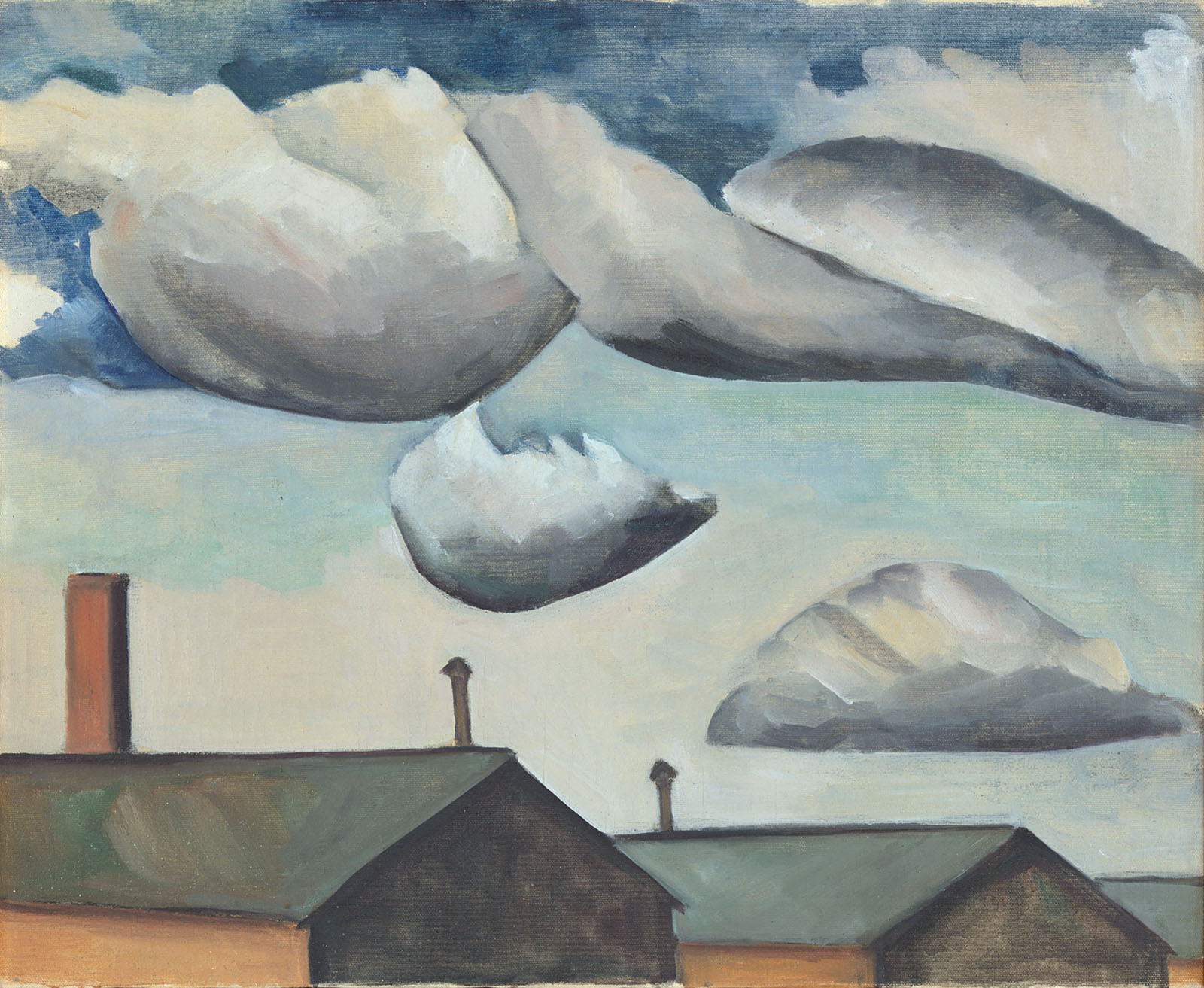 Hisako Hibi (1907-1991), Floating Clouds, 1944. Oil on canvas, Smithsonian American Art Museum, Museum purchase through the American Women’s History Initiative Acquisitions Pool, administered by the Smithsonian American Women’s History Initiative, 2023.6.1, © 2024, Ibuki Hibi Lee.Okubo’s Grocer Weighing Produce, a 1940 tempera, has many of the hallmarks of the New York School of the 1930s, simultaneously recalling the soup kitchens of the Depression while, in a prophetic way, anticipating both the rationing that would come with America’s entry into the war and harsh conditions in the internment camps, where getting in line for food would be a way of life. In the work, the tightly grouped, overlapping figures resemble one another; they are “the people,” the populace. Their eyes are large, heavy and grim, almost Byzantine in size and shape as they wait for the grocer to weigh the green apples and pronounce his price. The work might easily be Russian, or Russian American.
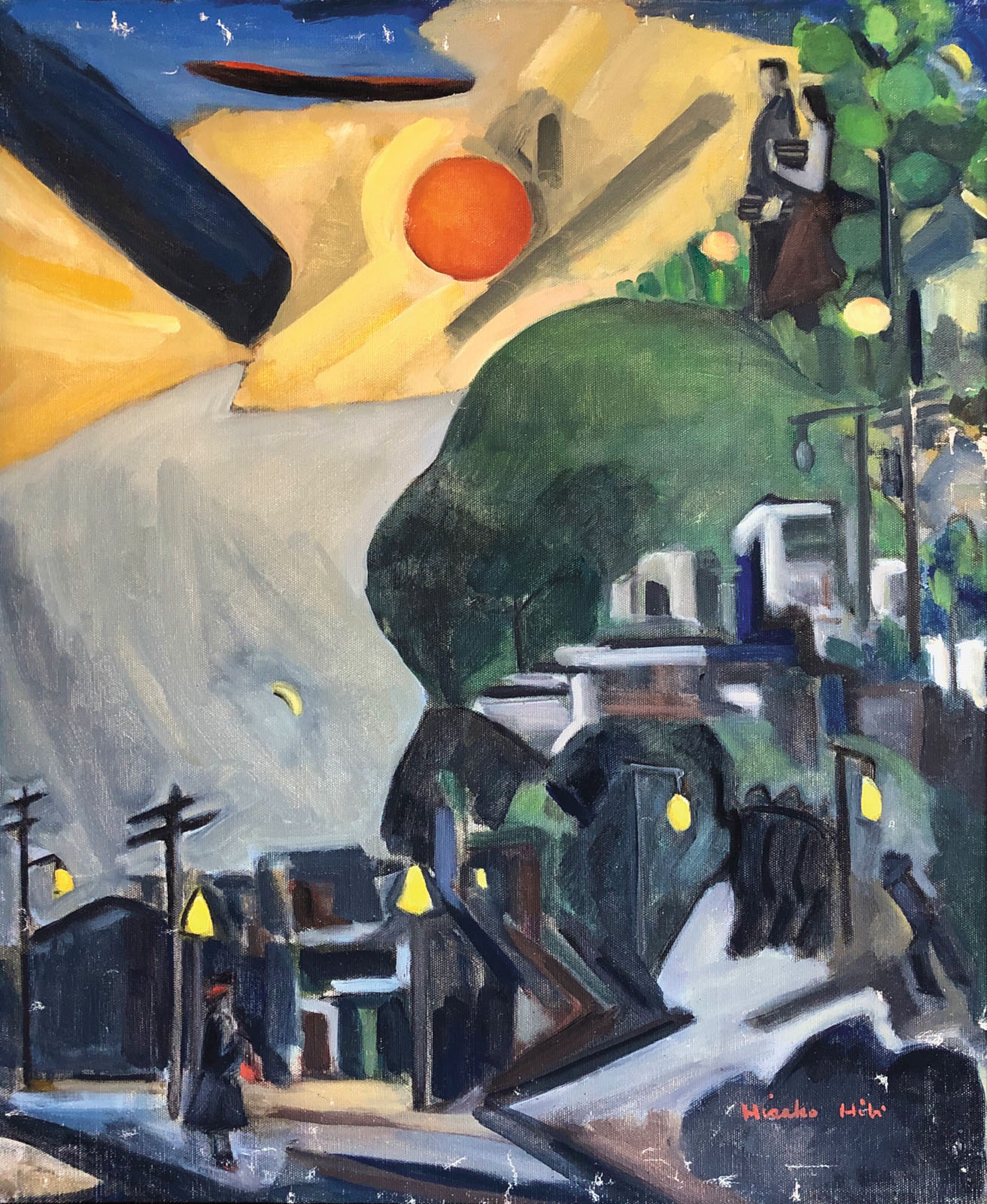 Hisako Hibi (1907-1991), Waiting for a Bus to Work, 1955. Oil on canvas. The Hibi Estate.Hibi’s Floating Clouds, a 1944 canvas, contrasts the rooftops of what may very well be the camp where she and her family were incarcerated, with the free, though somehow somber and ponderous clouds floating overhead. “After the war,” as a piece from the Japanese American National Museum states, “she moved to New York City in 1945, lost her husband to cancer in 1947, and raised her children by working as a garment factory worker. Upon returning to California in 1954, she worked as a live-in maid and became a respected member of the San Francisco art circles for nearly 40 years.” In her later paintings, the 1955 oil, Waiting for a Bus to Work and the spectacular 1967 semi-abstract, Autumn, Hibi seems to be incorporating aspects of the Japanese woodblock tradition and calligraphy, recalling her ancestral culture and daring anyone to declare her and her work anything other than American.
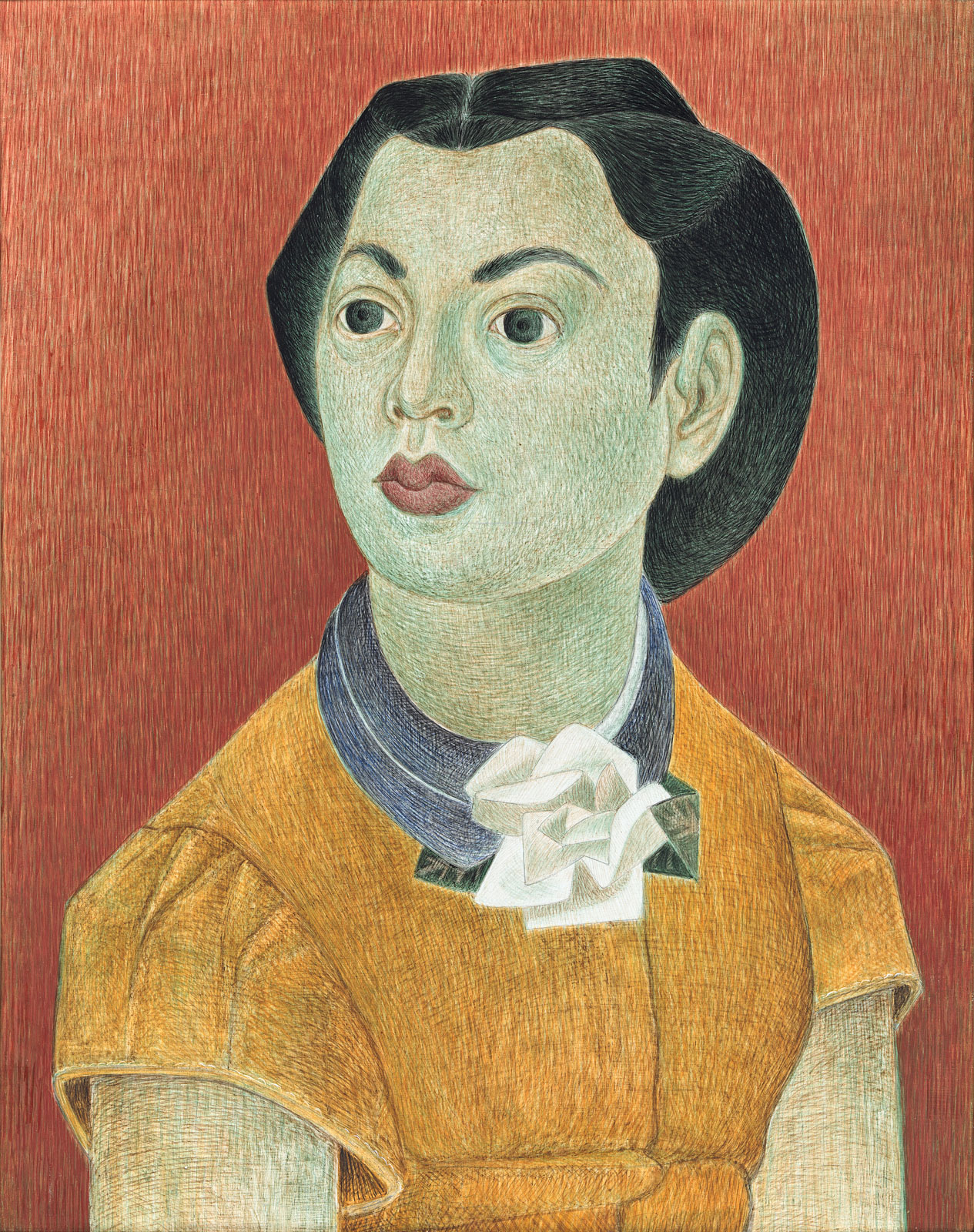 Miné Okubo (1912-2001), Portrait Study, ca. 1937. Tempera on hardboard. Smithsonian American Art Museum, Museum purchase through the Luisita L. and Franz H. Denghausen Endowment, 2023.46.1, © 2023, The Miné Okubo Charitable Corporation.
Miki Hayakawa, Miné Okubo, and Hisako Hibi painted “pictures of belonging” all their lives, even when they must have felt that they didn’t belong anywhere. That is a testament, to them and to the power of art, and it is a searing indictment of the ongoing perils of prejudice.
Powered by Froala Editor