“Gentle reader, do you know the eager, painful joy of mountain exploration—the treading of forests…the crashing and crawling through the thickets of stunted firs and spruces…claw[ing] the clothing of the alpine aspirant; the ascending of the beds of mountain-brooks to find some waterfall worthy of renown…hidden in deep mountain basin and visited only, and not reported on, by logger and trapper.”
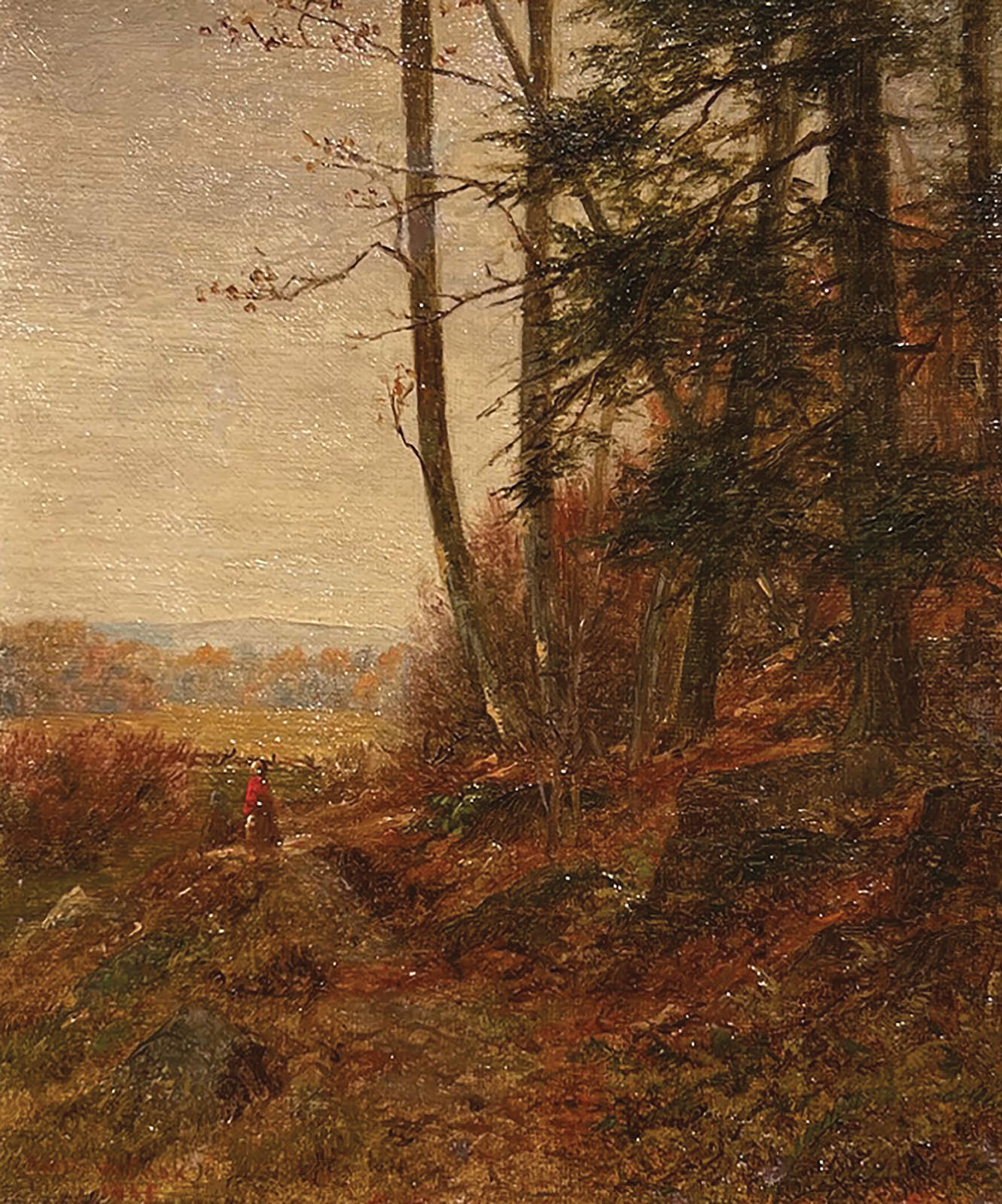 Edith Walker Cook (1839-1902), Autumn Landscape, 1865. Oil on canvas, 7½ x 6¾ in., signed and dated lower left.
Such were the words of Edith Walker Cook (1839-1902) in A New England Pilgrimage, published in 1885. She implies that the “logger and trapper” had witnessed natural wonders, but she, the artist-explorer, unlocked and reported them. Cook was a member of the Appalachian Mountain Club familiar with the challenges of scrambling through wild scenery. She trained under landscapists Jervis McEntee and Worthington Whittredge. She was also a poet and a writer.
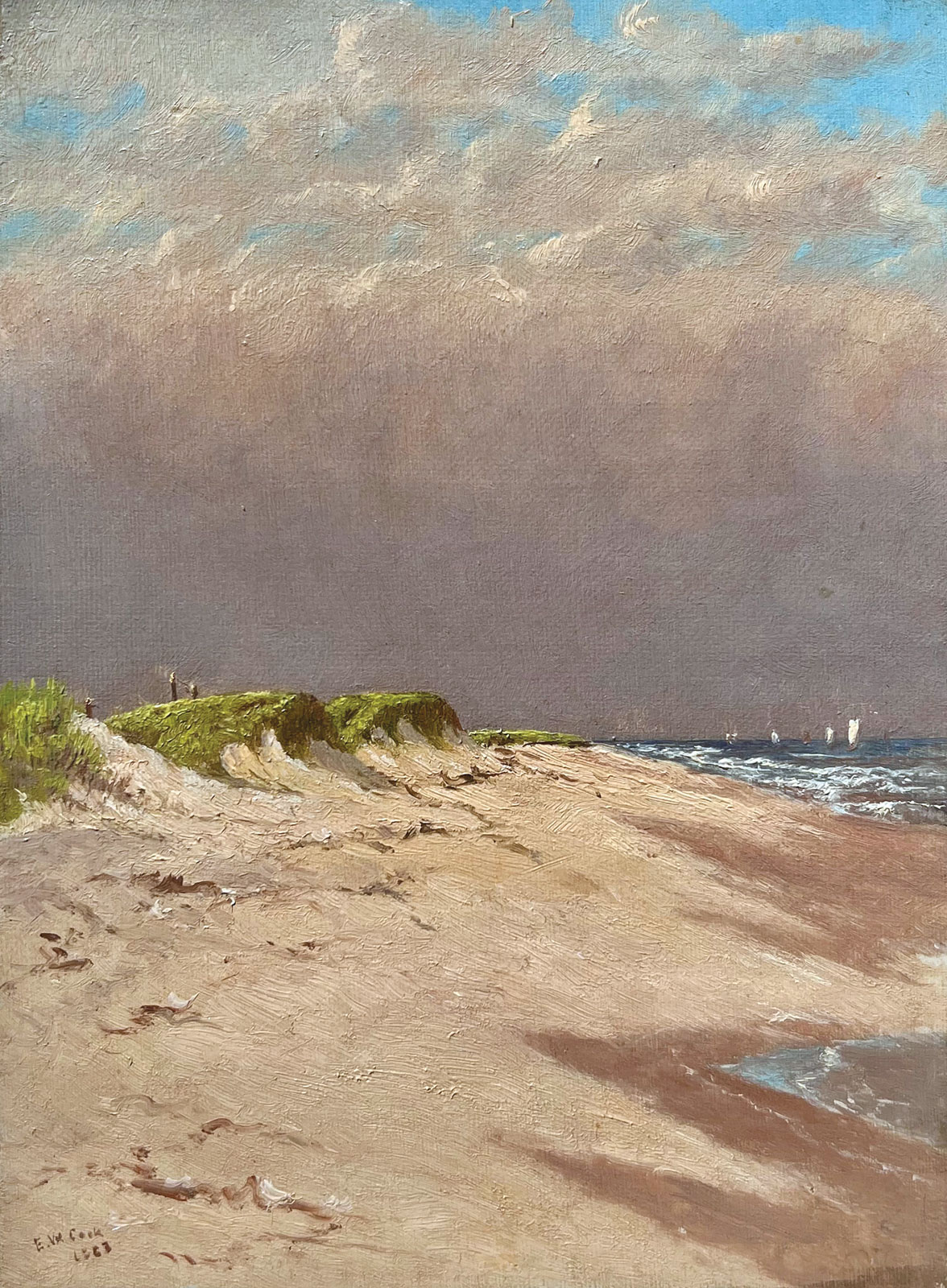 Edith Walker Cook (1839-1902), New Jersey Shoreline, 1863. Oil on canvas, 8 x 6 in., signed and dated lower right.
Her Autumn Landscape, 1865, reflects views from her hikes, where a woodland ramble opens to a pastoral clearing. The roseate sky harmonizes with the auburn trees, evoking emotion and hinting toward the subjectivity of the burgeoning Barbizon influence. Cook painted the ominous coastal work, New Jersey Shoreline, in 1863. She carefully observes nimbostratus cloud structure and contrasting eerie brightness of the bluffs and crested waves below. Cook may have read Jasper Francis Cropsey’s essay, Up Among the Clouds, or Alexander von Humboldt’s Cosmos series, but clearly she perceived meteorological nuance and stood on trend with better credited colleagues who painted nature with the same scientific awareness.
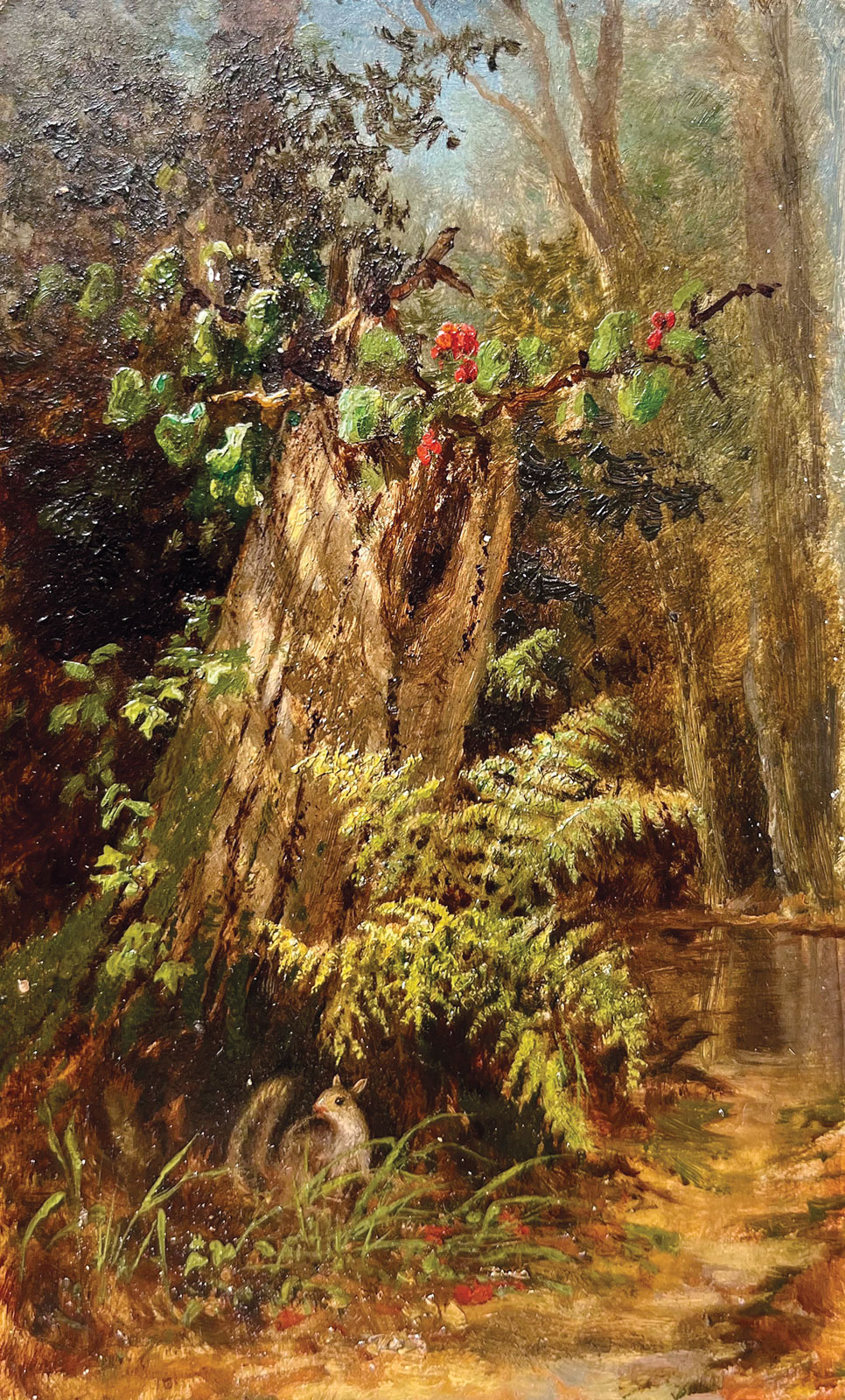 Susie M. Barstow (1836-1923), Squirrel in a Woodland Nook. Oil on panel, 7½ x 5½ in. Estate of the artist.
Cook was part of a network of other artists, writers and mountaineers, which included Susie M. Barstow. Barstow hiked and painted with Cook as a fellow member of the Appalachian Mountain Club. They exhibited together at an 1871 exhibition of the Ladies’ Art Association at Clinton Hall in Manhattan.
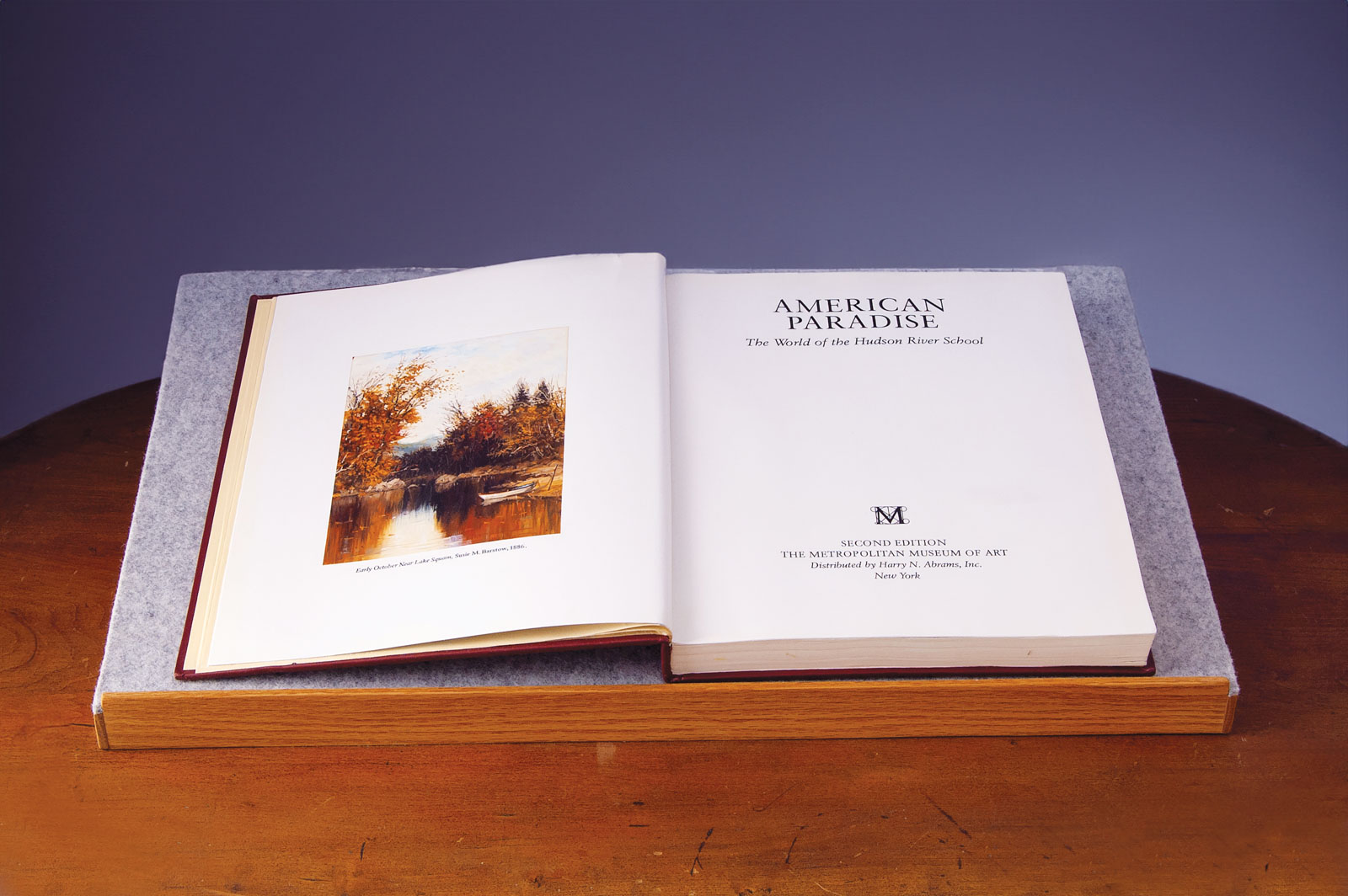 Anna Plesset, American Paradise (Second Edition), 2023. Oil on epoxy, aluminum and steel on wood plinth, 11¾ x 19½ x 1¾ in.
Barstow was the aunt of the botanical artist, illustrator and author Susie Barstow Skelding, with whom she traveled in New England. She shared with her niece a botanical interest and painted intimate forest scenes with flora and fauna sharply delineated, as in her Squirrel in a Woodland Nook. Barstow, Cook and their colleagues have inspired new art to flourish, most notably in the work of contemporary artist Anna Plesset. She recreates their artistic process in our moment and sheds light on their accomplishments and once forgotten legacies. Accordingly, what follows is a dialogue between Plesset and chief curator at the Thomas Cole National Historic Site, Kate Menconeri, who have been invited to contribute to this conversation. Kate Menconeri: Your work illuminates the extraordinary work and dynamic circle of 19th-century women painters who actively painted, hiked and exhibited their work alongside Hudson River School icons such as Thomas Cole, Frederic Church and Asher B. Durand but who were written out of 20th-century art history books and exhibitions. One of those artists, Susie Barstow, features prominently in your work. Can you talk about some of the ways you are recentering her and other women into the history of landscape art? Anna Plesset: My project, American Paradise, takes its name from American Paradise: The World of the Hudson River School, the iconic 1987 exhibition presented at the Met that perpetuates the mythology of the Hudson River School being founded by and exclusively comprised of men. There’s only one published edition of the catalog accompanying the exhibition and it features 84 artworks by 25 male artists, and not a single work by a woman. As I began thinking of ways to revise the history of American landscape painting, I came up with the idea of creating my own imagined editions of the catalog as a way to insert these women painters into the canon. Each of my “editions” is cast out of resin from the original 1987 catalog and painted entirely in oil. American Paradise: Second Edition, the version I showed in your exhibition Women Reframe American Landscape, I’ve painted a reproduction of Susie Barstow’s Early October near Lake Squam in the frontispiece instead of Asher Durand’s The Beeches which is what occupies that space in the original edition.
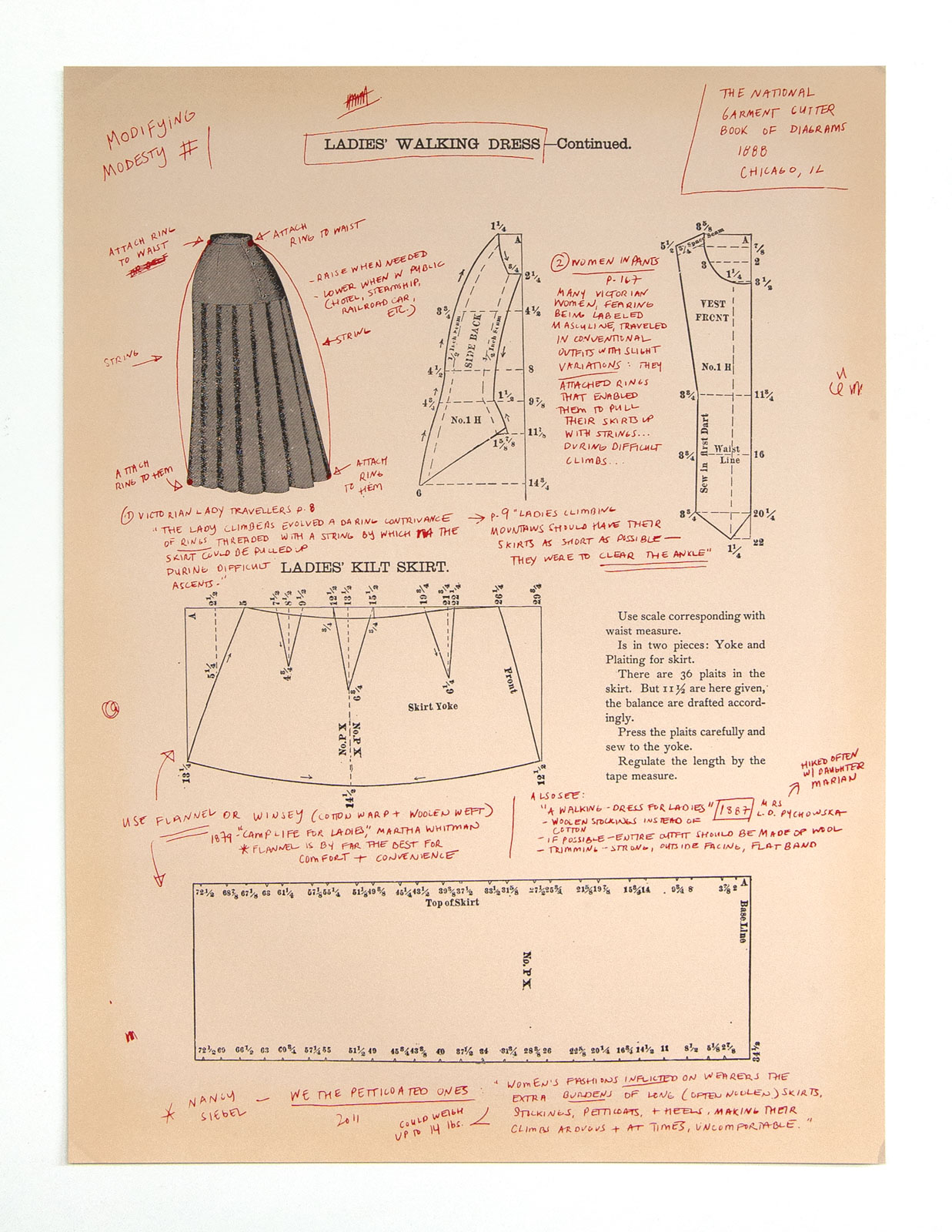 Anna Plesset, Modifying Modesty 1, 2022. Letterpress, silkscreen and handwork on Stonehenge, ed. of 20, 5 AP, 2PP, 20 x 15 in.
Another series of works, Value Studies, references the work of 19th-century women landscapists through paintings that look like paintings in progress. In Value Study 6: Autumn Waterfall / Copied from a picture by S. M. Barstow / ca.1880 you see an unfinished painting on canvas and what looks like a cut out piece of source material taped to the wall featuring Susie Barstow’s Autumn Waterfall. In fact, this “source material” —the ostensible reference for the “unfinished” painting—is painted in oil using trompe l’oeil, making it the “true copy” of Barstow’s painting KM: Your work is a major contribution to the history of art and forges critical connections with our own moment, asking us to consider the ongoing work to understand our histories and our enduring agency to imagine our futures. What do you hope the viewer to take away from your work? AP: What makes this work of reframing and revising history so necessary is that it holds up a mirror to the challenges we currently face. Even though the art world is seen as an area of progress and liberalism, women are still held back, and women still suffer from a lack of parity and equity in the art world and beyond. I hope my work prompts people to question what they think they know about the world we live in, both past and present. Ultimately, what I hope my Value Studies and other work from my American Paradise project does is make visible the act of historical recovery and acknowledge that act as always in progress and never finished.
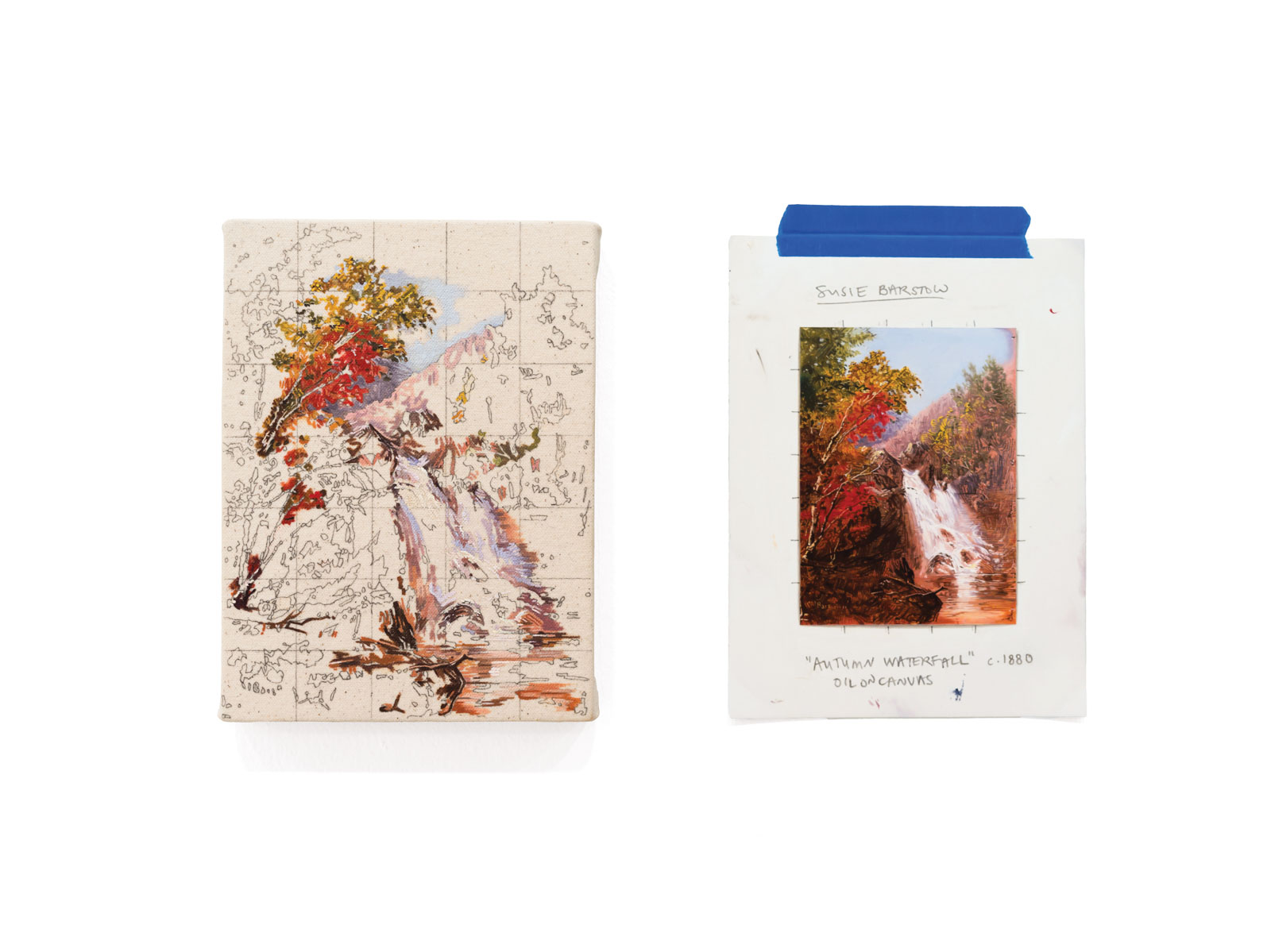 Anna Plesset, Value Study 6: Autumn Waterfall / Copied from a picture by S. M. Barstow / c.1880, 2024. Oil on canvas and steel, each 6¾ x 5 in.
Jennifer Krieger is the owner of Hawthorne Fine Art, an American art gallery specializing in works by historic women artists.
In the remainder of this special section we celebrate historic women artists who have succeeded in carving names for themselves in the cannon of American art history (if, perhaps, not during their lifetimes) despite working in a male-dominated field with limited access to formal schooling and exhibition opportunities and other obstactles unique to female artists. Galleries and museums are now putting women artists and their talents center stage, and collectors are taking notice. In that spirit, we present our inaugural Collector’s Focus dedicated to historic women artists.
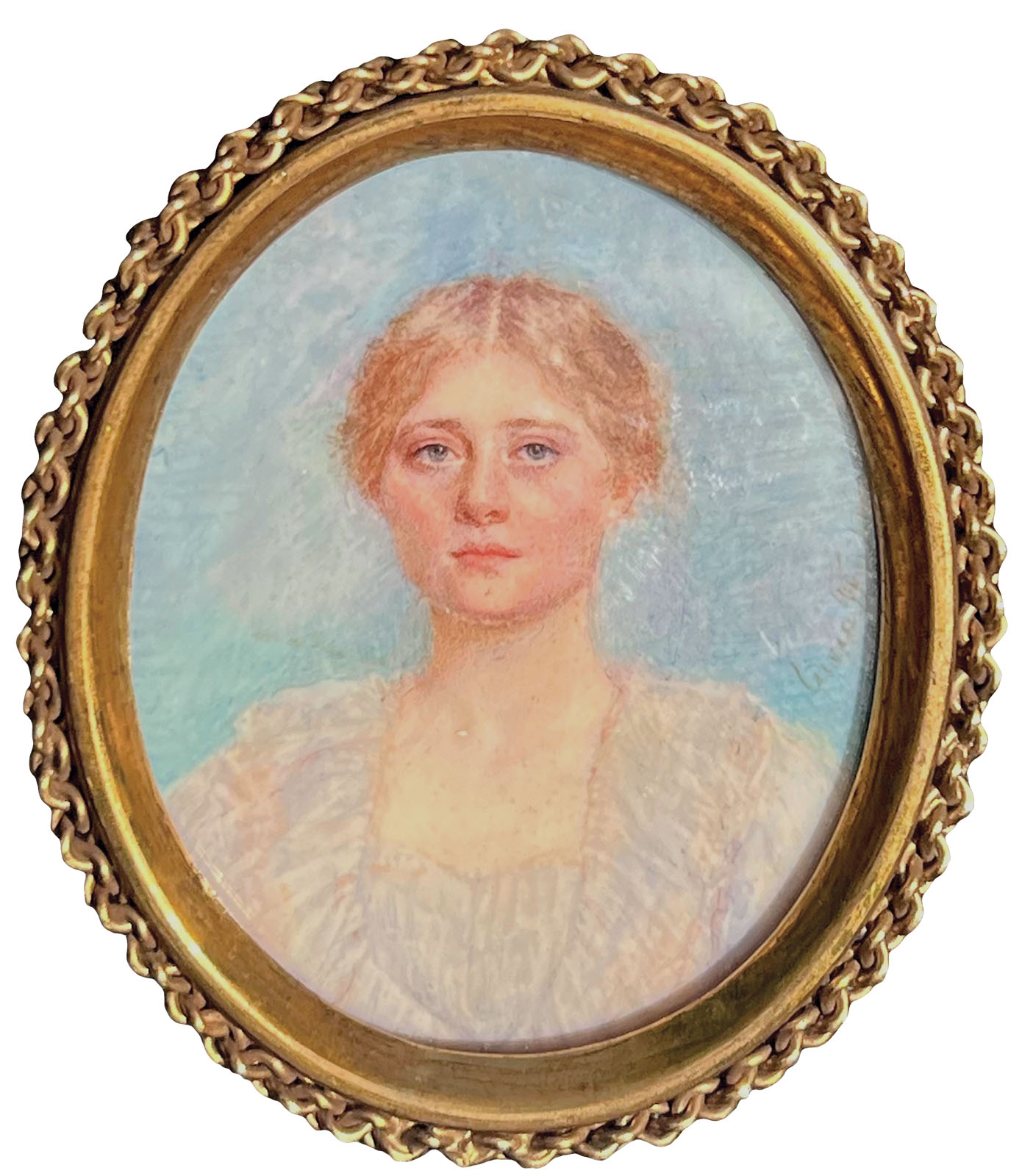 Lucia Fairchild Fuller (1872-1924), Portrait. Watercolor, 3 x 2½ in., signed center right; identified on verso and inscribed ‘Return to Mrs. Maria Taylor, Port Clyde, ME’. Available at Hawthorne Fine Art, New York, NY.
Among Hawthorne Fine Art’s extensive holdings of works by historic women artists is a rare miniature by Lucia Fairchild Fuller (1872-1924), “She grew up in Boston in a family whose artistic and literary circle included John Singer Sargent and William James,” says Krieger. “Her family did not support her career as an artist but her husband…Henry Brown Fuller did. After she married him in 1893, she switched from being a muralist to a miniaturist to support her family which included two children.” Fuller studied under William Merritt Chase was a member of the National Academy of Design and her miniatures won medals at the 1900 Paris Exposition, and at the 1901 Pan-American Exposition in Buffalo, New York. In 1915, she exhibited at the Panama-Pacific International Exposition in San Francisco.
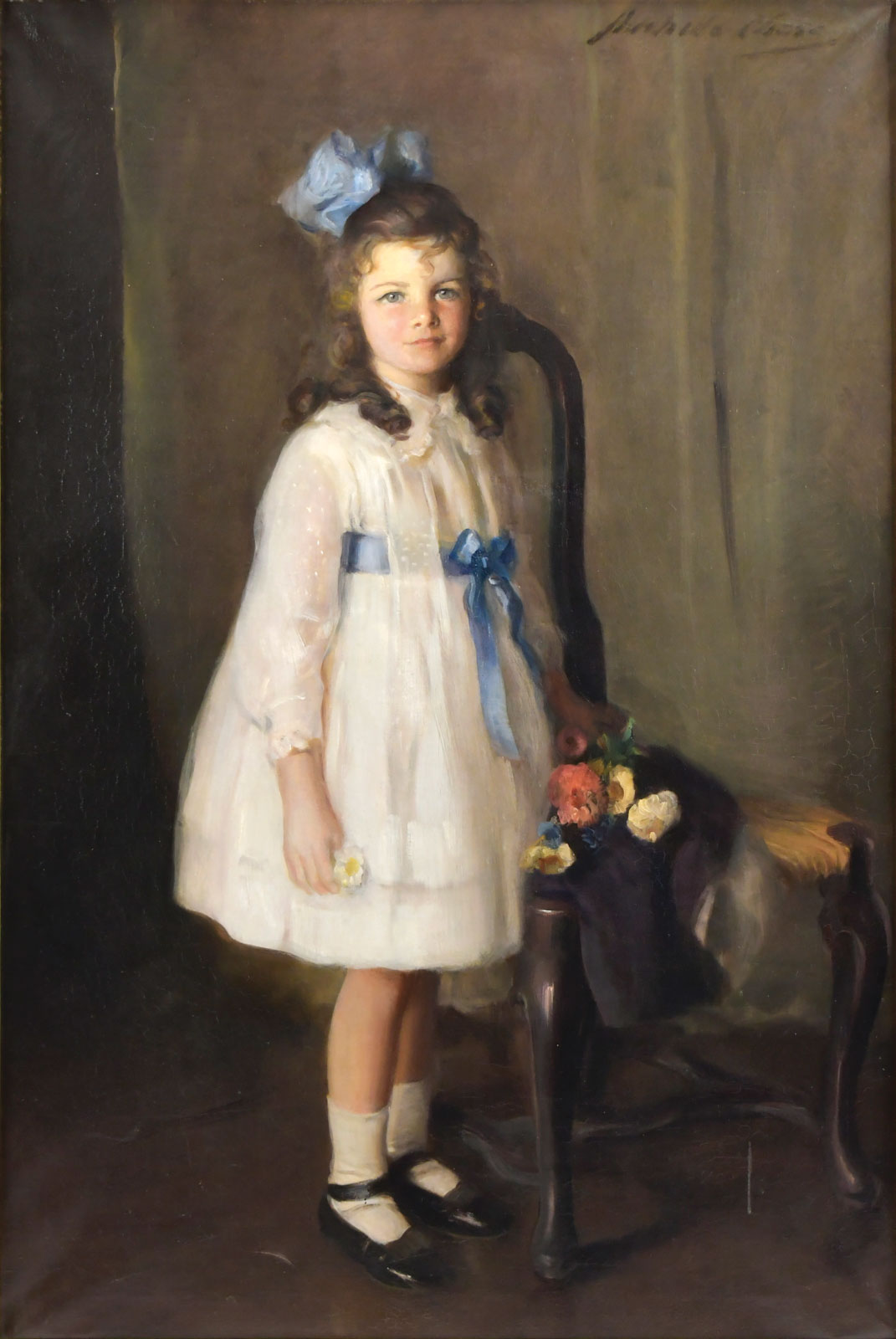 Adelaide Cole Chase (1868-1944), Portrait of Mary Shippen Schenck. Oil on canvas, 60 x 40 in., signed upper right. Available at Hawthorne Fine Art, New York, NY.
Hawthorne Fine Art has also acquired a large-scale painting by Adelaide Cole Chase (1868-1944), who was known for her exquisite portraits and still lifes. This portrait of Mary Shippen Schenk, a direct descendant of Charles Ridgely Carrol, a signer of the Declaration of Independence, was exhibited at the Pennsylvania Academy of Design in 1920. “Adelaide Cole Chase was the daughter of Belgian Pianist, Irma de Pelgrom and Boston landscape painter, Joseph Foxcroft Cole,” says Krieger. “She sat as a child model for Winslow Homer. Her father served as her first teacher. His instruction was followed by that of portraitist Frederic Porter Vinton. In 1892, she married the Boston-based architect, William C. Chase and enrolled at the Boston Museum School of Art under Frank Benson and Edmund Tarbell. She went to Paris to study further in the atelier of Charles-Auguste Carolus Duran and at the Academie Julien under Jean Paul Laurens.” Chase went on to receive numerous honors and show her work in many prestigious exhibitions throughout the 1920s.
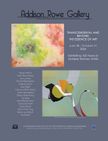
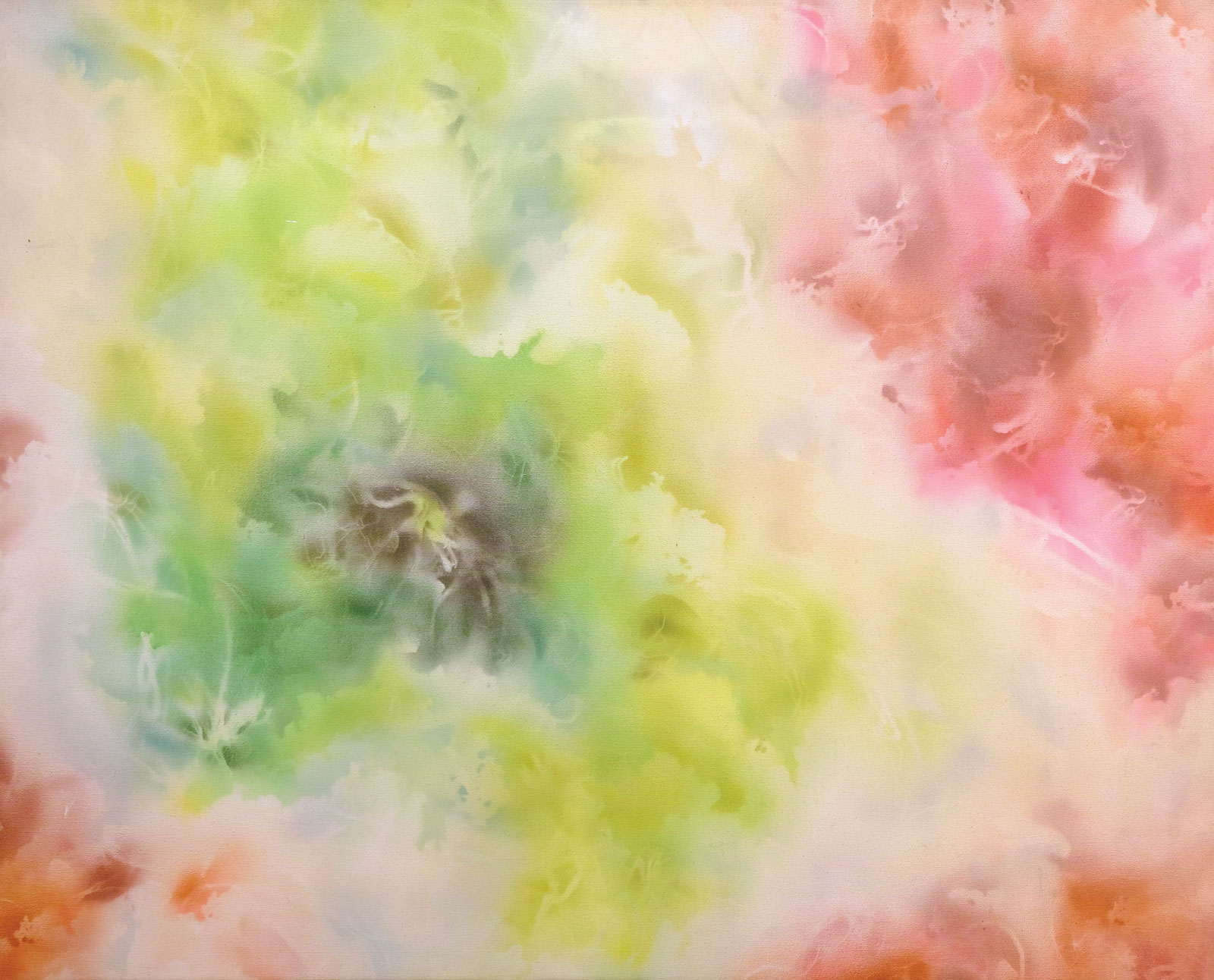 Sheila Isham (1927-2024), Tui II, 1972. Acrylic on canvas, 42 x 52 in., signed, dated and titled verso. Available at Addison Rowe Gallery, Santa Fe, NM.On view at Addison Rowe Gallery in Santa Fe through December 31, 2024, Transcendental and Beyond: The Essence of Art features the work of notable women artists, “whose unique self-expression, creative interpretations and intimate perspectives focus on spiritual and cosmic themes. Each piece reflects the artists’ inner thoughts and emotions, resulting in a diverse display of imagery,” notes the gallery.
Two artists highlighted in the show are Sheila Isham (1927-2024) and Mimi Chen Ting (1946-2022). “They illustrate the varied ways artists approach similar themes,” the gallery explains. “Isham’s works, characterized by subtle colors, evoke spiritual vibrations and can be seen as atmospheric color abstractions. They encourage viewers to reflect on the vastness of the universe and their own existence within it. In contrast, Chen Ting employs abstract, gestural images with striking color contrasts to capture the energy and movement of both the environment and dreamlike spaces.”
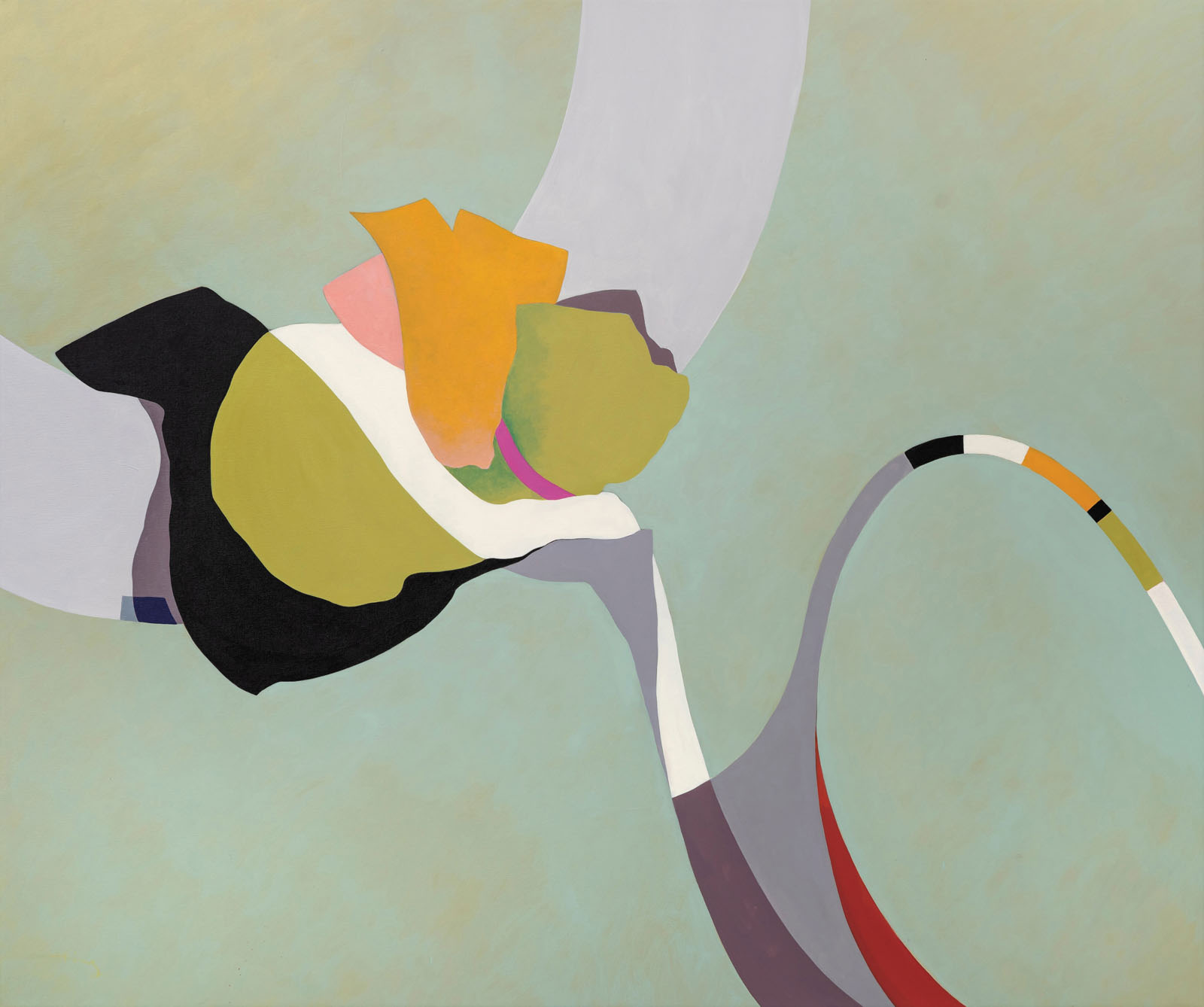 Mimi Chen Ting (1946-2022), Hakone, 2011. Acrylic on canvas, 46 x 55 in. Available at Addison Rowe Gallery, Santa Fe, NM.The gallery continues, “Currently, women artists are in high demand, gaining recognition through museum exhibitions and gallery shows. This is a favorable time for collectors to acquire works of this caliber, as the market for them is robust. Investing in these pieces not only supports the artists place in history, and market status but enriches one’s personal art collection with meaningful and historically significant art. When collecting such pieces, it’s essential to consider the artist’s intent, market value and personal resonance.”
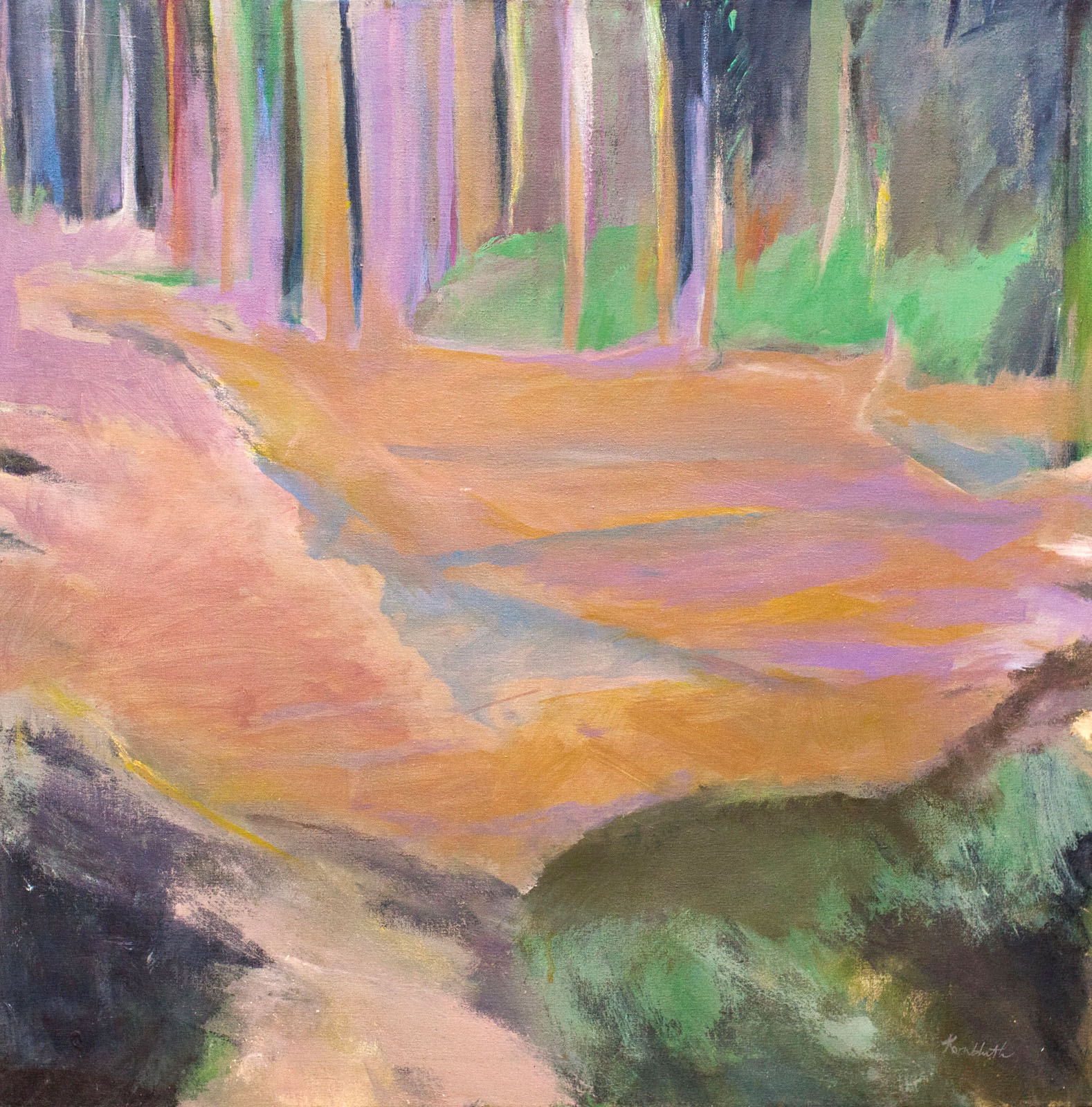 Frances Kornbluth (1920-2014), Forest Path, 1989. Oil on canvas, 32½ x 32½ in. Available at J. Kenneth Fine Art, Shelburne, VT.
Available through Lincoln Glenn Gallery are works by Frances Rogers (1886-1974) and Fanny Mahon King (1865-1952). Rogers was born in Grand Rapids, Michigan, and studied at the Art Institute of Chicago and the School of the Boston Museum of Fine Arts. From 1905 to 1910, she was a student of Howard Pyle in Wilmington, Delaware, and went on to illustrate for Harpers, the Saturday Evening Post, and many books for adults and children. “The present painting served as the cover for The Lightning Conductor Discovers America written by Alice Muriel Williamson and Charles Norris Williamson,” notes Lincoln Glenn partner Eli Sterngass. “The portrayal of an early automobile, the sole figure’s defiant pose, and the combination of a female artist painting a female subject for a female author adds intrigue.
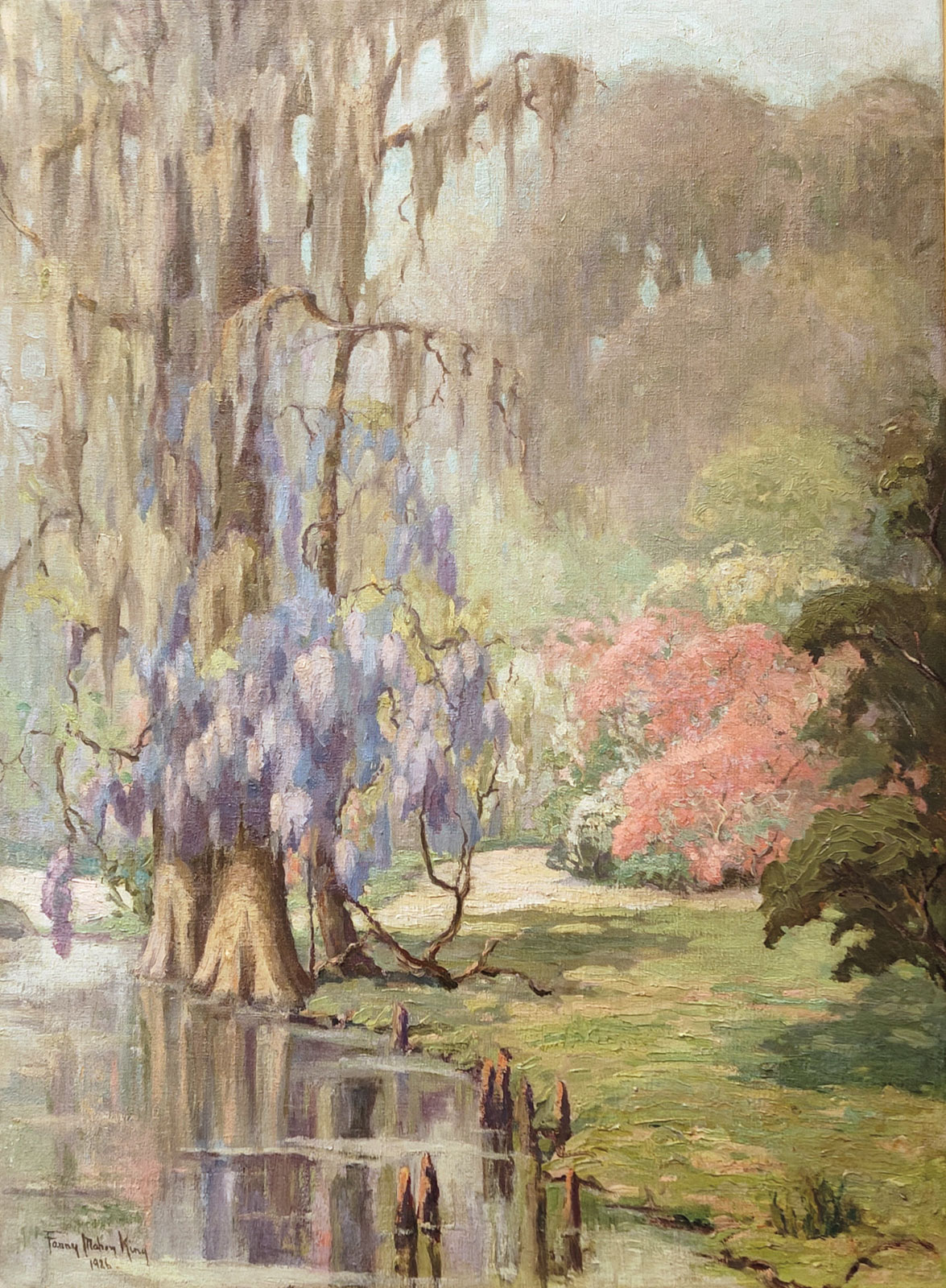 Fanny Mahon King (1865-1952), Magnolia Gardens, South Carolina, 1926. Oil on canvas 27½ x 21½ in., signed and dated lower left. Available at Lincoln Glenn Gallery, New York, NY.“Fanny Mahon King remains a quiet presence among the better 20th Charleston, South Carolina, artists, and with Emma Gilchrist, was in the group of artists who slightly preceded the Charleston Renaissance,” continues Sterngass. “She was educated in Washington, D.C., but received most of her instruction in art in Charleston from out-of-town artists.” King studied with multiple nationally prominent artists…and a body of her work dedicated to the magnolia gardens of the region was exhibited throughout the South and in New York galleries. Her works are in the permanent collections of the Nashville Museum of Art, the High Museum in Atlanta, and the Gibbes Museum of Art in Charleston. Lincoln Glenn has two upcoming exhibitions, one of Juanita Guccione’s (1904-1999) work at their New York City location in Chelsea from January through March 2025; and concurrently, in partnership with Graham Shay 1857 at their Upper East Side gallery, an exhibition celebrating the 150th anniversary of the Art Students League.
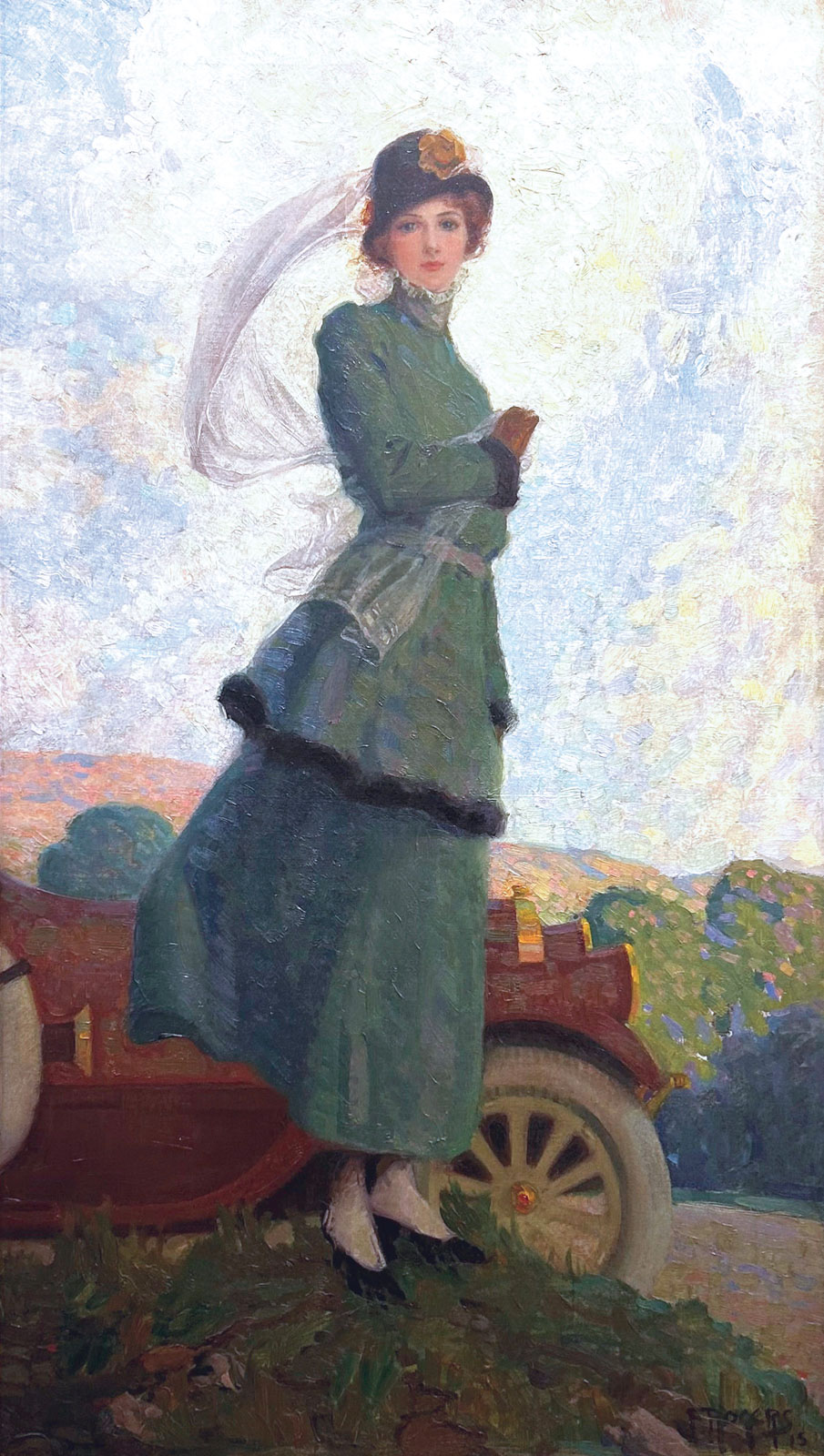 Frances Rogers (1886-1974), Patricia Moore (Illustration for The Lightning Conductor Discovers America), 1915. Oil on canvas, 30 x 18 in., signed and dated lower right; inscribed ‘Lightning Conductor’ on overlap. Available at Lincoln Glenn Gallery, New York, NY.
The Illustrated Gallery, based in Fort Washington, Pennsylvania, has acquired multiple works by Jessie Willcox Smith (1863-1935), one of the most popular illustrators of the 20th century. Her work graced the pages of children’s books and leading publications like Ladies’ Home Journal, Collier’s, Scribner’s, and Good Housekeeping. Smith studied under Thomas Eakins at the Pennsylvania Academy of the Fine Arts, Howard Pyle at Drexel and later at his Brandywine School. “She formed a tight personal and professional bond with fellow Pyle students Elizabeth Shippen Green and Violet Oakley, and the trio would become known as the the ‘Red Rose Girls,’” explains gallery director Laura Pulcha. “Though Smith never married and had no children of her own, she had a keen ability to render sensitive depictions of children, adeptly capturing their subtle expressions and gestures to form a poetic and romanticized vision of childhood. The Daisy Wreath, appearing on the cover of the June 1910 issue of Harper’s Bazaar, illustrates a sweet moment of children at play, a common subject for the artist.”
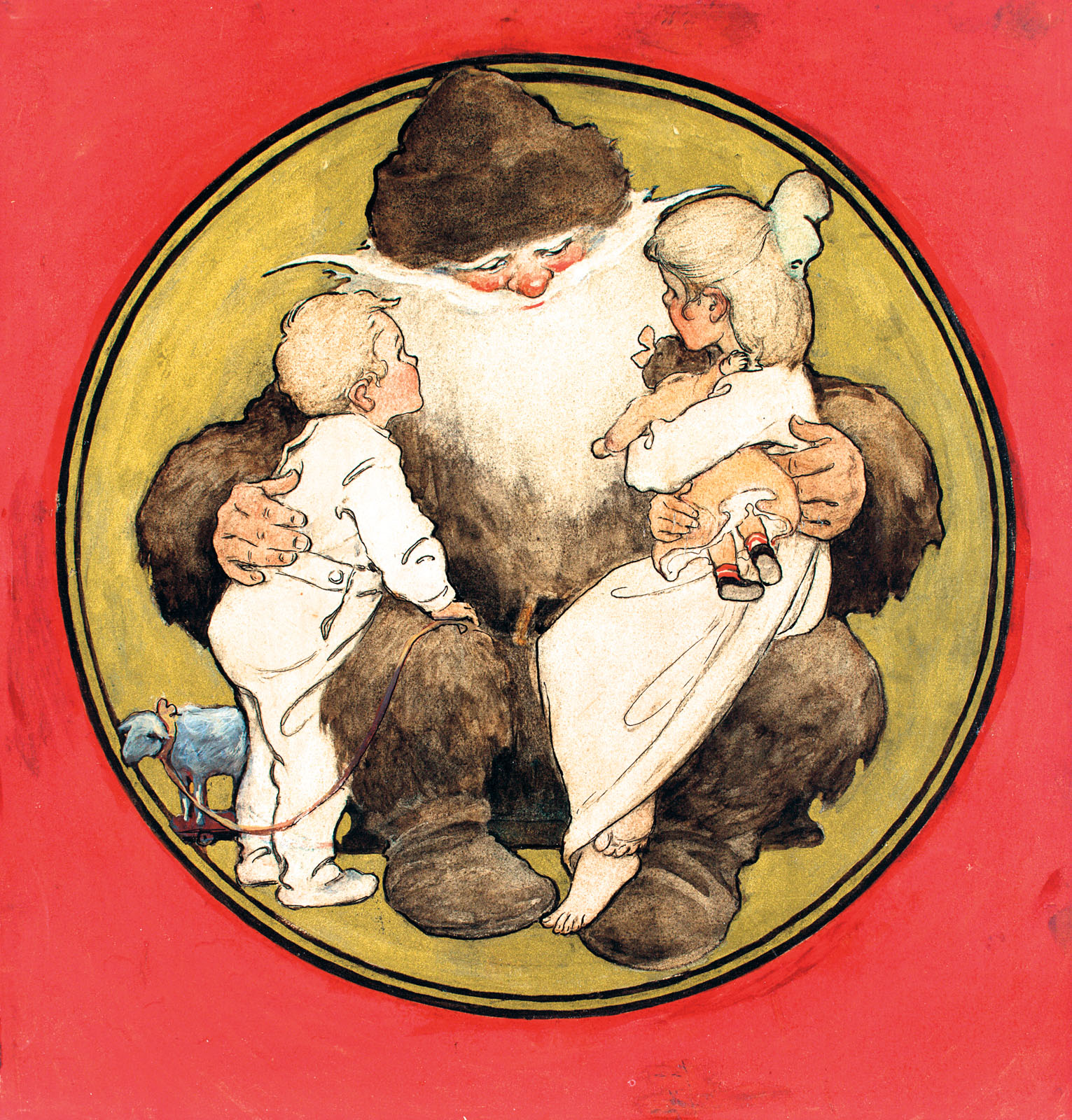 Jessie Willcox Smith (1863-1935), ‘Twas the Night Before Christmas. Gouache and watercolor on board, 18 x 17 in. (Original cover for the book ‘Twas the Night Before Christmas: A Visit from St. Nicholas by Clement C. Moore with pictures by Jessie Willcox Smith (Boston and New York: Houghton Mifflin, 1912). Available at The Illustrated Gallery, Fort Washington, PA.Pulcha advises collectors of original illustration to seek out pieces that were published. “A cover illustration for a popular magazine or an image associated with a beloved well-known story or poem like ‘Twas the Night Before Christmas is going to have lasting appeal.”
J. Kenneth Fine Art, which recently relocated from Palm Springs, California, to Shelburne, Vermont, has a wide variety of artworks in its collection, many by artists that are quickly gaining recognition, including this featured piece by Frances Kornbluth (1920-2014). The artist spent 57 summers on Maine’s Monhegan Island, inspired by both its natural beauty and community of dedicated artists. “A true artists’ colony, Monhegan’s remoteness and rugged coastline insured that only the most serious of painters would accept the demands of the island,” says gallery owner John Alexander. Artists Lynne Drexler, Robert Henri, Rockwell Kent and Andrew Wyeth are just a handful of artists inspired by the beauty and solitude of Mohegan Island.
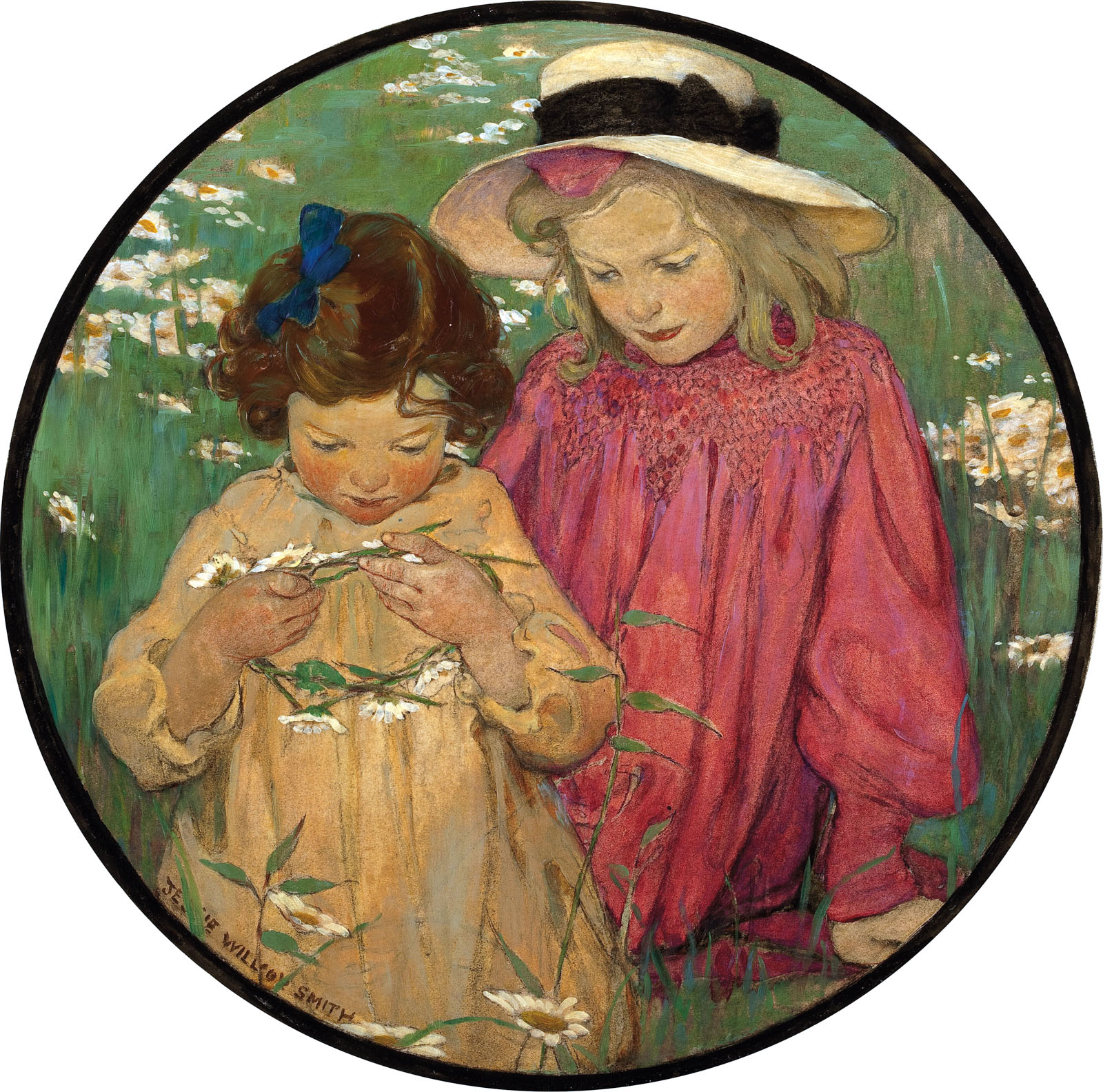 Jessie Willcox Smith (1863-1935), The Daisy Wreath. Mixed media on board, 18½ x 18 in. (Original cover for Harper’s Bazar, June 1910). Available at The Illustrated Gallery, Fort Washington, PA.
Kornbluth purchased a cottage in Lobster Cove in 1974, establishing a permanent summer studio, and was a founding member of Women Artists of Monhegan Island. Alexander continues, “Like much of her body of work, this untitled work on paper embodies many of Kornbluth’s creative elements, such as expressive mark making and gestural linework that’s more suggestive of the landscape rather than definitive.”
Featured Galleries
Addison Rowe Gallery
229 E. Marcy Street
Santa Fe, NM 87501
t: (505) 982-1533
addart@addisonrowe.com
www.addisonrowe.art
Hawthorne Fine Art
By Appointment Only
Manhattan Showroom
575 Fifth Avenue, 14th Floor
New York, NY 10017
t: (212) 731-0550
info@hawthornefineart.com
www.hawthornefineart.com
The Illustrated Gallery
By Appointment Only
Fort Washington, PA 19034
t: (267) 405-3639
laura@illustratedgallery.com
www.illustratedgallery.com
J. Kenneth Fine Art
Shelburne, Vermont
t: (802) 540-0267
jkennethfineart@gmail.com
www.jkennethfineart.com
Lincoln Glenn Gallery
17 East 67th Street, Suite 1A
New York, NY 10065
t: (646) 764-9065
gallery@lincolnglenn.com
www.lincolnglenn.com
Powered by Froala Editor