In its exhibition Up East: Andrew Wyeth in Maine, the Brandywine Museum of Art in Chadds Ford, Pennsylvania, the rural area where Andrew Wyeth lived half of the year, celebrates the paintings he created in the coastal area where he spent the spring and summer.
The 31 watercolors, two major temperas and fascinating archival materials are drawn from the collection of the Wyeth Foundation for American Art. William Coleman is the inaugural Wyeth Foundation curator and director of the Andrew & Betsy Wyeth Study Center at the Brandywine Museum. He explains, “The circa 7,000 artworks that comprise the Wyeth Foundation Collection were preserved and documented by Betsy James Wyeth with the goal of creating a representative overview of Andrew Wyeth’s life’s work with a view to posterity.”
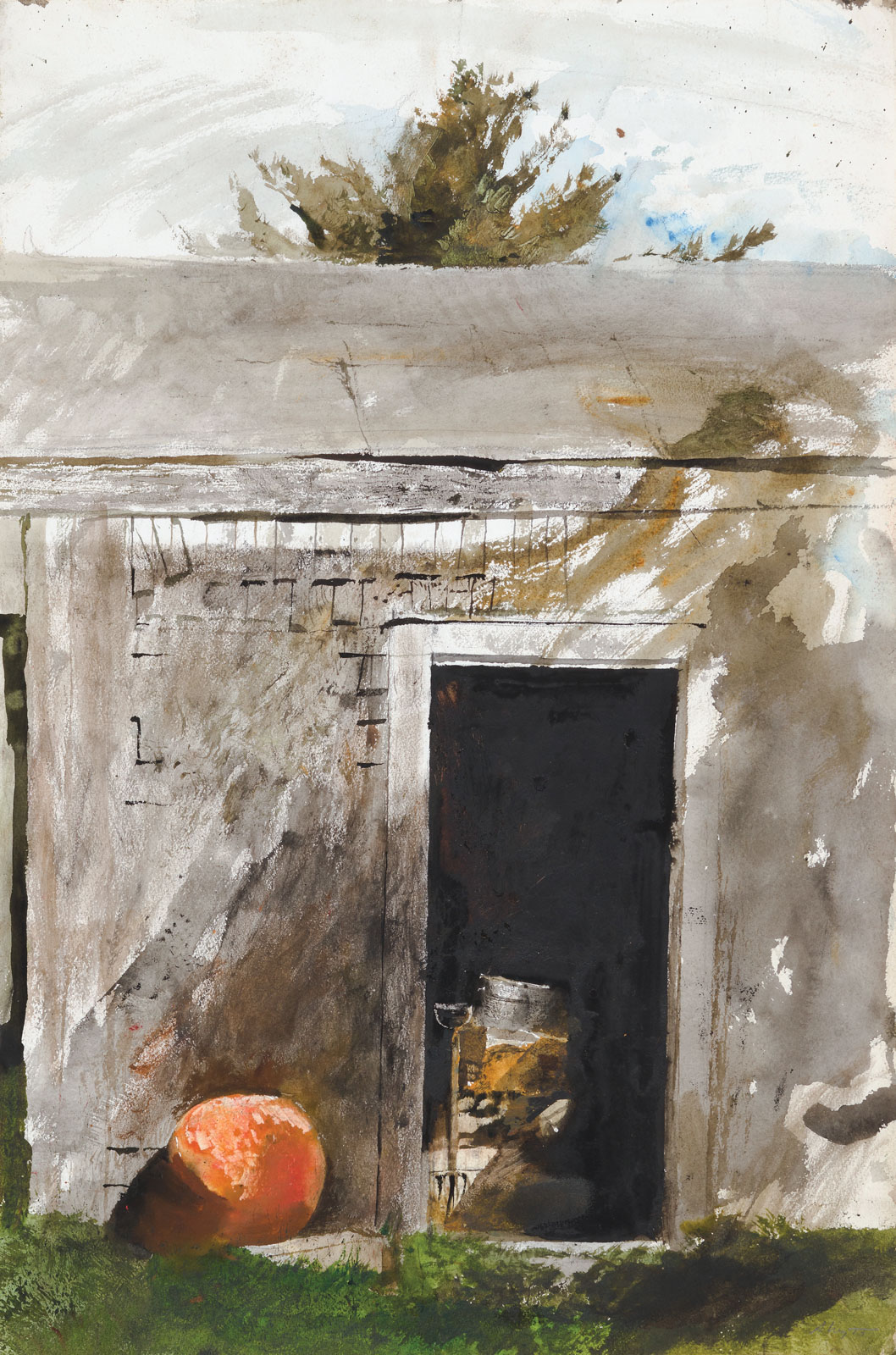 Andrew Wyeth (1917-2009), Maine Door – 1st version, 1970. Watercolor, 28 x 19 in. Collection of the Wyeth Foundation for American Art, M2102 © 2024 Wyeth Foundation for American Art / Artists Rights Society (ARS), New York.Wyeth (1917-2009) wrote, “I search for the realness, the real feeling of a subject, all the texture around it... I always want to see the third dimension of something...I want to come alive with the object.”
The colors, light and smells—all the sensual experiences of visiting or living on the Maine coast—come alive in his paintings.
An untitled and undated watercolor of a tattered curtain in a window “was found in Wyeth’s Port Clyde studio at the time of his death in 2009,” Coleman relates. “It responds to the view from that very studio’s window. It’s fascinating to see this artist around 90 years old still [passionate] about the subtle effects of light through curtains, and the ready-framed views of the world beyond in the windows that marked his life.
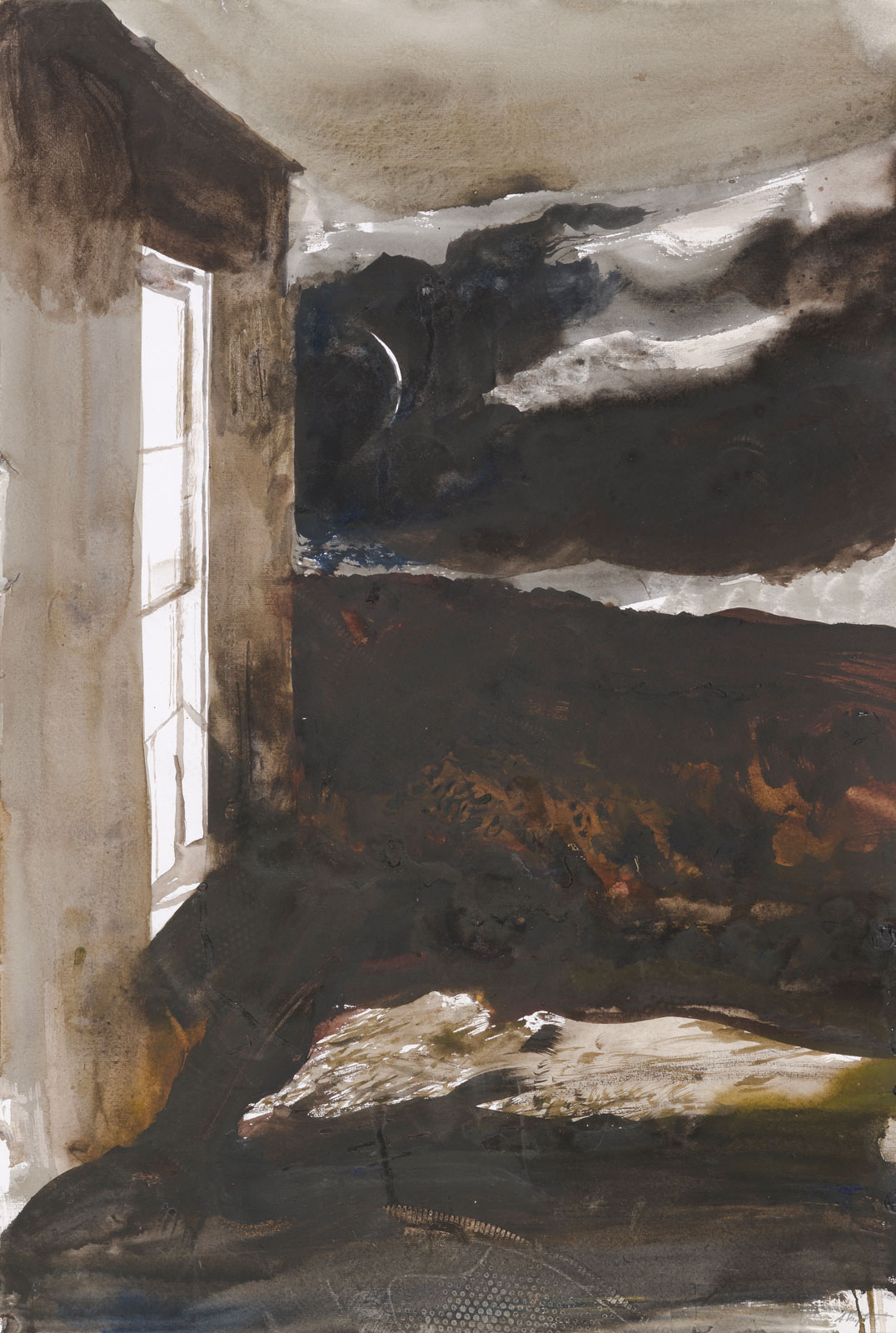 Andrew Wyeth (1917-2009), New Moon Study, 1985. Watercolor, 27½ x 18 5/8 in. Collection of the Wyeth Foundation for American Art, M2414 © 2024 Wyeth Foundation for American Art / Artists. Rights Society (ARS), New York
“We who live with the remarkably intact evidence of his creative process see windows as just one of many leitmotifs that define a visionary practice that was rigorously rooted in just two narrowly circumscribed regions—the Brandywine Valley of Pennsylvania and the St. George River watershed of mid-coast Maine—and dedicated to plumbing the layers of each.
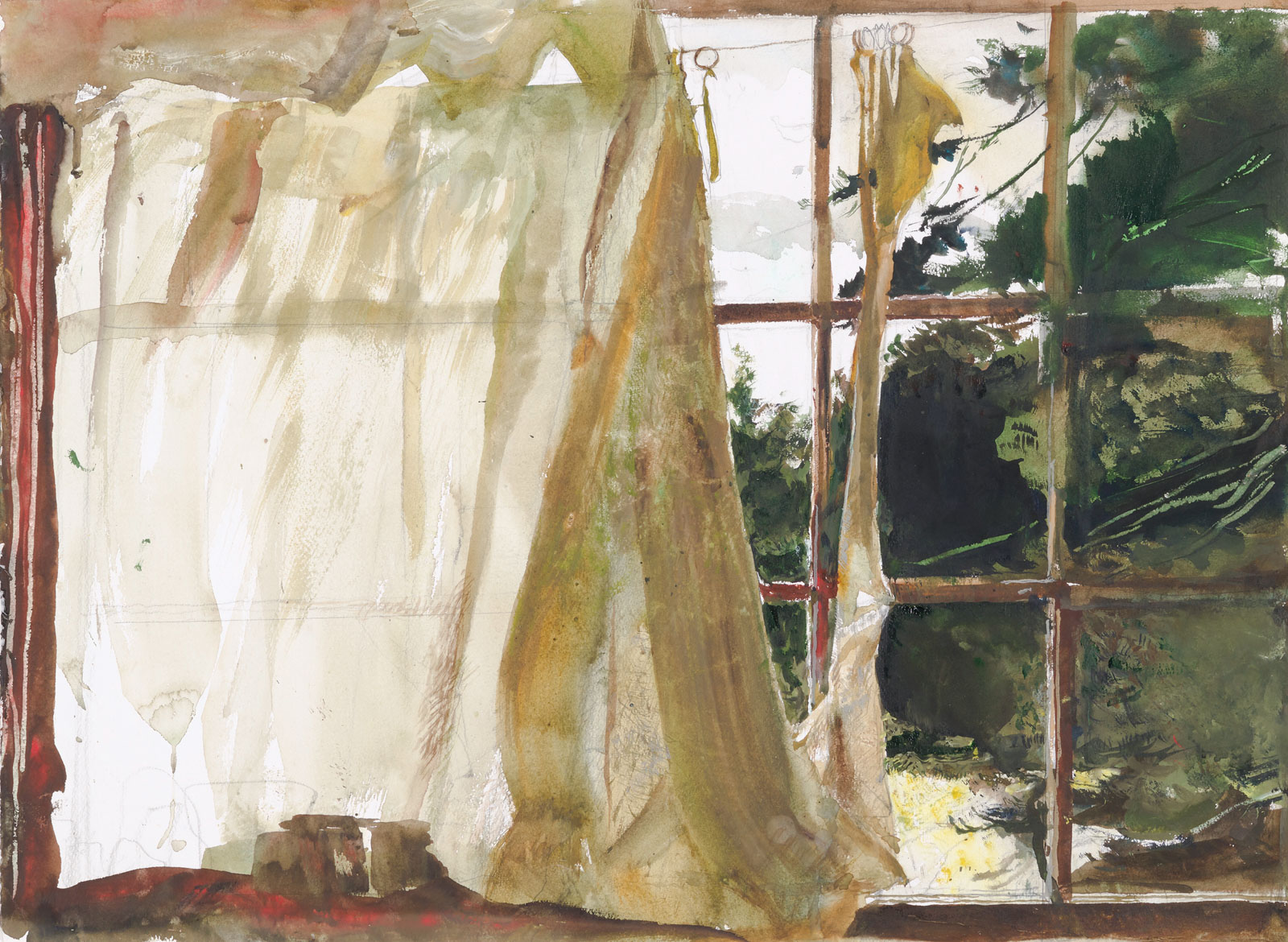 Andrew Wyeth (1917-2009), Untitled. Watercolor, 195/8 x 26½ in. Collection of the Wyeth Foundation for American Art, M3357r © 2024 Wyeth Foundation for American Art / Artists Rights Society (ARS), New York.
“Because there has been such a strong and consistent market demand for his watercolors and temperas for the better part of a century now, the decision to set these works apart for the enjoyment of the public is a remarkable legacy indeed,” Coleman continues. “Many were kept because the family thought them too significant to sell. A fascinating subset we call ‘Betsy Bought Back’ are instances in which an artwork that was sold immediately upon creation was re-acquired via estate sales and the like when opportunities arose.”
The exhibition runs through February 16, 2025
Powered by Froala Editor