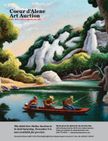
The artwork that emerged from the South during the early-to-mid 20th century is characterized by the exploration of the region’s cultural identity through landscapes, scenes of day-to-day life and social commentary, often relating to African American narratives unfolding outside the mainstream art world.
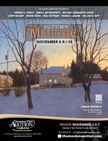
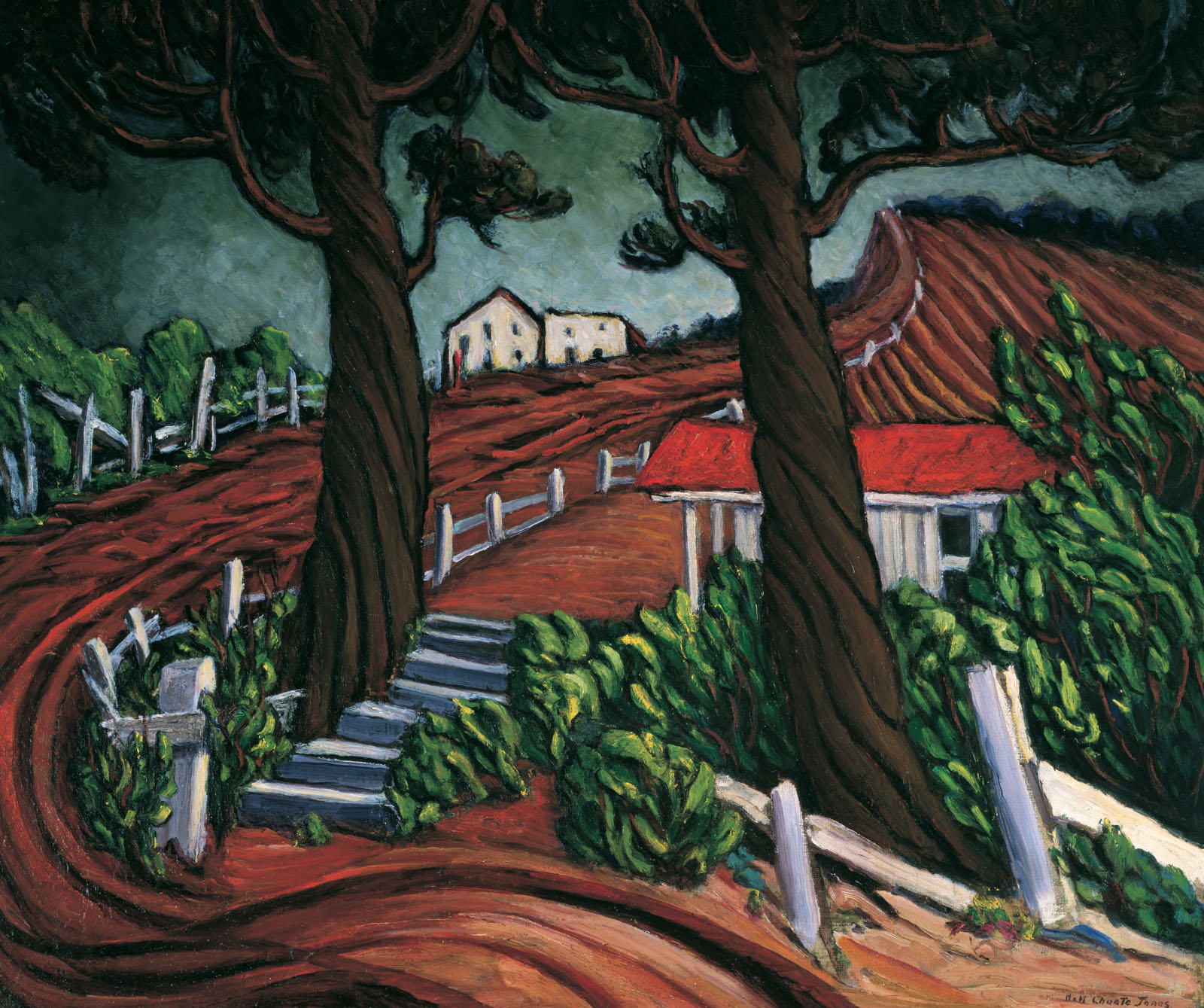 Nell Choate Jones (1879-1981), Georgia Red Clay, 1946. Oil on canvas. Morris Museum of Art, Augusta, GA. 1989.01094.Opening October 26 at Mint Museum Uptown, Southern/Modern is the first exhibition to provide a comprehensive survey of progressive art created in the American South during the first half of the 20th century. The exhibition comprises more than 100 paintings and works on paper by artists working in states below the Mason-Dixon line and as far west as the Mississippi River, as well as some artists who created significant bodies of work during visits to the region.
Works by artists Romare Bearden, John Biggers, Dusti Bongé, Carroll Cloar, Marie Hull, Jacob Lawrence, Blanche Lazzell, John McCrady, Will Henry Stevens and Hale Woodruff will be represented in the exhibition, as well as many others, both well-known and those now being rediscovered.
A collaboration with the Georgia Museum of Art, Mint Museum curator Jonathan Stuhlman and scholar Martha Severens were intent on selecting the strongest works by the most significant artists of the period to highlight the quality and creativity of the art being produced in the region.
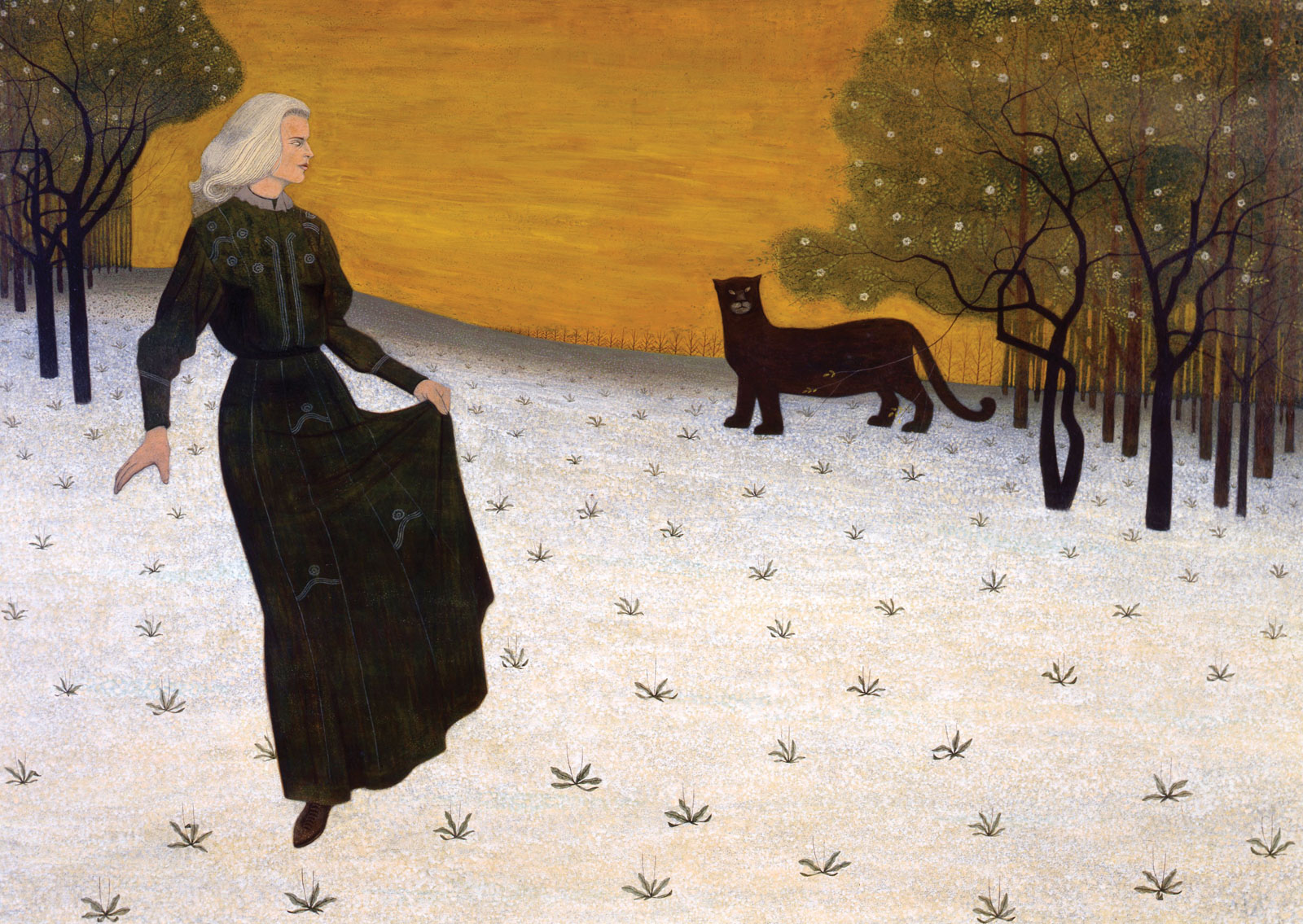 Carroll Cloar (1913-1993), A Story Told by My Mother, 1955. Casein tempera on Masonite. Memphis Brooks Museum of Art, Memphis, TN. Bequest of Mrs. C.M. Gooch. 80.3.16 © Estate of Carroll Cloar.
“The South in general, and this period in particular, are notably absent from most current histories and overviews of American art,” says Stuhlman. “The [region] tends to be seen as a bit of an artistic backwater during the first half of the 20th century when it comes to the visual arts. We believe that in fact there was a great deal of activity here that was, in fact, quite noteworthy and worth shining a light upon.”
Bongé’s 1940 oil Where the Shrimp Pickers Live highlights the industries that thrived along the coastal regions of the South, where the wide variety of seafood was a major economic driver. One of the pioneers of Southern modernism, Will Henry Stevens’ untitled pastel from 1944 echoes works of his modernist contemporaries. Like Georgia O’Keeffe was doing in New Mexico, Stevens draws inspiration from the natural, fluid forms found in the landscape.
Another highlight is Nell Choate Jones’ Georgia Red Clay, a rhythmic and somewhat foreboding rendering of a rural farm. One of the later works in the exhibition, A Story Told by My Mother, 1955, by Carroll Cloar, taps into the mystery of the Southern landscape and lore. In the piece, a woman lifts the hem of her dress and a panther emerges from a highly stylized wood.
Clare Leighton’s 1952 wood engraving Moonshine Still was made for a series of publications on North Carolina folklore. The British-American artist lived in the state during the 1940s and was captivated by its landscape and culture. Not only does it demonstrate her mastery as an artist, but also her ability to earn the trust of the locals, who let her observe their illicit act.
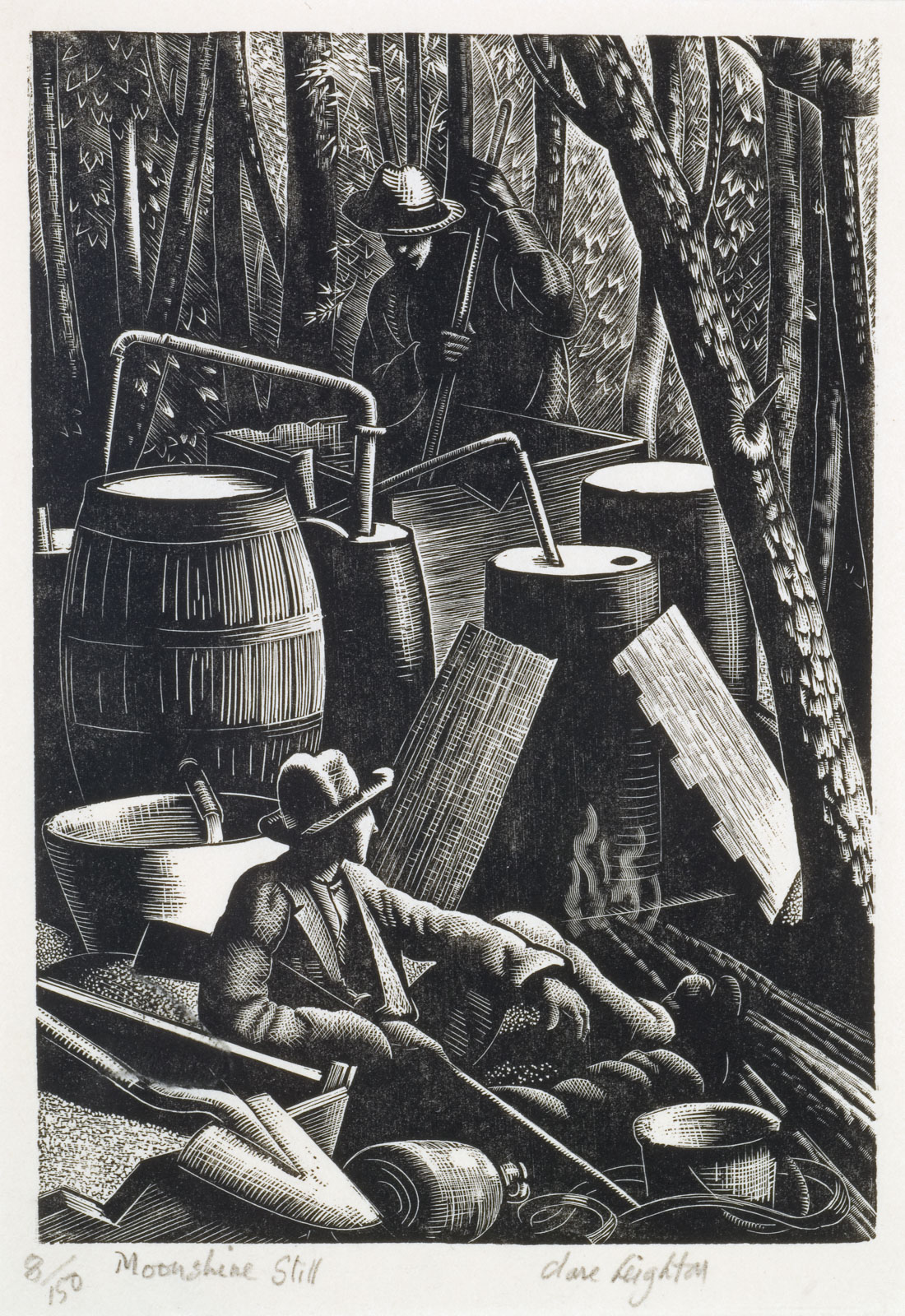 Clare Leighton (1898-1989), Moonshine Still, 1952. Wood engraving. The Mint Museum, Charlotte, NC. Gift of Gabby Pratt. 2004.79.123 © Estate of Clare Leighton, courtesy of David Leighton.
Although diversity is a defining aspect of the exhibition, Stuhlman says, “I think they all reveal a region that was growing, changing and whose residents were dealing with both the promise of a brighter future but also struggles along racial and socio-economic lines. All of the works that we selected do reveal that the region’s artists were engaged with various aspects of modernism, whether stylistically through bold colors, simplified or stylized forms, unique perspectives, or energetic brushwork, or in terms of the ‘modern’ subjects that they chose and the messages that those subjects communicated.”
The Mint Museum Uptown is the final stop for Southern/Modern and will close on February 2, 2025.
Powered by Froala Editor