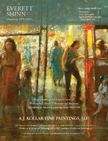
Ashcan painter Everett Shinn’s fascination with the stage was a focus throughout his career. His ability to capture movement and drama in theatrical and urban settings distinguishes his work.
Night Travelers, one of Shinn’s works on paper portraying gritty, urban realism, presents two figures: one sitting atop a cart, engaging verbally, and the other standing downtrodden in silence. With their luggage cast aside, we might assume the pair has missed the last train out of town.
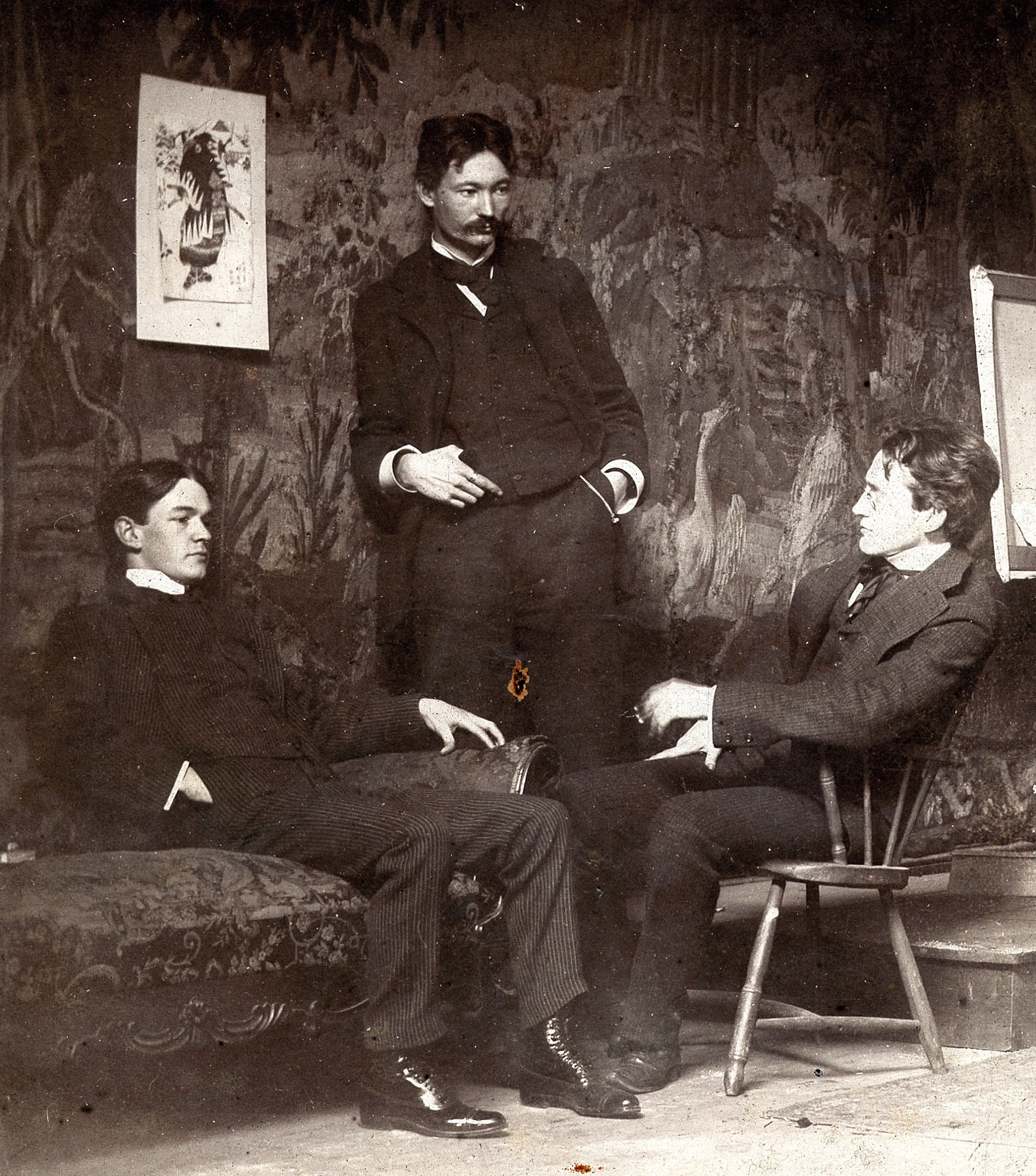 Members of The Eight, artists Everett Shinn, Robert Henri and John Sloan, ca. 1896.
Though this painting is not dated, a clue is present in the attire: the female figure’s tilted hat and the pom-pom shoulder design of her vest are indicative of fashions popular in the late 1920s and early 1930s. The man’s fedora and buttoned-down trench coat also coincide with this era.
The painting could nearly be a still from the silver screen––Shinn has composed a symbolic narrative. The woman’s body language, with her hands on her hips, her leg outstretched and her high heel piercing the void space between the two figures, is contrasted by the man’s downward gaze and reserved posture. Behind them, the handle of the railroad cart rises in a cross, the red light shining behind it suggestively. What happens next is a question left to the viewer.
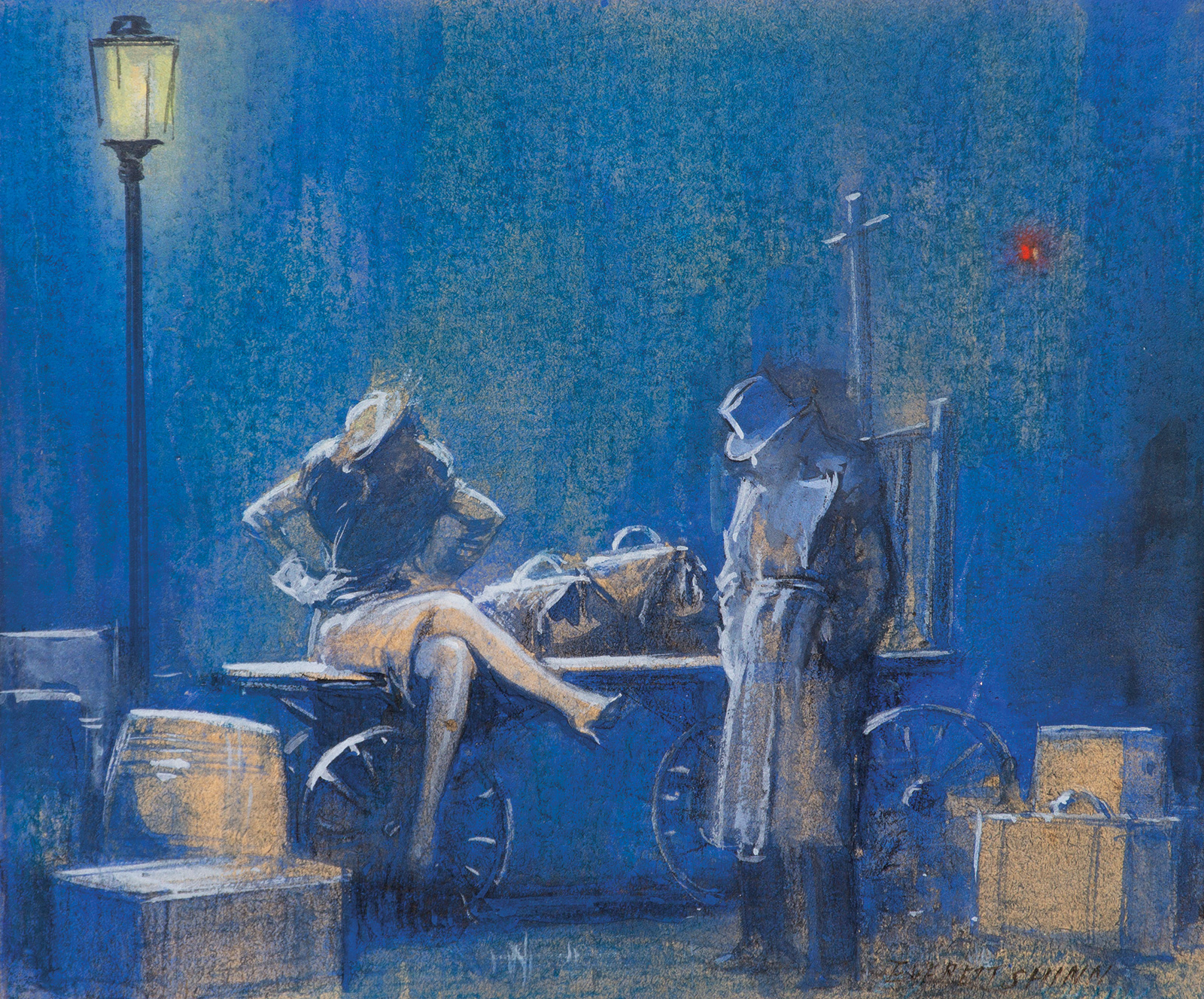 Everett Shinn (1876-1953), Night Travelers, ca. 1929. Watercolor and gouache on paper, 6 x 7 in., signed lower right: ‘Everett Shinn’. A.J. Kollar Fine Paintings, LLC; Seattle, WA.Meanwhile, Back Stage is one of Shinn’s paintings taking place in the theater. Though painted in 1945, it is emblematic of the type of theatrical painting Shinn produced throughout his career. The woman onstage is isolated, charged with entertaining the audience alone. Shinn has rendered her mid-motion, leaning toward her audience, the stage light catching a segment of her flipped hair and swinging dress. Beyond her figure, we can see that the theater is packed––glaring faces crowd the stage. We are positioned to regard her success by the faces in the crowd. Her job is to engage this devouring audience. Will she succeed or become a disappointing spectacle?
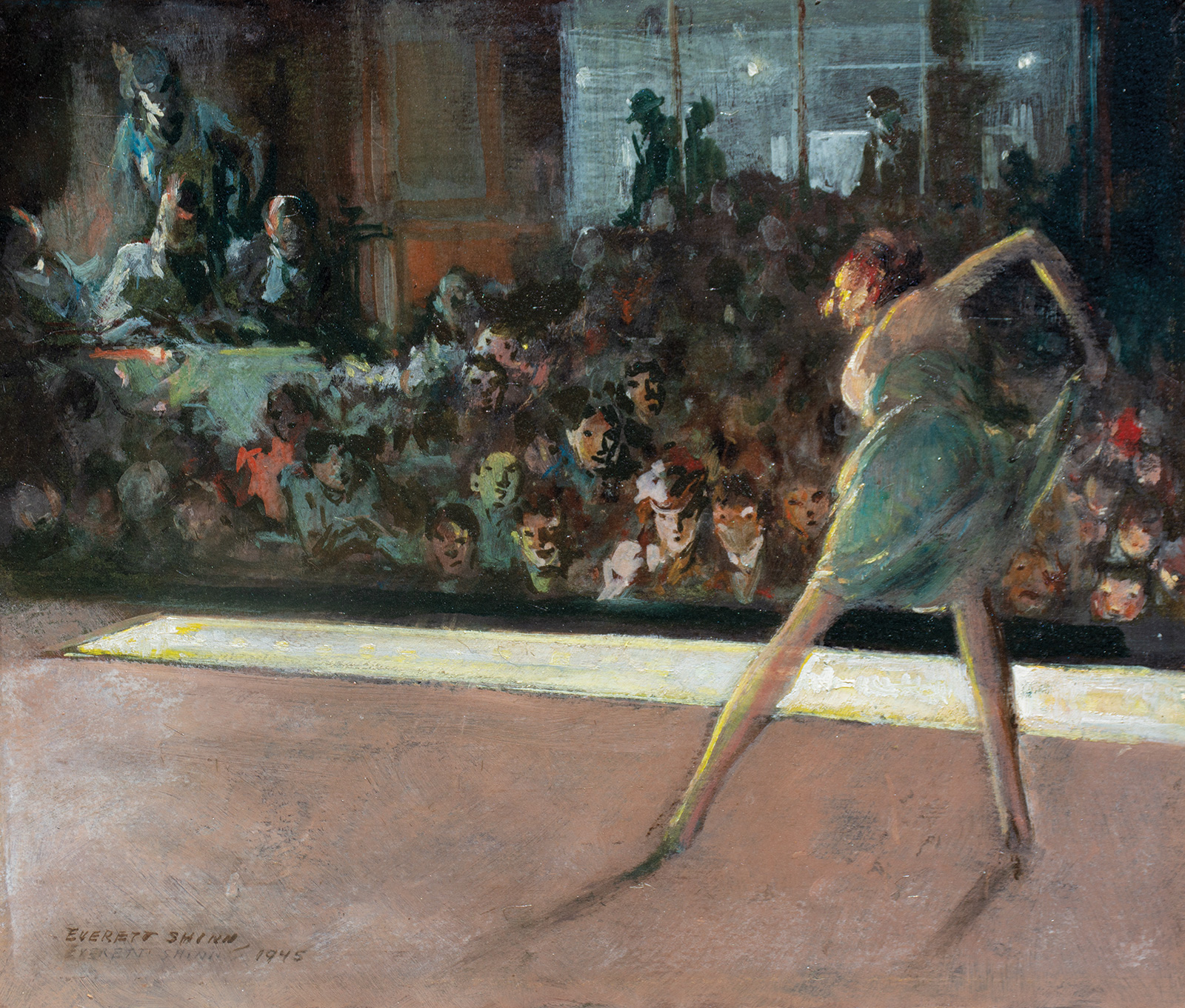 Everett Shinn (1876-1953), From Backstage, 1945. Oil on board, 9 x 11 in., signed and dated lower left: ‘Everett Shinn 1945’; signed again in pencil, lower left; artist label on reverse; and inscribed on reverse in artist’s hand: ‘Belasco Theatre / Over Arch’. A.J. Kollar Fine Paintings, LLC; Seattle, WA.World War II ended in September of the year this painting was completed, and anxiety about the war was ever-present. Shinn’s dark palette, accompanied by seemingly spontaneous brushwork, was a signature trait that captures this uncertainty and foreboding well. It worked symbiotically with his attempt to capture daily life in an urban setting. The reverse of a painting can reveal ownership, the potential involvement of a dealer, exhibition history or notes left by the artist. In the case of From Backstage, a partially covered warning informs us that this panel was made for pastel application. The back of the panel has, in Shinn’s hand, “Belasco Theater / Over Arch.” Note Shinn’s handwriting on the lower right of the frame.
Early in his career, Shinn was commissioned to paint 18 murals for the exquisite interior of New York’s Belasco Theater on 44th Street. Theoretically, this oil could have been painted over an early pastel of the stage and arching mural displayed above it. Due to the size of the space and the small, packed crowd, Back Stage is not a depiction of the opulent Belasco Theater.
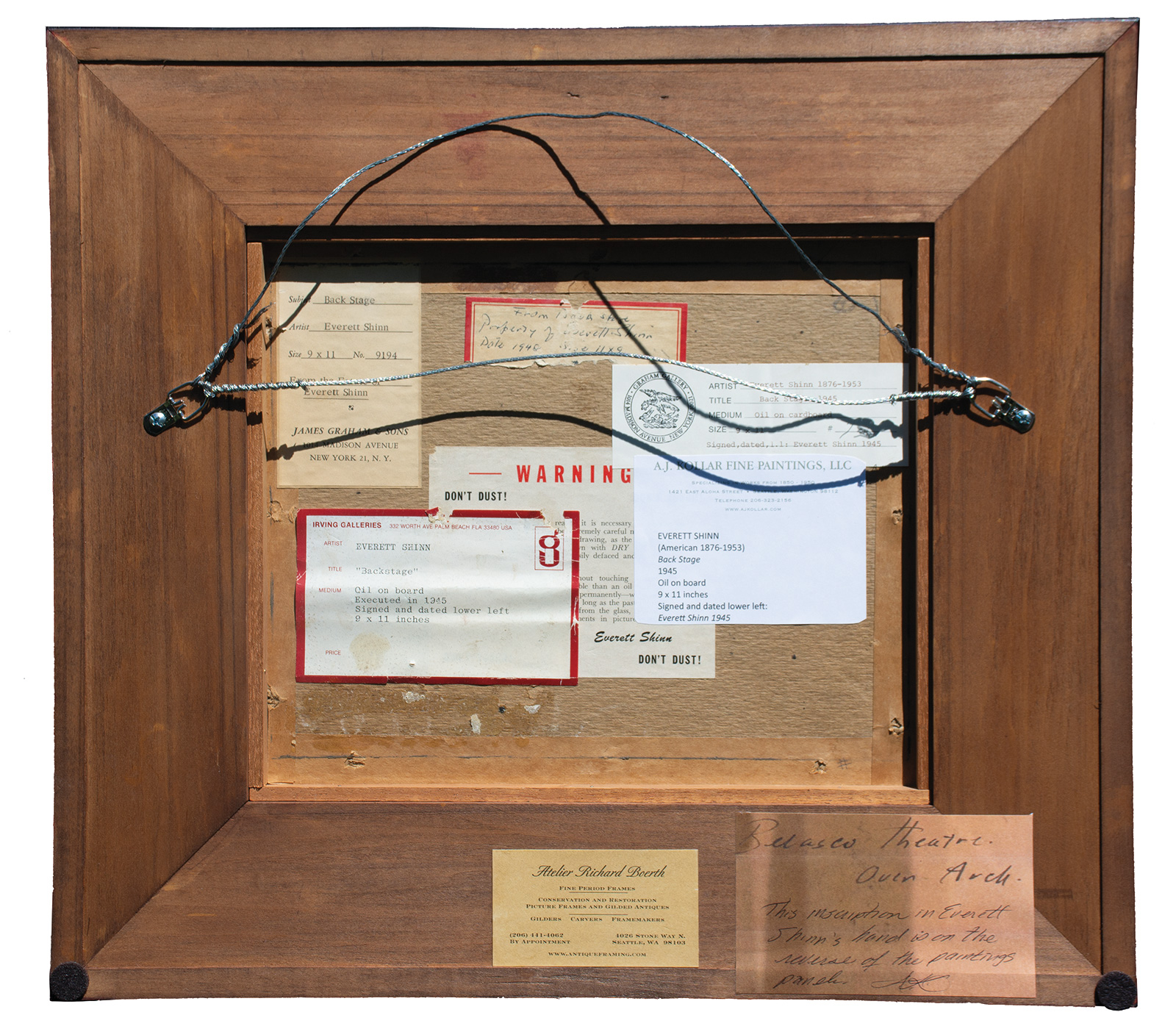 Reverse of the painting From Backstage showing the artist’s inscription: ‘Belasco Theatre / Over Arch’Street Carnival reflects some major inspirations of Shinn’s life. His early introduction to the circus heightened his interest in performers, an interest that he captured on paper and canvas throughout his career. By 1948, the year Street Carnival was completed, the country wished to put the war behind it. In Street Carnival, Shinn records families enjoying an evening of entertainment. The carnival is winding down for the evening, parents and children exiting the gate while a man in the ticket booth visits with a circus employee. It is a positive narrative.
This composition is balanced by the foreground reflections on the pavement, opposed by the string of flags overhead and the lights on the merry-go-round. One can imagine the music emanating from the ride. The mid-ground presents crowds of attendees, and the central focus is on a family with two small children, highlighting their innocence. These children will live to learn the war’s history without living the war’s anxiety.
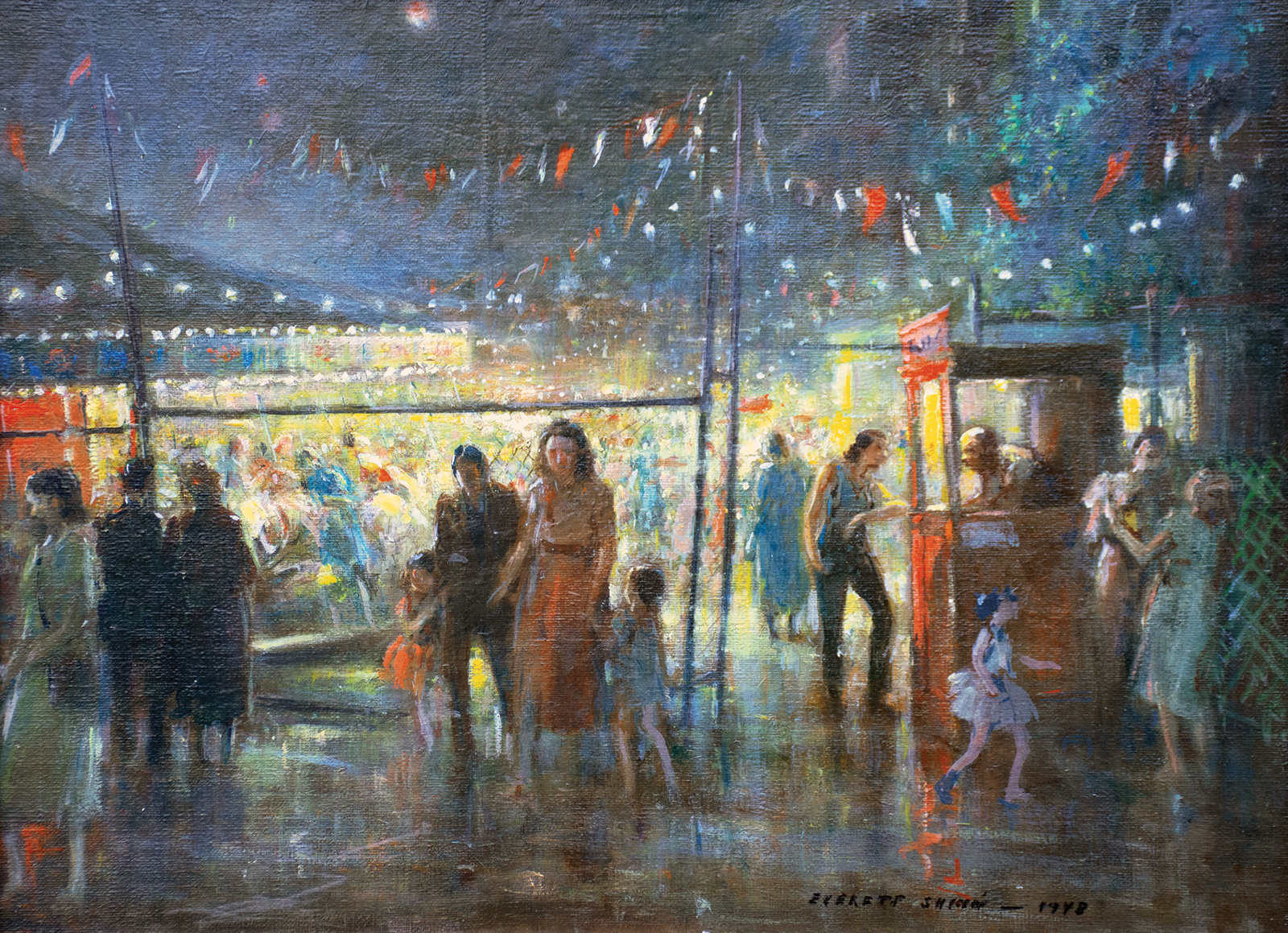 Everett Shinn (1876-1953), Street Carnival, 1948. Oil on panel, 13½ x 18¾ in., signed and dated lower right: ‘Everett Shinn 1948’. A.J. Kollar Fine Paintings, LLC; Seattle, WA.
Regarding this work, Ormonde de Kay shared his theory in an article for American Heritage: “In many of his later works, Shinn summoned up the city of his youth.” De Kay also declared Shinn the most naturally gifted of The Eight. Shinn’s work was highlighted in 1937 with an exhibition of 10 of his paintings at the Whitney Museum, prior to his painting of Back Stage and Street Carnival in the 1940s. During this time, he painted many acclaimed murals of New York City, including three for the Oak Room of the Plaza Hotel in Central Park South.
Shinn’s contemplative narratives are still vibrant. There is much to engage viewers in his depictions of urban drama and his penchant for theatrical flair.
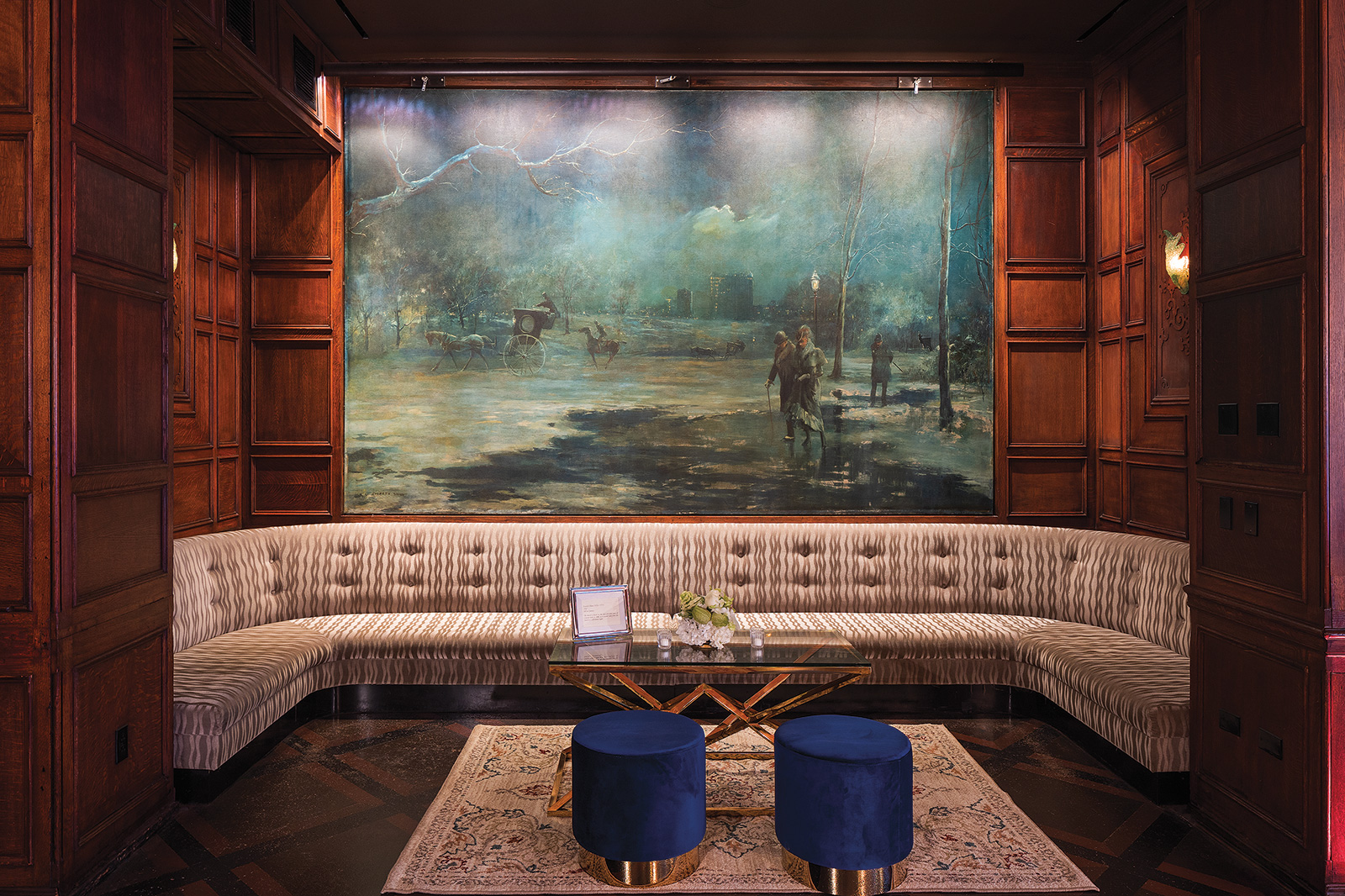 Everett Shinn mural in the Oak Bar, Plaza Hotel, New York City. Photo by Michael Mowery.
An exhibition of Shinn’s work is featured at A.J. Kollar Fine Paintings in Seattle, and includes paintings by Childe Hassam, Theodore Robinson, Federick Frieseke, Frederic MacMonnies, Elizabeth Okie Paxton, William M. Paxton and others––available for viewing by appointment.
Powered by Froala Editor
Powered by Froala Editor
Powered by Froala Editor
Powered by Froala Editor
Powered by Froala Editor
Powered by Froala Editor
Powered by Froala Editor
Powered by Froala Editor
Powered by Froala Editor
Powered by Froala Editor
Powered by Froala Editor
Powered by Froala Editor