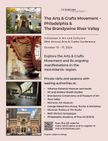

In efforts to explore regional significance of the arts and crafts movement, the New York-based organization, Initiatives in Arts and Culture, travels to a different American city each year to host the annual Arts and Crafts Conference. The 2024 edition will visit Pennsylvania’s Brandywine Valley and Philadelphia, as well as other proximate sites.
Lisa Koenigsberg, the IAC president and founder, adds that the event “traces the history of the arts and crafts movement from its origins in Britain, to its manifestations in the Philadelphia area and its formative influences on the studio craft movement, coinciding with the opening of a major exhibition on Wharton Esherick (1887-1970) at the Brandywine Conservancy and Museum of Art.”
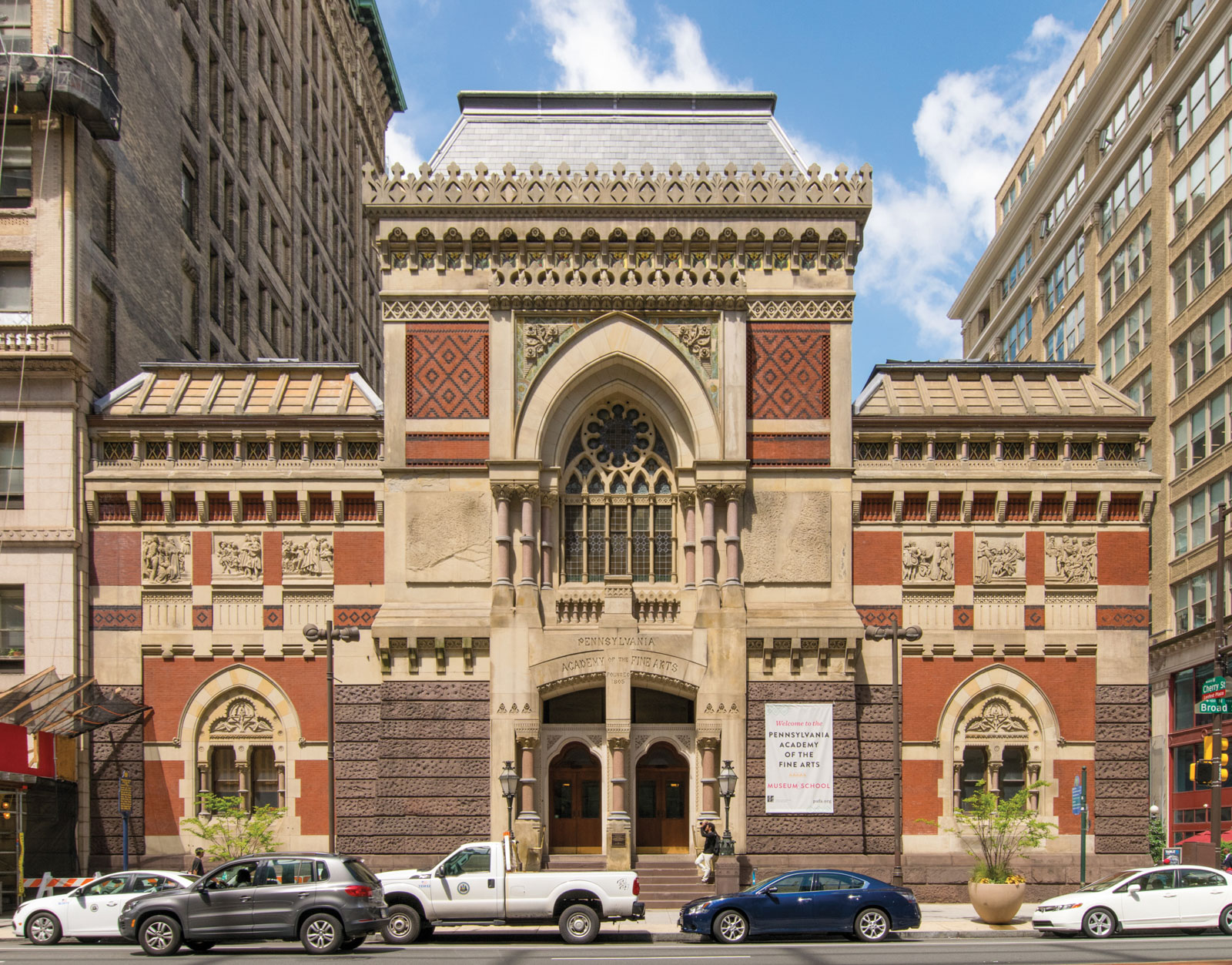 Pennsylvania Academy of the Fine Arts building, where Wharton Esherick trained.
The 2024 conference will explore the following: The work and legacy of Esherick, as well as the artistic milieu in which he trained at the Philadelphia Academy of Fine Art (PAFA); The Arts & Crafts community of Rose Valley, the milieu in which Esherick practiced; and The George Nakashima House, Studio and Workshop. “George Nakashima began his furniture business in 1945 as a reaction to “20th-century modern,” says Koenigsberg, “with the goal of reclaiming the philosophy of periods past in which the maker’s eye and hand determined his world in relation to the universe.”
Other major expressions of the movement that flourished in the region, is the work of The Red Rose Girls, a group of young female artists in Philadelphia whose legacy straddles the movement and early 20th-century feminism. Attendees will also find the work and influence of NC Wyeth, muralist and illustrator, and his son Andrew, whose paintings and watercolors captured a particular sense of place. “Both artists’ studios will be visited, as well as those of other artists and craftsmen participating in or influenced by the movement in the Philadelphia region,” explains Koenigsberg.
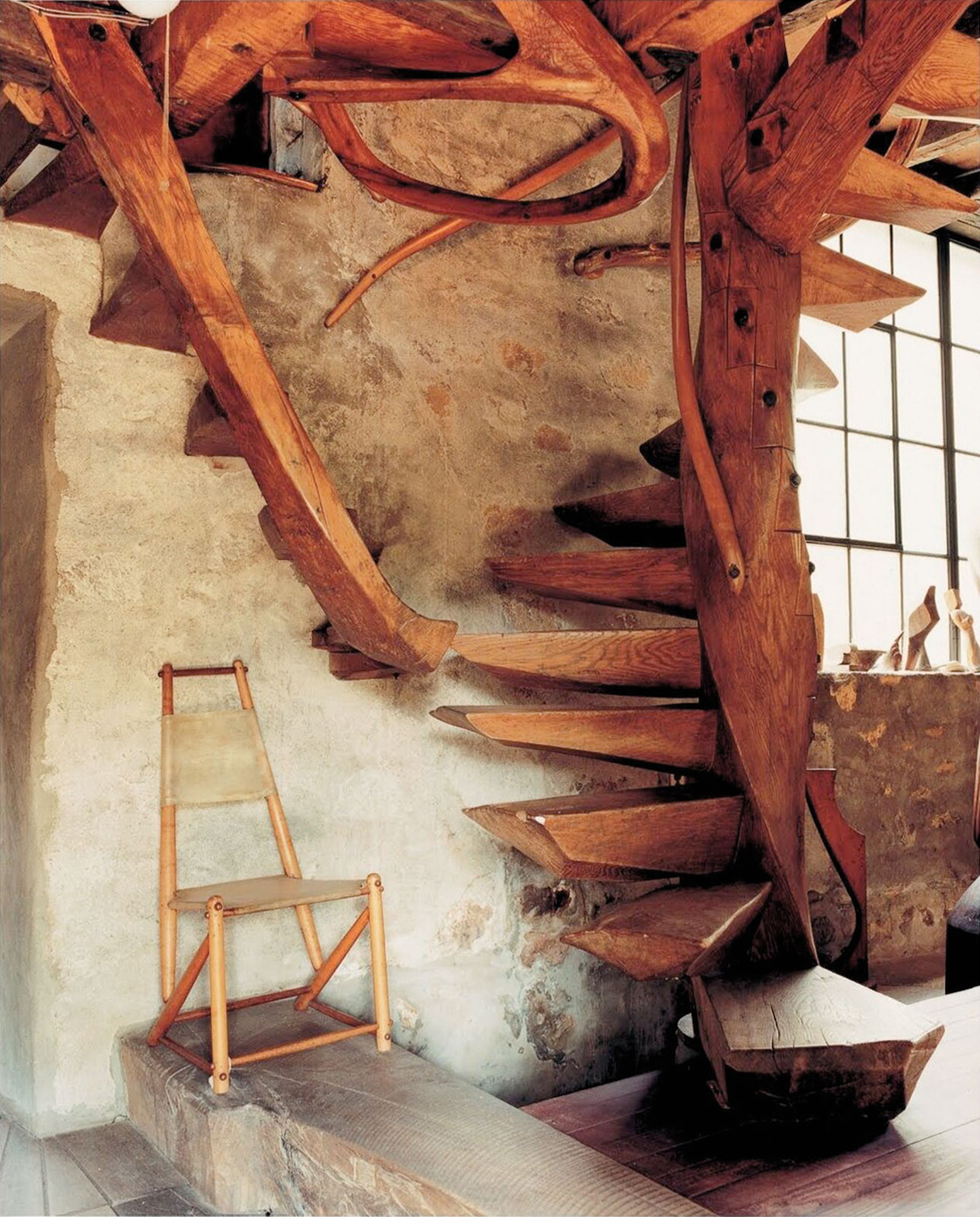 Spiral Staircase in Wharton Esherick’s home and studio, 1930. Photo: ©LeslieWilliamson from Handcrafted Modern, Rizzoli, 2010.
Lastly, guests will be educated on the contributions of Henry Chapman Mercer, a leading artistic tile maker of the movement, whose legacy continues at the Moravian Pottery & Tile Works. “Also, the Michener Museum, where in addition to its major collection of American art, attendees will be able to view the institution’s significant holdings of the regional frame maker Bernard Badura; and vital architectural sites relating to the movement or its ongoing expressions” says Koenigsberg. “This includes Frank Lloyd Wright’s Beth Sholom Synagogue in Elkins Park, and Louis Kahn’s residential commission for Margeret Esherick.
In a nutshell—as has been the practice of the IAC since the beginning—the event explores the artistic and philosophical underpinnings of the movement and how it informed the art and architecture that followed. “Key to this consideration are the commonalities in ethos and approach among different practitioners and how the movement continues—reflected in contemporary culture in ways both original and nonmimetic,” says Koenigsberg.
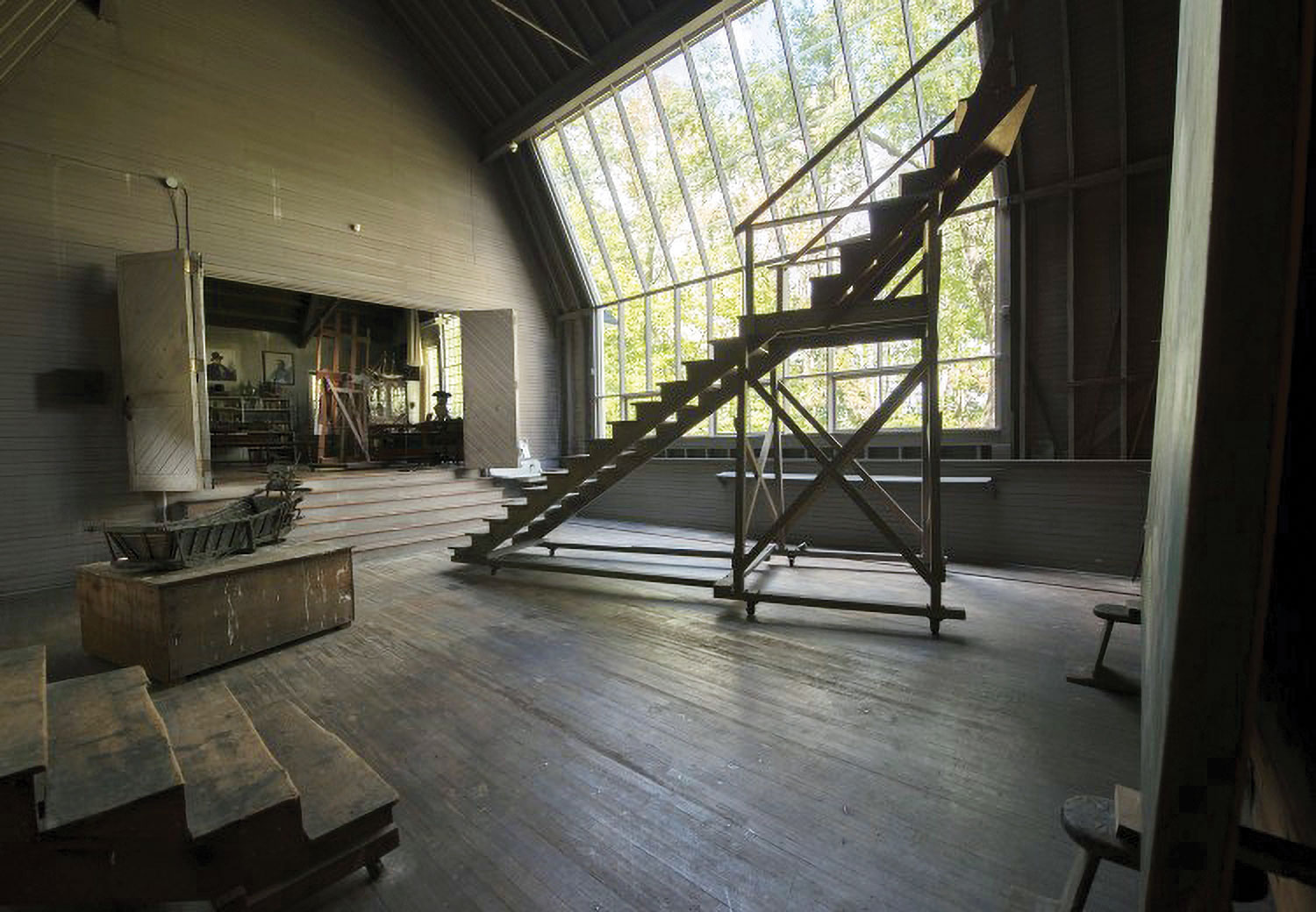 Mural Room at the NC Wyeth Studio. Photo by Carlos Alejandro.
The Arts and Crafts Conference, from October 13 to 17, will underscore the importance of preservation and of the continuing influence of historic architecture in the contemporary urban and suburban landscapes.
Powered by Froala Editor