American Beauty: The Osher Collection of American Art, featuring the works of 39 prominent artists, continues at the de Young through October 20.
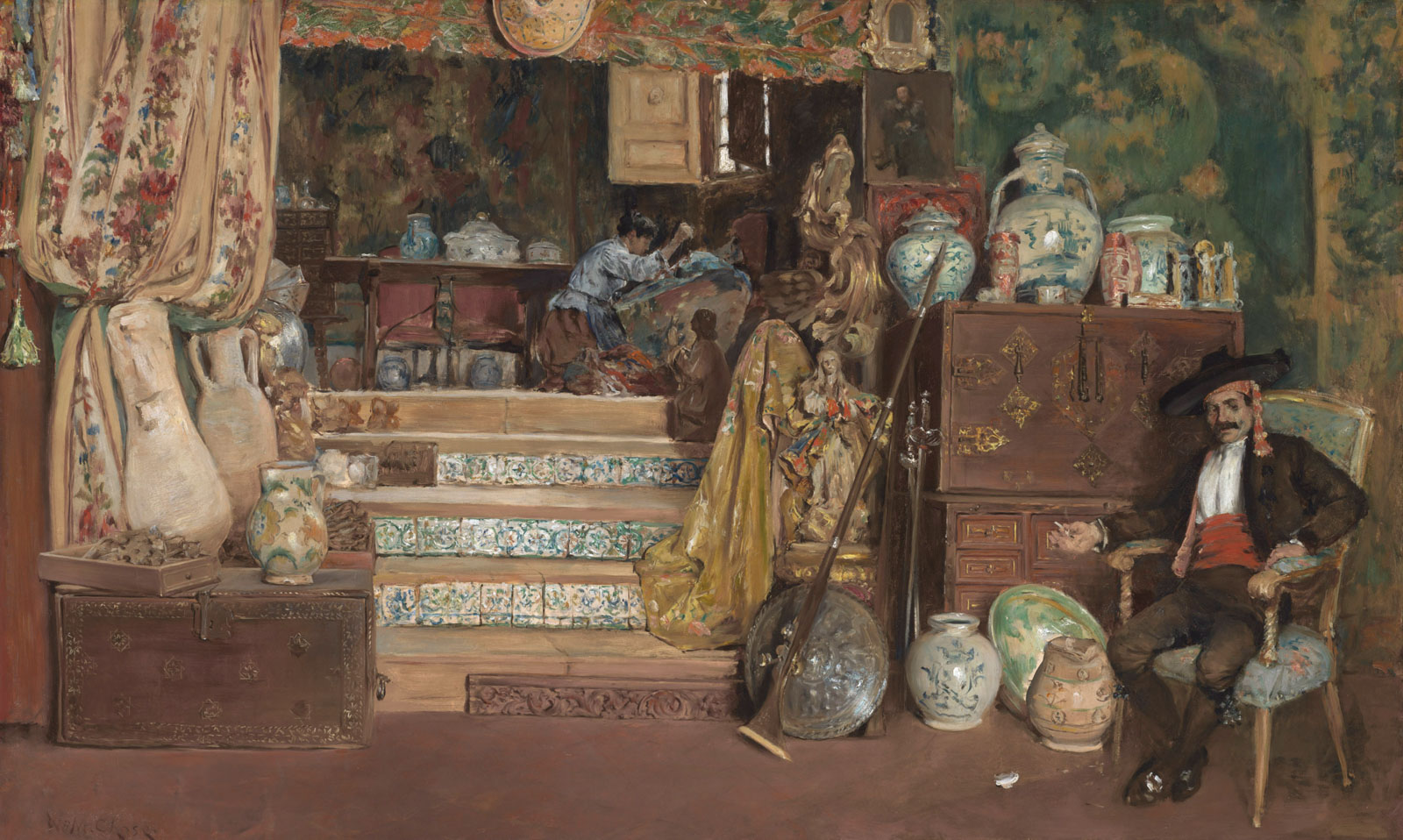 William Merritt Chase (1849-1916), Bric-a-Brac Shop, 1883. Image by Randy Dodson. Courtesy the Fine Arts Museums of San Francisco.
The de Young in Golden Gate Park and the Legion of Honor in Lincoln Park make up the Fine Arts Museums of San Francisco, the largest public arts institution in the city and one of the largest art museums in the United States. The museums’ director and CEO, Thomas P. Campbell, states, “Their generous donation of more than 60 works of such expansive historic scope is one of the most transformative contributions in the museums’ history. The Oshers have enriched the museums’ representation of American art—long considered to be one of the greatest survey collections in the United States—with a gift reflective of a dynamic period when the United States ascended to global prominence both culturally and artistically.”
In her catalog essay, “Finding Beauty at Home and Abroad, 1848-1960,” Lauren Palmor, the Fine Arts Museums’ associate curator of American art, describes that dynamic period.
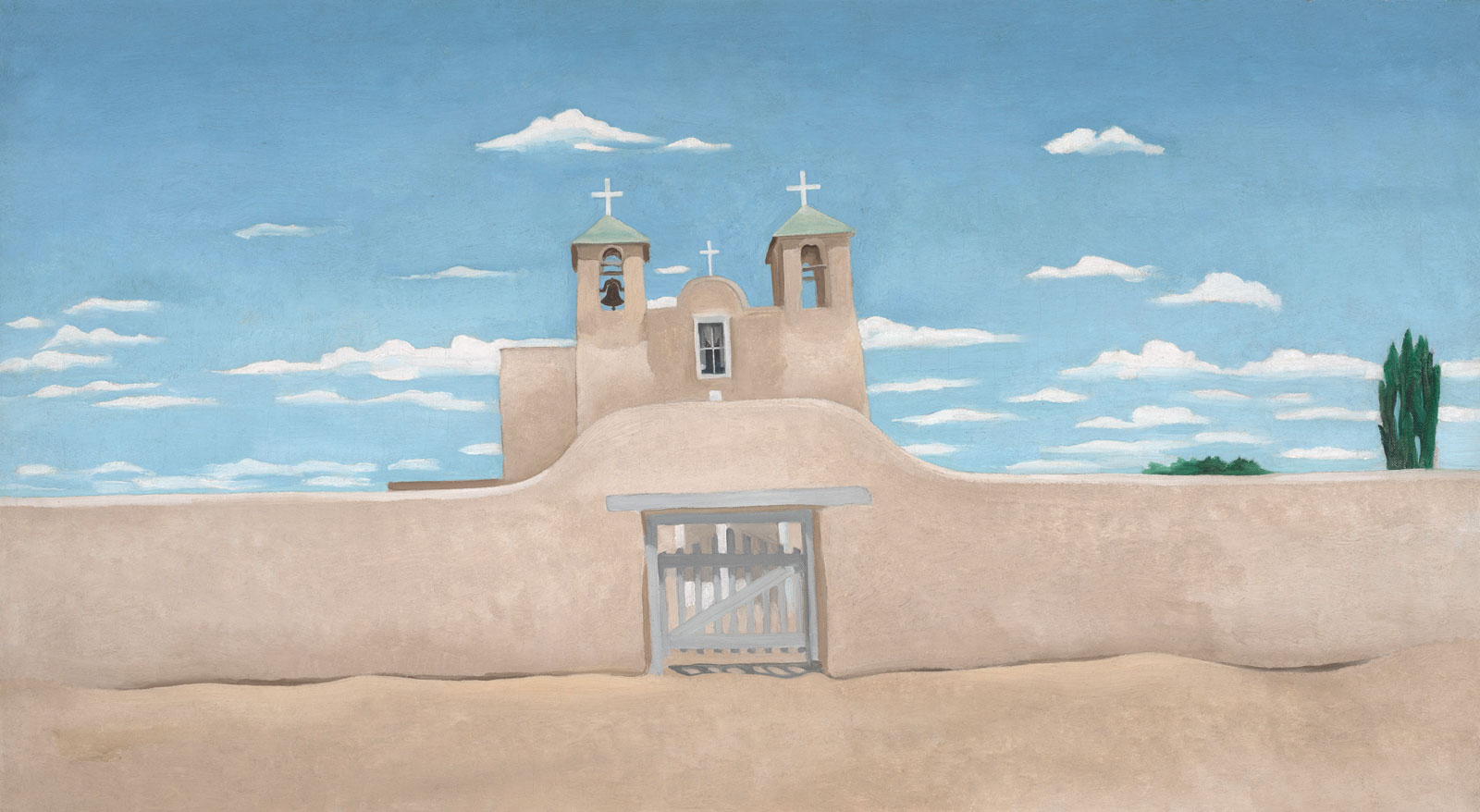 Georgia O’Keeffe (1887-1986), Front of Ranchos Church, 1930. © 2024 Georgia O’Keeffe Museum / Artists Rights Society (ARS), New York. Image by Randy Dodson. Courtesy the Fine Arts Museums of San Francisco.
“The collection, which spans the years from 1848 to 1960, showcases the accomplishments of American artists who studied, worked and exhibited throughout a critical epoch in U.S. history. This period is defined by its transatlantic accent, as many American artists looked to the example of the European art world while also striving to express national ideals and appeal to regional tastes. The featured works reflect the lasting imprint of global travel and the enduring legacies of American art colonies, both at home and abroad.”
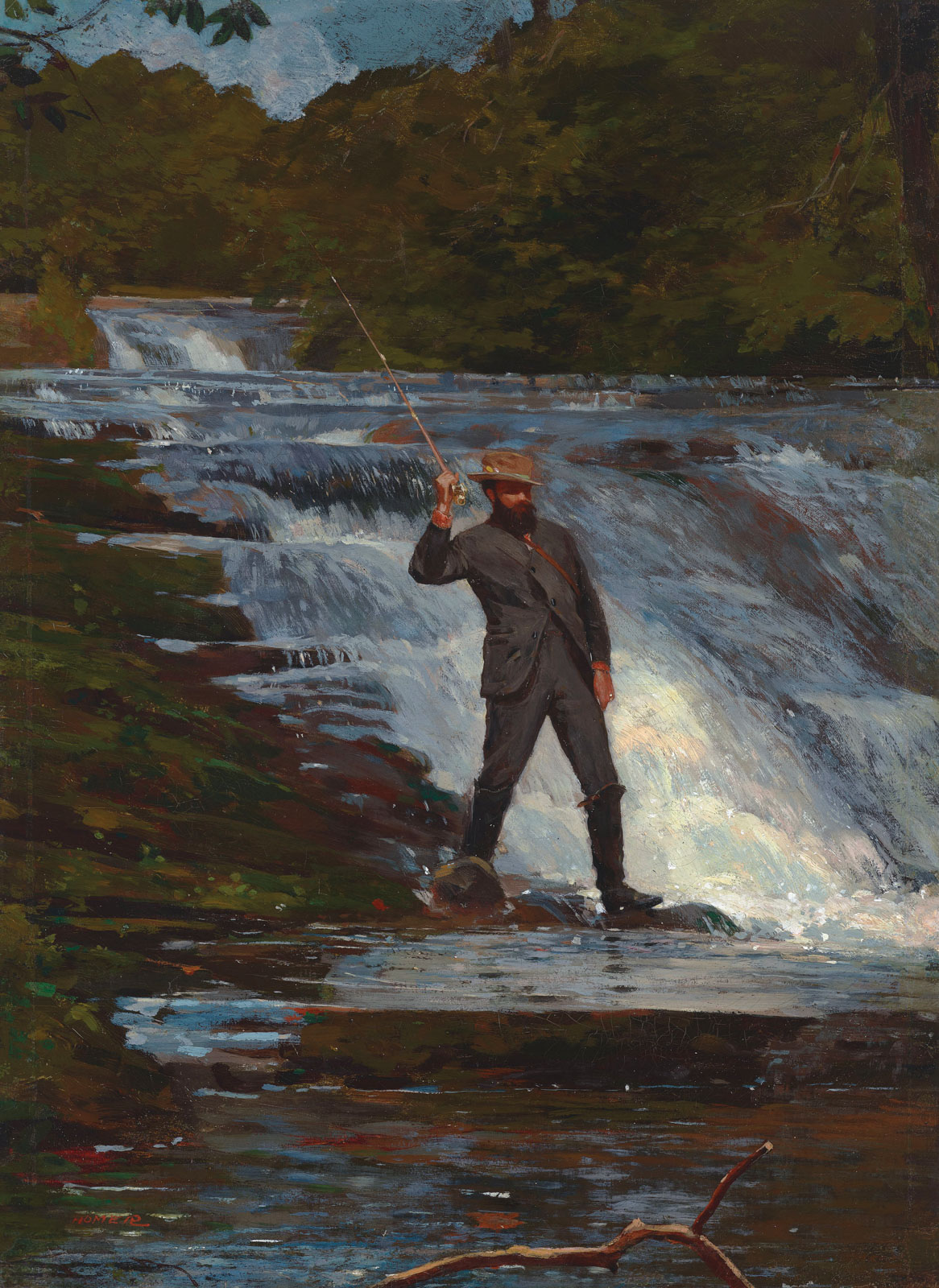 Winslow Homer (1836-1910), The Angler (Casting in the Falls), ca. 1874. Oil on canvas, 233⁄8 x 171⁄8 in. Image by Randy Dodson. Courtesy the Fine Arts Museums of San Francisco.
Many of the country’s foremost artists are represented in the collection, including Georgia O’Keeffe, Winslow Homer, Thomas Moran, Thomas Eakins, William Merritt Chase, John Singer Sargent, Charles Sheeler and Alexander Calder. The gift also introduces works by American impressionist Edward Henry Potthast, multidisciplinary artist Robert Frederick Blum, influential teacher Frank Vincent DuMond, leading Boston School painter William McGregor Paxton and “Giverny Luminists” Frederick Carl Frieseke and Richard Edward Miller.
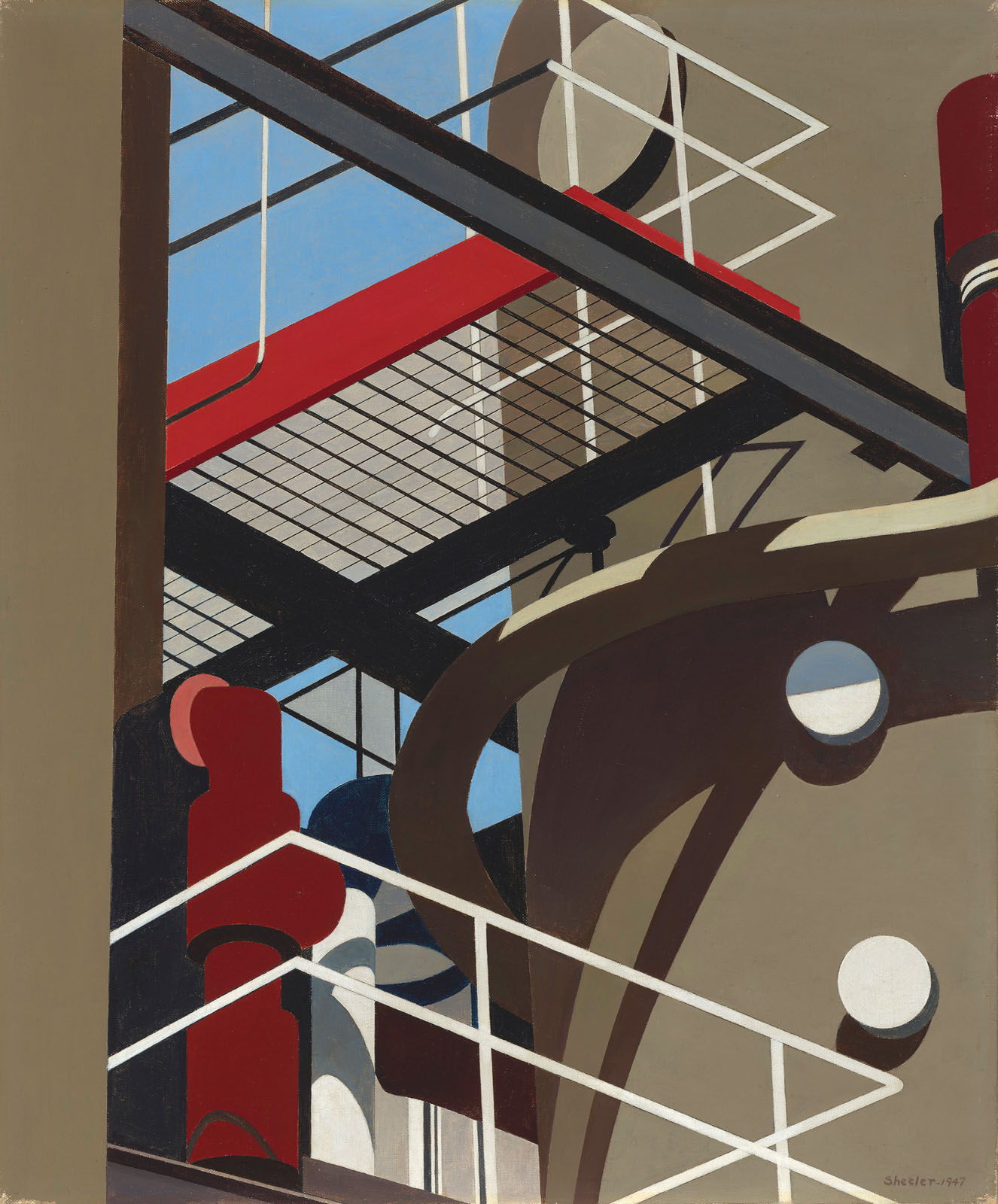 Charles Sheeler (American, 1883-1965), Cat-walk, 1947. Oil on canvas, 24 x 20 in. Image by Randy Dodson. Courtesy the Fine Arts Museums of San Francisco.
“Together, these works illustrate the myriad ways American artists have long sought to define and declare American styles and sensibilities,” note the museums. “Particular highlights from the Osher Collection include Winslow Homer’s masterful The Angler (Casting in the Falls), the first large-scale oil by the artist to enter the permanent collection. The de Young galleries will be further augmented by several significant ‘firsts’ for its American art collection: the first genre picture by William Merritt Chase (Bric-à-Brac Shop), the first major George Bellows landscape (In Virginia), the first Georgia O’Keeffe Southwest subjects (Front of Ranchos Church, and The Patio), and the first Hiram Powers portrait bust (Frances Elliot Austin).”
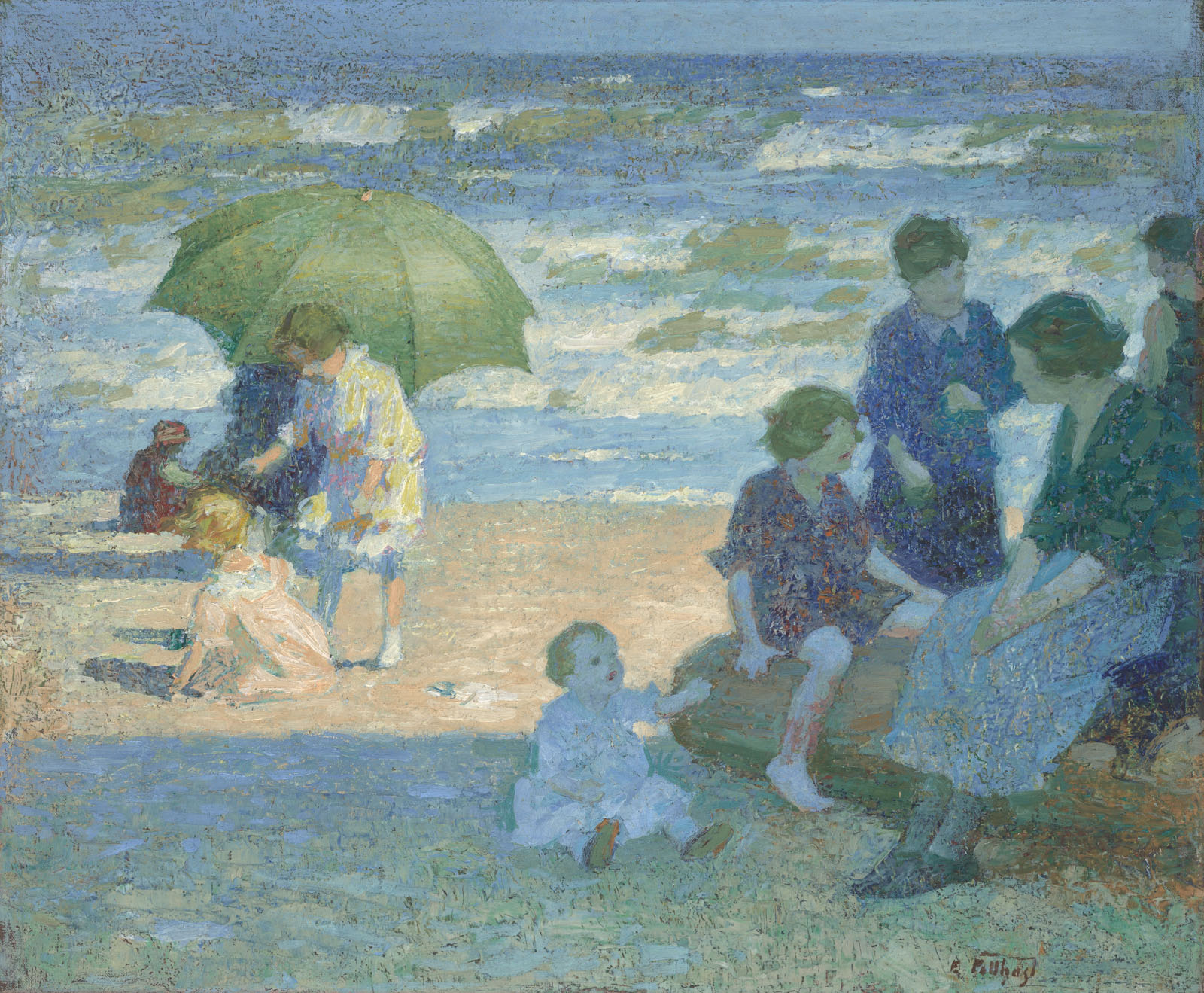 Edward Henry Potthast (1857-1927), Summer Days, ca. 1915. Oil on canvas, 20 x 24 in.
Many of the works in the collection represent firsts or transitions in the artists’ oeuvre. O’Keeffe (1887-1986) painted Front of Ranchos Church in 1930. San Francisco de Asís Mission Church was built in 1810 and is the number one motif of northern New Mexico, just as a red fisherman’s shack has been for generations of artists painting at Gloucester harbor in Massachusetts. Each year, volunteers gather to replaster the church’s exterior with adobe, continually softening its contours. The soft geometry of its rear elevation has been immortalized by painters and photographers.
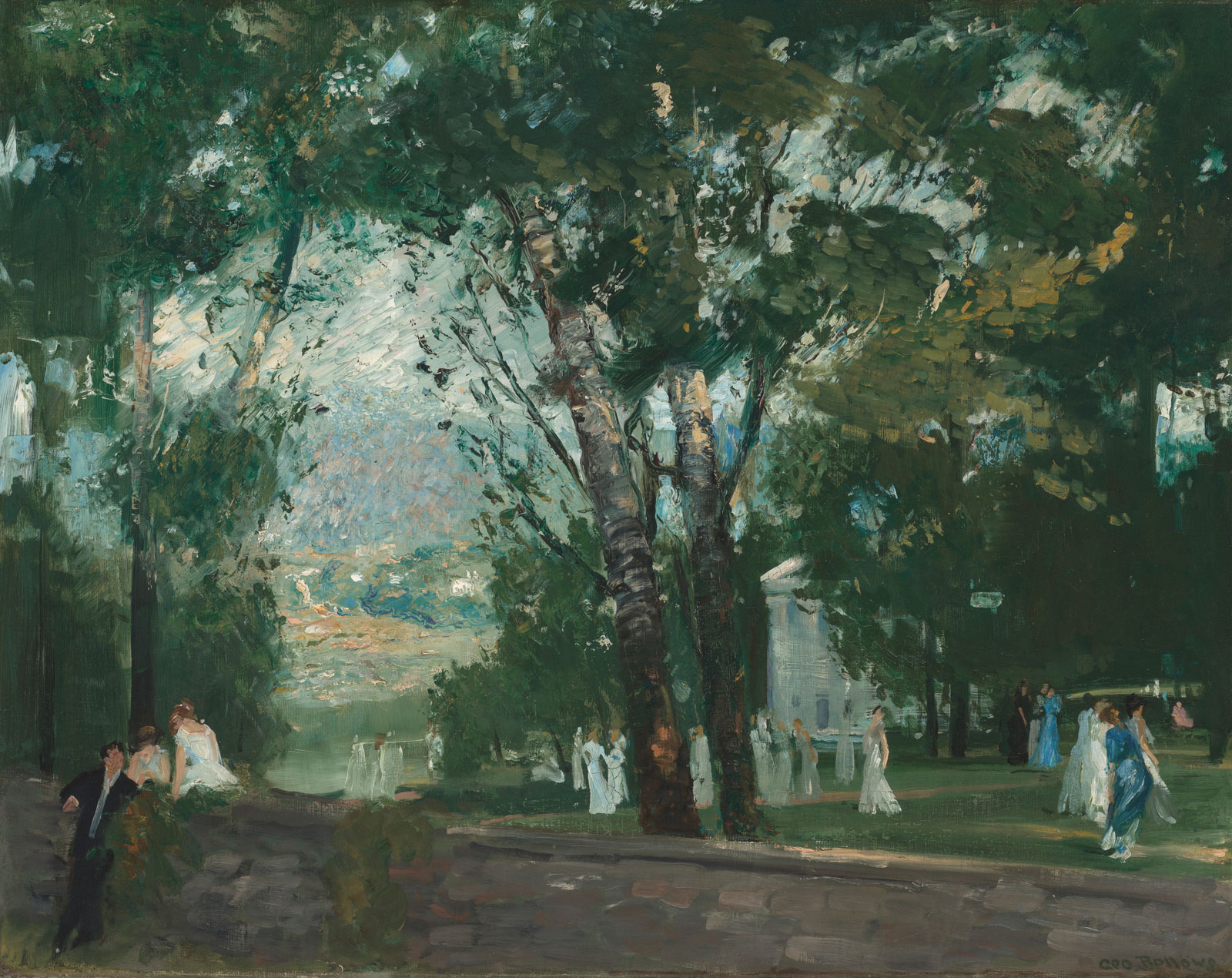 George Wesley Bellows (1882-1925), In Virginia (Garden Party), 1908. Oil on canvas, 30 x 38 in. Image by Randy Dodson. Courtesy the Fine Arts Museums of San Francisco.
O’Keeffe, who had visited the area for the first time the year before, commented, “Most artists who spend any time in Taos have to paint it, I suppose, just as they have to paint a self-portrait. I had to paint it—the back of it several times, the front once.” In this painting she weds the building of mud to the ground from which it came as its twin towers project into the heavens.
Chase (1849-1916) was an inveterate collector. Bric-à-Brac Shop, 1883, is the type of shop where he would purchase the art, furniture and antiques that filled his New York studio. He once told a friend, “I intend to have the finest studio in New York.” In this painting, he illustrates the things he loved, including a reproduction of a painting by Diego Velázquez, an artist he admired.
The eclectic assortment of objects, textures and colors reflects Chase’s attitude toward life and his work. He advised his students, “Be in an absorbent frame of mind. Take the best from everything.” He had established the Chase School which later became Parsons School of Design. He explained his eclecticism: “I have been a thief, I have stolen all my life—I have never been so foolish and foolhardy as to refrain from stealing for fear I should be considered as not ‘original.’ Originality is found in the greatest composite which you can bring together.”
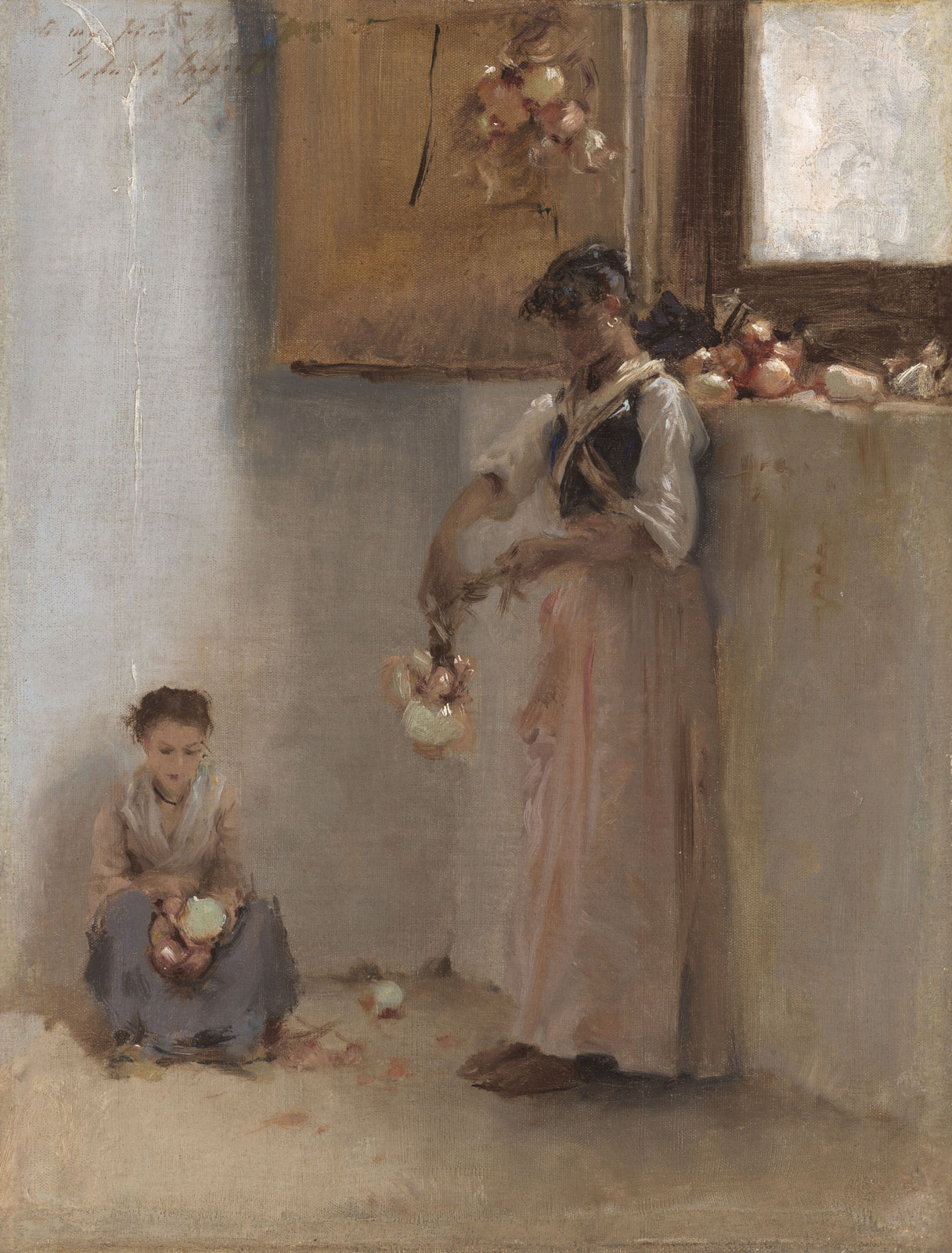 John Singer Sargent (1856-1925), Stringing Onions, 1878. Watercolor on paper, 17 x 13 in. Image by Randy Dodson. Courtesy the Fine Arts Museums of San Francisco.
Bellows (1882-1925), was a student of Chase at the New York School of Art. Palmor writes, “Chase encouraged Bellows to take up oil painting and to embrace a fluid style of brushwork that he retained throughout his career.”
A significant early landscape of Bellows’ is In Virginia, 1908. He painted it while teaching at the Virginia Summer School of Art at the University of Virginia in Charlottesville. Palmor explains that the painting “depicts an afternoon event on the verdant campus of the university. It is an atmospheric, arcadian landscape, the air heavy with humidity. Languid figures stroll and stand amid the shade of the trees, and at least one couple in the foreground appears to be courting across a low stone wall.”
Bellows’ energetic application of paint, best known is his paintings of prize fighters and the turbulent ocean, and rugged coast of Maine, is already evident in this early painting.
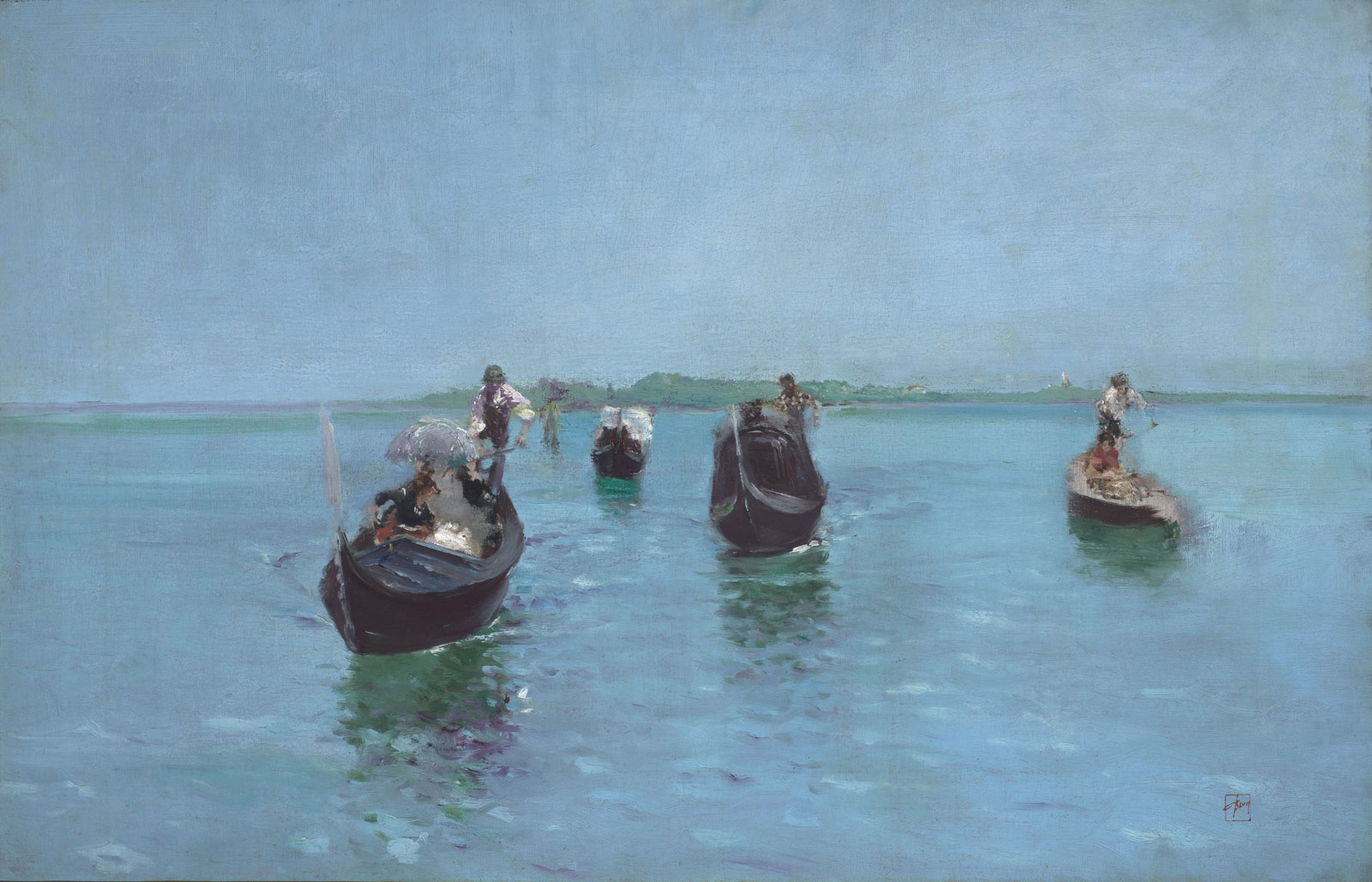 Robert Frederick Blum (1857-1903), Venetian Gondoliers, ca. 1880-1889. Image by Randy Dodson. Courtesy the Fine Arts Museums of San Francisco.
Another Chase student, Sheeler (1883-1965), is represented by Cat-walk from 1947. Commenting on selected works in the Osher collection, Magnolia Molcan, the museums’ senior web managing editor, writes, “An early modernist, Charles Sheeler worked in both painting and photography. In the mid-1940s, he photographed a synthetic-rubber plant in West Virginia, using the photos as the basis for four paintings. In Cat-walk, Sheeler simplified the plant into overlapping lines, jutting catwalks, and interlocking shadows. By presenting the facility without soot or laborers, he created the fantasy of pristine industry.”
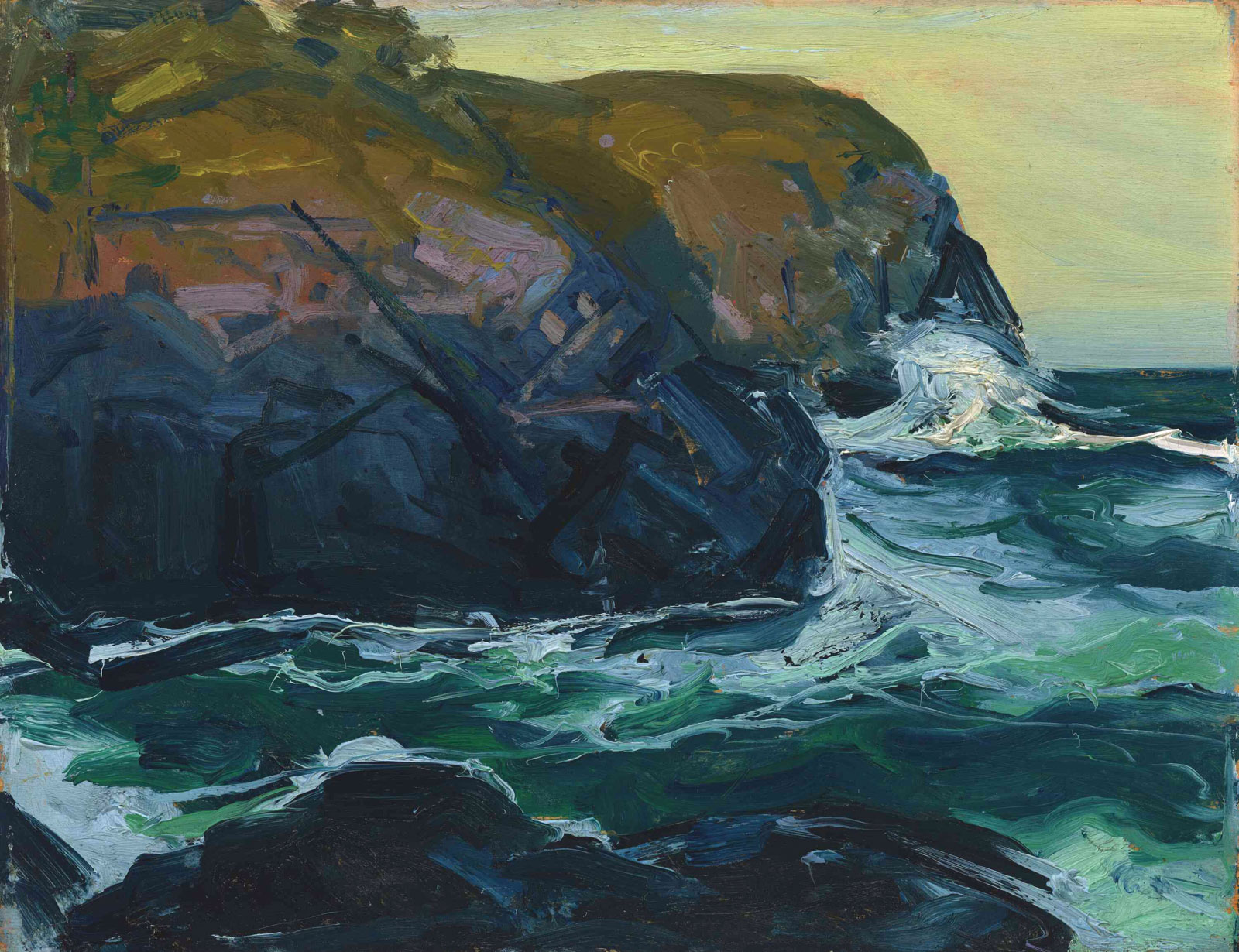 George Wesley Bellows (1882-1925). Blue and Gold, 1913. Oil on canvas, 15 x 19½ in. Image by Randy Dodson. Courtesy the Fine Arts Museums of San Francisco.
Sheeler had traveled in Europe and admired the simple massing of form in the paintings of the late Middle Ages in Italy. Later, he collected early American furniture and decorative art, commenting, “No embellishment meets the eye. Beauty of line and proportion through excellence of craftsmanship make the absence of ornament in no way an omission.” His precise renderings of the built environment echo their simplicity.
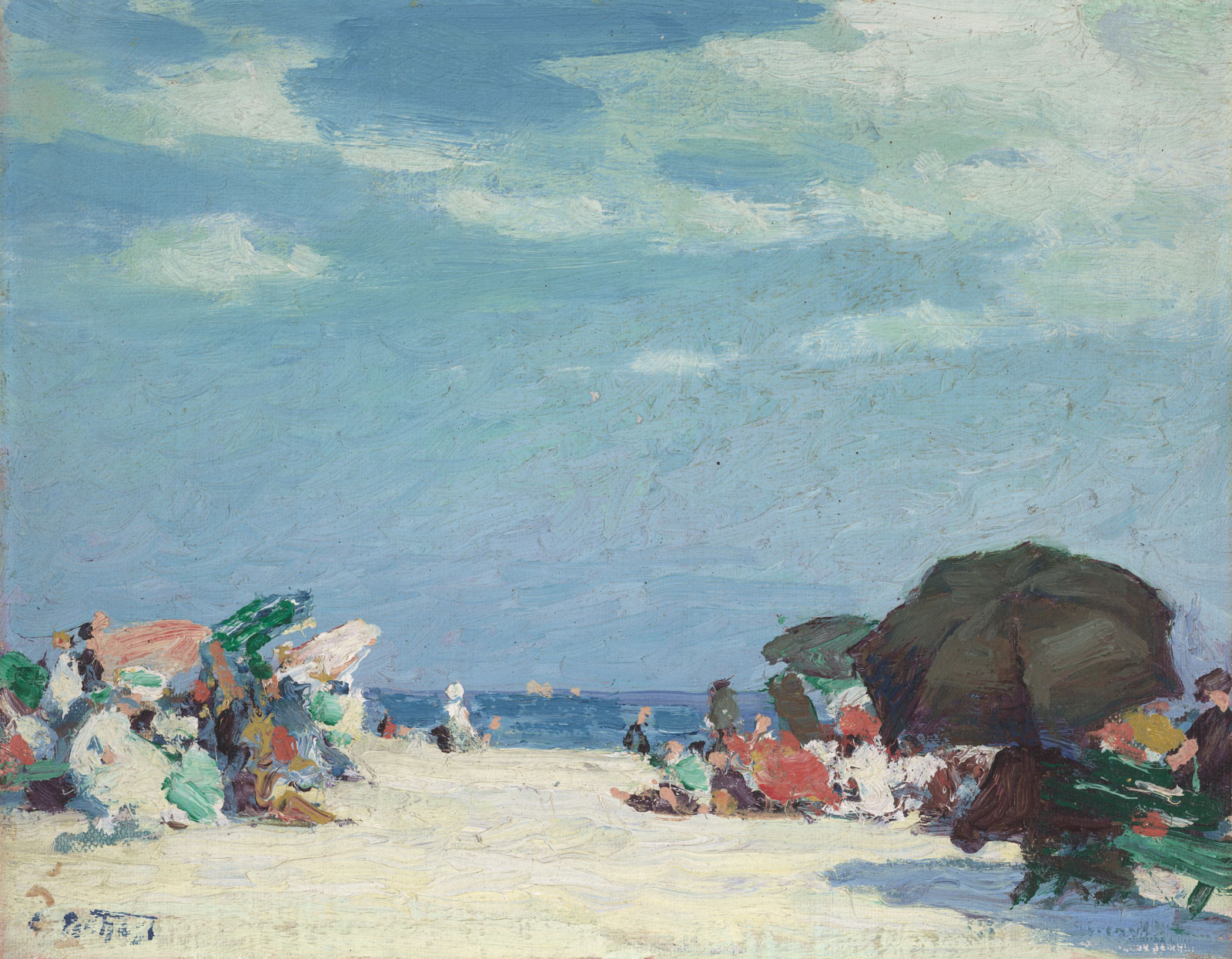 Edward Henry Potthast (1857-1927), Beach at Rockaway, ca. 1910-1920. Oil on canvasboard, 8 x 10 in. Image by Randy Dodson. Courtesy the Fine Arts Museums of San Francisco.
Commenting on their promised gift, the Oshers say, “We are delighted that these works that we have relished collecting and displaying in our home will now be appreciated by visitors to the Fine Arts Museums of San Francisco. As the largest public arts institution in our city, with the finest survey collection of American art, it is fitting that these artworks will join the collection here.”
Through October 20, 2024
American Beauty: The Osher Collection of American Art
de Young Museum
Golden Gate Park
50 Hagiwara Tea Garden Drive
San Francisco, CA 94118
t: (888) 901-6645, www.famsf.org
Powered by Froala Editor