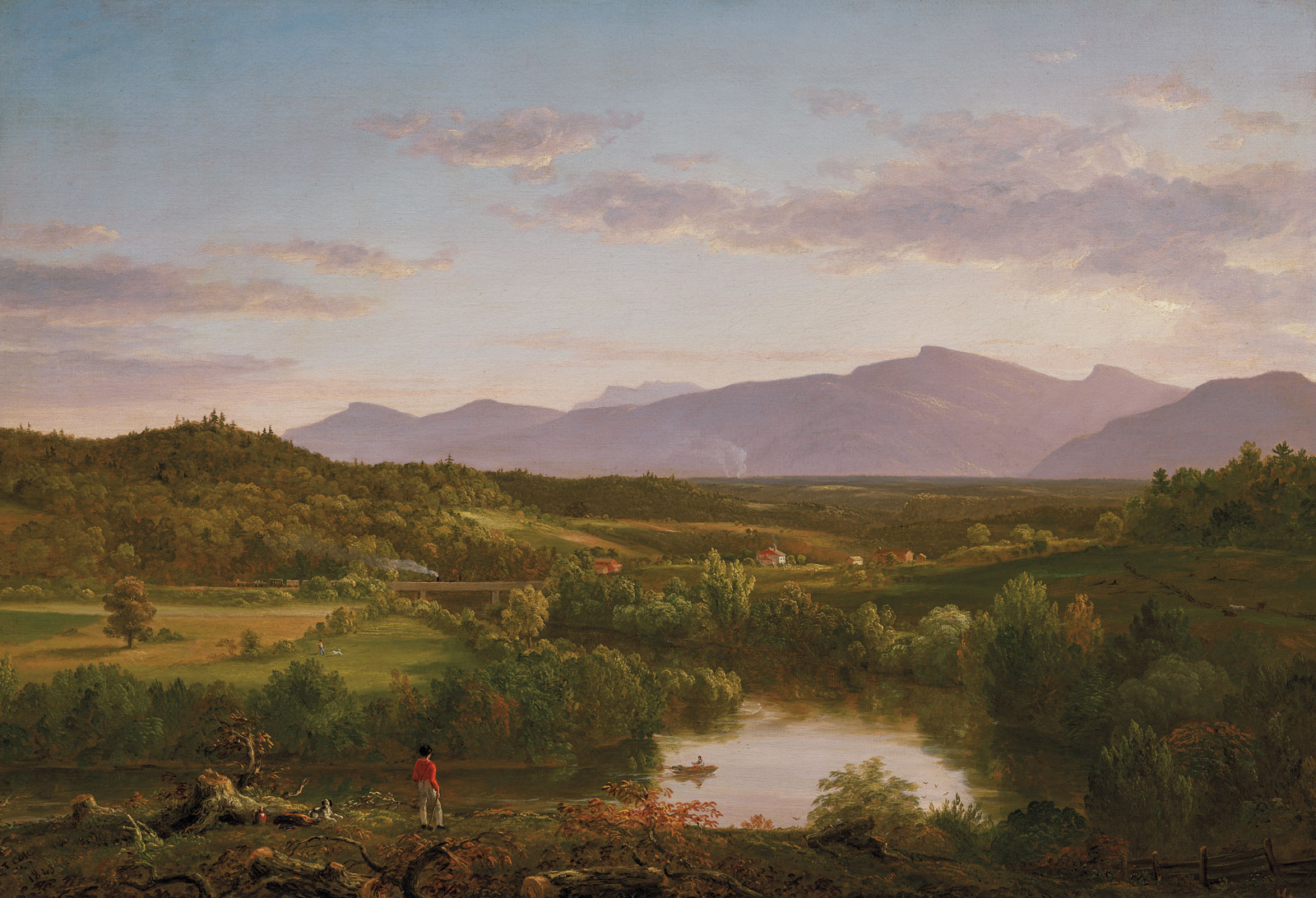
 Thomas Cole (1801-1848), River in the Catskills, 1843. Oil on canvas, 27½ x 403/8 in. Museum of Fine Arts, Boston; Gift of Martha C. Karolik for the M. and M. Karolik Collection of American Paintings, 1815-1865. 47.1201. Photograph © 2024 Museum of Fine Arts.
Represented in the exhibition are renowned artists Thomas Cole, Ernest Lawson, Jacob Lawrence, Edward Hopper, Georgia O’Keeffe, Theodore Kauffman, Albert Bierstadt, John Sloan, Reginald Marsh, Thomas Hart Benton, and many others.
Comprised of 40 works sourced from private and public collections, the exhibition is organized into four thematic sections: “Smoke in the Wilderness: American Landscape Painting and the Railroad, 1840-1900,” “Industry and Urbanization: The Railroad and American Art in the Progressive Era,” and “The Lonely Rail, and Passengers All: People on the Train in American Art, 1900-1950.”
Taken together, All Aboard shines a spotlight on the influence of the railroad on the history of American art, from its beginnings as a technological wonder, connecting the country coast to coast, to its role as a driver of industry and urbanization at the turn of the century, and its eventual adoption by artists drawn to the subject for its modernist potential. The exhibition also touches upon how this new mode of travel transformed how individuals perceived distance and time, and facilitated novel, diverse social interactions, highlighted in depictions of rail workers and passengers.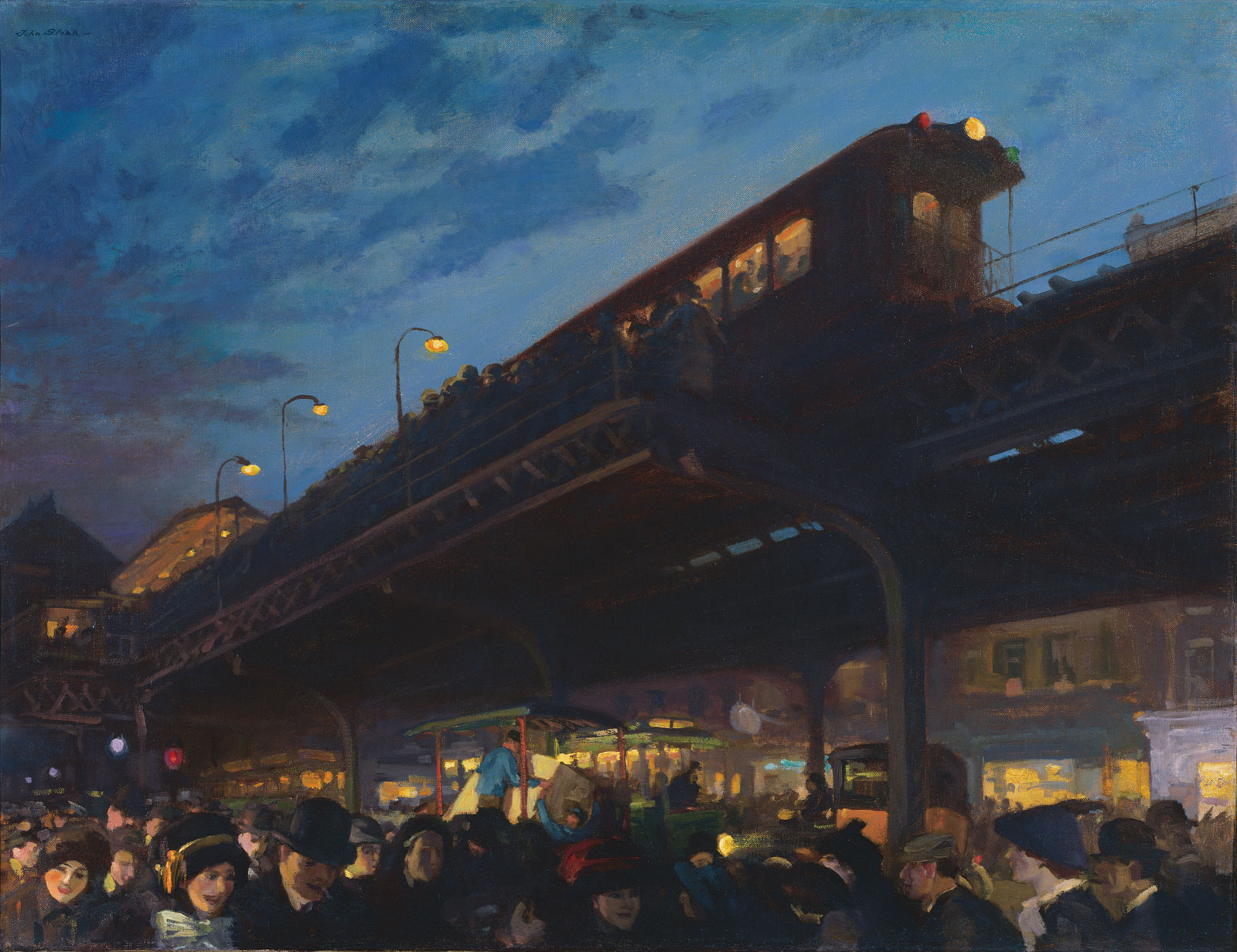 John Sloan (1871-1951), Six O’Clock, Winter, 1912. Oil on canvas, 261/8 x 32 in. The Phillips Collection; Acquired 1922. © 2024 Delaware Art Museum / Artists Rights Society (ARS), New York
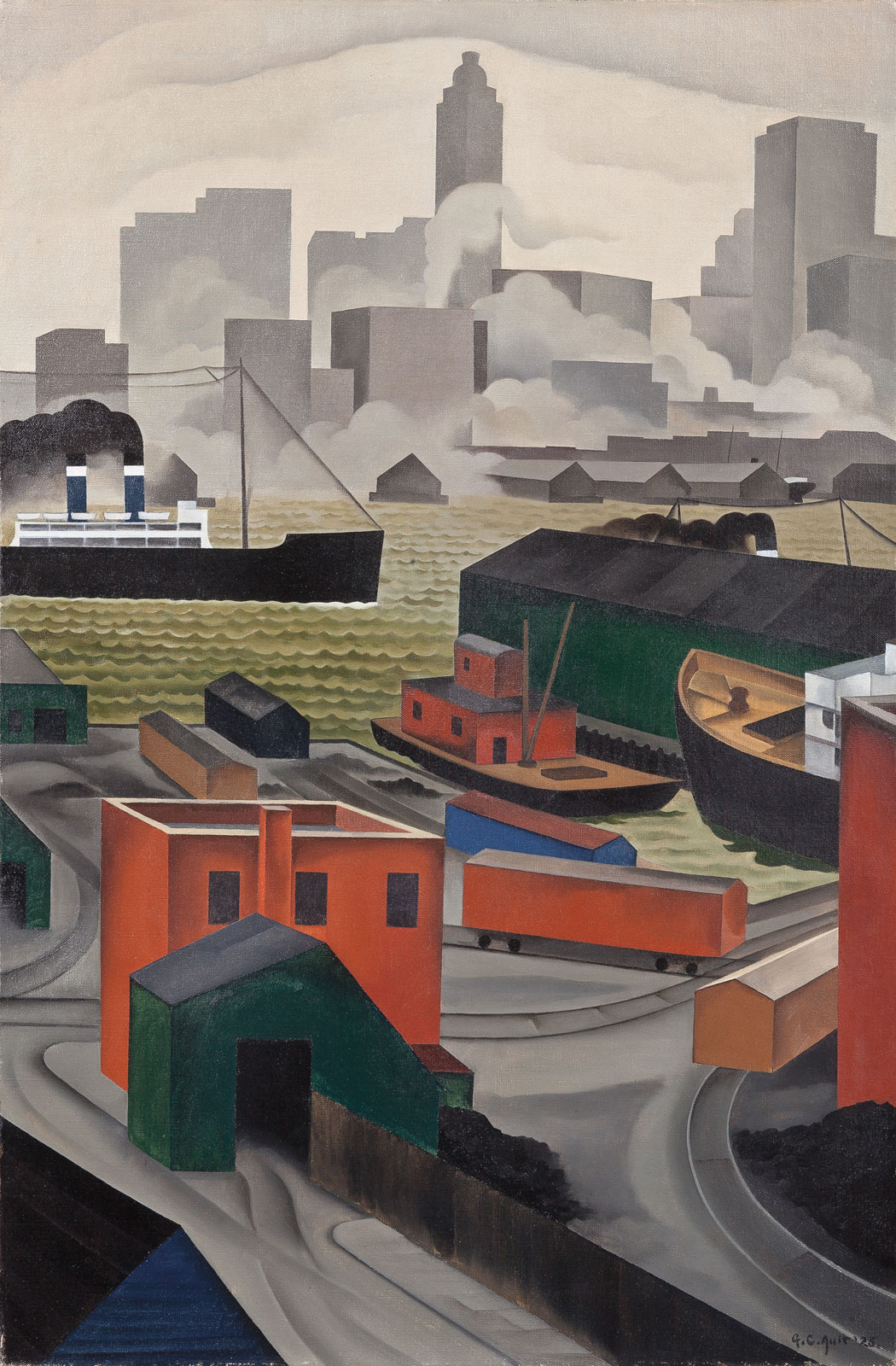 George Ault (1891-1948), From Brooklyn Heights, 1925. Oil on canvas, 30 x 20 in. Collection of The Newark Museum of Art; Purchase, 1928. 28.1802.
“Creatives—artists and writers—immediately recognized the impact of the railroad, pro and con,” says museum director and CEO Thomas Denenberg. “Perspective changed over time, from those who issued warnings about the ‘iron horse’ and how it may impact the environment or Indigenous people, to those who literally saw the railroad as an engine of change in a rapidly expanding economy.
“It is rare, in fact, to find an American painter who did not take up the theme at some point in their career,” Denenberg continues. “Most painters are ambivalent at best about the railroad, though some like Bierstadt are certainly complicit in rendering the West as a form of Eden in the service of Manifest Destiny and Westward Expansion. Some, like Samuel Woolf in The Underworld, sketch a pluralistic society where all classes are riding in the same subway car, but as often as not painters sought to depict the gritty realities of hard labor, and environmental damage brought about by the railroad.”
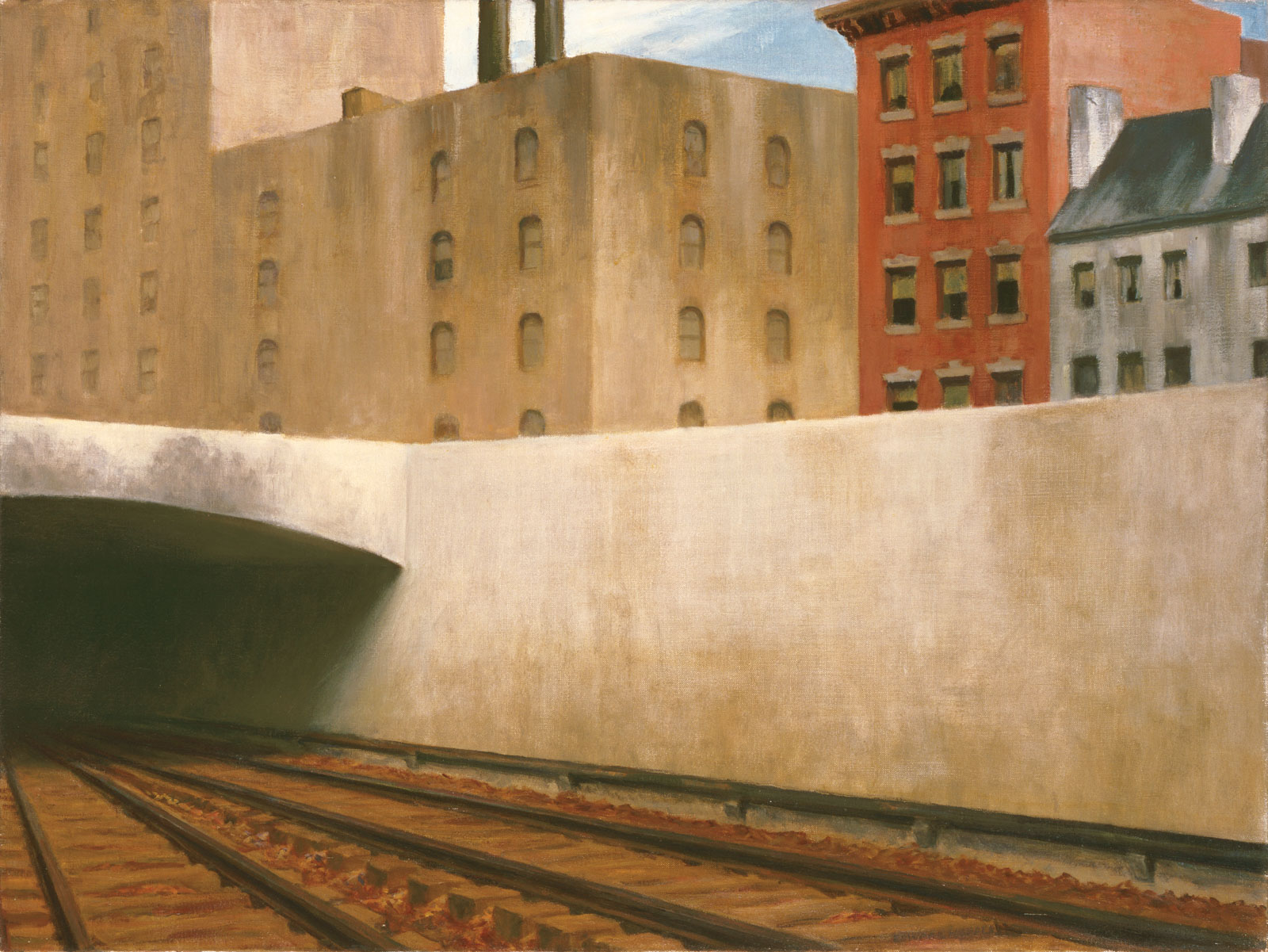 Edward Hopper (1882–1967), Approaching a City, 1946. Oil on canvas, 271/8 x 36 in. The Phillips Collection, Washington, D.C. Acquired 1947
Focusing on 1840 to 1900, the “Smoke in the Wilderness” section focuses on the railroad’s encroachment on landscapes that many believed should remain untouched and pure. Cole’s River in the Catskills, 1843, is exemplary of this idealized vision of the natural world that was shared among the founding Hudson River School artists.
Works like John Sloan’s 1912 piece Six O’Clock Winter are represented in the area of the exhibition that looks at railroad art in the Progressive Era and beyond, a new period in American history that took shape at the dawn of the 20th century when social reform, government regulation and economic expansion were topics of national interest. The railroad was central to the country’s unparalleled growth but with it came unavoidable conflict—and a shift in train sentiments from the celebratory to the critical that showed up on the canvases of artists working at the time.
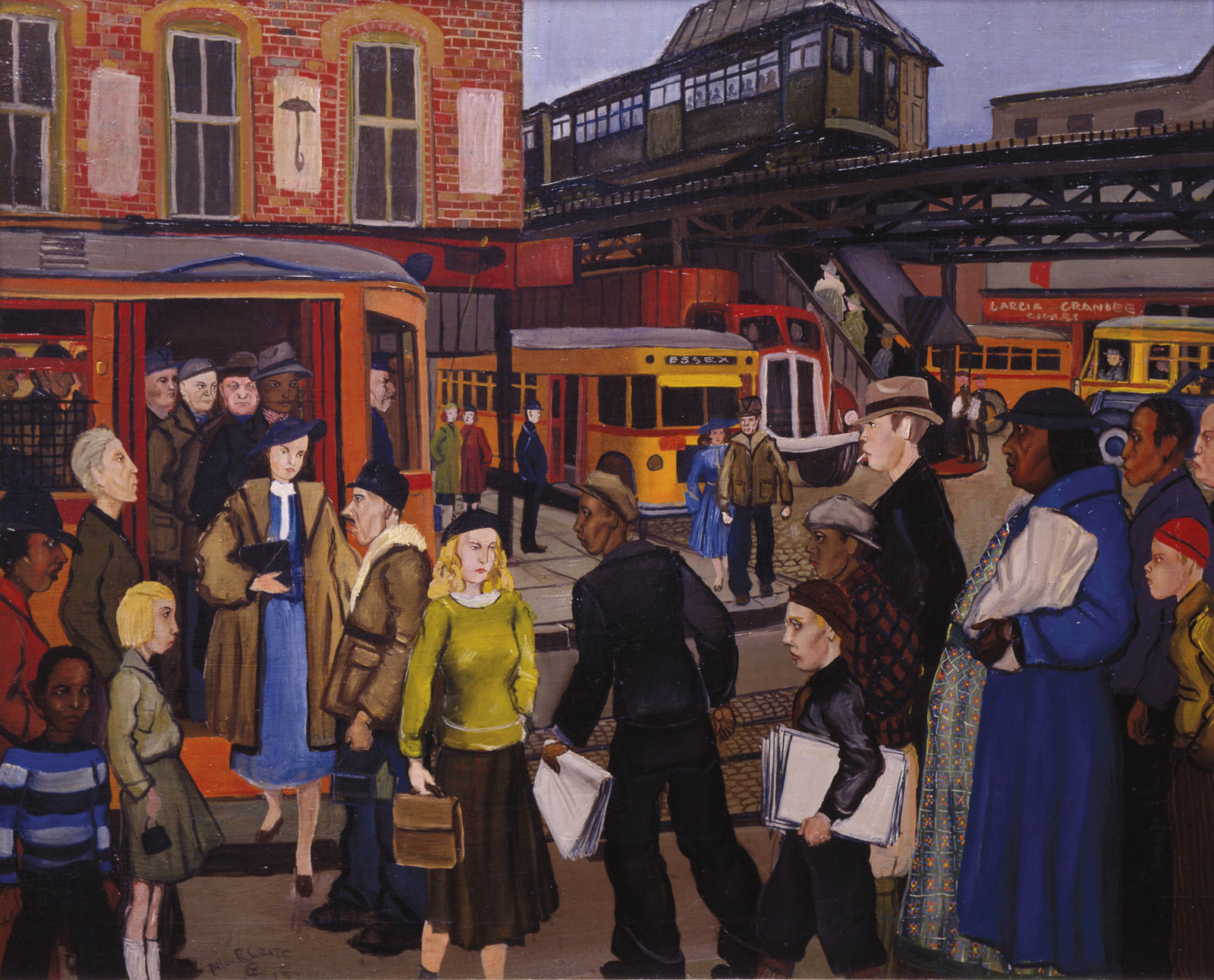 Allan Rohan Crite (1910-2007), The Carstop, 1940. Oil on canvas, 37¼ x 31¼ in. Boston Athenaeum, UR75. © Estate of Allan Rohan Crite
“The Lonely Rail” highlights the second and third decades of the 20th century when trains became associated with separation, loneliness, migration and nostalgia for simpler times, which affected the way painters portrayed train-related subject matter. Hopper captures this attitude in his 1946 painting Approaching a City. From the viewpoint of an anonymous traveler drawing close to an unknown city, the piece suggests a future that is both predictable and unknown. Ironically, this shift in perception, reinforced by the art, songs and prose of the day, cast the railroad in the nostalgic light that persists today.
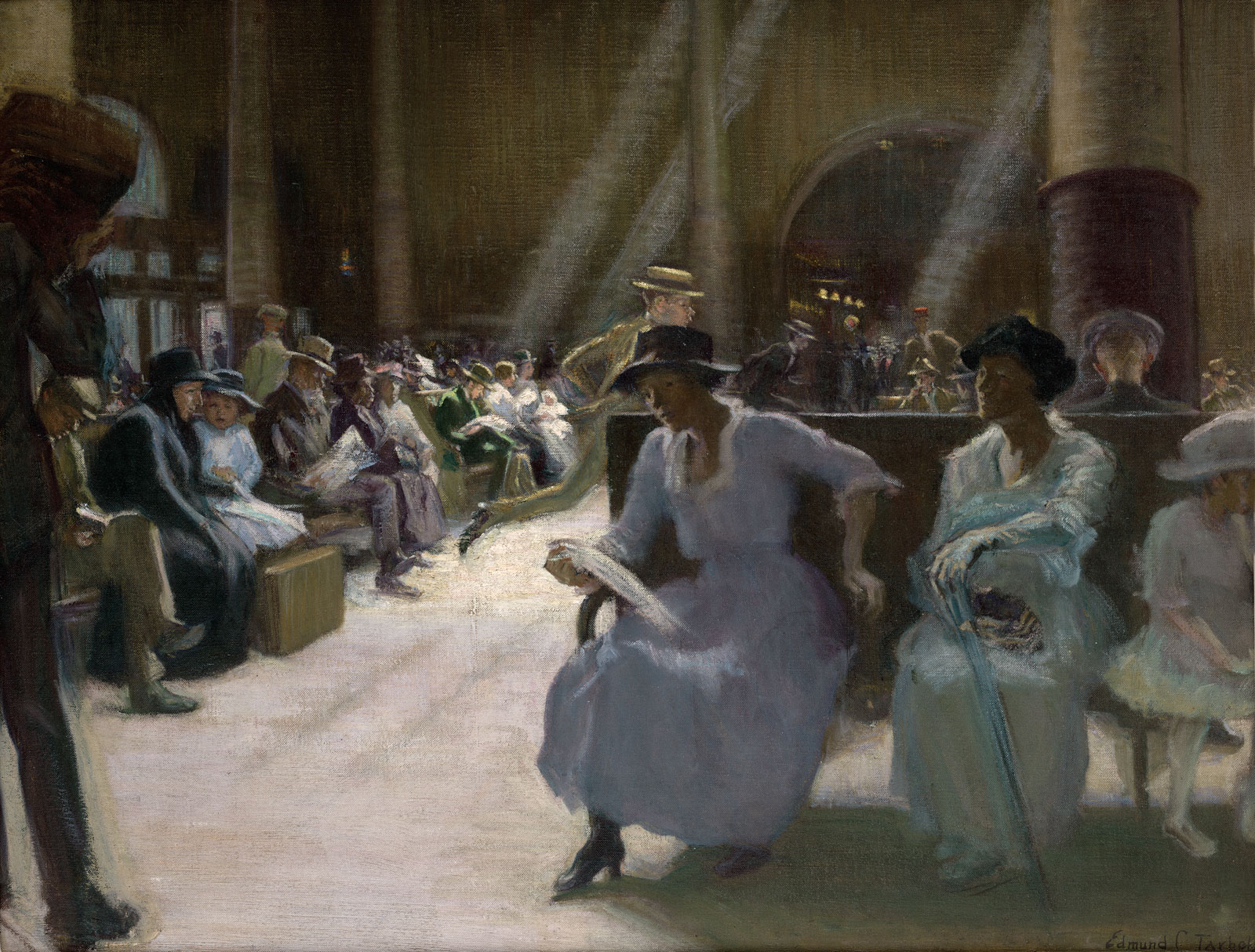 Edmund Charles Tarbell (1862-1938), In the Station Waiting Room, Boston, ca. 1915. Oil on canvas, 243/8 x 32 in. Crocker Art Museum; Gift of Dr. Joseph R. Fazzano. 1956.7.
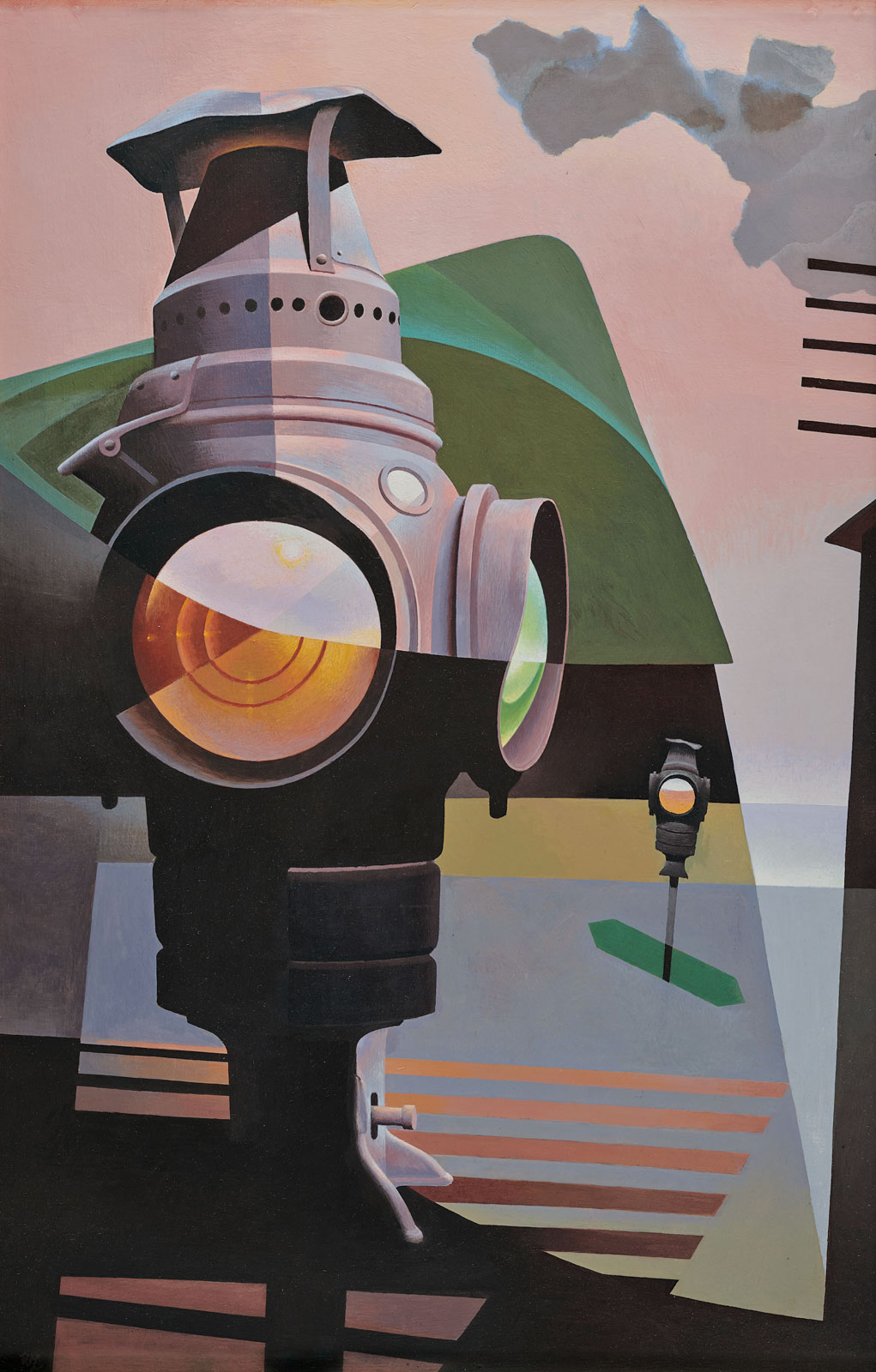 William Charles Libby (1919-1982), Lanterns, 1945. Tempera on board, 271/8 x 173/4 in. Carnegie Museum of Art, Pittsburgh; Gift of Mr. and Mrs. James H. Beal. 63.1.5. Photograph © 2023 Carnegie Museum of Art, Pittsburgh.
Denenberg explains, “Beginning in the 1920s with the highpoint of ridership and number of miles of rail in the U.S., a nostalgic narrative of the rail road begins to take shape, a confluence of other organizing myths such as that of the frontier in American culture that conspires to make railroad imagery persistent and pervasive for generations.
“Artists concretize myth,” he continues. “They absorb and interpret, and—as we developed a visual culture in the course of the 19th century—are afforded a privileged role in society.”
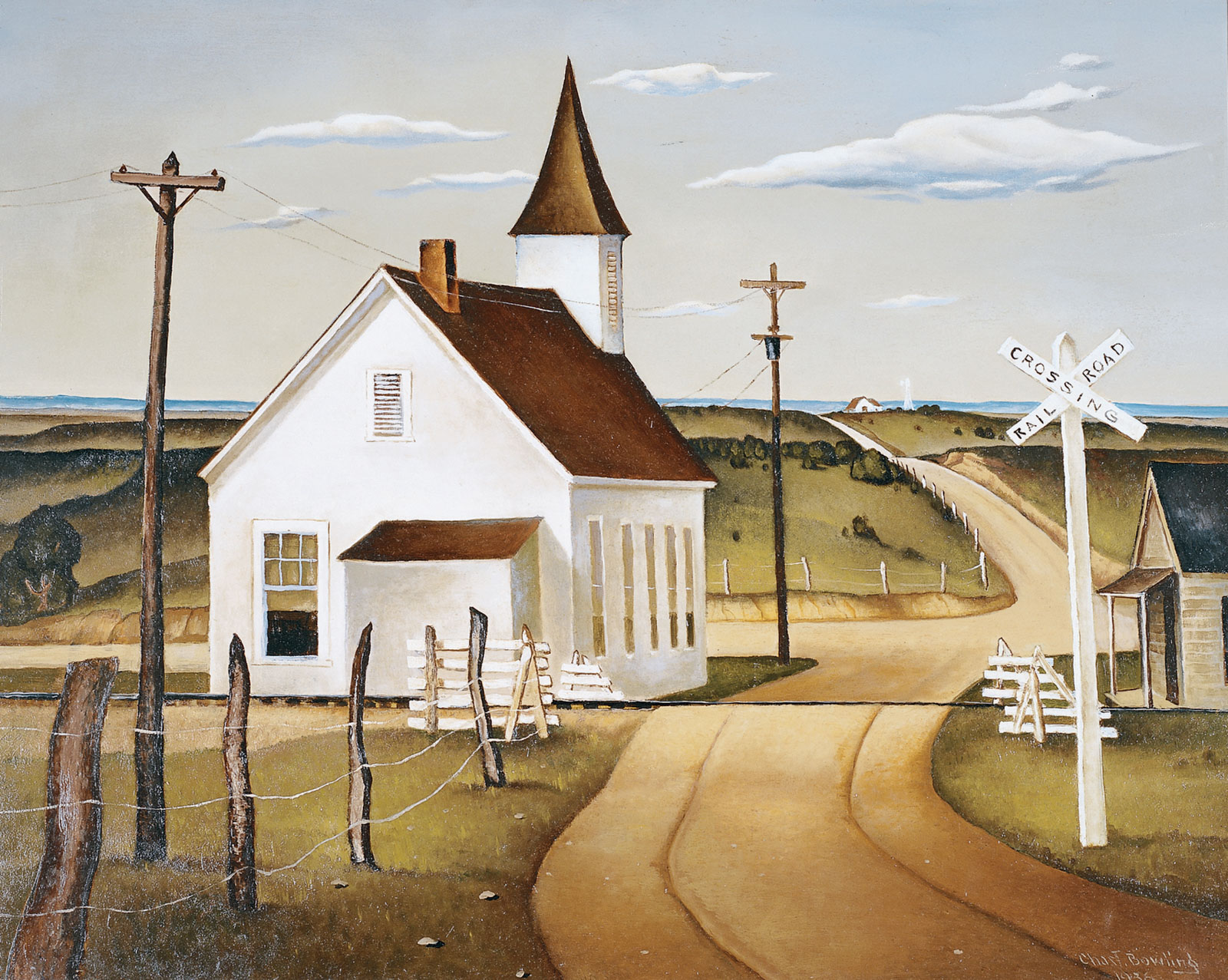 Charles T. Bowling (1891-1985), Church at the Crossroads, 1936. Oil on board, 24 x 30 in. Private Collection, courtesy of the Dallas Museum of Art
The final area of the exhibition showcases passenger-focused works created between 1900 and 1950, including Edmund Charles Tarbell’s In the Station Waiting Room, Boston, ca. 1915; and Allan Rohan Crite’s The Carstop from 1940.
“Paintings from this moment capture the shift in perspective,” notes the museum. “In the 19th century, representations of people associated with the railroad were most often limited to executives and owners, but after the Depression the laborer and everyday rider garnered artists’ attention…These subjects increasingly dominated images of the railroad as they appeared throughout the American imagination.”
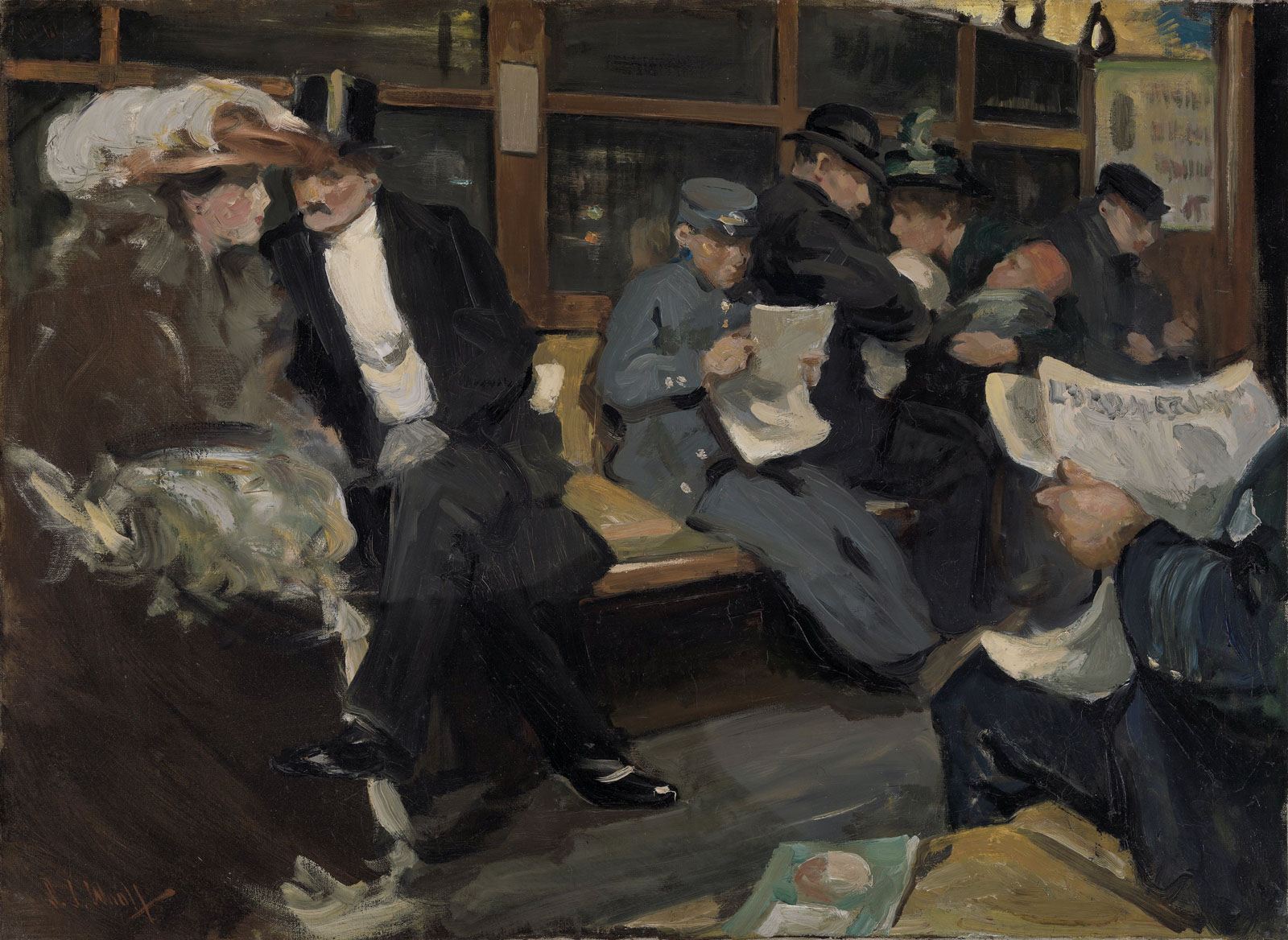 Samuel Woolf (1880-1948), The Under World, ca. 1909-10. Oil on canvas, 22½ x 30½ in. Virginia Museum of Fine Arts, Richmond, Funds provided by a private Richmond foundation. 95.101. Photography by Travis Fullerton. © Virginia Museum of Fine Arts.
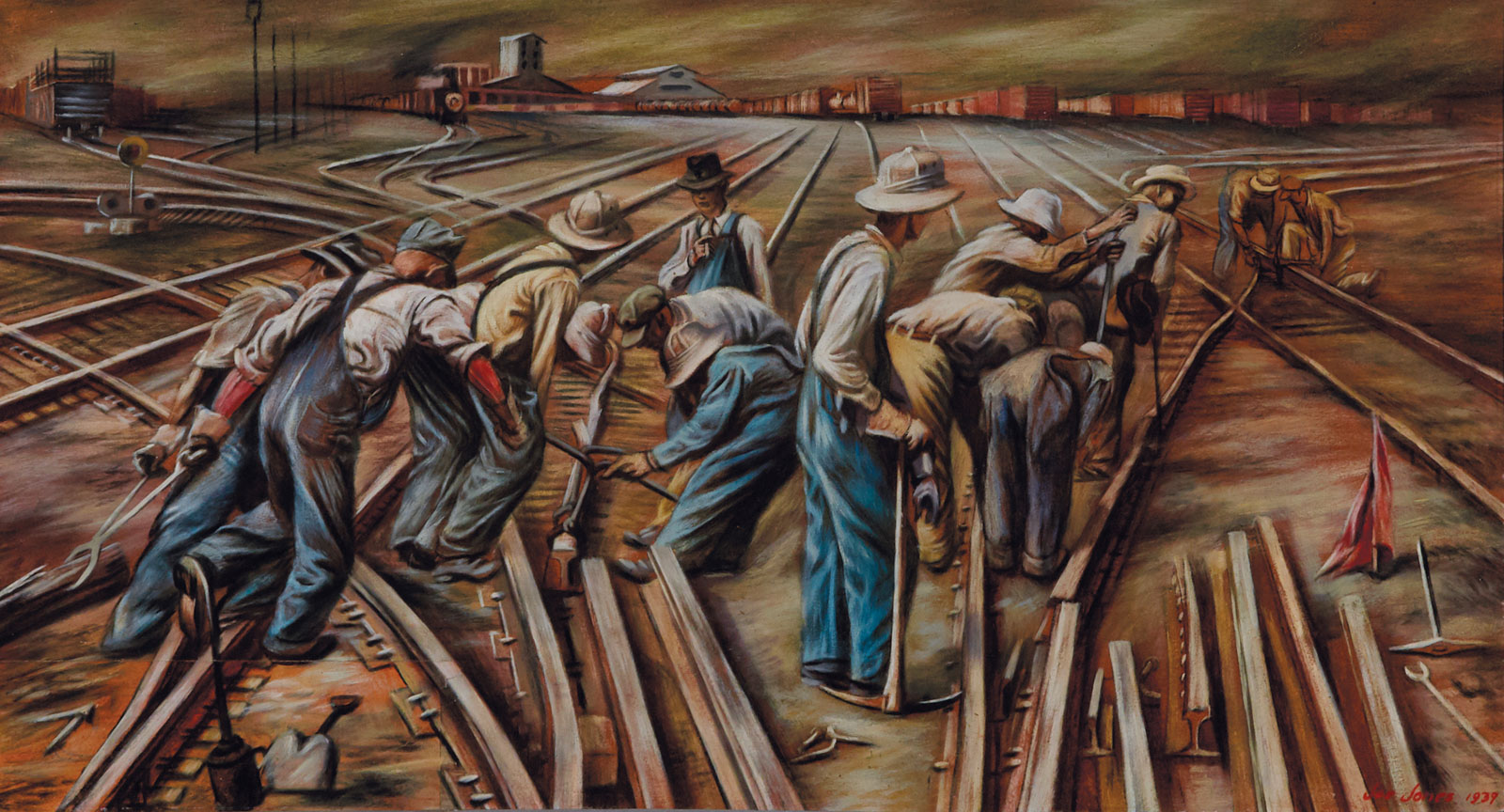 Joe Jones (1909-1963), All the Live Long Day, 1939. Oil on paper mounted on board, 16 x 295/8 in. Art Gallery of Hamilton; Gift of Mr. Herman H. Levy, O.B.E. 1961. Photography by Mike Lalich, 2017.
All Aboard will travel on to the Dixon Gallery & Gardens in Memphis in early November, followed by the Joslyn Art Museum in Omaha, Nebraska.
Denenberg says, “The exhibition is a wonderful collaboration among museum colleagues that allows all three institutions to leverage their collections to create an impactful and rigorous survey of an important part of this country’s history viewed through the eyes of artists.”
Powered by Froala Editor