The word “landscape,” which comes from the Dutch “landschap,” was first used in the context of a specific art genre in the early 17th century. When the Dutch Republic declared independence from Spain in 1588, the growth of capitalism and the country’s wealth revolutionized painting and ushered in a new era now called the Dutch Golden Age, which lasted until 1672. It was during this time that the genre was flourishing in the Netherlands, where pure landscape paintings were appreciated and accepted as fine art, centuries before the rest of the Western art world would follow suit.
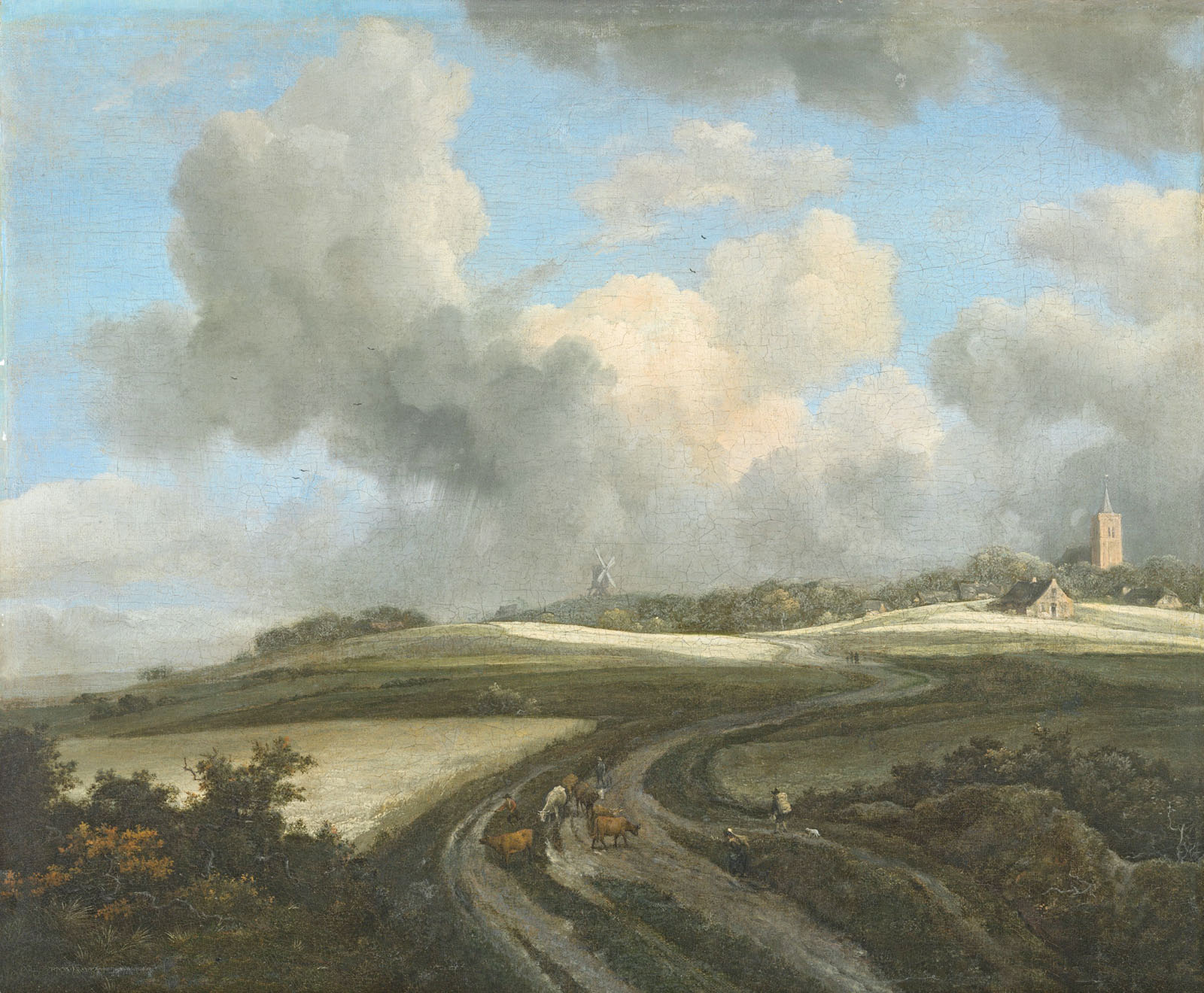 Jacob van Ruisdael (Dutch, 1628-1682), Road trough Grain Fields near the Zuider Zee, ca. 1660-1662. Oil on canvas. 17½ x 21½ in. Museo Nacional Thyssen-Bornemisza, Madrid Inv. no. 357 (1934.18).
In other parts of Europe, until the 19th century, landscapes served as the backdrop for narrative paintings—often religious or mythical in nature and in which figures were the main subject. These types of pictures were especially popular in Italy and France; while in England, landscapes more often formed the background for portraits, especially of wealthy landowners.
After the Renaissance, religious art slowly fell out of favor, in part due to the Protestant Reformation, which shifted artists’ focus to more secular themes and patrons. This trend continued throughout the 18th and 19th centuries, as a new romanticism emphasizing subjectivity, individualism and an appreciation for nature took hold of the collective imagination—eventually elevating landscape painting to the highly regarded, autonomous genre it is today.
Artists on both sides of the Atlantic were responsible for radically shifting the widely held perception of landscape painting as a secondary art form. French painters in the Barbizon School were establishing a landscape tradition that by the late 1860s would blossom into one of the most influential movements of the century—impressionism.
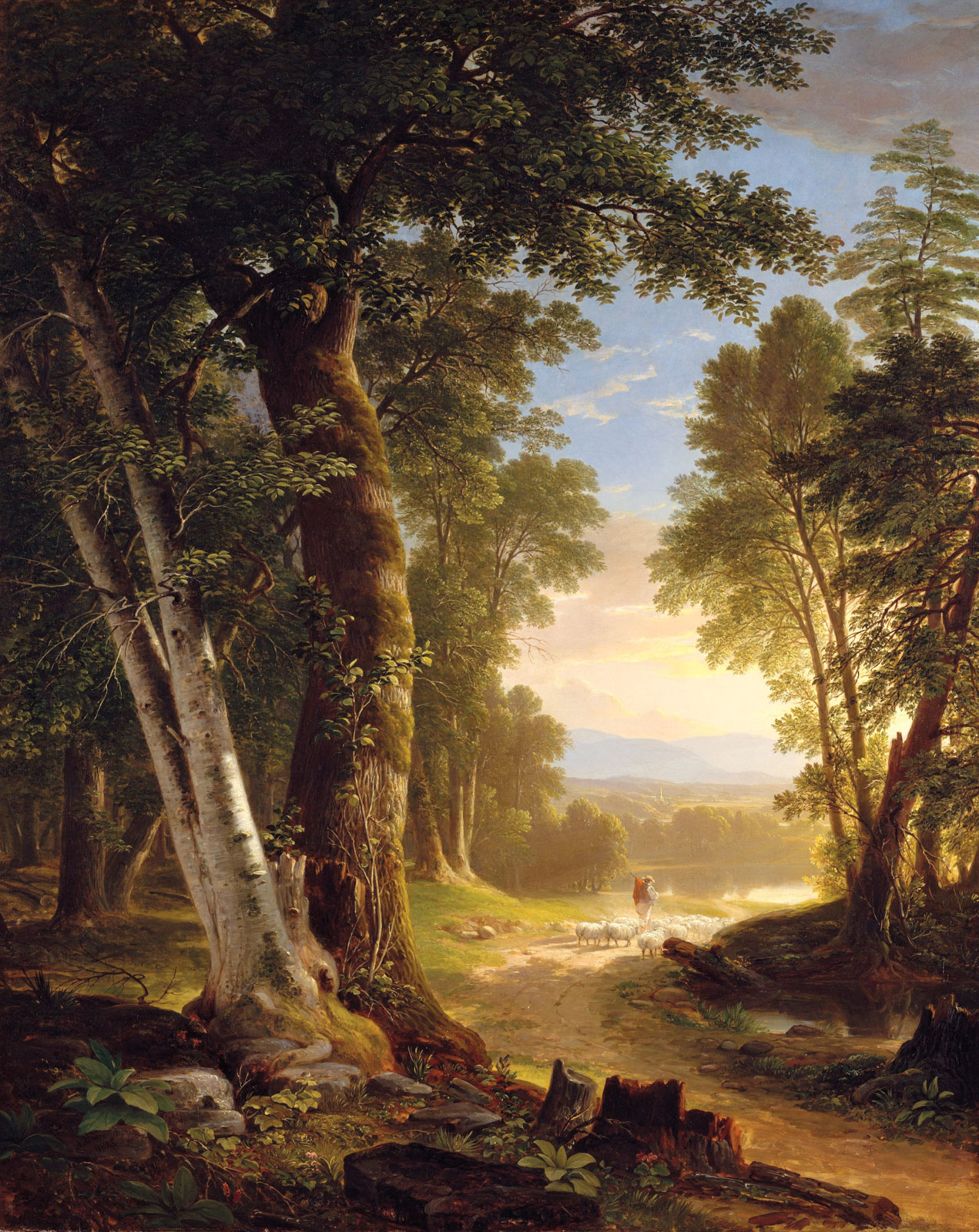 Asher Brown Durand (1796-1886), The Beeches, 1845. Oil on canvas, 603⁄8 x 481⁄8 in. Bequest of Maria DeWitt Jesup, from the collection of her husband, Morris K. Jesup, 1914, The Metropolitan Museum of Art, New York, NY.
In the early part of the 19th century, landscape painting was also beginning to dominate American art. The Hudson River School artists, led by Thomas Cole (1801-48) and Asher B. Durand (1796-1886), with followers such as Frederic Edwin Church (1826-1900) and Albert Bierstadt (1830-1902), embraced the romantic viewpoint and created idealized visions of the country from Upstate New York to the epic terrain of the American West. Working on a massive scale to emphasize the grandeur of the natural world, many of these artists promoted the country as a vast, unspoiled wilderness of abundance and promise—Thomas Moran’s paintings helped persuade Congress to create the first national park in 1872—while others, like Bierstadt, created works that emphasized the fearsome forces of nature.
By the beginning of the 20th century, romantic renderings of the landscape were being replaced by themes of urbanization, industry and a nostalgia for simpler times. In the 1920s, the Ashcan School, led by Robert Henri, zoomed in on the gritty reality of city life; while in the ‘30s, regionalist painters like Grant Wood and Thomas Hart Benton focused on Midwest scenes of rural and agrarian life.
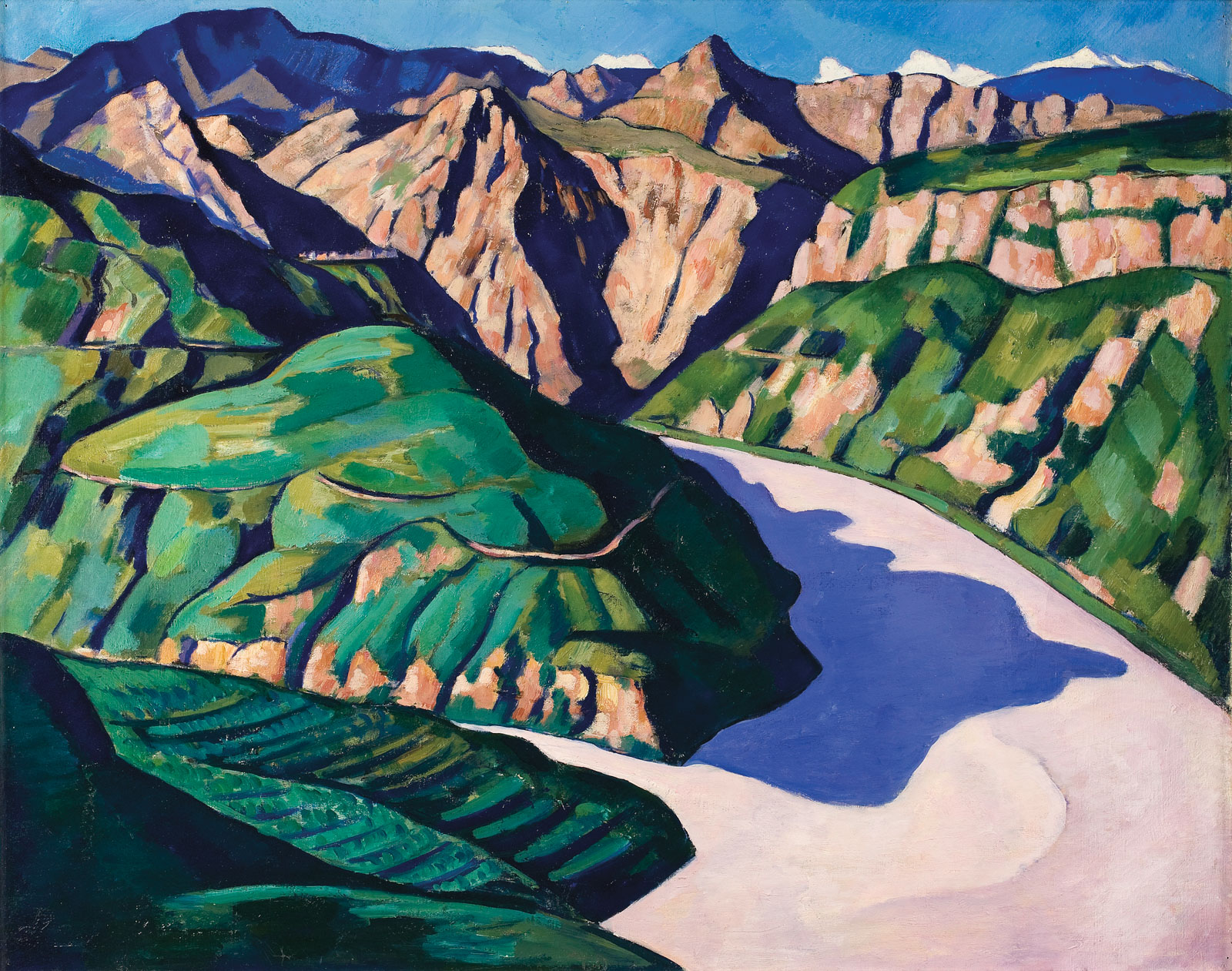 Marsden Hartley (1877-1943 ), Landscape, Vence, 1925-1926. Oil on canvas, 251/2 x 317⁄8 in. Bequest of Hudson D. Walker from the Ione and Hudson D. Walker Collection, Weisman Art Museum, Minneapolis, MN.
Modernists, influenced by the European avant-garde, again approached landscapes in innovative ways. Georgia O’Keeffe (1887-1986) gained international recognition for her meticulous paintings of floral and desert-inspired landscapes, which she distilled into fluid, organic forms. Marsden Hartley (1877-1943) and John Marin (1870-1953) captured Maine’s rugged coastline and churning seas with bold, vigorous brushstrokes. Precisionists like Charles Sheeler, Ralston Crawford, Charles Demuth and Joseph Stella used soft but tight brushwork to depict the clean lines and blocky forms of the new industrial landscape. Edward Hopper applied a looser painterly style to both urban and rural landscapes; while the reductive style of artists like Milton Avery presaged works by abstract impressionists like Mark Rothko.
In the remainder of this special section, we highlight works that represent the ever evolving, but always enduring, genre of landscape painting, from traditional, early examples through the shifting modernist visions of the most distinguished historic American artists. Read on to discover fresh-to-market landscape works now available at some of the finest galleries and dealers of American art.
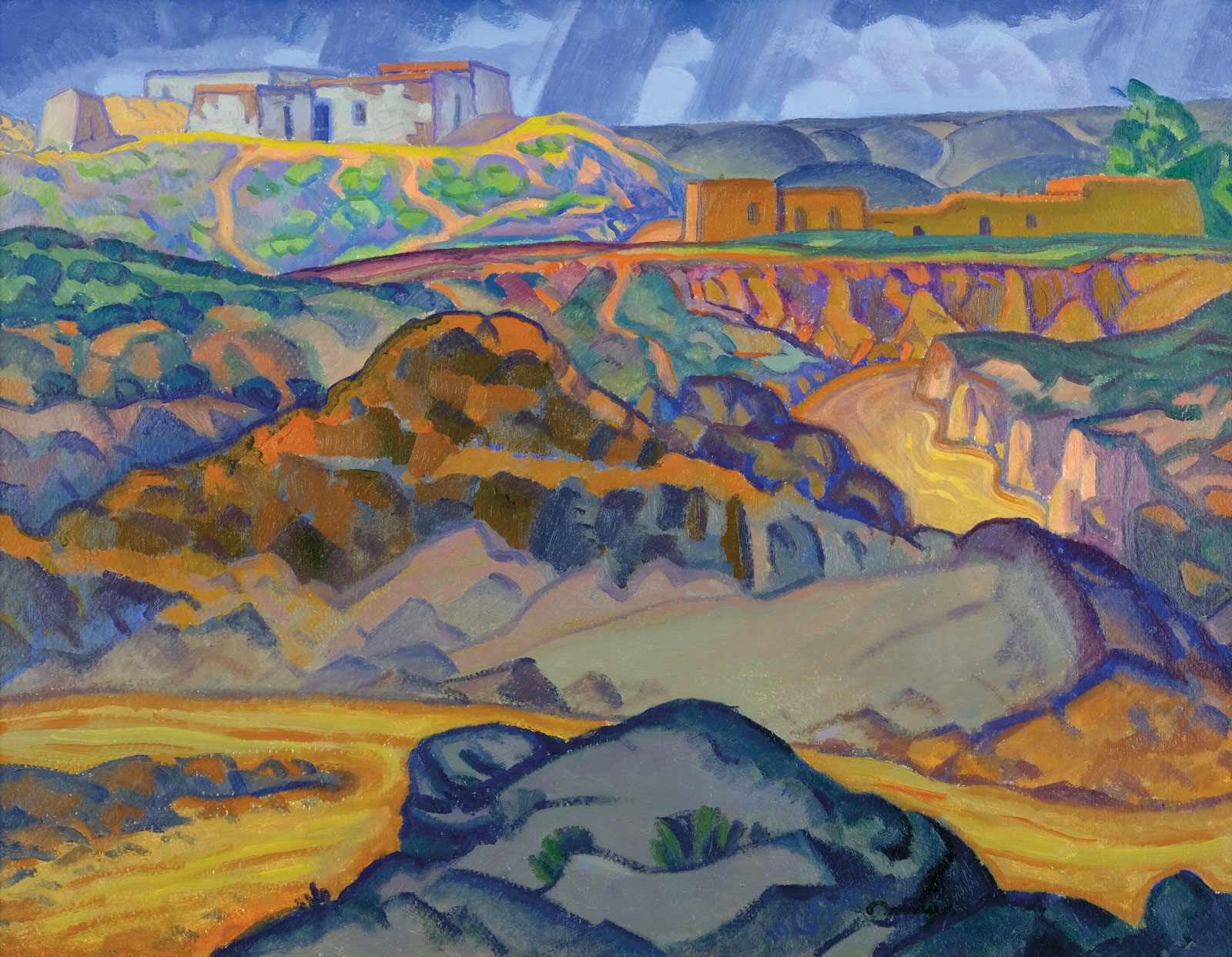 Addison Rowe Fine Art, Arroyo No. 4, 1922. Oil on canvas board 23 x 48 in., signed lower right, by Raymond Jonson (1891-1982).
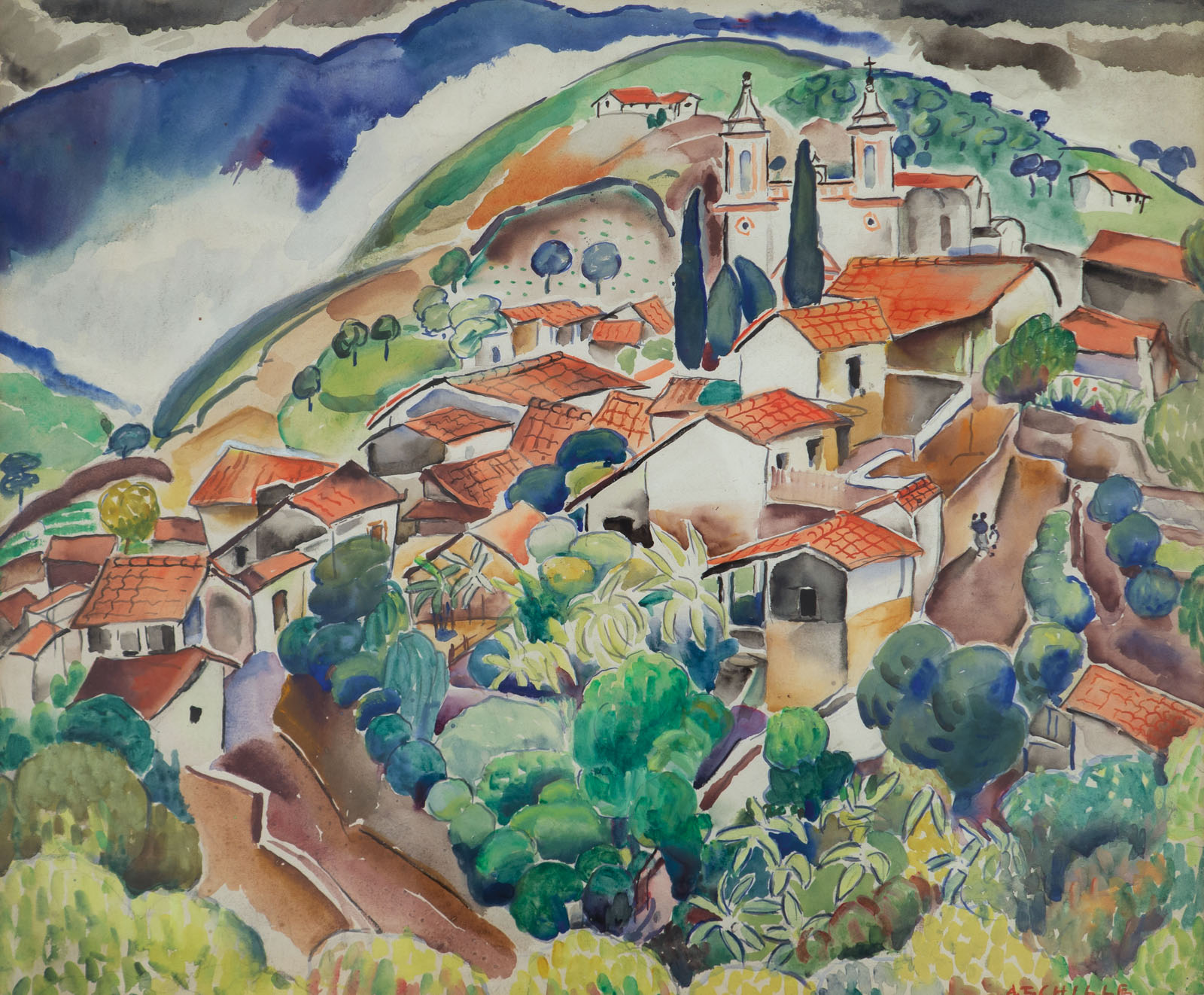 Vose Galleries, Mexican Hilltown. Watercolor on paper, 21 x 25¼ in., by Alice Schille (1869-1955).
Addison Rowe Gallery, located a few blocks off the Plaza in Santa Fe, New Mexico, specializes in innovative and important works by American and Southwest modernists, with a focus on promoting exceptional art relevant throughout the ages. Among the gallery’s available landscapes are Raymond Jonson’s oil Arroyo No. 4 from 1922, and Ward Lockwood’s watercolor Winter Orchard.
Jonson (1891-1982) was one of the foremost 20th-century nonobjective painters in America. A 1922 summer visit to Santa Fe prompted Jonson’s permanent move to New Mexico two years later. For 25 years, he taught and painted in Santa Fe, producing rhythmic, sculpturally modeled landscapes, suggestive of a life force underlying the land, of which Arroyo No. 4 is an excellent example. He founded many artist groups in both Chicago and New Mexico, including the Transcendental Painting Group and Cor Ardens. Greatly influenced by Wassily Kandinsky and the Bauhaus artists, he advanced new technologies in American art (e.g. the use of the airbrush and polymer paints), and devoted himself to exploring the spiritual in art.
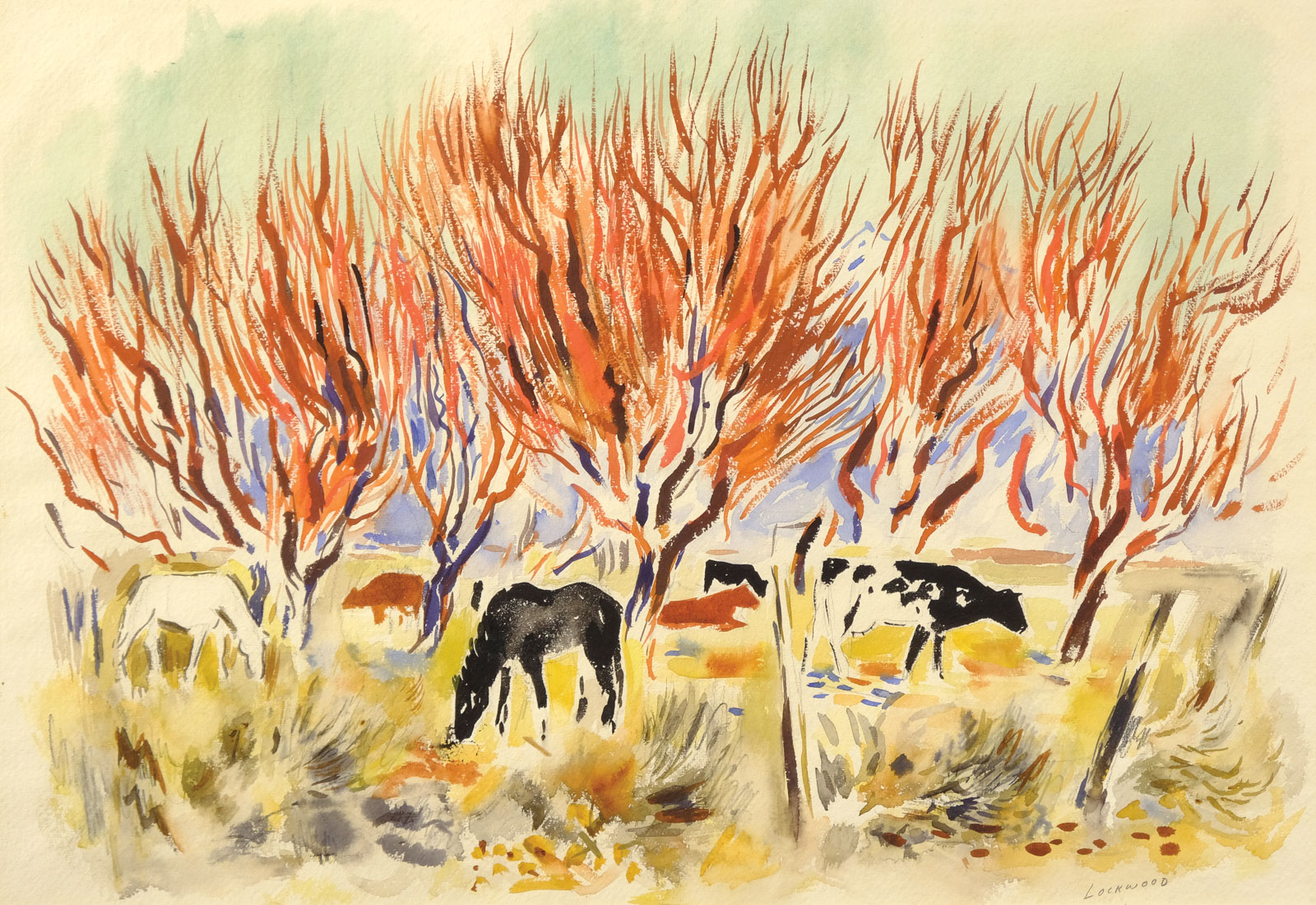 Addison Rowe Fine Art, Winter Orchard. Watercolor on paper, 157⁄8 x 23¼ in., signed lower right, by Ward Lockwood (1894-1963).
Throughout his career, Lockwood (1894-1963) employed many different styles including expressionism and cubism to surrealism and constructivism, reflecting the ever-changing American aesthetic of the 20th century. During his early years in Taos, New Mexico, Lockwood spent most of his time fishing and painting with Kenneth Adams, Andrew Dasburg and Loren Mozley. When John Marin visited Taos in 1929, he found an easy camaraderie with this group of fisherman-painters. Lockwood, who was already partial to using watercolors, was greatly inspired by Marin. These experiences encouraged Lockwood to develop a distinct modernist style of painting. Although his fame was overshadowed by many of the Taos artists, his influence was evident, and he was a key figure in the Taos community.
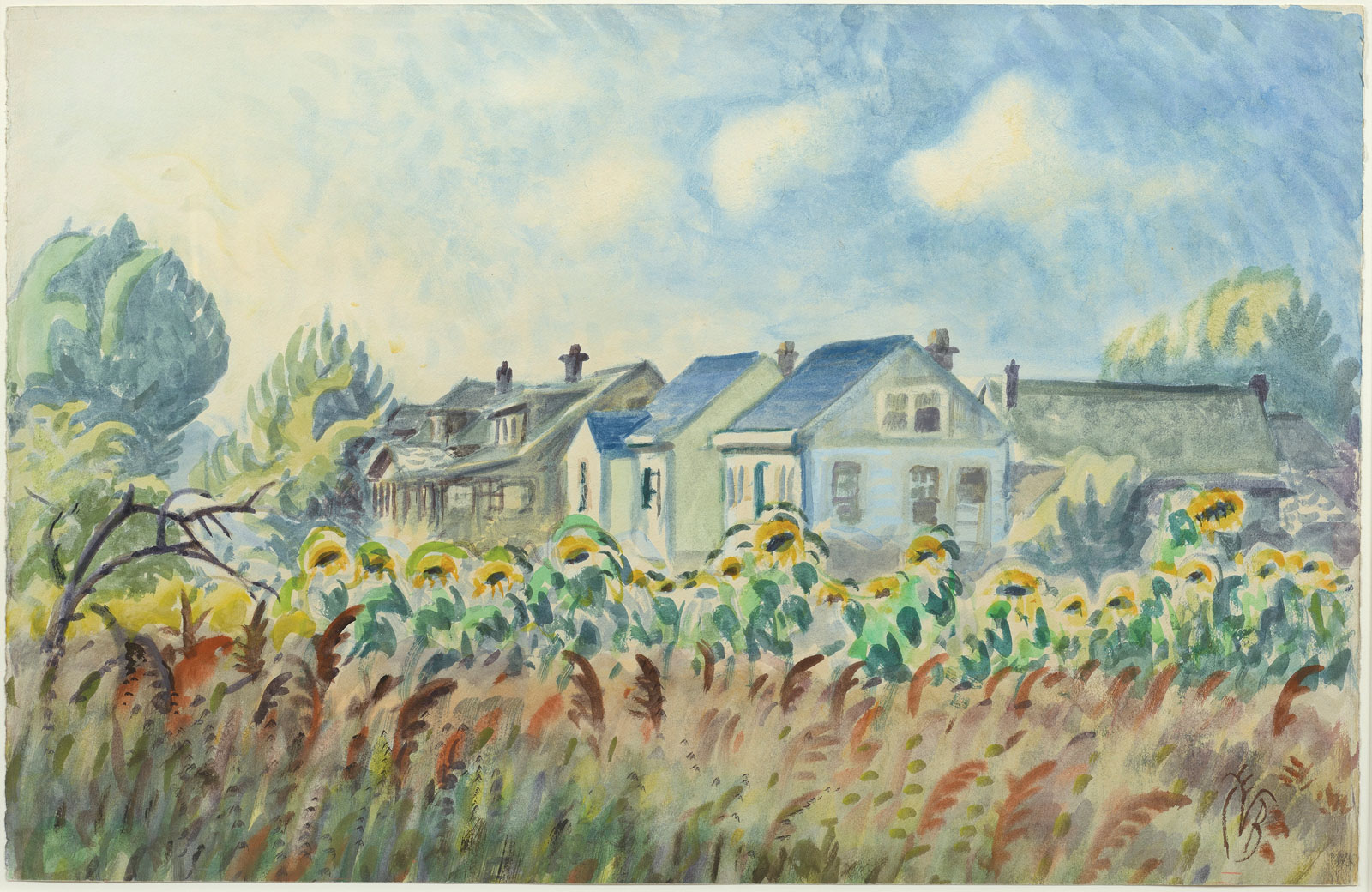 Debra Force Fine Art, Sunflower Row, ca. 1942. Watercolor on paper, 19½ x 301⁄8 in., by Charles Ephraim Burchfield (1893-1967).Located on New York’s Upper East Side, Debra Force Fine Art specializes in the finest quality American paintings, drawings and sculpture from the 18th, 19th and 20th centuries, among them are works by Charles Burchfield (1893-1967) and Julie Hart Beers (1835-1913). “Burchfield was drawn to painting rural landscapes beginning in 1915 and this remained his primary subject through the 1960s,” explains gallery director Bethany Dobson. “Depictions of changes in seasons and weather were of particular interest, and in Sunflower Row, 1942, he conveys the hopeful warmth of a late spring or summer day as viewed from his backyard in Gardenville, New York.
“Nature’s Beauty is an example of Julie Hart Beers’ exquisitely detailed landscape paintings, incorporating soft, atmospheric tones with the precision of pre-raphaelite renderings of vegetation,” Dobson continues. “The sister of artists William Hart and James McDougal Hart, Beers set up a studio in New York City and led sketching trips for other female artists in the Hudson River Valley, Vermont and the Adirondacks.” When considering a landscape painting, the gallery encourages clients to focus on scenes that depict a place where they have a connection or those that evoke a memory.
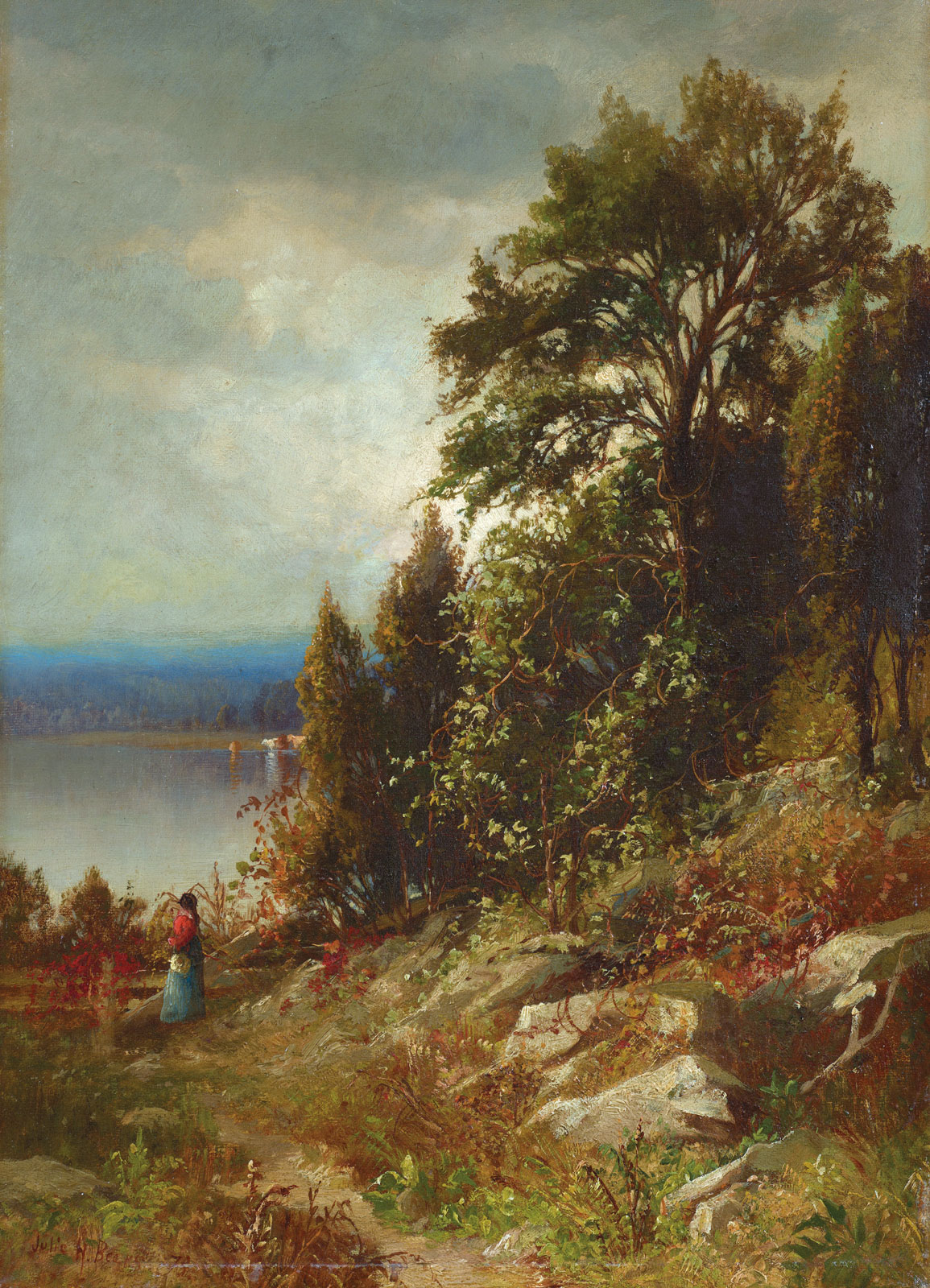 Debra Force Fine Art, Nature’s Beauty, 1873. Oil on canvas, 151⁄8 x 10⁷⁄8 in., by Julie Hart Beers (1835-1913).
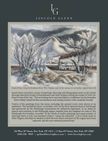
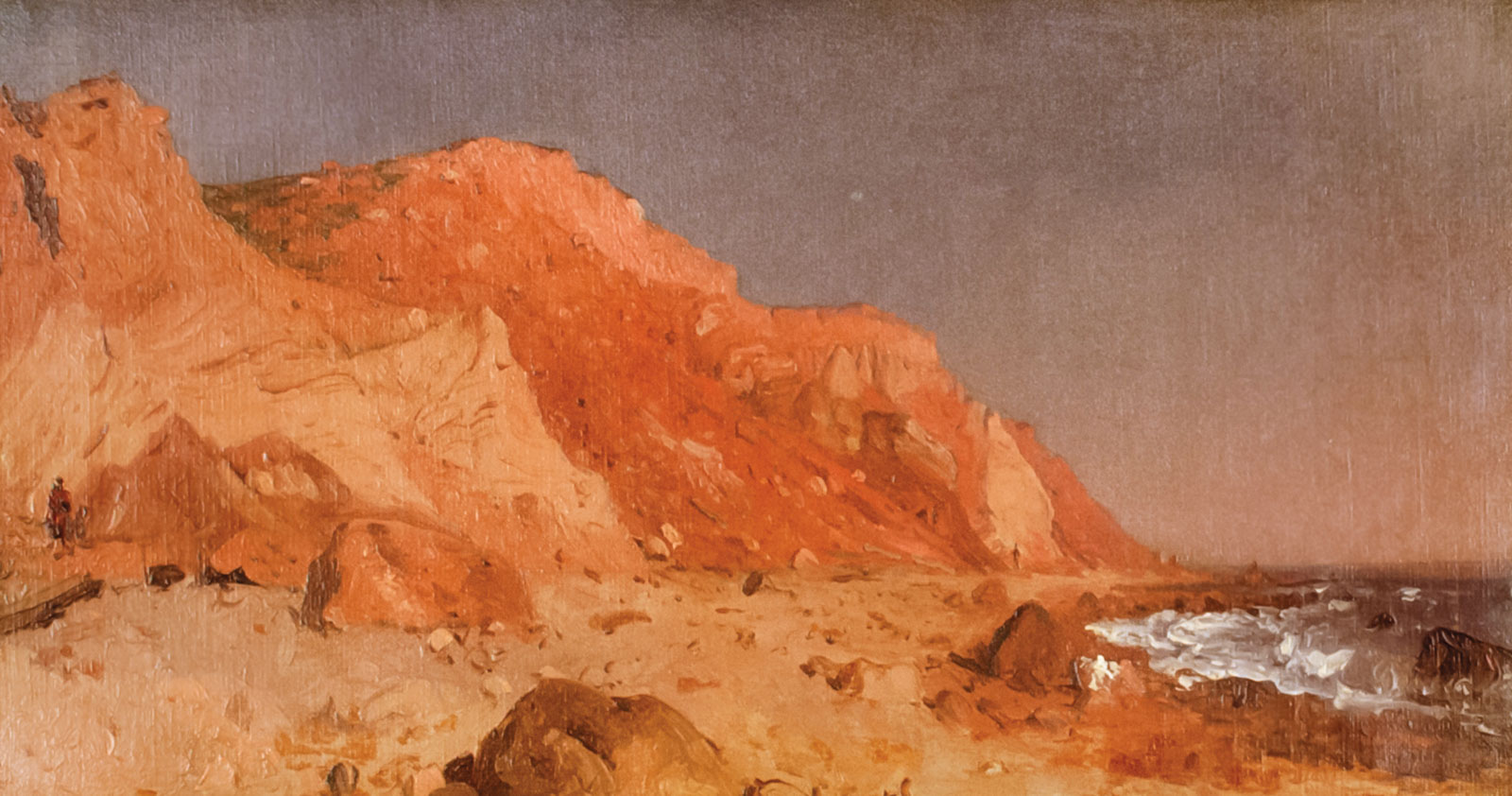 Lincoln Glenn Gallery, A Sketch of Clay Bluffs on No Man’s Land, 1877. Oil on canvas 91⁄16 x 163/4 in., by Sanford Robinson Gifford (1823-1880).
Hawthorne Fine Art, a by-appointment gallery in New York City, also specializes in 19th and early 20th century American art, with a focus on Hudson River School and impressionist paintings. They also place a strong emphasis on historic women artists, two of whom are highlighted here. Born in New Haven, Connecticut, artist Elizabeth Gilbert Jerome (1824-1910) studied in Hartford under Julius T. Busch, at the National Academy of Design, and in the studio of Emanuel Leutze. “Tropical Landscape, 1873, is one of several works by Jerome featuring a South American landscape,” notes gallery research associate Megan Bongiovanni. “The painting reveals the artist’s interest in foreign culture and travel. While she was never afforded the opportunity for such travel, the South American works of Hudson River School artist Frederic Edwin Church provided her with ample inspiration.” While a direct link between the artists has not been found, they lived near to one another in Hartford.
Edith Walker Cook (1839-1902) was born into a prominent New Jersey family. She was raised in Hoboken, a short walk from the Hudson River. “She may have studied under Hudson River School artist, Jervis McEntee,” says Bongiovanni. “The elder artist and his wife were close friends of the Cook family. Inspired by Cook’s love for the outdoors, Autumn Landscape, 1865, depicts two women preparing to ascend a steep hike into the forest. Cook and her siblings were avid mountain climbers. As members of the Appalachian Mountain Club, they contributed detailed accounts of their excursions in the White Mountains to the club’s journal Appalachia.”
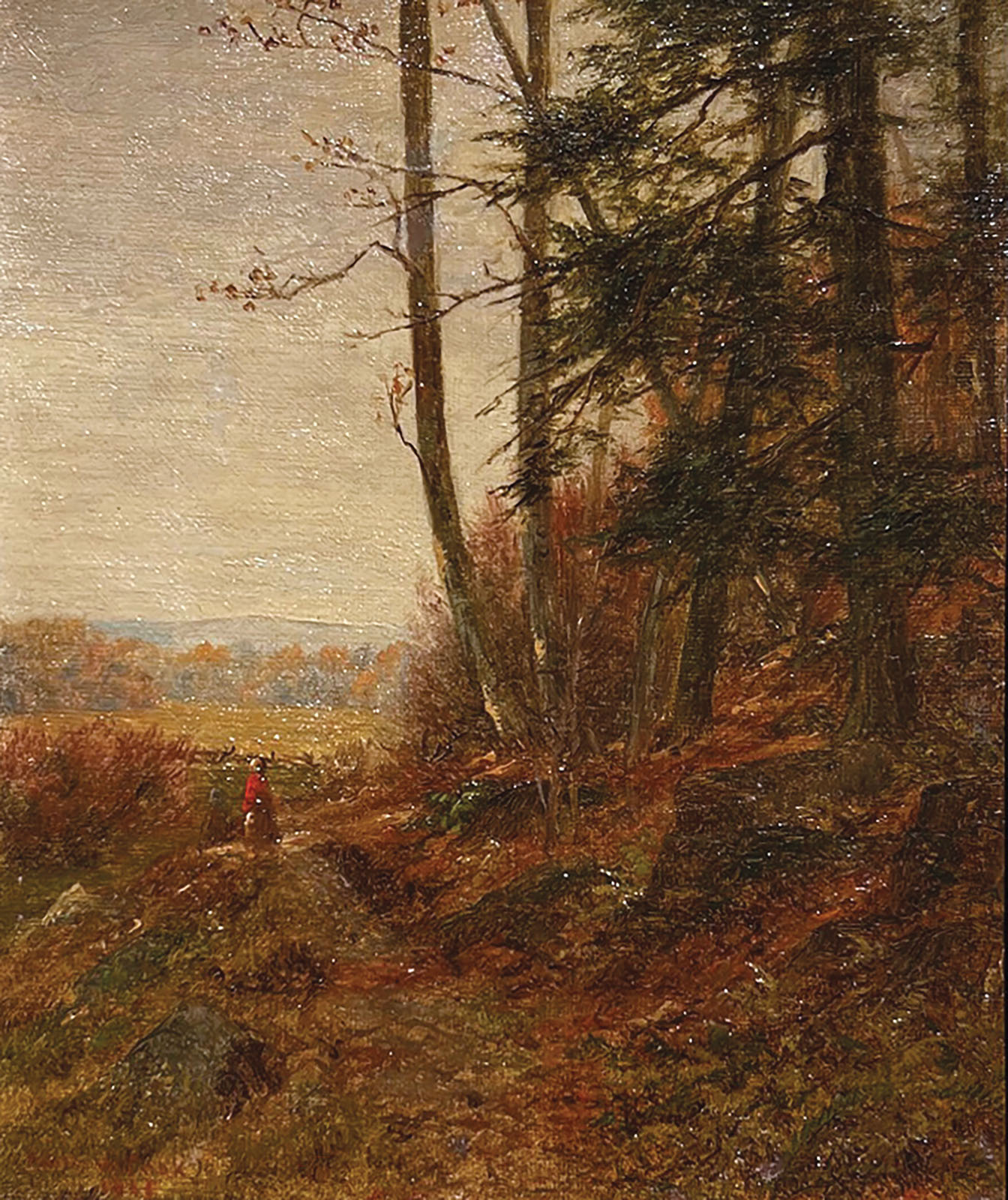 Hawthorne Fine Art, Autumn Landscape, 1865. Oil on canvas, 7½ x 6¾ in., signed and dated lower left, by Edith Walker Cook (1839-1902).When purchasing a 19th-century landscape, Hawthorne Fine Art suggests paying close attention to the date of the painting and where it falls within the artist’s oeuvre.
“My introduction to American art was through landscape paintings and especially the Hudson River School,” says Lincoln Glenn Gallery partner Eli Sterngass. “I always feel a special spark when admiring a work that reminds me of places I’ve traveled with friends and family, or the views near my hometown in Upstate New York. I think collectors should also experience that blissful sentiment when acquiring and adding a landscape to a collection.”
Available now at Lincoln Glenn are landscapes by Sanford Robinson Gifford (1823-1888) and Philip Little (1857-1942). “Gifford completed as many as six paintings from one recorded visit he made in October 1877 to the small, uninhabited island known as Nomans Land, southwest of Martha’s Vineyard,” explains Sterngass. “The artist’s primary objective may have been fishing, an avid pursuit of Gifford’s that he depicted in three of the paintings of Nomans Land, including the present work.”
The majority of Little’s exhibited paintings were landscapes or marines set in Maine and Massachusetts. Sterngass says, “During his lifetime, the artist was recognized not only for his paintings of Salem and its environs, but also for his love of the sea and sailing vessels and their relationship with light, atmosphere and seasonal changes.”
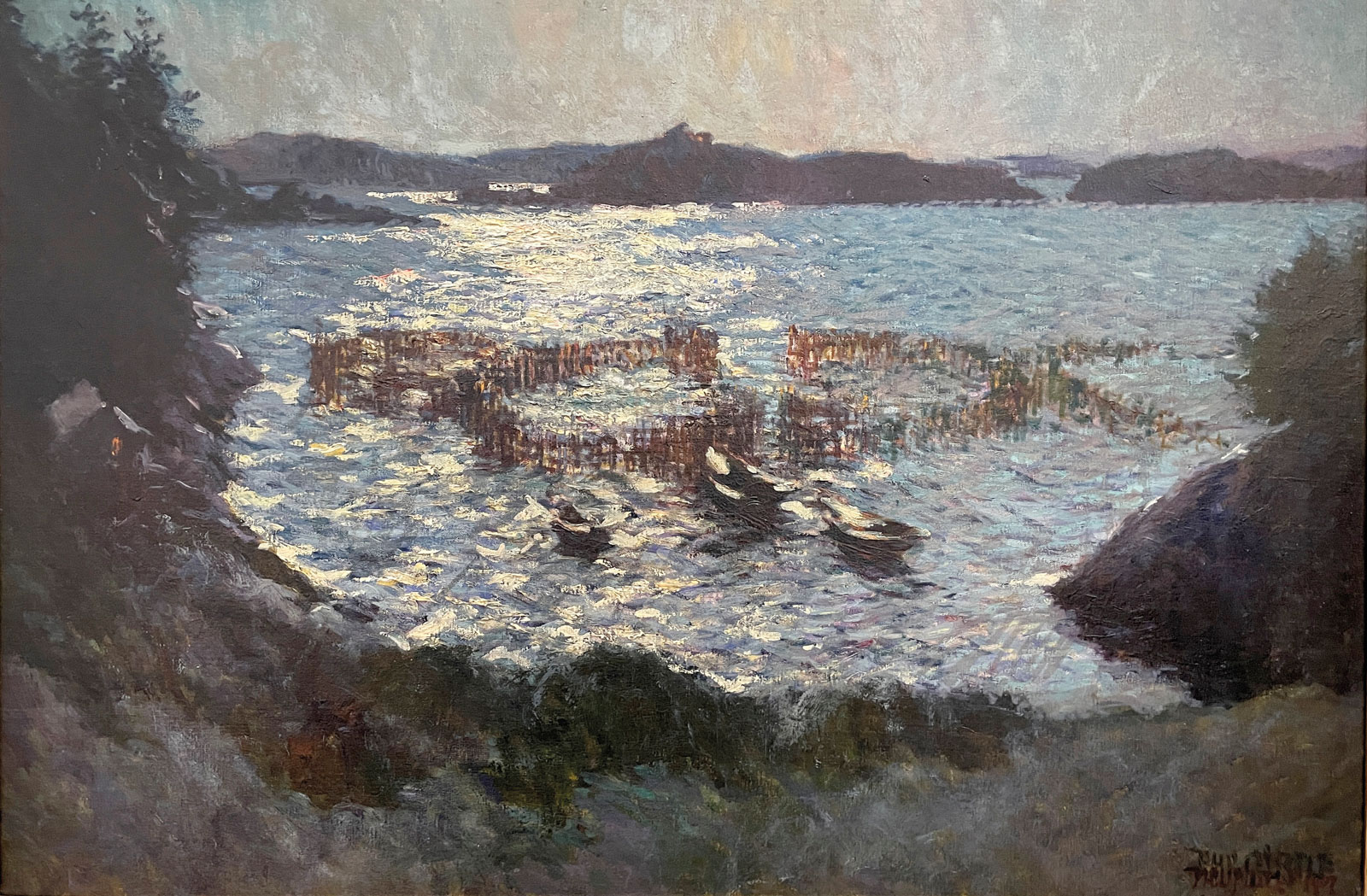 Lincoln Glenn Gallery, September Moon: The Weirs by Moonlight, 1907. Oil on canvas, 26 x 36 in., by Philip Little (1824-1897).
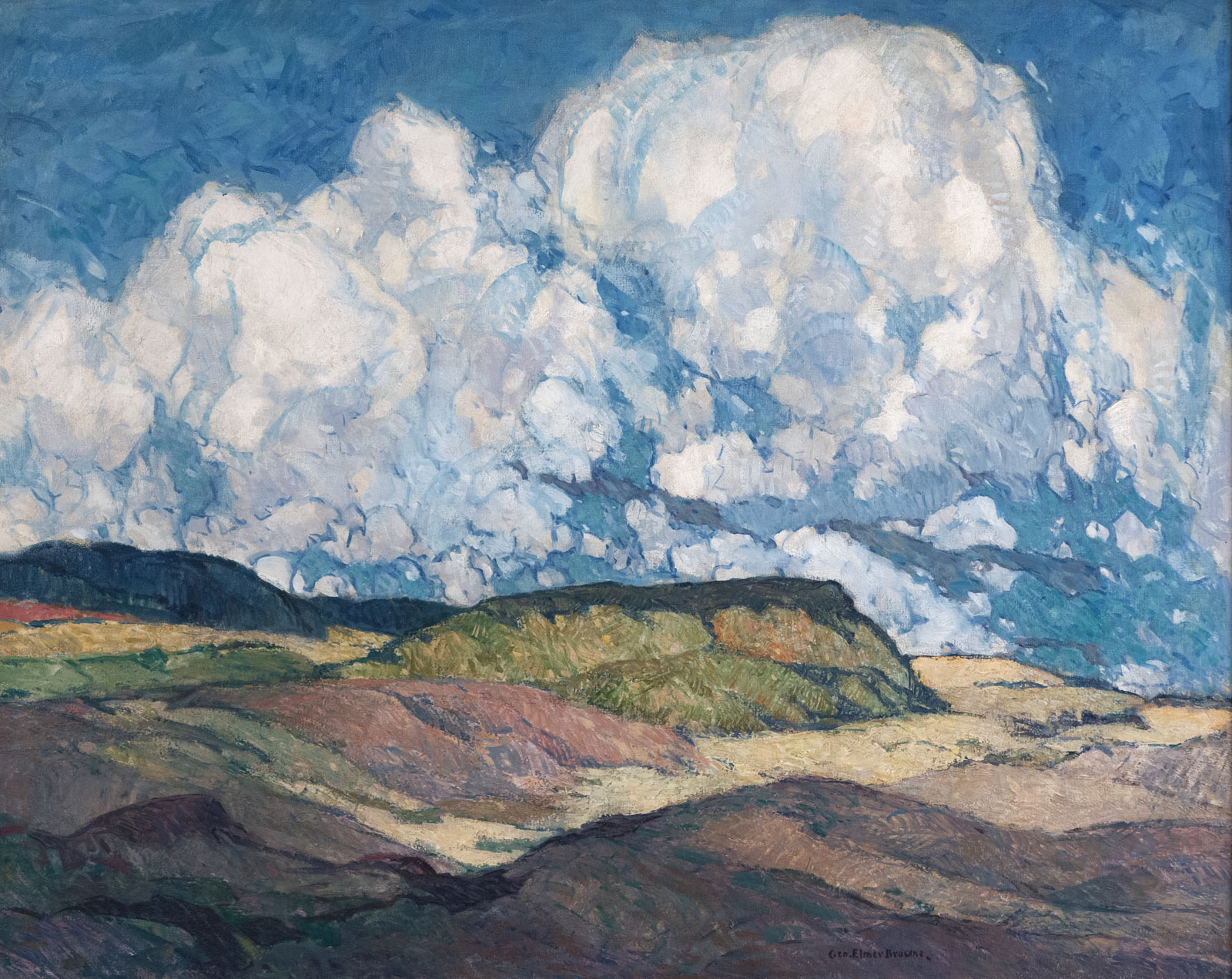 Vose Galleries, The Dunes. Oil on canvas, 401⁄8 x 50¼ in., by George Elmer Browne (1871-1946).
Established in 1841, Vose Galleries is the oldest family-owned gallery in the country. The Boston gallery specializes in top quality 18th, 19th and early 20th-century American realist paintings and works on paper across a broad spectrum of genres. In the landscape category, two works of note are Alice Schille’s Mexican Hilltown, circa 1927; and The Dunes by George Elmer Browne (1871-1946).
“Alice Schille was a master of watercolor,” shares a gallery representative. “Her fresh, beautifully colored depictions of beaches, villages, gardens, children and city streets earned her over a dozen awards, including top prizes at the Corcoran Gallery of Art, the Pennsylvania Academy of the Fine Arts and the Panama-Pacific Exposition of 1915. Mexican Hilltown offers a fascinating amalgam of several influences on Schille’s personal approach to her art. The verticality of the village and its interlocking forms evokes Cezanne’s geometric landscapes while the impressionist, almost pointillist, rendering of the foreground trees shows her appreciation for Prendergast’s dappled brushwork in his own watercolors. However, the painting is entirely Schille’s creation, showing her keen eye for composition, her embrace of bold color, and her fearless pigment application of wet-on-wet watercolor to achieve depth and luminosity.”
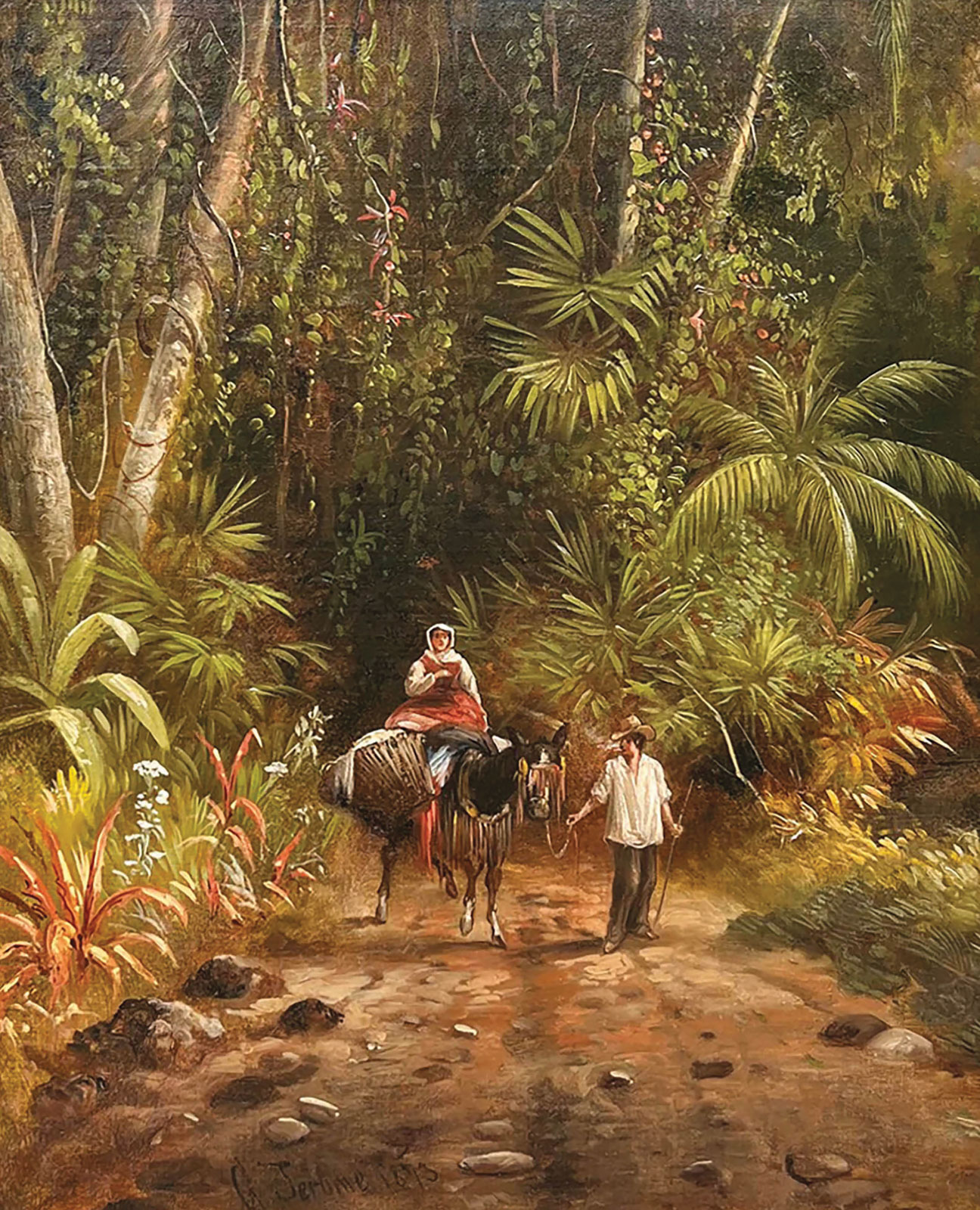 Hawthorne Fine Art, Tropical Landscape, 1873. Oil on canvas, 22¼ x 18¼ in., signed and dated lower center, by Elizabeth Gilbert Jerome (1824-1910).
Browne was an integral part of the Provincetown community. He became a full National Academician in 1927, and exhibited nationally and internationally, including at the Boston Art Club, the National Academy of Design, the Pennsylvania Academy of the Fine Arts, the Corcoran Gallery in Washington, D.C. and the Paris Salon. “The Dunes embodies the artist’s gift for rendering atmosphere, evidenced by his brilliant interpretation of the grandiose clouds and rolling dunes,” continues the gallery representative. “Browne’s use of strong outlines and hatched brushstrokes gives the large-scale painting a sense of energy and vitality, his quick, decisive marks imbuing movement throughout the canvas.”
Featured Galleries
Addison Rowe Gallery
229 E. Marcy Street
Santa Fe, NM 87505
t: (505) 982-1533
addart@addisonrowe.com
www.addisonrowe.art
Debra Force Fine Art
13 E. 69th Street, Suite 4F
New York, NY 10021
t: (212) 734-3636
info@debraforce.com
www.debraforce.com
Hawthorne Fine Art
Manhattan Showroom
By Appointment Only
t: (212)731-0550
info@hawthornefineart.com
www.hawthornefineart.com
Lincoln Glenn Gallery
17 E. 67th Street, Suite 1A
New York, NY 10065
t: (646) 764-9065
www.lincolnglenn.com
Vose Galleries
238 Newbury Street
Boston, MA 02116
t: (617) 536-6176
info@vosegalleries.com
www.vosegalleries.com
Powered by Froala Editor