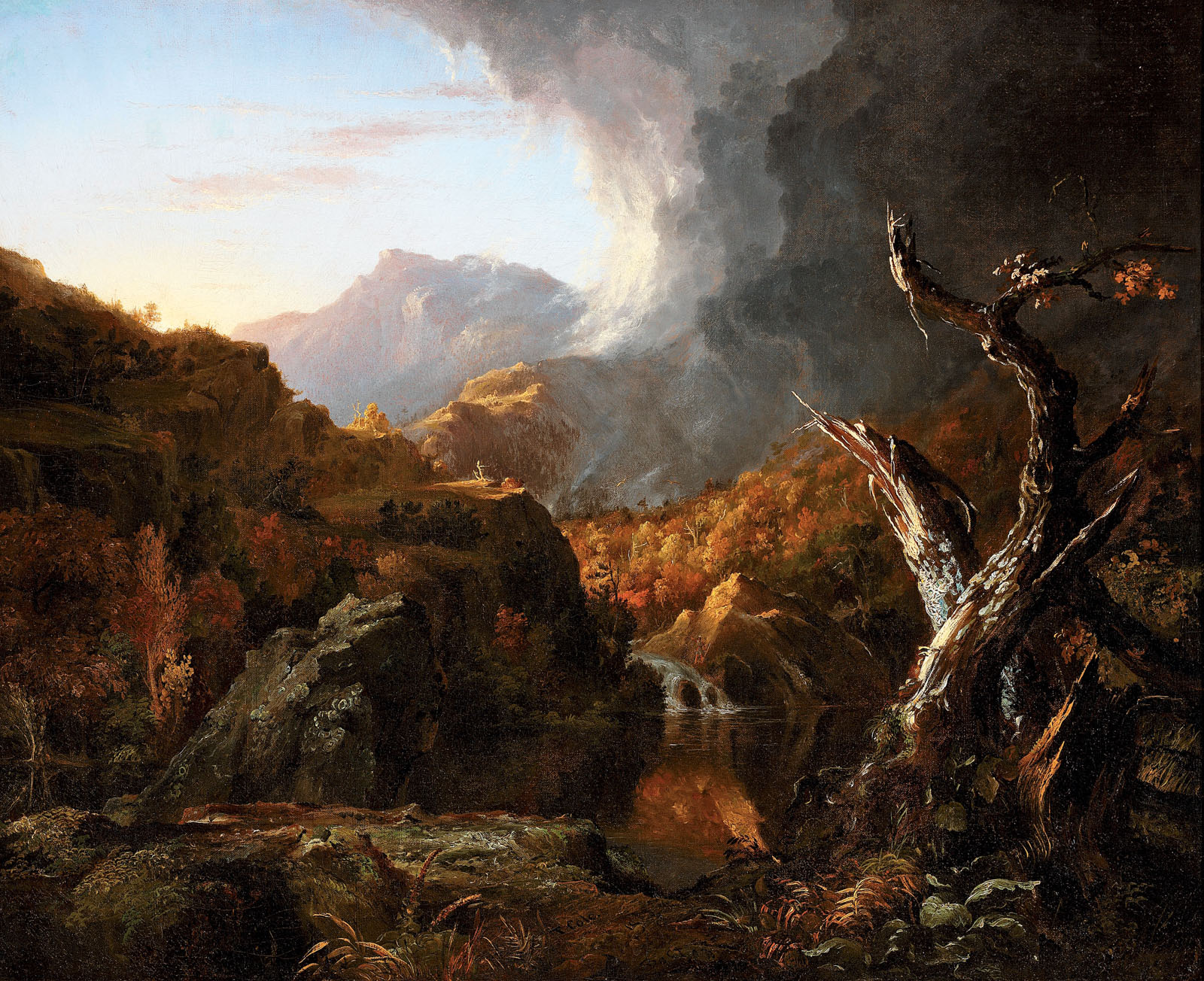
 Thomas Cole (1801-1848), Landscape (Landscape with Tree Trunks), 1828. Oil on canvas, 261/8 x 321/4 in. RISD Museum, Providence, Rhode Island, Walter H. Kimball Fund, 30.063.
American Art: Collecting and Connoisseurship
General Editor: Stephen M. Sessler with foreword by Elizabeth Broun, PhD (Merrell Publishers, Autumn 2020). Hardback with jacket, 304 pages with 180 illustrations, $70.
Despite its narrative heft and a host of very beautiful images, I can personally attest that American Art: Collecting and Connoisseurship fits a backpack as readily as it adorns a coffee table. Yet, because it was published prior to the pandemic, it seemed worthwhile to revisit it in light of the seismic shifts in the arts—not just in the market—that have occurred over the past four years. The purpose of art, its role in a turbulent world, and the place and responsibilities of artists, museums and scholarship stand at the cutting edge of culture. NFTs and A.I. alone are reshaping the very definition of the word.
The brainchild of Atlanta art collector Stephen M. Sessler, who edited the volume, American Art: Collecting and Connoisseurship was unusual and perhaps unique among fine art books in that it was both beautiful and useful. Offered by Merrell Publishers under the direction of publisher Hugh Merrell, one of the few remaining keepers of the art book flame, the book was nothing less than a quick course in American art history combined with advice from top professionals on every aspect of collecting: the place of galleries, the function of art advisors, how auctions work, scholarship and research, framing, conservation, and a primer on art and law.
Sessler assembled some of the best of the best to contribute to the book. Among them were dealers Lou Salerno, Meredith Ward, Debra Force, Betty Krulik and Joel Rosenkranz; scholars such as Betsy Fahlman, Inge Reist, Tiffiany Elena Washington and Karen Wilkin; art advisor Barbara Guggenheim; framers Tracy Gill and Simeon Lagodich; curators Seth Hopkins, Graham Boettcher and Heather Campbell Coyle; and lawyers Thomas C. and Charles Danziger.
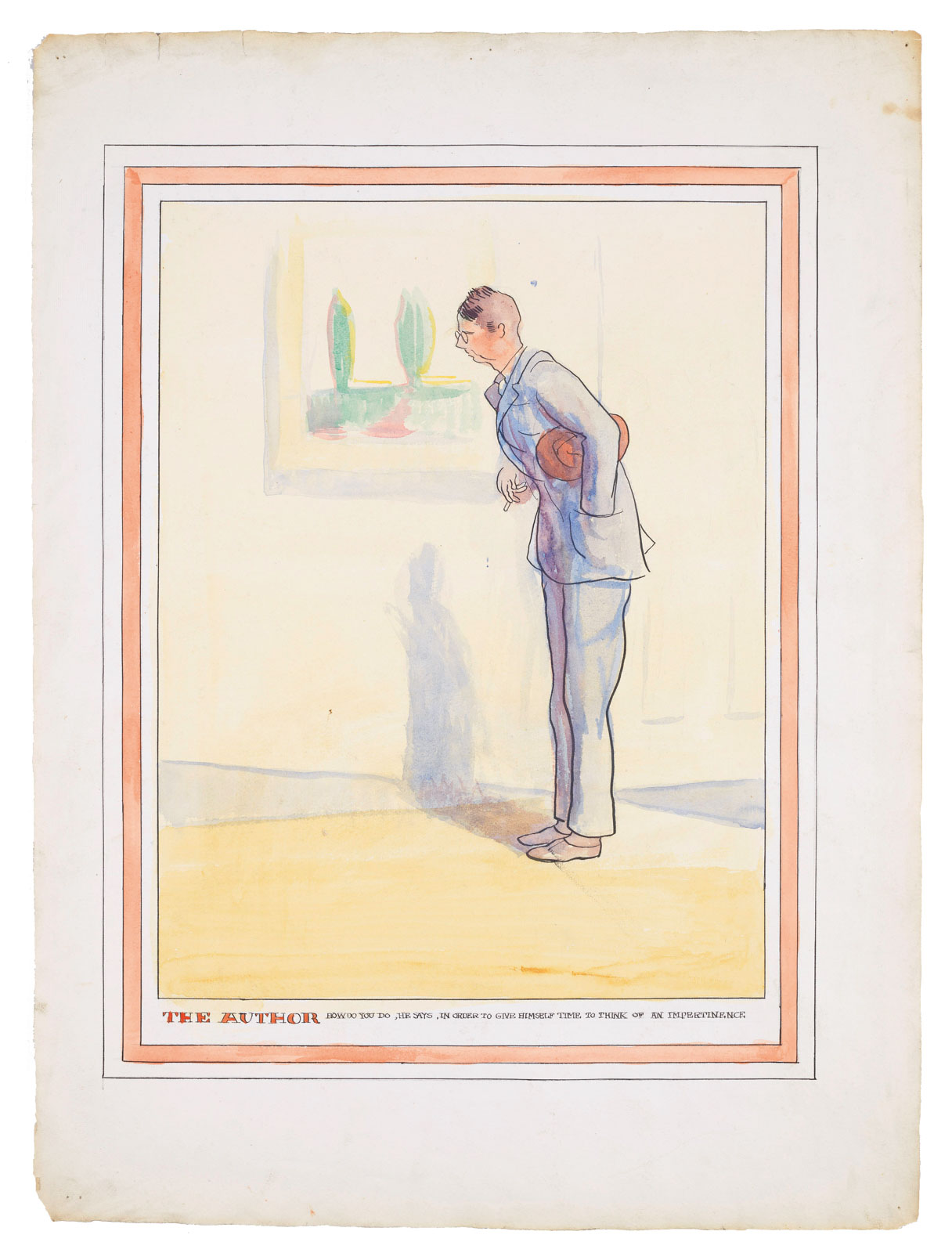 Guy Pène du Bois 1884-1958, The Author, 1921. Watercolor, pen, and ink, and graphite pencil on paper, 267/8 x 197/8 in. From A True History of Eight West Eighth, Whitney Museum of Art, New York, NY. Gift of Flora Miller Biddle 2014.74.16.
Connoisseurship, these days, is an ever more vexed question. Traditionally, connoisseurs have been tastemakers, where “taste” means the establishment, at least provisionally, of hierarchies, that is, deciding which artists are more desirable than others and which of an artist’s works ought to rank higher than others. The subject of taste has always grated against the very American, democratic notion that what is good is what one likes or, too often, what is good is whatever collectors are willing to pay the most for—which is to say, the market decides what is good, never mind the fact that a work you see as a “five” someone else sees as an “eight and a half.” (I despise the “x out of 10” scale applied to art) and vice versa.
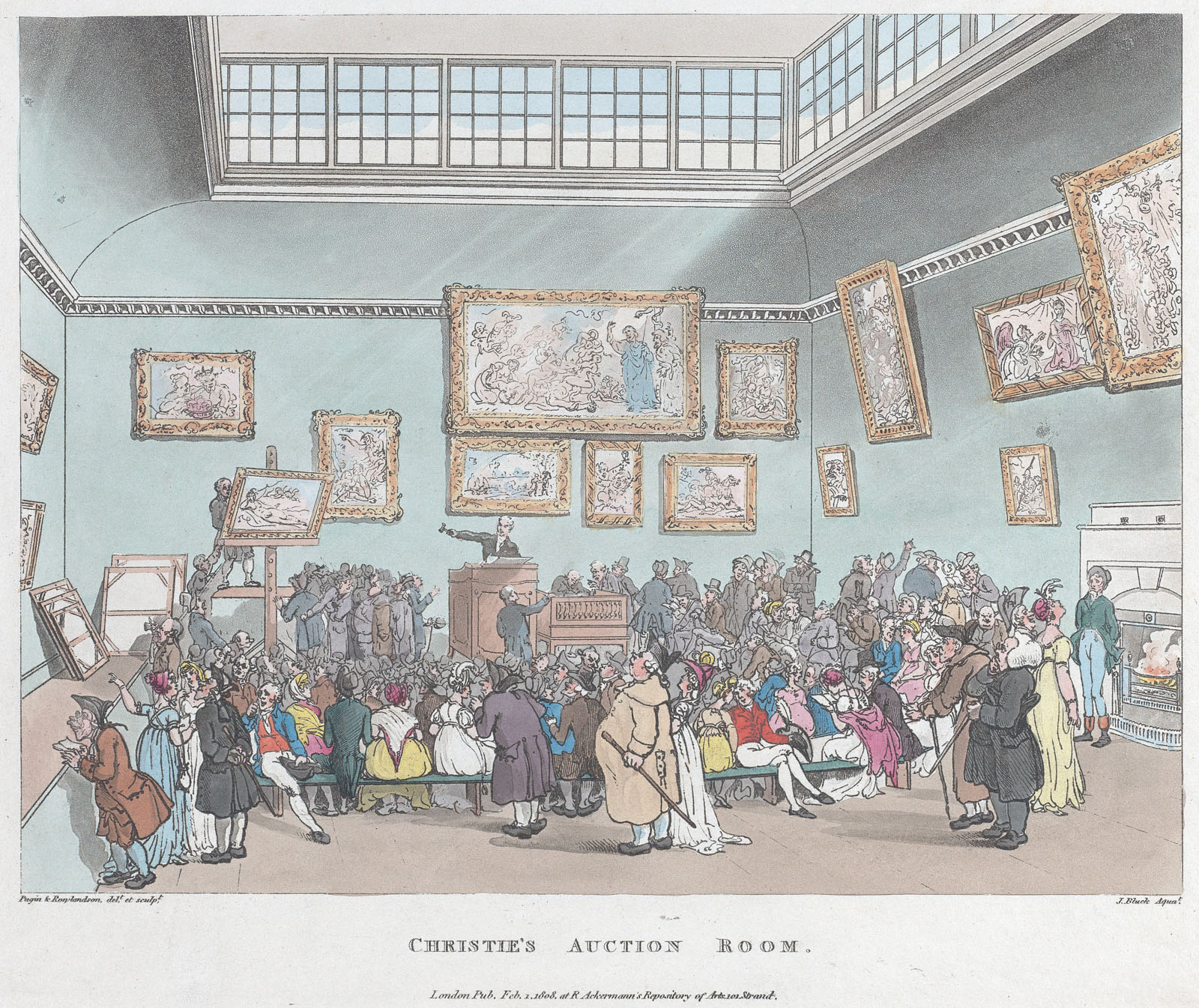 Thomas Rowlandson (1756-1827), Microcosm of London, Christie’s Auction Room, 1808. Ink on paper, plate 6, 9½ x 1111/16 in. The Metropolitan Museum of Art, New York, NY. The Elisha Whittelsey Collection, 1959 59.533.2085.Wisely, the authors in American Art: Collecting and Connoisseurship steer clear of this morass, describing as opposed to prescribing. After rereading the essays, my main takeaway is still simple—do your homework. Let me repeat that with a bit more force, as it is the basso continuo of the book: Do Your Homework. What’s more, and this is the real joy of the book, the homework is a journey, one the collectors ought to savor and enjoy. Will there be mistakes? Probably…almost certainly…Yes. Will markets, artists, artworks rise and dip? Probably…almost certainly…Yes. But the true collector sees impulses and unforeseen fluctuations as instructive, as part of the ride, as lessons learned. On the other side of the coin are the finds that come with the thrill of the hunt, the friendships that arise out of a mutual love of art, the moments when a neglected work almost seems to come back to life after a proper cleaning, or with the proper frame.
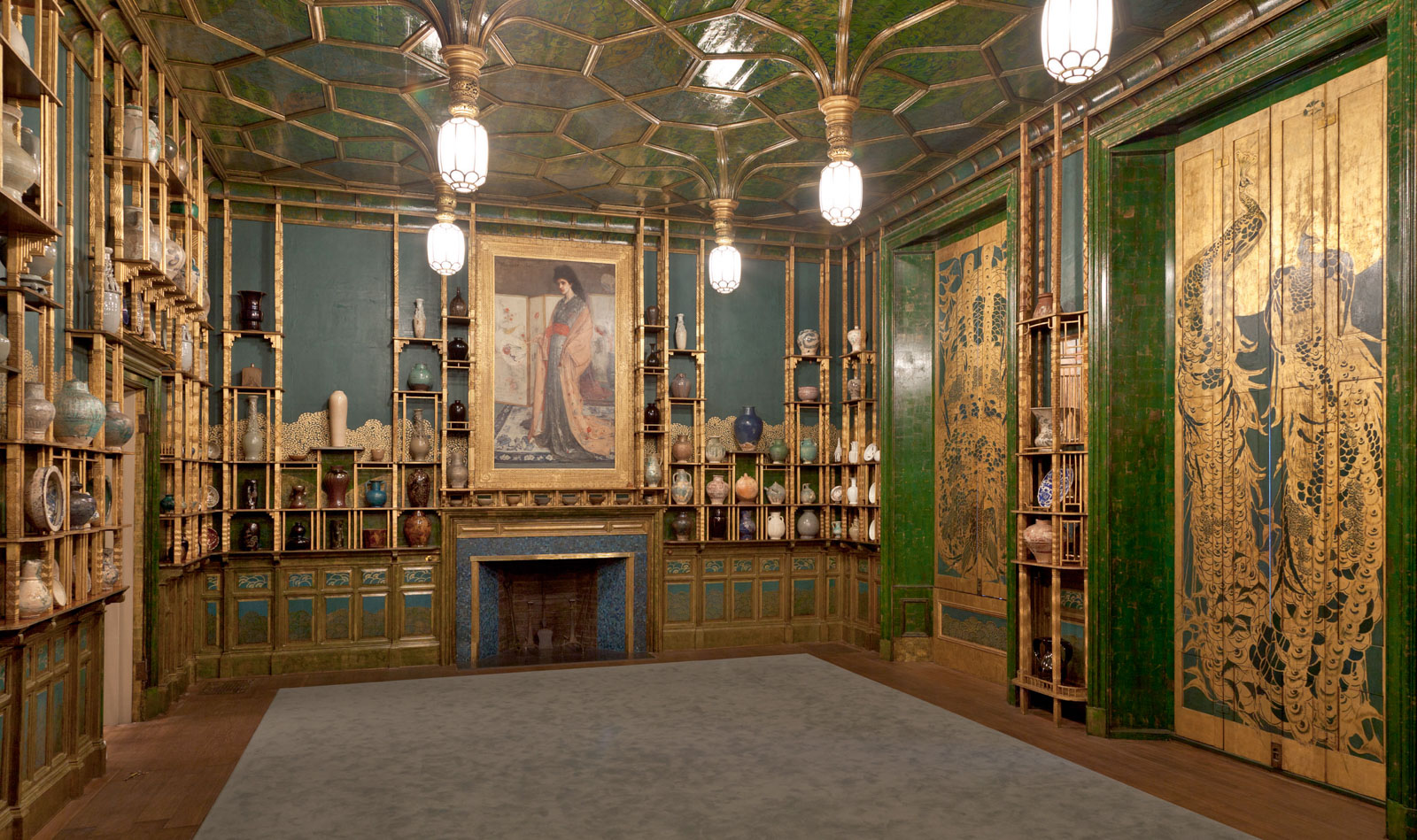 James Abbott McNeill Whistler (1834-1903), The Princess from the Land of Porcelain, 1863-65.Oil on canvas, 78¾ x 45¾ in. In the Peacock Room, Freer Gallery of Art, Smithsonian Institution, Washington, D.C. Gift of Charles Lang Freer, F1903.91a-b.
The essays are full of such moments, personal stories as examples, told with a certain excitement. Connoisseurship, then, isn’t a question of making taste for others, or for society at large. Rather, it’s a lifelong course of study that informs collecting, one that adds knowledge to instinct, an all-important “because…” to “I like…” It’s odd that only when thinking about the arts—and perhaps politics—do you find people choosing ignorance, saying that “knowing too much” might spoil their experience and diminish its spontaneity.
I certainly look forward to a second edition of American Art: Collecting and Connoisseurship with new, revised or expanded essays that reflect and anticipate our accelerating world. We need it.
Powered by Froala Editor