The last large-scale Mary Cassatt exhibition in the United States was in 1998 when the Art Institute of Chicago; Museum of Fine Arts, Boston; and the National Gallery of Art mounted Mary Cassatt: Modern Woman. While Cassatt has not faded into obscurity by any means, her works are now widely dispersed among museums and private collections. And because the bulk of her oeuvre is on paper, much of it in pastel, it is light-sensitive and delicate, and rarely brought out for public display.
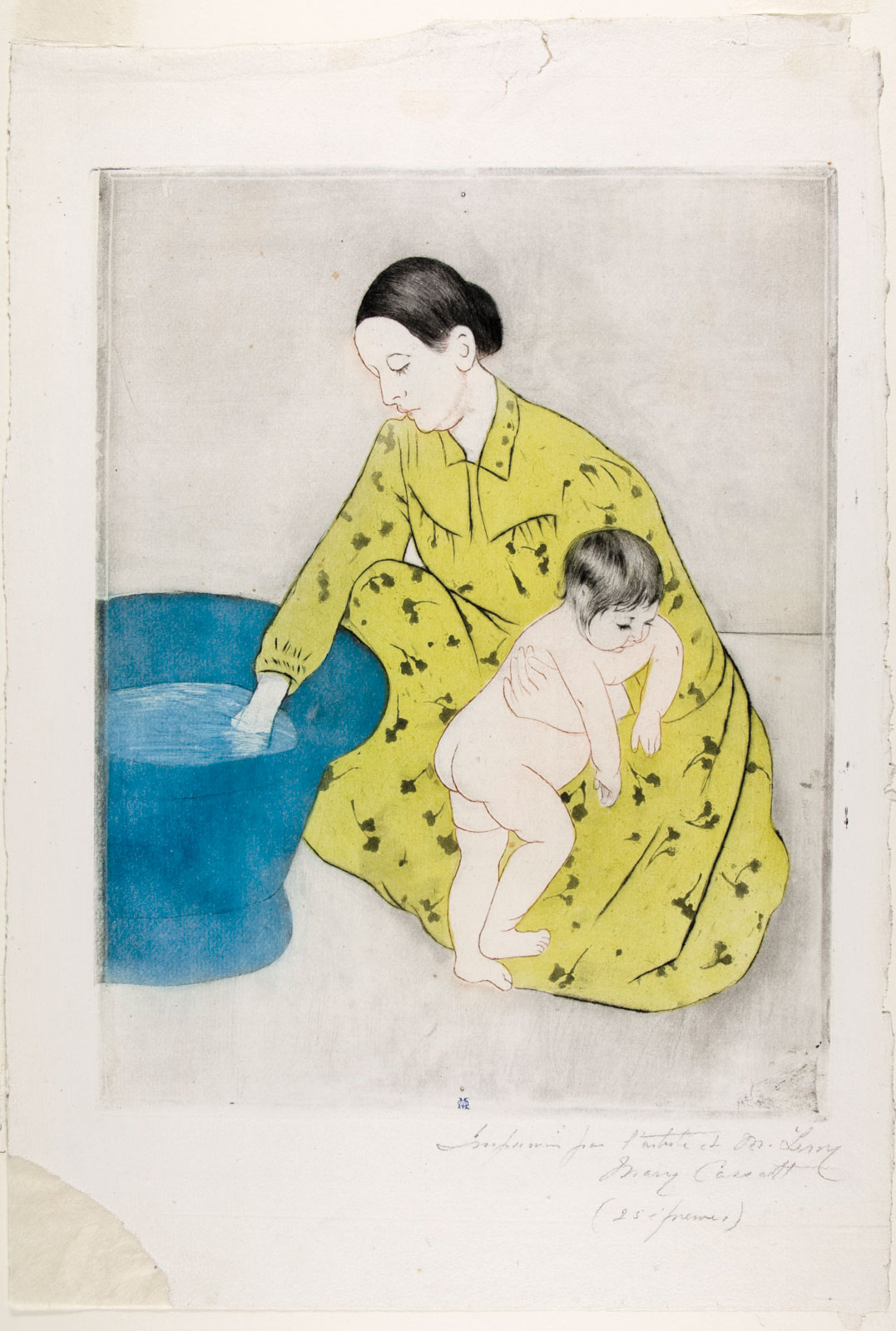 Mary Cassatt (1844-1926), The Bath, 1890-91. Color drypoint, aquatint and soft-ground etching from two plates, printed à la poupée, on ivory laid paper; plate: 125/8 x 93/4 in.; sheet: 173/16 x 1113/16 in. Art Institute of Chicago, Mr. and Mrs. Martin A. Ryerson Collection, 1932.1287
The Philadelphia Museum of Art has is offering that rare opportunity with Mary Cassatt at Work, which draws from the museum’s extensive holdings, among them some of Cassatt’s most celebrated paintings and prints, as well as loans from the Metropolitan Museum of Art, Art Institute of Chicago, Cleveland Museum of Art, Virginia Museum of Fine Arts and various private collections.
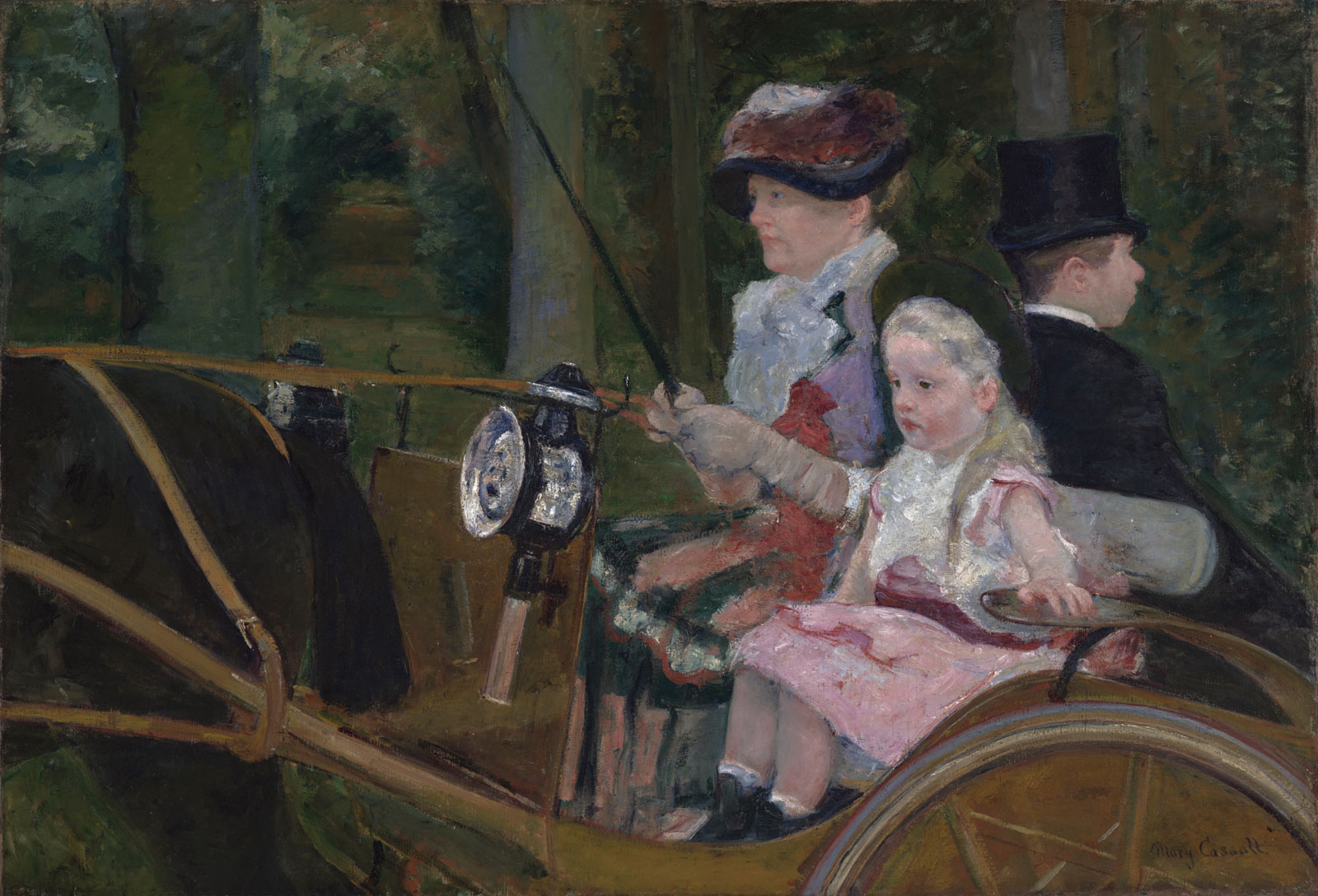 Mary Cassatt (1844-1926), Driving, 1881. Oil on canvas, 355⁄8 x 513⁄8 in. Philadelphia Museum of Art: Purchased with the W. P. Wilstach Fund, W1921-1-1.
On view through September 8, the exhibition brings together 130 paintings, drawings, prints and pastels with the added context of extensive personal correspondence, illuminating Cassatt’s six-decade-long career investigating the intersection of gender, labor and agency, which until now has not been deeply explored.
“Recent studies by Hollis Clayson, Nicole Georgopulos, Anne Higonnet, Ruth Iskin, Lini Radhakrishnan, Hadrien Viraben, and others have revealed that Cassatt was more calculating and intentional in her imagery than mainstream art history has given her credit,” says co-curator Jennifer Thompson, the Gloria and Jack Drosdick Curator of European Painting and Sculpture and Curator of the John G. Johnson Collection, at the Philadelphia Art Museum. “Our project invites close-looking through the study of Cassatt’s materials and techniques and consideration of the ways in which she depicts women as active subjects engaged with the world.”
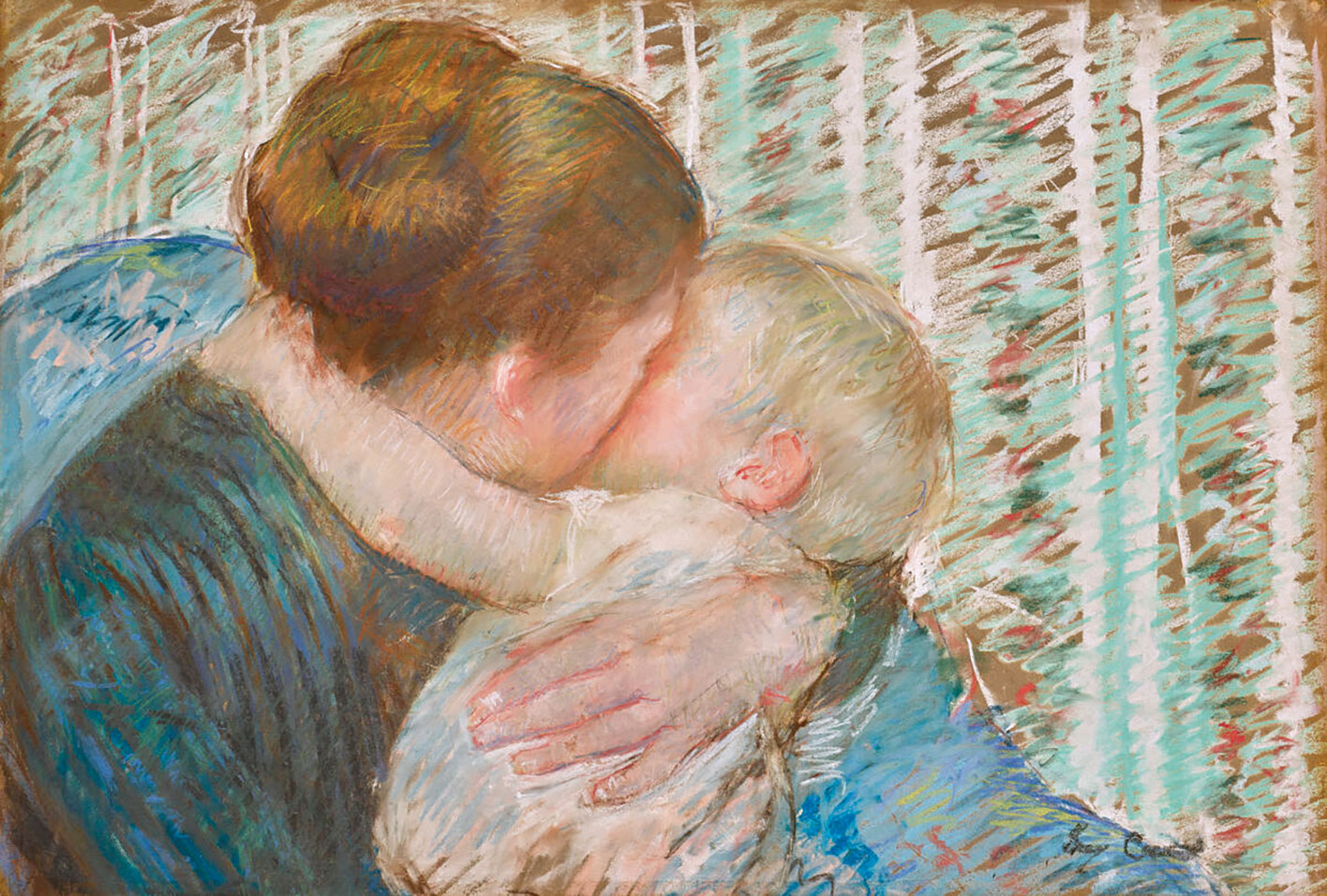 Mary Cassatt (1844-1926), A Goodnight Hug, 1880. Pastel on brown paper laid down on board, 169⁄16 x 243/4 in.
Born in Pennsylvania in 1844, Cassatt, who was the only American member of the French Impressionist movement, made a career out of depicting the women around her, but her repertoire extended far beyond, and had greater implications, than the mother/child portraits for which she is best known. In addition to the domestic sphere, she was also deeply interested in the social, intellectual and working lives of the modern woman.
Her paintings showed women as intellectual, curious and engaging—a radical shift from the way women had traditionally been portrayed in art. If her artworks were a subtle form of feminism, Cassatt herself was blatantly so, particularly her commitment to “the serious work of art-making,” as both a means of supporting herself and asserting her identity. “Oh the dignity of work, give me the chance of earning my own living, five francs a day and self-respect,” she wrote to her friend, the collector Louisine Havemeyer.
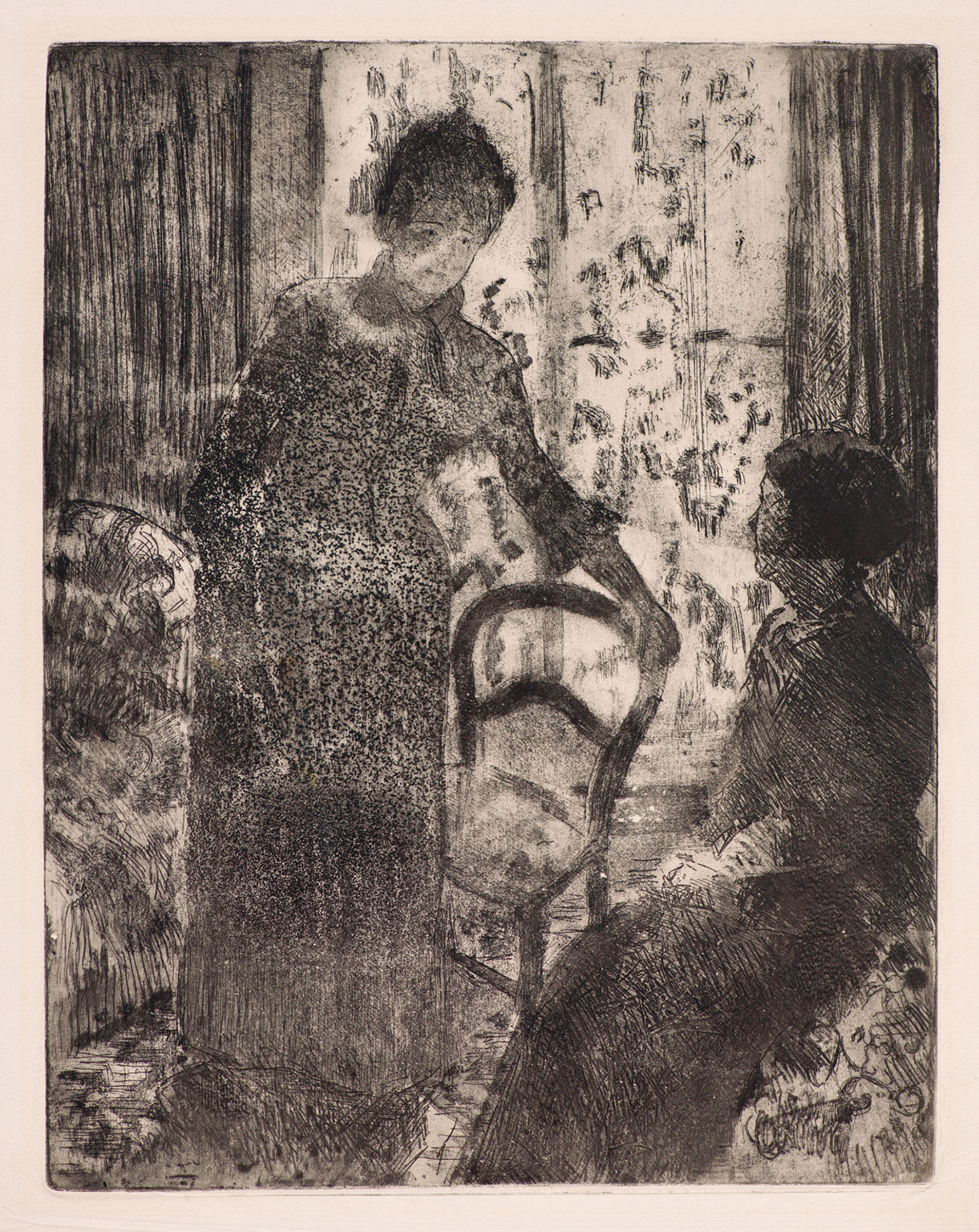 Mary Cassatt (1844-1926), The Visitor, ca. 1881. Soft-ground, aquatint, etching, drypoint, and fabric texture, plate: 155⁄8 x 121⁄8 in., sheet: 20½ x 153/4 in. Metropolitan Museum of Art, New York.
Labor is the organizing principle of Mary Cassatt at Work. “Our exhibition grew out of our interest in Cassatt’s private descriptions of her artistic labor across her letters and correspondence (a significant portion of which is housed in the PMA’s Library and Archives),” explains co-curator Laurel Garber, Park Family Assistant Curator of Prints and Drawings. “We were struck by how Cassatt, again and again, attributed her achievements to her ‘effort upon effort’ or to the ‘time and strength’ involved in artistic production. This observation formed the core of our exhibition and allowed us to re-examine the activities of her sitters: the nursing, knitting, socializing, teaching and care-giving came into new focus less as scenes of leisure than as different kinds of activity and work. And it is these subjects that served as the setting for Cassatt’s artistic innovation.”
Among the highlights in the show is The Bath, 1890-91, a print of a woman washing a young child. “The practical clothing of the woman in this painting suggests she is a nurse or paid caregiver,” explains Thompson. “Although Cassatt obscures her face, presenting us instead with the child’s fretful expression, the woman’s reddened hand is a calculated focal point. In contrast to the agitated brushwork on the rest of the canvas, the rich color, crisp contours, and smooth texture of her hand draw attention to the artistic and domestic labor animating this painting.”
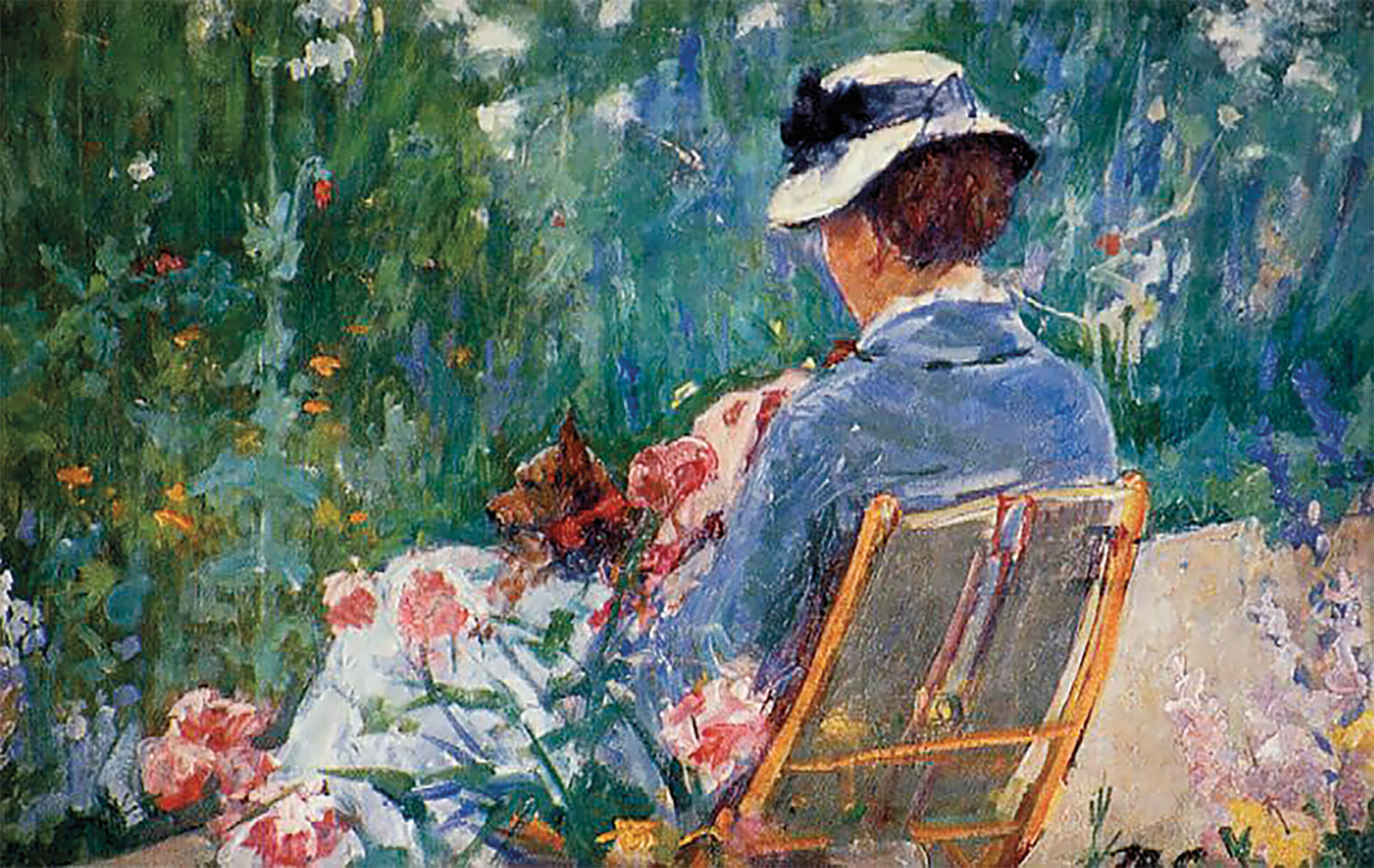 Mary Cassatt (1844-1926), Lydia Seated in the Garden with a Dog on Her Lap, 1878-79. Oil on canvas, 103/4 x 16 in. Cathy Lasry, New York.
The exhibition also includes a grouping of works related to The Bath—two drawings, 12 printed drafts of the composition and a final signed version. “[It] is a remarkable demonstration of the intensive Cassatt put into making prints, the ‘effort upon effort’ involved in arriving at her final composition,” says Garber. “Visitors will have an opportunity to see Cassatt’s work unfold across a wall in the exhibition and to appreciate the print’s subject—a woman testing the water temperature of a bath while wrangling a squirming toddler—as attentive to the often invisible work performed by women.
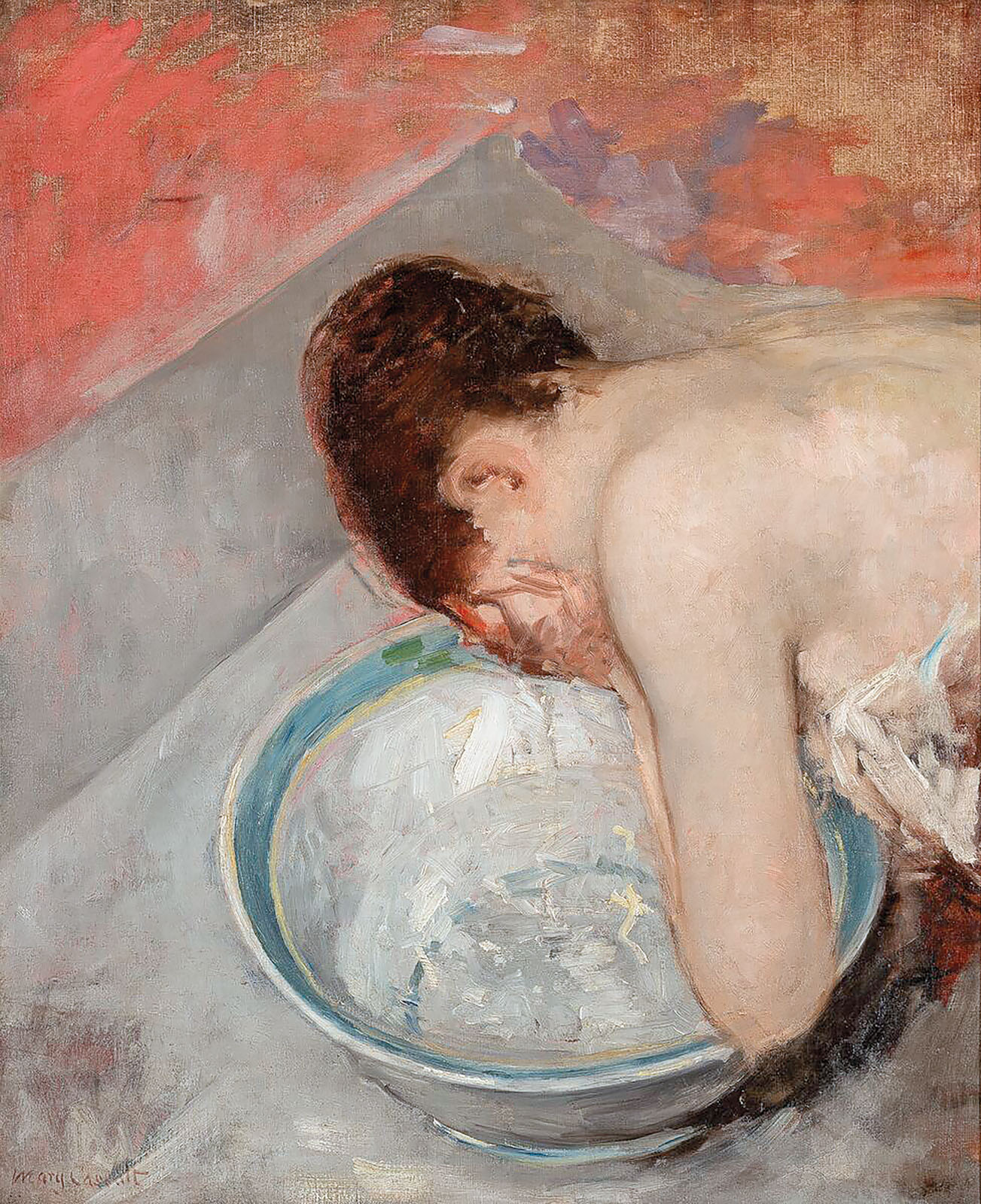 Mary Cassatt (1844-1926), Woman at Her Toilette, ca. 1891. Oil on canvas, approx. 30 x 25 in. Private Collection.
“Elsewhere in Cassatt’s paintings and pastels, we are aware of her hand, the brushstrokes she uses to suggest disrupted water in a basin in Woman at her Toilette or the color-laden zig-zagging pastel strokes that draw our eye to the intimate embrace of child and caregiver in Goodnight Hug.”
Another piece of note is the 1881 oil Driving, which depicts the family pony “Bichette” pulling a carriage. “Cassatt places her sister Lydia’s hands—responsible for steering the carriage through a public park—at the center of the cropped scene,” says Thompson. “The artist adjusted the position of the headlamp, horse groom and the wheel spokes, changes that reinforce the forward movement of the buggy.
“These works stand out, but the entire exhibition focuses on labor—Cassatt’s own and that of the women in the world around her: the seamstresses, nannies, models, wetnurses, and parents caring for children,” continues Thompson. “We’ve grown accustomed, perhaps, to thinking of impressionism in relation to leisure activities, yet Cassatt’s scenes of mending and needlework, socializing and hosting, maintaining domestic spaces and navigating public ones, can also be seen as different kinds of work, albeit less visible and often overlooked.”
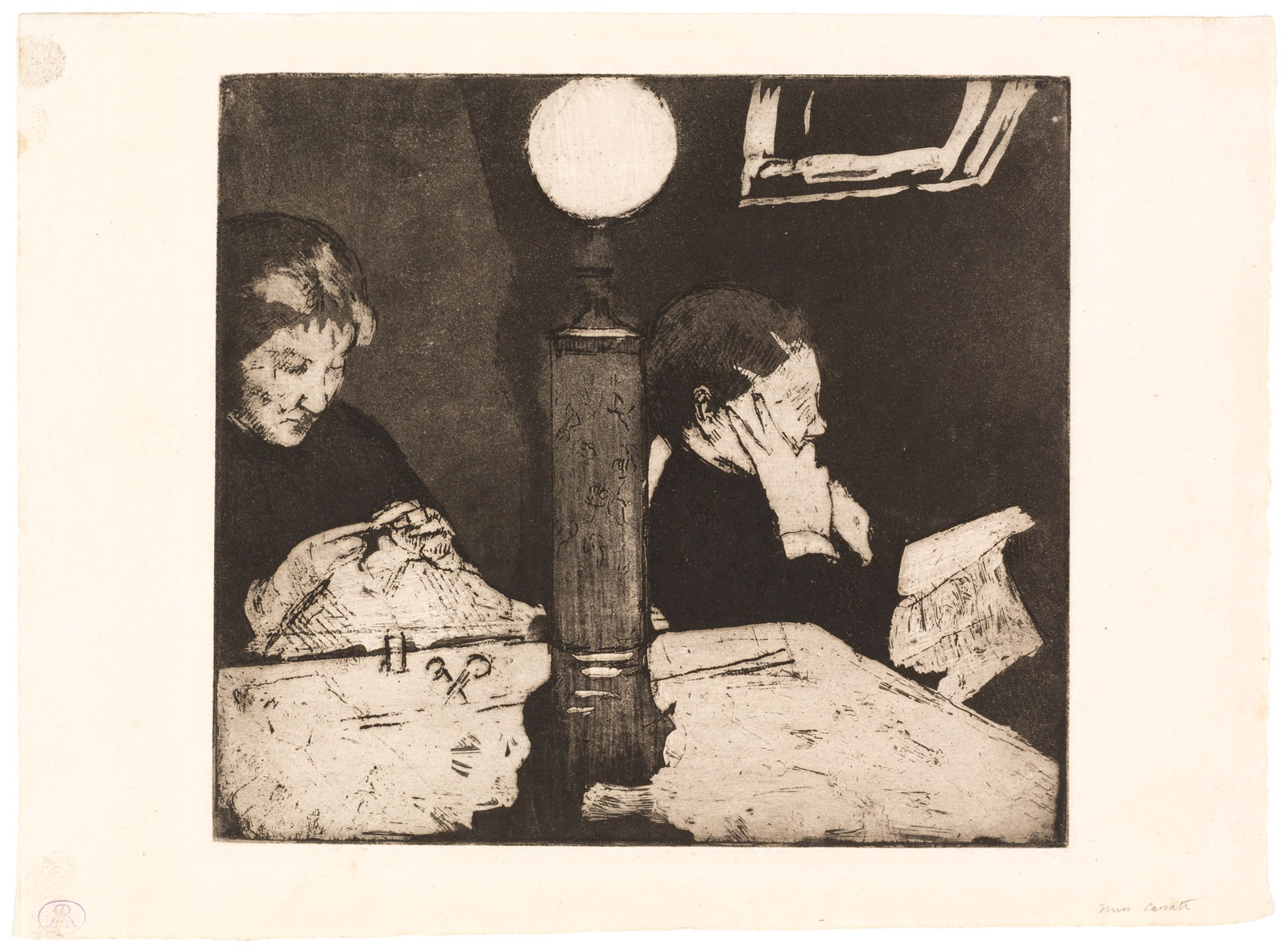 Mary Cassatt (1844-1926), Under the Lamp, 1882. Soft ground etching and aquatint in black on cream wove paper. Art Institute of Chicago, Mr. and Mrs. Martin A. Ryerson Collection, 1932.
The significance of the personal correspondence, much of it never before published, is not to be overlooked. The exhibition grew out of spending time with the nearly 200 Cassatt family letters in the Philadelphia Museum of Art’s Library and Archives. They provided curators with a strong sense of the way Cassatt herself characterized her work—as all-consuming, as physically demanding, as fundamental to her sense of self. “We were then able to connect Cassatt’s work ethic and professionalism to her art, since we have 84 works in the PMA collection,” says Garber. “We embarked on the first in-depth technical study of Cassatt’s artistic materials, techniques, and habits, and the insights of this collaborative research has deeply informed the show. By focusing on her professionalism, her biography, and the wider Parisian world she inhabited, we are showing the full breath of Cassatt’s artist work, including her commitment to experimentation and bold techniques.”
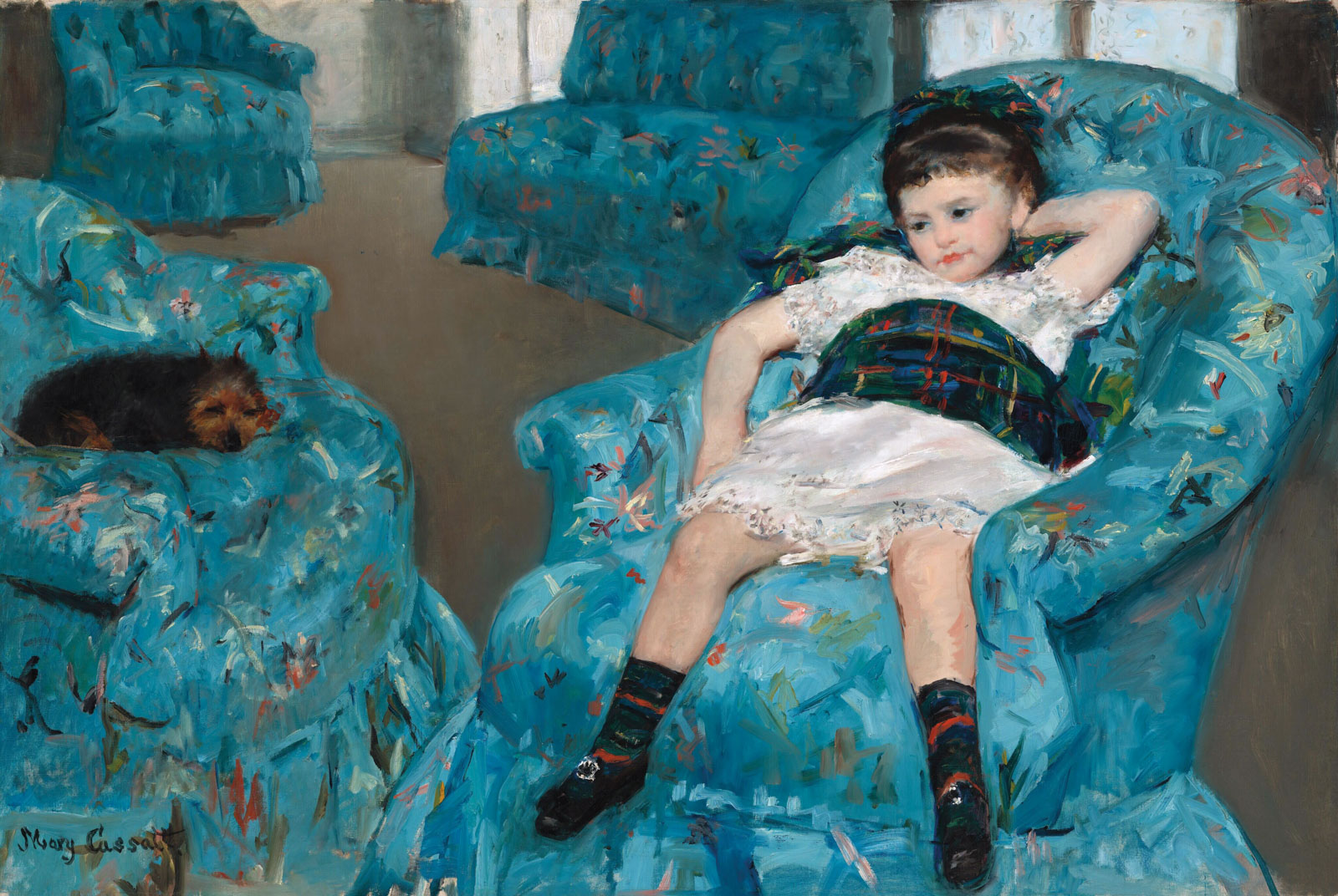 Mary Cassatt (1844-1926), Little Girl in a Blue Armchair, 1877-78. Oil on canvas, 35¼ x 511/8 in. National Gallery of Art, Washington, D.C.: Collection of Mr. and Mrs. Paul Mellon, 1983.1.18.The letters describe methods ranging from her experimental print-making practices to her use of delicate light-sensitive pastels and illuminate Cassatt’s evolving artistic production and unswerving commitment to professionalism.
Most of the correspondence in PMA’s holdings are by the artist’s parents—Katherine and Robert Cassatt—who wrote from Paris to their sons and grandchildren (Cassatt’s brothers, nieces and nephews) in Philadelphia. While the letters mostly concern mundane family matters, Cassatt’s work habits are a recurring subject. “‘Aunt Mary is at her studio’; ‘Mame [the family’s nickname for Cassatt] is working away like a beaver preparing for her next exhibition’; or ‘Mame has had an unusual fit of idleness and has not put brush to canvas these two months,’” cites Thompson. “These regular comments reveal that work was a persistent concern that structured Cassatt’s life and shaped the ways others saw her. Our exhibition builds on a reading of these unpublished letters, and several of them will be displayed in the exhibition.”
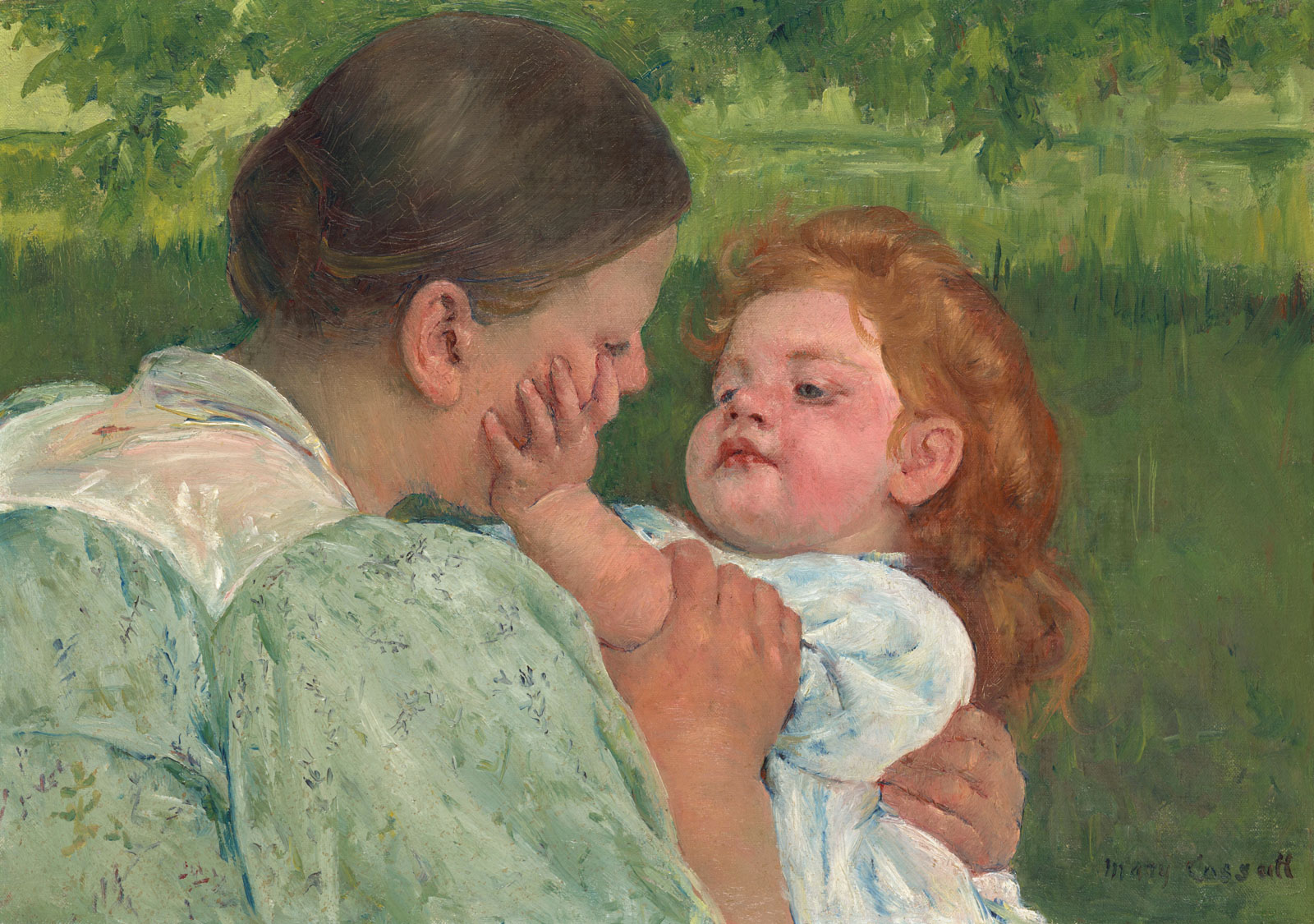 Mary Cassatt (1844-1926), Maternal Caress, 1896. Oil on canvas, 15 x 21¼ in. Philadelphia Museum of Art: Bequest of Aaron E. Carpenter, 1970-75-2.
It can and has been said that art was Cassatt’s life and purpose for living. If a case needed to be made, the Philadelphia Museum of Art has not only proven so beyond a doubt, but with the curators’ probing minds and eyes have spun, and now share, a compelling narrative that renews the relevance and refreshes the beauty of the work, personhood and life of one of the most beloved artists of the 19th century.
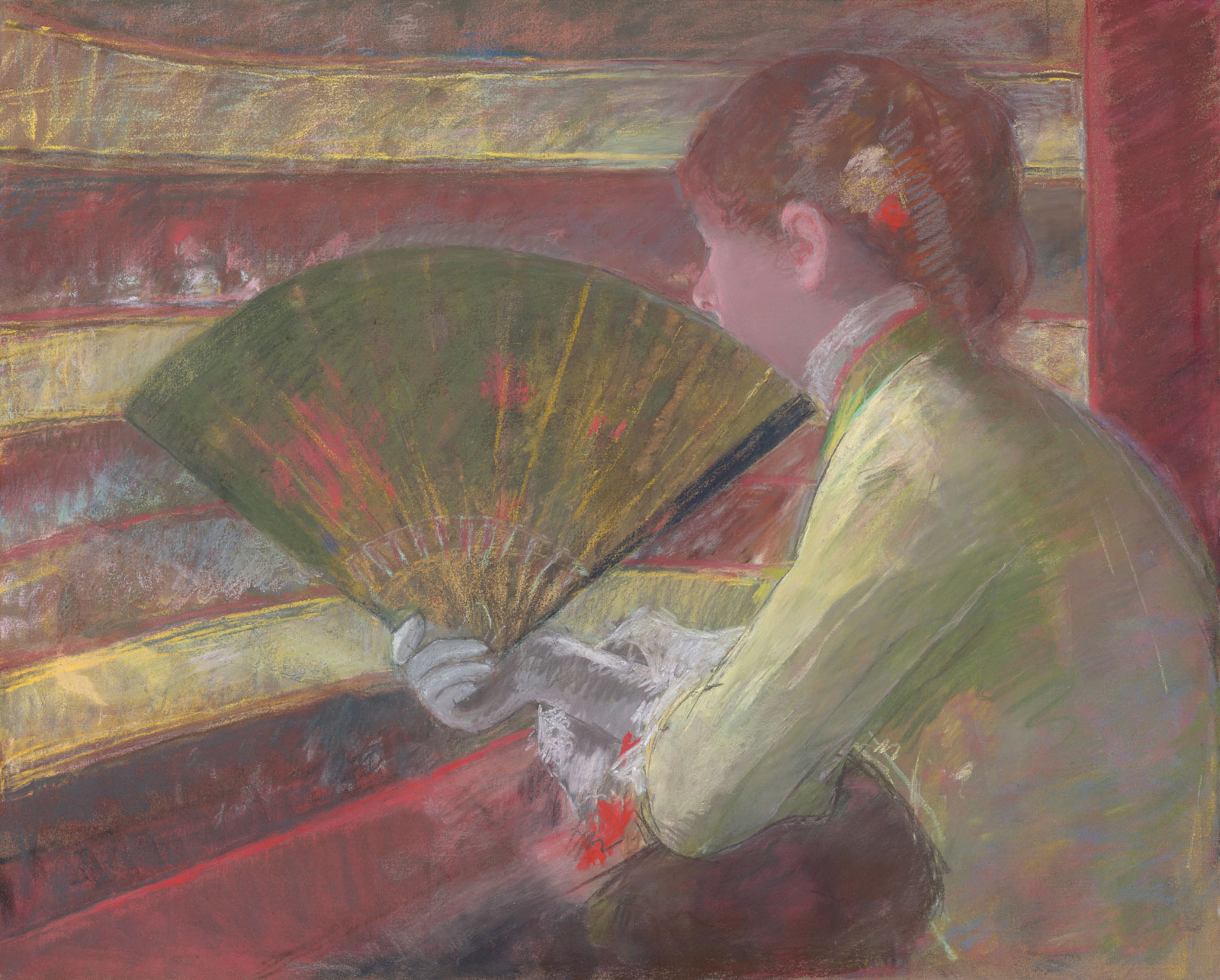 Mary Cassatt (1844-1926), In the Loge, 1879. Pastel with gold metallic paint on canvas. Philadelphia Museum of Art, Gift of Mrs. Sargent McKean, 1950-52-1.
“Exhibitions on female artists tend to be group shows or retrospective career surveys,” says Thompson. “In an age when intelligent exhibitions are organized on Cezanne’s rock and quarry paintings or Degas’ millinery pictures, it feels important to similarly advance study on Cassatt. Using the concept of ‘work’ to consider Cassatt’s artistic labor and her attention to the occupations and concerns of the women around her provides a way of increasing our understanding of her process, the challenges she faced as a woman artist, and her social and political interests.”
Powered by Froala Editor