Many know Winslow Homer for his dramatic marine paintings capturing sailors and fisherman on stormy waters or rocky coastlines pummeled by crashing waves. They also might know the 19th-century painter for his bucolic landscapes. Regarded as one of the most prominent and influential artists of the 19th century, Homer was also known for his illustrative work, particularly as a freelance commercial illustrator designing wood engravings on paper.
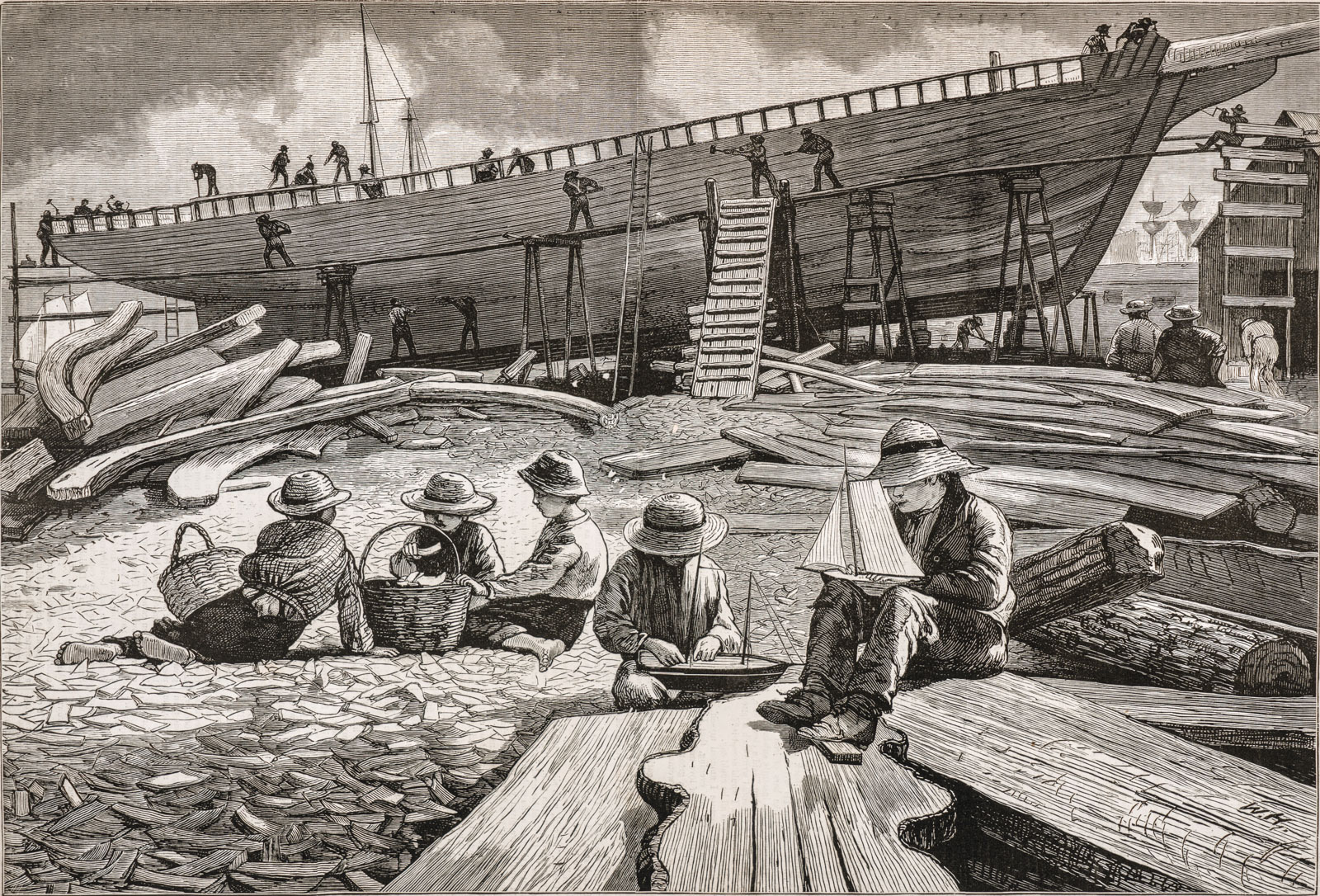 Winslow Homer (1836-1910), Ship-building, Gloucester Harbor, 1873. Wood engraving on paper, 93⁄8 x 13¾ in. Lent by the Family of Ruth and Joseph Davis.
“The wood engravings Homer created for popular pictorial magazines [like] Harper’s Weekly, Ballou’s Pictorial Drawing-Room Companion and Appleton’s Journal were the works that first brought him national attention and helped established his reputation as an artist and illustrator,” says Kim Spence, the senior director of collections and curator of works on paper at the Speed Art Museum in Louisville, Kentucky. Beginning this August, the museum is hosting an exhibition devoted to Homer’s illustrative wood engravings titled Winslow Homer: American Storyteller. The show is curated by Spence.
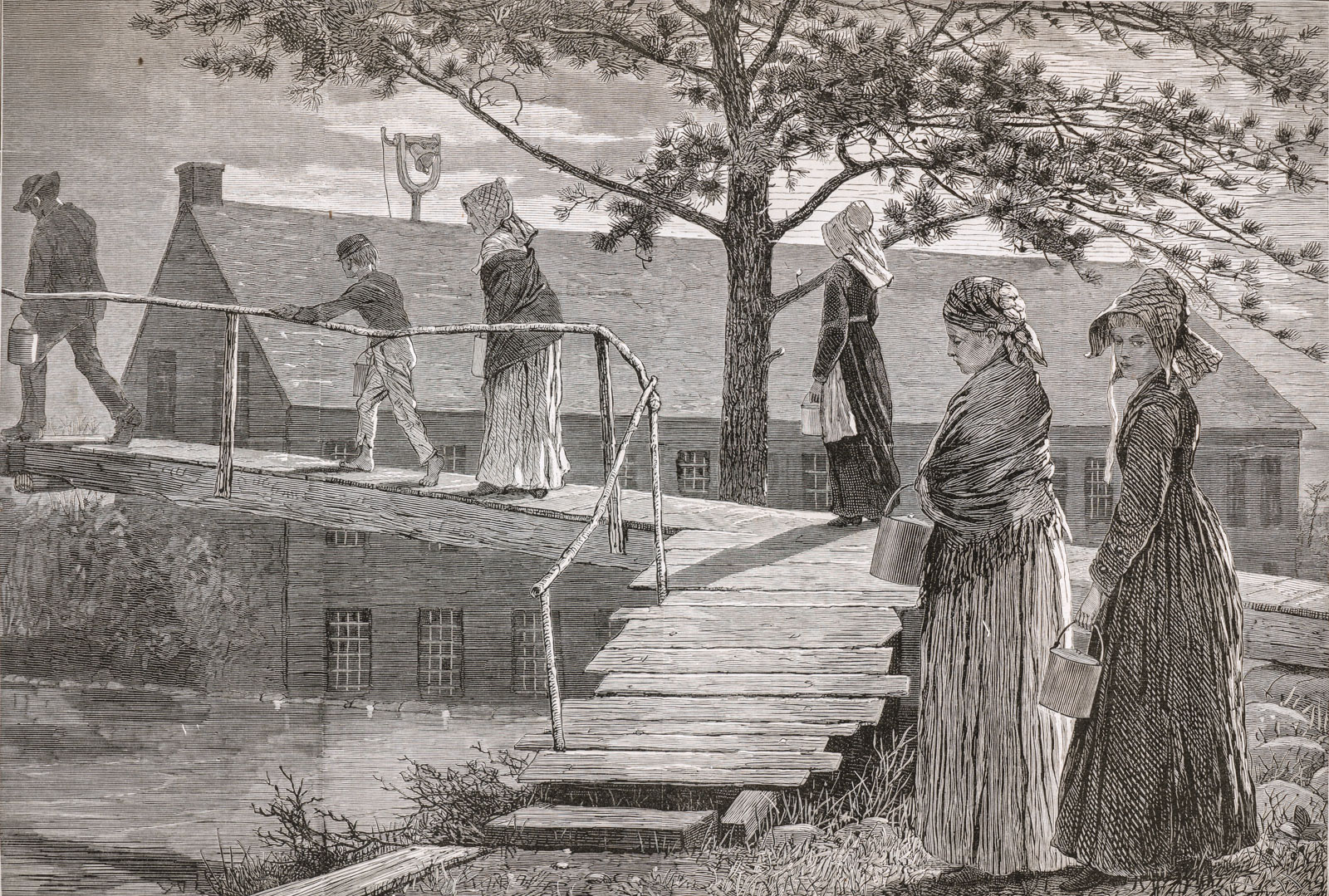 Winslow Homer (1836-1910), The Morning Bell, 1873. Wood engraving on paper, 9¼ x 13½ in. Lent by the Family of Ruth and Joseph Davis.“Whether illustrating a piece of poetry or prose, reinterpreting his own paintings or inventing new compositions for publication, Homer’s designs had to be clear, concise and effectively communicate narrative details and an overall mood or tone,” Spence continues. “Subjects chosen for his wood engravings were widely diverse, but no matter what he portrayed, Homer was a remarkable storyteller who possessed a gift for capturing the essence of a moment and of human interactions.”
Displayed in the museum’s European and American art galleries, the exhibition focuses chiefly on the narrative elements present within the engravings, which depict scenes of men, women and children in a variety of scenarios—at work and at play.
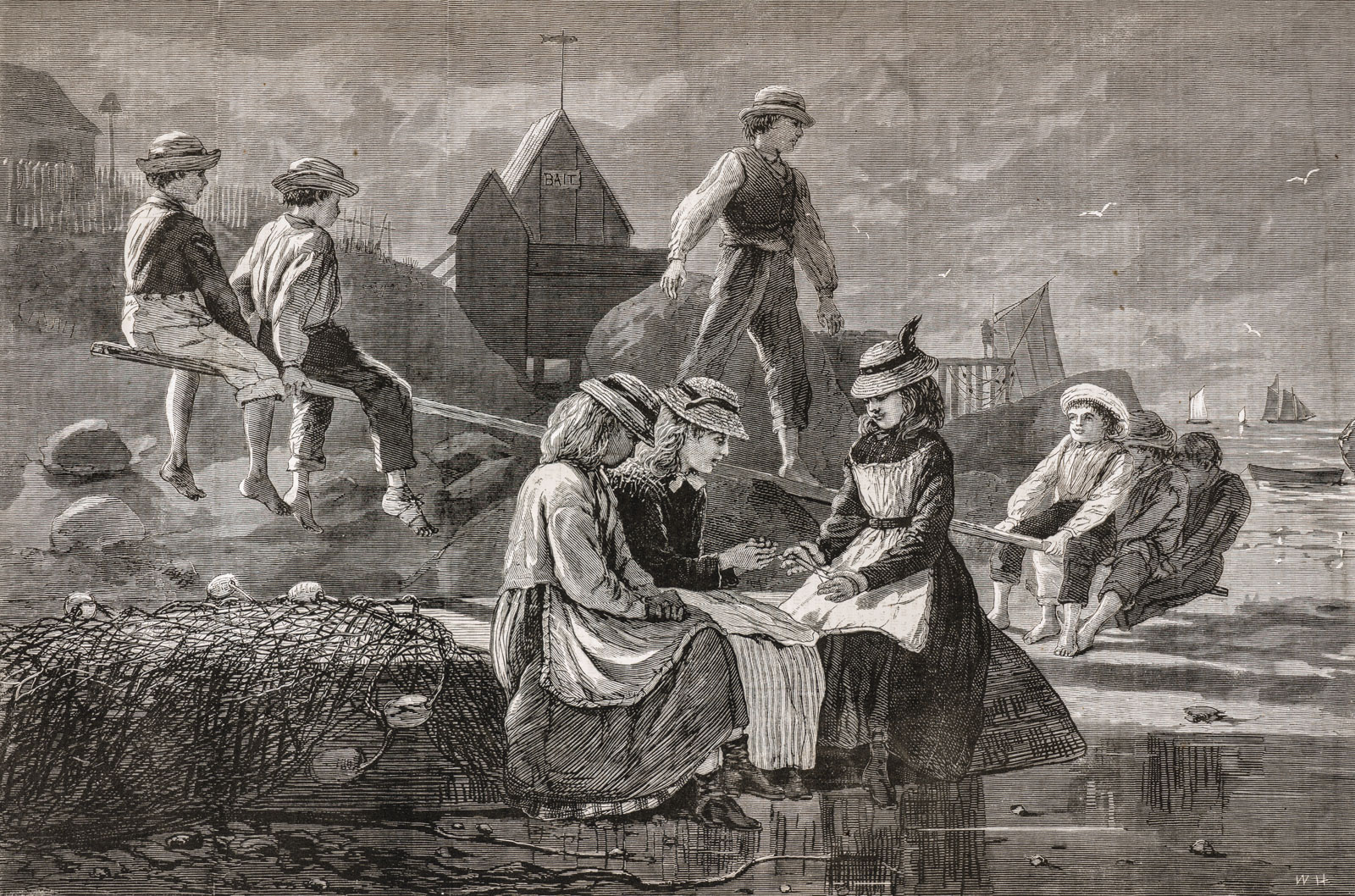 Winslow Homer (1836-1910), Seesaw—Gloucester, Massachusetts, 1874. Wood engraving on paper, 91⁄8 x 13¾ in. Lent by the Family of Ruth and Joseph Davis.
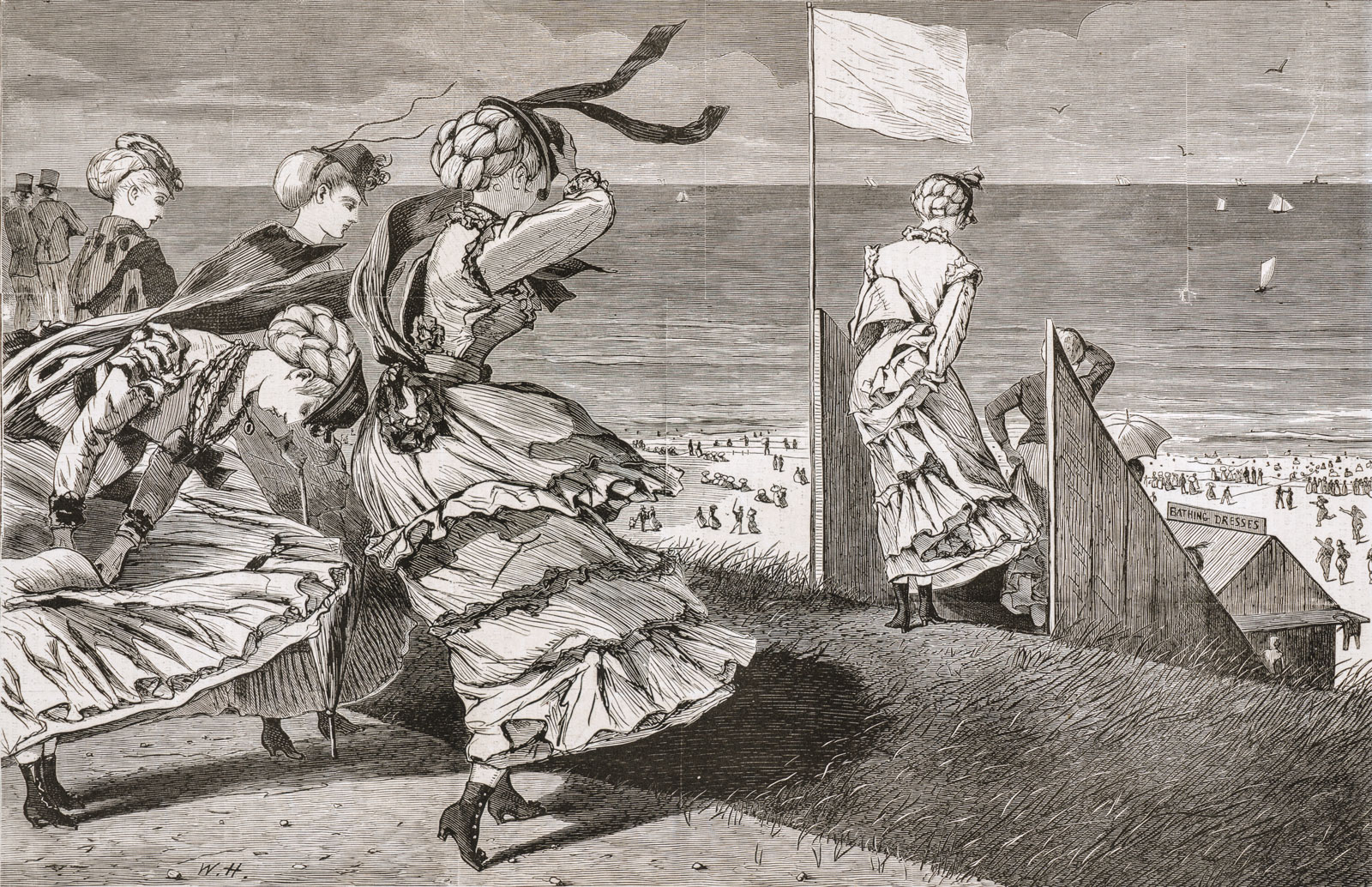 Winslow Homer (1836-1910), On the Bluff at Long Branch, at the Bathing Hour, 1870. Wood engraving on paper, 87⁄8 x 135⁄8 in. Lent by the Family of Ruth and Joseph Davis.“Ship-building, Gloucester Harbor appeared in the October 11, 1873, issue of Harper’s Weekly,” says Spence. The engraving illustrates a bustling scene of men at work in a harbor with young boys playing with their toy ships in the foreground. “In this single image—packed full of details—Homer tells us about the lives of an entire coastal community. The boys in the foreground play with model ships, but there is no question what these boys will become when they reach maturity,” Spence continues. “Their destiny looms large in the background. They are going to be boat builders and fishermen, just like their fathers and their grandfathers before them…In this composition, Homer also asserts that in order for the community to thrive, everyone must do so together. Compared to many of Homer’s scenes of coastal life, which serve as reminders of the constant threats endured by seafaring laborers, Ship-building, Gloucester Harbor offers an optimistic vision of American industry.”
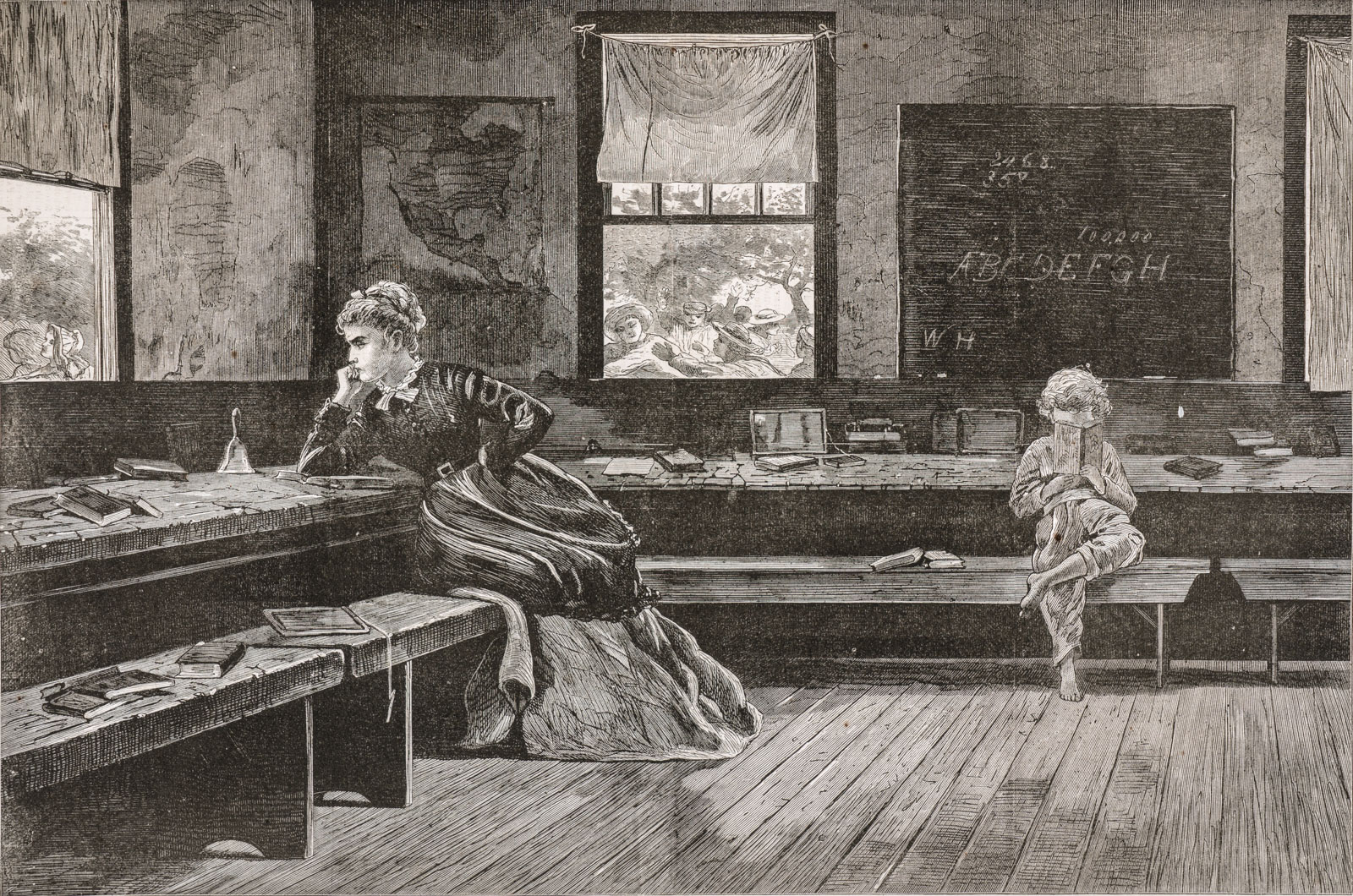 Winslow Homer (1836-1910), The Noon Recess, 1873. Wood engraving on paper, 91⁄8 x 135⁄8 in. Lent by the Family of Ruth and Joseph Davis.The Morning Bell, which was featured in the December 13, 1873, issue of Harper’s Weekly, depicts men, women and children called to work by a bell tolling on the roof of a building. “It is related to an oil painting from 1871 in the collection of the Yale University Art Gallery. In both the painting and the print, Homer references increased industrialization following the Civil War and the economic necessity that prompted many women to seek work outside the home, often in factory or mill settings,” says Spence. “An anonymous poem published adjacent to the Harper’s Weekly illustration contrasts the calls of silvery-tongued church bells and the lighter bells that rouse fair young women from sweet dreams with the noise and din of the heavy factory bell, whose monotonous tones call workers to never-ending days of hardship. In Homer’s composition, men, women and even children are called to work by the toll of a bell suspended above the mill’s roof. Their slightly bowed bodies suggest a weariness before the workday has even begun. Faces turned or hidden beneath caps and bonnets instill the figures with a sense of anonymity, save for the woman on the right, who turns to directly engage the viewer, demanding acknowledgement of her plight.”
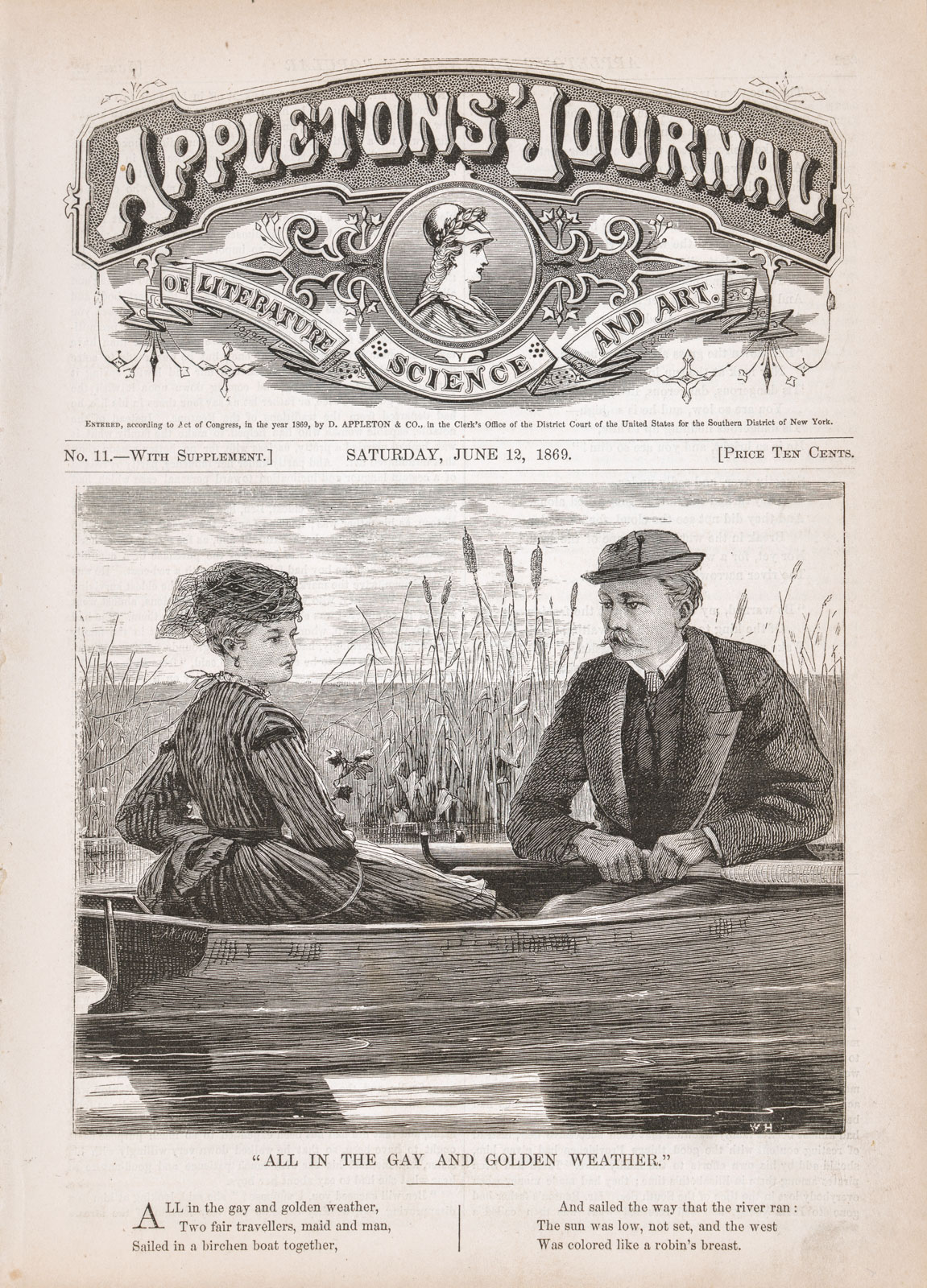 Winslow Homer (1836-1910), “All in the Gay and Golden Weather,” 1869. Wood engraving on paper, 5½ x 6½ in. Lent by the Family of Ruth and Joseph Davis.Winslow Homer: American Storyteller will be on view at the Speed Art Museum through February 2025. Works in the show are on loan from Ellen Weinstein from the collection of her late parents Ruth and Joseph Davis, who built up a substantial collection of Homer’s wood engravings over the years.
Powered by Froala Editor