The Muskegon Museum of Art in Michigan is not really neighbors with the Whitney Museum of American Art in New York, but they’re close enough together that when the Whitney wants to borrow a cup of sugar it knows who to ask. And then, when the Muskegon Museum needs some eggs, the Whitney is right there to return the favor.
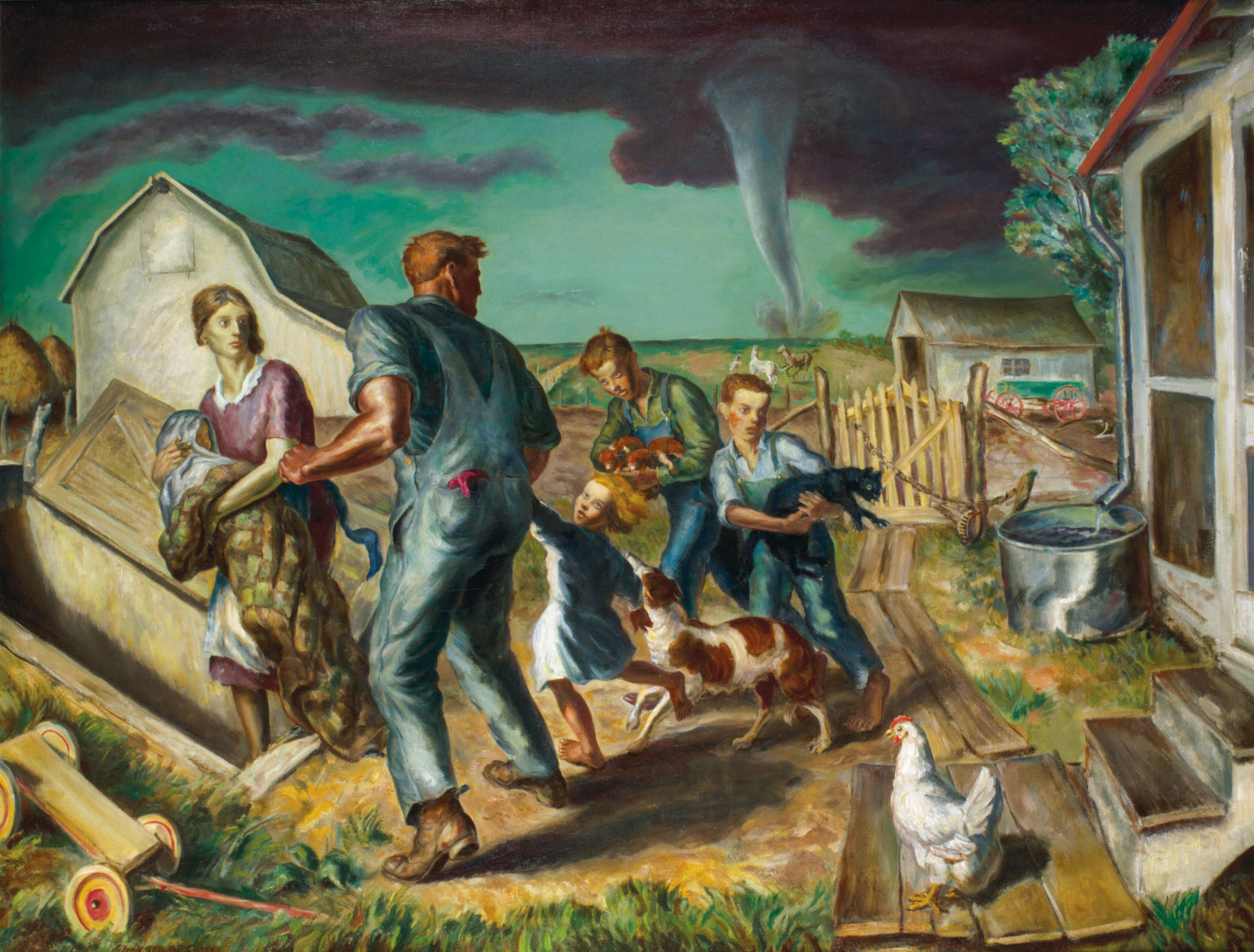 John Steuart Curry (1897-1946), The Tornado (Tornado Over Kansas), 1929. Oil on canvas, 46¼ x 603/8 in. Collection of the Muskegon Museum of Art. Hackley Picture Fund Purchase, 1935.4.
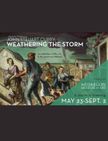
And when we say “cup of sugar” we mean an important Edward Hopper painting. When we say “some eggs” we actually mean an iconic John Steuart Curry work. This story of good neighbors is essentially what happened to the Muskegon Museum of Art as it prepared to organize John Steuart Curry: Weathering the Storm, which opens May 23.
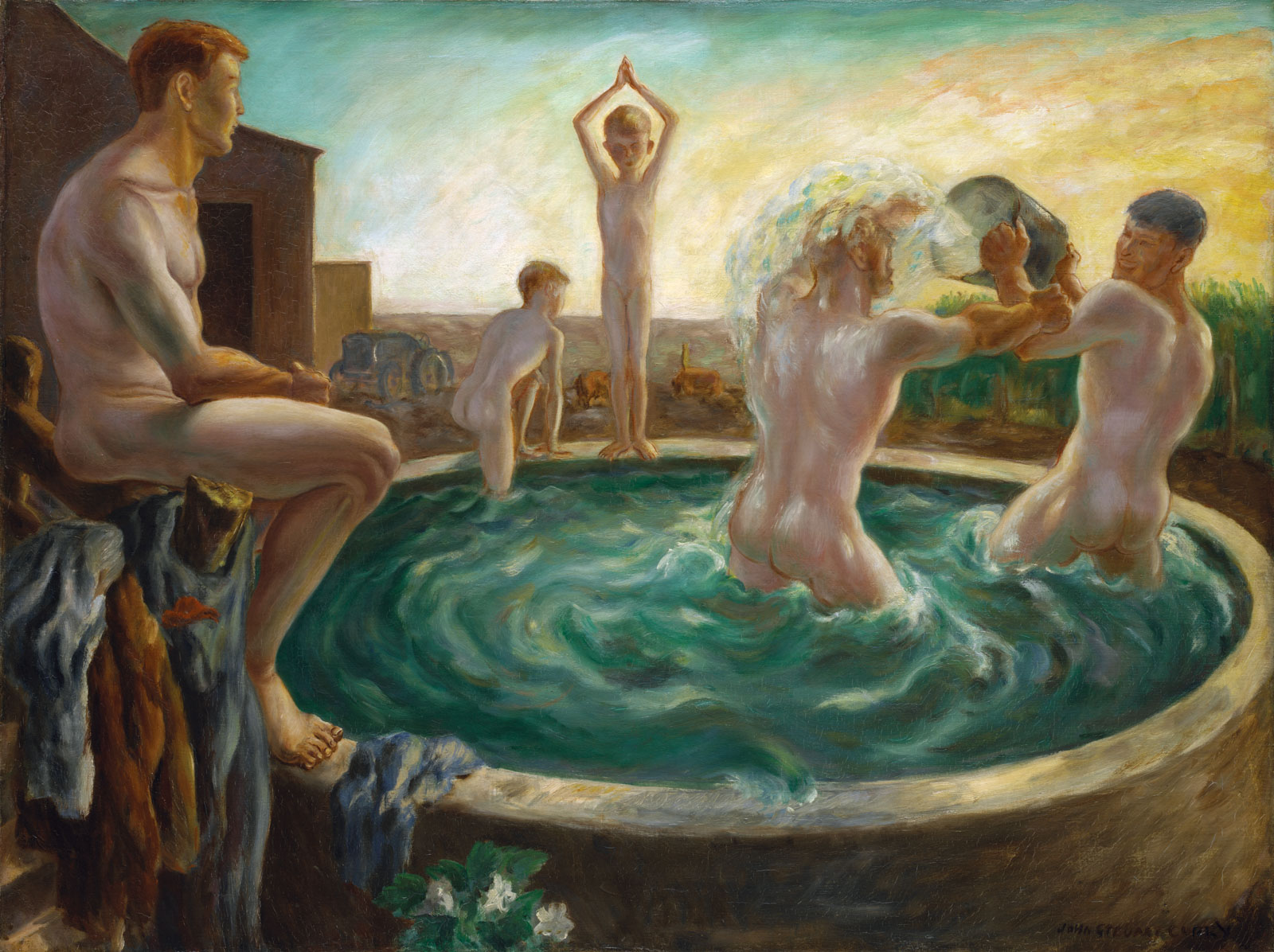 John Steuart Curry (1897-1946), The Bathers, ca. 1928. Oil on canvas, 301/8 x 401/8 in. Nelson-Atkins Museum of Art, Kansas City, Missouri. Purchase: acquired with a donation in memory of George K. Baum II by his family, G. Kenneth Baum, Jonathan Edward Baum, and Jessica Baum Pasmore, and through the bequest of Celestin H. Meugniot, F98-3.
“It really starts with The Tornado (Tornado Over Kansas), one of Curry’s most famous and reproduced paintings. We knew the Whitney had Baptism in Kansas, which helped launch Curry’s career. We saw an opportunity to show these two monumental paintings, as well as many others, and we took it,” says Art Martin, senior curator at the Muskegon Museum of Art. “We also started with Patricia Junker, who put on the last major Curry retrospective. Her research and our research, and then all the phenomenal loans, we knew we had a great show on our hands.”
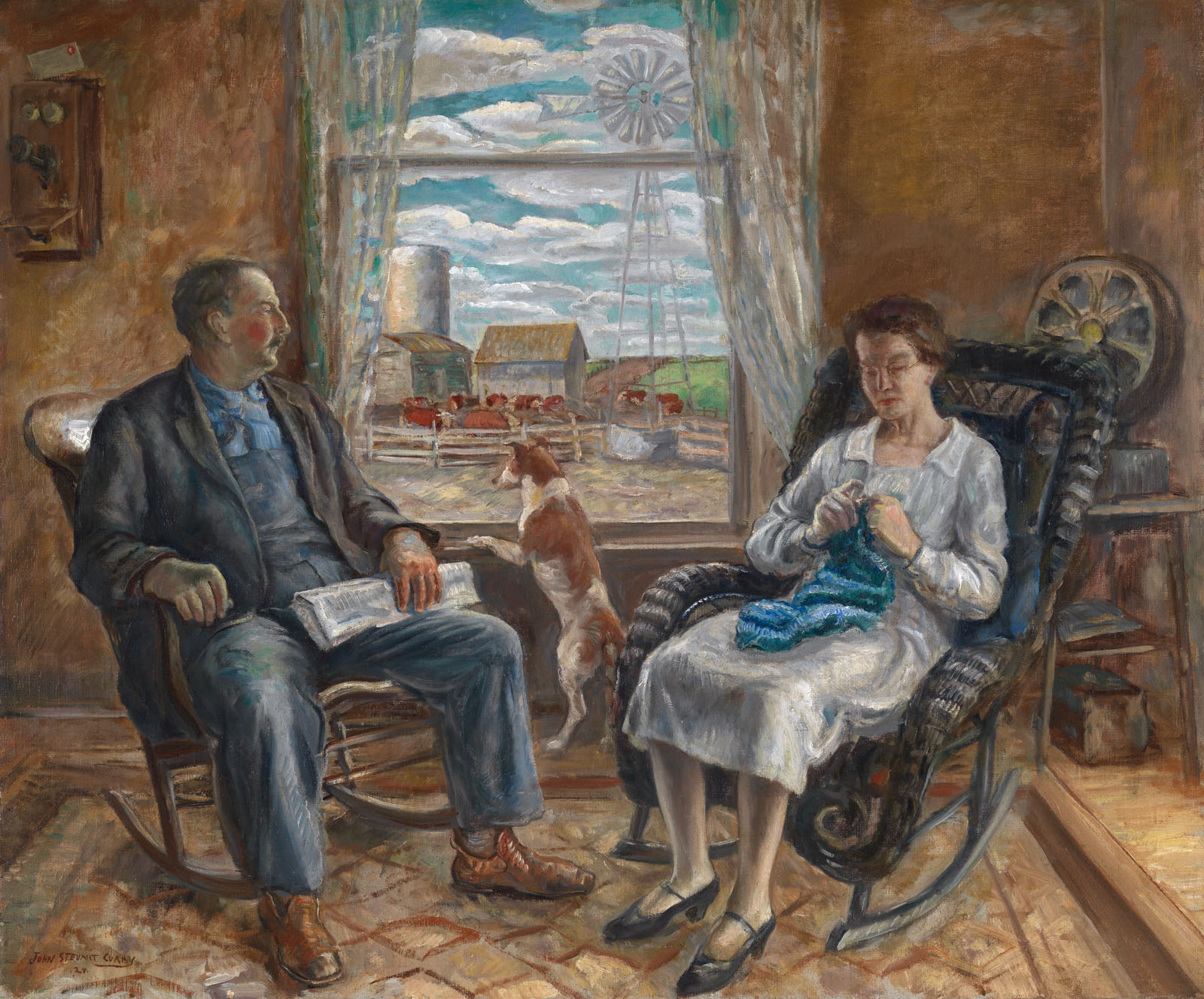 John Steuart Curry (1897-1946), The Old Folks (Mother and Father), 1929. Oil on canvas, 30 x 36 in. Cincinnati Art Museum. The Edwin and Virginia Irwin Memorial, 2002.46.
Martin hopes the exhibition will allow viewers to see Curry in another light. Largely shuffled into a box labeled “Regionalism,” Curry’s place in the American art scene in the early 20th century was more complex. “He never viewed himself as a regionalist. He was just making paintings about what he knew. He was a Midwest, hometown kind of guy. Early on he wanted to be an illustrator, but it never worked out economically. Then, when he started painting some of his more famous works, some [East Coast] viewers were looking at his work as almost satire,” Martin says. “And yet, Curry was truly earnest about his work and career.”
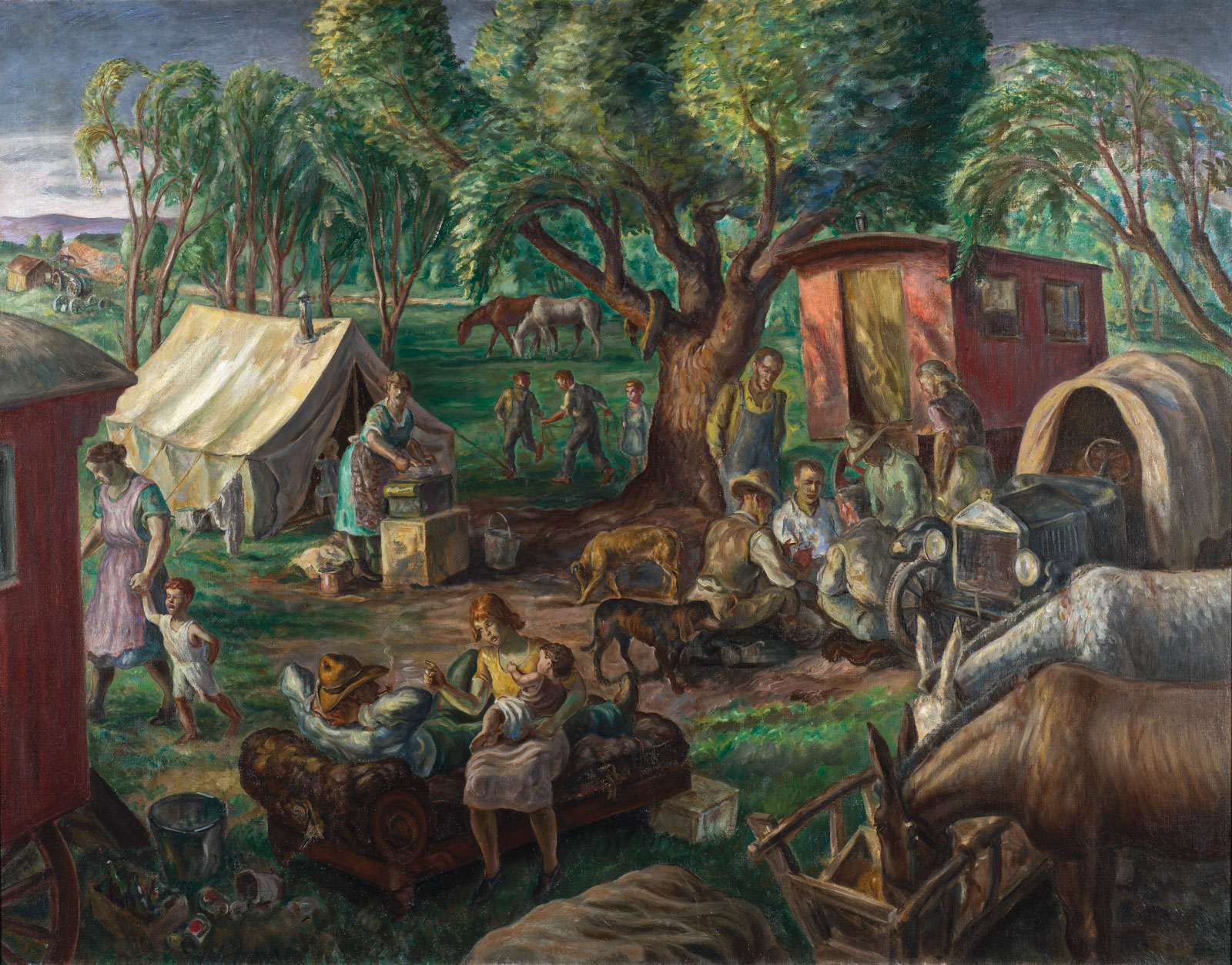 John Steuart Curry (1897-1946), Roadmender’s Camp (The Road Worker’s Camp), 1929. Oil on canvas, 40¼ x 521/8 in. Sheldon Museum of Art, University of Nebraska-Lincoln, Anna R. and Frank M. Hall Charitable Trust, H-164.1934.
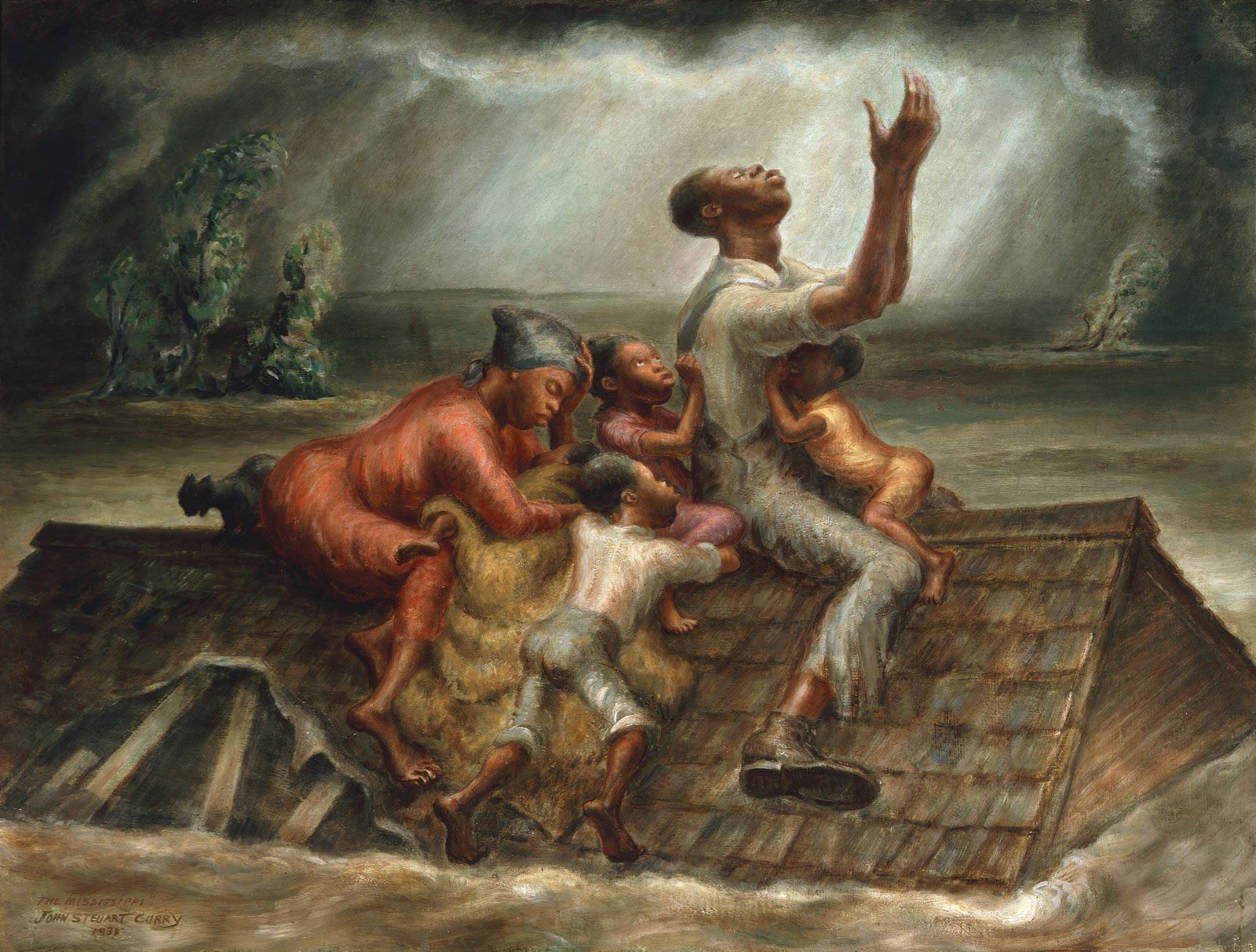 John Steuart Curry (1897-1946), The Mississippi, 1935. Tempera on canvas mounted on panel, 36 x 48 in. Saint Louis Art Museum. Museum Purchase, 7:1937.
The artist had a tremendously successful early career, which is where The Tornado (Tornado Over Kansas) and Baptism in Kansas originate. The Tornado (Tornado Over Kansas), in particular, has had a huge presence in the world of American art. It’s been reproduced in hundreds of publications, including the Encyclopedia Britannica and it comes to sum up life in the rural Midwest. As if to cement its role in the discussion about rural America, The Tornado has also been shown with Grant Wood’s American Gothic. Adding to the mystique of the work and Curry’s life is how short it all lasted—he died in 1946 at the age of 48. “He was regarded as a horrible painter, but an amazing storyteller. Later, Curry lands in a funny place within regionalism after the WPA, and after modernism and abstraction take over,” Martin says. “There is a resurgence of his work in the 1980s. But you can almost see what people were thinking about his work. When he was active, at that point the Armory Show had happened [in 1913] and it was as if people were too sophisticated for his work. Suddenly they were too clever for these kinds of images, which revealed their own prejudices.”
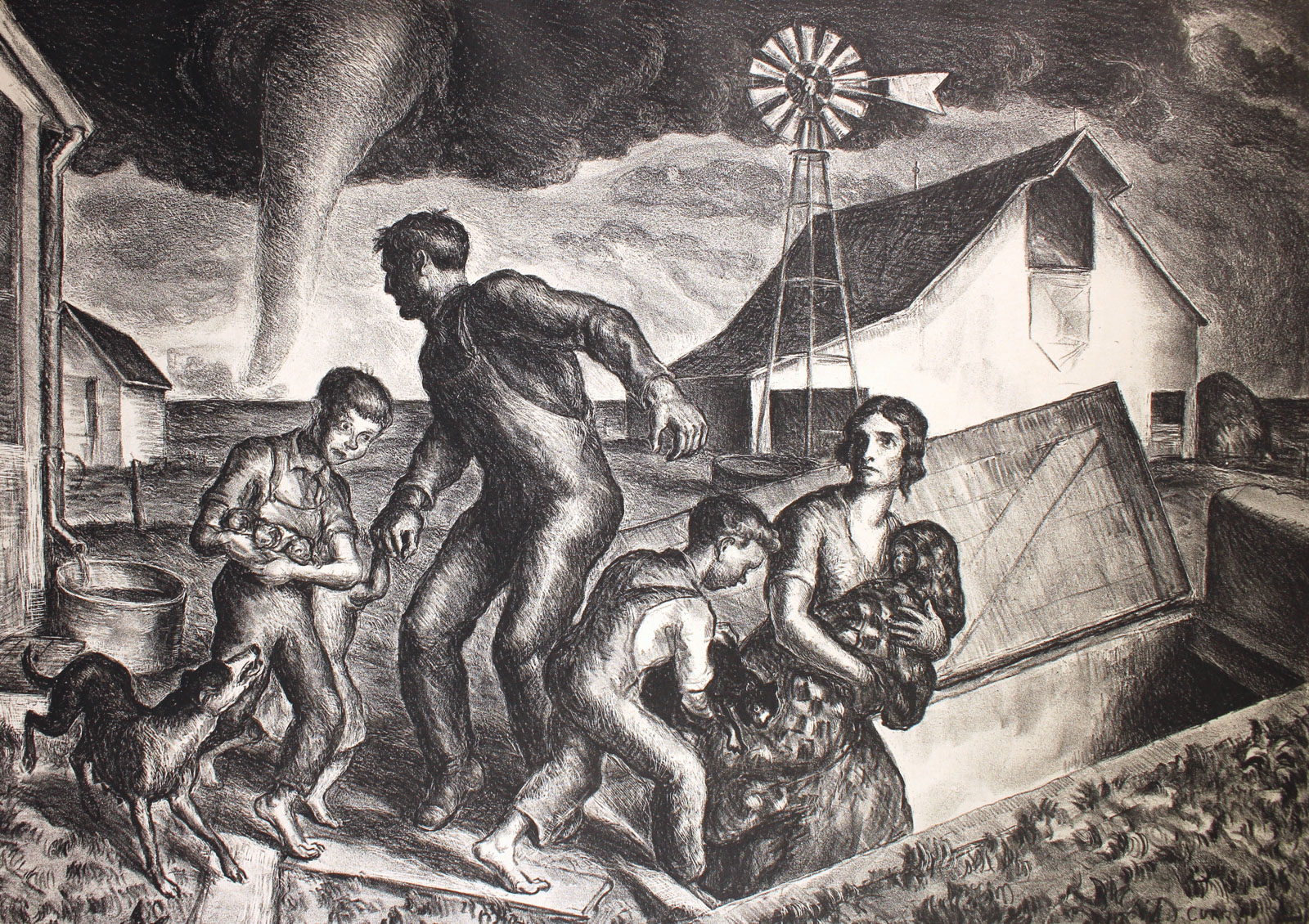 John Steuart Curry (1897-1946), The Tornado, 1932. Lithograph, 97/8 x 141/8 in. Collection of the Muskegon Museum of Art. Special Fund Purchase, 1934.29.
Prejudices aside, you can forgive those sophisticated viewers from disregarding the pictures, especially considering how Curry’s works magnify these little moments in rural America. The subjects and settings will likely feel quaint—and yet, grandly painted—compared to even Grant Wood and Thomas Hart Benton, other artists labeled regionalists from the 20th century. Other works in the show include Roadmender’s Camp (The Road Worker’s Camp), a 1929 oil showing various campers and travelers going about their daily lives amid a green field, and The Old Folks (Mother and Father), a 1929 oil with two figures seated in front of a window that overlooks a cattle pen.
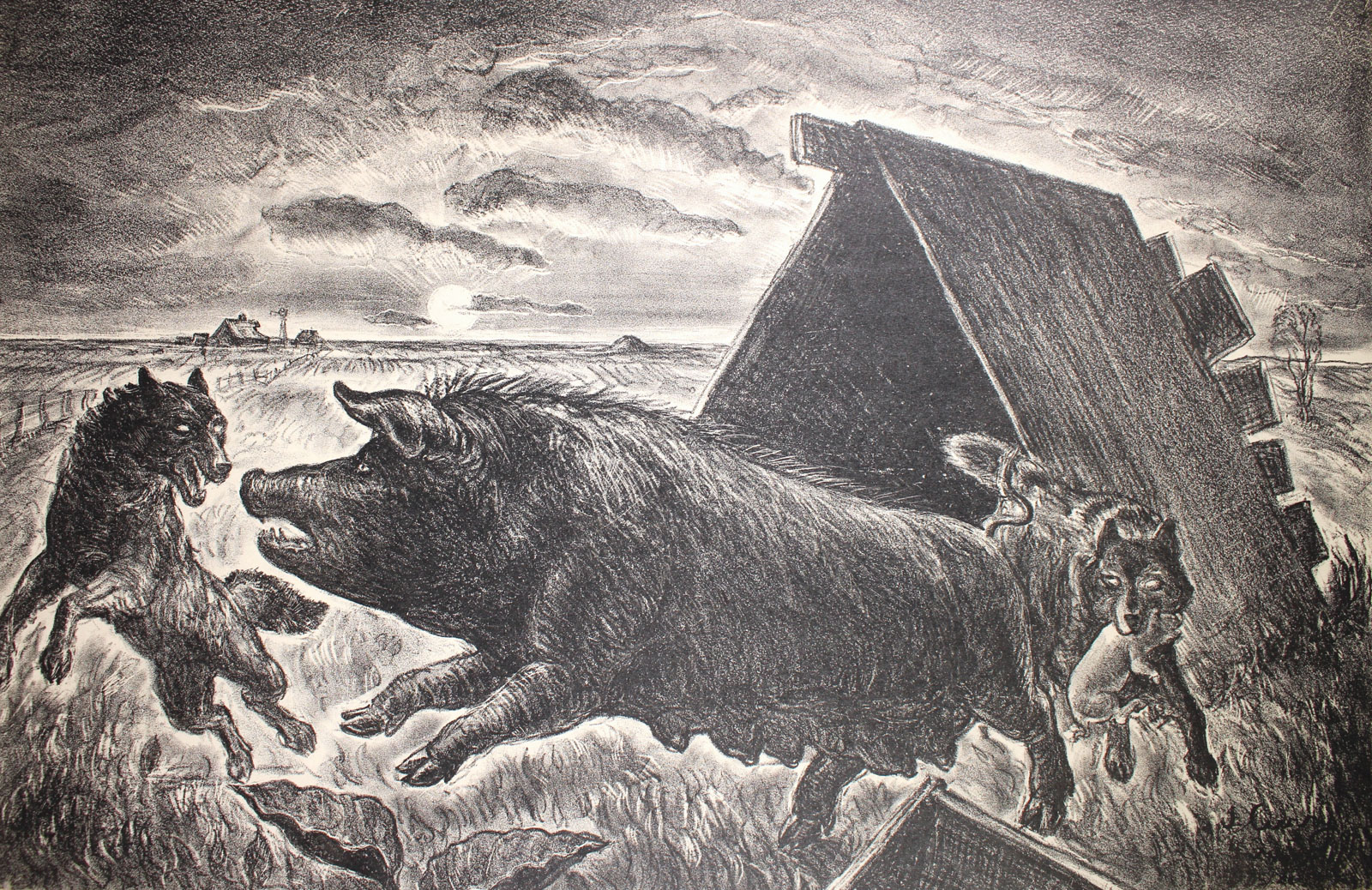 John Steuart Curry (1897-1946), Coyotes Stealing a Pig, 1927. Lithograph, 10 x 15 in. Collection of the Muskegon Museum of Art. Gift of Frederic Newlin Price, 1950.54.
The exhibition will also look at much of Curry’s history, some of which takes place in Paris where he studied with two Russian expatriates who had fled the Russian revolution before settling in France. At the center of the story is The Tornado, a work that looms large over the discussion. The work was so prominent in art culture that director Jan de Bont wanted to have access to the painting when he was making his 1996 weather thriller Twister. (A copy of the work was made and installed on the film’s set.)
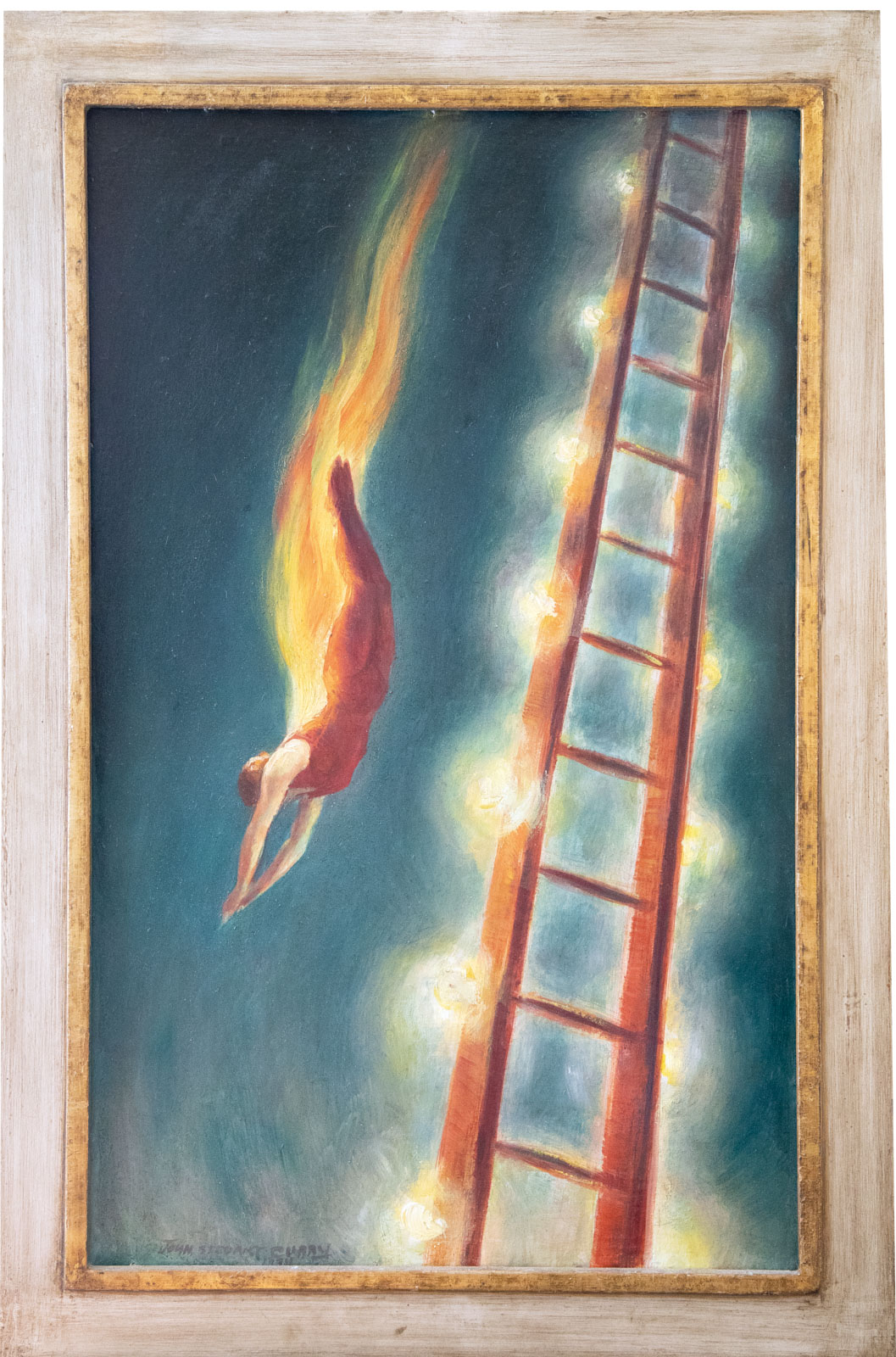 John Steuart Curry (1897-1946), Fire Diver, 1934. Oil on canvas, 23 x 14 in. John Steuart Curry Estate. Collection of Vivian Kiechel.
“The Muskegon Museum of Art is home to one of Curry’s most famous paintings, Tornado Over Kansas, as well as one of the best art collections of a small art museum in the country,” says Kirk Hallman, the museum’s executive director. “Over the past 111 years, the MMA has enjoyed a reputation of being a small museum presenting exhibitions that regularly receive national attention. In this tradition, we are proud to present this groundbreaking John Steuart Curry exhibition.”
John Steuart Curry: Weathering the Storm continues through September 2.
Powered by Froala Editor