Between the world wars of the early 20th century, a new culture began to take shape in the northern cities of the United States, formed from the migration of a vast Black population who departed the segregated South in search of well-paid work, hoping for freedom from the racial oppression and contempt that had restrained them. As urban neighborhoods coalesced between the 1920s and 1940s, Black arts inevitably emerged from them, especially in New York City’s Harlem and on Chicago’s South Side, where unconventional artists, determined to resist racist stereotyping, committed themselves to depicting members of their new communities as a modern people fully engaged in a modern culture. The exciting art that emerged became known as the Harlem Renaissance, because it was particularly in that city that artists blended the influences of African sculpture and Black folk art with the western avant-garde.
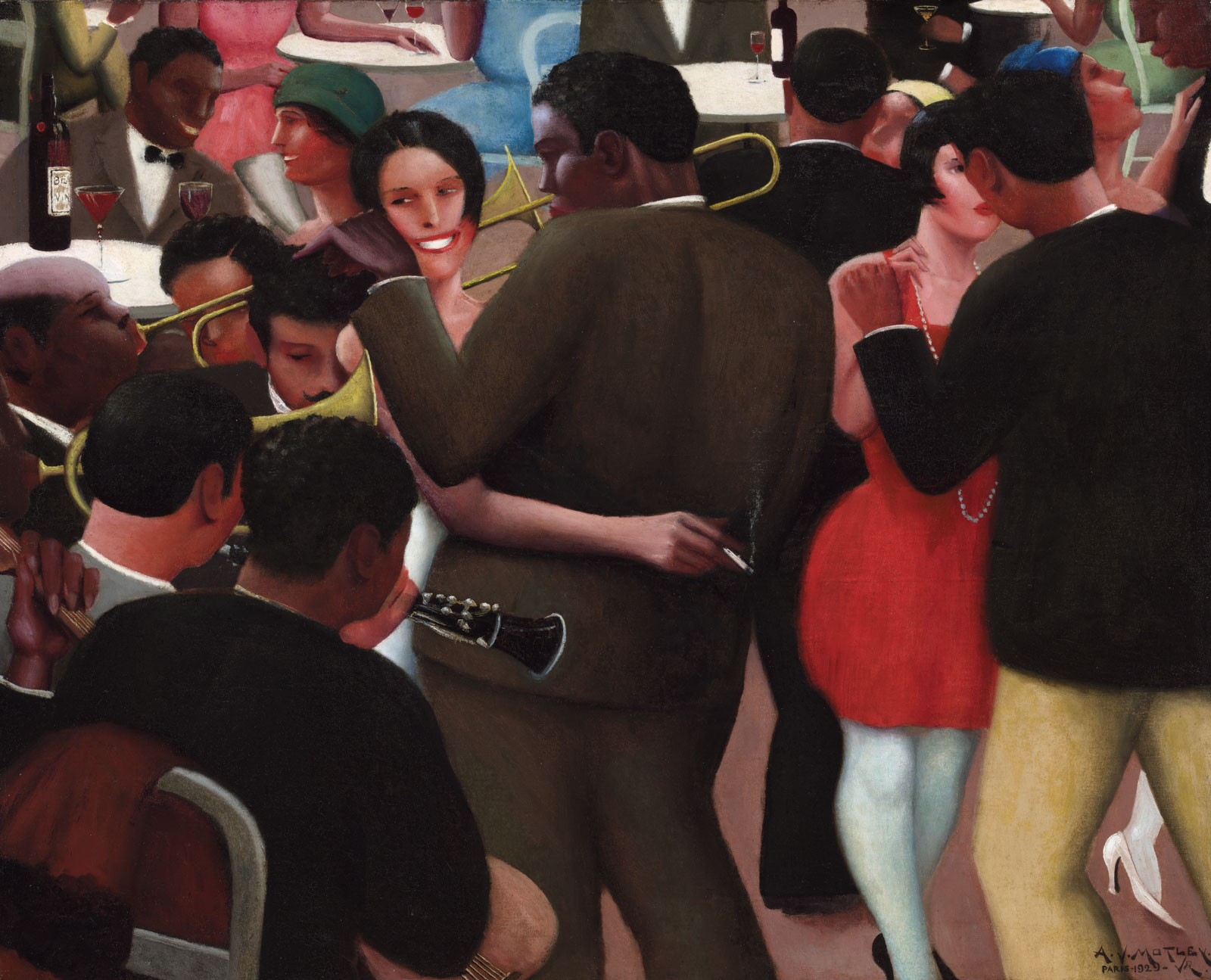 Archibald J. Motley Jr. (1891-1981), Blues, 1929. Oil on canvas, 37¾ x 453/8 in. Mara Motley, MD, and Valerie Gerrard Browne HRN.093.
It was the first time African Americans had led a movement of international modern art. The Met’s Merryl H. and James S. Tisch Curator at Large Denise Murrell explains, “Many ‘New Negro’ artists spent extended periods abroad and joined the multiethnic artistic circles in Paris, London and Northern Europe that shaped the development of international modern art. The exhibition underscores the essential role of the Harlem Renaissance and its radically new modes of portraying the modern Black subject as central to the development of transatlantic modern art.”
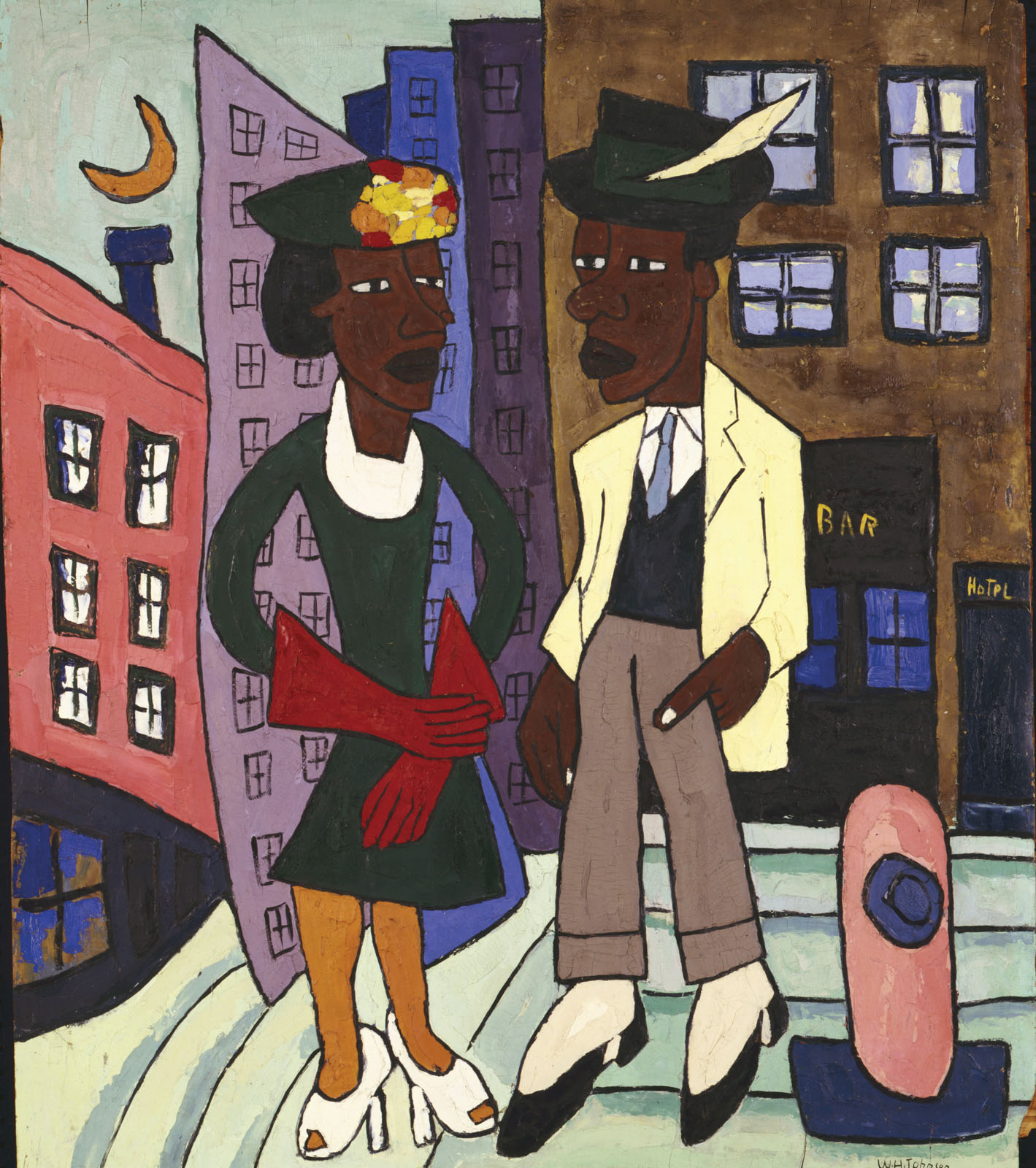 William Henry Johnson (1901-1970), Street Life, Harlem ca. 1939-1940. Oil on plywood, 52 x 445/16 in. Smithsonian American Art Museum, Washington D.C. Gift of the Harmon Foundation HRN.069.
This movement was not limited to art. It was given intellectual weight by luminaries like Howard University professor Alain Locke, who provided philosophical strength; W.E.B. Du Bois, the leader of the Niagara Movement, a group of Black civil rights activists seeking equal rights; and sociologist Charles S. Johnson, the president of Fisk University, while its literary stars included authors Zora Neale Hurston, Langston Hughes and James Weldon Johnson. Hughes wrote, “We younger Negro artists who create now intend to express our individual dark-skinned selves without fear or shame. If white people are pleased we are glad. If they are not, it doesn’t matter. We know we are beautiful. And ugly too…If colored people are pleased we are glad. If they are not, their displeasure doesn’t matter either. We build our temples for tomorrow, strong as we know how, and we stand on top of the mountain, free within ourselves.”
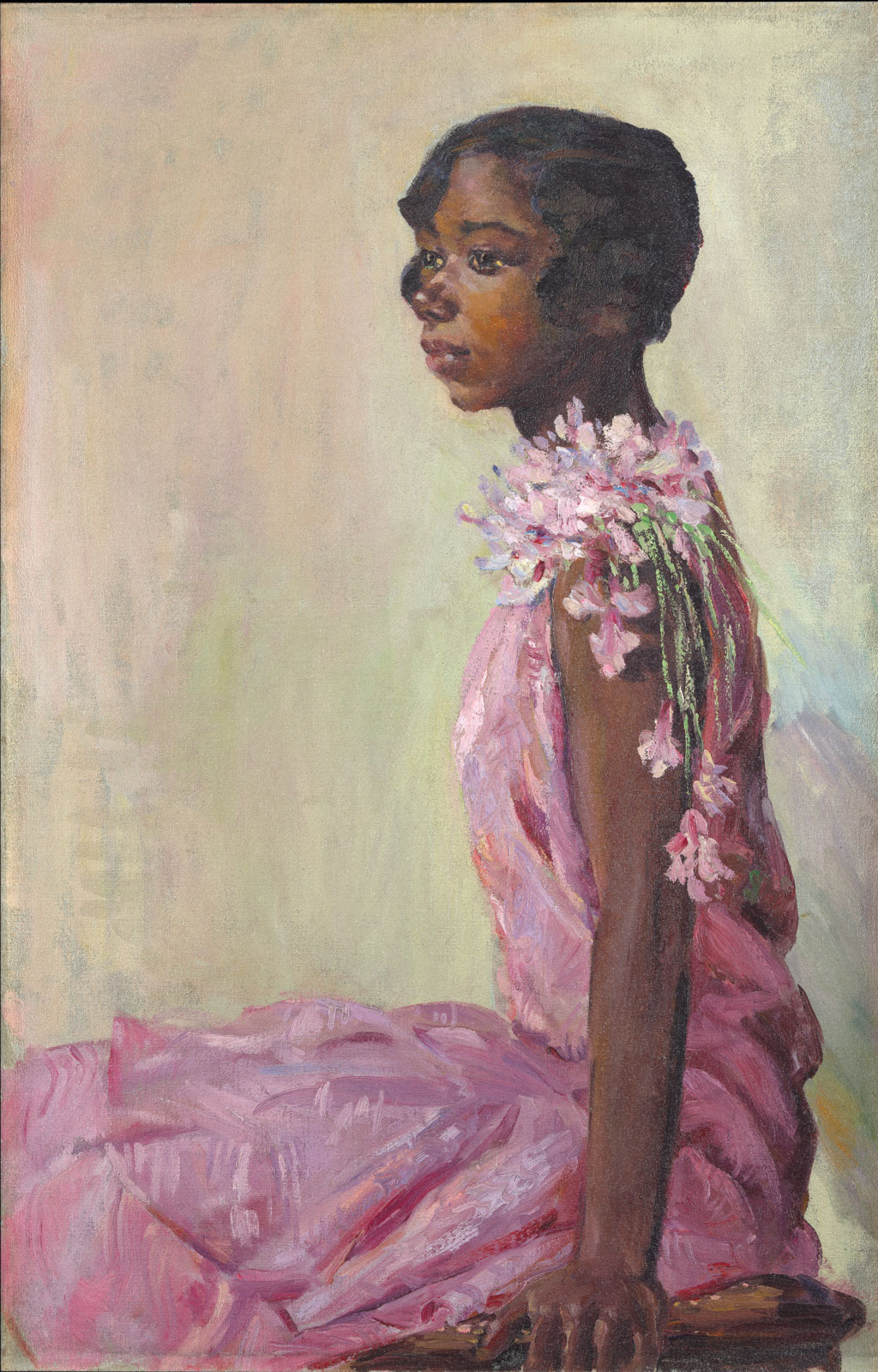 Laura Wheeler Waring (1887-1948), Girl in pink dress, ca. 1927. Oil on canvas, framed: 371/4 x 261/8 in. Roberta Graves HRN.159.
But how was the modern Black American subject to be portrayed in paintings? The Harlem Renaissance and Transatlantic Modernism, a sprawling exhibition at The Met through July 28, considers New Negro art within the context of the modernist movement flourishing during the period.
The exhibit is certainly part of the prolonged discussion centered on the broader question of American identity that continues to pervade all American art—but specifically focused on how the question of identity was manifested in these communities, as an enquiry into what Black American culture was, what it could become, and how it differed from other cultures, both in America and abroad. As the Harlem Renaissance took shape, some artists approached this challenging question by adopting the idealism of the European avant-garde—then a transatlantic phenomenon—which was founded upon the idea of creating a new art for the new era. The exhibit compares paintings by Black artists who traveled to Europe to explore the potential of the modern movement with images of the international African diaspora by famed modernists like Henri Matisse, Edvard Munch and Pablo Picasso. Other African American artists were resistant to participating in any product of the white culture that had enslaved their people. Instead they adopted the aesthetics of Africa and Egypt, and the exhibit includes works of art hinting at these differing approaches, like Sargent Claude Johnson’s copper and enamel Mask from 1934, which uses the ritual masks of African tribal traditions as inspiration for a masterpiece of distinctively modernist, and yet uniquely American New Negro sculpture.
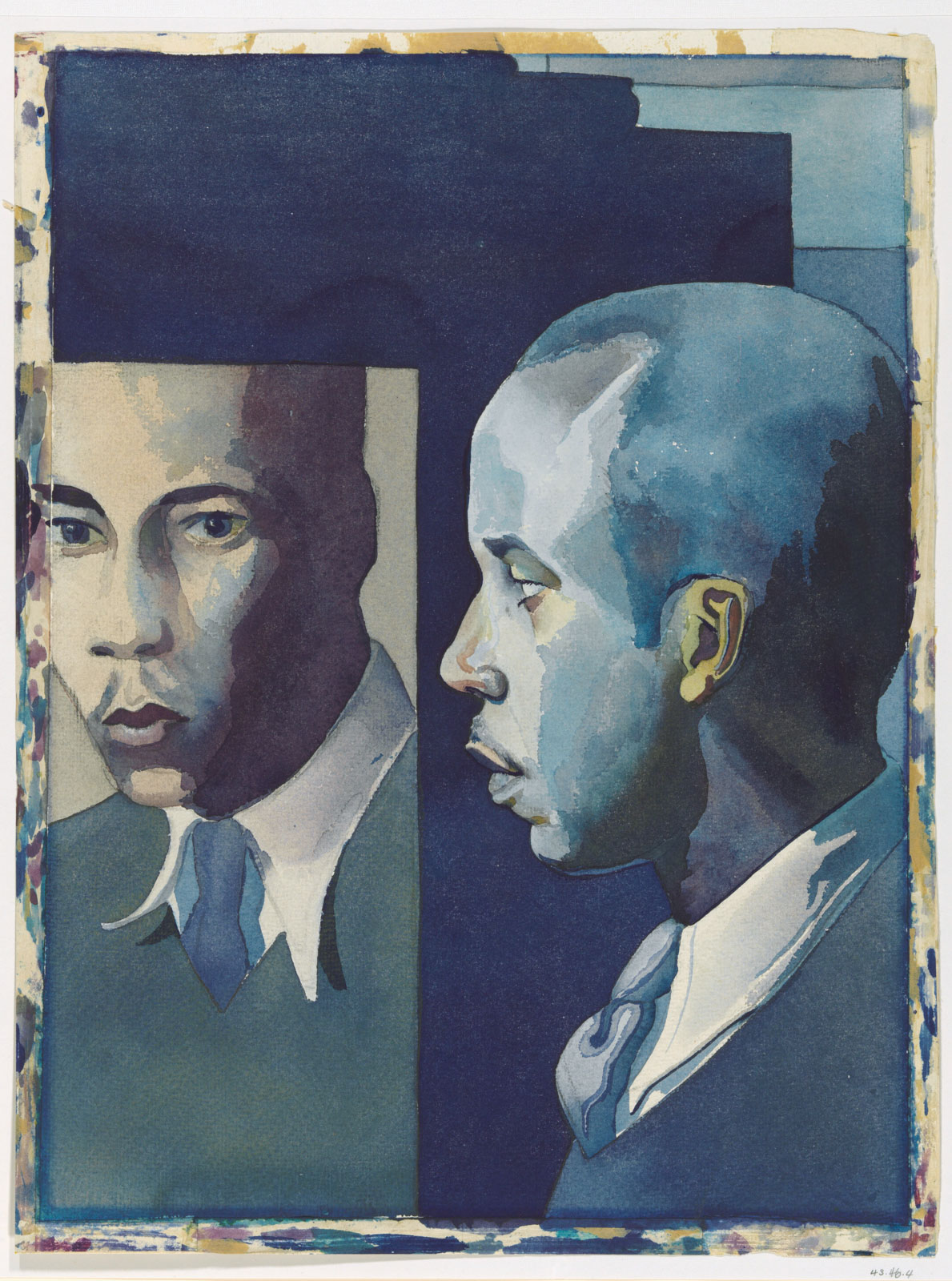 Samuel Joseph Brown Jr. (1907-1994), Self-Portrait, ca. 1941. Watercolor, charcoal and graphite on paper, 20¼ x 153/8 in. Gift of Pennsylvania W. P. A., 1943 43.46.4.
Palmer Heyden’s Fétiche et Fleurs is a graceful conciliatory gesture which includes an African fetish as an object of the artist’s examination within a conventional modernist still life, suggesting co-existence, while paintings like William H. Johnson’s Harlem Street Life reflect the artist’s efforts to create a new aesthetic approach to the unique situation of the ‘New Negro’ in America. Willliam Artis’ beautiful 1939 ceramic bust Woman with Kerchief shows how elegant realism transcends all other approaches and finds the simple beauty of the subject rendered by the skilled hand.
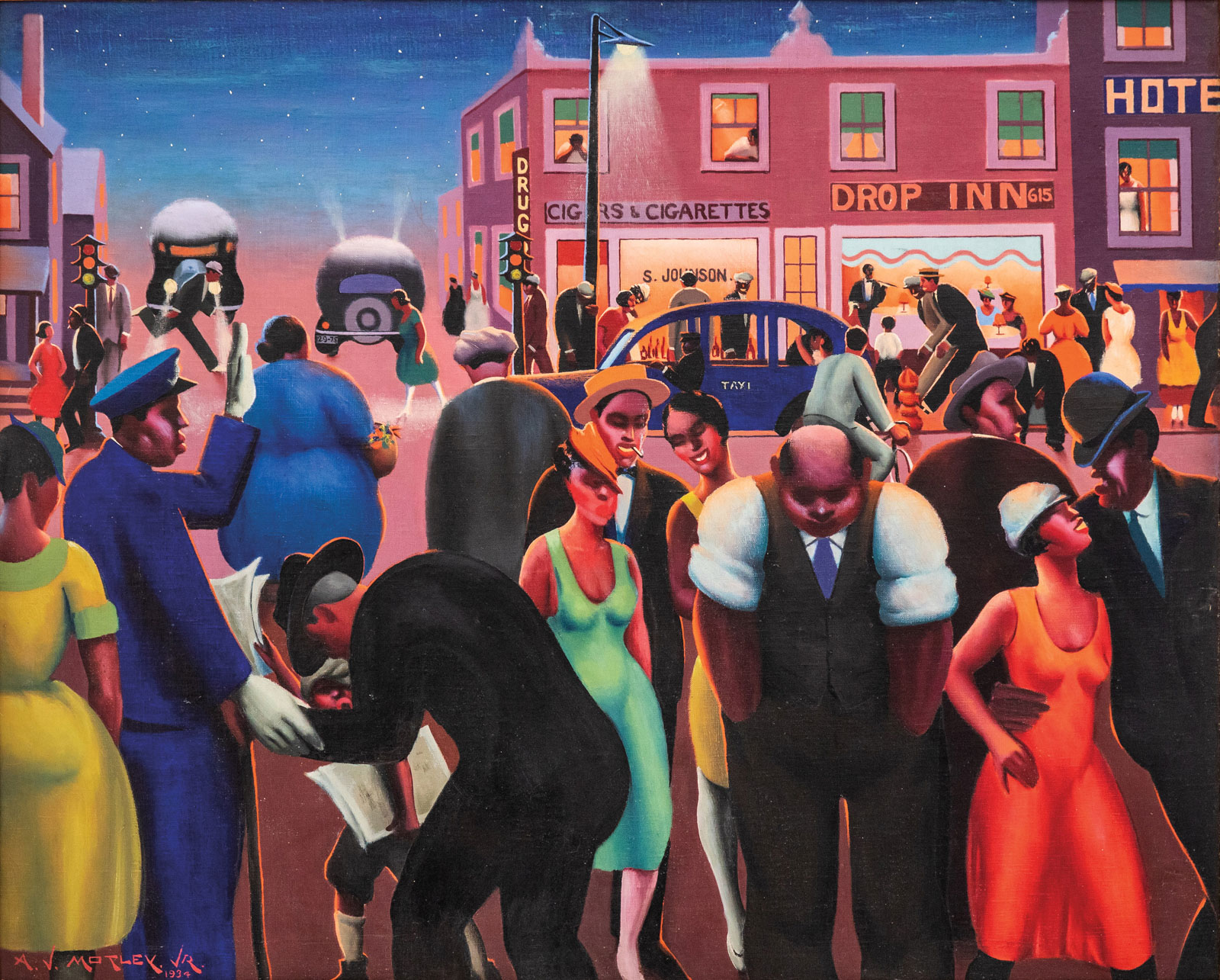 Archibald J. Motley Jr. (1891-1981), Black Belt, 1934. Oil on canvas, 33 x 405/8 in. From the Hampton University Museum Collection, Hampton, VA HRN.097.
It is also within the realm of realism that some true novelty emerges from the time, for highly skilled portrait paintings marked the arrival of a new class of Black American leaders, who are lent all the dignity and gravitas of ancient media. For centuries the form and function of realist portraits have consistently indicated that their subjects are worthy of respect and admiration, and these subjects are no exception. Reiss’ elegant portraits of W. E. B. Du Bois, Langston Hughes and Charles Spurgeon Johnson, all created in 1925, are fresh, honest and stylish. Today it is hard to believe that these were the controversial shockers of painted imagery less than a century ago. Reiss, a German white man, never managed to sell or exhibit a single one of his Harlem portraits in a gallery, despite their grace and technique. Portraits of Black subjects were a serious matter, and understood as an important move toward equality—recognizing the gravity of including luminaries of the Black American community, the National Portrait Gallery in Washington, D.C. commissioned a series of paintings of Outstanding Americans of Negro Origin, including Laura Wheeler Waring’s monumental portrait of popular singer Marian Anderson among the purchases, the image and statement of a prospering middle-class lady.
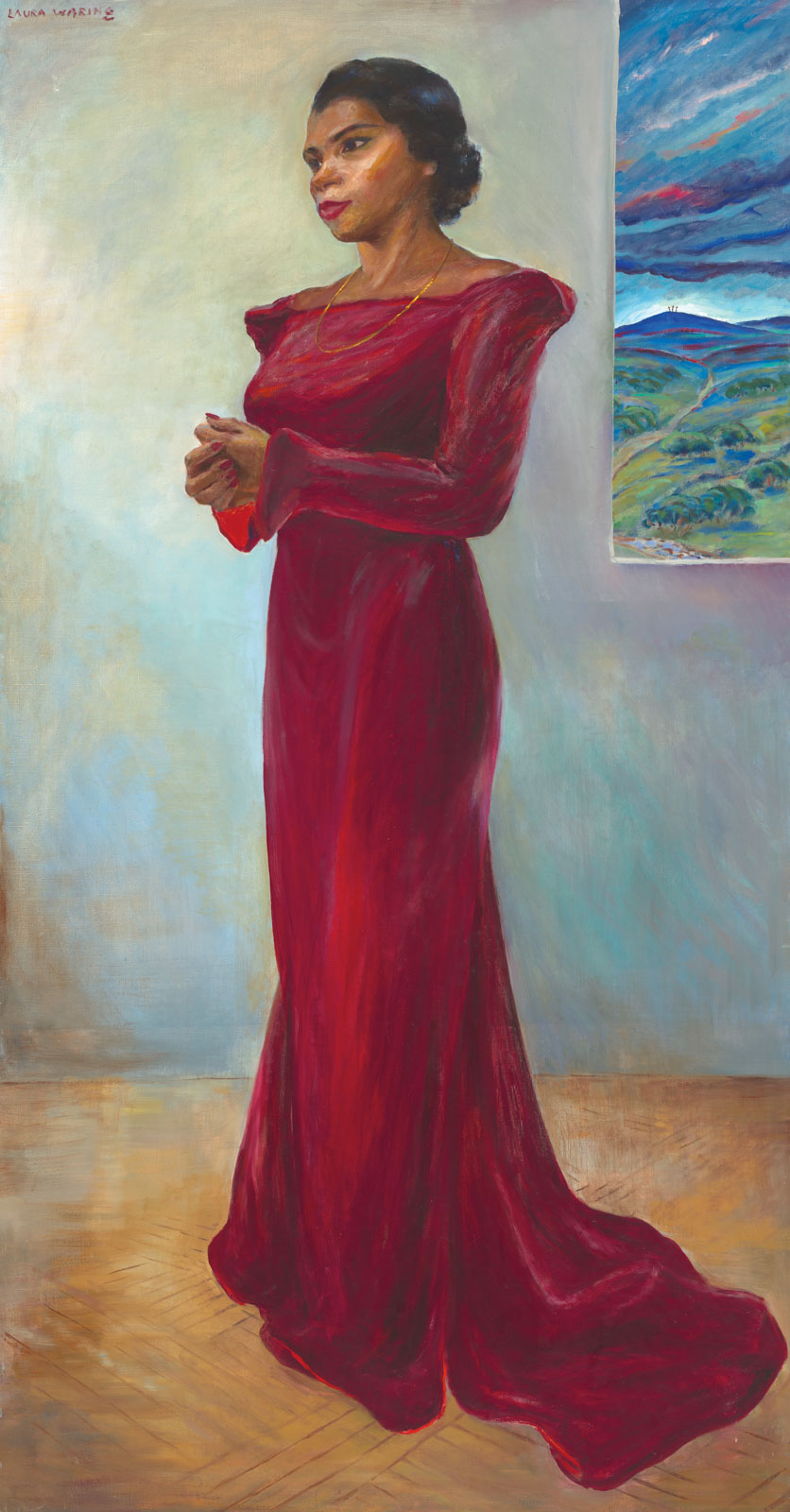 Laura Wheeler Waring (1887-1948), Marian Anderson, 1944. Oil on canvas 76 x 40¼ in. National Portrait Gallery, Smithsonian Institution, Washington D.C.; gift of the Harmon Foundation HRN.119.
Should these portraits of the great seem too stable or stuffy without the benefit of tempered time to lend them the teeth they earned, Archibald Motley’s delightful 1920 Self-Portrait shows a young man keen to present himself as a well turned-out and serious artist, pomaded and barbered with a trim and fashionable mustache, holding the palette, brush and paint of his trade. Samuel Brown’s experimental double image self-portrait is an ecce homo of the New Negro, and Waring’s Girl With Pomegranate is a lovely painting of a nervous debutante in the form of a society portrait, while her Girl in a Pink Dress presents a pretty young mademoiselle in the flapper silk and trim of the age, full of promising light. America was changing, and these artists knew it.
A group of paintings by William Henry Johnson make an interesting connection to the strength of the United States establishment’s institutional interest in Primitivism during the 1930s and 1940s, a peculiarly American phenomenon connecting itinerant and naïve art by untrained artists to the radical simplification of the figure which was among the hallmarks of avant-garde abstraction. Primitivism was enthusiastically endorsed and promoted by Abby and Nelson Rockefeller who were key figures in shaping the aesthetics of the American individualist avant-garde. Abby Rockefeller collected Johnson’s work, purchasing his 1941 Training for War, Children, and Street Musicians of 1941. Johnson’s work was entirely in harmony with the ideas promoted in Jean Lipman’s book American Primitive Painting of the same year, and with John Dewey’s earlier Art as Experience of 1934, both of which justified primitive art as foundational to the American avant-garde.
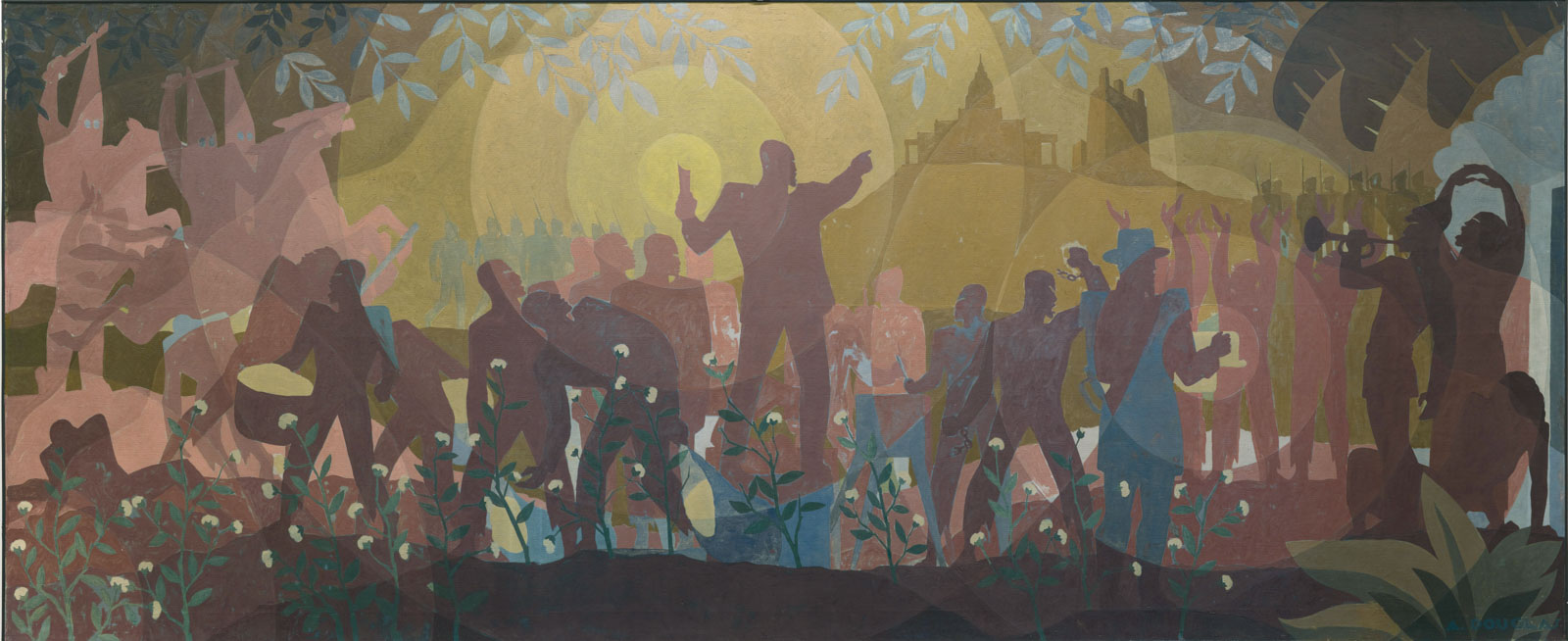 Aaron Douglas (1899-1979), Aspects of Negro Life: From Slavery through Reconstruction, 1934. Oil on canvas, 60 in. x 11 ft. 11 in. Schomburg Center for Research in Black Culture, Art and Artifacts Division, The New York Public Library, Astor, Lenox and Tilden Foundations HRN.005 PIC H.Printed graphics are a special treat—gorgeous art nouveau designs by Waring for the covers of The Crisis magazine, like her Egypt and Spring and The Strength of Africa, tie the New Negro movement to a romanticized Black heritage which parallels the same impulse for glamorous nostalgia that dominated the West after the Great War.
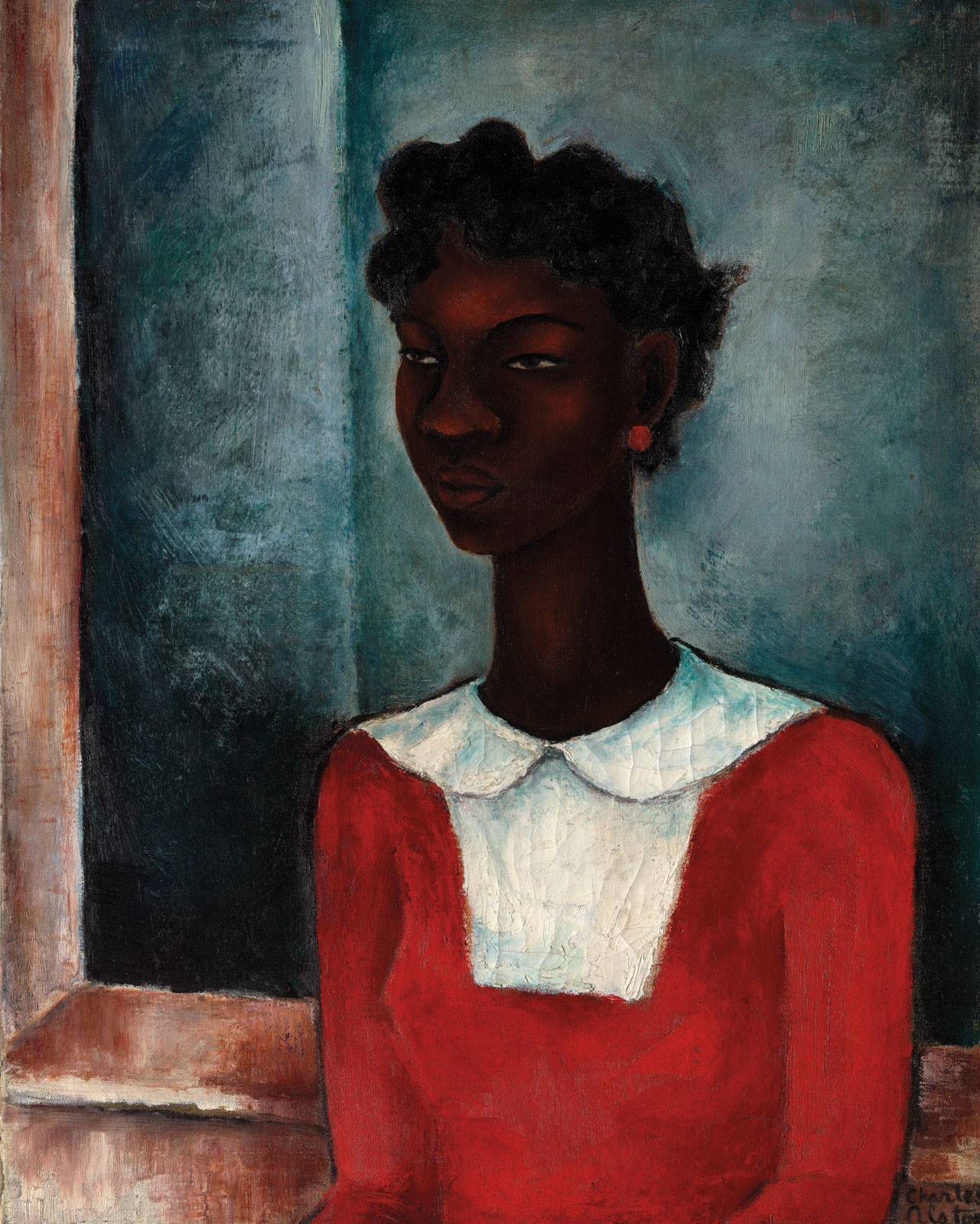 Charles Henry Alston (1907-1977) New York Girl in a Red Dress, 1934. Oil on canvas, 28 x 22 in. Purchase, Lila Acheson Wallace Gift and George A. Hearn Fund, 2021 2021.25.
An impressive room of oil paintings by Aaron Douglas shows the artist fully engaged—and succeeding—In the effort to assimilate the African American experience with modern art, and his paintings are the highlight of the show, especially his Aspects of Negro Life From Slavery to Reconstruction, created in 1934 for the 135th Street branch of the New York Public Library. While clearly influenced by the aesthetic guidelines imposed upon all murals financed by the Works Progress Administration, Douglas explicitly introduces the contemporary Black artist as an active, enthusiastic and, above all, equal participant in the American art world of the 1930s. The figures are silhouetted and simplified, and surrounded by radiating circles which draw focus to the emancipation proclamation gripped tightly in the hand of an activist speaker who gestures toward the idealized city on the hill Hughes had spoken of. It was an important symbol to Douglas. He painted it again in his Aspiration, this time with two silhouetted men gesturing to the ethereal high-rises of the hilltop city which tower over the industrial buildings that offered employment. One of the fraternal pair holds an architect’s square and a compass over a globe, representing the masonic tools of universal self-improvement and the brotherhood of all mankind—the paintings are powerful and idealistic images of the vision and hope of true liberation.
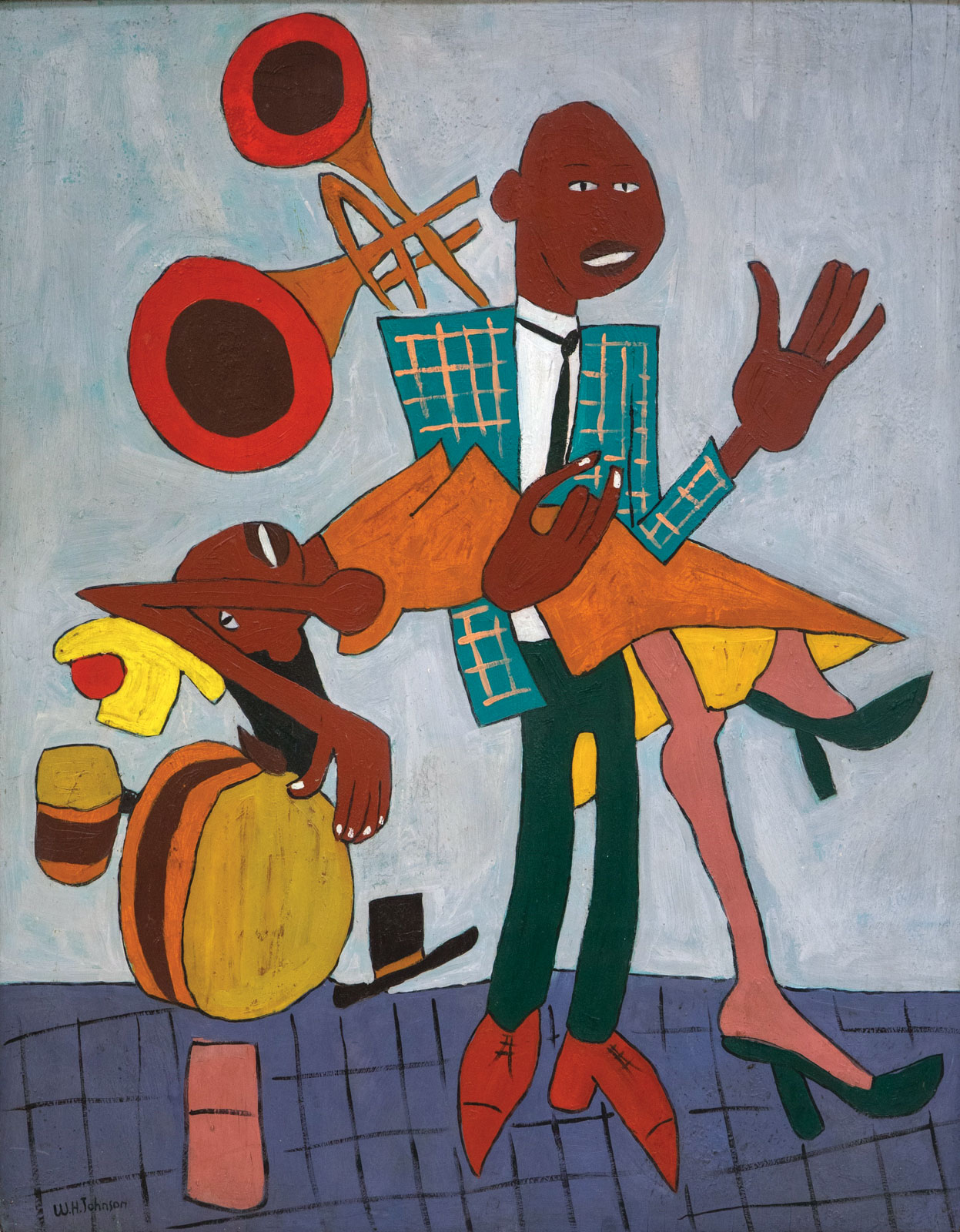 William Henry Johnson (1901-1970), Jitterbugs V, ca. 1941-42. Oil on board, 39 x 21 in. From the Hampton University Museum Collection, Hampton, VA HRN.246.
The thoughtful curators are careful to emphasize the historical value and significance of the Harlem Renaissance. While dating from 1971, and thus outside the usually accepted realm of the New Negro period, Romare Bearden’s 15-foot-wide mixed media collage, The Block, indicates their faith that the legacy of the movement lived on, and that the artistic journey toward the city on the hill would continue—always hoping for Hughes’ promised temples for tomorrow.
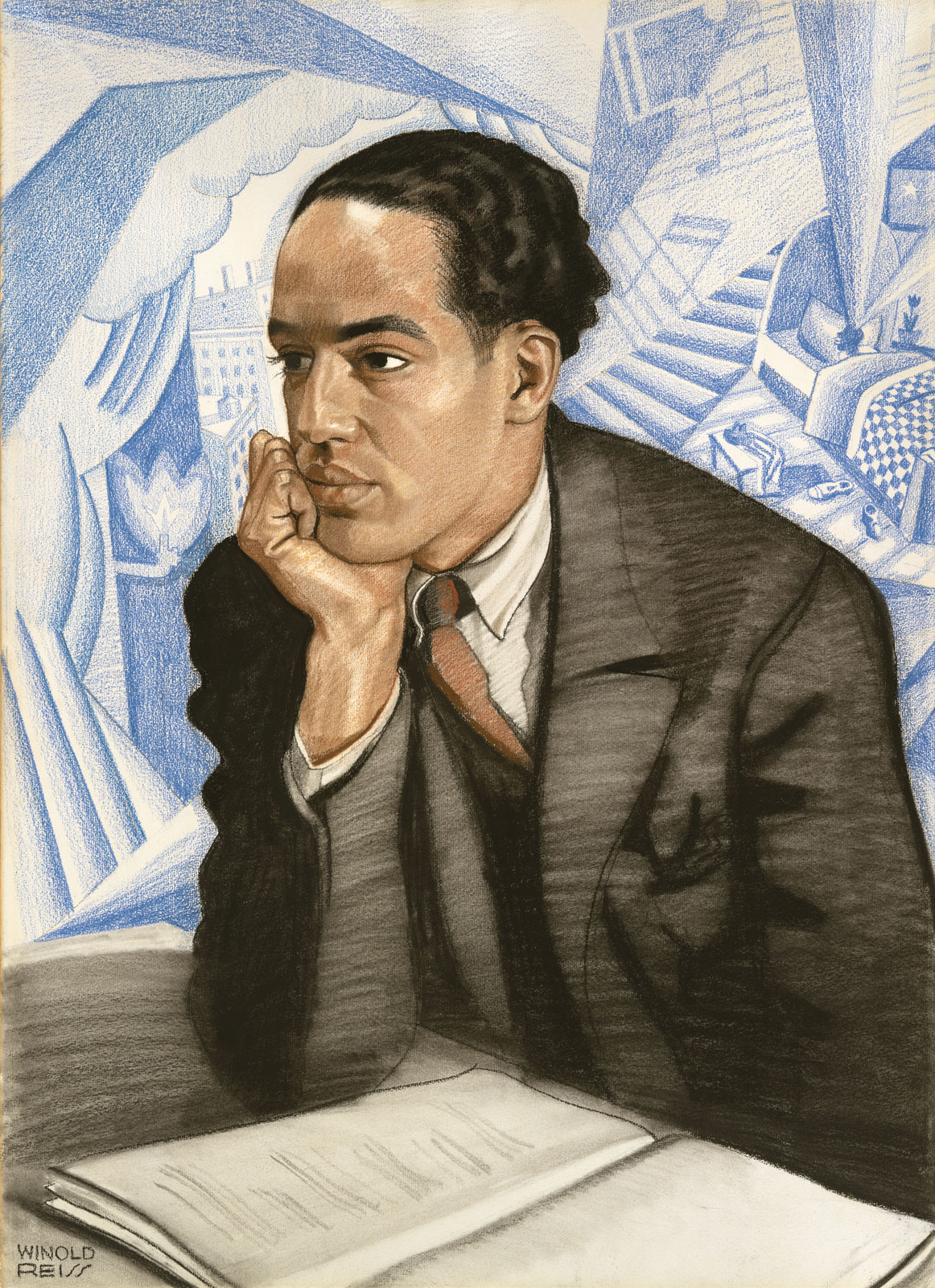 Winold Reiss (1886-1953), Langston Hughes, 1925. Pastel on illustration board, 35 x 27¼ in. National Portrait Gallery, Smithsonian Institution, Washington D.C.; gift of W. Tjark Reiss, in memory of his father, Winold Reiss HRN.157.
Michael Pearce is a dynamic writer, curator, and critic, and a champion of art that emerges from popular culture and shapes the spirit of the age. He has published dozens of articles about art and artists, and is author of Kitsch, Propaganda, and the American Avant-Garde. He is Professor of Art at California Lutheran University.
Powered by Froala Editor