In 1934, toward the end of the Great Depression, Reeves Lewenthal, an enterprising art dealer in New York, formed Associated American Artists to make affordable art available to the middle class. He commissioned well-known and unknown artists to produce signed, limited-edition etchings and lithographs to be sold for as little as $5, equivalent to about $100 today. Mail-order campaigns, magazine advertisements, department store sales and traveling exhibitions put the prints before the public. The prints were produced in editions ranging from 125 to 250 impressions.
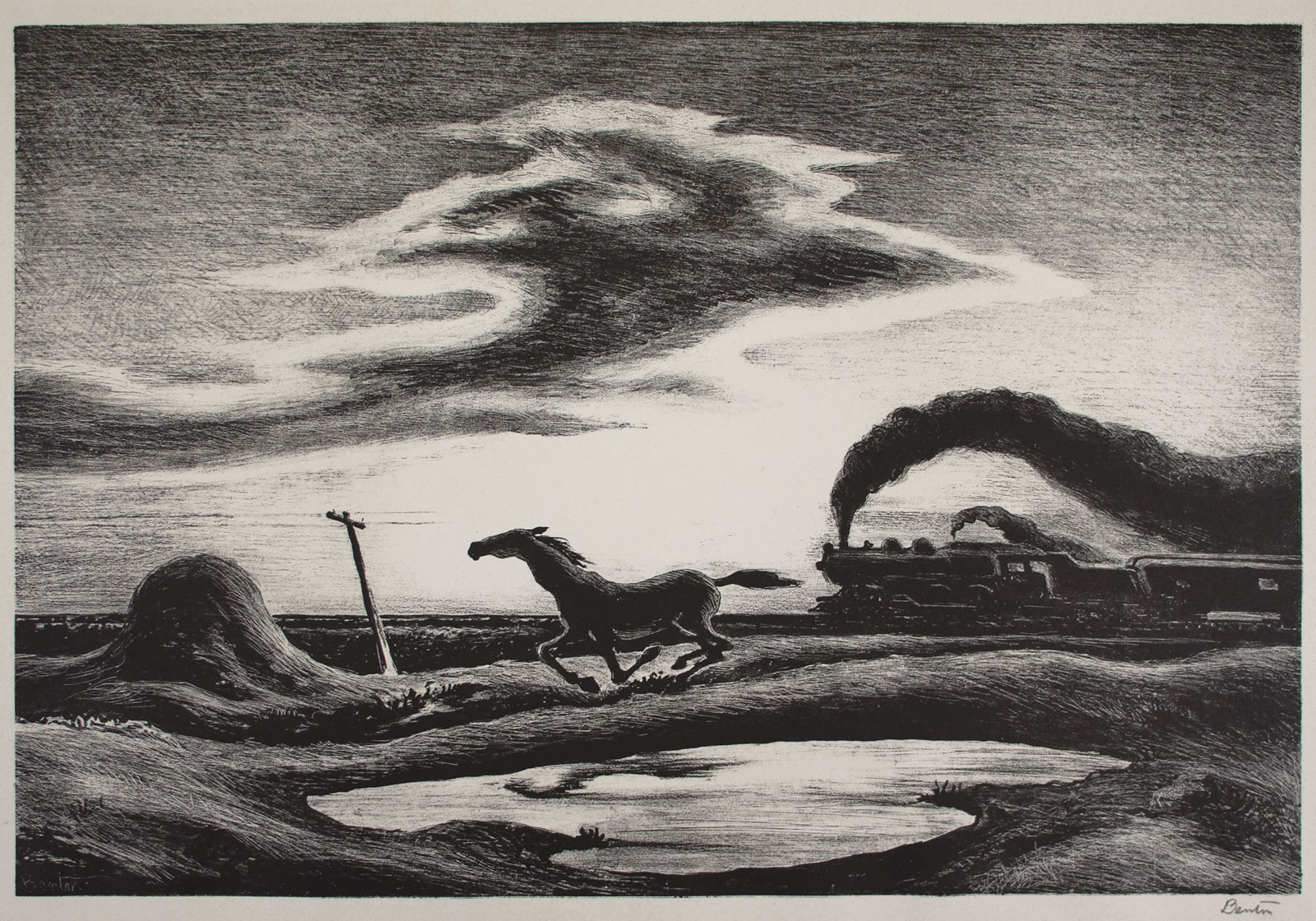 Thomas Hart Benton (1889-1975), Homeward Bound, 1942. Lithograph on cream wove paper, 11½ x 16 in. Museum Purchase, 1943.78.
The Farnsworth Art Museum in Rockland, Maine, has drawn from its collection to stage the exhibition Prints for the People: Associated American Artists which continues through May 5, and features prints from the 1930s and 40s.
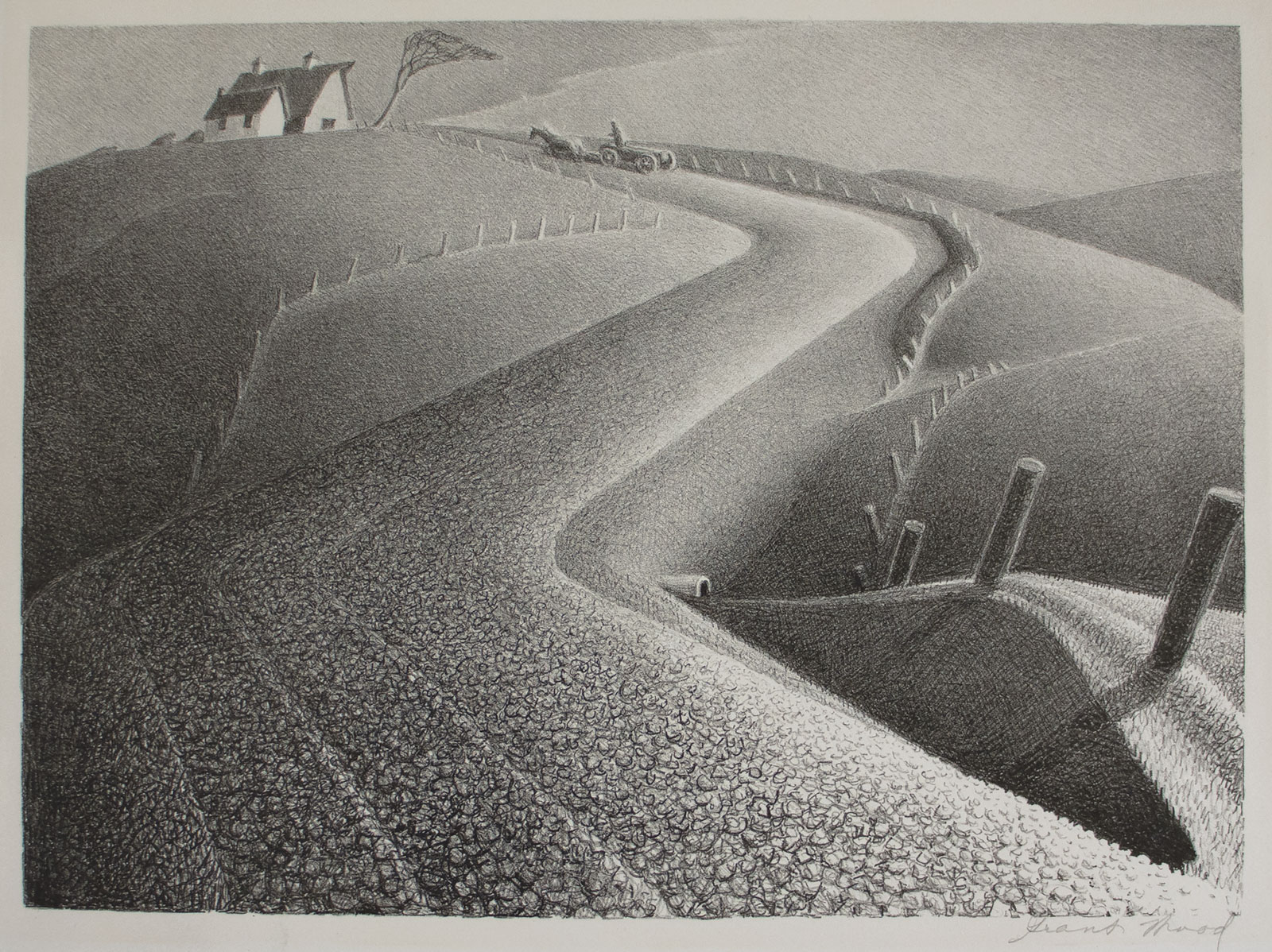 Grant Wood (1892-1942), March, 1939. Lithograph on deckled white wove paper, 12½ x 15¾ in. Gift of Mr. and Mrs. Robert Rothschild, 1978.67.1.
The museum’s curator, Jane Bianco, writes, “The Great Depression impacted artists across the United States, and Associated American Artists played a pivotal role as a print publisher, marketer and gallery by creating a new market for artists. They became a lifeline for artists by offering affordable, original artwork to the middle-class, which sustained both established and emerging printmakers until the 2000s.”
Among the well-known artists are Thomas Hart Benton (1889-1975) and Grant Wood (1892-1942). Both were regionalists in the Midwest who depicted uniquely American subjects.
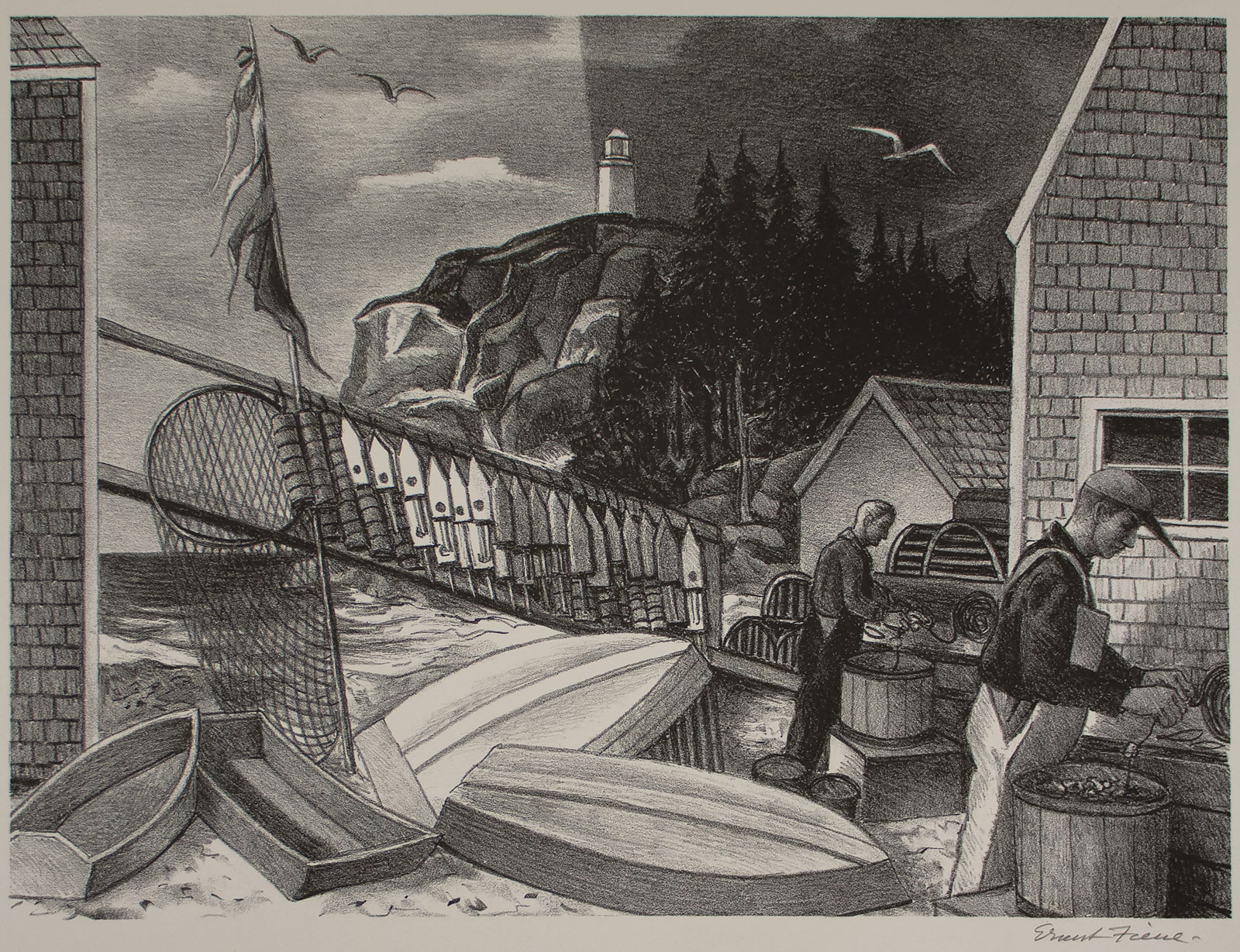 Ernest Fiene (1894-1965), Fisherman’s Cove, Maine, 1953. Lithograph on semi-deckled white wove paper, 9¾ x 13 in. Museum purchase, Leo Meissner Fund, 1984.37.3. © Estate of Ernest FeineBenton’s lithograph, Homeward Bound, 1942, alternatively titled The Race, depicts the tension between rural life and industrialization in his typical elongated forms. The fluidity of Benton’s drawing of the forms is a quality of the lithographic process.
Lithography also lends itself to Grant Wood’s sinuous style. He intended to represent the four seasons and each month of the year in his lithographs. March, 1939, depicts the end of winter with March winds seemingly bending house, tree, horse and wagon with its force.
Wood had made several trips to Europe in the 1920s. When he returned, he wrote, “I came back because I learned that French painting is very fine for French people and not necessarily for us, and because I started to analyze what it was I really knew. I found out. It’s Iowa.”
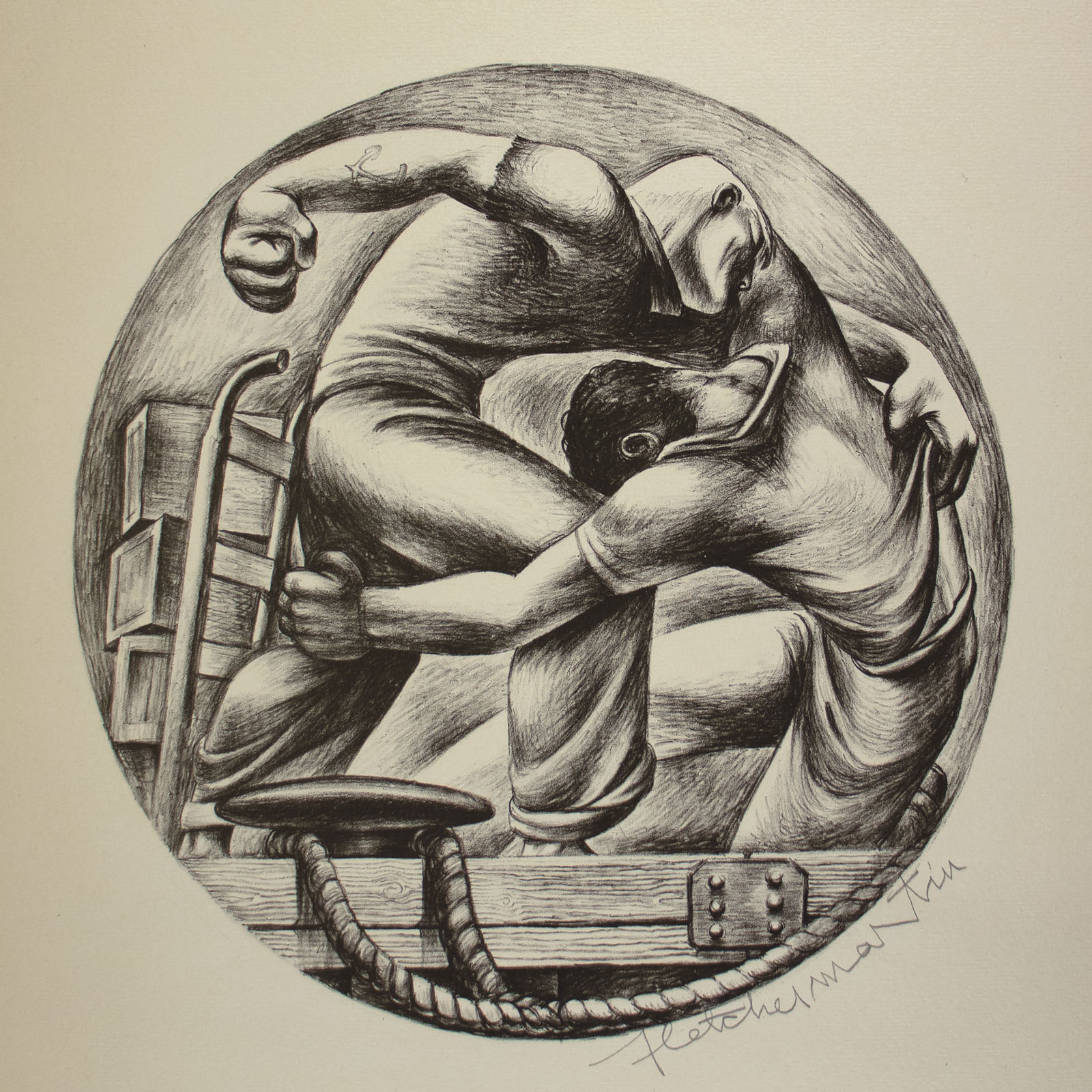 Fletcher Martin (1907-1979), Trouble in Frisco, ca. 1936. Offset lithograph on cream wove paper, 19 x 13 15/16 in. Gift of Mrs. Jean Martin, 1982.10. © Estate of Fletcher Martin.
Fletcher Martin (1907-1979) portrays a confrontation between two sailors in his lithograph Trouble in Frisco, circa 1936. In 1934, more than 30,000 maritime workers went on strike on the West Coast for over 80 days to protest inhumane conditions and low pay. In his 1938 painting of the same composition, Martin added detail to the circular format to depict an open ship’s porthole.
Powered by Froala Editor