There is healthy discourse surrounding what constitutes “modernism”. With a definition as broad as “a style or movement in the arts that aims to break with classical and traditional forms,” according to the Oxford Languages Dictionary, it is not surprising why.
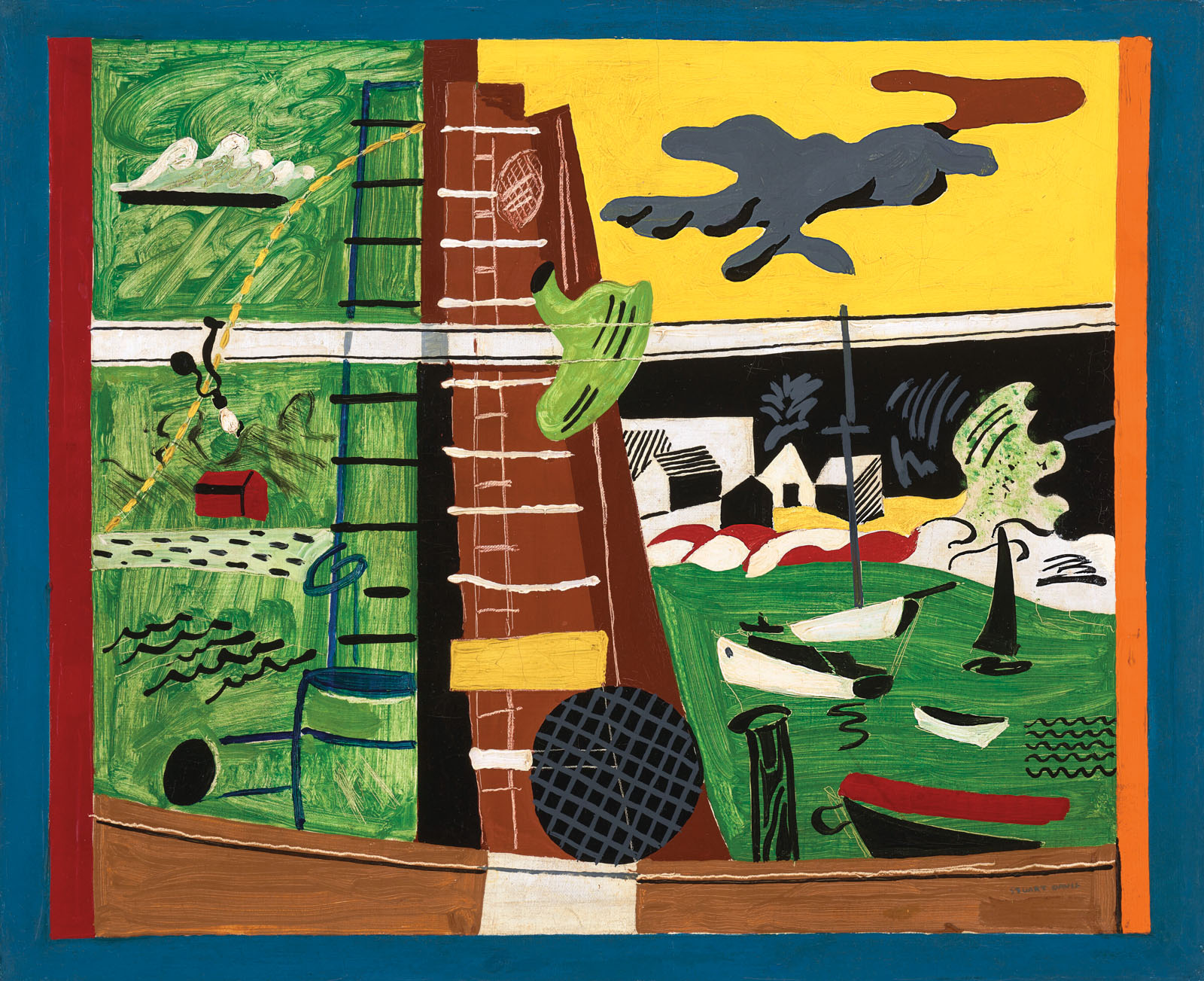 Stuart Davis (1892-1964), Wharf, 1931. Oil on canvas, 18 x 22 in., signed lower right: ‘Stuart Davis’; signed again and dated ‘1931’ on the stretcher.
The Tate gets a little more specific in its description but still leaves plenty of room for debate: “Modernism refers to a global movement in society and culture that from the early decades of the 20th century sought a new alignment with the experience and values of modern industrial life. Building on late 19th-century precedents, artists around the world used new imagery, materials and techniques to create artworks that they felt better reflected the realities and hopes of modern societies.”
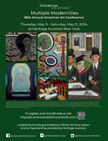
In her essay Multiple Modernities, Initiatives in Art and Culture founder Lisa Koenigsberg, takes it one step further, writing, “Central aspects of modernity, as Baudelaire described it, were the artist’s responsibility to capture the immediacy of life in a metropolis, their openness to the novelty and change, and their questioning or rejection, to a greater or lesser extent, of artistic tradition. ‘Modernism’, as distinct from both the modern and modernity, generally refers to a specific movement characterized by a tendency to abstraction in pursuit of a ‘truer’ way of rendering a new, more industrialized world.”
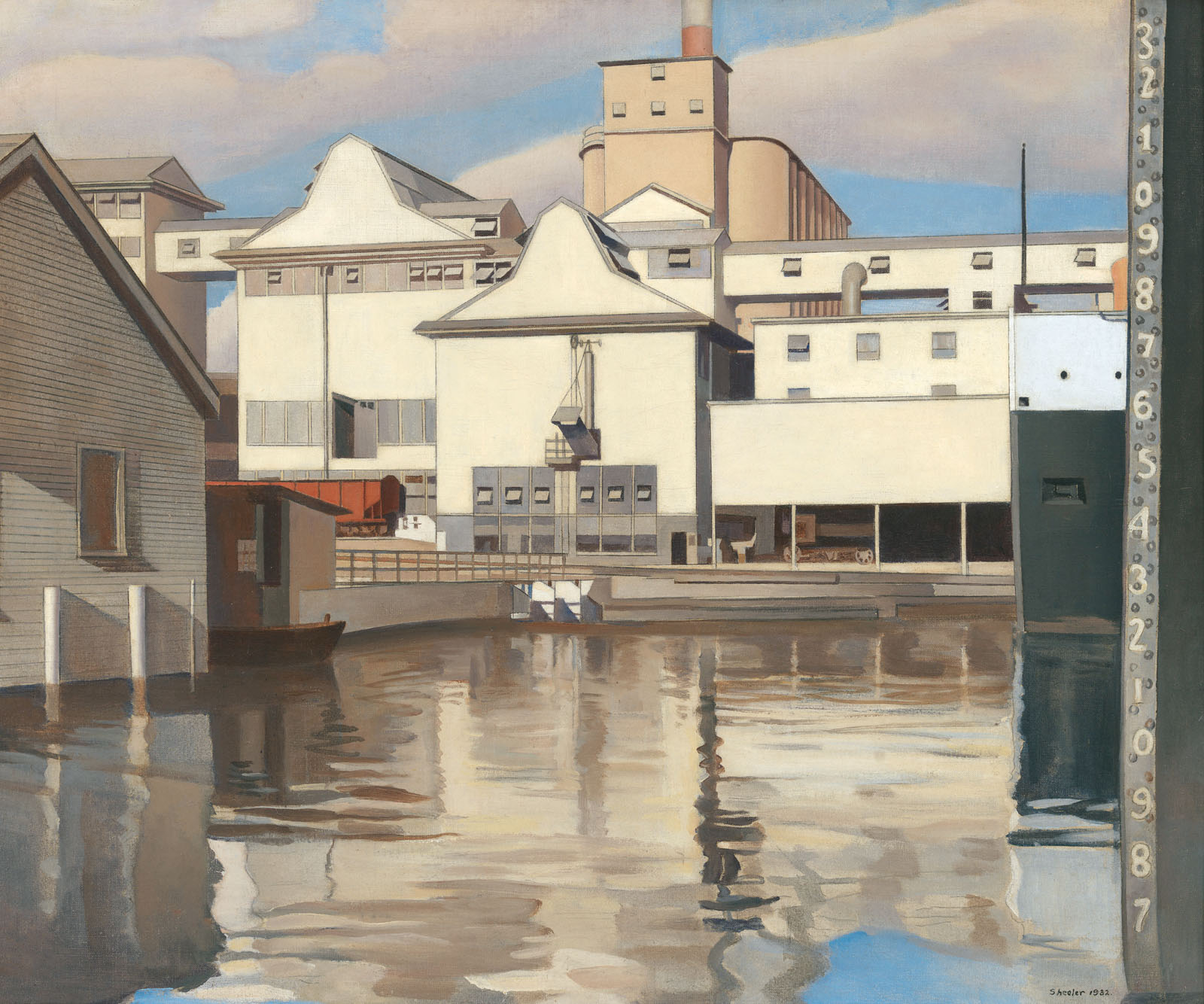 Charles Sheeler (1883-1965), River Rouge Plant, 1932. Oil and pencil on canvas, 20 x 7⁄16 x 243⁄8 in. Whitney Museum of American Art, New York; purchase.
Aesthetically speaking, and thematically, modernist works splintered in countless directions. The Ashcan School—the most extensively trained member being Robert Henri—broke away from the stultifying world of academia, but remained faithful to realism and were not proclaimed social activists. Artists like Max Weber created abstracted odes to New York City; while Stanton Macdonald-Wright was founding Synchronism, an early color-based abstract mode of painting. Others—Joseph Stella, Charles Sheeler, Charles Demuth—adopted precisionism to render the industrialized landscape of America in dynamic, geometric forms. Eventually the work of artists like Charles Burchfield, Marsden Hartley, Stuart Davis, Arthur Dove and Georgia O’Keeffe—some of the most renowned artists associated with modernism—would usher in the abstract expressionism of the New York School.
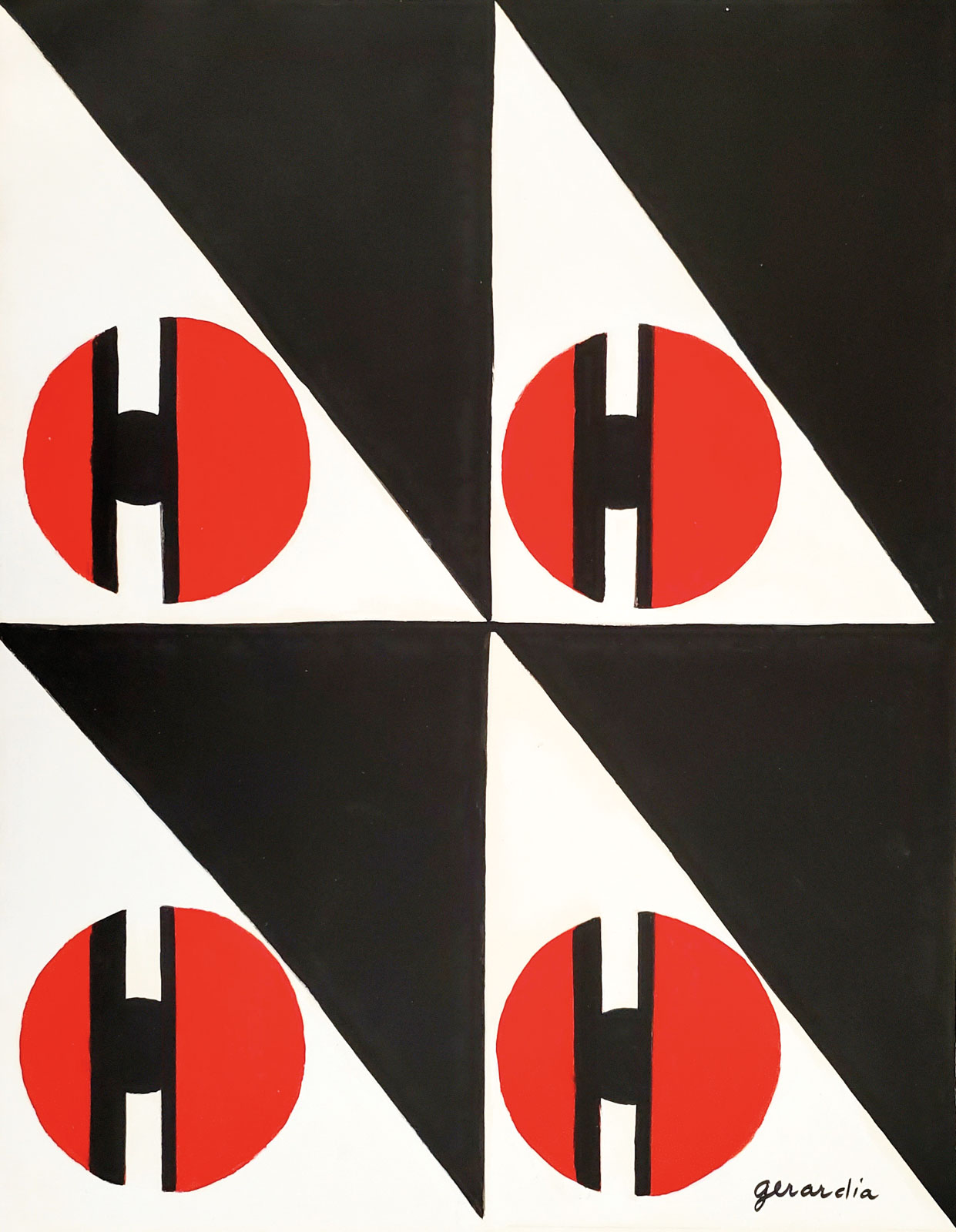 J. Kenneth Fine Art, The Inner Eye, ca. 1960s. Acrylic on paper, 27 x 21 in., by Helen Gerardia (1903-1988).
Subject matter was as diverse as form. Members of The Eight, like John Sloan and George Bellows focused on urban life, highlighting social diversity and the poor conditions in industrial areas of the city. Regionalism focused on the colorfulness of the American landscape and the rural experience, whereas the social realists were endeavoring to bring awareness to the socio-political conditions of the working class.
Modernist artists like Agnes Pelton were exploring metaphysical themes; Black expressions of modernism were exploding in Harlem and Chicago.
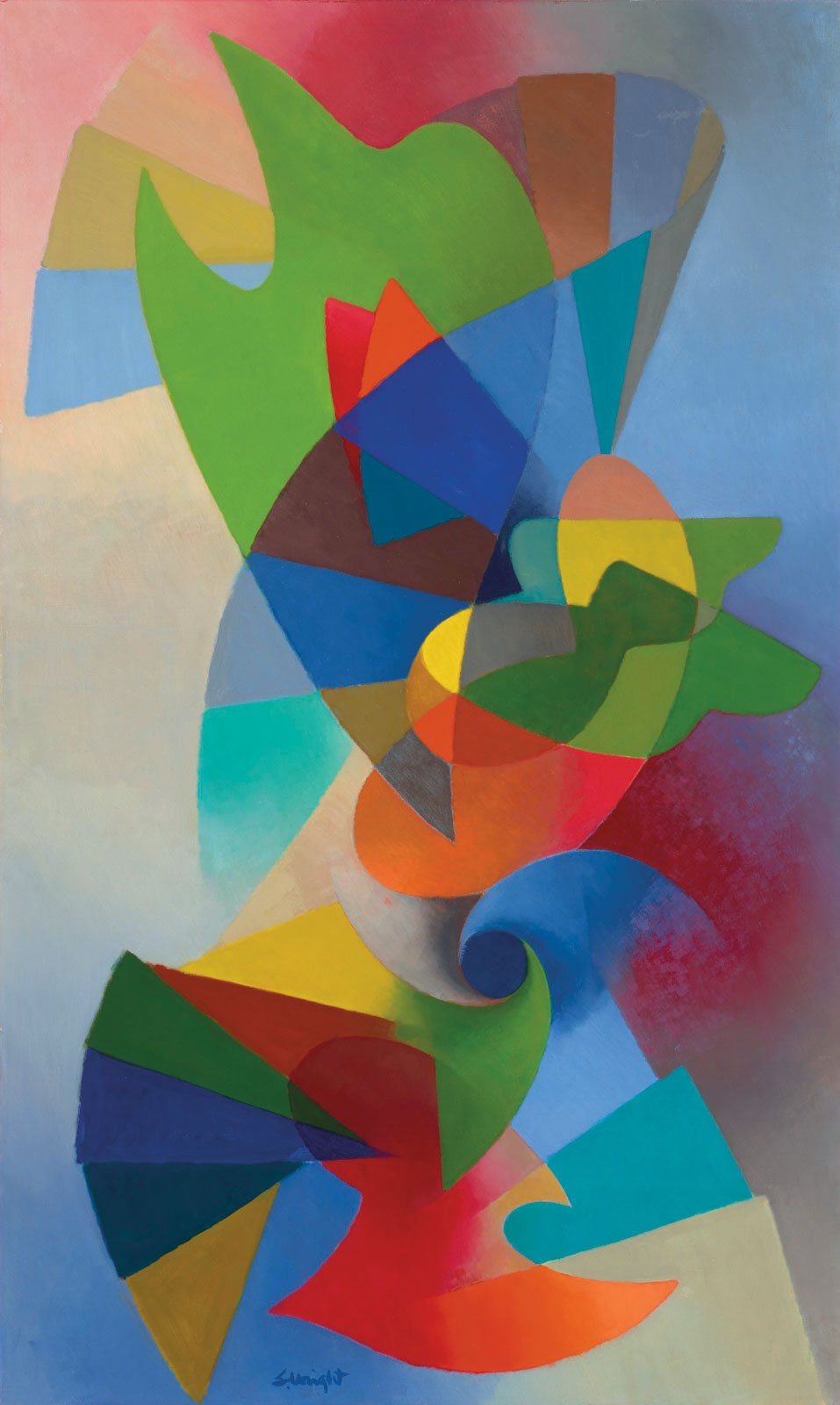 Stanton Macdonald-Wright (1890-1973), Jeunesse, 1955. Oil on canvas, 60 x 36 in., signed lower left: ‘S. Wright; signed again, dated ‘1955’ and inscribed with title on the reverse.No specific date can be pinpointed as the beginning of the modern era in the context of art or its end, but some argue for a stricter timeline that began in the 1910s, and burst onto the scene with the 1913 Armory Show—often credited with ushering in the dawn of modernism—and came to a close around 1935, when modern art became referred to as the avant-garde.
Keith Sherman, proprietor of Helicline Fine Art in New York City, takes a broader perspective, viewing modernism “as a break with the past and the concurrent search for new forms of expression. It is in fact, constant reinvention, and it’s significant because it fundamentally asks us to change our perspectives as time passes.”
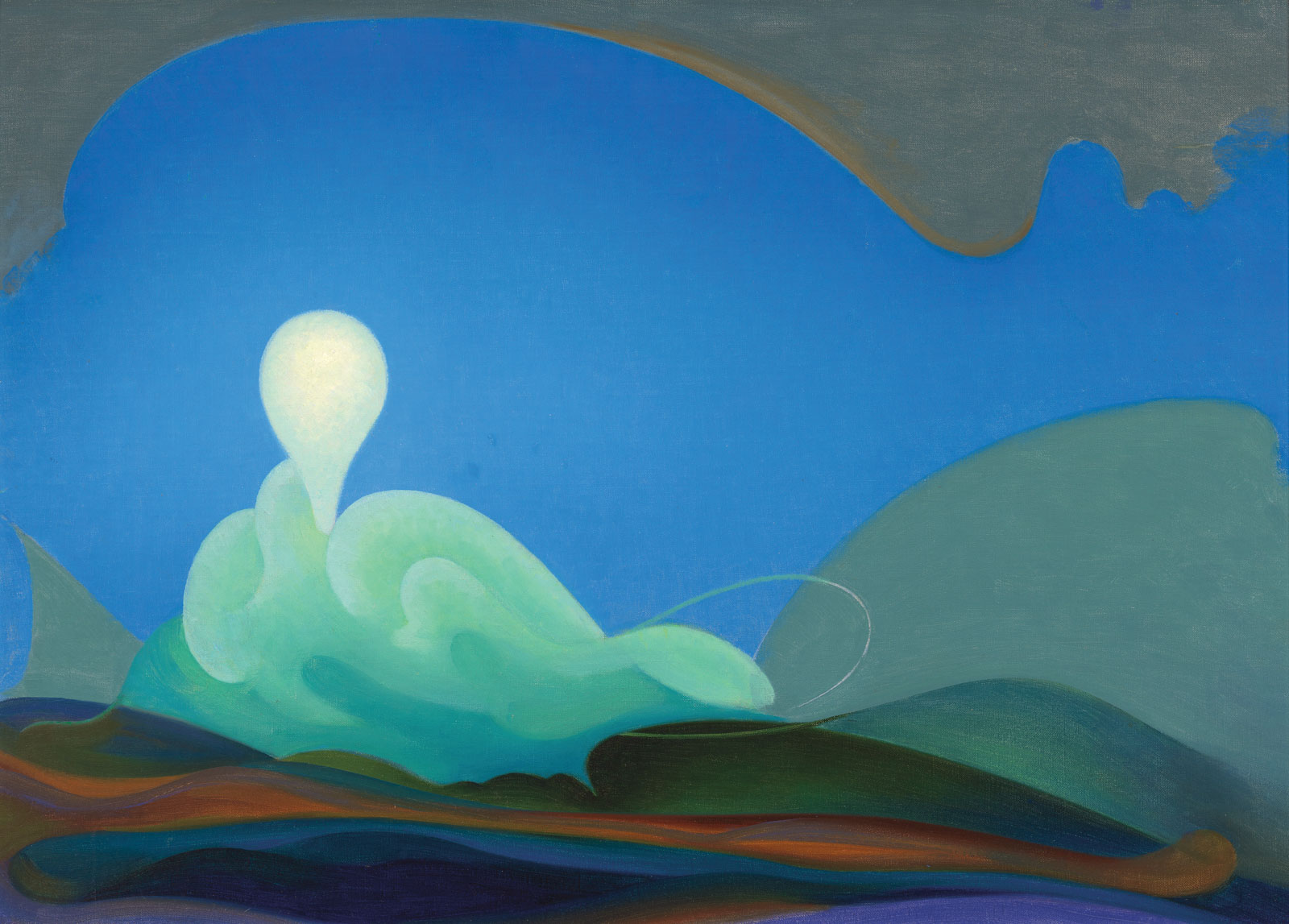 Agnes Pelton (1881-1961), Sea Change, 1931. Oil on canvas, 201⁄8 x 283⁄8 in. Whitney Museum of American Art, New York; gift of Lois and Irvin Cohen 99.64.
In the remainder of this section, we will explore the many manifestations of modernism. Some of the artists you will know and immediately associate with modernism. We will also introduce you to lesser-known artists whose work might challenge your notions of modernism, and we will hear from many scholars, dealers and experts who will expand and deepen your understanding of the genre. and the complexities that connect and distinguish the rich, diverse expressions of the human experience during this era.
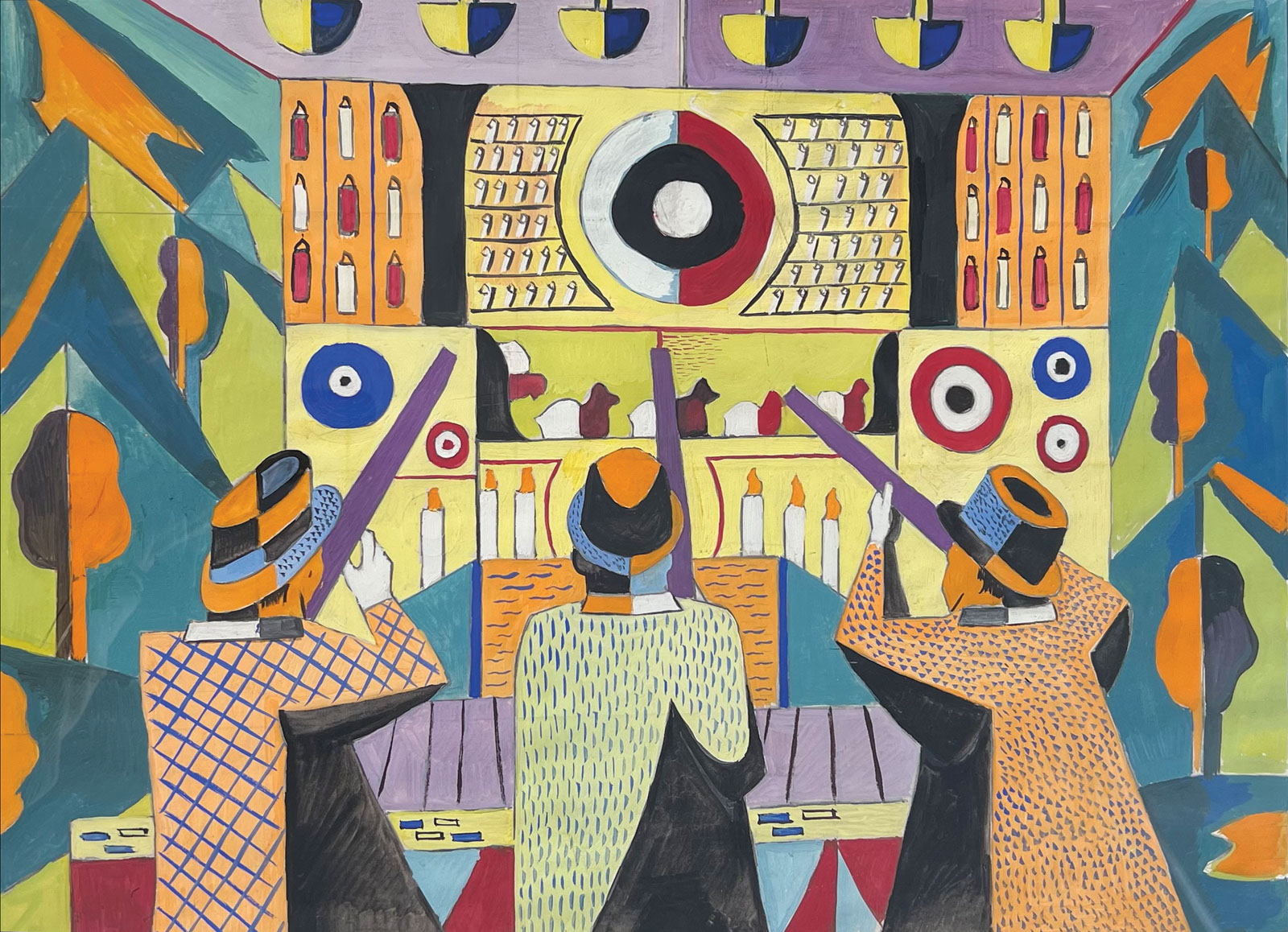 Helicline Fine Art, Shooting Gallery, Sixth Avenue, ca. 1941. Poster paint on paper, 15¾ x 21 in., by William Kienbusch (1914-1980).
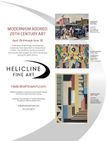
Helicline Fine Art specializes in 20th century American and European modernist paintings, sculptures and works on paper. Established in 2008 by passionate collectors Keith Sherman and Roy Goldberg, Helicline collaborates with new and experienced collectors, institutions, interior designers and art professionals. The gallery is located in a private space in New York and is open by appointment. One the highlights in their current inventory is a piece by William Kienbusch (1914-1980). Best known for his semi-abstract landscapes, Kienbusch was born in New York City and graduated from Princeton University with high honors. He studied at the Art Students League in New York with Raphael Soyer and John Sloan, spent 1937 painting abroad, and then worked with Anton Refregier and Stuart Davis, Henry Varnum Poor and Abraham Ratner.
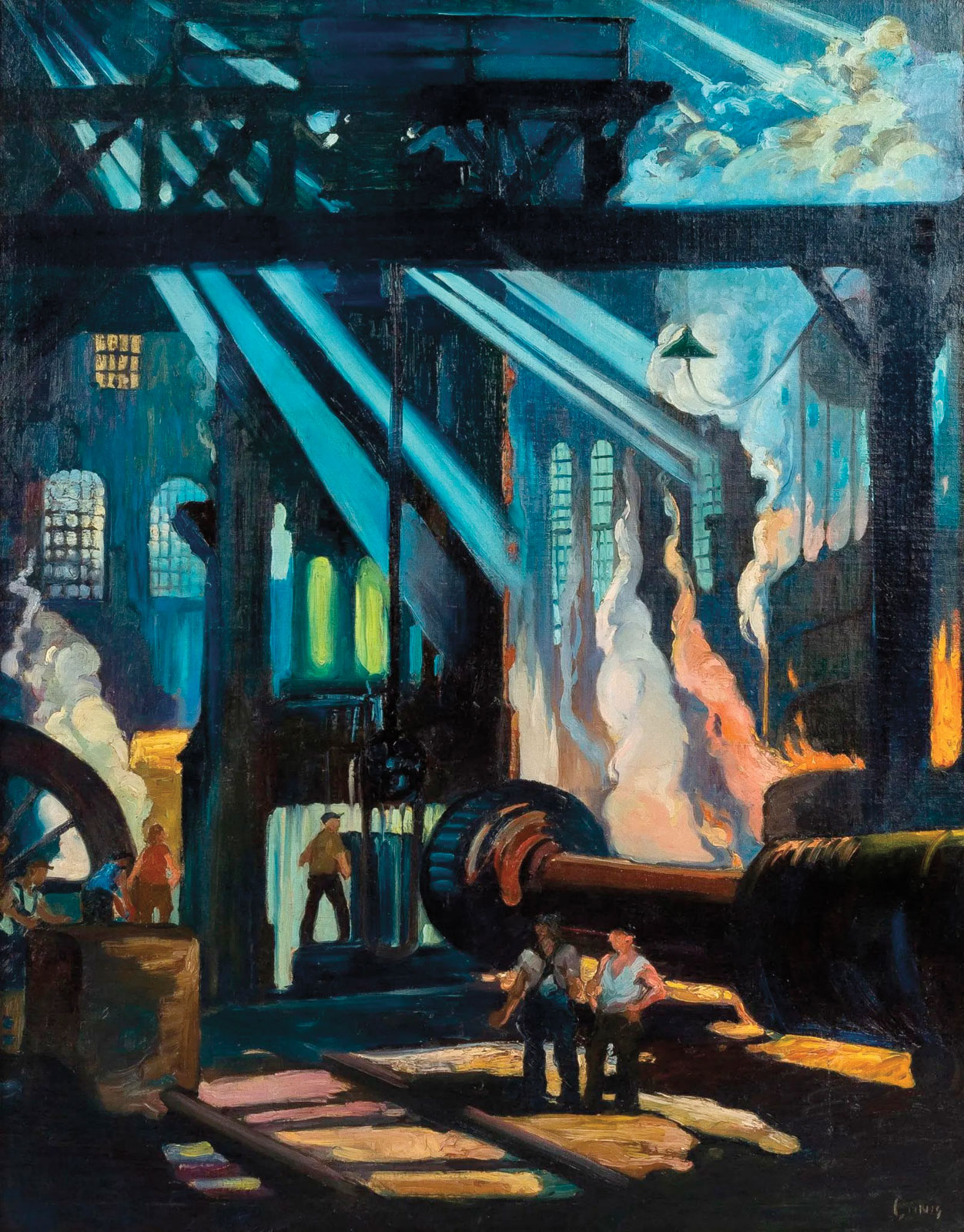 Helicline Fine Art, Forging a Gun Tube #1. Oil on canvas, 46 x 37 in., signed lower right, by George Pearse Ennis (1884-1936).
During an interview, chronicled in the Smithsonian’s Archives of American Art, Kienbusch said that Shooting Galleries, Sixth Avenue, was from a period of his career where he found himself painting much like Davis, who was not only his mentor, but lived in the apartment below him in New York. Another painting of note in Helicline’s collection is Forging a Gun Tube #1, one in a series George Pearse Ennis (1884-1936) created for Bethlehem Steel Works in 1918. The 28 drawings and watercolors were first exhibited at the Corcoran Gallery in Washington, D.C., in November of 1918. “The oil paintings, exhibited at the Sherwood Studios in New York City in December of 1918, were created to highlight the role of American industry in the war effort,” says Sherman.
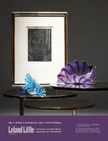
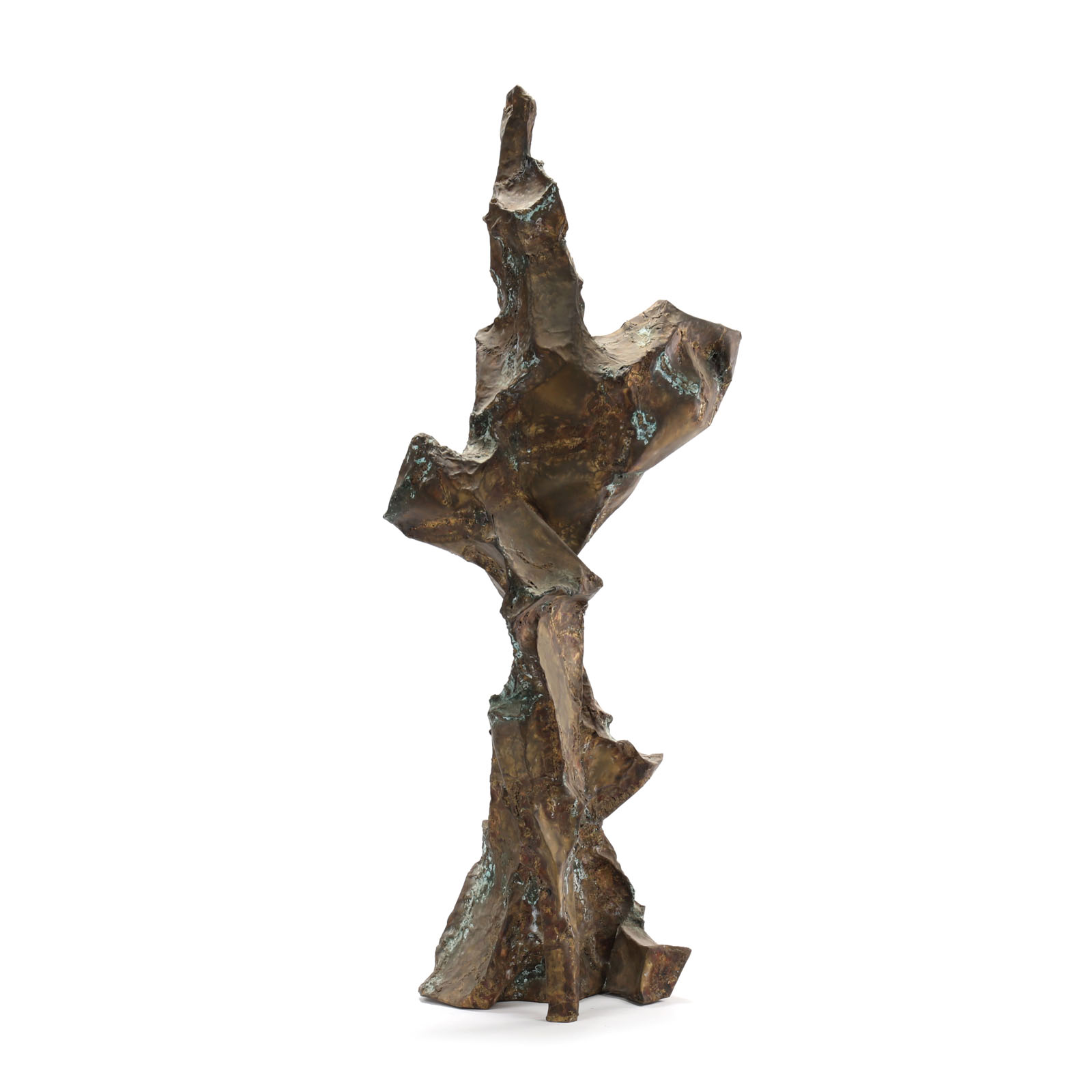 Leland Little Auctions, Juno, ca. mid-20th century. Hammered and brazed brass sheet, 66 x 21 x 23 in., labeled to underside with ‘Norfolk Museum of Arts and Sciences (Chrysler Museum), accession number 63.70.171’, by Blanche Phillips Howard (1908-1979). From the Collection of Professor Roberto Severino, Washington, D.C.
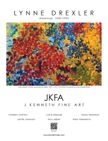
On the other side of the country, Palm Springs, California, gallery J. Kenneth Fine Art is championing artists who were unduly overlooked during their lifetimes and are now having their moment in the sun—like Lynne Drexler and Ukrainian-born Helen Gerardia (1903-1988). “Gerardia studied at the Art Students League and the Hans Hofmann School,” says gallerist John Alexander. “She founded the Gerardia Workshop, where she taught a variety of mediums including lithography and etching. Gerardia was an original member of the Vectors artist group and a delegate to the U.S. Committee of the International Association of Art. From 1967 until 1969, she was president of the American Society of Contemporary Artists. Her works can be found in over 30 museum collections around the world.”
Another artist whose works are among J. Kenneth’s holdings is abstract expressionist Taro Yamamoto (1919-1994). Like Gerardia, Yamamoto was also a member of the Art Students League and a student of the Hans Hofmann School. He was awarded a John Sloan Fellowship and traveled to Europe under a MacDowell Traveling Fellowship, where he exhibited at Gallerie Huit in Paris. His work can now be found in many private and museum collections.
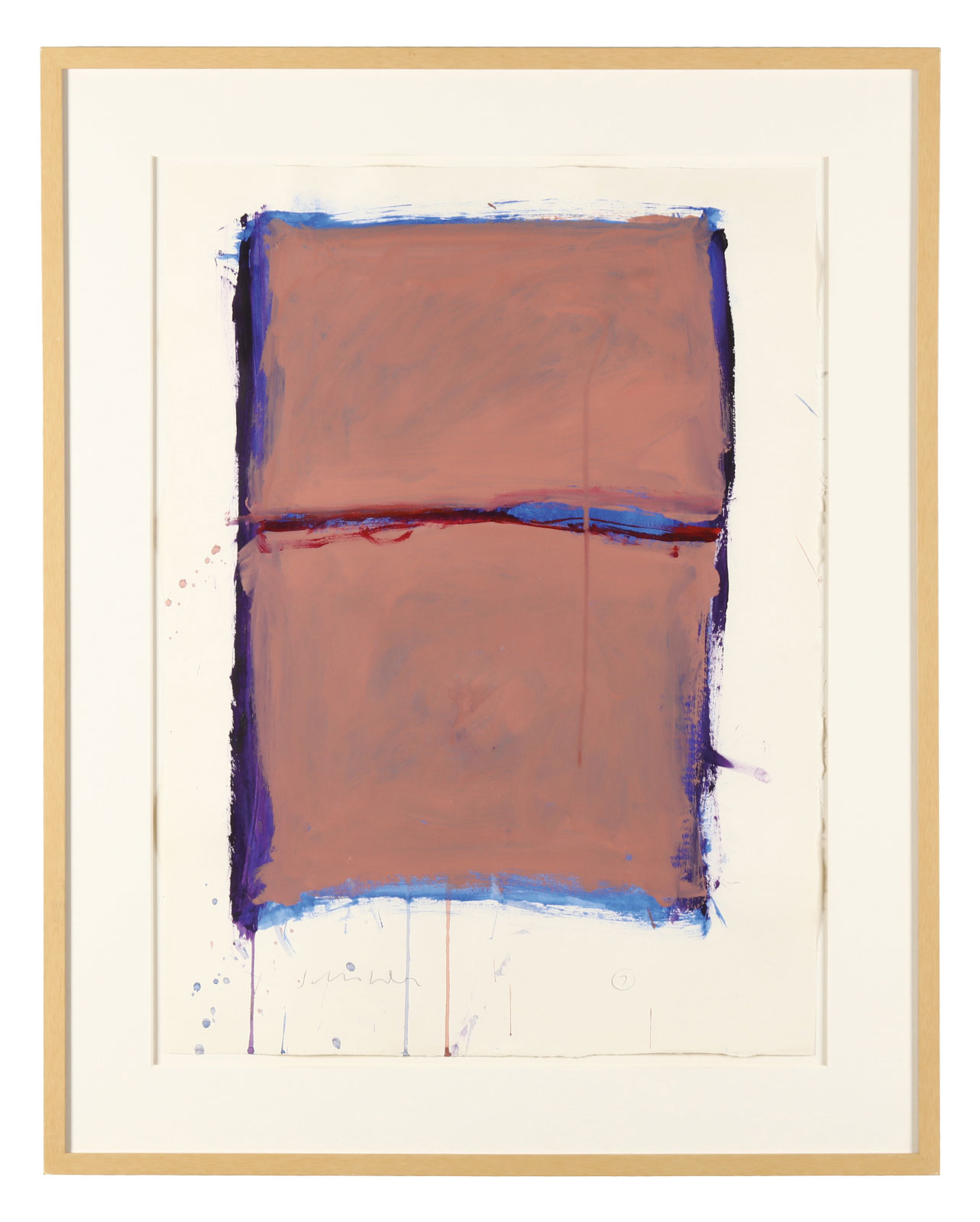 Leland Little Auctions, Map 7. Monotype, pencil signed and titled; sheet size: 31 x 223⁄4 in.; framed: 393⁄8 x 31 in., by Fritz Scholder (1937-2005).
Leland Little Auctions has specialized in the sale of fine high-end collectible objects and art for over 20 years. Among their fine art currently on offer is a mid-20th sculpture by Blanche Phillips Howard (1908-1979). Phillips was a sculptor and painter who lived in the San Francisco Bay area from 1942 to 1950, and again in the 1970s. Born in Mt. Union, Pennsylvania, Phillips studied in New York at the Cooper Union School of Art, the Steinhof Institute of Design, and at the Art Students League with instructor, Ossip Zadkine. Phillips was associated with Louise Nevelson and other members of the “New Sculpture Group” while focusing on her expressionist abstractionist sculptures in New York in the 1950s. Phillips exhibited internationally throughout her career, including in Mexico and the United Kingdom. In the 1970s she had several two-person shows with her husband, artist, John Langley Howard (1902-1999), at the San Francisco Art Commission Gallery and the Bank of America Center.
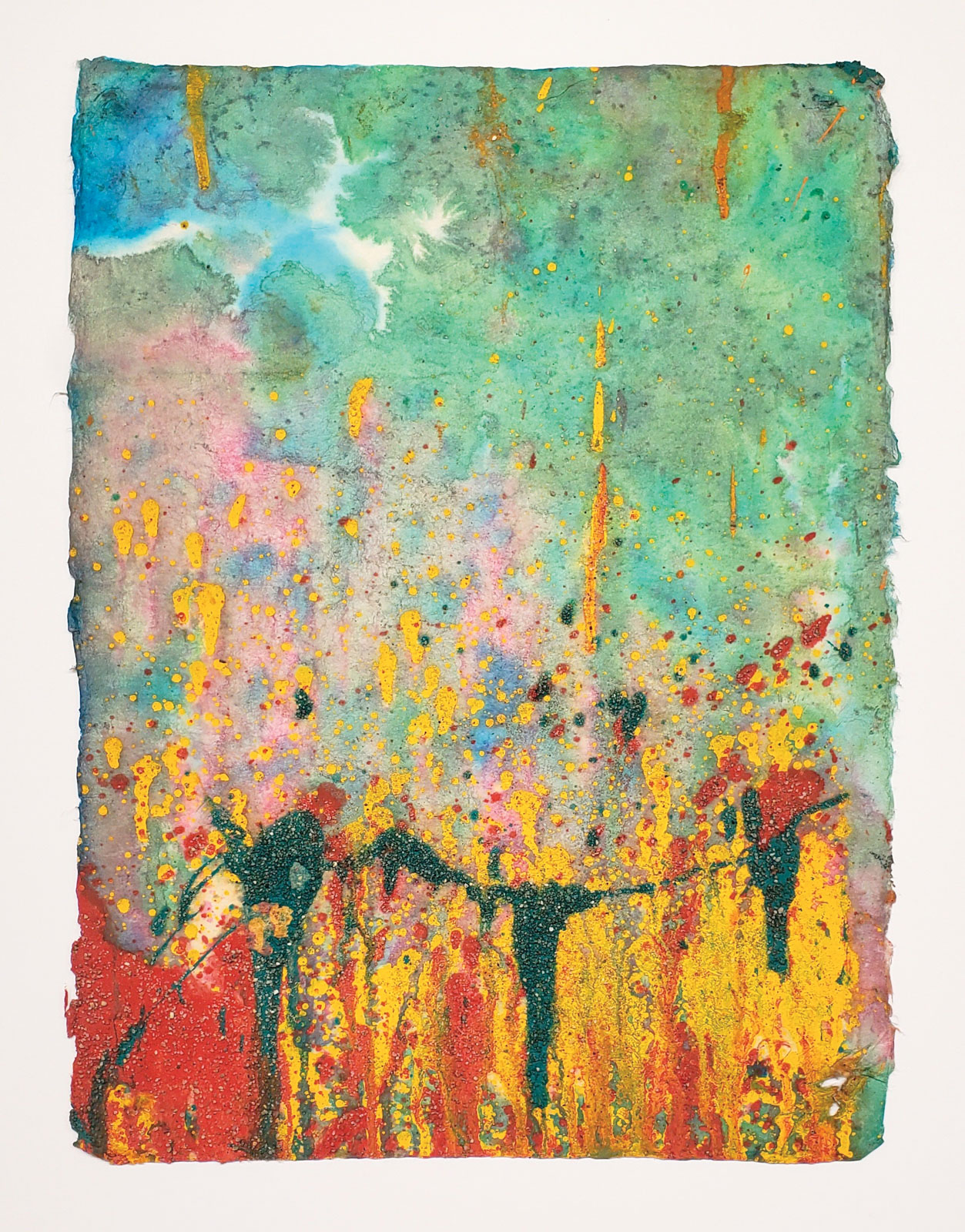 J. Kenneth Fine Art, Untitled, ca. 1970. Mixed media on paper, 16¾ x 12½ in., by Taro Yamamoto (1919-1993).
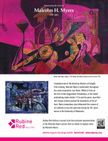
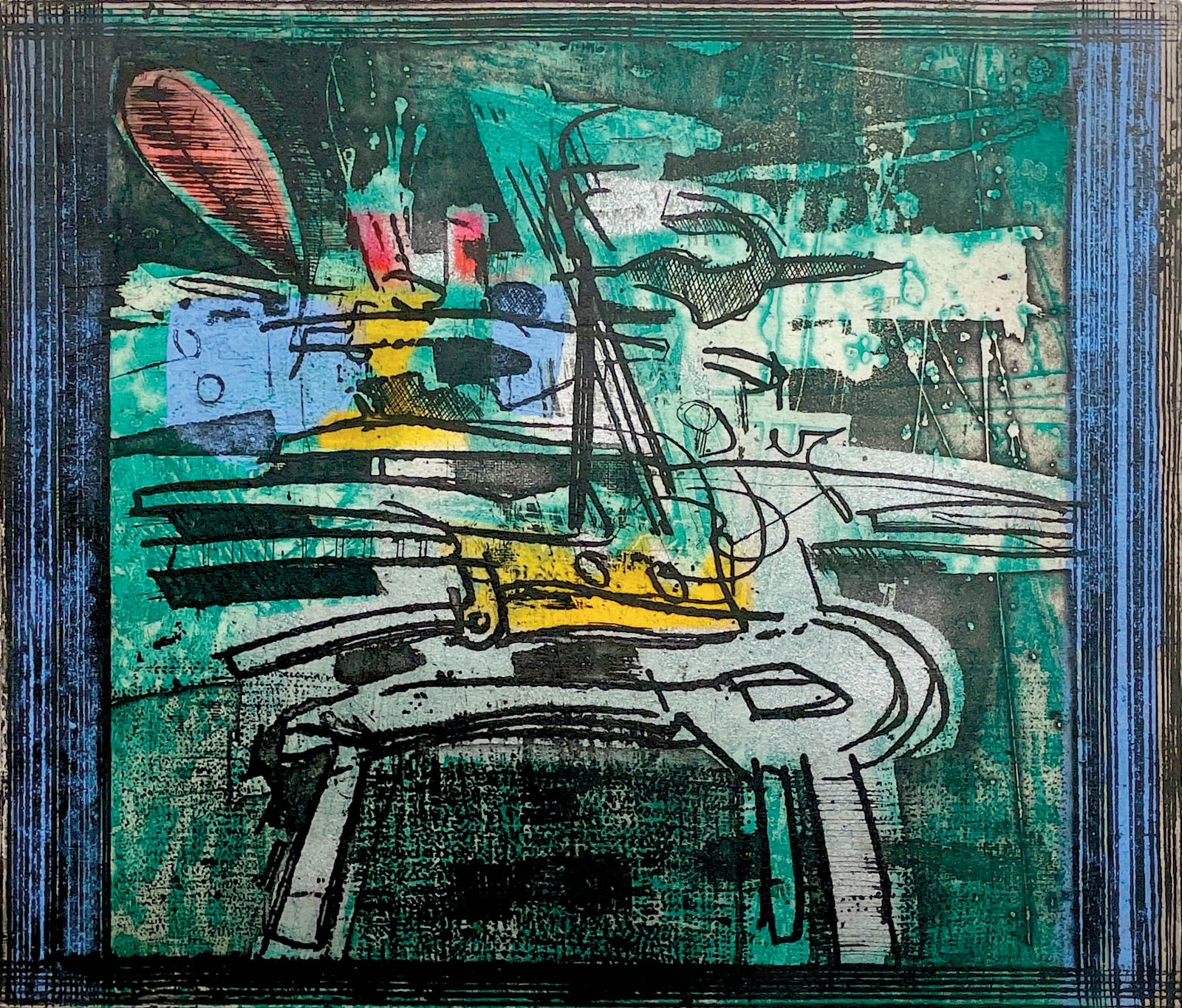 Rubine Red Gallery, The Machine (Edition I), Monoprint 9, 1960. Etching, open bite, Aquatint, soft ground, dry point, color stencil and spray paint, 14¾ x 17 in., by Malcolm Myers (1917-2002).Another exciting piece in Leland Little’s inventory is a monotype by the highly collectible—and influential—Native American artist Fritz Scholder (1937-2005). Scholder studied at Sacramento City College with Wayne Thiebaud, who exposed him to the Pop Art movement and also arranged his first solo exhibition. “Scholder’s vigorous and confident paint application brings to mind the work of abstract expressionists Franz Kline and de Kooning,” shares Leland Little representative. “Elsewhere, anthropomorphized animal forms and somber portraits recall the dark figuration of Francis Bacon and the edginess of Edvard Munch.”
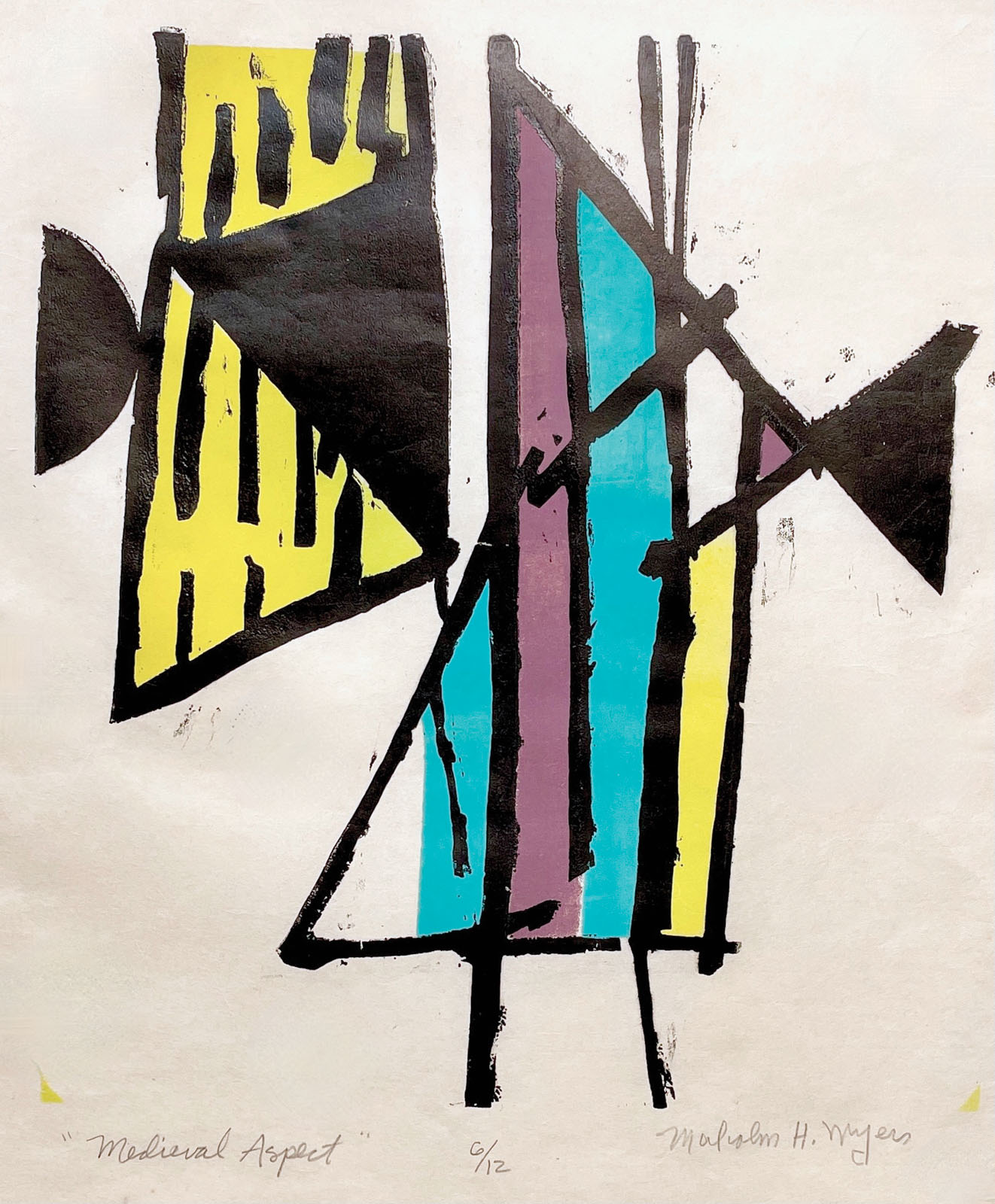 Rubine Red Gallery, Medieval Aspect (Edition I), 1958. Woodcut (color), ed. of 12, 21 x 17 in., by Malcolm Myers (1917-2002).
Also in Palm Springs, Rubine Red Gallery deals in both contemporary and historic works. Their Estate Collection highlights specific artists who were creating in the mid-20th century” ncluding Midwest printmaking icon Malcolm Myers, Reginald Pollack, Lynne Mapp Drexler and others. Gallerist Jason Howard says, “Much mid-century art in the United States revolved around and was inspired by the home designs of influential modernist architects of the day: Wexler, Eichler and Lautner to name a few. Myers’ intaglios, woodblocks and paintings from the 1950’s onward reflected those aesthetics…angular shapes alongside negative space and the abstract expressionism of the day that allowed the viewer space to develop a personal connection with the art.” Myers’ Medieval Aspect, featured here, is an example of the angles and open space, while the abstraction of The Machine opens up many ideas as to what exactly is being seen.”
Featured Galleries & Auctions
Helicline Fine Art
By appointment
New York, NY
t: (212) 204-8833
keith@heliclinefineart.com
www.heliclinefineart.com
J. Kenneth Fine Art
668 N. Palm Canyon Drive
Palm Springs, CA 92262
t: (802) 540-0267
jkennethfineart@gmail.com
www.jkennethfineart.com
Leland Little Auctions
620 Cornerstone Court
Hillsborough, NC 27278
t: (919) 644-1243
www.lelandlittle.com
Rubine Red Gallery
668 N. Palm Canyon Drive, Suite 102
Palm Springs, CA 92262
t: (760) 537-7665
info@rubineredgallery.com
www.rubineredgallery.com
Powered by Froala Editor