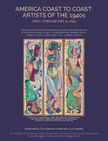
The second installation in a series of exhibitions mounted by CW American Modernism picks up the art historical narrative in the era of World War II and the immediate aftermath.
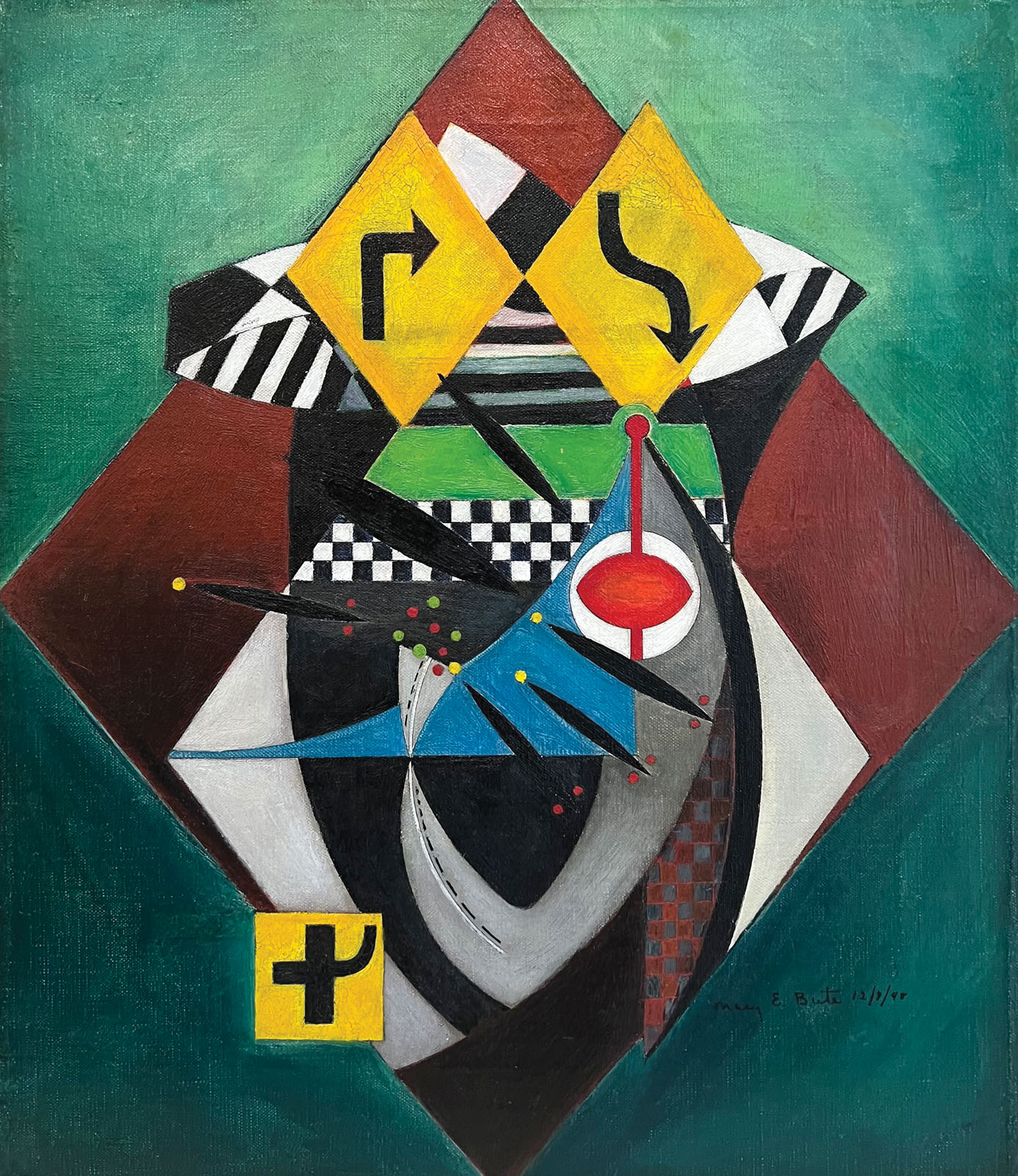 Mary Bute (1906-1983), key sketch for 60-foot movie announcement on ‘Safety First’, 1948. Oil on canvas, 14½ x 12½ in., signed and dated lower right.
The conflict shaped all aspects of art, society and culture, and as the devastating economic times of the Great Depression faded, the United States emerged as a global superpower that resulted in widespread prosperity for many, but by no means all Americans. By the end of the 1940s, a sense of existential dread had crept into the nation’s consciousness as the threat of nuclear war became a real possibility for the first time. Despite this era of great turmoil, the number of American artists increased dramatically, as government and military-sponsored programs enlisted creative individuals to contribute to the war effort in the form of poster and map-making, technical drawings and illustrations of soldier life. After the war, with the assistance of the GI Bill, thousands of veterans enrolled in art school, some pursuing fine art, and others entering the booming commercial sector. “Working in a dizzying array of styles from Regionalism, Social Realism and American Scene painting to Magic Realism, Modernism and Abstraction, artists from coast to coast produced a beautiful and compelling array of images,” notes the exhibition press release. “By the end of the decade, the United States’ tendency towards parochialism and isolationism of the 1930s had largely disappeared and artists again embraced the rich exchange of ideas and artistic approaches that had characterized early American Modernism in the Teens and Twenties.”
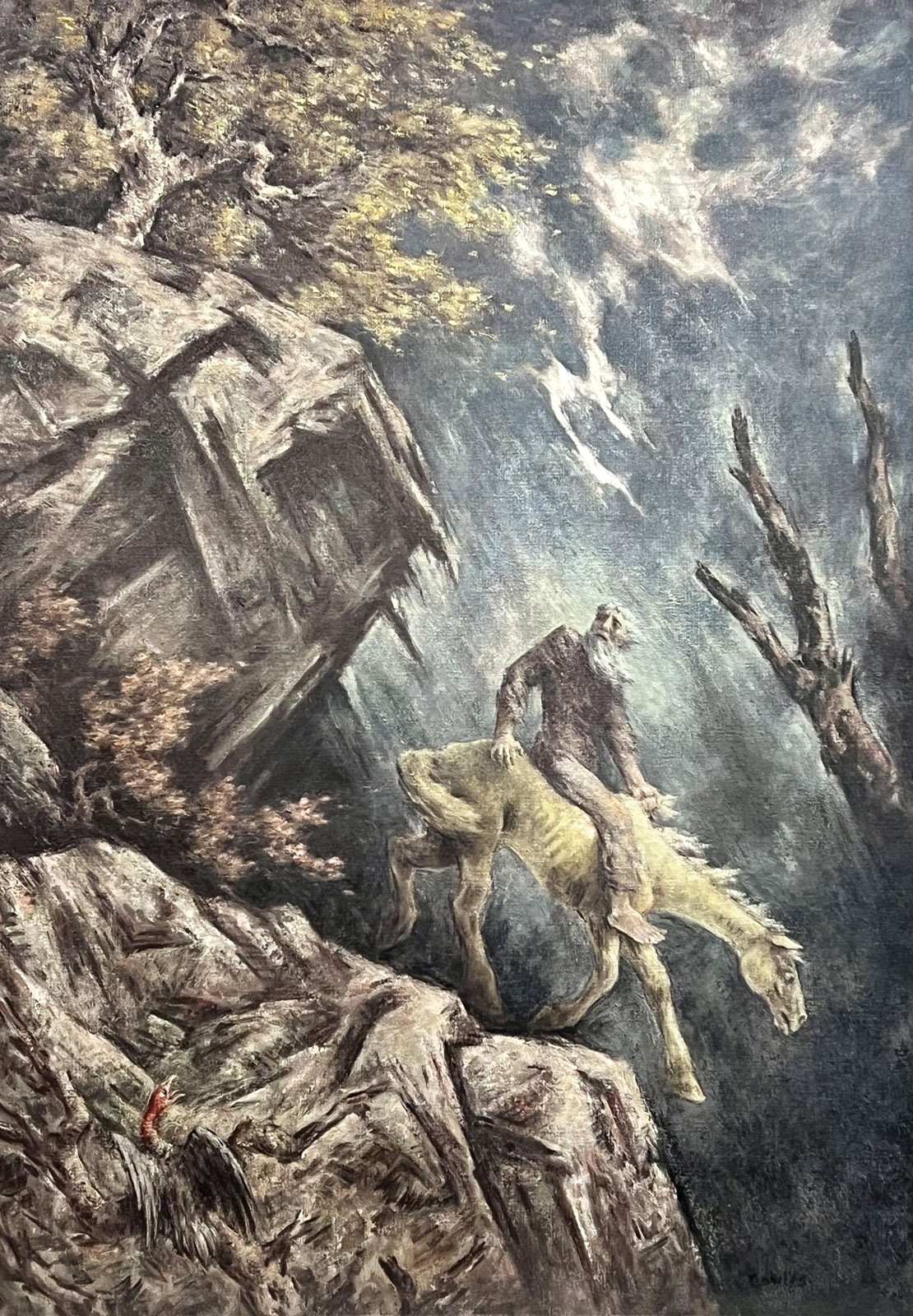 Russell Cowles (1887-1979), Old World, by 1943. Oil on canvas, 43½ x 30½ in., signed lower right.
In America Coast to Coast: Artists from the 1940s, CW American Modernism presents a cross-section of the diverse artistic output of the decade through 25 works by painters and sculptors who not only reflected, but also confronted the realities in which they lived.
Among the featured artists are Mary Bute (1906-1983), Charles Bunnell, Helen Lundeberg (1908-1999), Edward Biberman (1904-1986), Russell Cowles (1887-1979), Vanessa Helder, Jean Kellogg, Roger Medearis and Charles M. Campbell.
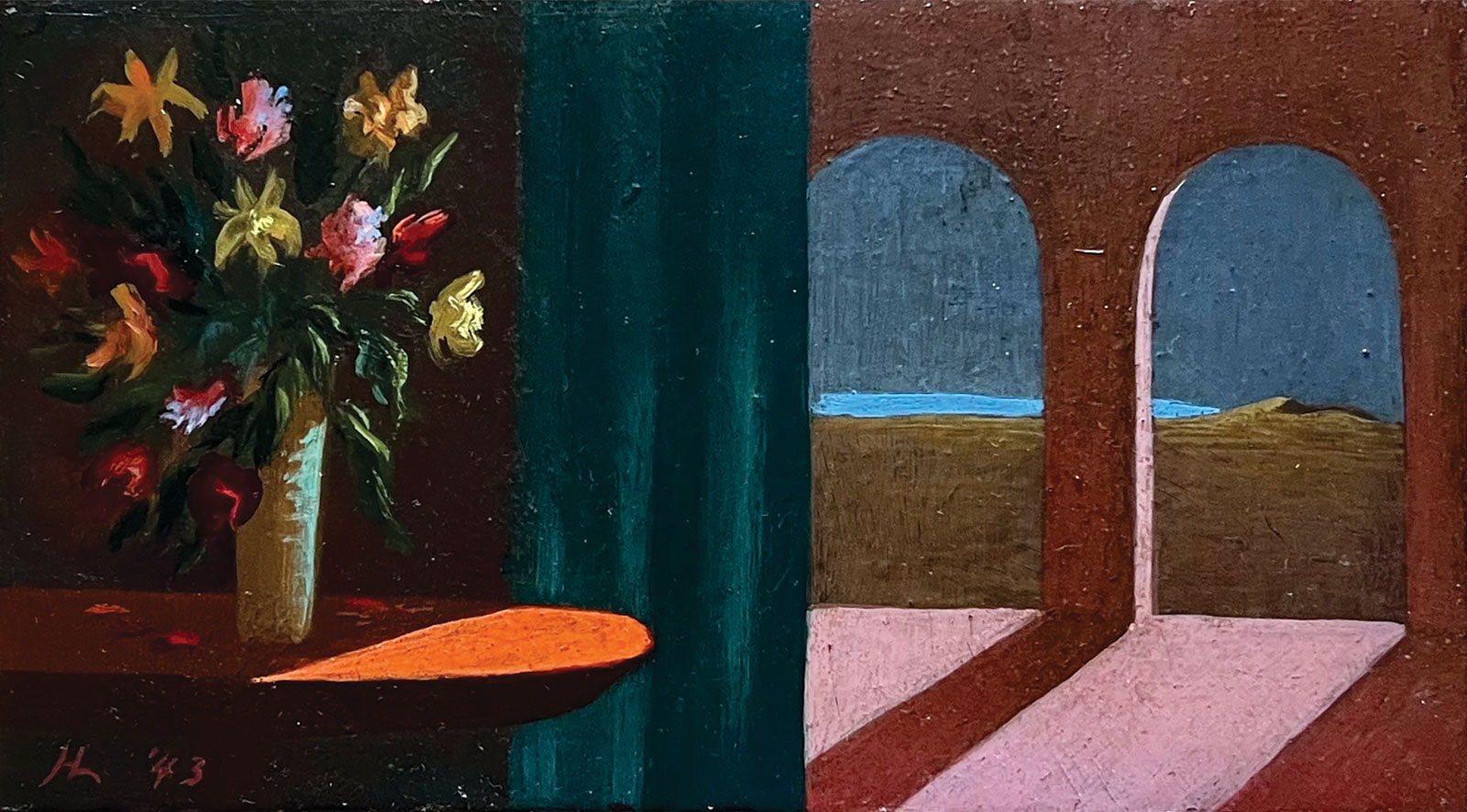 Helen Lundeberg (1908-1999), Flowers and Arches, 1943. Oil on board, 4 x 71⁄8 in., initialed and dated lower left.
Bute’s 1948 piece Traffic Safety is one of the highlights of the show according to CW American Modernism owner, Chris Walther. “Bute was one of the nation’s most important experimental filmmakers during the 1930s and 1940s. Her specialty was the production of ‘visual music’ shorts, which today are regarded as among the most innovative early examples of avant-garde animation,” he says, adding that her film Synchromy No. 4: Escape is currently on view as part of the Whitney Museum’s permanent collection. “Bute was trained as an artist, but her paintings rarely appear on the market making the chance to see and acquire Traffic Safety a unique opportunity.”
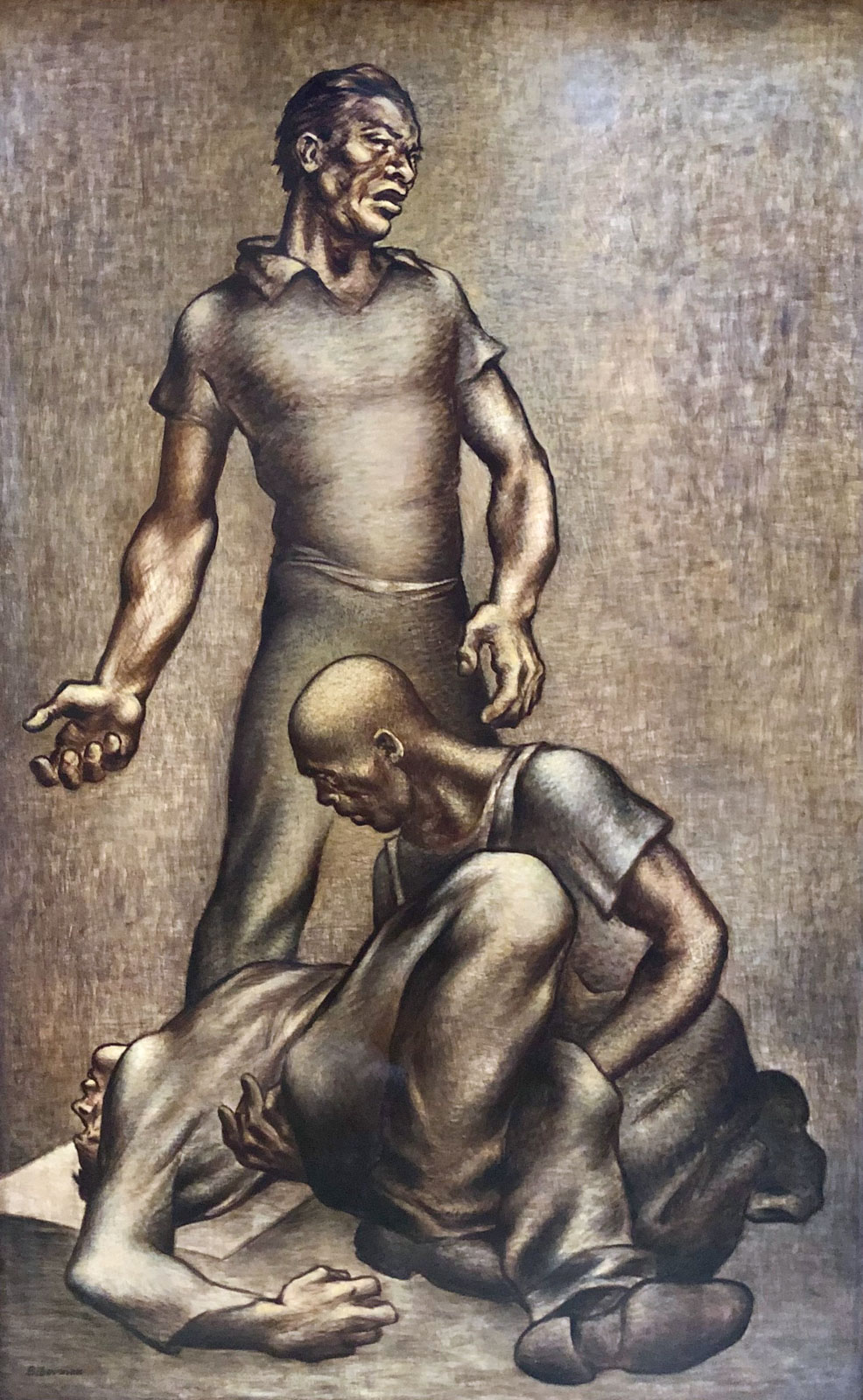 Edward Biberman (1904-1986), Fallen Comrades/Interlude, 1949. Oil on Masonite, 35 x 56 in., signed lower left.
Cowles’ Old World (created by 1943) is a significant large-format painting that has been exhibited at the Museum of Modern Art, Pennsylvania Academy of the Fine Arts and Los Angeles’ Dalzell Hatfield Gallery. The piece depicts an old man—as the personification of Europe—fearfully looking over his shoulder as his gaunt horse is about to step off a steep cliff into the void. “An example of what in the 1940s was characterized as Romantic painting, Old World is a meditation on the tragedies of World War II,” shares Walther.
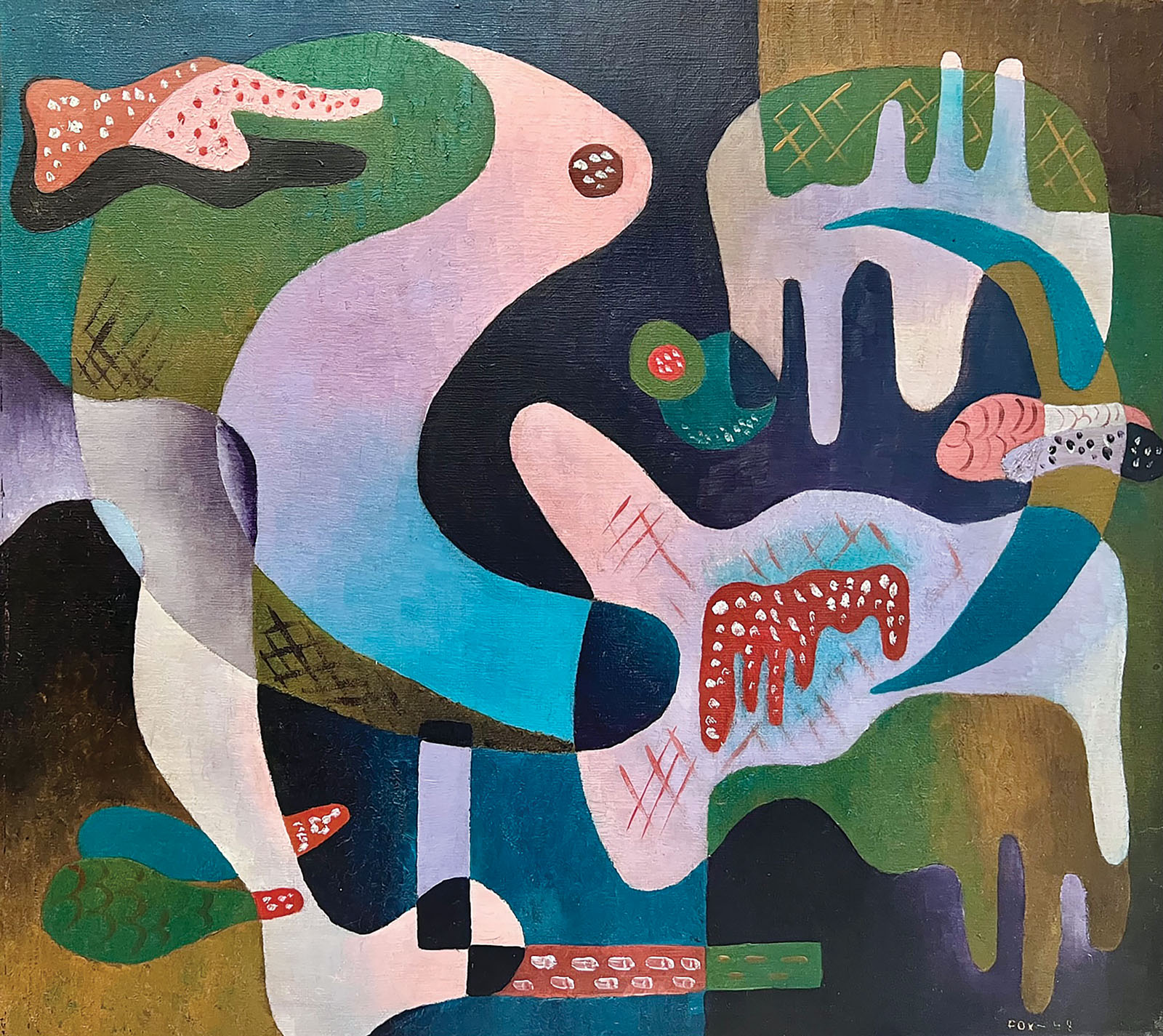 Dave Fox (1920-2011), Untitled (Biomorphic Composition), 1948. Oil on textured paper mounted on board, 16 x 18 in., signed and dated lower right.
In Fallen Comrades, 1940, Biberman, provides additional commentary on the ongoing strife at home, despite the Allied victory abroad. “Fallen Comrades is part of a series of paintings reflecting the nation’s and the Biberman family’s struggles during the McCarthy Era,” explains Walther, adding that the artist’s brother was one of the Hollywood Ten, and imprisoned for contempt of Congress and then blacklisted. Biberman felt the repercussions personally and was, for a time, edged out of the artworld when he came into political conflict with the powerful critic of the Los Angeles Times.
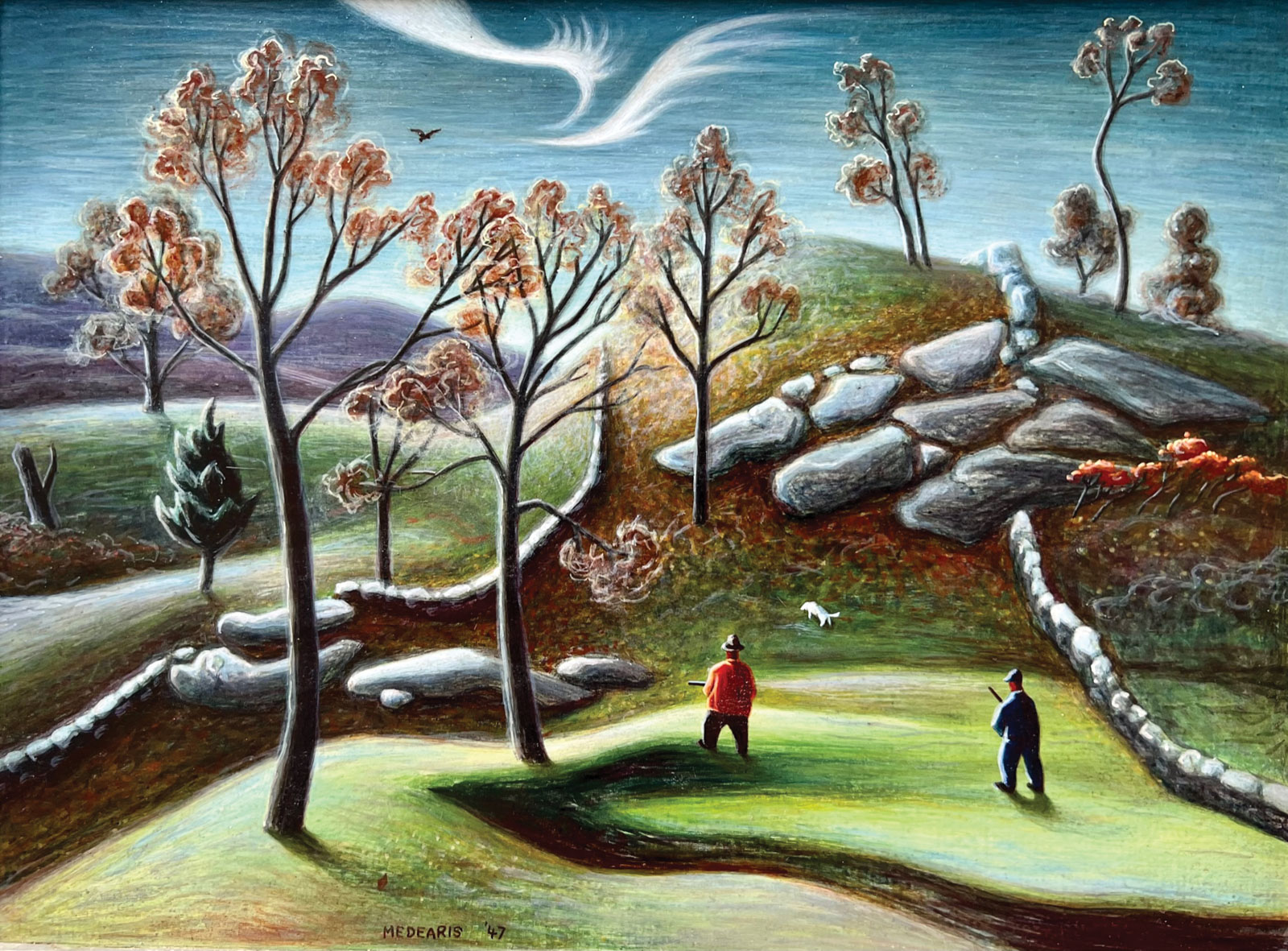 Roger Medearis (1920-2001), Rabbit Hunters, 1947. Oil on Masonite, 9 x 12 in., signed and dated lower middle.
One of California’s most important female modernists is represented by Lundeberg’s 1943 paintings Flowers and Arches, a dream-like post-Surrealist interior with still life reminiscent of works by fellow modernists Agnes Pelton and Gertrude Abercrombie.
Through prime examples by artists working across 10 states, Coast to Coast illuminates the vast stylistic diversity of American art in the 1940s—a tumultuous time of great upheaval that triggered an equally powerful creative response.
Powered by Froala Editor