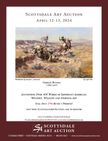
On April 12 and 13, the Scottsdale Art Auction will return to Arizona to bring collectors top Western pieces in a variety of categories, from cowboys and cattle to bronze sculpture to works from the Taos Society of Artists. The sale will also offer important works from outside the West, including major pieces from the East Coast from the 19th and 20th century.
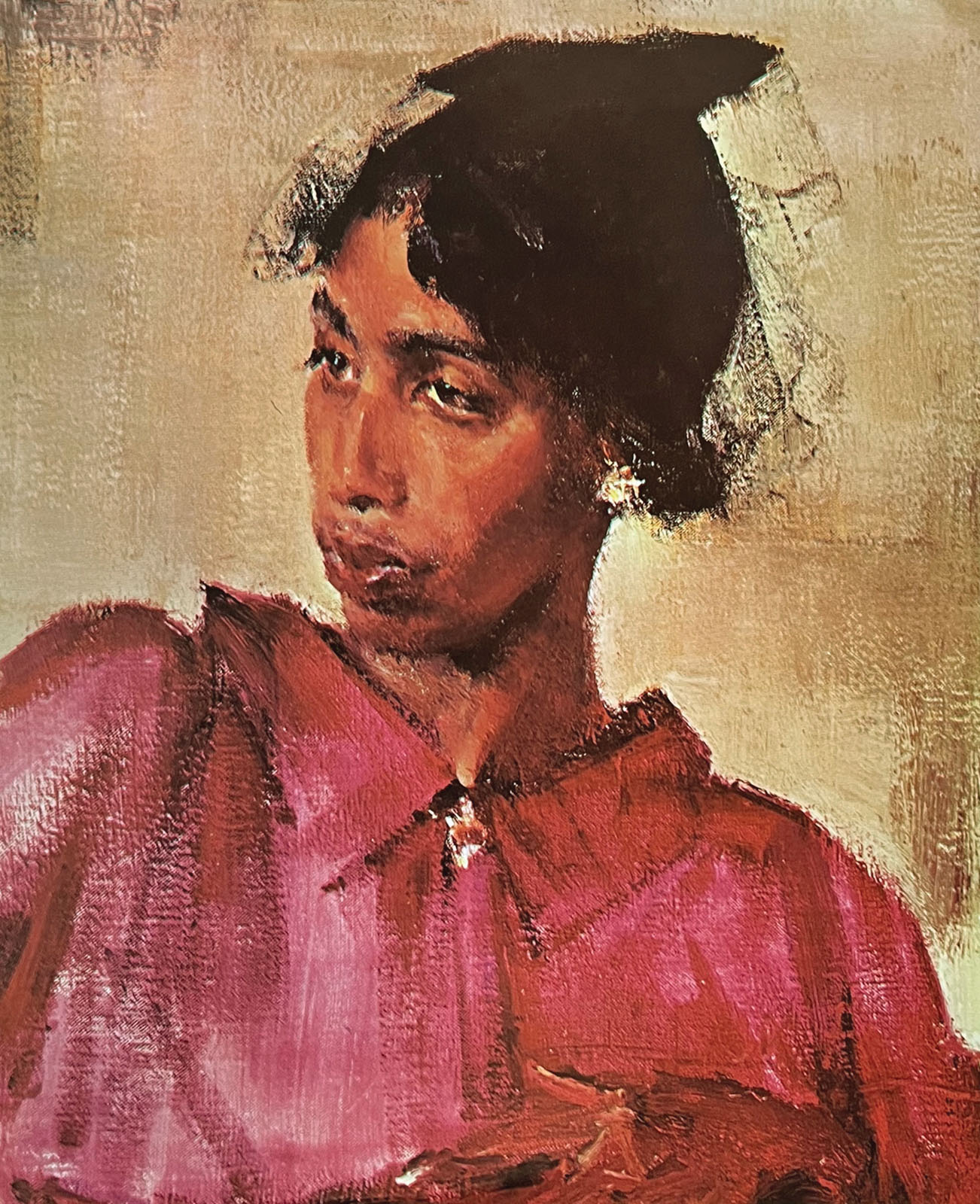 Nicolai Fechin (1881-1955), Carmelita. Oil, 24 x 20 in. Estimate: $300/500,000
An early standout of the sale is Charles M. Russell’s The Broken Rope, a major oil from the famous cowboy artist. The work appears in many books on the artist, and is regarded as an important work by many Russell scholars. Author Frederic G. Renner mentions the work in his 1976 book titled Charles M. Russell. “Many authorities feel that Russell’s greatest work was done between 1902 and 1916, the period of this fine action painting. At this time the artist was painting the scenes that he loved best and that delighted his most critical audience, his cowboy friends. To them, every detail in the painting, from the brand on the horse to the ring in the tail of the angry cow, helped tell the story. If they couldn’t name the cowboy to the right they could spot him for a Texan from his tapaderos. These stirrup coverings of heavy cowhide were used to protect the rider’s feet in the southern brush country, but were not used by Montana cowboys in the early days. The angora chaps, which the cowboys called ‘woolies’ were strictly ‘Montana,’ however. These were a real comfort in the winter or during the crisp days of the fall roundup,” Renner writes. “Russell’s admirers have always claimed ‘he was the only artist who could paint a horse with all four feet in the air and make’im look natural,’ a point well demonstrated in The Broken Rope.”
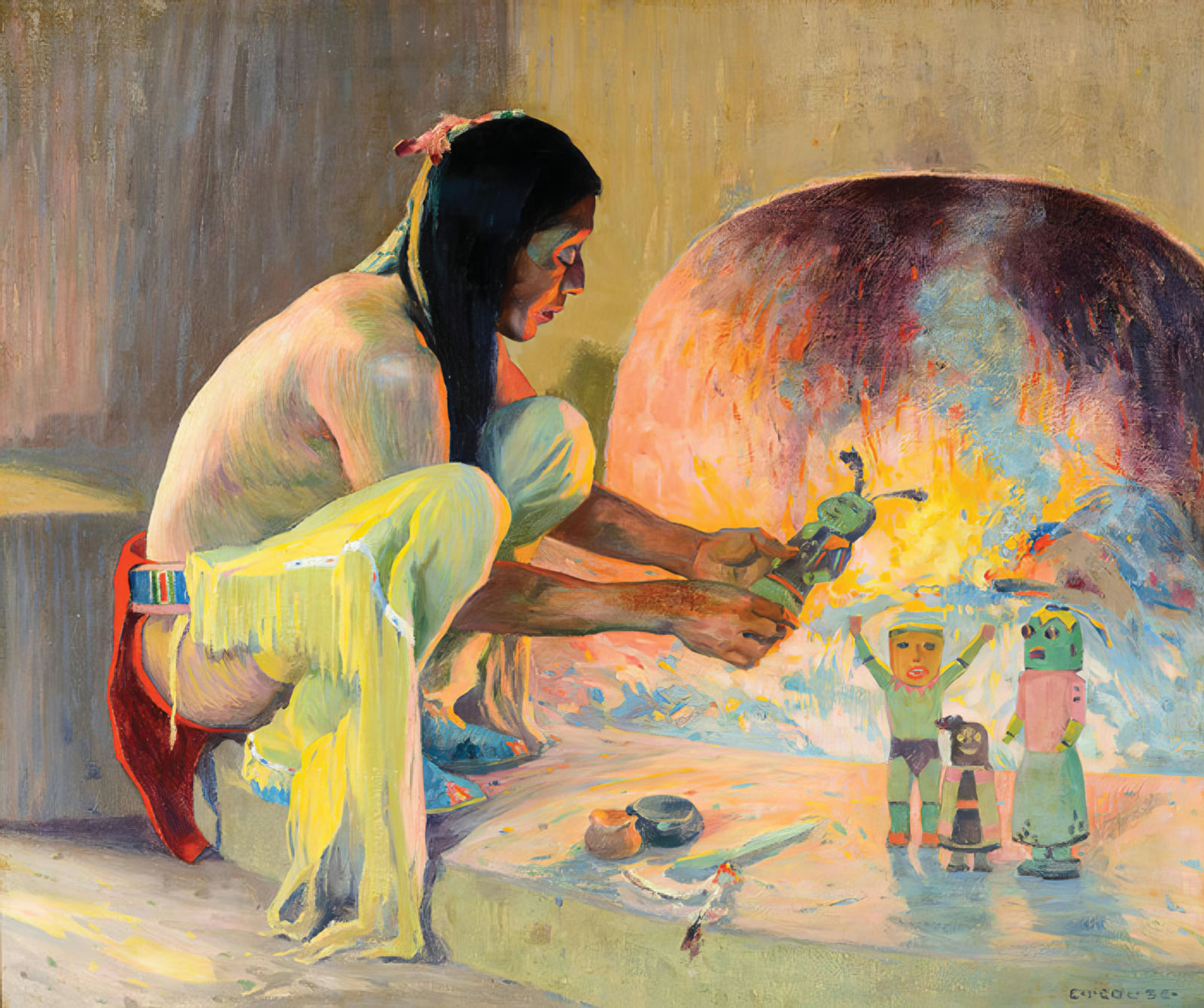 Eanger Irving Couse (1866-1936), Kachina Doll Maker. Oil, 24 x 29 in. Estimate: $150/250,000
The Broken Rope is estimated at $5 million to $7 million, making it one of the most significant Russell works to hit the market in the last decade. (Russell’s world auction record is $5.6 million, set in 2005.)
Another lot that is generating interest is Nicolai Fechin’s Carmelita, a portrait of a woman with distinctive features in a red blouse. In 1971, the work was loaned to what was then the Cowboy Hall of Fame (today the National Cowboy & Western Heritage Museum) in Oklahoma City by Hammer Galleries in New York City. The museum installed a re-creation of Fechin’s studio, and Carmelita hung in a space near his easel. The work remained on display through at least the early 1980s, where it was likely seen by millions of museum visitors. Later, upon the release of Mary N. Balcomb’s book Nicolai Fechin, small castings of Carmelita’s face, made from a 1940 clay by Fechin, were cast in bronze to be offered with limited editions of the book. Few works by the artist are as well known or so widely seen. The painting is estimated at $300,000 to $500,000.
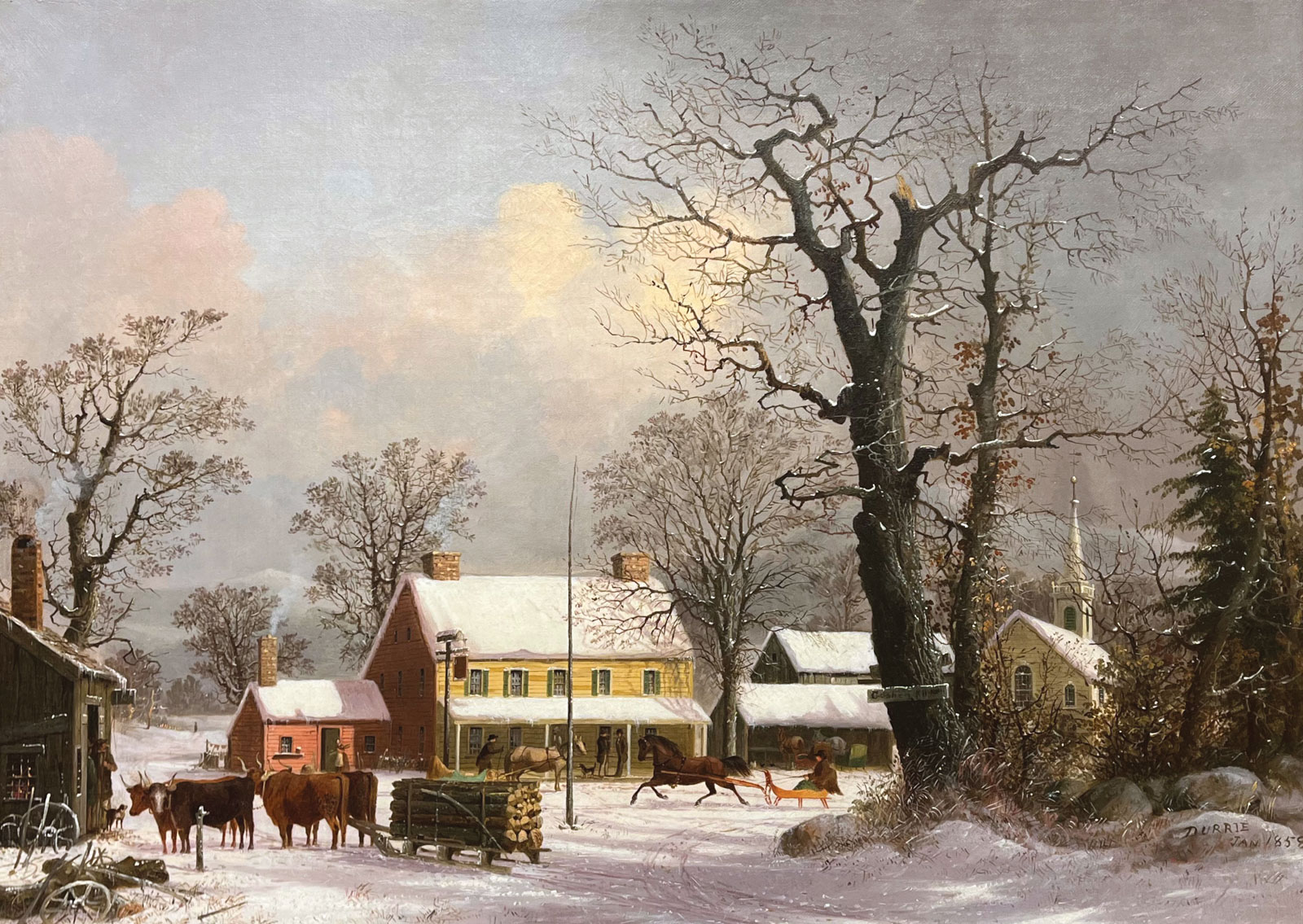 George Henry Durrie (1820-1863), Twelve Miles to Goshen. Oil, 18 x 24 in. Estimate: $100/150,000
Works from Taos, New Mexico, include several major pieces from Taos Society of Artists founders, including Oscar E. Berninghaus, Bert Geer Phillips, William Herbert “Buck” Dunton and Joseph Henry Sharp. Two works by Eanger Irving Couse are likely to excite collectors: The Kachina Maker from 1921 and The Sculptor from 1914. Both works show a Native American figure examining objects in an interior setting. The Sculptor (est. $90/120,000) was originally part of a 1915 show at Braus Art Gallery in New York City. The Kachina Maker (est. $150/250,000) might have been inspired by a 1903 trip Couse took to Hopi lands in Northern Arizona, where the majority of katsina carvings originate.
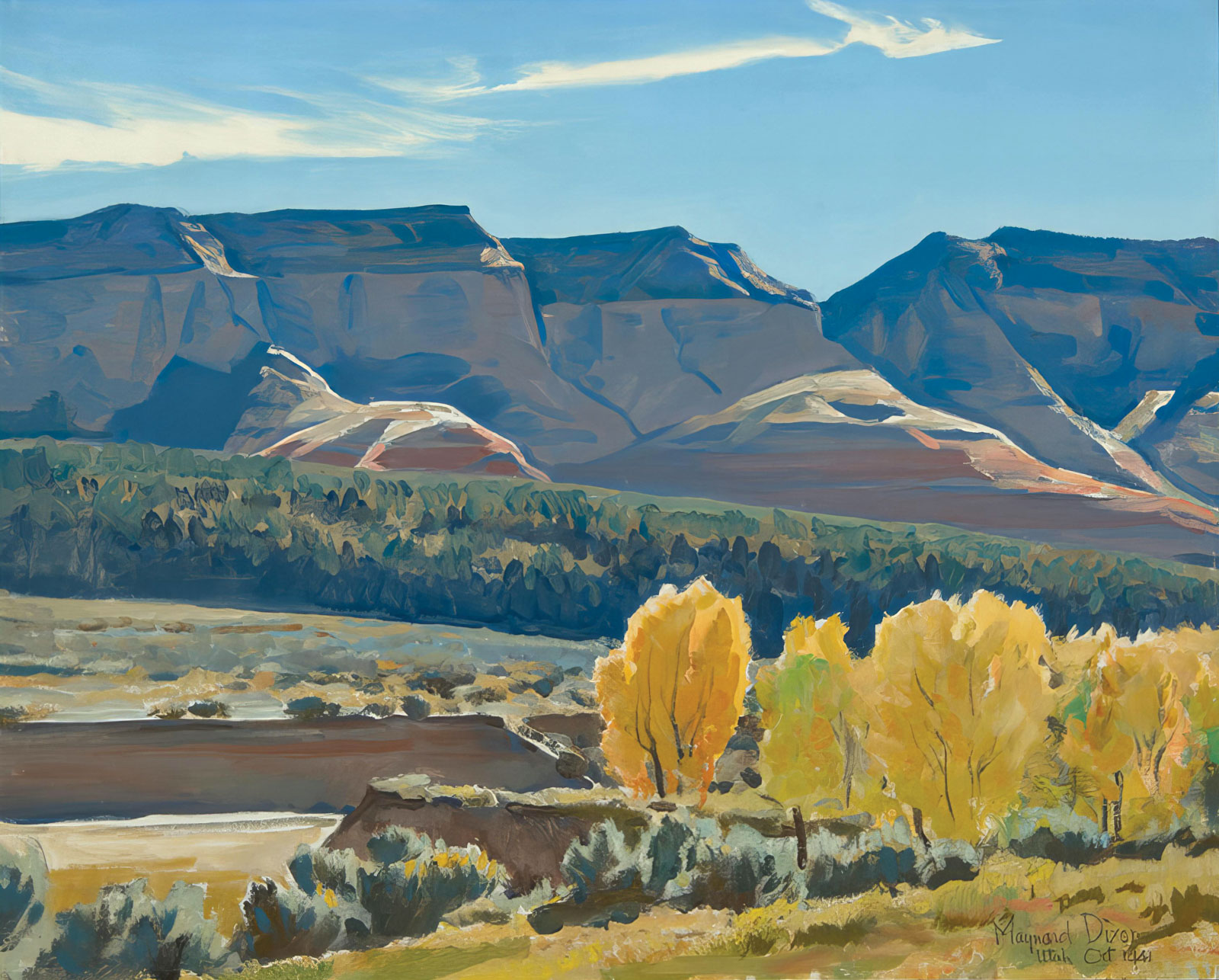 Maynard Dixon (1875-1946), Peaceful Morning. Oil, 16 x 20 in. Estimate: $100/150,000One example from outside the West, is George Henry Durrie’s Twelve Miles to Goshen, which shows a snowy village in Connecticut. The painting, from 1858, was ahead of its time when it was created. Many of Durrie’s contemporaries were painting large green landscapes of the Hudson River Valley and other locations in the East. When Durrie started painting snow scenes, it was thought no one would want to look at those images. But Durrie pushed forward and the works became quite popular, especially after Currier & Ives started producing lithographs of his paintings. The pioneering artist didn’t live long—he died at the age of 43—but his contribution to landscape painting is felt still today. Twelve Miles to Goshen is estimated at $100,000 to $150,000.
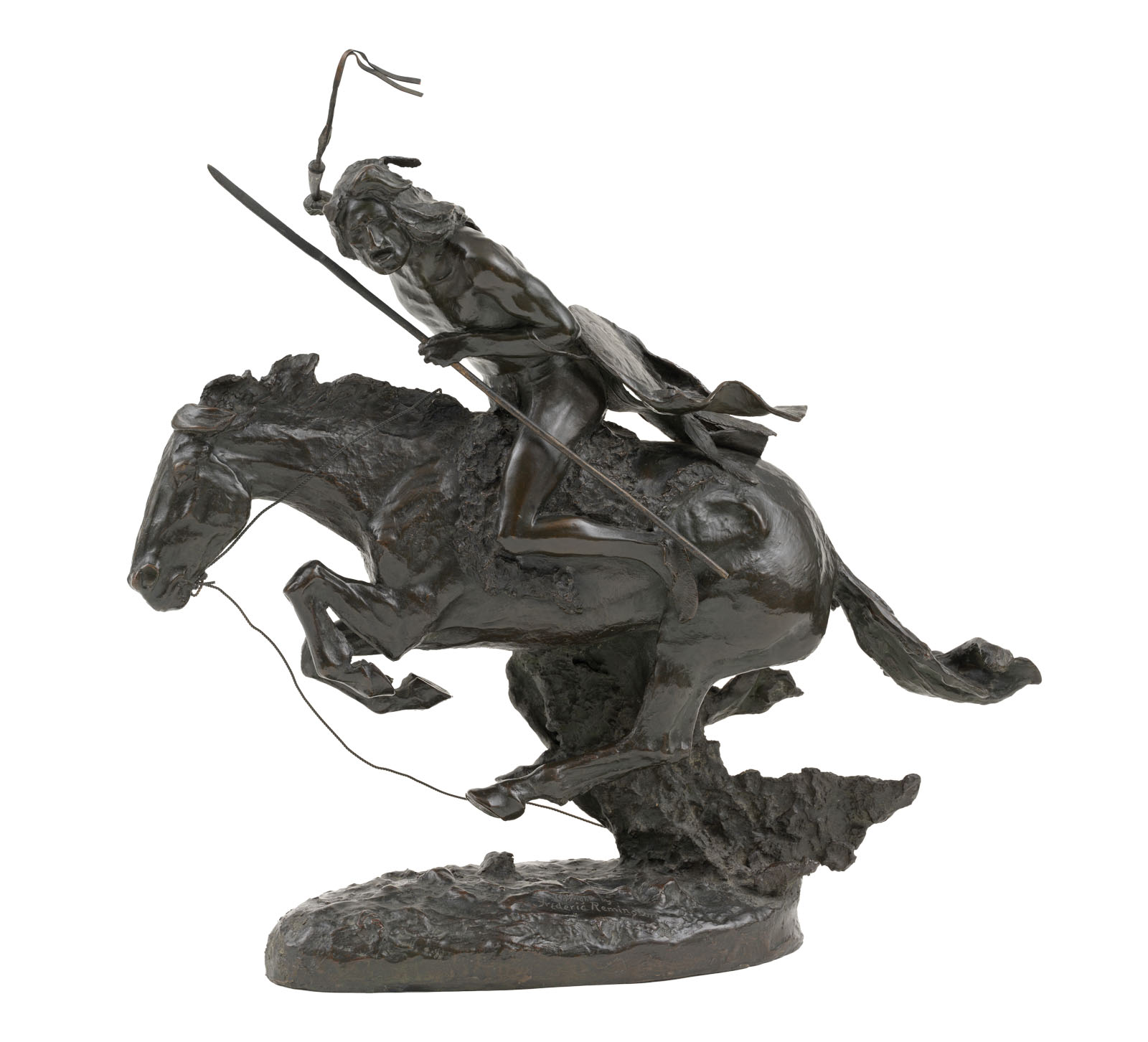 Frederic Remington (1861-1909), The Cheyenne. Bronze, cast No. 25, 19¾ in. Estimate: $100/150,000
Other works in the sale include pieces from Birger Sandzén, Maynard Dixon, Fremont Ellis, Leon Gaspard, Peter Hurd, William R. Leigh, Frank Tenney Johnson, Winold Reiss and John Clymer.
Powered by Froala Editor