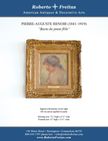
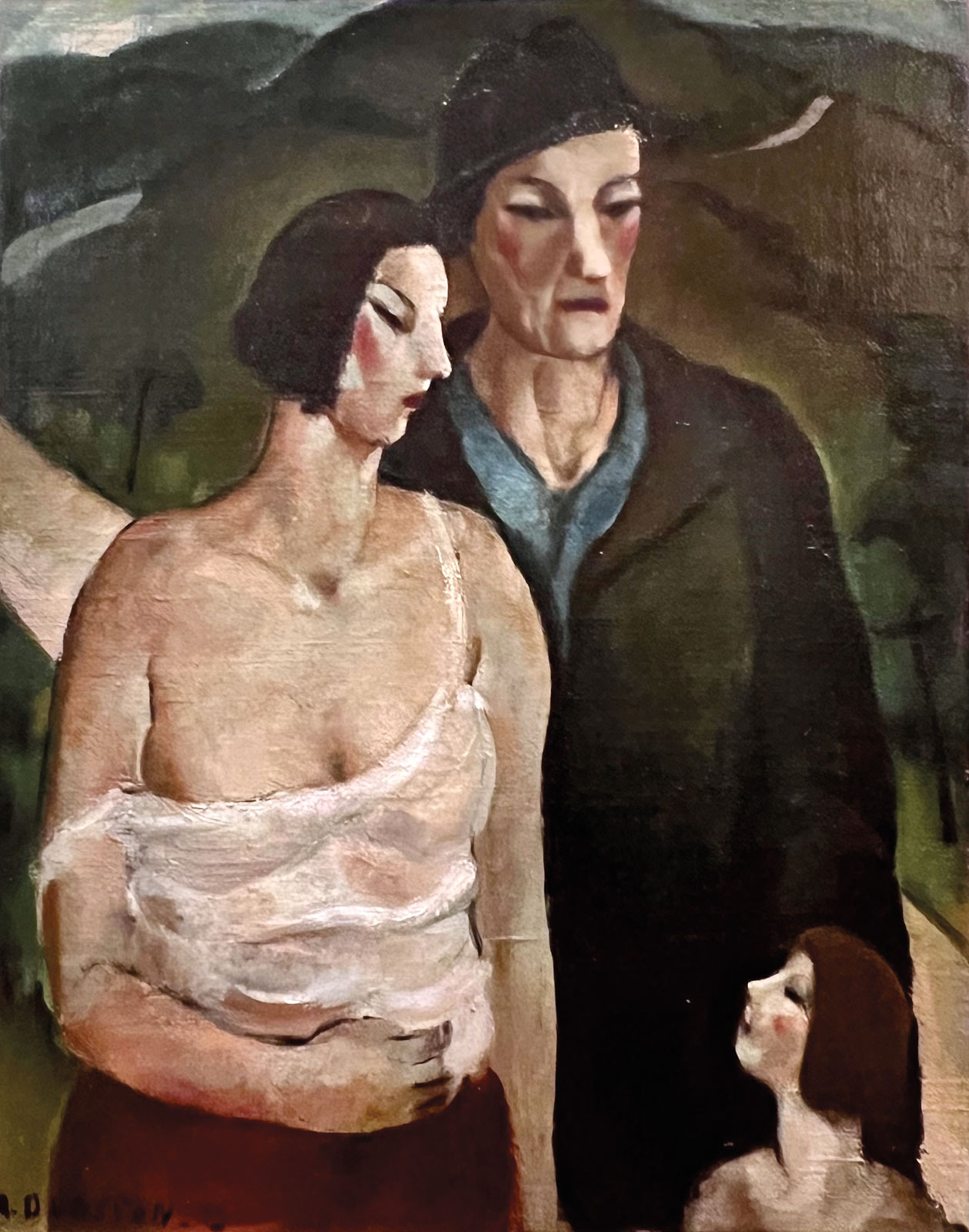
 Arthur Durston (1889–1938), Depression, 1933. Oil on canvas, signed lower left, 23 x 18 in., signed lower left. Arthur Durston (1889-1938)
Depression
Arthur Durston was one of California’s leading modernist painters of the 1920s and 1930s. Los Angeles Times art critic, Arthur Millier praised Durston as one of the region’s “most individual talents.” Combining influences as diverse as German Expressionism, Mexican Muralism and the Cezanne/Gaugin vein of post-impressionism, Durston produced a stunning, but small body of work, which was unfortunately cut short by his early death at the age of only 41.
Depression is among Durston’s most important paintings. In 1933, it won the prestigious Bertram C. Newhouse Prize at the 14th annual Painters & Sculptors of Southern California Exhibition at the predecessor to the Los Angeles County Museum of Art and was published in the Los Angeles Times in connection with that exhibit. Reflecting on the $100 prize, the artist told Millier, “I can live on that for a year.” Depression was later shown at the Winter Exhibition of the Progressive Painters of Southern California and the artist’s solo exhibition at Centaur Gallery. The work is a prime example of the unique form of modernist-informed social realism developed on the West Coast during the 1930s and bears favorable comparison to Durston’s Industry which is in the permanent collection of the Smithsonian American Art Museum.
CW American Modernism
By Appointment • Los Angeles, CA • (310) 383-0463 cwamericanmodernism@gmail.com • www.cwamericanmodernism.com
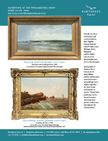
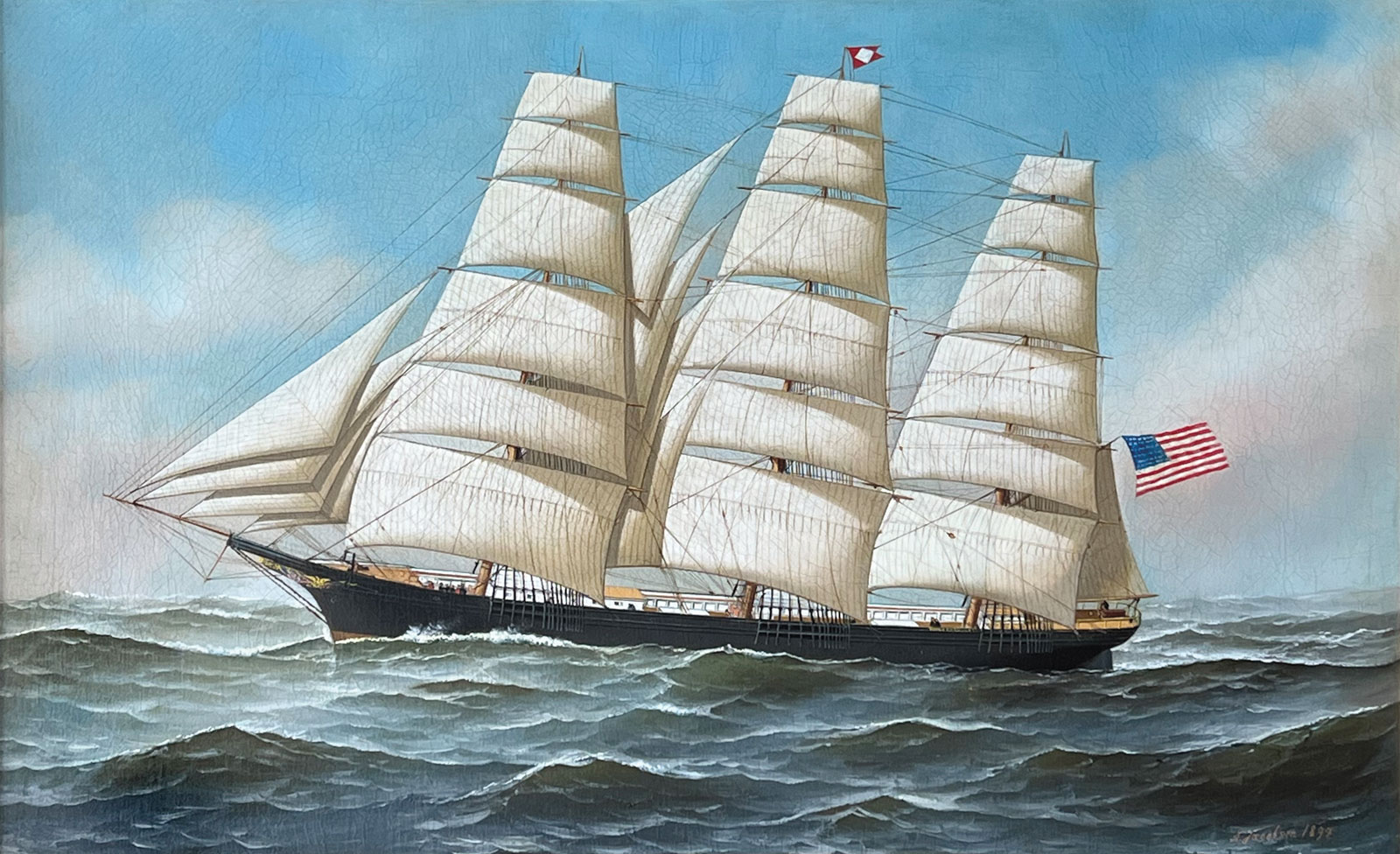 Antonio Nicolo Gasparo Jacobsen (1850-1921), Young America, 1894. Oil on Canvas, 21½ x 35½ in., signed and dated lower right.
Antonio Nicolo Gasparo Jacobsen (1850-1921)
Young America
Antonio Nicolo Gasparo Jacobsen was born in Copenhagen, Denmark, where he attended the Royal Academy of Design before emigrating to the United States in August 1873, where he settled in New Jersey, across the Hudson River from New York Harbor, its port filled with ships from America and around the world.
Painted in 1894, Young America depicts one of the most famous of clipper ships, setting a record for the passage from Liverpool to San Francisco in 1872, of 99 days; and another for a loaded sailing ship between San Francisco to New York in 1870 in 83 days. The Danish-American artist painted Young America from life, first in 1880 before it was lost at sea. This version was painted in 1894.
Thomas Colville Fine Art
111 Old Quarry Road • Guilford, CT 06437 • (203) 453-2449 • tlc@thomascolville.com • www.thomascolville.com
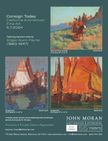
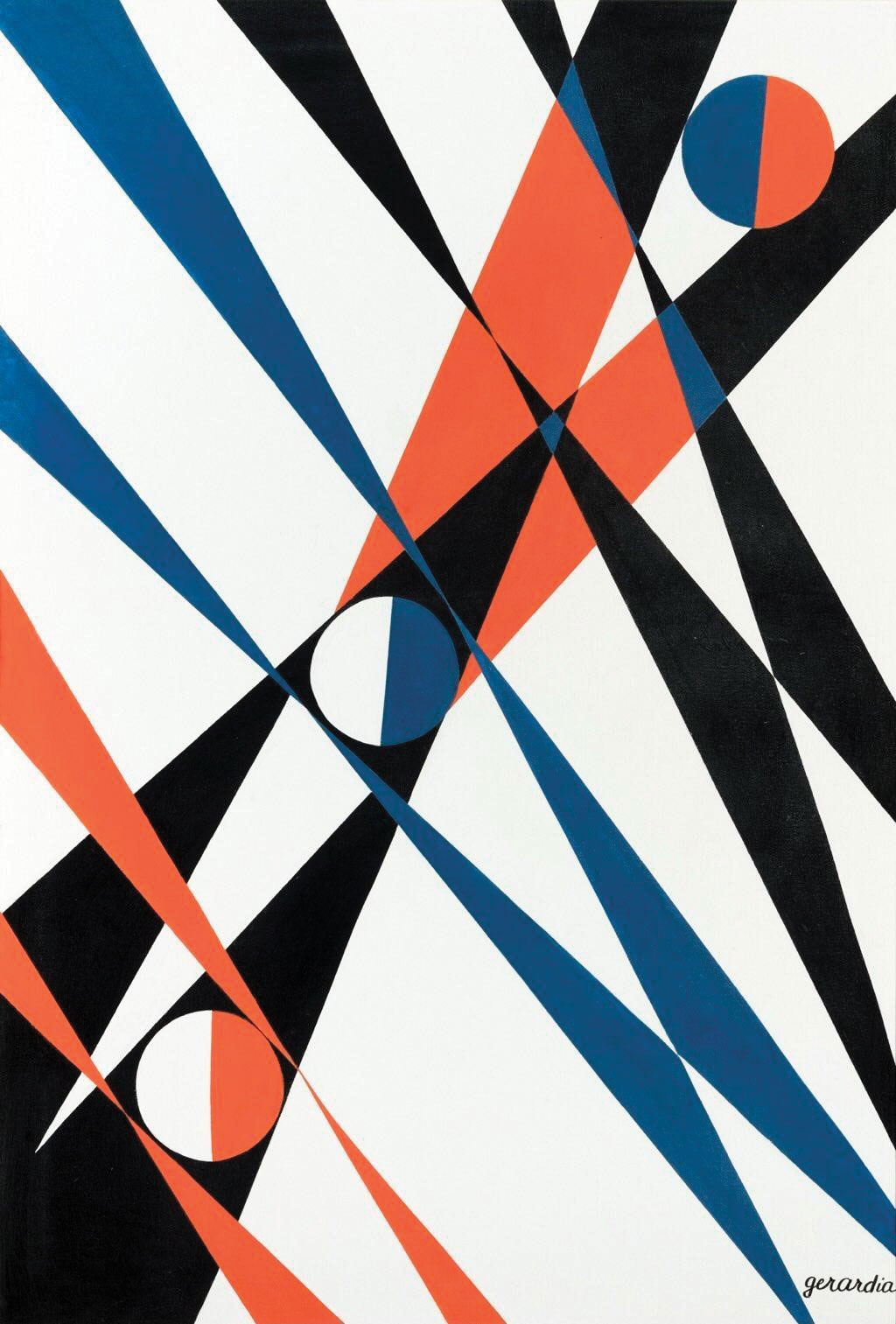 Helen Gerardia (1903-1988), Moon Ladder, ca. late 1960s. Acrylic on canvas, 59 x 39 in.
Helen Gerardia (1903-1988)
Moon Ladder
Helen Gerardia was born in Dnipro, Ukraine, in 1903. Ukraine was under the domination of Imperial Russia and she immigrated to the United Sates in 1921. Having settled in New York, Gerardia became an elementary school teacher. In the late 1940s, she studied at the Art Students League and immersed herself in the abstract expressionist movement, studying under Hans Hofmann. In the early 1950s, Gerardia was primarily a painter and used hard-edge geometric shapes, and black and white in much of her works. She started incorporating more color into her paintings in 1959, including lavender, which is prominent in her works of the early 1960s. “I have always been interested in the play of light and its effect on form and color,” stated Gerardia. “Another quality of light, the prismatic breaking up of colors, has always fascinated me. I felt that by placing my color in broken areas I could, in a way, approximate the movement of atmosphere and the divisibility of color.”
During her career, she also engaged in lithography and etching. She eventually founded the Gerardia Workshop, where she taught a variety of mediums. Gerardia was an original member of the Vectors artist group and served as president of the American Society of Contemporary Artists.
J. Kenneth Fine Art
668 N. Palm Canyon Drive • Palm Springs, CA 92262 (802) 540-0267 • www.jkennethfineart.com
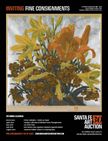
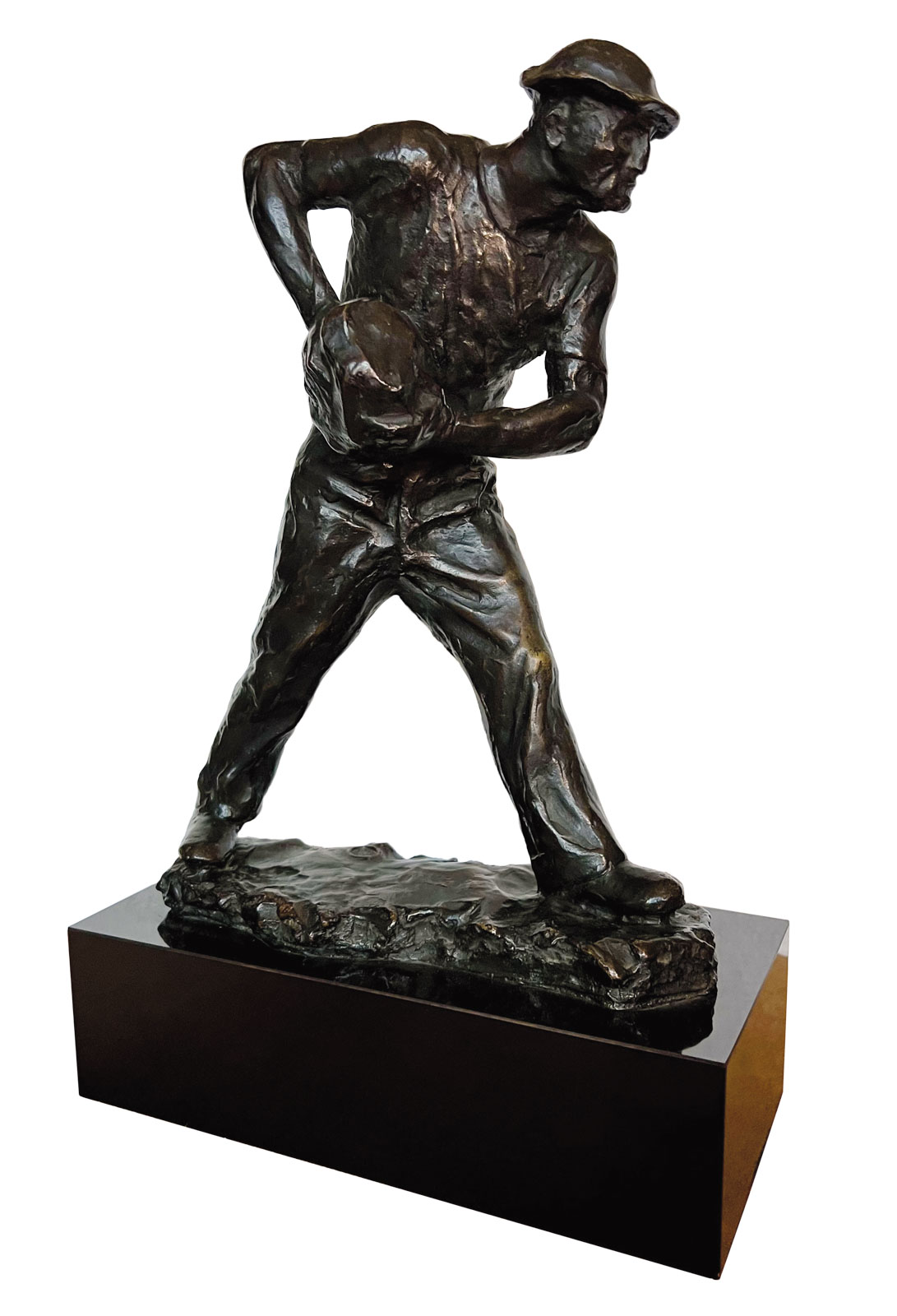 Max Kalish (1891-1945), The Road Builder, 1923. Bronze, 13¼ x 9¾ x 4½ in., inscribed on top of base: ‘M. KALISH 23’ with Meroni-Radice foundry mark.
Max Kalish (1891-1945)
The Road Builder
Born in Poland, Max Kalish was a sculptor best known for his WPA Depression-era sculptures of American laborers, a prime example of which is his bronze The Road Builder. A talented youth, Kalish enrolled at the Cleveland Institute of Art at 15, and after graduation went to New York City, where he studied with Isidore Konti and Herbert Adams for the next two years.
In 1912, Kalish went to Paris and studied at the Académie Colarossi in Paris and then at the École des Beaux-Arts. In the army by 1916, Kalish sculpted a series of bronze soldiers. In 1920, back in Paris, he soon sculpted his first laborer, The Stoker, depicting a Cleveland blast furnace worker. In 1925, one of his award-winning marble nude torsos was purchased by the Cleveland Museum of Art, which led to several significant large-scale public commissions.
Living and working in New York City at the outset of World War II, Kalish was commissioned by the Museum of American History to sculpt 48 bronze figures—one-third life-size—of those involved in the war effort, including President Roosevelt, his cabinet and other important people.
Helicline Fine Art
By Appointment • New York, NY • (212) 204-8833 • www.heliclinefineart.com
Powered by Froala Editor