The public sculptures of Daniel Chester French (1850-1931) and Augustus Saint-Gaudens (1848-1907) are some of the country’s most recognized and revered monuments. French’s sculpture of a seated Abraham Lincoln commands the Lincoln Memorial in Washington, D.C. At the southeast corner of Central Park in New York City are Saint-Gaudens’ gilded Victory and William Tecumseh Sherman commemorating the Union Army general.
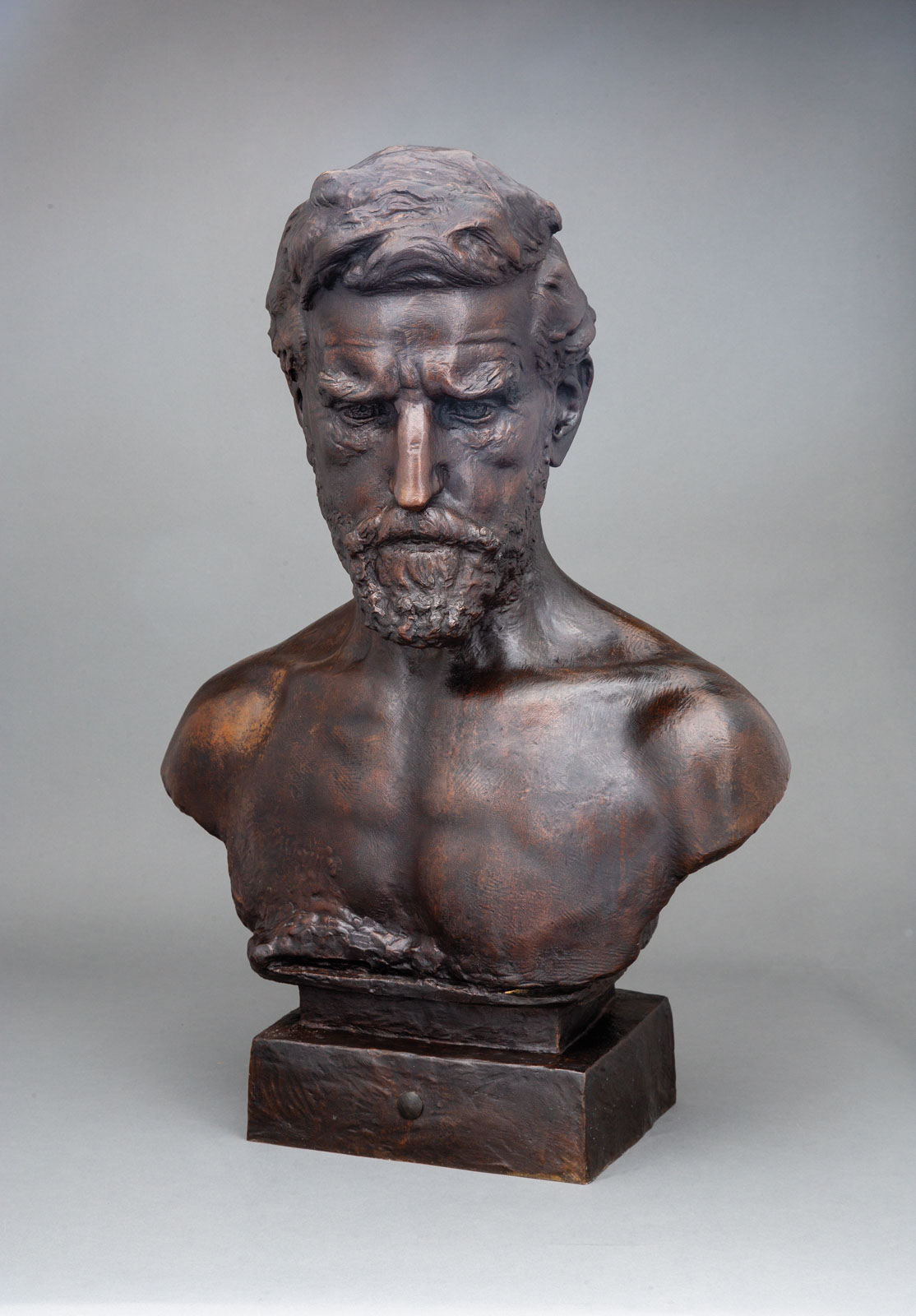 James Earle Fraser (1876-1953), Augustus Saint-Gaudens, 1905-26. Bronze, 32 x 23 x 16 in. Saint-Gaudens National Historic Park, Cornish, NH. Courtesy American Federation of Arts.
Both monuments contain symbols often overlooked by the viewer. Eighty-seven steps lead up to architect Henry Bacon’s Greek revival Lincoln Memorial, referencing Lincoln’s “four-score and seven years ago” in his Gettysburg Address. Referring to Lincoln’s hands on the sculpture, the National Park Service notes, “One of the president’s hands is clenched, representing his strength and determination to see the war through to a successful conclusion. The other hand is a more open, slightly more relaxed hand representing his compassionate, warm nature.”
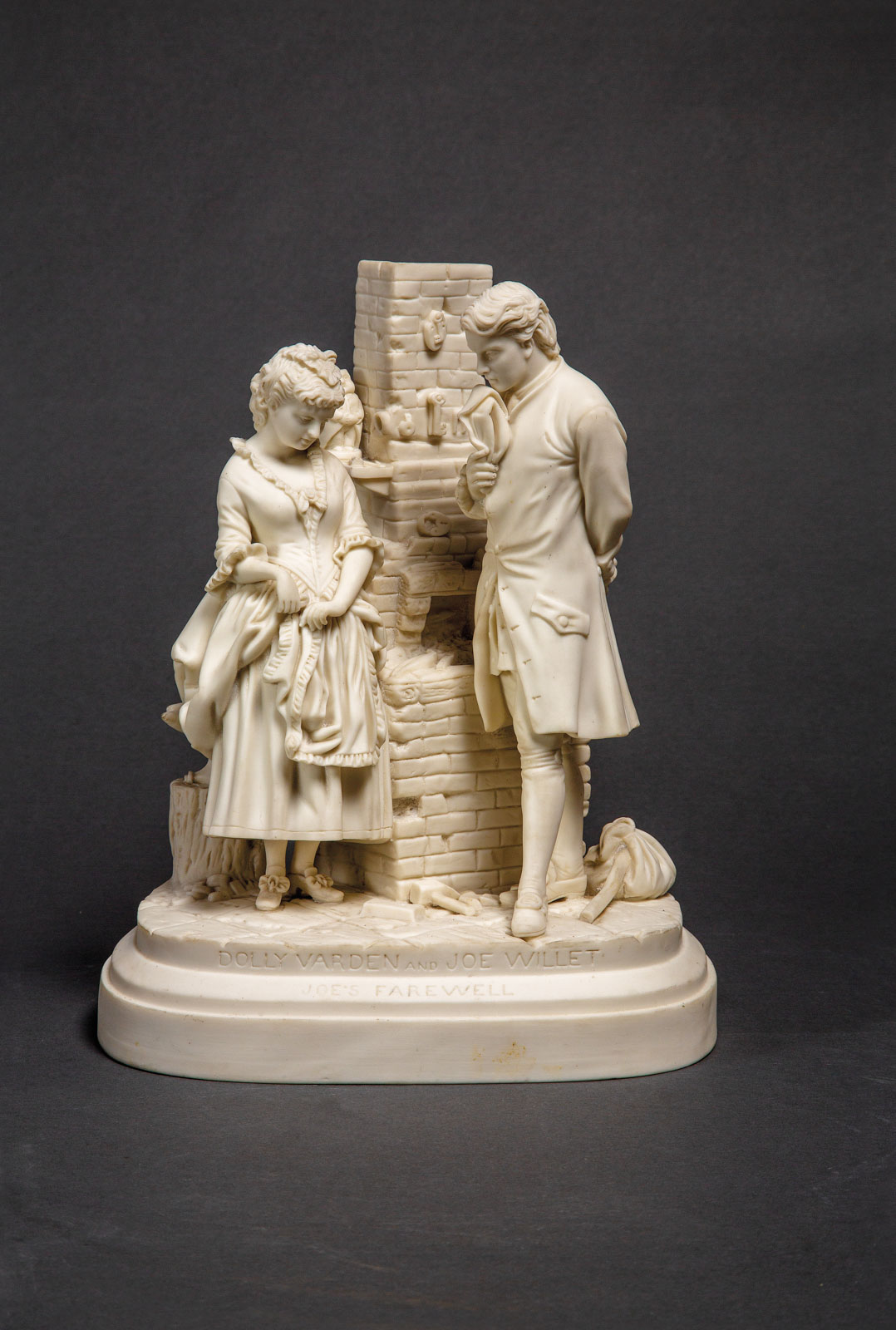 Daniel Chester French (1850-1931), Joe’s Farwell, 1873. Parian Ware, 9¾ x 7¾ x 5¾ in. Chesterwood, Stockbridge, MA. Gift of the Daniel Chester French Foundation, NT69.38.1189. Courtesy American Federation of Arts.
References abound in Saint-Gaudens’ Sherman monument. The model for Victory, was Hettie Anderson, an African-American woman who was a model for many of the era’s best-known artists. She leads Sherman to victory over the South. Sherman’s horse, Ontario, tramples on a branch of Georgia pine.
Both artists left behind idyllic country estates in New England where their homes and studios are open to the public. French’s Chesterwood is in the Berkshires of western Massachusetts and is a site of the National Trust for Historic Preservation. The Saint-Gaudens National Historical Park and the Saint-Gaudens Memorial are in Cornish, New Hampshire.
Both institutions have collaborated with the American Federation of Arts (AFA) to mount the traveling exhibition, Monuments and Myths: The America of Sculptors Augustus Saint-Gaudens and Daniel Chester French. The exhibition features approximately 80 sculptures, models, maquettes and more.
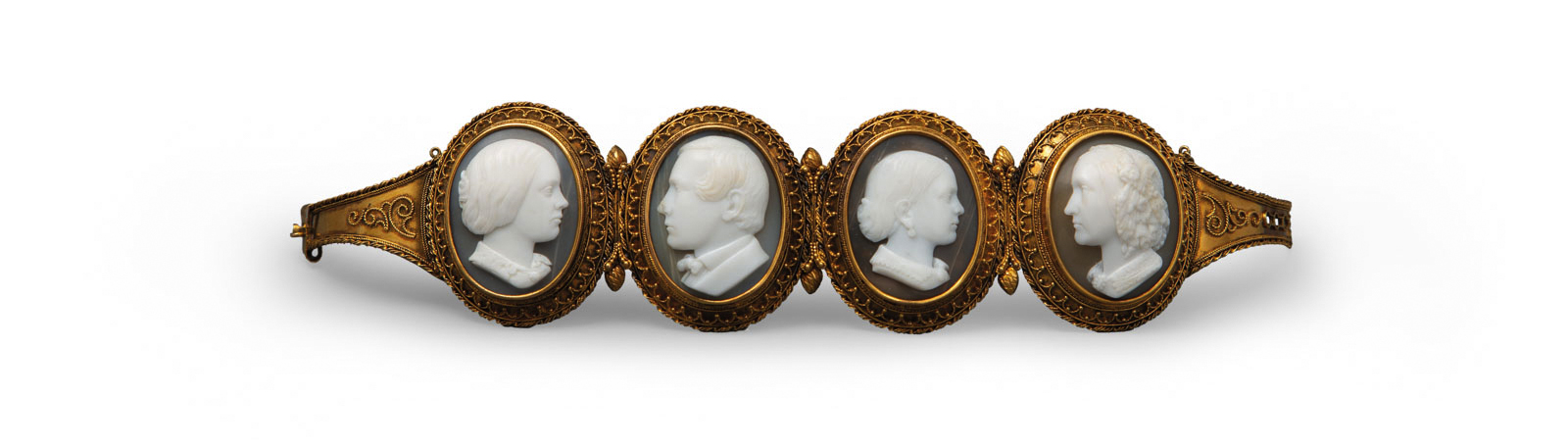 Augustus Saint-Gaudens (1848-1907), Stuart Family Cameo, after 1861. Shell and gold, 8¾ in. Saint-Gaudens National Historical Park, Cornish, NH. Courtesy American Federation of Arts.
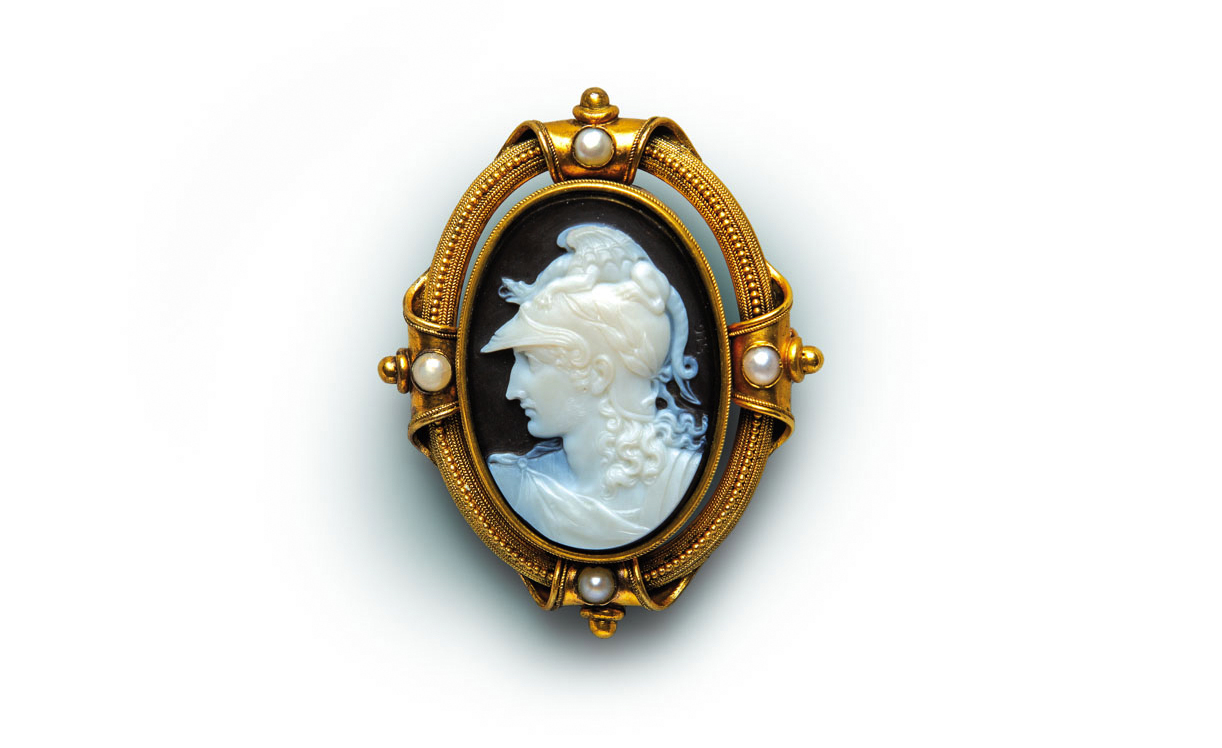 Augustus Saint-Gaudens (1848-1907), Mars Cameo, 1873-74. Onyx, 15/8 in. Saint-Gaudens National Historical Park, Cornish, NH. Courtesy American Federation of Arts.
Pauline Forlenza, director and CEO of AFA, writes, “Monuments and Myths traces the formation of Gilded Age American identity through the era’s sculptures and monuments. A century after the Lincoln Memorial’s unveiling, many are once more asking what it means to be American, and which artworks are best poised to speak to national heritage. This exhibition holds valuable keys to those questions.”
The AFA explains, “Augustus Saint-Gaudens was born in Dublin, Ireland, the son of an Irish mother and a French father. He immigrated to New York as an infant. Daniel Chester French was born in New Hampshire, the fourth child of a New England family with roots in America that reached back hundreds of years. After coming of age in Civil War America and training in Europe, Saint-Gaudens and French returned to the United States in a moment when sculpture had immense power to shape the visual and intellectual landscape of the nation. Amid massive industrial growth and developing new socio-political structures, the sculptors produced aesthetically graceful and socially potent artworks that informed the nation’s efforts to navigate its post-Civil War values.”
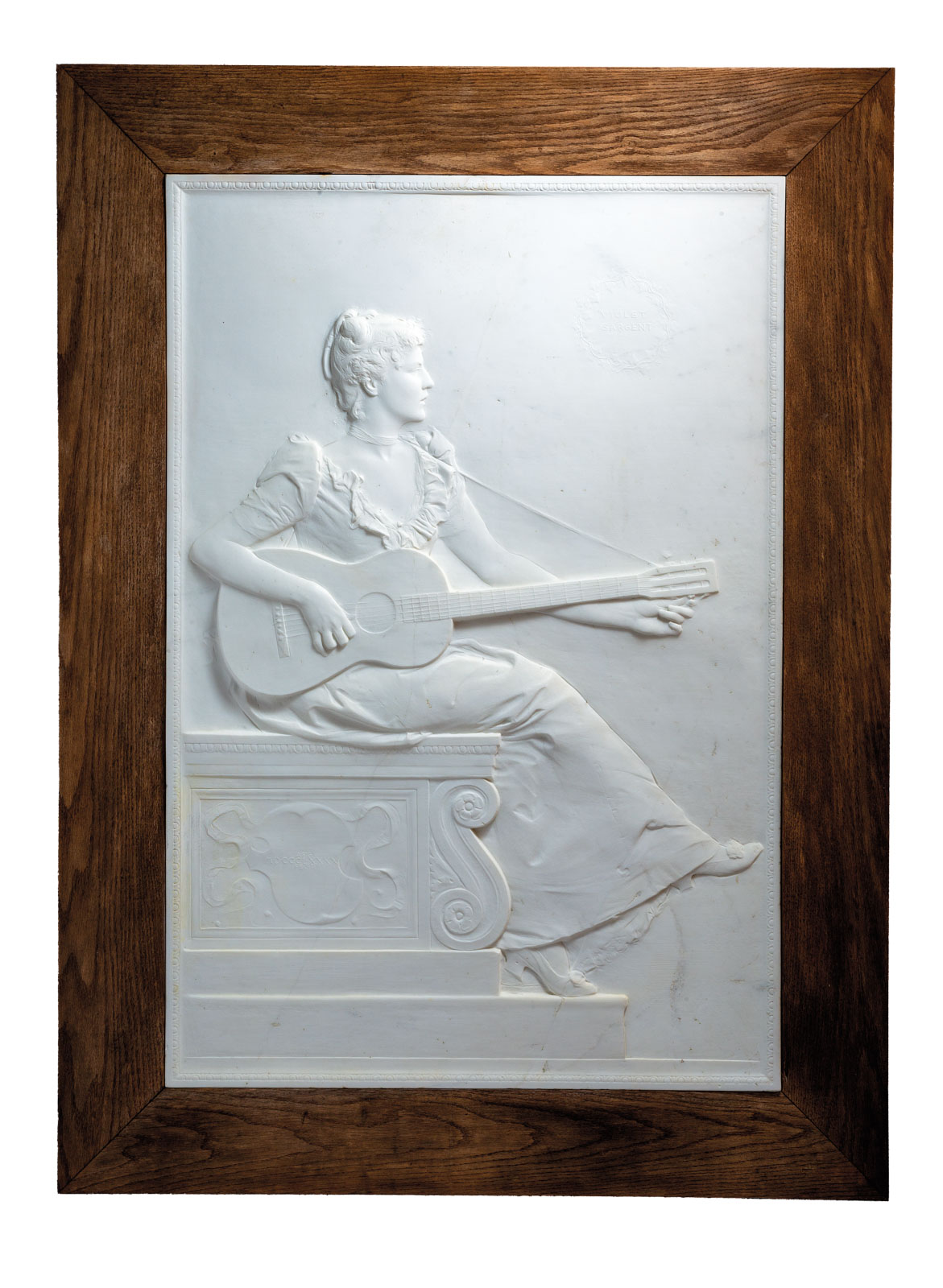 Augustus Saint-Gaudens (1848-1907), Violet Sargent, 1890. Marble, 50¼ x 34¼ in. Saint-Gaudens National Historical Park, Cornish, NH. Courtesy American Federation of Arts.
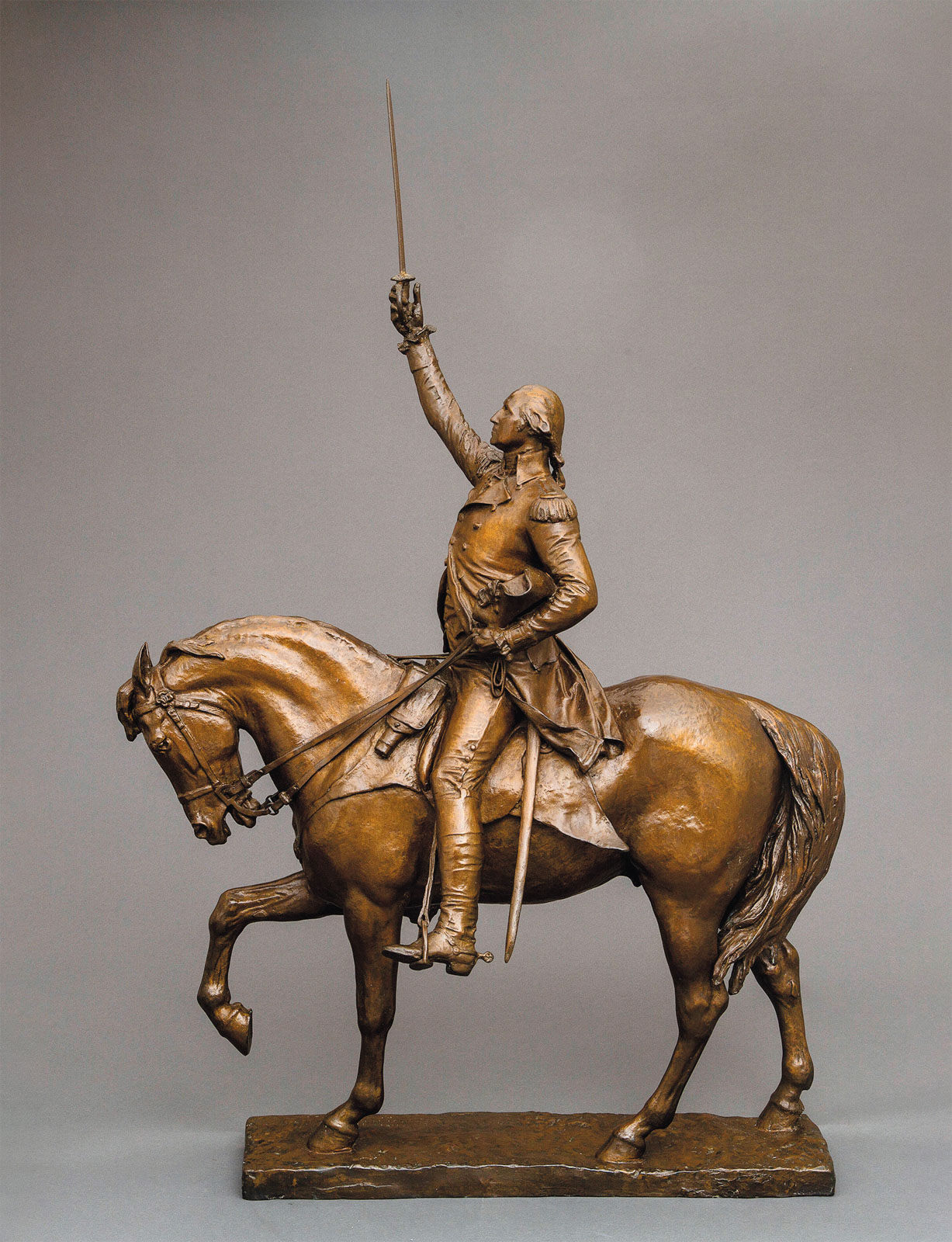 Daniel Chester French (1850-1931), George Washington Equestrian, 1903-04. Bronze, 30¾ in. Chesterwood, Stockbridge, MA. Gift of the Daniel Chester French Foundation. Courtesy American Federation of Arts.
In his preface to the exhibition’s catalog Andrew Eschelbacher, director of collections and exhibitions at the Amon Carter Museum of American Art in Fort Worth, Texas, addresses the societal complexities in which their monumental sculpture was created.
“Saint-Gaudens, French, and their contemporaries produced a vision of American grandeur and ascendency. Yet given the nature of sculpture in this era, which was dependent on the commissions of those in political or cultural power, their art also obfuscated significant and growing social injustices. For as much as this was a golden age of so-called American Renaissance, it was also a period of great inequality with both de facto and de jure discrimination based on race, gender, national origin, Indigenous status and more. Saint-Gaudens and French both have mixed legacies in this regard; in certain respects they were progressive, while in others their attitudes deserve further scrutiny. Looking back on their careers as the United States confronts the link between its public sculptures and long-standing systems of inequity, the lives and careers of French and Saint-Gaudens are ripe for reexamination as we pursue a fuller picture of the moment in which they lived and consider the fraught American narratives their artwork has advanced.”
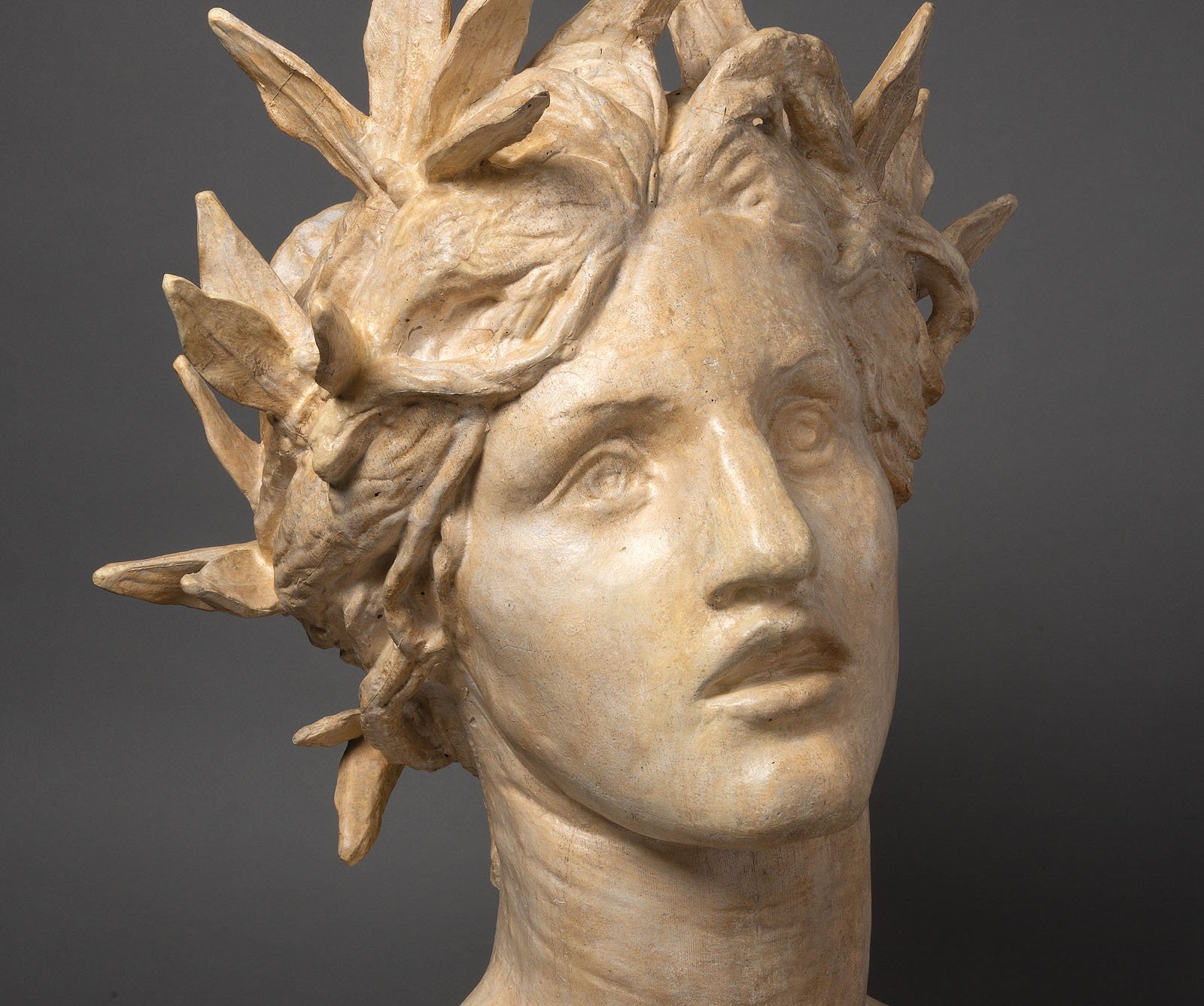 Augustus Saint-Gaudens (1848-1907), Head of Victory (detail), 1897-1902. Plaster, 24 x 19 x 22 in. Saint-Gaudens National Historical Park, Cornish, NH. Courtesy American Federation of Arts.The exhibition is mounted thematically with an opening section devoted to the artists’ studios, “introducing aspects of their techniques as well as the diverse group of models, assistants, carvers, and casters who were vital to their practices,” the AFA explains. “A subsequent section examines how their monuments and architectural sculptures were designed to communicate ideas of national grandeur in civic spaces; a third considers the artists’ portraits and decorative arts alongside the cultural milieu of their patrons and clients; a fourth section showcases their funerary monuments, in turn detailing America’s shifting attitudes towards public mourning.”
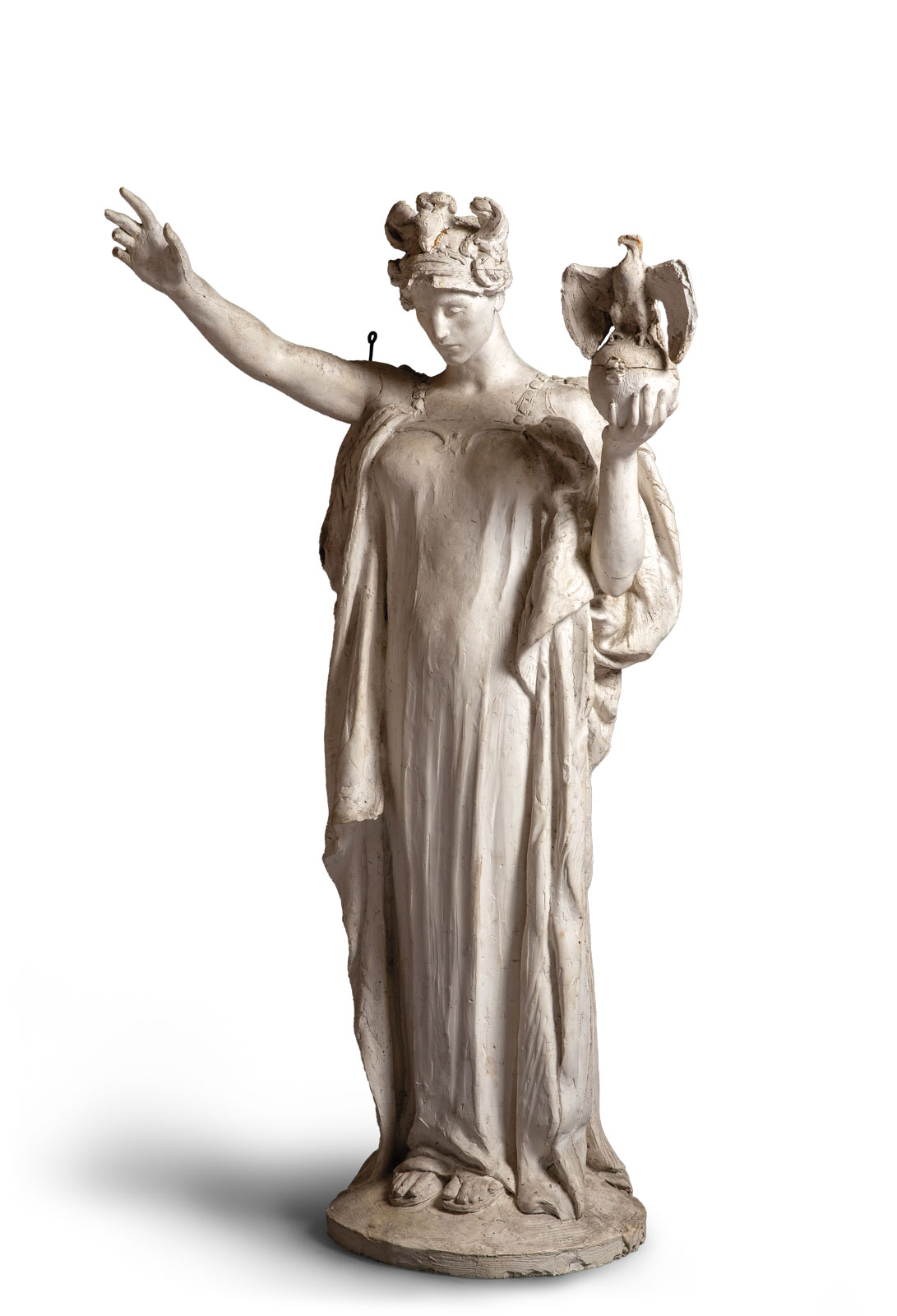 Daniel Chester French (1850-1931), Model for Wisconsin, 1913-14. Plaster, 35½ x 115/8 in. Chesterwood, Stockbridge, MA. Courtesy American Federation of Arts.
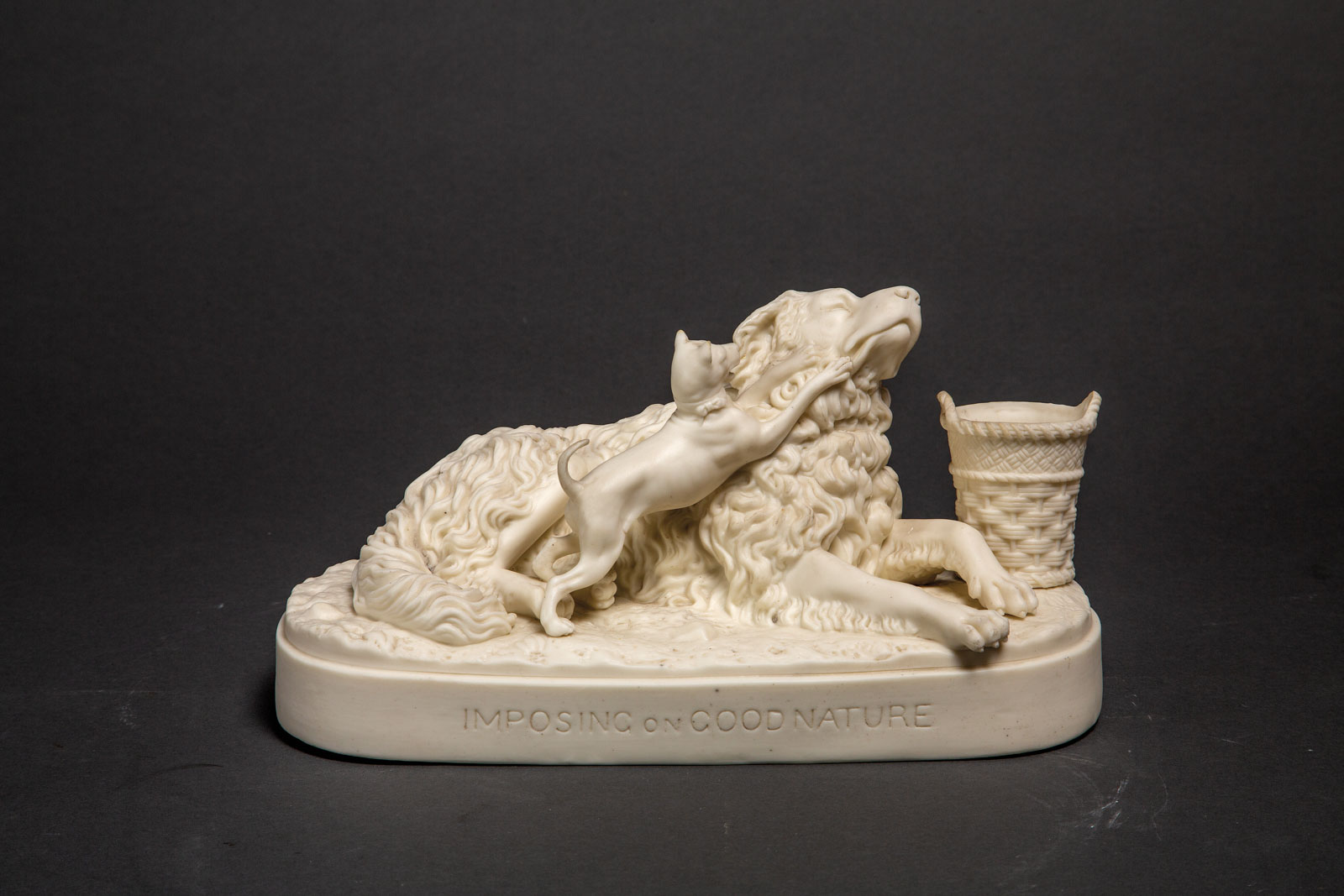 Daniel Chester French (1850-1931), Imposing on Good Nature, 1871-72. Parian Ware, 5 x 10 x 4¾ in. Chesterwood, Stockbridge, MA. Gift of the Daniel Chester French Foundation. Courtesy American Federation of Arts.
The works in the exhibition are drawn from the collections of Chesterwood and the Saint-Gaudens Memorial. While many refer to their familiar public works, others are, perhaps, unexpected like Saint-Gaudens’ cameos of the Joseph Stuart Family carved for a bracelet when he was 13, and his marble bas relief of Violet Sargent, the sister of John Singer Sargent. Violet met Saint-Gaudens at a party in William Merritt Chase’s studio. The sculptor asked to create her portrait. Her brother agreed and offered to paint a portrait of Saint-Gaudens’ son Homer in exchange.
James Earle Fraser (1876-1953), sculptor of End of the Trail and the buffalo nickel, was an assistant to Saint-Gaudens and his portrait bust of the artist is in the exhibition.
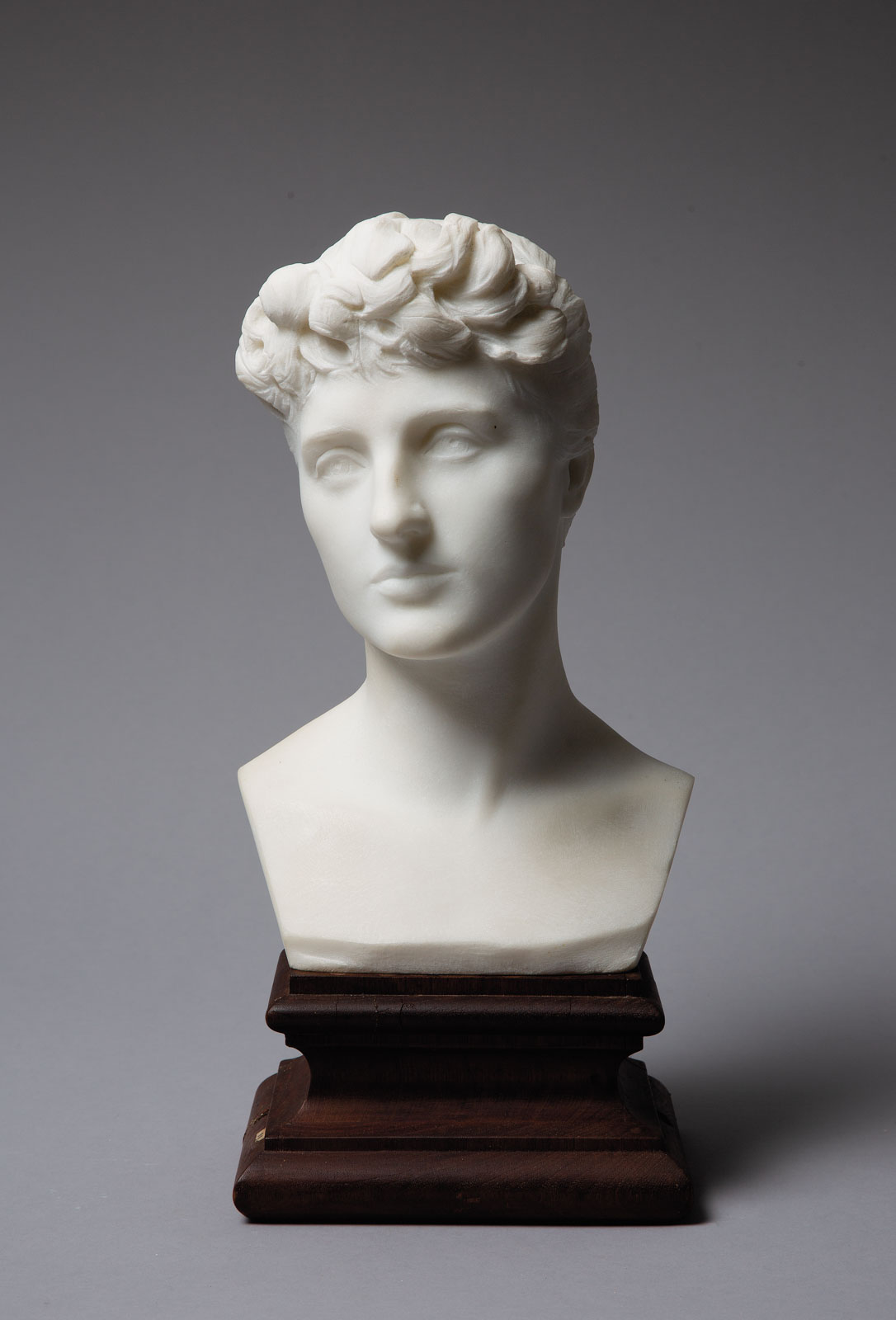 Augustus Saint-Gaudens (1848-1907), Davida Johnson Clark, 1886. Marble, 11 x 77/8 x 7½ in. Saint-Gaudens National Historical Park, Cornish, NH. Courtesy American Federation of Art.
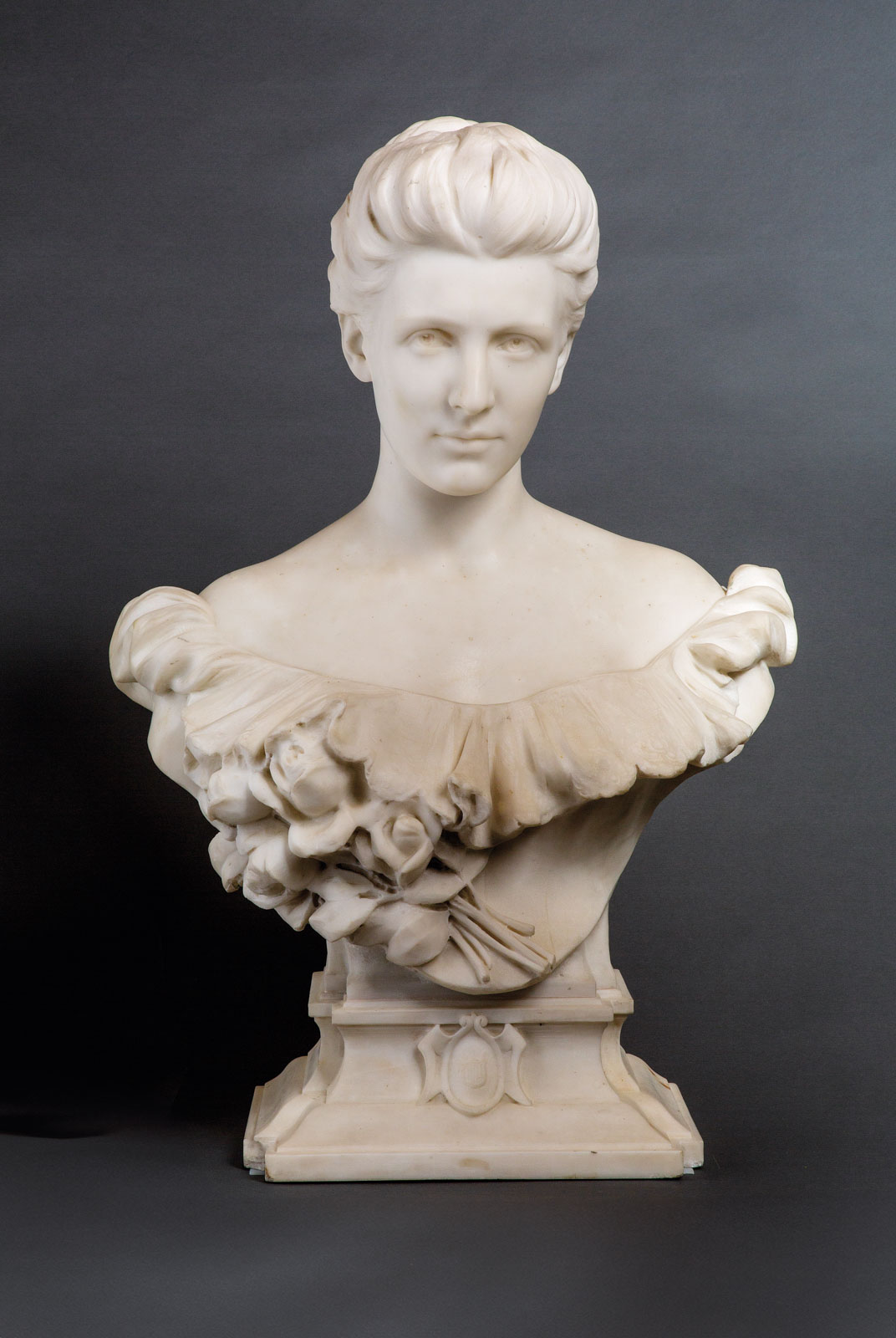 Daniel Chester French (1850-1931),Cornelia Fanning Gay, 1901. Marble; 30 1/8 x 21 1/2 x 13 in. Chesterwood, Stockbridge, MA. Gift of the Daniel Chester French Foundation. Courtesy American Federation of Arts
Among French’s early works are small figurative pieces modeled when he was living in Concord, Massachusetts, in the early 1870s, and sold to a company which had them cast in Parian Ware for mass consumption by a growing middle class. Joe’s Farewell is based on characters in Charles Dicken’s novel, Barnaby Rudge.
The exhibition will be shown at the Frist Art Museum in Nashville, Tennessee, March 1 through May 27, followed by the James A. Michener Art Museum, Doylestown, Pennsylvania, June 29 through January 5, 2025, and at the Brunnier Art Museum, University Museums at Iowa State University February 8, 2025 through May 18, 2025.
Powered by Froala Editor