Recently augmented by 44 outstanding pieces from the collection of John M. Rivers, the Kim and Jim Pallotta Main Gallery at the Gibbes Museum of Art in Charleston, South Carolina, is a fascinating time capsule of Southern history and culture in the American Colonial era and in the years of the early republic through the Civil War. Comprised of 18th- and 19th-century American paintings and sculpture, as well as decorative and utilitarian arts, this permanent exhibition showcases a variety of strands of artistic and craftsman practice in the region. In the process, the array reveals aspects of Southern culture that have largely been hidden from view. The contributions of women and African Americans—enslaved and free—for example, offer strong counterpoint to the works of better-known artists such as Louis Mignot, Eastman Johnson and Conrad Wise Chapman. Artworks by Europeans, made expressly for American clientele, add yet another surprising element to the exhibition.
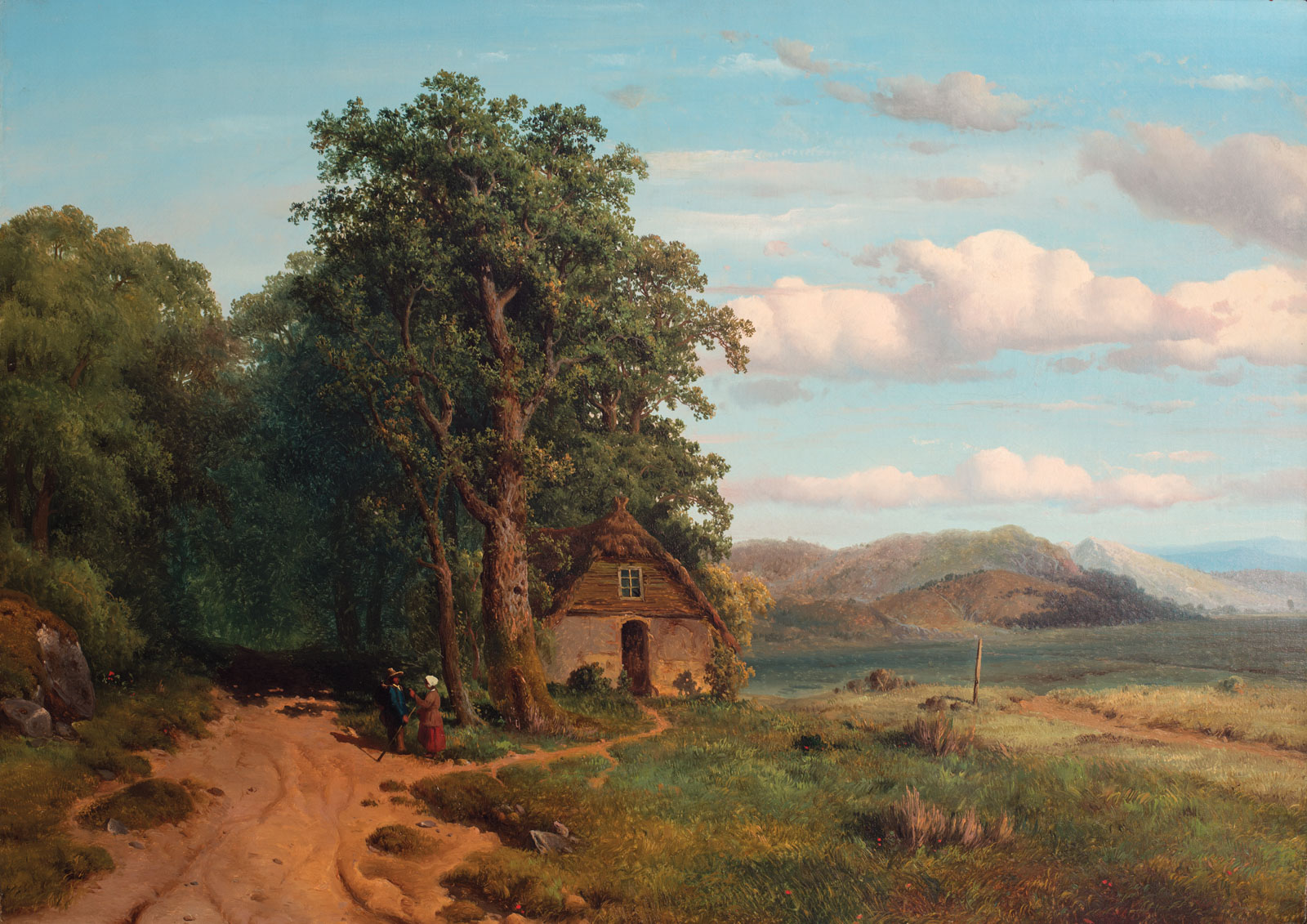 Louis Rémy Mignot (1831-1870), Two Figures on a Country Road next to a Cottage, ca. 1850. Oil on canvas, 41½ x 54 in. (framed). Museum purchase and partial gift of Edward and Anna Crawford with funds provided by Ms. Helen Eakins Bowen, Mrs. Elizabeth W. Ellis, Mrs. K.B. Goddard, Mrs. A Baron Holmes, Mrs. Caroline Whaley.
Permanent exhibitions, especially those that combine the fine and decorative arts, get little play in the media. Visitors walk through them to get to the latest, splashiest thing. Yet the latest thing, as we would all admit, often makes a quick splash and recedes into still waters while carefully amassed and curated collections such as the one on view at the Gibbes—if we stop and take a look—often linger long in the mind. With a sense of continuity and cohesion across a variety of media, as well as the creative friction that arises between objects from the disparate times and subcultures of the area, the patient viewer can get a sense—a sensory sense—of an arc of history that goes well beyond the one-artist or one-school show. Artists we think we know come to life in ways we never expected, while artists we have never heard of simply come to life.
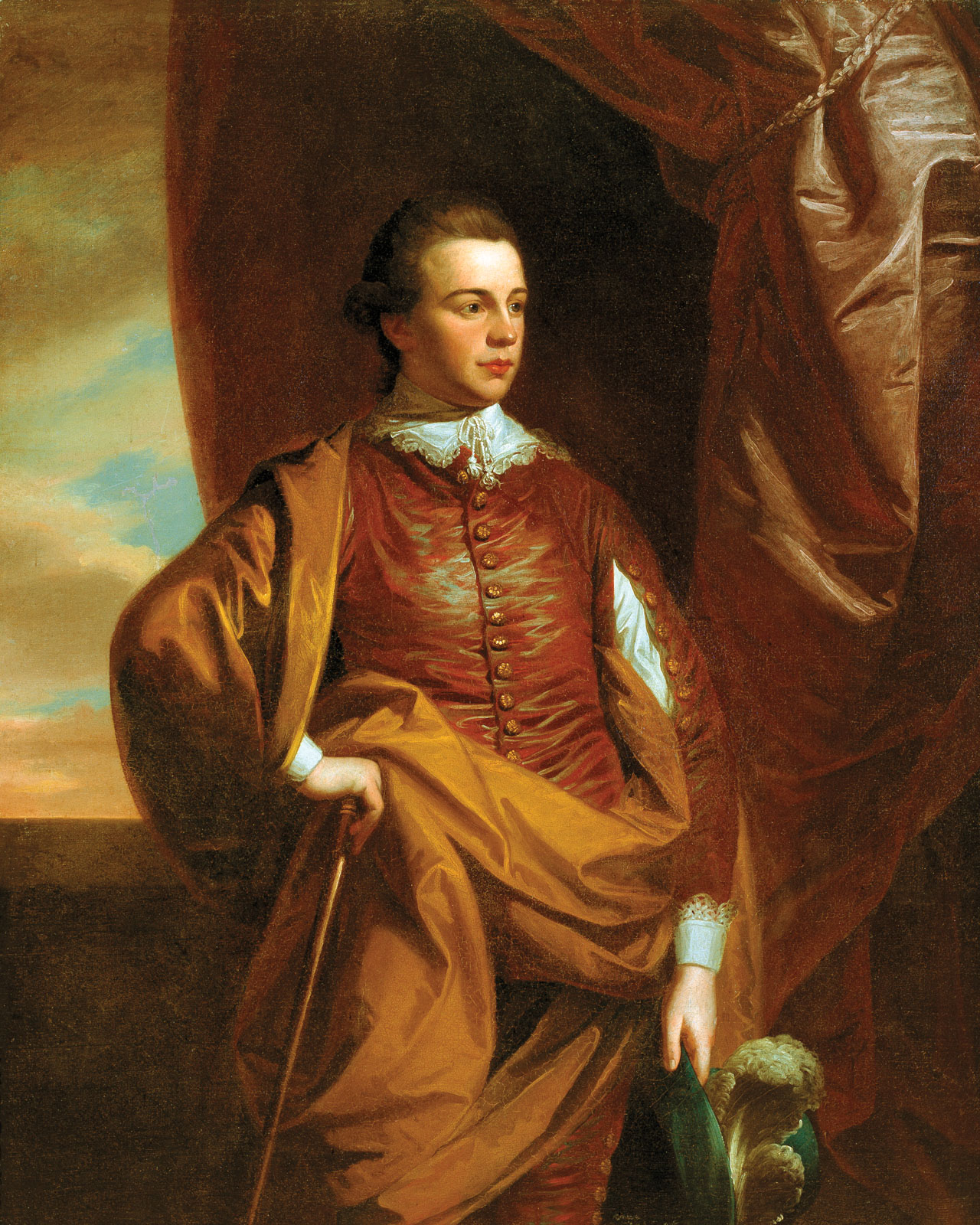 Benjamin West (1738-1820), Thomas Middleton of The Oaks (1753-1797), 1770. Oil on canvas, 59 x 50 in. (framed). Gift of Alicia Hopton Middleton.
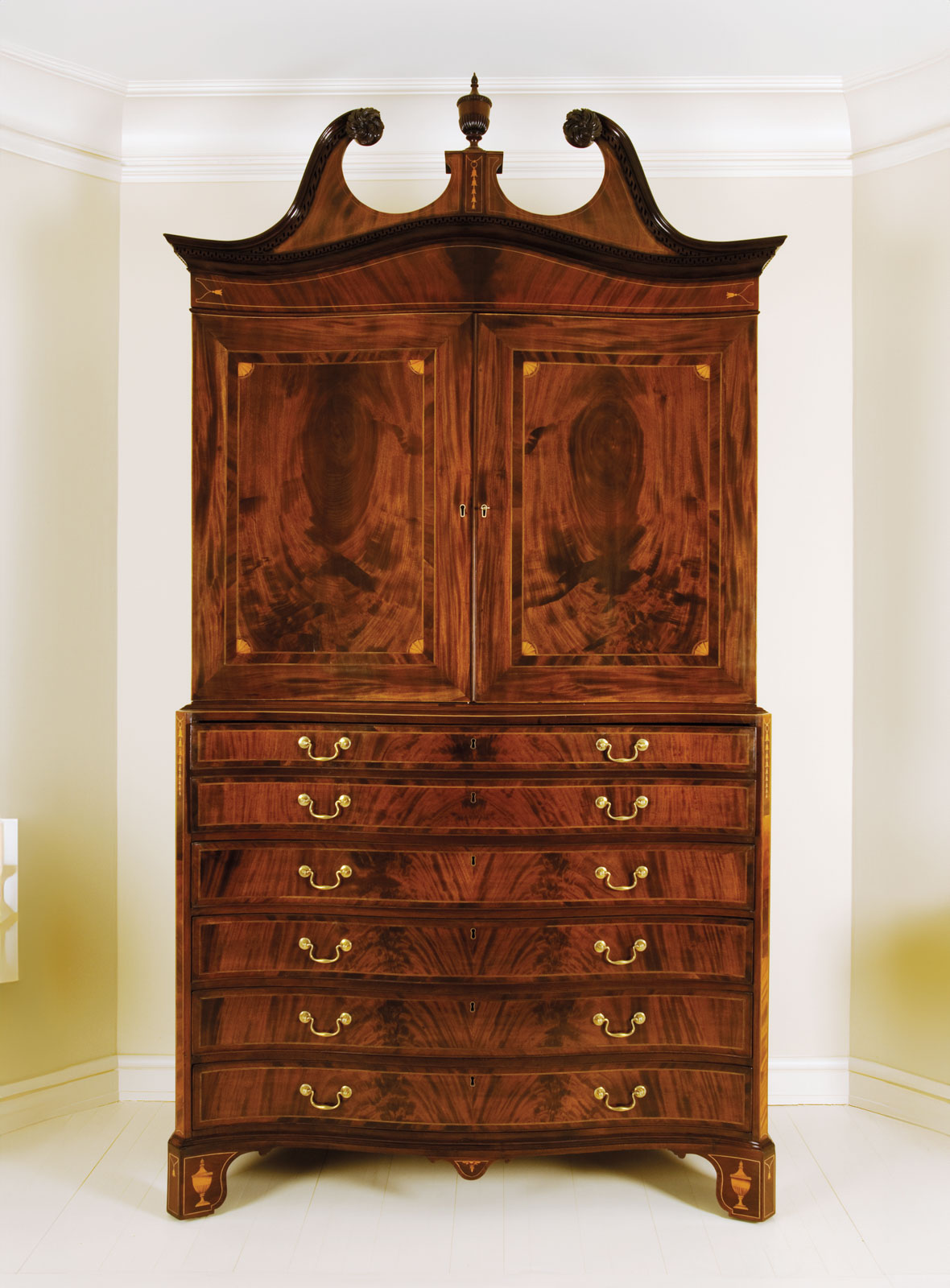 Secretary Press, ca. 1783-1790, Charleston, South Carolina. Inlaid mahogany, 106 x 54 x 27 in. Gift of John M. Rivers.
I have always had a soft spot for Benjamin West (1738-1820), who is, in my mind, the first great American artist of European descent. His painting of The Death of General Wolfe almost single-handedly freed the grand picture from the prison of biblical and mythological subject matter, and his rise to become president of the Royal Academy and confidant of King George III while maintaining a very ardent and public advocacy for American independence is nothing short of astonishing. West painted Thomas Middleton of The Oaks in 1770, the year The Death of General Wolfe made history. Middleton was studying in England then and West portrays him in what the Gibbes website refers to as, “an antique style of dress used in 18th-century paintings to create an air of elegance and pageantry found in Anthony Van Dyck’s 17th-century portraits.” On the one hand, while one might say that West imparts an air of Carolina aristocracy to young Middleton, one might also see West comparing himself, an American expatriate, to Van Dyck, a Flemish artist who became England’s premier 17th-century court portraitist. West, it might be said, is showing off here, letting the world know that he’s no provincial upstart through his demonstration of his skill at conveying textures and capturing the essence of a likeness.
From the same era, consider the creation of the exquisite Secretary Press, (ca. 1783-1790), from the Rivers Collection, “attributed to cabinetmaker Jacob Sass who was born in Germany in 1750 and immigrated to Charleston in 1773.” According to the Gibbes press release, “Sass operated one of the busiest and most successful cabinet shops in Charleston. Craftsmen working in shops like Sass’ included enslaved Africans and African Americans as well as immigrant European journeymen.” The inlays, carving and gilding, as well as the matching of wood in the panels combine neoclassical style with a kind of federal boldness. The shapes on the panels of the doors almost look like eagles at rest. But what is perhaps most intriguing is to imagine the sounds and, perhaps, languages mingling in the air in Sass’ workshop.
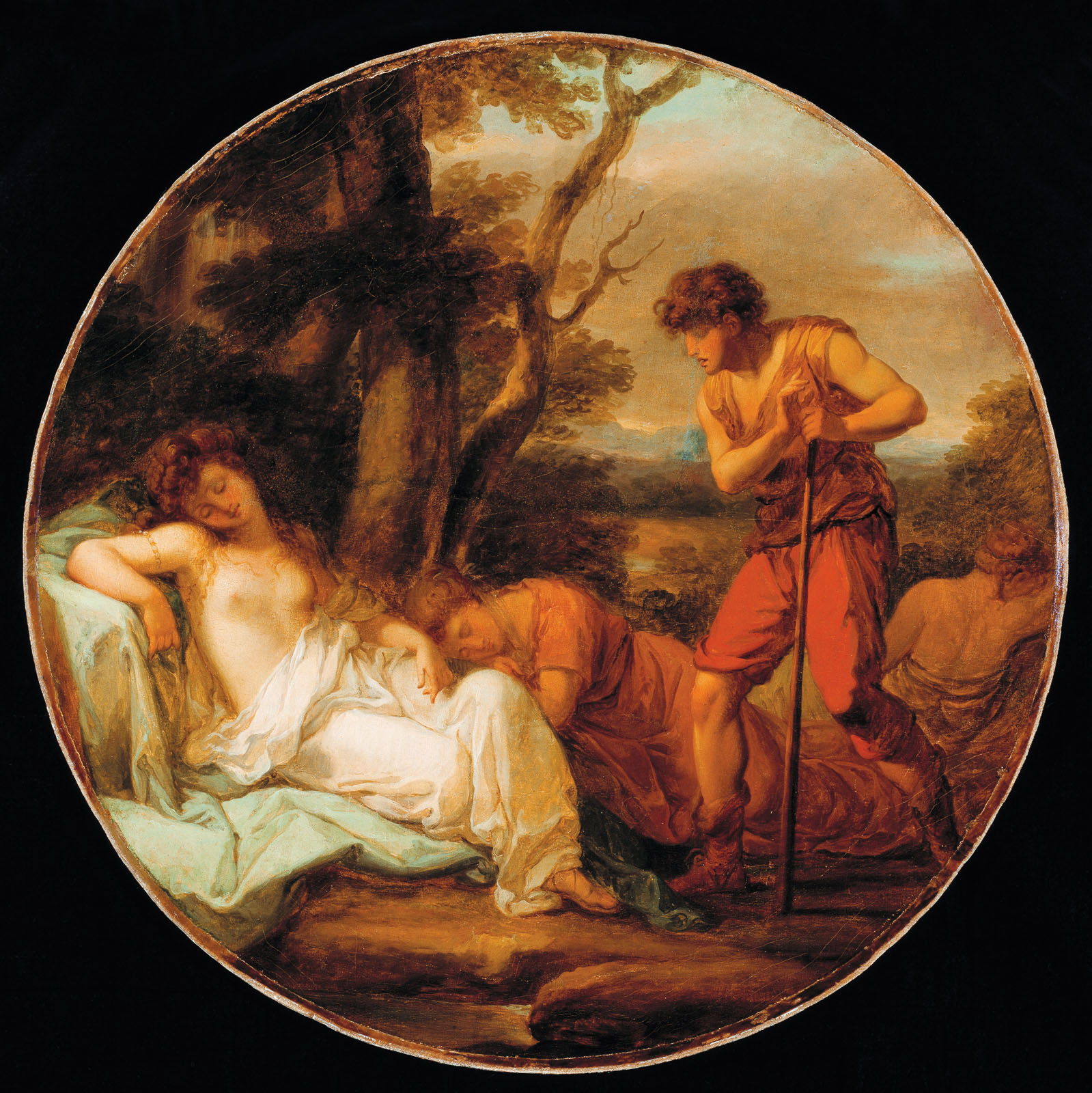 Angelica Kauffman (1741-1807), ca. 1780. Oil on canvas, 32¾ x 32¾ in. (framed). Gift of Alicia Hopton Middleton.
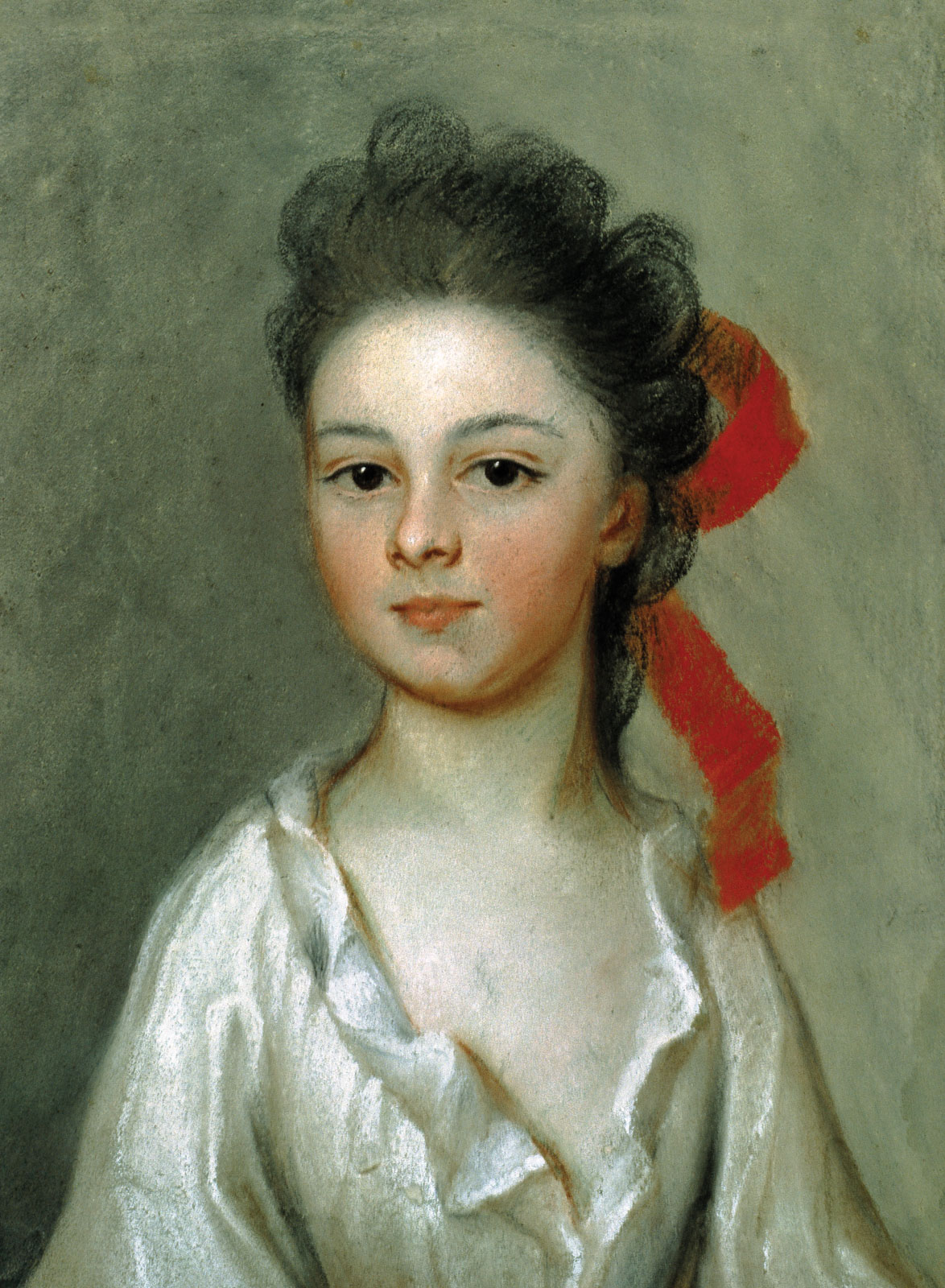 Henrietta De Beaulieu Dering Johnston (ca. 1674-1729), Henriette Charlotte Chastaigner (Mrs. Nathaniel Broughton, 1700-1754), 1711. Pastel on paper, 11¾ x 9 in. Gift of Victor Morawetz.
Two works by women, a pastel portrait, Henriette Charlotte Chastaigner (Mrs. Nathaniel Broughton), 1711, by the first professional woman artist in America, Charleston resident Henrietta De Beaulieu Dering Johnston (ca. 1674-1729); and Cymon and Iphigenia, (ca. 1780) by the Swiss painter Angelica Kauffman (1741-1807), force us to revise and extend our very male image of transatlantic art in the 18th century. A glance at her portrait of Henriette reveals Johnston, who was self-taught, as a highly-skilled artist working in a historically difficult medium. Indeed, Johnston, shows herself as a stylist, making virtues out of the chalky limitations of pastel, especially in her economic approach to the girl’s hair, ribbon and ruffles, and in her ability to convey a variety of skin tones, from the alabaster of her throat to the pale pink of her cheeks. Henriette’s mouth and eyes suggest a knowing energy behind the stiff stillness of her posture, one that perhaps only another woman of the era could fully understand. By contrast, Kauffman’s delicately rendered tondo depicts a mythological scene as Giovanni Boccaccio described it in his 14th-century classic, The Decameron where the brutish Cymon is so moved by the beauty of the sleeping Iphigenia that he is inspired to better himself and pursue a life of the mind. Why the Middleton family purchased this work, other than for its innate excellence, is unknown, but perhaps we can imagine Kauffman choosing this story as her subject in hopes that the beauty of her painting would inspire men to pursue virtue instead of brutality. Jane Austen might well have written it as a turning point in one of her novels.
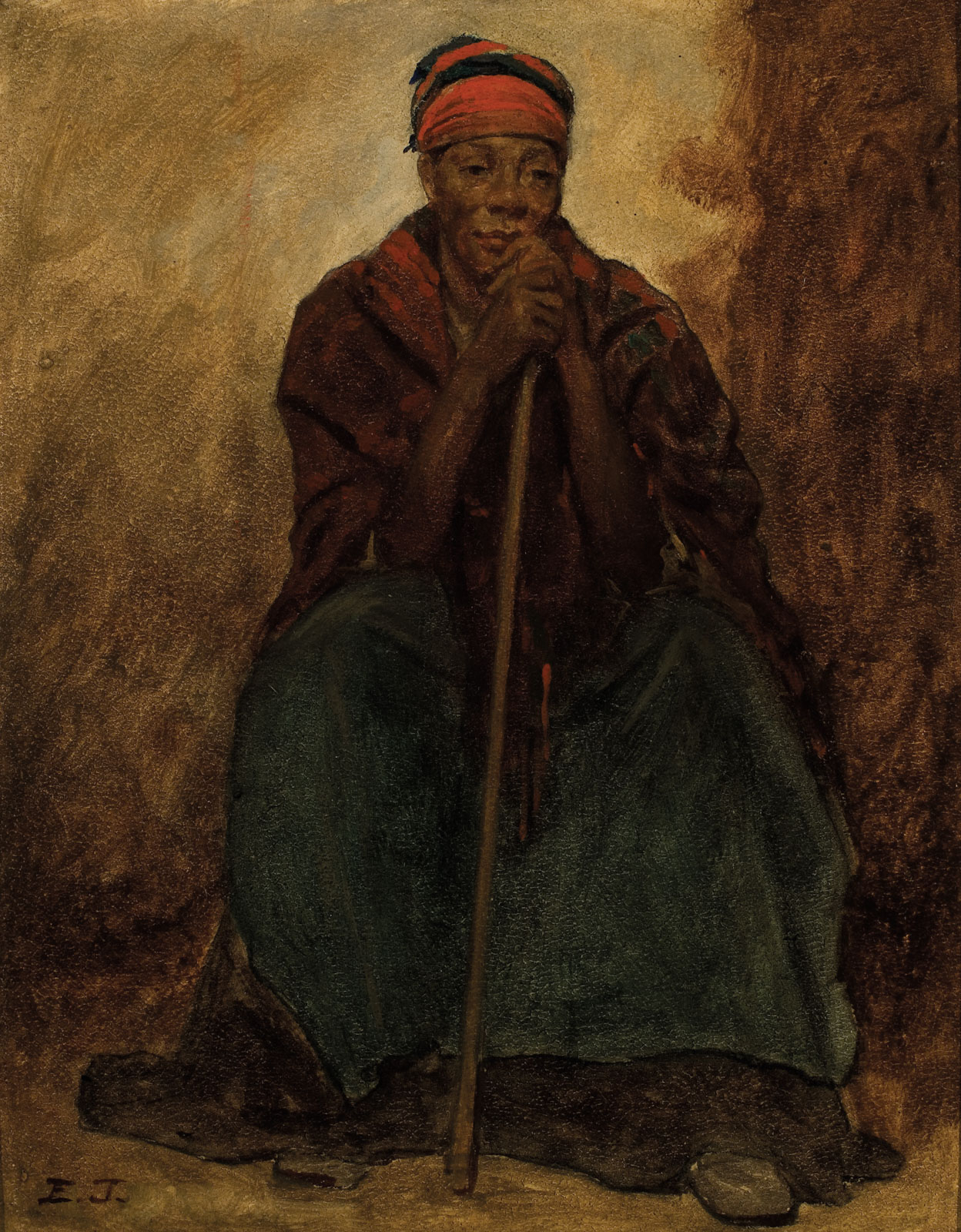 Eastman Johnson (1824-1906), Dinah, Portrait of a Negress, ca. 1867. Oil on board, 10¾ x 8½ in. Gift of Kathleen Hammer and Arthur Seelbinder and partial museum purchase. 2006.007. Image courtesy of the Gibbes Museum of Art/Carolina Art Association.
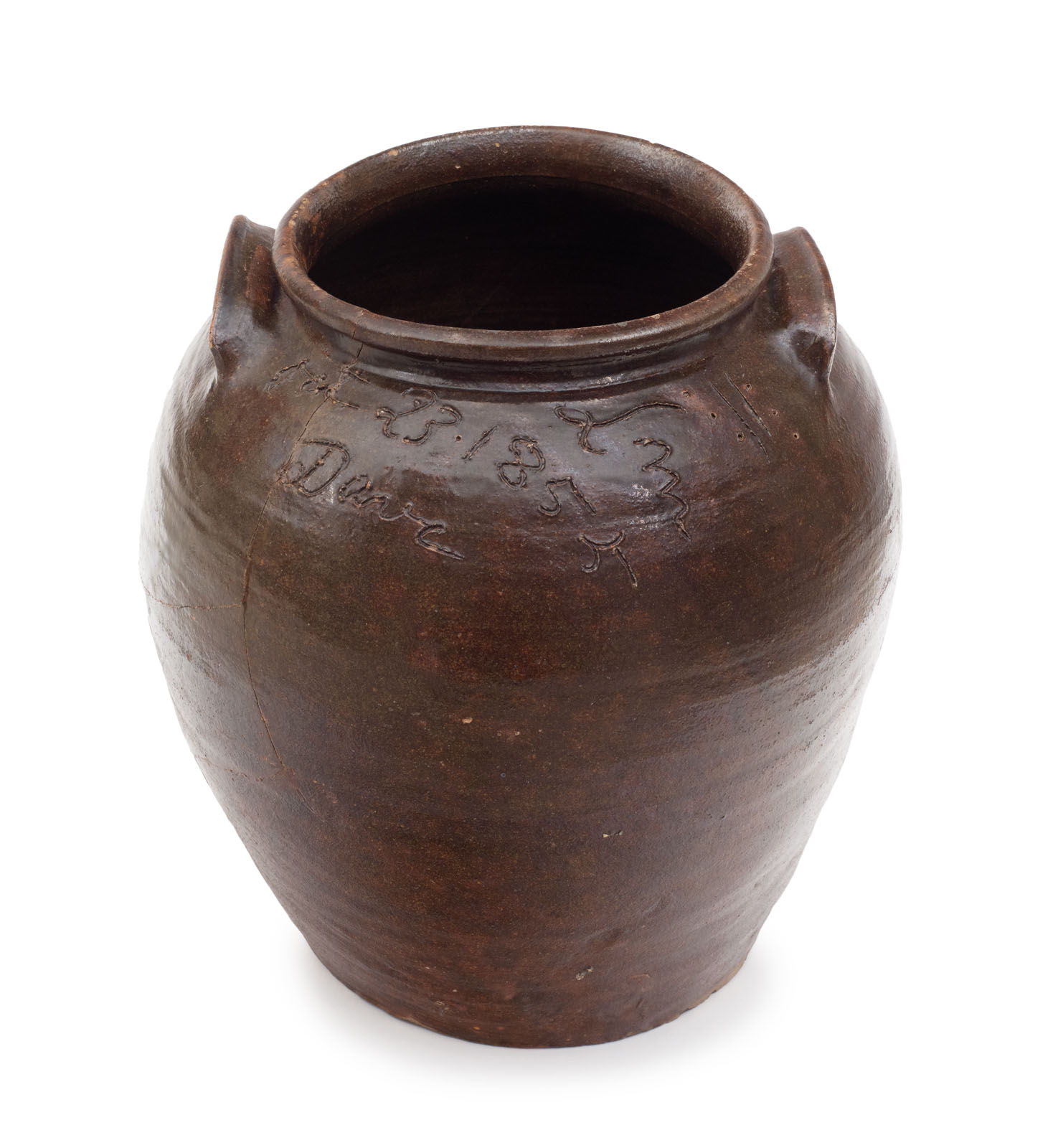 David (Dave) Drake (1801-ca. 1870), Storage Jar, 1855. Alkaline-glazed stoneware, 14¾ in. Gift of C. Philip and Corbett Toussaint, in memory of Dr. Arthur F. Goldberg.
Circling back to Benjamin West’s freeing of the grand manner work from classical subjects, The Wreck of the Rose in Bloom, an 1809 marble relief by Belgian artist John Devaere (1754-1830), makes mythology of an actual story from South Carolina’s McPherson family. As the Gibbes website states: “The artist, who was Flemish, worked in England and was employed to make designs for Wedgwood. The marble relief was commissioned as a memorial to General John McPherson who died in the shipwreck of the Rose in Bloom. He was accompanied by his daughter, Elizabeth (later Mrs. James R. Pringle), who, according to legend, had dreamt of the impending disaster on three previous nights. General McPherson, a member of the South Carolina militia during the Revolution, is shown drowning while his daughter is rescued by a sailor.” An absolutely incredible, and subtle piece of carving—it is no wonder that it was long attributed to Canova—the shallow reliefs of the ship, the lifeboat at far right, and the billowing storm clouds, contrasting with the deeper figures, mast and wave crests, make us nod at the Wedgewood connection but also take us back to Donatello and other Renaissance masters. Perhaps inspired by Elizabeth’s three dreams, Devaere elevates the fateful tale from calamity to classical tragedy.
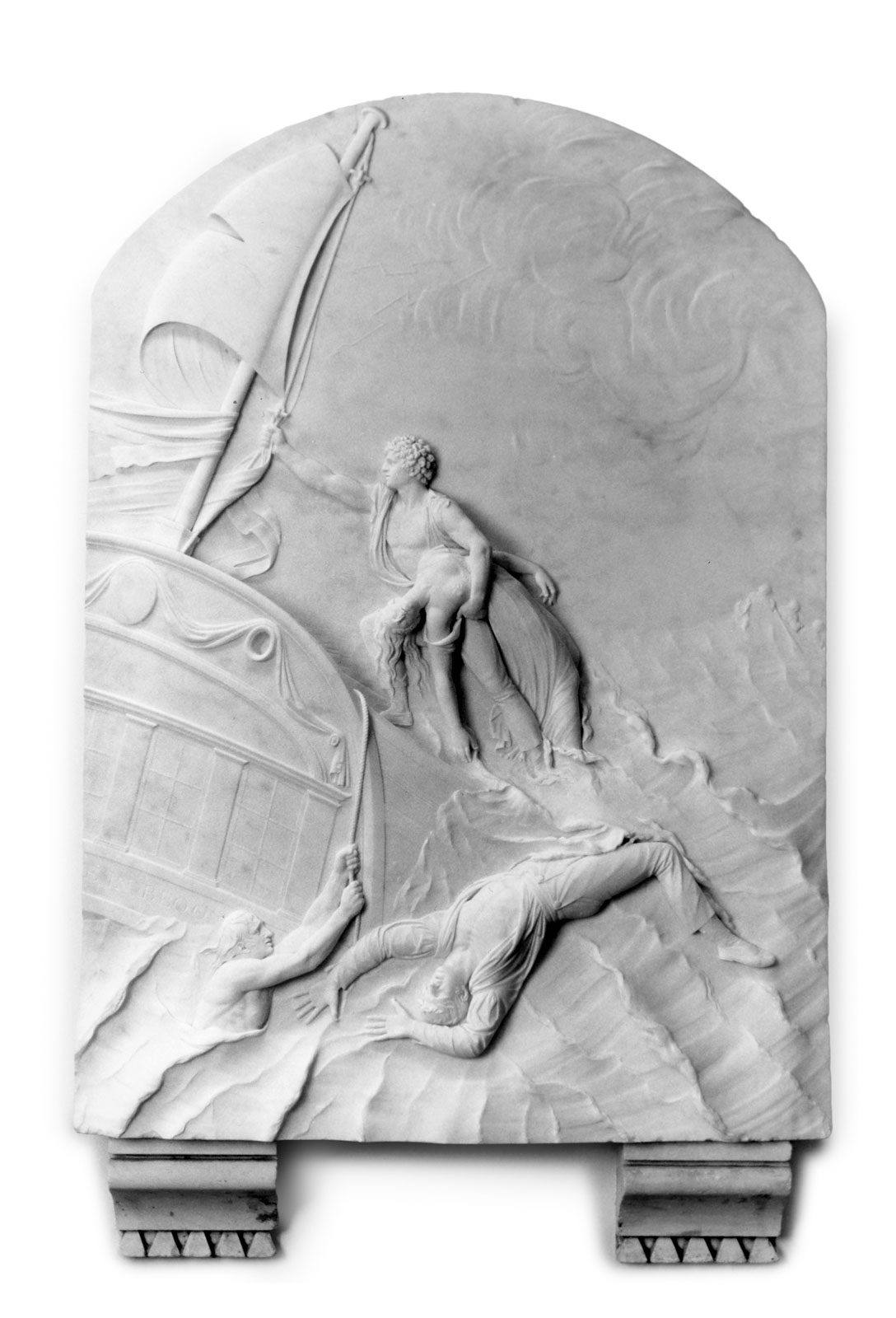 John Devaere (1754-1830) The Wreck of the Rose in Bloom, 1809, by. Marble, 60 x 42 in. Gift of Victor Morawetz. 1937.002.0010. Image courtesy of the Gibbes Museum of Art/Carolina Art Association.
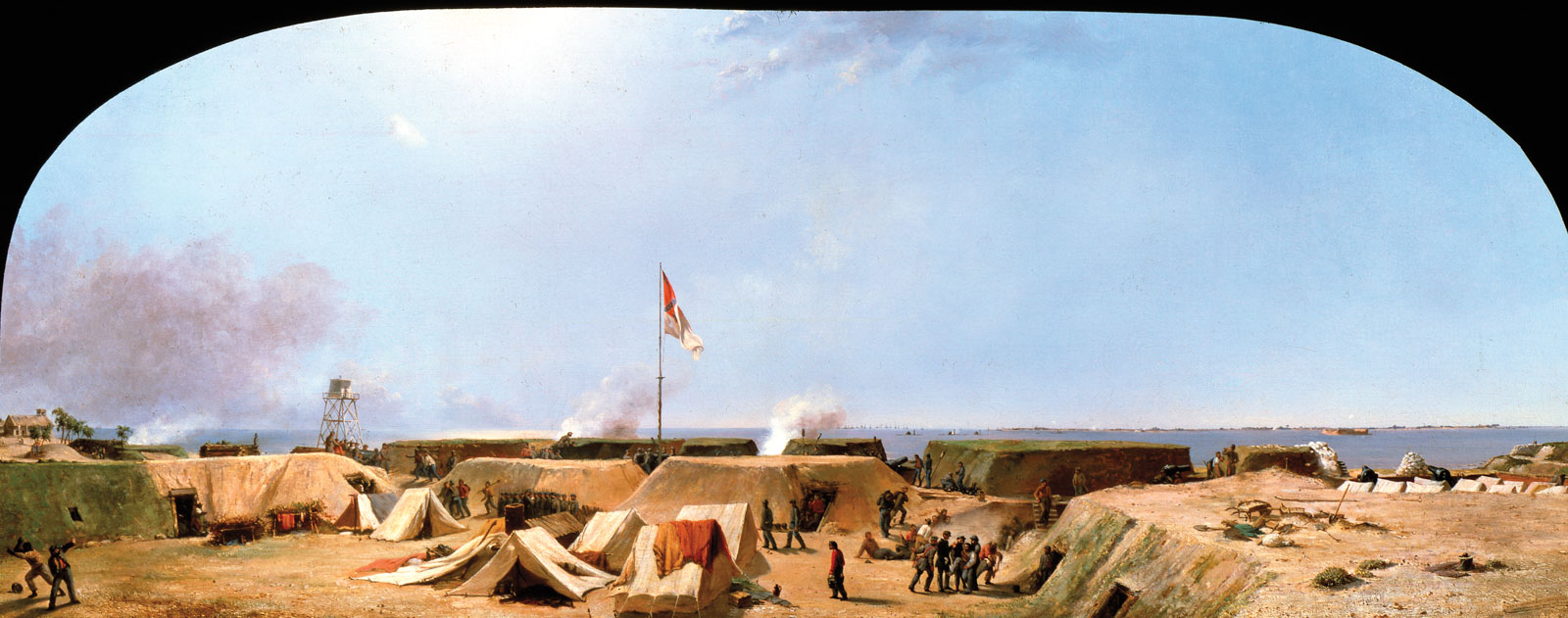
Conrad Wise Chapman (1842-1910), Bombardment of Fort Moultrie, Charleston Harbor, South Carolina, 1864. Oil on canvas, 401/8 x 841/8 in. (framed). Museum purchase with funds provided by the Winnie Edwards Murray Fund.
Fast forward to Storage Jar, 1855, by enslaved African American David (Dave) Drake (1801-ca. 1870) and Dinah, Portrait of a Negress, ca. 1867, by Eastman Johnson (1824-1906), and this permanent exhibition exposes other insights into the culture of the ante- and postbellum South. Pairing these works in our minds sheds light on the creativity and artistry of the enslaved and also on the ongoing tribulations of Black Americans, even after emancipation. Drake, as numerous sources attest, may have made as many as 40,000 ceramic vessels. Many, like Storage Jar, 1855, were signed and dated by the artist; some were inscribed with Drake’s own verses. Some scholars have seen these signatures and verses as signs of the artist’s rebellion against the strict laws forbidding the enslaved from learning to read and write. Eastman Johnson, on the other hand, was a highly successful white artist of the North who painted everything from portraits of presidents and prominent Americans, to genre scenes of everyday life and from the Ojibwe people in Wisconsin to African Americans before and after the Civil War. Johnson was an abolitionist whose painting, A Ride For Liberty, is one of the icons of the drive for African American freedom. And yet, Dinah, Portrait of a Negress, painted after the war and the adoption of the 13th Amendment to the Constitution, abolishing slavery, depicts a woman whose fortunes seem not to have improved much. Her bemused smile and exhausted slump over the staff she leans on suggest that the long war and promise of a brighter future have not—and may never— come to pass. Johnson’s painting bears more resemblance to the sharecroppers’ paintings of William Aiken Walker and others, where poor African Americans labor beside ramshackle cabins. These are snapshots of a world largely unchanged since Conrad Wise Chapman painted the Bombardment of Fort Moultrie, Charleston Harbor, South Carolina, three years prior.
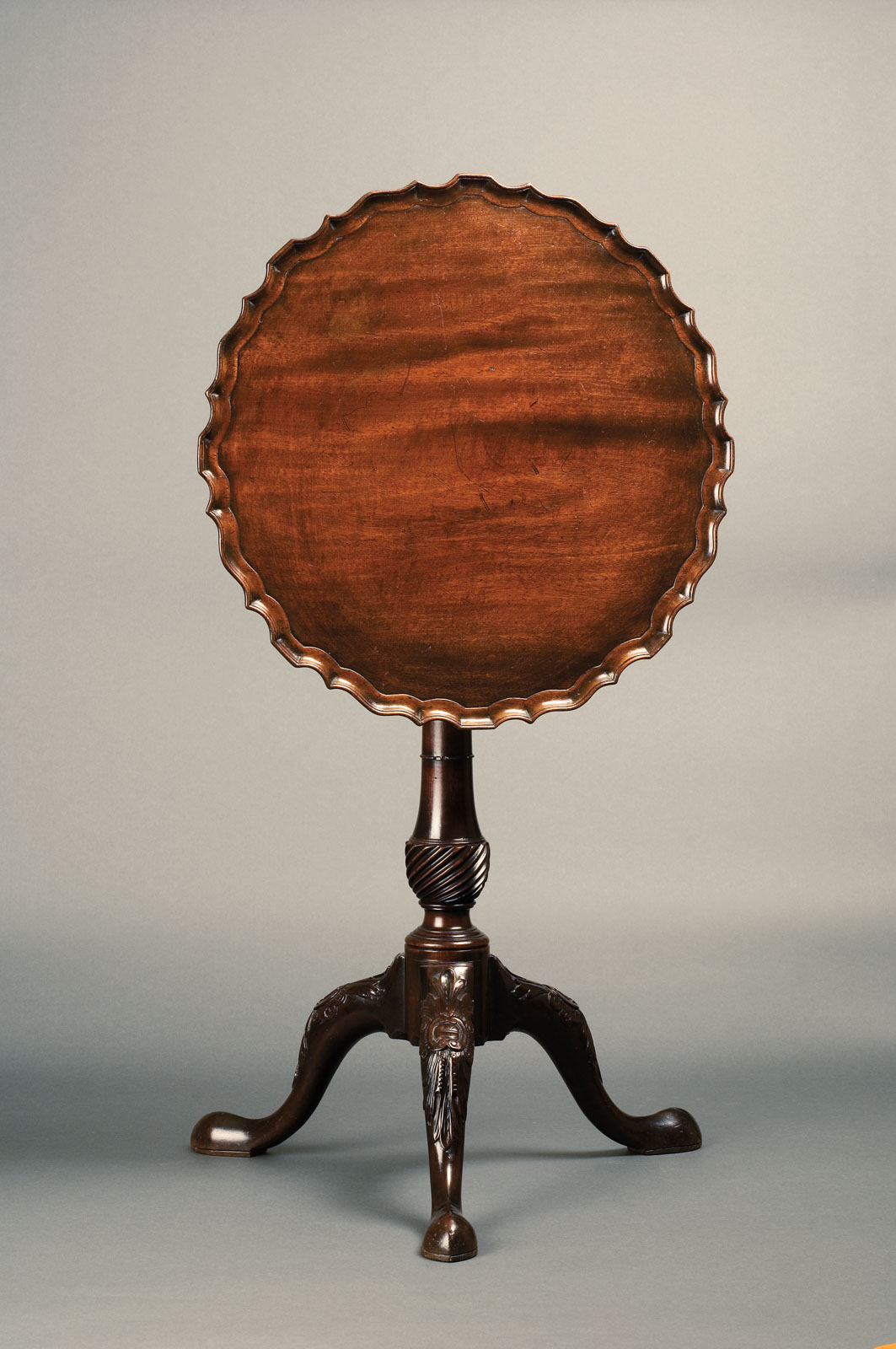 Kettle Stand, ca. 1750-1760, Charleston, South Carolina. Mahogany, 275⁄8 x 21 in. Gift of John M. Rivers.
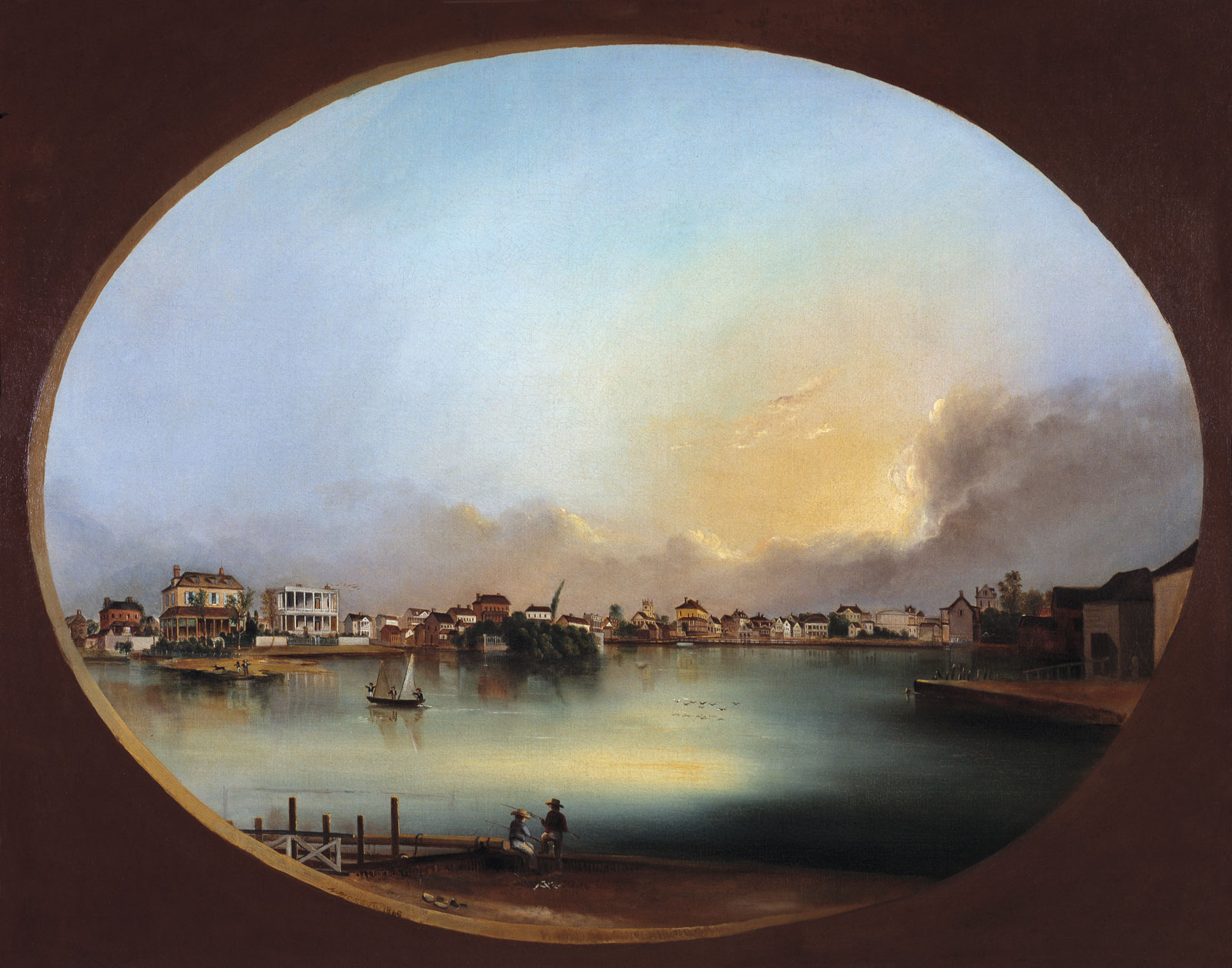 Henry Joseph Jackson (1823-1848), View of Charleston (View from the West), 1846. Oil on canvas, 31¾ x 41¾ in. (framed). Gift of Victor A. Morawetz.
Next time you are tempted to walk through a permanent exhibition of fine and decorative arts, pause to listen to the planing of the wood that became a beautiful chest of drawers; hear the scratch of pastel on paper as a woman chats with her subject, listen for the rise and fall of the swell of the ocean under a crate housing a marble sculpture destined for Charleston. Imagine how these things came to be and came to be part of the culture of their times. Imagine the sounds of the times. Imagine these works in dialogue with one another in Charleston homes. Pay attention to the harmonies and dissonances, to class and race, to elegance and privation grating against one another. These are the sounds of history and time—sounds that have much to teach us—sounds that art can convey when we shut out the noise of the quick splash.
Powered by Froala Editor