The Phillips Collection became America’s first museum of modern art when it opened in 1921 in Washington, D.C., by collector and philanthropist Duncan Phillips. Phillips (1886-1966) was the son of Major Duncan Phillips, a Pittsburgh businessman and Civil War veteran, and Eliza Laughlin Phillips, whose father was a banker and co-founder of Jones and Laughlin Steel Company. The family moved to the nation’s capital when Duncan was 10 years old.
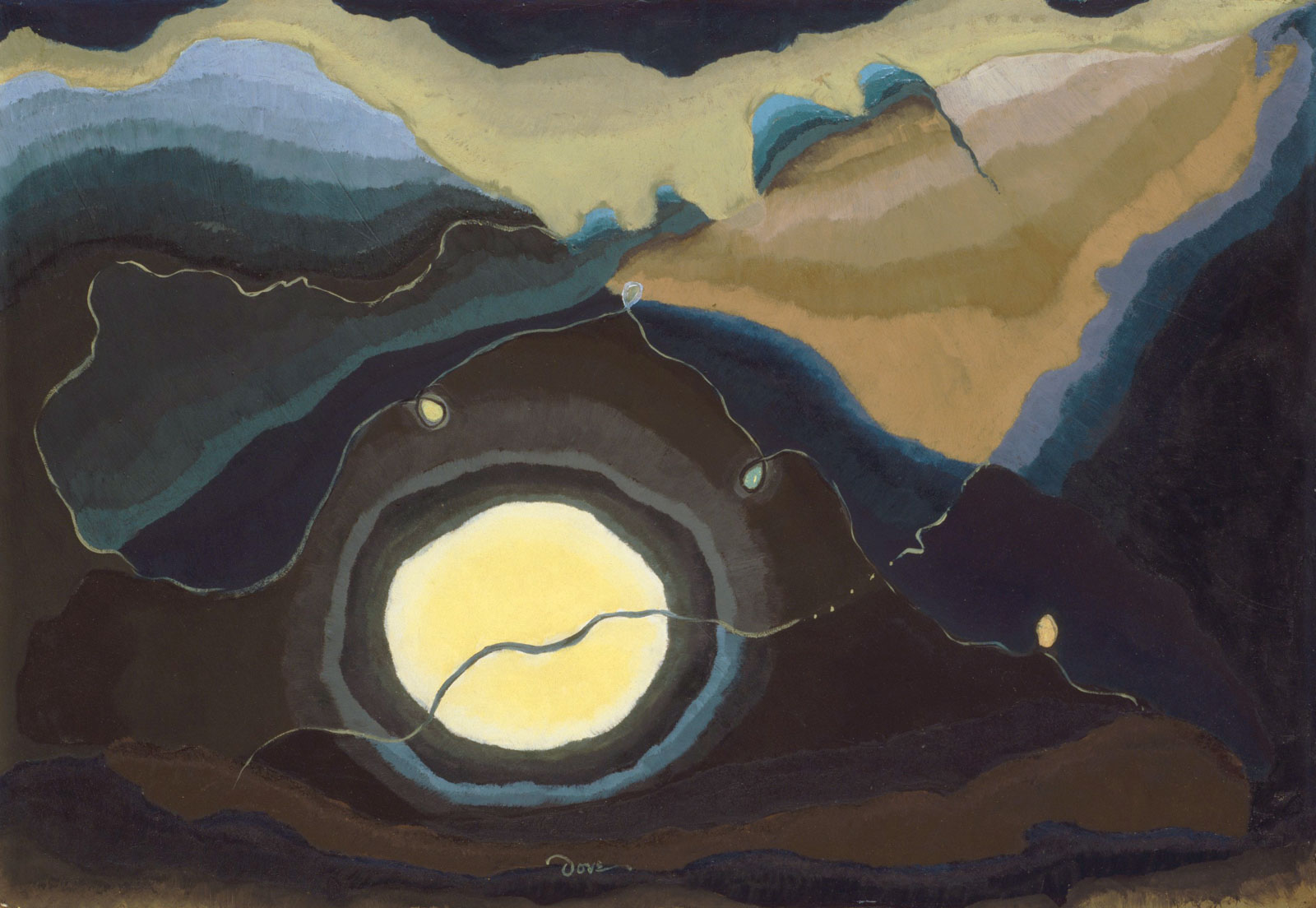 Arthur G. Dove (1880-1946), Me and the Moon, 1937. Wax emulsion on canvas, 18 x 26 in. The Phillips Collection: Acquired 1939.
In 2004, Duncan and his older brother Jim attended Yale University, where Duncan advocated for adding more art history courses to the curriculum, writing in the Yale Literary Magazine, “To know the great pictures and the great sculpture of the ages is invaluable to the formation of a respectable standard of public taste.” The brothers moved to New York after college where they mixed with fellow Ivy League-educated art enthusiasts and spent their money on contemporary art. In 1914, born of a passion fueled by earlier trips to Europe and friendships he continued to build with artists, he wrote his first book, The Enchantment of Art.
In 1916, the brothers convinced their parents to put aside $10,000 a year for them to start building a collection of American art. But tragedy soon struck the family two-fold—Duncan’s father died suddenly from heart failure in 1917, and his brother Jim, perished a year later during the flu epidemic of 1918.
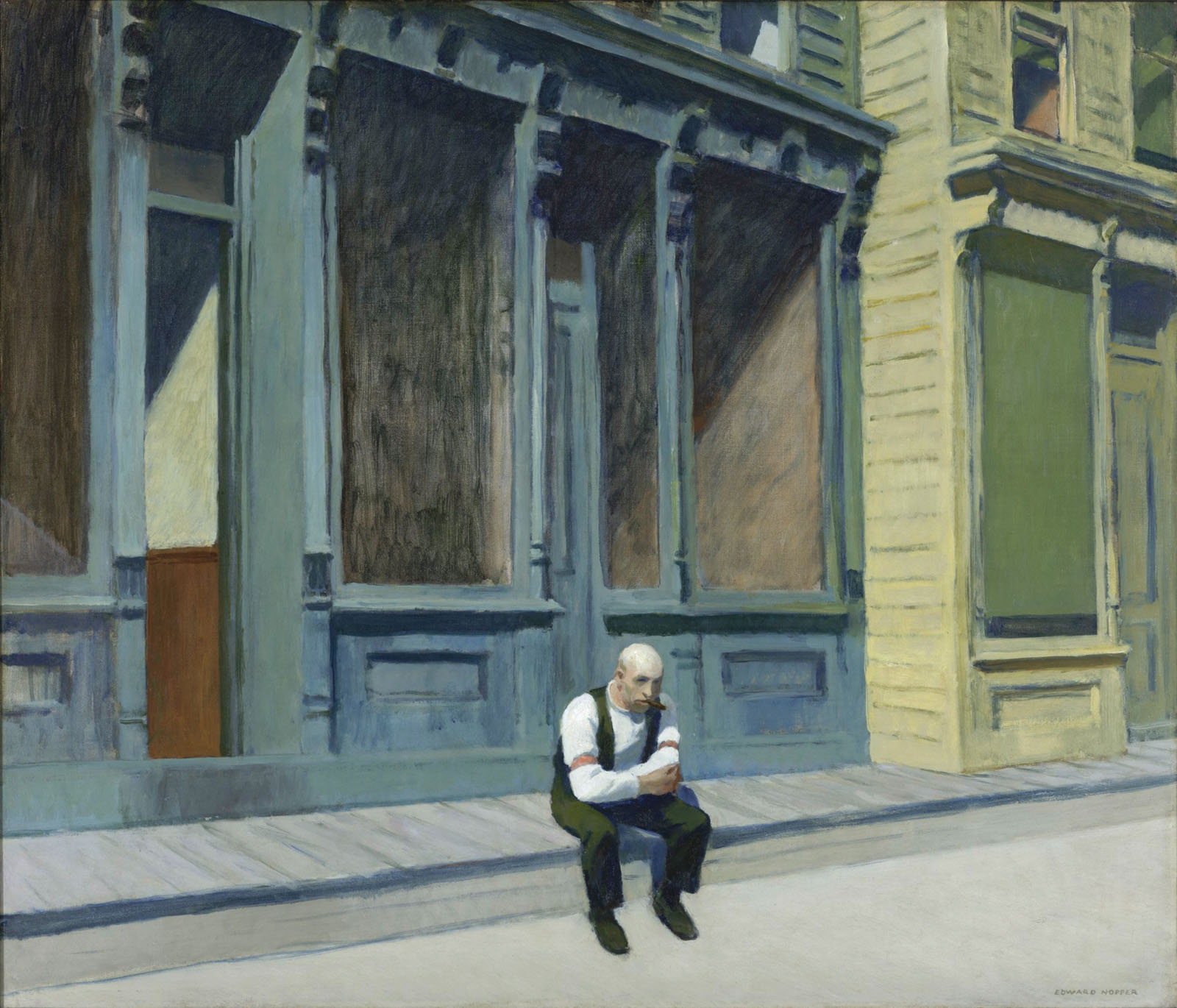 Edward Hopper (1882-1967), Sunday, 1926. Oil on canvas, 29 x 34 in. The Phillips Collection: Acquired 1926. © 2022 Heirs of Josephine N. Hopper / Licensed by Artists Rights Society (ARS), NY.
“Sorrow all but overwhelmed me,” Duncan later wrote. “Then I turned to my love of painting for the will to live.” Duncan and his mother founded the museum within the year and opened to the public in 1921. In 10 years, the collection had grown to more than 600 works, necessitating the first of many expansions in the decades that followed.
Initially called the Phillips Memorial Art Gallery, the museum was located inside the family home, where they continued to live until 1930. Their small collection of Old Masters included paintings by Jean-Baptiste-Siméon Chardin, Eugène Delacroix, El Greco and Francisco de Goya. Alongside them were more recent 19th and 20th-century works, which increasingly became the Phillips’ focus, bringing in seminal works by Picasso and George Braques, as well as then-emerging American artists Marsden Hartley and Stuart Davis. Later, Duncan would become a generous patron to American artists including Arthur B. Davies, Arthur Dove and Edward Rosenfeld.
Shortly before the museum opened, Duncan Phillips married artist Marjorie Acker (1894-1985) and together they embarked on a lifelong journey as patrons and collectors of art. When Duncan died in 1966, Marjorie continued his legacy until her death in 1985.
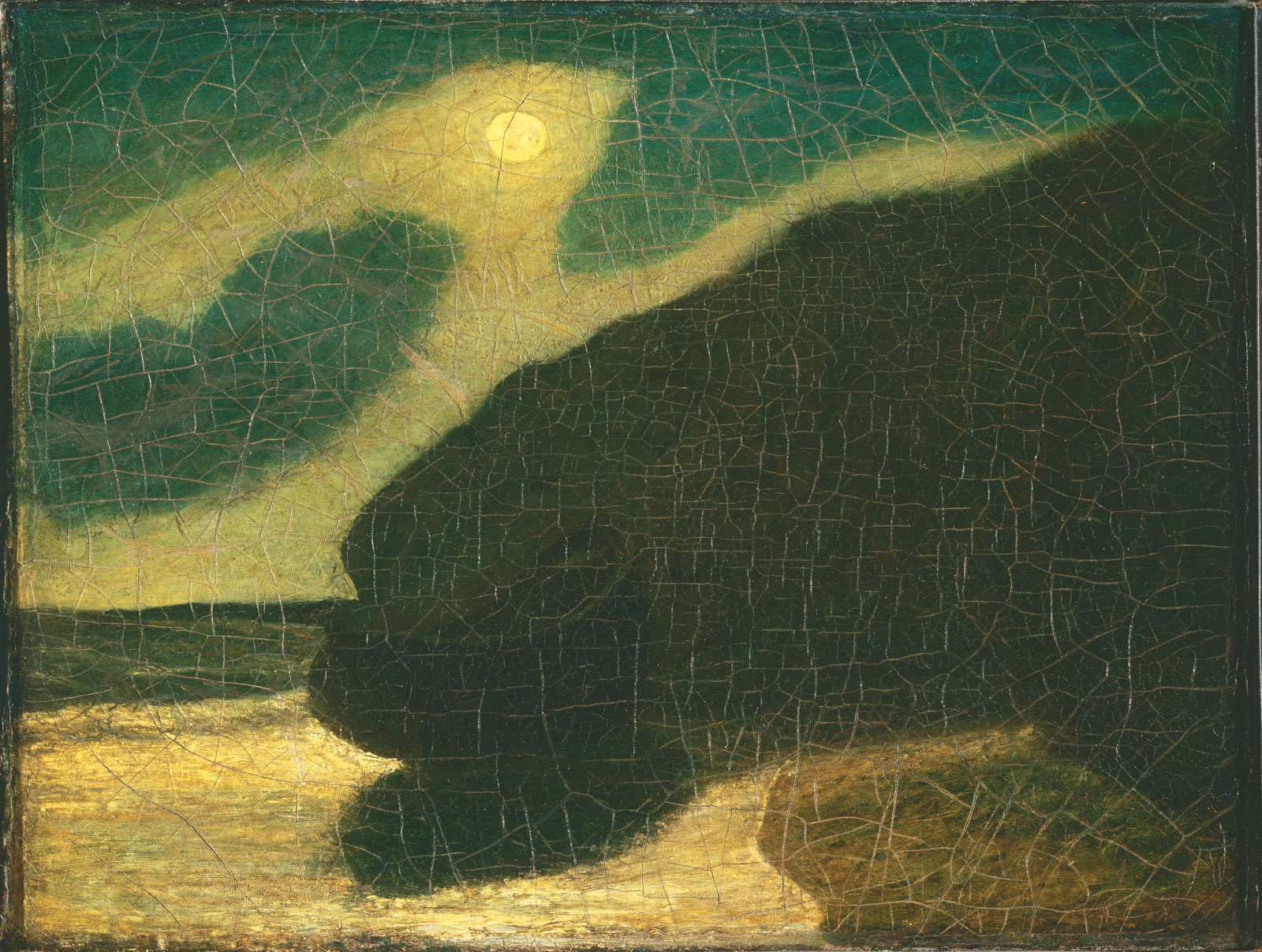 Albert Pinkham Ryder (1847-1917), Moonlit Cove, ca. 1880. Oil on canvas, 141⁄8 x 171⁄8 in. The Phillips Collection: Acquired 1924.
“From the outset, Phillips sought to create a space where one could encounter the art of the past and the present on equal terms,” says Rory Padeken, Vicki and Kent Logan Curator of Modern and Contemporary Art at the Denver Art Museum.
“The Phillips Collection was and continues to be an experimental space where artworks created in different times and places by artists from various backgrounds are installed in dialogue with one another,” Padeken continues. “Duncan Phillips and his artist wife Marjorie supported artists who practiced outside of the mainstream but whose works are well known today such as Milton Avery and Arthur Dove. They collected artworks by self-taught artists such as Albert Pinkham Ryder and artists of color like James Lesesne Wells and Jacob Lawrence early in their careers. A long time ago, the Phillips Collection set the blueprint for collecting broadly and to comminglingly various practices in gallery space, which many museums in the United States are starting to do today.”
The landmark show, All Stars: American Artists from The Phillips Collection features 75 masterworks by 56 American artists from the birth of the modernist spirit at the end of the 19th century through post-war American painting of the mid-20th century and into the 21st century, highlighting artists exploring important issues today. The exhibit opens at the Denver Art Museum on November 12, 2023 and will remain on view through March 3, 2024.
Works by Childe Hassam and William Glackens are representative of American impressionism, while the trend toward realism is visible in works by George Bellows and Edward Hopper. Modernism is ushered in with works by Arthur Dove and Georgia O’Keeffe, followed by precisionist pieces by Charles Sheeler and Stefan Hirsch that give way to the abstract expressionism of artists like Clyfford Still and Robert Motherwell.
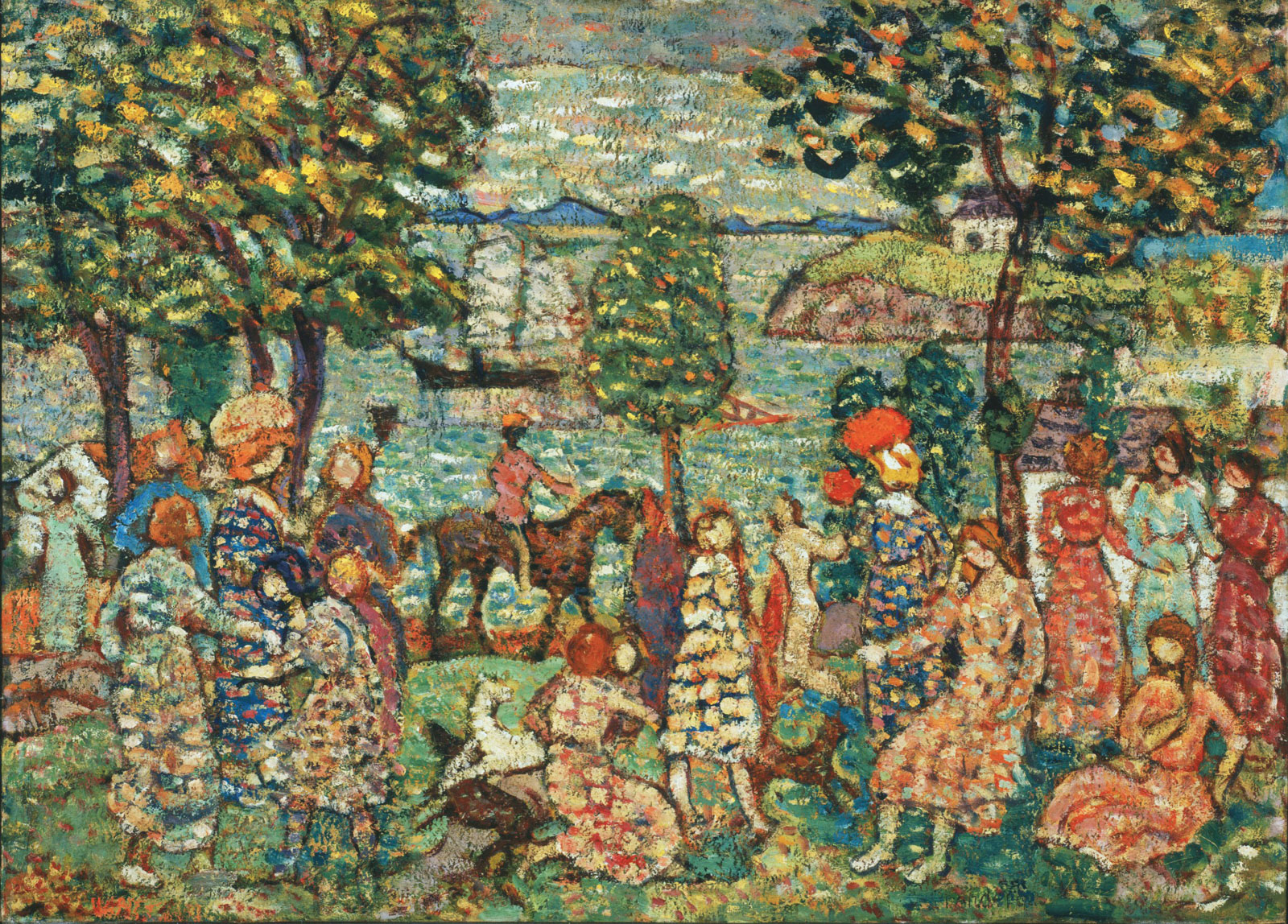 Maurice Brazil Prendergast (1858-1924), Fantasy, ca. 1917. Oil on canvas, 225⁄8 x 315⁄8 in. The Phillips Collection: Acquired 1921.
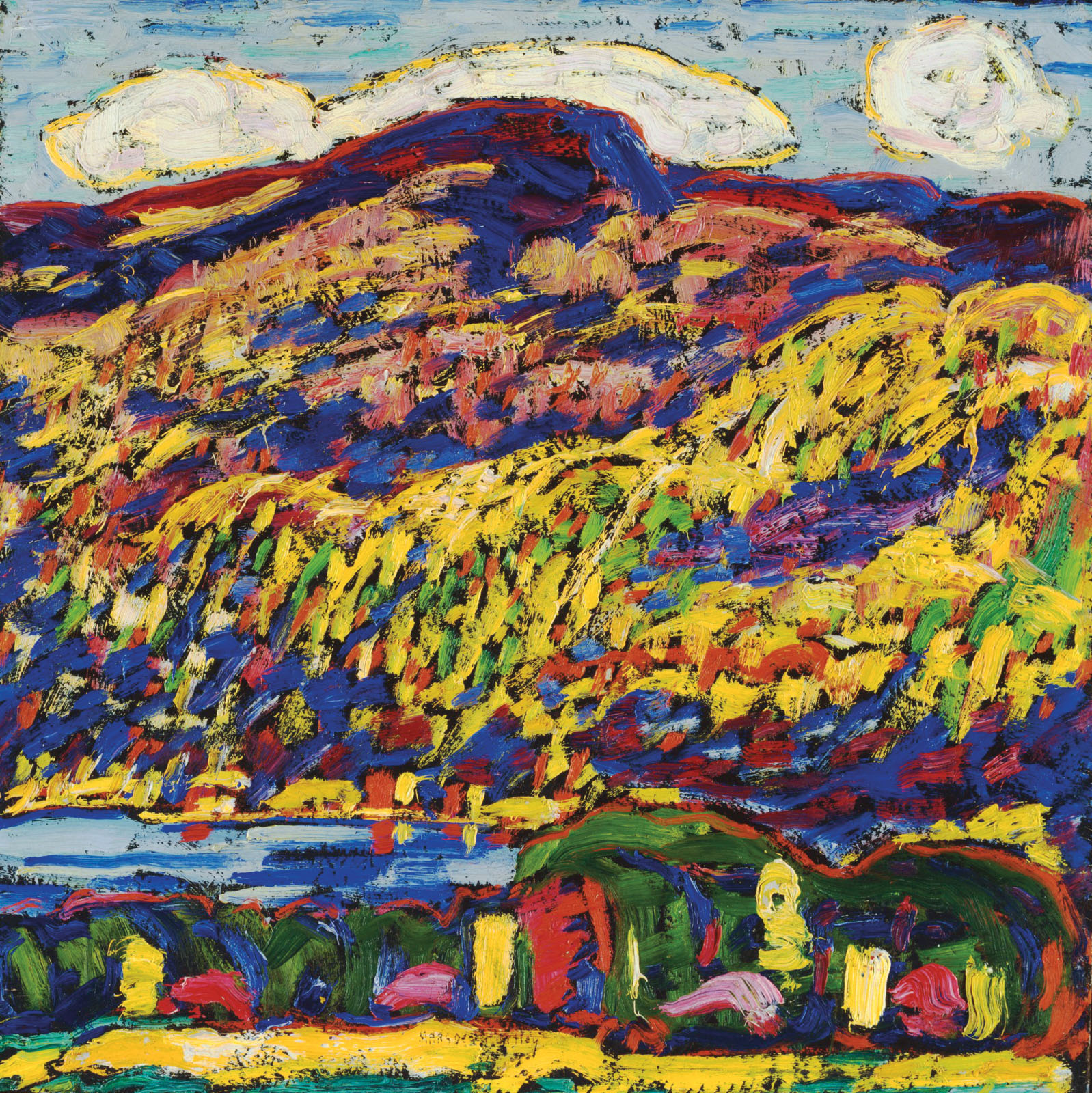 Marsden Hartley (1877-1943), Mountain Lake—Autumn, ca.1910. Oil on canvas, 12 x 12 in. The Phillips Collection: Gift of Rockwell Kent, 1926.
Museum visitors, especially those who live in Colorado, might find Augustus Vincent Tack’s Canyon (ca. 1923–23) and Aspiration (1931) of particular interest. Both of the abstracted landscapes were inspired by the artist’s experience of the Rocky Mountains in 1920. A much later piece created by Benny Andrews in 2005 is also of note. Titled Trail of Tears, the piece depicts a scene from the forced removal of almost 100,000 Native Americans from their ancestral homelands by the United States government beginning in 1830.
In the spirit of Phillips, who defied art historical convention, the exhibition groups artworks by theme and visual affinities to create unexpected conversations between generations of artists. The art is divided into sections that include Enchantment, Immersion, Presence, Rhythm + Motion, Contours of Space and Time, and Together, Apart. Each section features an array of artistic approaches to figuration, abstraction, landscape and still life that respond to the human condition. Another viewing area is devoted solely to four paintings from Jacob Lawrence’s magnum opus The Migration Series, which chronicles the exodus of African Americans from the rural South to the industrial North following the outbreak of World War I.
“Exhibitions are first and foremost about encountering works of art in space,” says Padeken. “The goal, therefore, is to always use the space to benefit the work of art,” noting the idiosyncratic design of the Denver Art Museum galleries, with their angled walls and sloping ceilings. “For example, the first section, ‘Immersion’, features paintings flooded with vibrant hues and dense, kaleidoscopic patterns. Artists are immersing their subjects in colorful and radiant environments, and so I wanted the architecture to heighten the sensation of being enveloped by color. The artworks are installed in an intimate yet cathedral-like gallery that allows for contemplation and emotional exploration.”
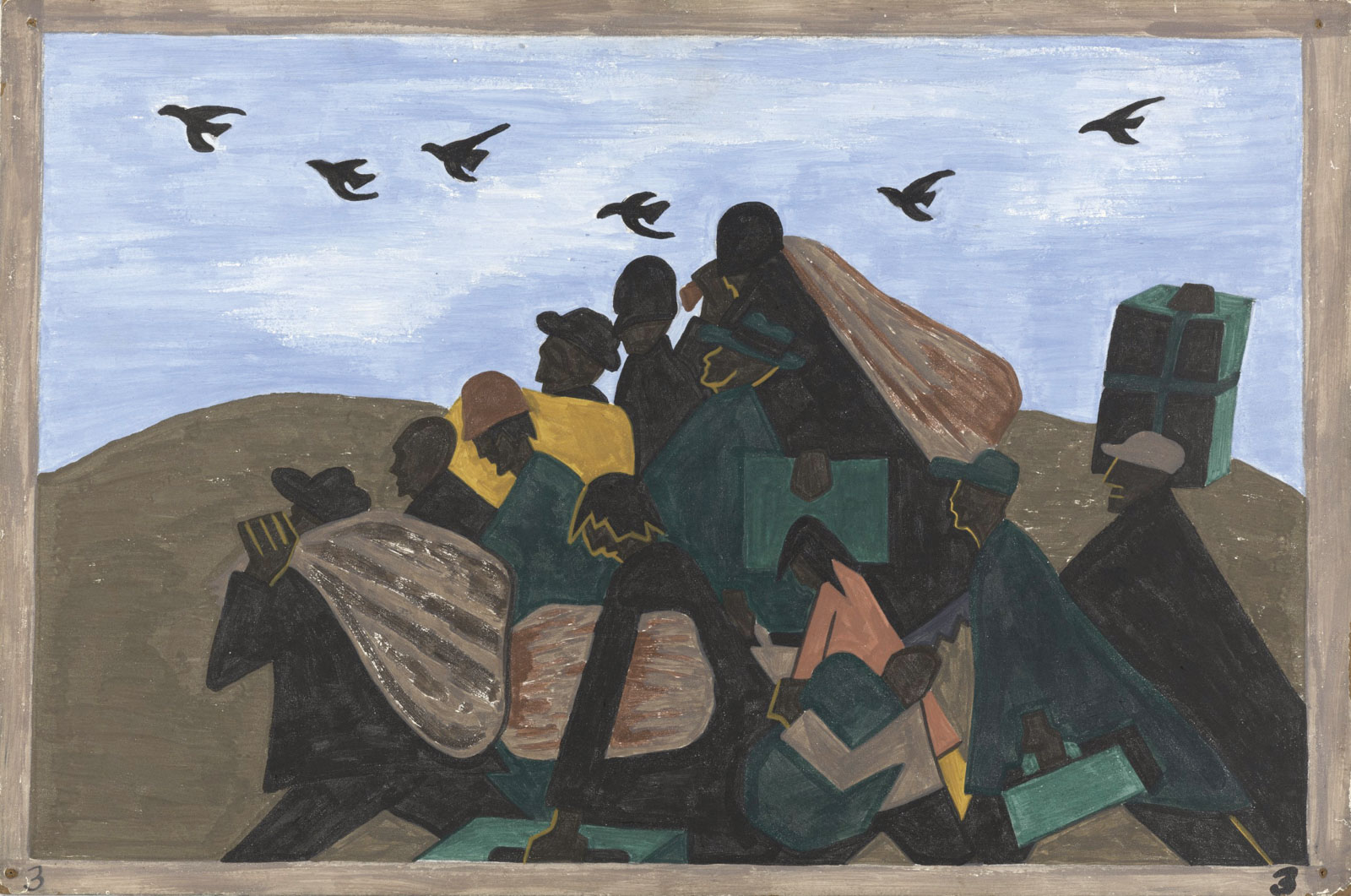 Jacob Lawrence (1917-2000), Migration Series, Panel 3, 1940-1941. Casein tempera on hardboard, 12 x 18 in. The Phillips Collection: Acquired 1942. © 2022 The Jacob and Gwendolyn Knight Lawrence Foundation, Seattle / Artists Rights Society (ARS), New York.
For this section and space, Padeken selected work that reflects this color-wheel environment, including Sam Gilliam’s ray-like abstraction Red Petals, 1967, and Maurice Prendergast’s Fantasy, circa 1917, a scene alive with dappled color.
The works in the section “Together, Apart” speak to the strength forged in community or the psychological effects of isolation, as in the lonely Sunday, executed by Edward Hopper in 1926, and the 1942 work Wild Roses by Marsden Hartley. The artists in “Rhythm + Motion” capture the rhythmic beat of the world, both chaotic and steady, through techniques like expressive brushwork or a style of precise detail. Works like Charles Sheeler’s Skyscrapers, 1922, and Morris Louis’ 1961 piece Number 1-82 are illustrative of both sides of this theme, with their divergent approach to the idea of verticality.
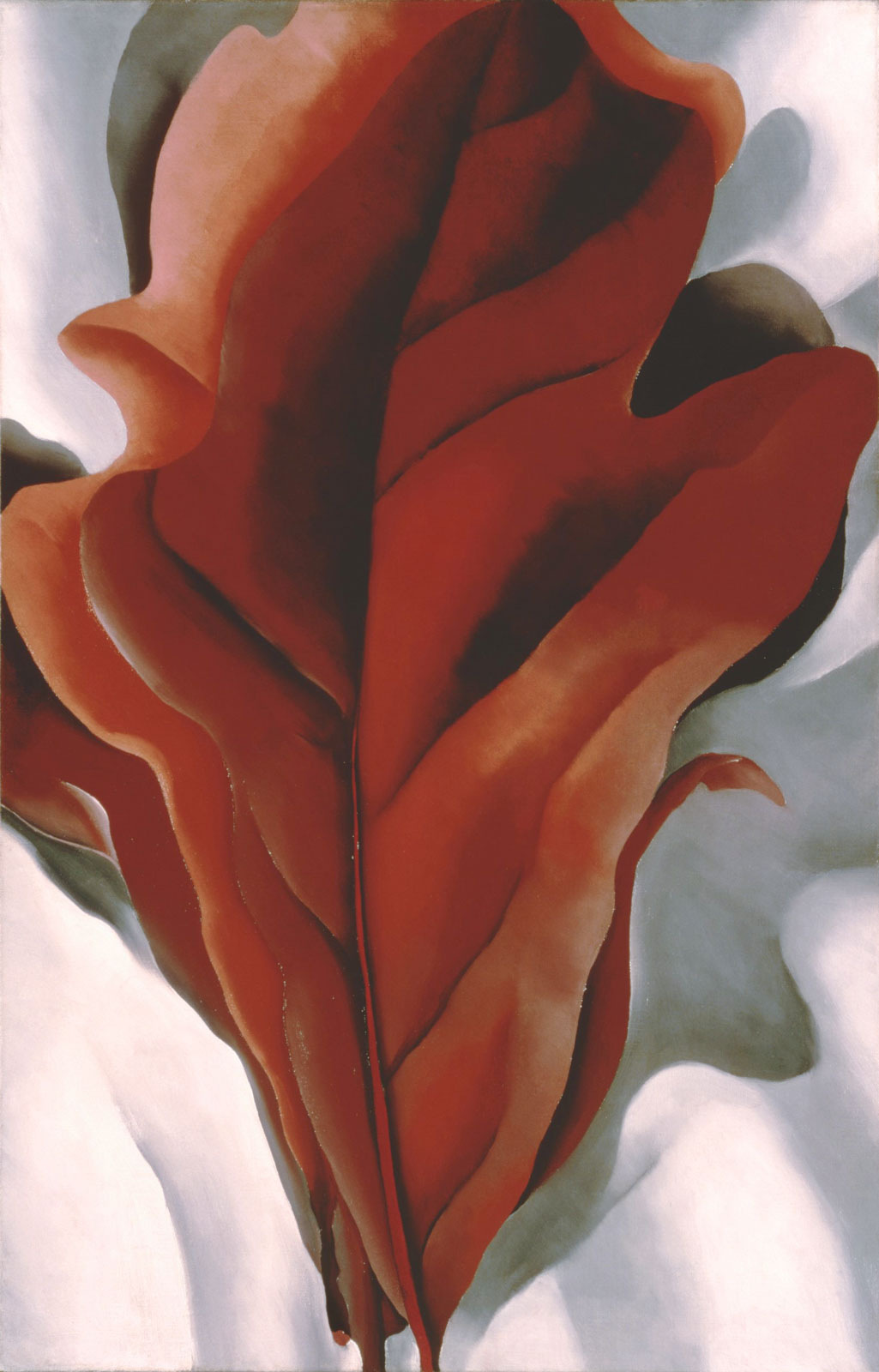 Georgia O’Keeffe (1887-1986), Large Dark Red Leaves on White, 1925. Oil on canvas, 32 x 21 in. The Phillips Collection: Acquired 1943. © 2022 Georgia O’Keeffe Museum / Artists Rights Society (ARS), New York.
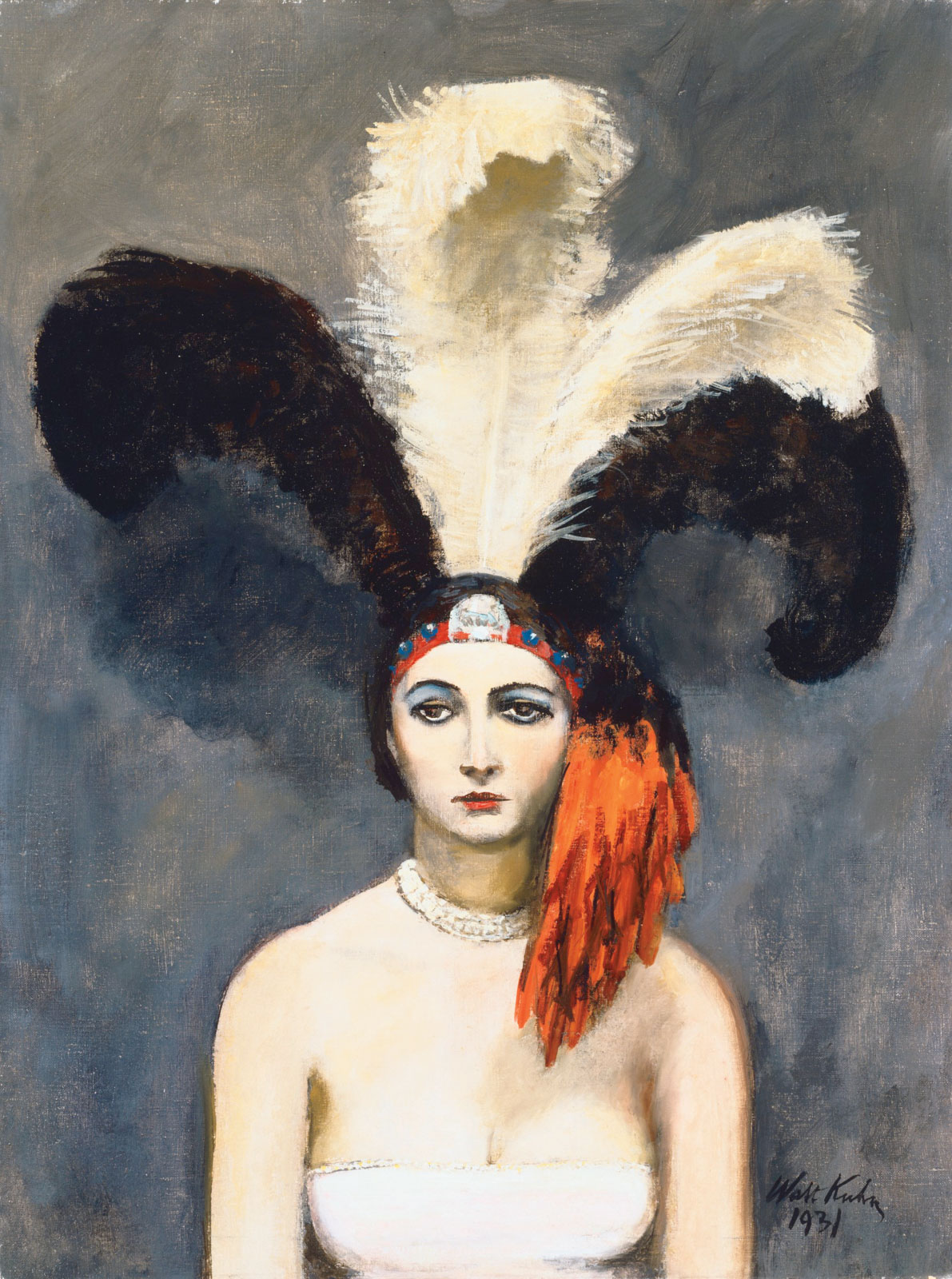
Walt Kuhn (1877-1949), Plumes, 1931. Oil on canvas, 40 x 30 in. The Phillips Collection: Acquired 1932.
“Presence” comprises works that explore art’s ability to ignite reflection with through-provoking pieces by Georgia O’Keeffe and Richard Diebenkorn. “Contours of Space + Time” is focused on the metaphysical nature of art and the intangible ties that transcend place and time to connect us as humans beings, as demonstrated in works by Alexander Calder and Adolph Gottlieb. Finally, “Enchantment” features artists who find beauty in unexpected places like the underside of a bridge captured in Ernest Lawson’s Spring Night, Harlem River, or Rockwell Kent’s The Road Roller, which depicts a mundane scene of the Dublin Township roller packing down the snow in his driveway. Drawing inspiration from the pioneering practice of the Phillips Collection to to devote an entire gallery to a single artist, Padeken decided to do so for the four panels from Jacob Lawrence’s The Migration Series, completed in 1941, providing audiences with the opportunity to have an intimate encounter with this seminal work.
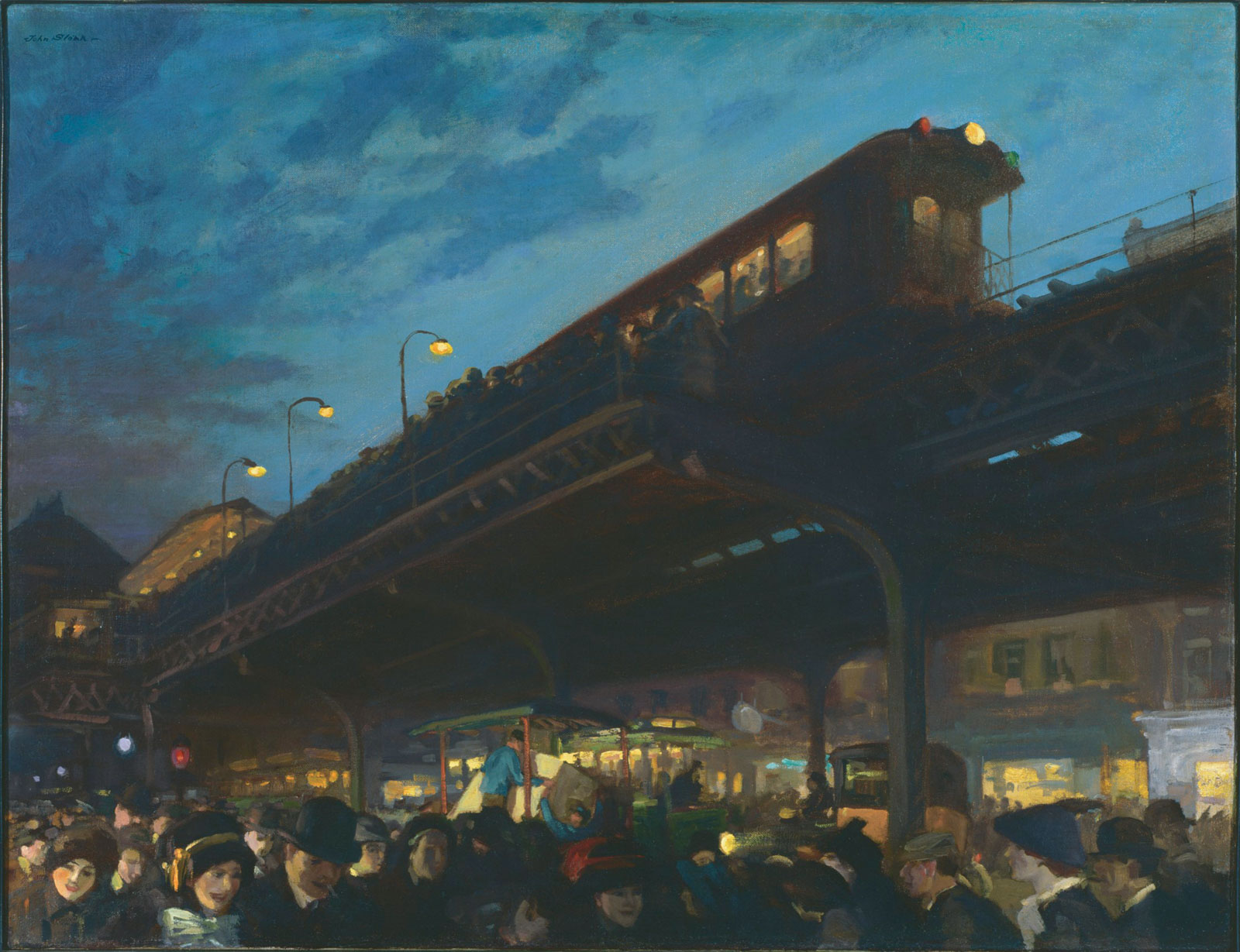 John Sloan (1871-1951), Six O’Clock, Winter, 1912. Oil on canvas; 261⁄8 x 32 in. The Phillips Collection: Acquired 1922. © 2022 Delaware Art Museum / Artists Rights Society (ARS), New York.
“While the exhibition does not trace the historical trajectory of American Art and neither focuses nor highlights any art historical movements or artistic styles, what the exhibition does reveal is the richness of experience and artistic creativity explored by a broad range of American artists whom Duncan Phillips championed during his lifetime,” says Padeken. “The structure of the exhibition embodies the very nature of the Phillips Collection’s unique arrangement of artworks that has always disregarded chronology or shared nationality and geography in favor of presenting art in a way that helped viewers to see the world with renewed vision [that] encourages curiosity and deeper inquiry into our shared humanity.”
Powered by Froala Editor