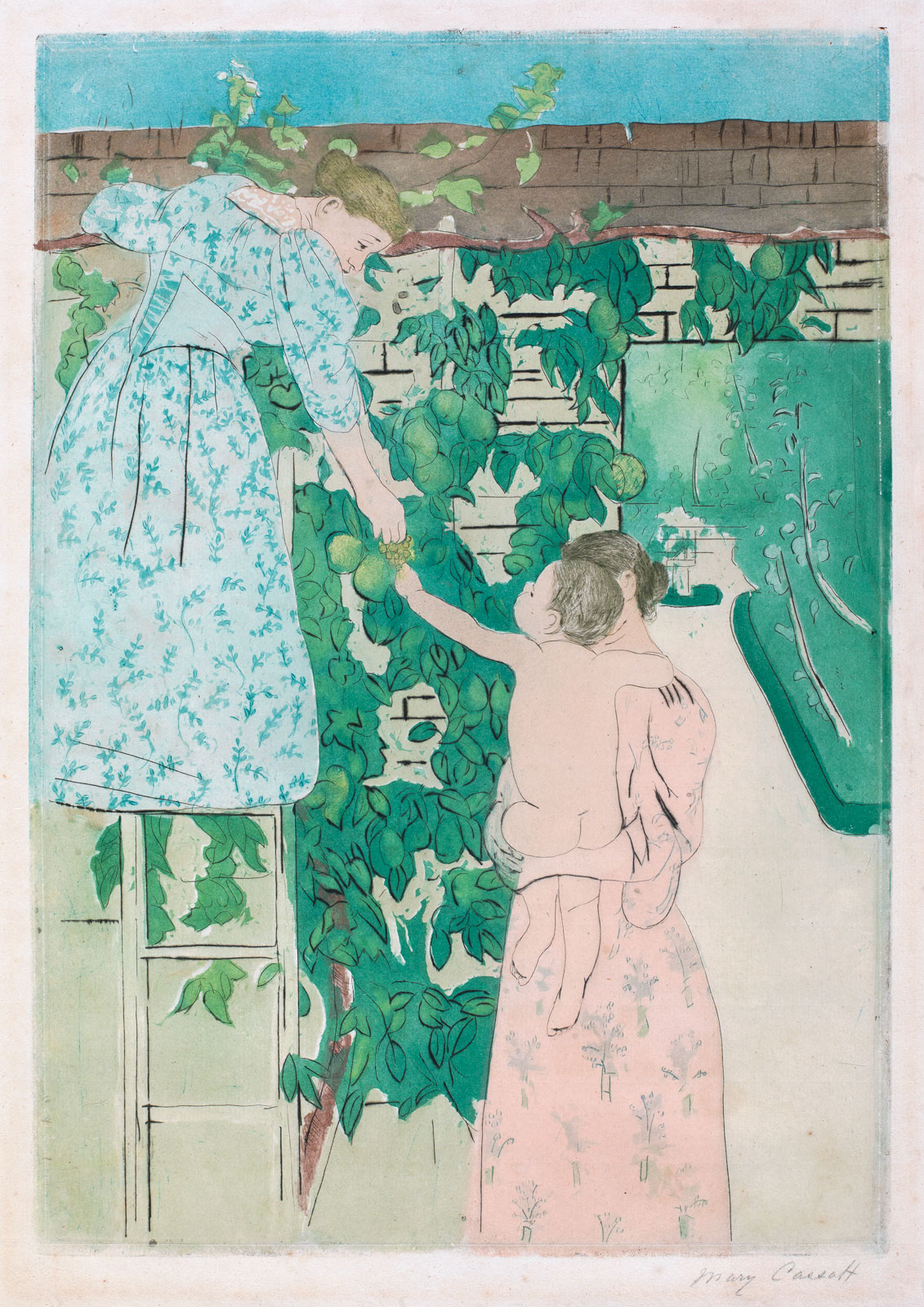
 Mary Cassatt (1844-1926), Gathering Fruit, ca 1893. Drypoint, soft-ground and aquatint in colors on paper. Chrysler Museum of Art, 2022.28, Museum purchase with funds given by the Macon and Joan Brock Collection of American Art.
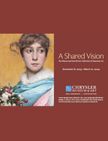
Spanning nearly 100 years of American art, from the wake of the Civil War to the mid-20th century, the Brock Collection includes works by a wide range of artists from Winslow Homer, Childe Hassam, John La Farge, Thomas Wilmer Dewing and John Singer Sargent, to Marsden Hartley, Max Weber, George Bellows, Charles Sheeler and Milton Avery. Works by more obscure artists such as Mary Fairchild MacMonnies, Helen Corson Hovenden and Sally Michel add depth and greater context to the monumental collection.
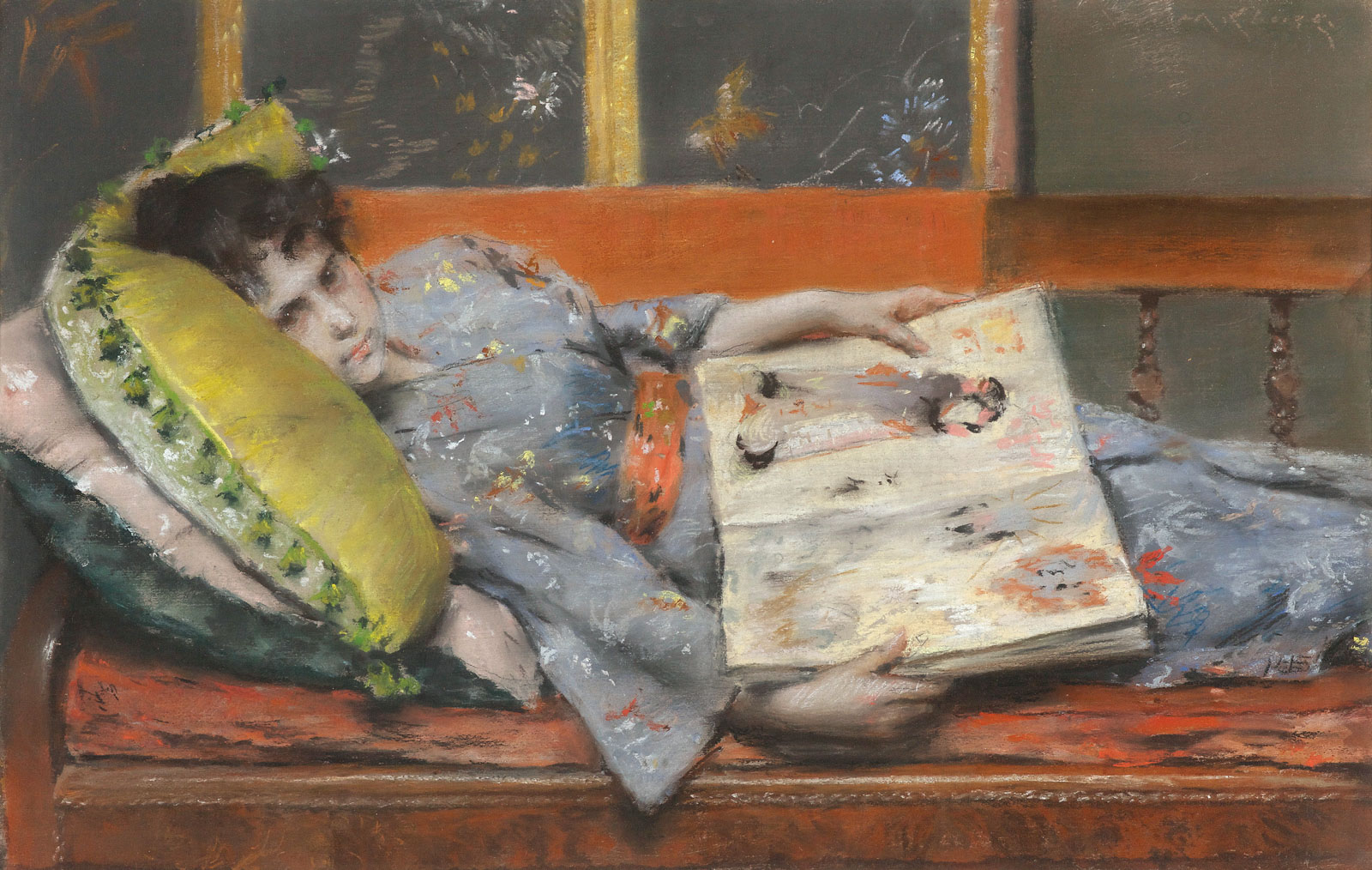 William Merritt Chase (1849-1916), At her Ease, ca. 1889. Pastel on panel. Promised gift to the Chrysler Museum of Art from the Macon and Joan Brock Collection of American Art.
Also represented are a variety of media, including pastels and watercolors, with examples by Homer, Sargent, William Merritt Chase, Charles Burchfield and more. The works also vary in scale and purpose, from sketches and studies to paintings ready for exhibition, providing insight into the stages and processes of numerous artists.
“The period covered by the exhibition from around the time of the Civil War, to around the Civil Rights Movement, was a period of great dynamism in America,” says Corey Piper, Chrysler’s Brock Curator of American Art. “Rather than a single trajectory of development, artists drew upon many sources of inspiration from Europe and beyond. At the same time, no single style or school dominated, but rather artists found the freedom to explore and innovate and push art in surprising and delightful new directions.”
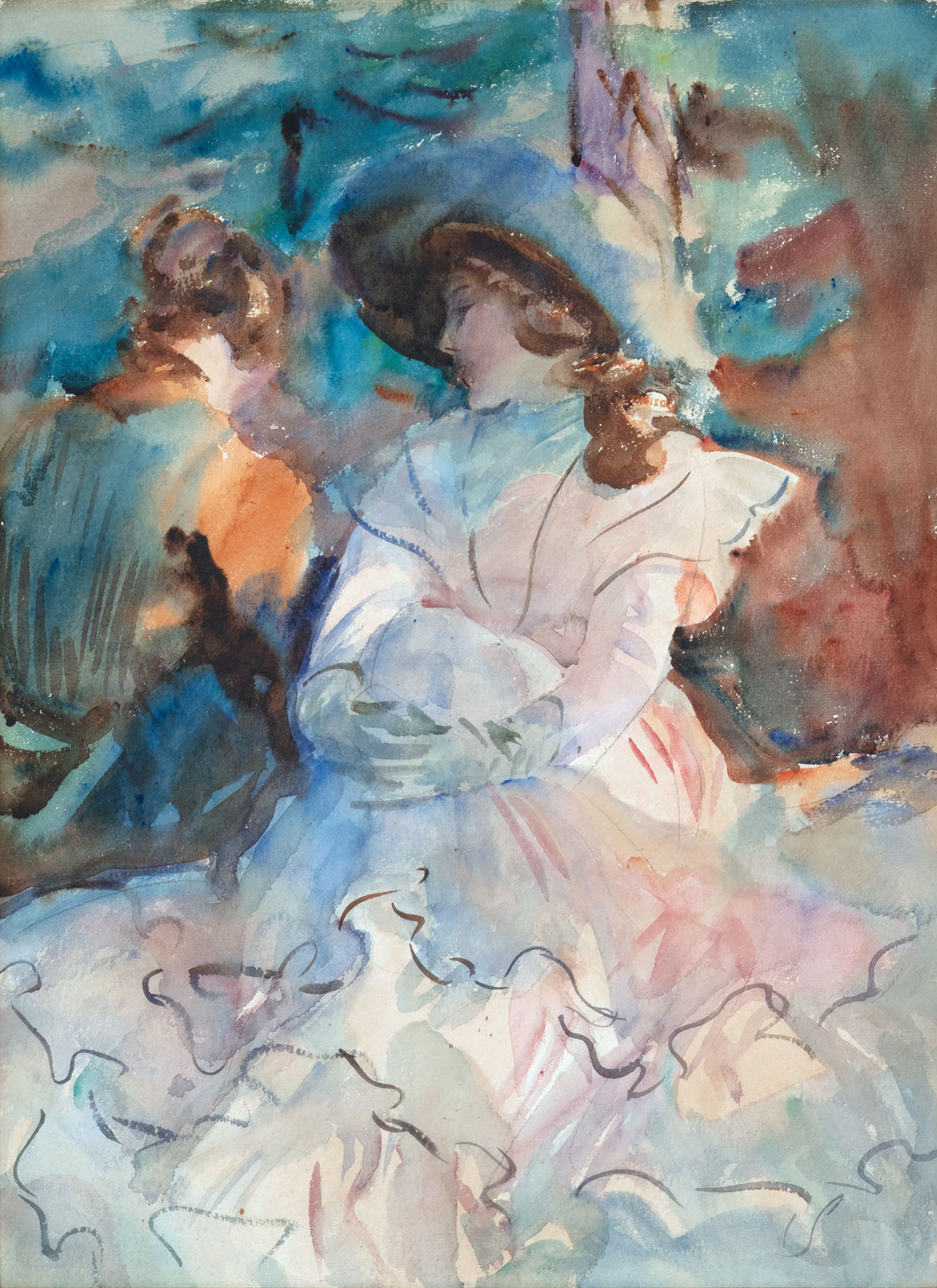 John Singer Sargent (1856–1925), Ladies in the Shade: Abriès, 1912. Watercolor and pencil on paper. Promised gift to the Chrysler Museum of Art from the Macon and Joan Brock Collection of American Art.
Piper continues, “The Brocks pursued works of exceptional quality…that exemplified the heights of each artist’s capabilities. They were also incredibly disciplined in forming a collection that focused on American art over a period of around 100 years. However, within that seemingly tight focus, Macon and Joan followed their interests widely, acquiring work from many artists, movements and styles. The result is a rich collection that beautifully captures the multifaceted nature of American art during one of the most dynamic periods of its history.”
The exhibition is organized chronologically, tracing the development of American art from the rigid guidelines as to what constitutes fine art upheld by the National Academy of Design through the movements and coalitions that arose in response, such as The Ten, the Ashcan School and modernism. Piper adds that “Several themes can be traced throughout the exhibition, such as the aestheticization of feminine leisure, the persistence of landscape within the American imagination, and the use of still life as a vehicle for artistic experimentation.”
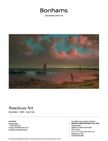
A standout piece for Piper includes Sanford Robinson Gifford’s 1880 painting Tappan Zee, a highly atmospheric work depicting sailboats in the distance on the Hudson River. “It is a canvas that the artist designated as one of his ‘chief pictures’—the most significant and exemplary works of his oeuvre,” says Piper. “Created during the last year of his life, it is not only a beautiful depiction of the iconic Hudson River, but a perfect encapsulation of the balance between the evocative and naturalistic tenets of American landscape painting.”
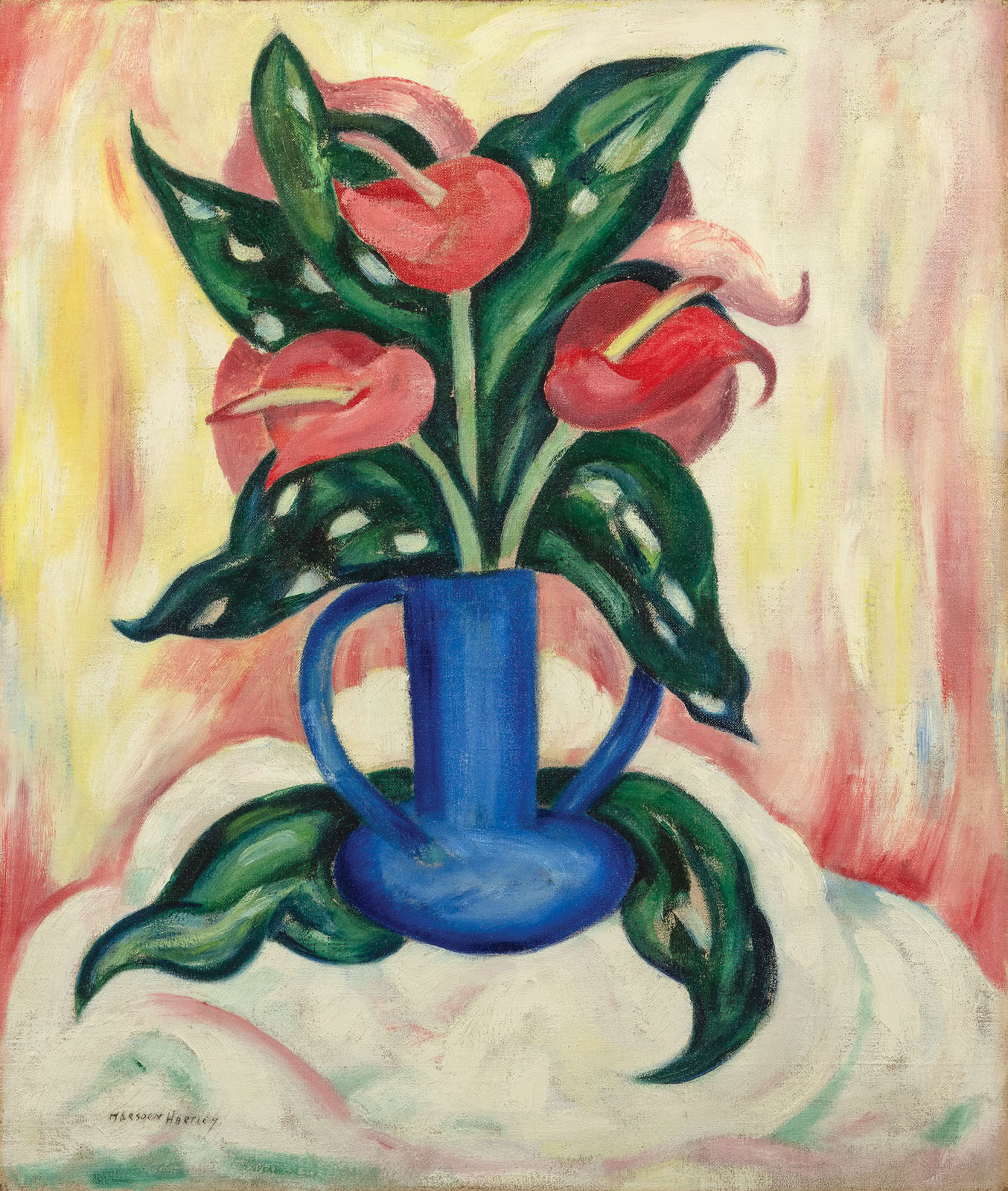 Marsden Hartley (1887-1943), Volupté, 1919. Oil on canvas. Promised gift to the Chrysler Museum of Art from the Macon and Joan Brock Collection of American Art.
Olives at Corfu and Ladies in the Shade: Abriès mark the first landscape and watercolor paintings by Sargent to enter the Chrysler’s collection. “They showcase the heights of his achievement in both oil and watercolor after he gave up his constrictive portrait practice,” says Piper. “They both highlight his exuberance at painting out of doors and complete mastery of two different types of media.”
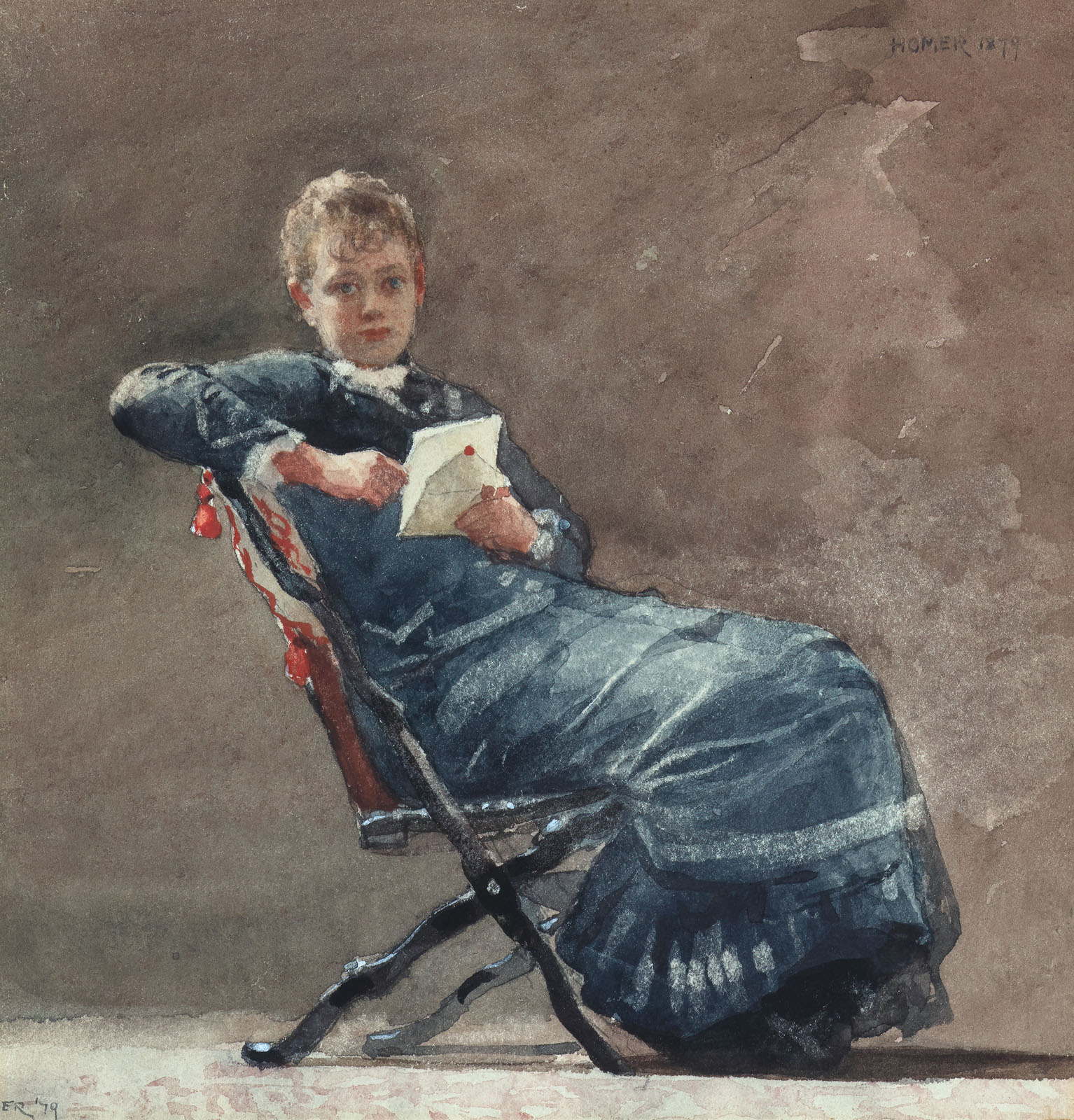 Winslow Homer (1836-1910), Girl with a Letter, 1879. Watercolor on paper. Promised gift to the Chrysler Museum of Art from the Macon and Joan Brock Collection of American Art.
Other notable works include The Album by Boston School artist William McGregor Paxton (1869-1941). The stunning portrait in profile incorporates elements from Renaissance portraiture and visual references to many eras from the Victorian period to the Civil War.
Painted during his early journey to New Mexico, Marsden Hartley’s Volupté is a prime example of the artist’s incorporation of European modernism and American subject matter. The title is a reference to Henri Matisse, whose work Hartley experienced in Europe, while the piece was inspired by flora encountered during springtime in the desert.
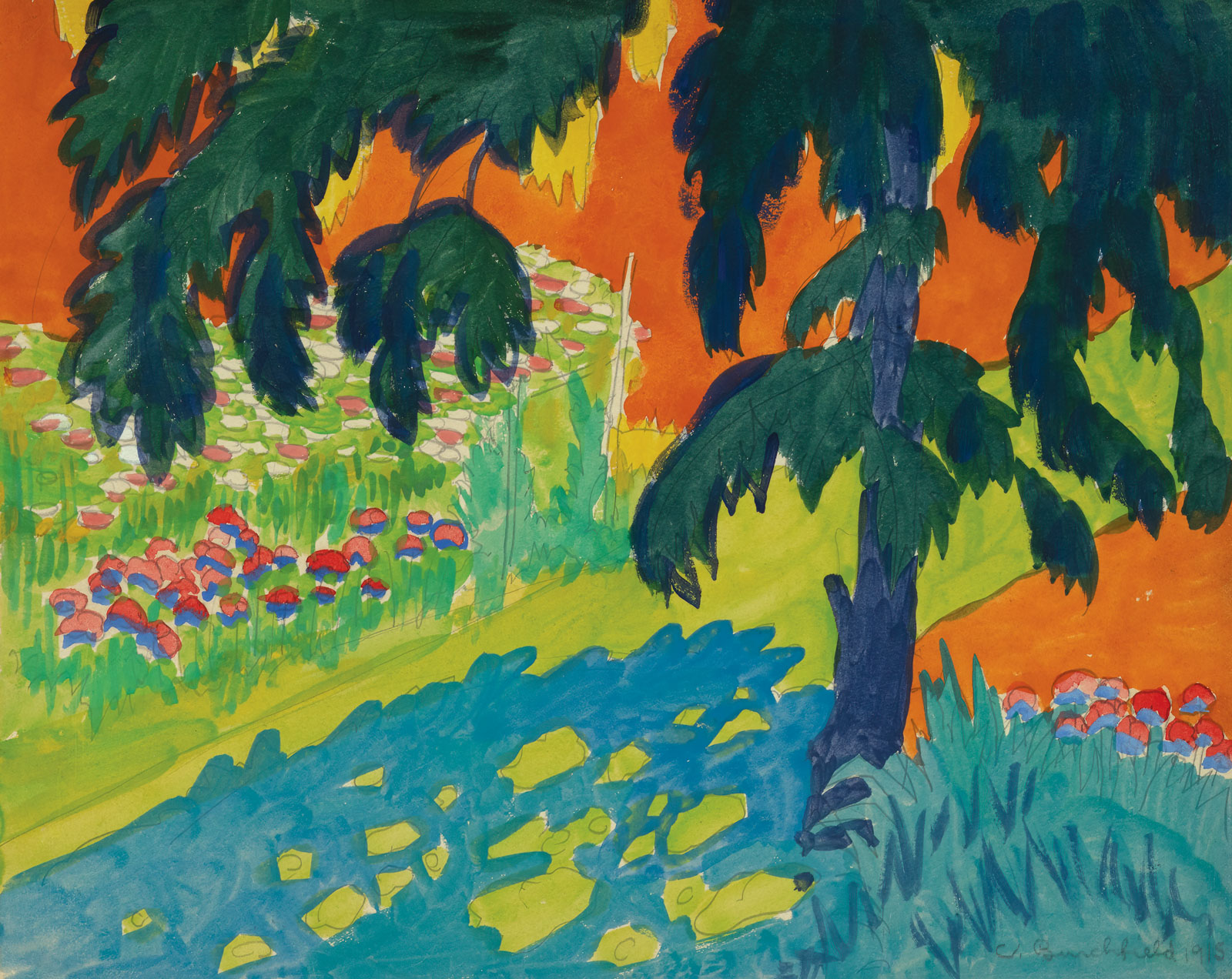 Charles Burchfield (1893-1967), Hot Morning, 1915. Watercolor, gouache, and pencil on paper. Promised gift to the Chrysler Museum of Art from the Macon and Joan Brock Collection of American Art.
“I hope visitors will appreciate the exhilaration and vitality of the great works of art included in the exhibition,” says Piper. “The exhibition provides a survey of American art, introducing many of the major figures of the period as well as lesser-known names. But above all, I hope the exhibition conveys a sense of joy in art, reflective of the spirit of the artists who created the works and the collectors who assembled them.”
Powered by Froala Editor