Henry David Thoreau wrote, “This kelp, oar-weed, tangle, devil’s apron, sole-leather, or ribbon-weed…appeared to us a singularly marine and fabulous product, a fit invention for Neptune to adorn his car with, or a freak of Proteus…as if they belonged to another planet, from seaweed to a sailor’s yarn, or a fish story. In this element, the animal and vegetable kingdoms meet and are strangely mingled.”
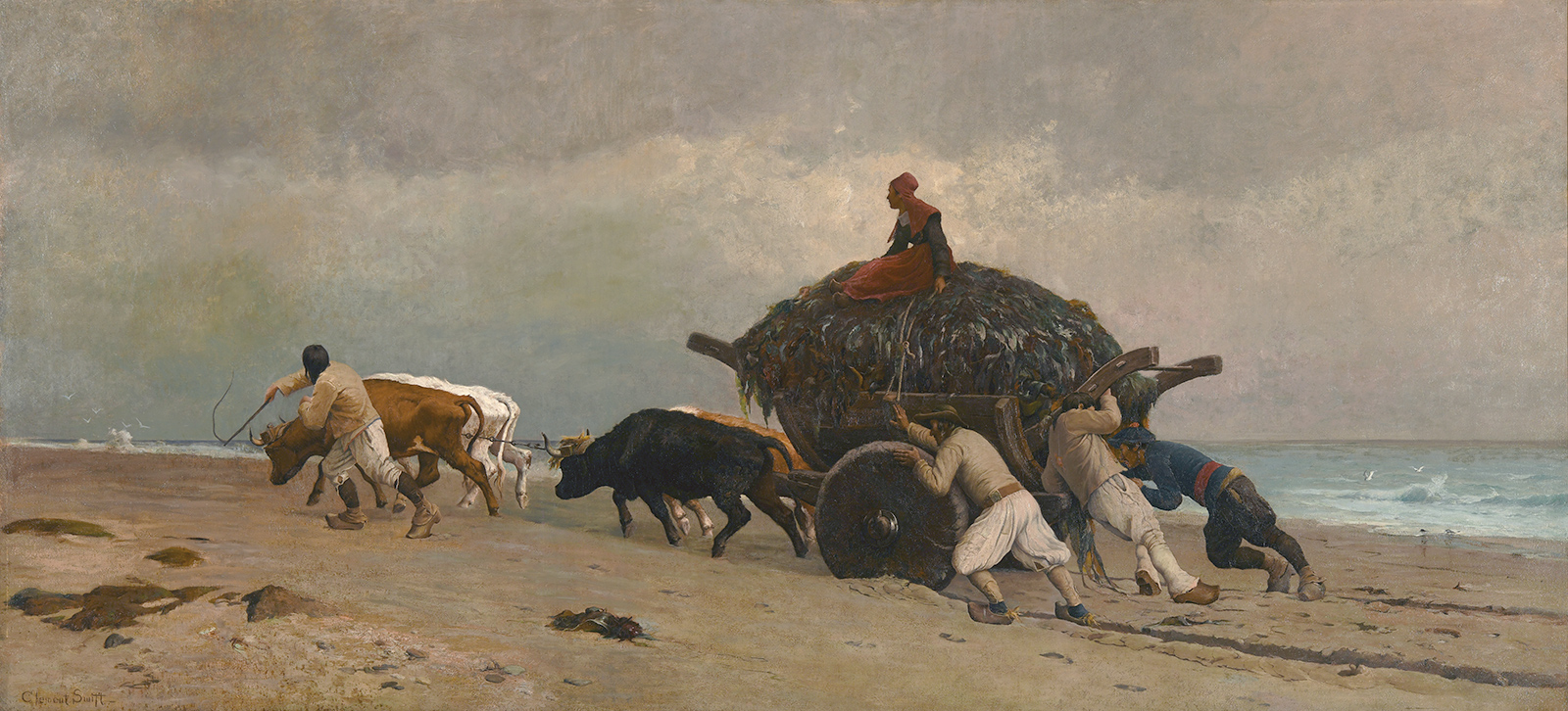 Clement Nye Swift (1846-1918), Seaweed Gatherers, 1878. Oil on canvas, 41 x 93 in. New Bedford Whaling Museum, Gift of the Russell Memorial Library of Acushnet, Massachusetts, 2015.9.1.
The Cultures of Seaweed, featuring more than 125 works from over 30 lenders, is inspired by Thoreau’s musings and explores the allure of this oceanic “produce” from about 1780 to today. The installation includes paintings, works on paper, textiles, photographs, albums, decorative arts and printed books, and demonstrates how seaweed is always changing in its form and appearance, cultural and social meanings, and industrial uses. Its changeability made it a subject of amateur study, aesthetic exploration and scientific examination.
The foundation of the exhibition is a spectacular painting of Seaweed Gatherers, created in Pont-Aven, France, in 1878 by Massachusetts artist Clement Nye Swift. It forms the interpretive center of an exhibition that could have been global in scope and far-reaching in time and media. Instead, using Swift as our entry point, the curatorial team led by myself and Maura Coughlin, Northeastern University, narrowed in on a triangle of the North Atlantic between New England, Brittany, France and Southeastern England that has similar tidal patterns, seaweed species and distribution, and applications.
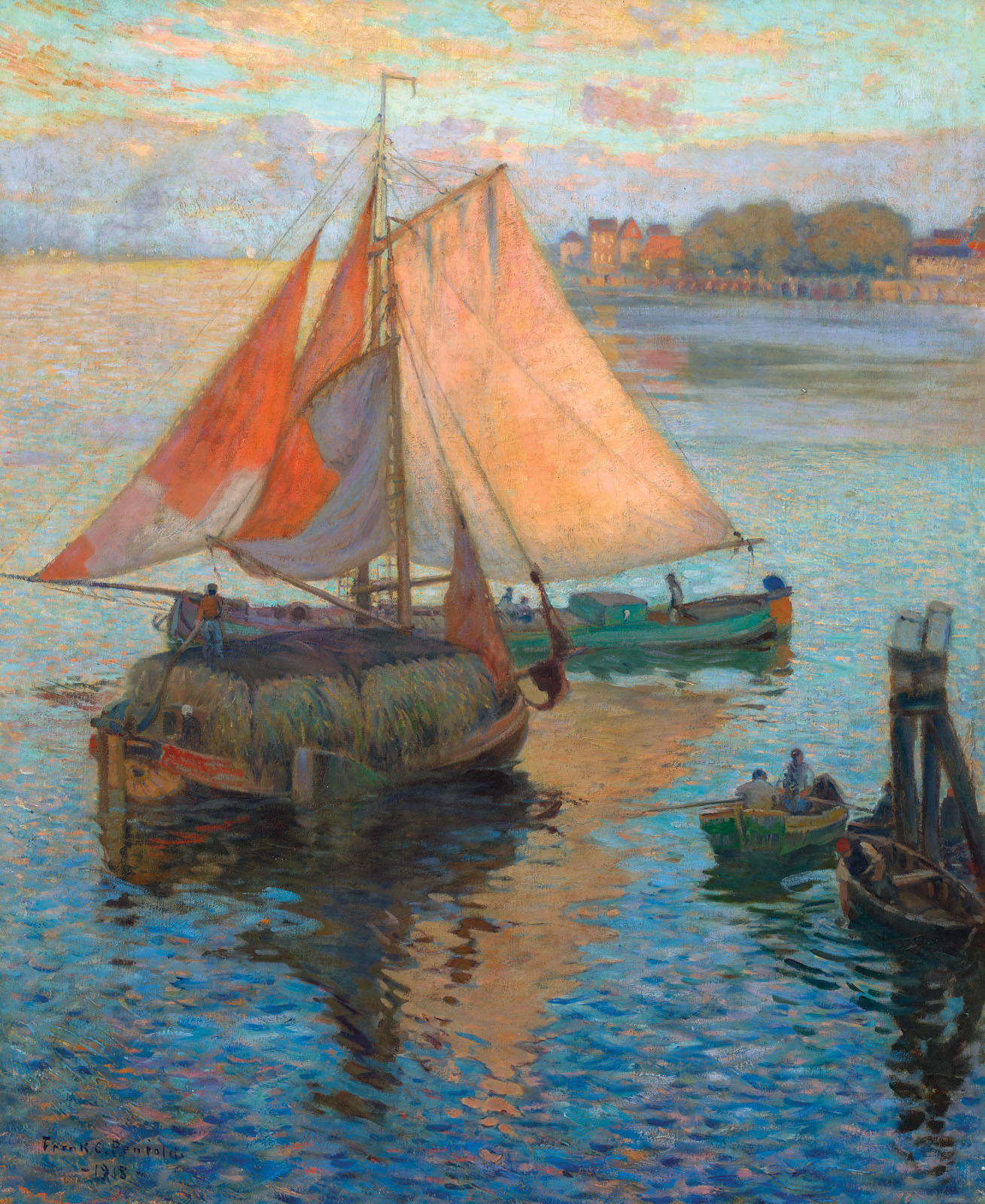 Frank Crawford Penfold (1849-1921), Brittany Harbor, Gathering of Seaweed, 1918. Oil on canvas, 38 x 312⁄5 in. Colby College Museum of Art, Gift of Mr. and Mrs. Ellerton M. Jetté, 1975.055.
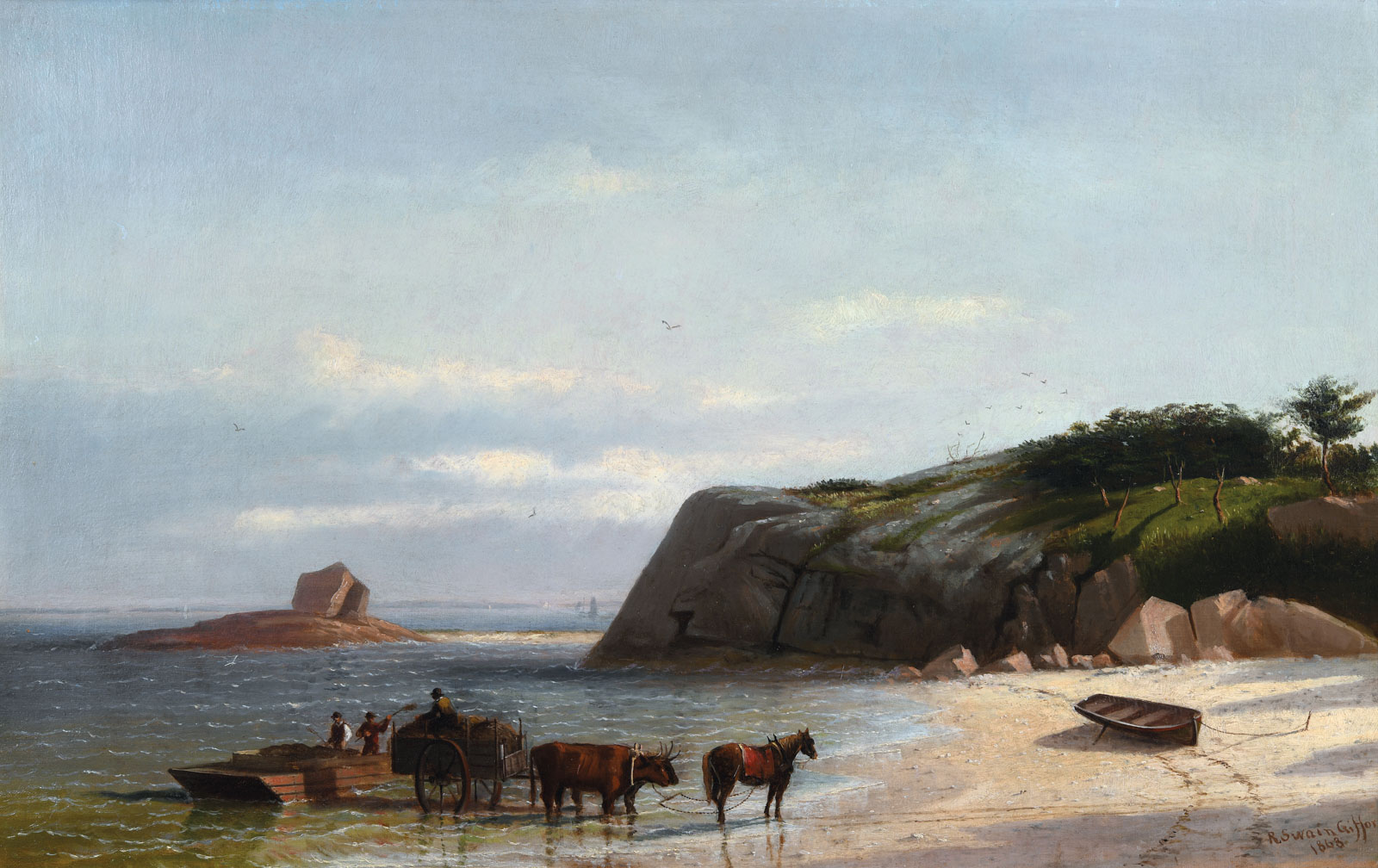 Robert Swain Gifford (1840-1905), Seaweed Gatherers at Nonquitt, 1868. Oil on canvas, 17½ x 27 in. New Bedford Whaling Museum Purchase, 1991.20.
In Brittany, harvesters, sometimes dressed in local costume, worked against rising tides with draft animals to haul heavy cartloads of wet seaweed off the beaches. Seaweed produced iodine, soda ash and carrageenan, and was used in innumerable products such as glass and saltpeter, and for animal bedding and fertilizer. The spectacle of seaweed harvesting and burning appealed to artists, photographers and illustrators working on both sides of the Atlantic. Even though some seaweed was destined for industrial uses and modern applications, artists and authors viewed seaweed harvesting as a historic tradition, reminiscent of a bygone era. In harvest images, artists including Frank Crawford Penfold (1849-1921), Edward A. Page (1850-1928) and George Inness, Jr. (American, 1854-1926) romanticized coastal labor. Visitors and tourists purchased postcards and souvenirs depicting the harvest, and images of it circulated in popular culture, like magazines. Individuals far from the coast and those who never traveled to France were familiar with the timeless practice of seaweed harvesting.
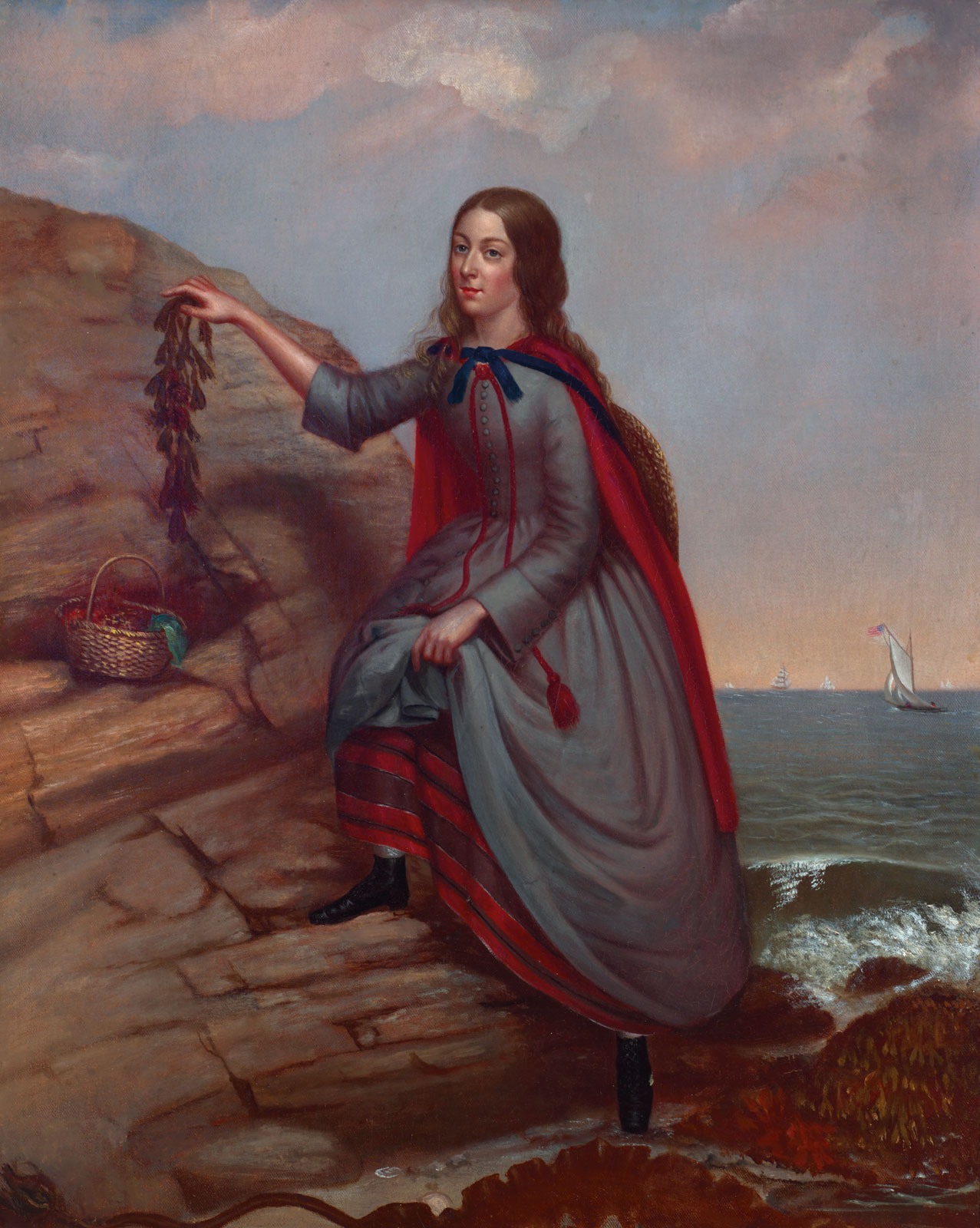 John Greenleaf Cloudman (1813–1892), Sea Captain’s Wife, undated. Oil on canvas, 25 x 20 in. Portland Museum of Art Purchase.
Swift and other New England artists pictured the New England seaweed economy in paint and photography. Robert Swain Gifford, who was born on Naushon Island and summered at Nonquitt in Dartmouth, Massachusetts, depicted seaweed gatherers frequently. In Seaweed Gatherers at Nonquitt, Gifford carefully renders a group of figures loading seaweed from the sea onto a flat-bottom skiff and wagon. Distinctive cliff and rock formations offer geographic specificity to this curving bit of coastal shoreline.
Conserved for this exhibition, Sydney Richmond Burleigh’s turn-of-the-century watercolor of seaweed gathering along the nearby Sakonnet River, shows a green meadow with wildflowers like goldenrod. A rutted track runs from the lower right corner of the picture into the middle where there is a cluster of wagons with teams of oxen. The middle ground is a strip of reflective water with a placid sailboat. Laborers fork the seaweed from the water’s edge up onto the wagons.
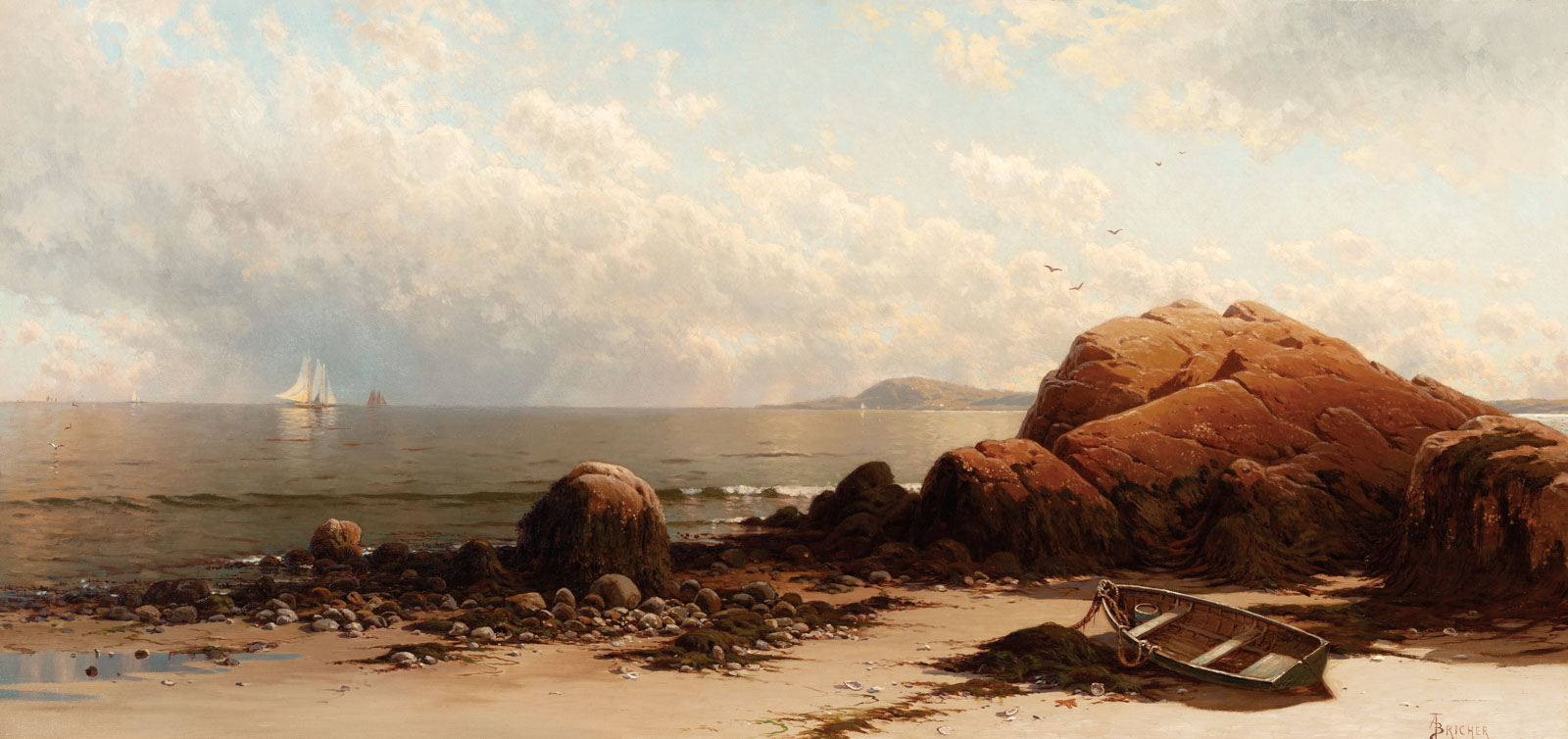 Alfred Thompson Bricher (1837-1908), Low Tide, ca. 1885-1895. Oil on canvas, 30 x 62¾ in. NBWM, Gift of Douglas and Cynthia Crocker.
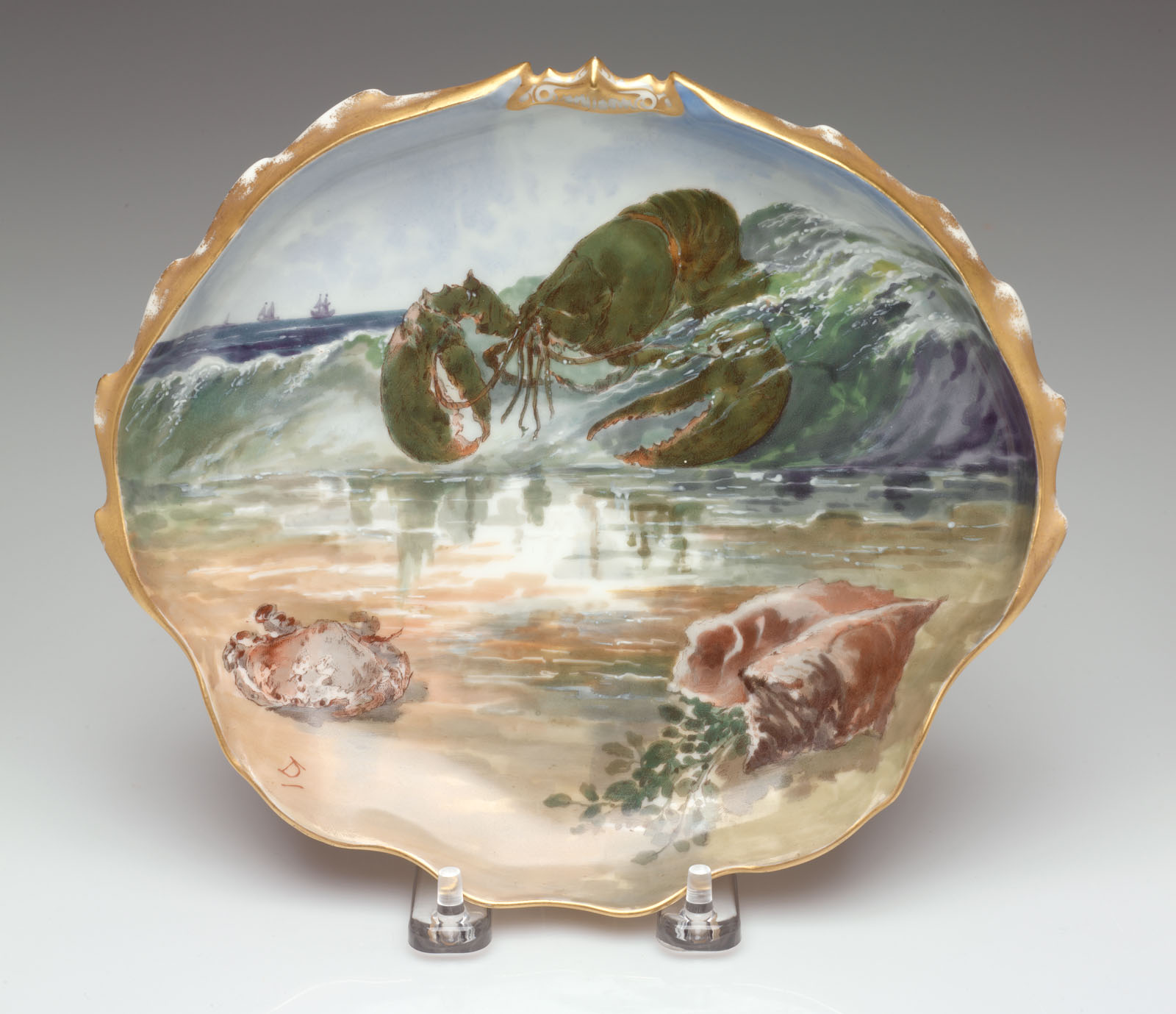 Theodore Russell Davis (1840-1894), Seafood Plate, from the Rutherford B. Hayes Presidential Service, ca. 1880. Porcelain with enamels and gilding, 9 x 1½ in. Rhode Island School of Design Museum, Providence, RI, Gift of Christopher Monkhouse, 2003.111.
Artists, like John Singer Sargent and Alfred Bricher demonstrate an interest in the picturesque qualities of seaweed itself, clinging to rocky coastlines and draped around the edges of tidepools. Sargent’s pristine 1921 watercolor of a rocky coastline uses the blank white of the page to effect the reflective surface of a tidepool with kelp nestled into the pockets of granite. In one of a series of monumental low tide paintings at Grand Manan Island, off the coast of Maine in the Bay of Fundy, Bricher captures the fleeting view of an undersea landscape, with green rockweed, starfish and stringy seaweed exposed at low tide. Massive, irregular boulders protrude like mountains from the beach, while an anchored dory is set adrift upon the shore.
An early 1940 watercolor by Andrew Wyeth shows how American modernists approached the subject of seaweed. While a tiny dory floats at the horizon line in the background, a large lobster washes up onto shore with the wrack, its body a wash of green, red and purple. Fine brushwork marks out the tiny hairs of the claw. The wrack is a symphony of loose wet washes and shapes, reminiscent of the abstractions of Kandinsky. The piece demonstrates Wyeth’s affinity for and careful study of the natural world of coastal Maine.
The exhibition was intentionally diverse in terms of the kinds of media we included. Numerous French, English and American designers incorporated seaweed in decorative arts, from popular mochaware made in industrial potteries to elite studio-made silver services, and from Palissy-style tableware encrusted with undersea flora and fauna in high relief, to sinuous and curving designs on textiles and wallpaper. Silversmiths at Tiffany & Company and Gorham Manufacturing Company employed different techniques and adopted diverse visual languages from Japonisme to Aestheticism to celebrate the watery fronds and radial shapes of twisting seaweeds. The silverwork on view in the exhibition shows how the wrack, the common, the free stuff from the shore—deemed smelly, annoying and an irritation by some, was transformed by the 1880s into elite and precious materials for wealthy clientele.
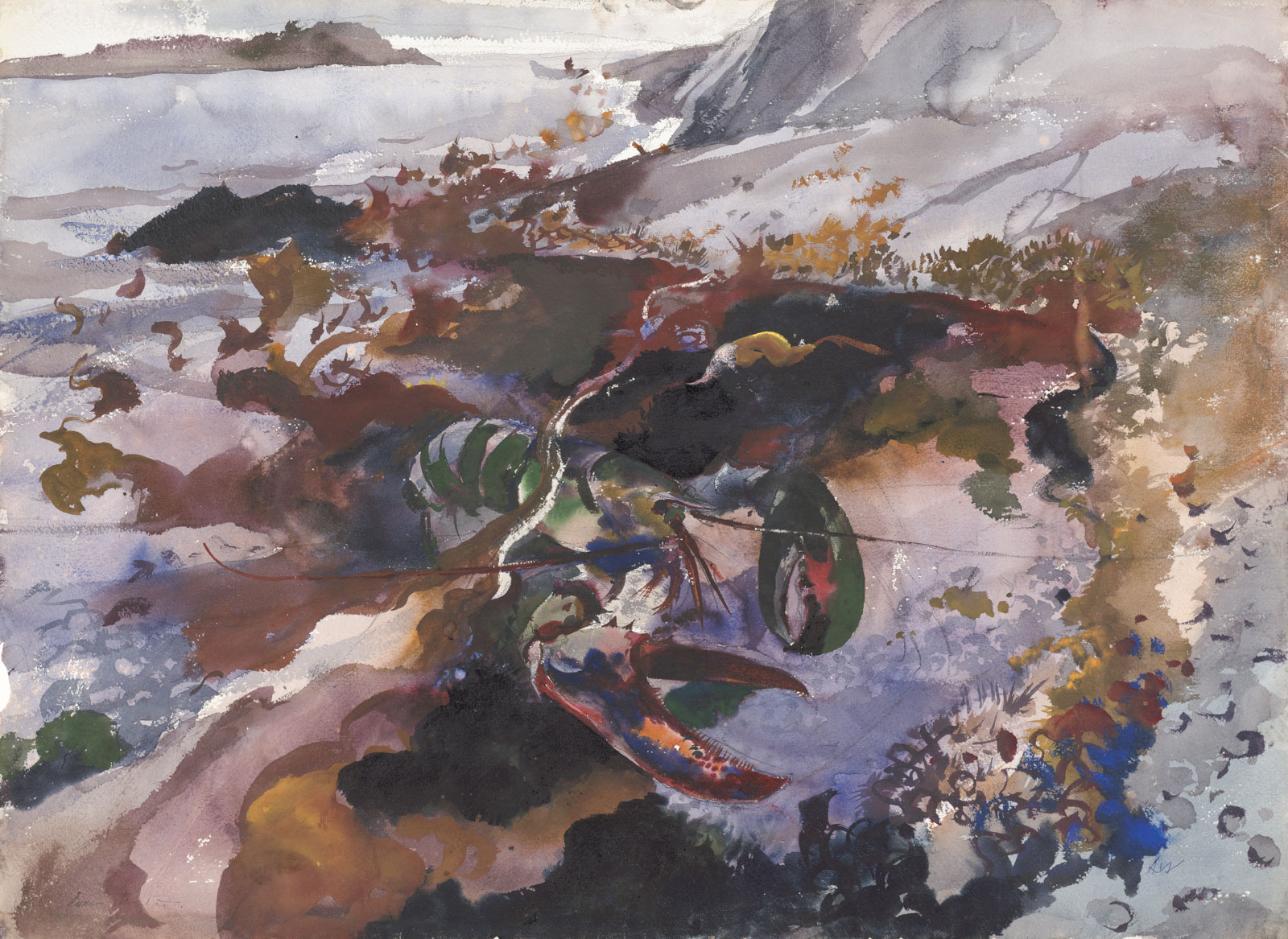 Andrew Wyeth (1917-2009), Lobster #4, 1940. Watercolor on paper, 21½ x 292/5 in. Collection of the Wyeth Foundation for American Art, BM1035. © 2023 Wyeth Foundation for American Art /Artists Rights Society (ARS).
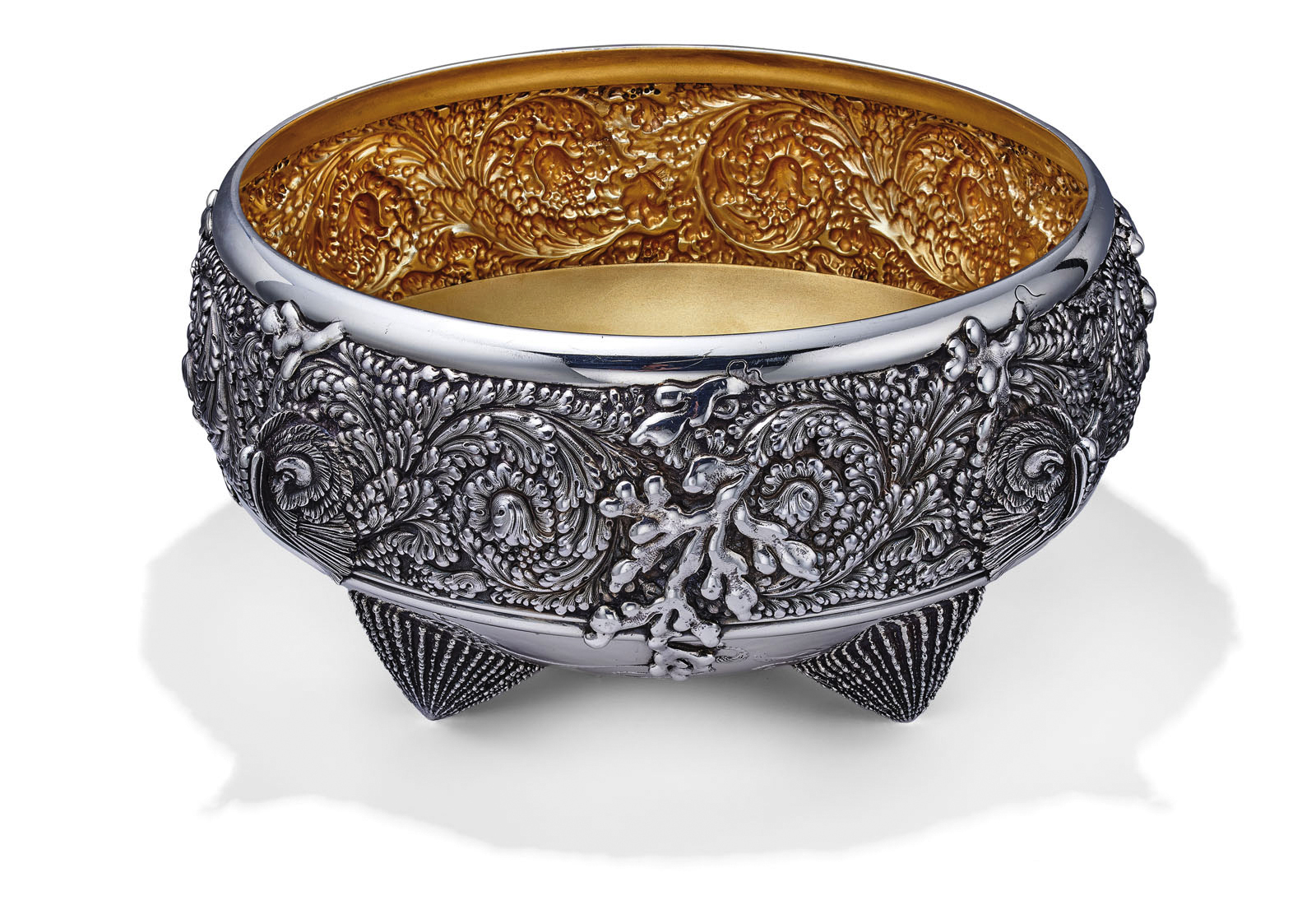 Tiffany & Co., Punch Bowl, 1885. Sterling silver and gold. Tiffany & Co. Archives, B2022.15. Copyright Tiffany Archives 2023.
We also recognized that women played an important role in the story of seaweed. Women hobbyists created collages, herbaria and pressings from seaweed, and they led the seaweed collecting industry in Brittany. English botanist Anna Atkins (1799–1871) published the very first book illustrated with photographs. Her spectacular original cyanotypes from British Algae (1843-53) influenced artists and designers throughout the exhibition, but also point to how women entered the sciences via amateur practices like seaweed collecting. Seaweed collecting guidebooks encouraged seaside gathering, instructed on assembling kits and advised on equipment and proper clothing. Women achieved rare freedom outdoors through shoreline collecting.
Works by female artists exemplify how women remained at the forefront of seaweed art and design into the 20th-century. These include Lobstering, a plate from the New England Industries series by Clare Leighton for Josiah Wedgwood & Sons, that includes carefully studied rockweed curled in the foreground, undersea textile designs by students of Mariska Karasz, who served as guest needlework editor for House Beautiful Magazine from 1952 to 1953; and an art deco French sidewall design distributed by Nancy McClelland, first female president of the first U.S. national association of interior designers, American Institute of Interior Decorators (AID). These influential women made substantive contributions to American craft and design and were clearly enmeshed in the vogue for seaweed that swept America in the first half of the 20th-century. Today, the fields of seaweed aquaculture and phycology are dominated by women.
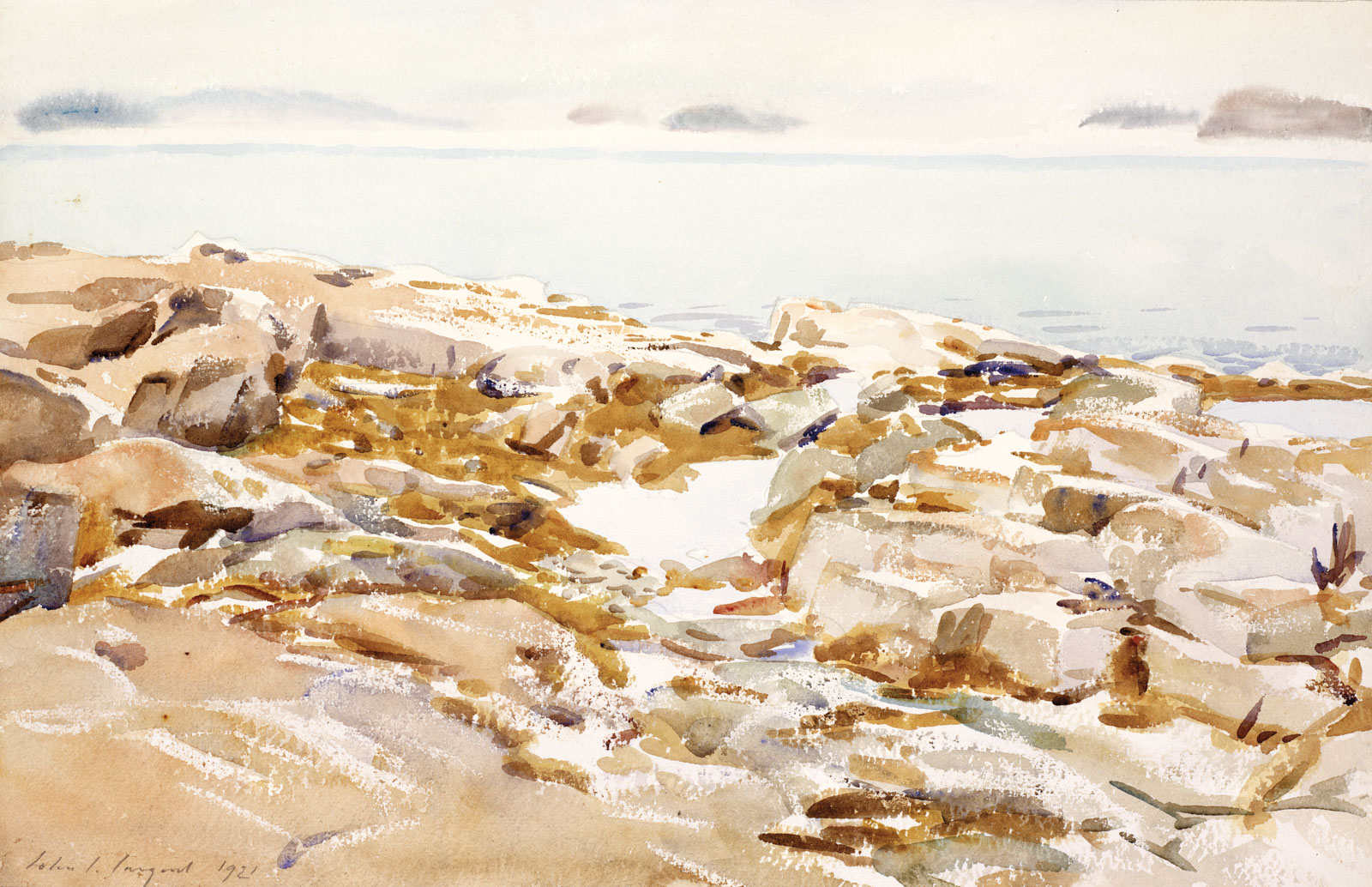 John Singer Sargent (1856-1925), Rocky Coast Near Boston, 1921. Watercolor and graphite on paper, 134/5 x 21 in. Rhode Island School of Design Museum, Providence, RI, anonymous gift, 1992.001.119.
Finally, the exhibition highlights objects from our collection, including a group of about 45 seaweed herbaria collected by Charles H. Durgin at Hudson Bay in 1864 while wintering-over on a whaling vessel; a whimsical hand block-printed textile of mermaids; seaweed made by famed boat designer L. Francis Herreshoff; and two souvenir albums with whalebone covers from Monterrey, California, that include photographs of waves crashing on rocky coastlines and actual seaweed specimens mounted on facing pages.
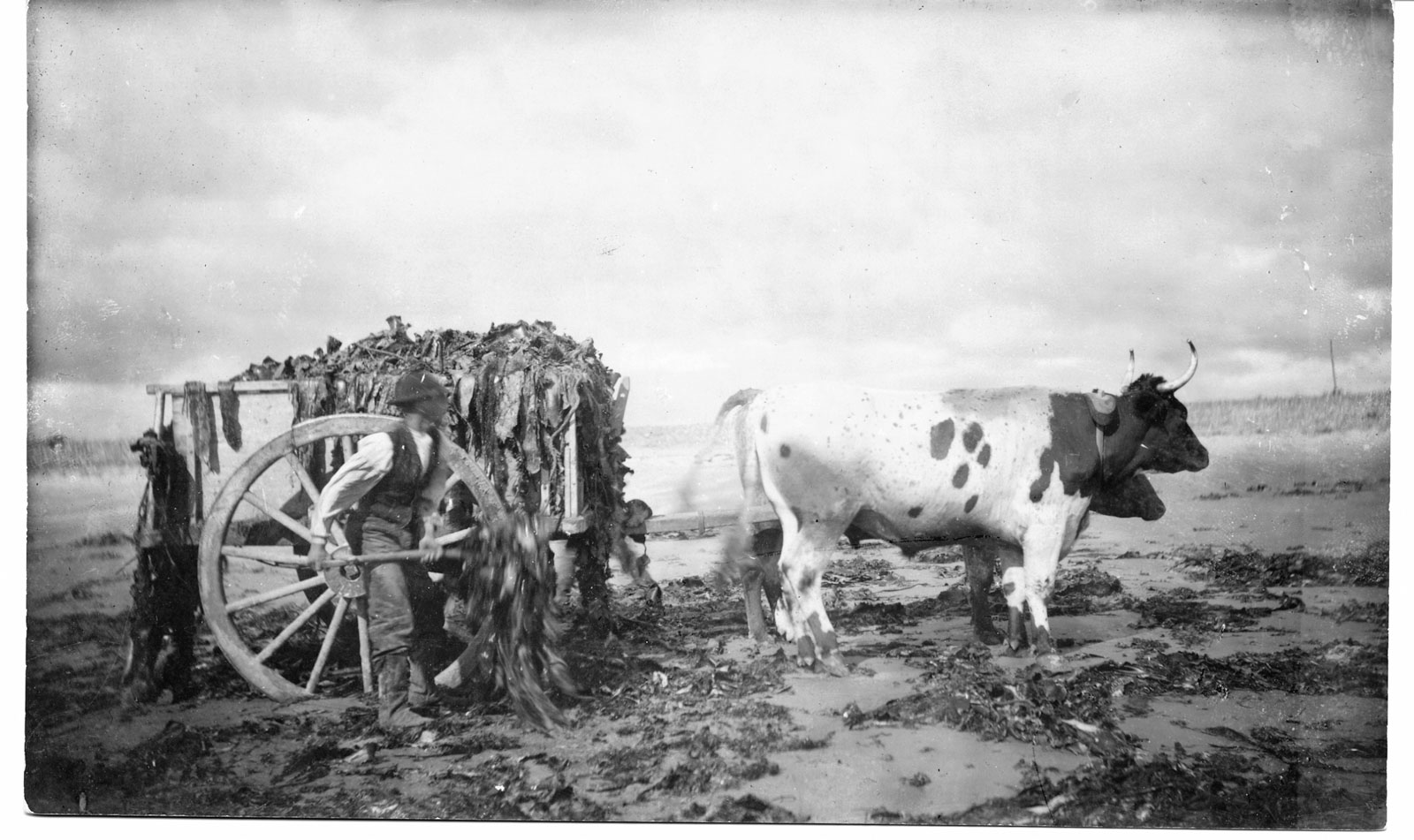 Emma L. Coleman (1853-1942), Gathering Kelp, Long Sands, York, Maine, ca. 1882. Photograph, 5 x 7½ in. Image courtesy of Historic New England.
The Cultures of Seaweed is a perfect vehicle for reflecting the interdisciplinary collections and mission of NBWM, which is to preserve the rich, diverse histories of the communities of the region and educate audiences about whale biology, conservation and ocean health, with a growing focus on climate science. The Cultures of Seaweed allowed us to lean into our mission and survey the cultural, scientific, historical, aesthetic and industrial applications of seaweed in the past and today.
Naomi Slipp is the Douglas and Cynthia Crocker Endowed Chair for the Chief Curator at the New Bedford Whaling Museum in New Bedford, Massachusetts.
Through December 3
The Cultures of Seaweed
New Bedford Whaling Museum
18 Johnny Cake Hill
New Bedford, MA 02740
t: (508) 997-0046
www.whalingmuseum.org
Powered by Froala Editor