
Charlotte B. Skinner (1879-1963) was a painter of the Sierra Nevada and Desert Country of Owens Valley. She is best known for her renderings of Lone Pine Peak, Mt. Whitney, the Alabama Hills and other iconic landmarks in the region, which define the artist’s body of work.
Forty examples of such pieces are on view October 14 through May 5, 2024 at the Nevada Art Museum in an exhibition titled End of the Range: Charlotte Skinner in the Eastern Sierra.
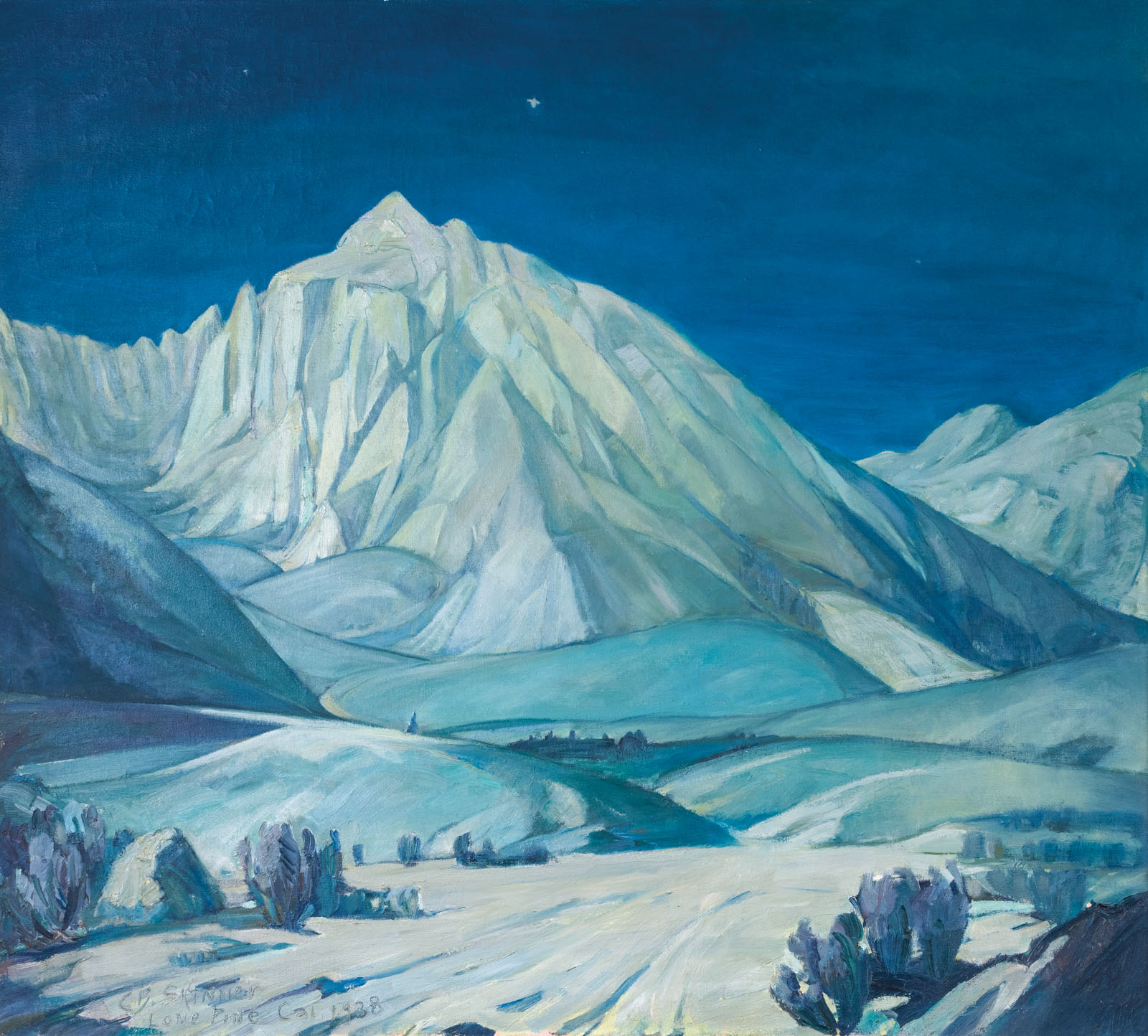 Charlotte Skinner (1879-1963), Silence (Lone Pine Sierra), 1938. Oil on canvas, 36 x 40 in. Collection of the Nevada Museum of Art, promised gift of John A. White in memory of James E. Skinner.
Skinner grew up in San Francisco where studied at the Mark Hopkins Art Institute and California School of Fine Arts. There she met and painted alongside notable artists including sculptor Ralph Stackpole, Otis Oldfield, Rinaldo Cuneo and Maynard Dixon.
She also met fellow student, artist and mining engineer William Lyle Skinner. The two married and, in 1905, moved to Lone Pine—located on California’s scenic Highway 395 just east of the Sierra Nevada mountain range—where they would reside for almost 30 years.
This is where Skinner would create her most iconic paintings, including the first painting of her new home—an untitled piece of Owens Lake, only a five-minute walk from their homestead. The piece already demonstrates several signature elements that would characterize her vast body of work: a vibrant palette with skillful variations of greens, blues and earth tones, and a rigorous attention to the rugged contours of the Eastern Sierra.
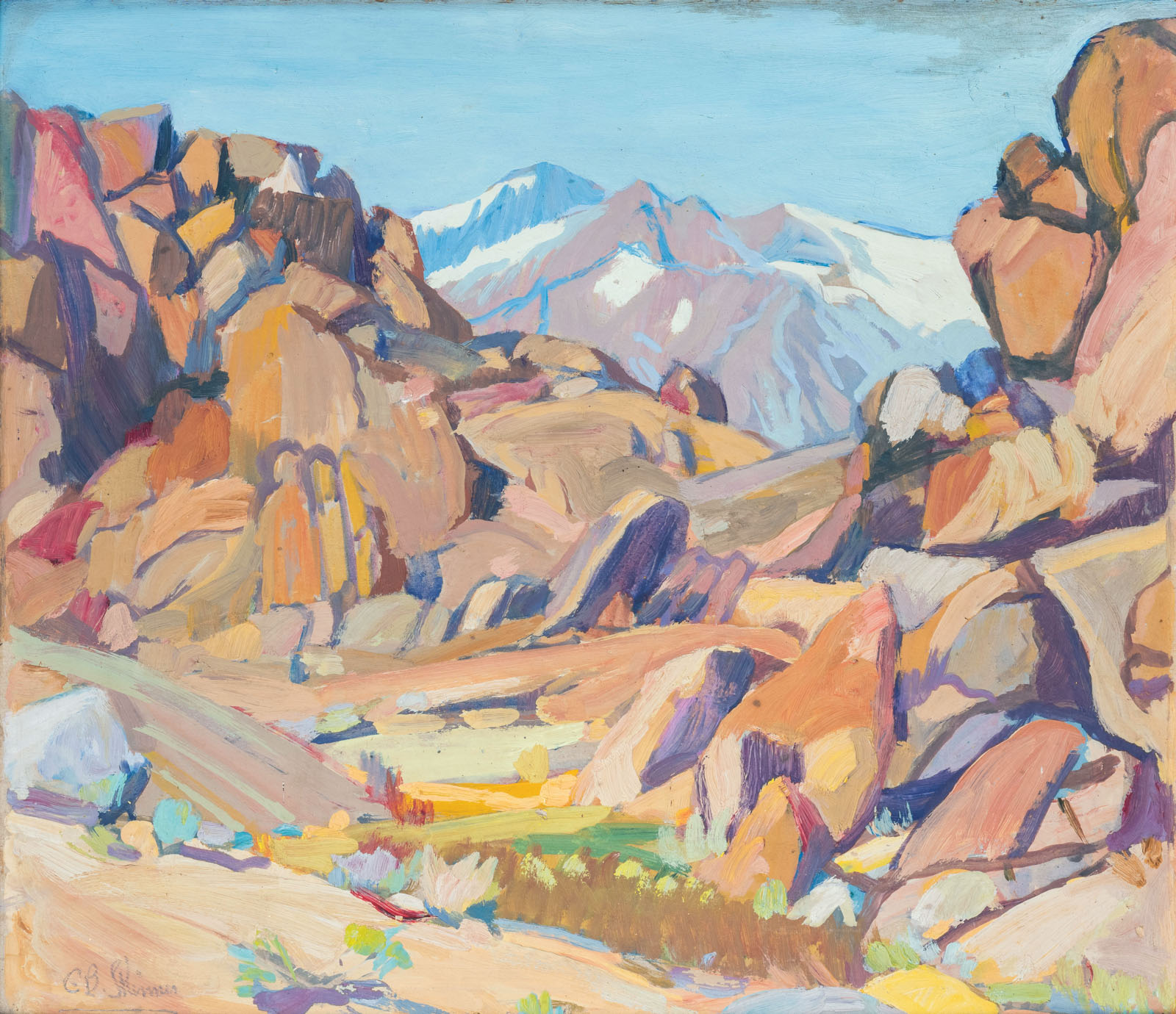 Charlotte Skinner (1879-1963), Rocks, not dated. Oil on board, 12 x 15 in. Collection of the Nevada Museum of Art, promised gift of John A. White in memory of James E. Skinner.
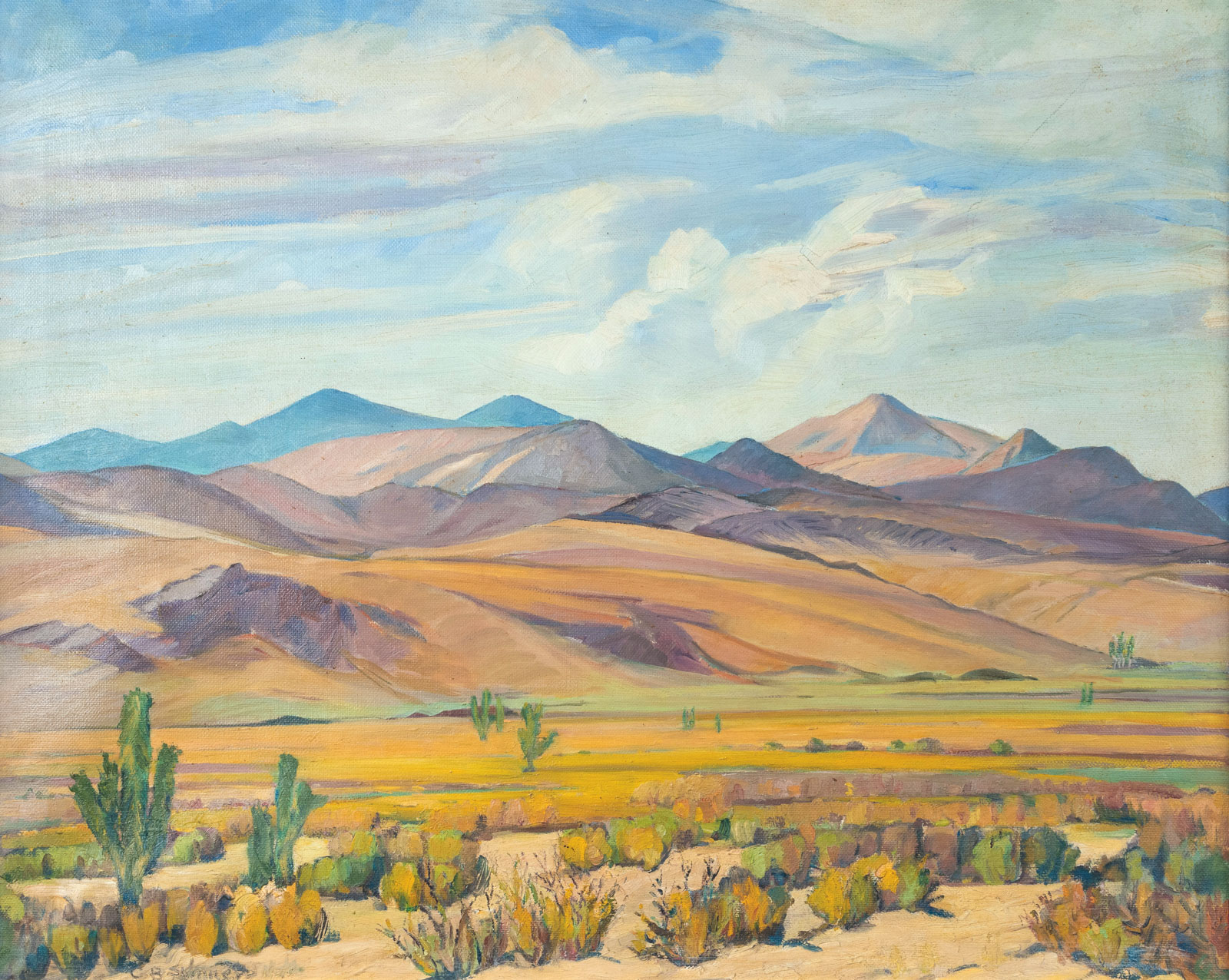 Charlotte Skinner (1879-1963), End of the Range, not dated. Oil on canvas, 24 x 30¼ in. Collection of the Nevada Museum of Art, promised gift of John A. White in memory of James E. Skinner.
“Adept at painting, drawing and printmaking, Skinner was one of the few artists working in the Owens Valley during the early part of the 20th century,” says curator Kolin Perry. “She documented, preserved and shared the unique landscape of the Eastern Sierra with which she had become intimately familiar. Her work has a spirited and energetic quality to it that comes from a familiarity of place that she acquired by spending almost three decades in Lone Pine.”
She was also documenting the changing times in her own backyard. Around the time she arrived in Lone Pine the City of Los Angeles began purchasing land and water rights in the Owens Valley to redirect the water to Los Angeles via aqueduct. Her husband ran for public office to oppose the shifting water rights, but ultimately these efforts failed, and many have speculated this is what caused the artist and her husband to relocate to Eugene, Oregon in 1933.
“While environmentalism wasn’t her primary goal, Skinner’s work shows us an Owens Valley that is very different from today,” says Perry. “I think of her paintings, Rampant Owens River, 1938, and her early landscape Untitled,1906, that speak to an abundance of water in the area. Today the Owens River, its tributaries, and the Owens Lake are considered ‘mostly dry.’ The Los Angeles aqueduct had a devastating and lasting impact on the environment, economic growth and livelihoods of the citizens of Lone Pine, including the Skinner Family.”
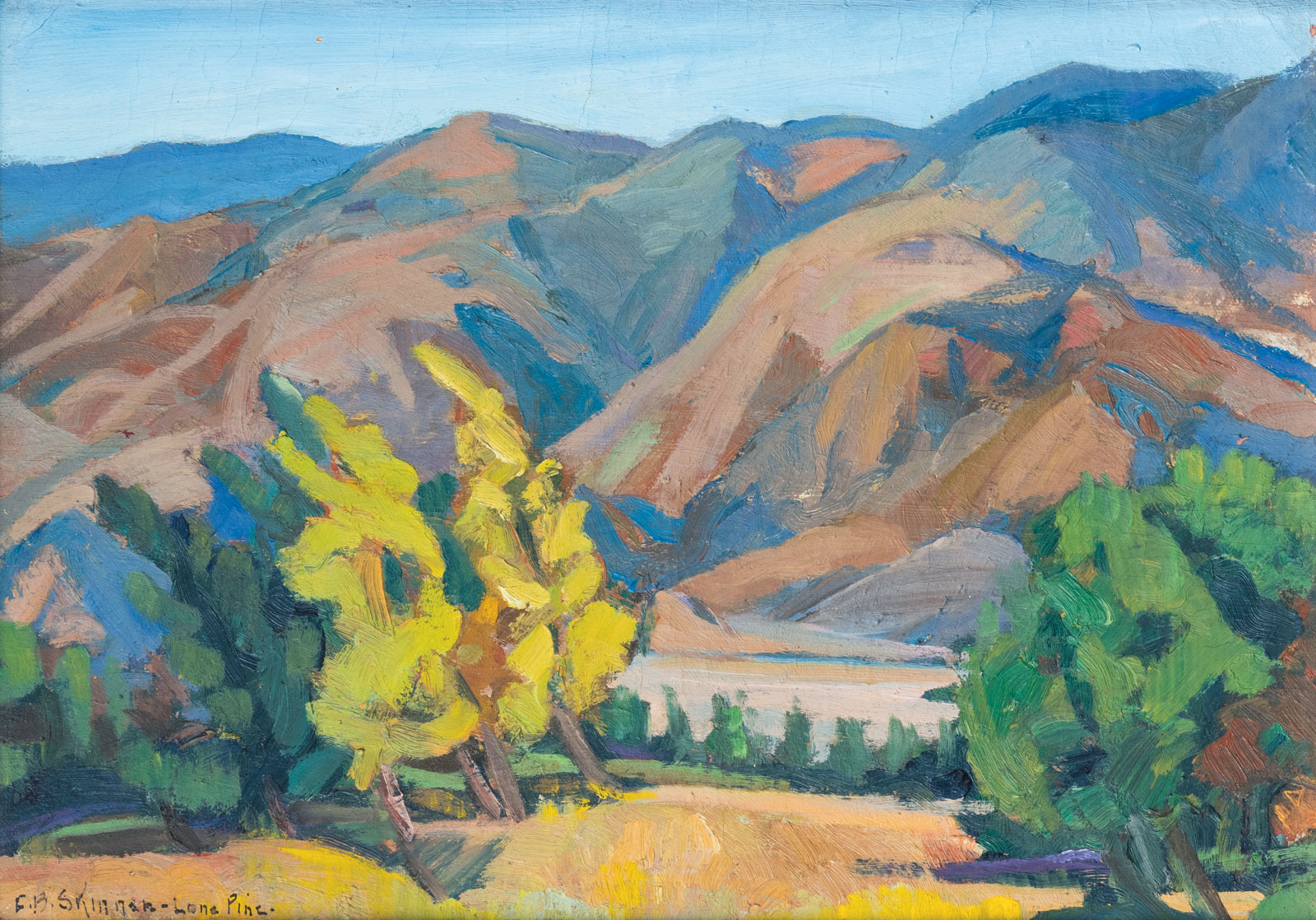 Charlotte Skinner (1879-1963), Willows (Lone Pine), not dated. Oil on board, 10 x 14 in. Collection of the Nevada Museum of Art, promised gift of John A. White in memory of James E. Skinner.
The exhibition also feature works by Skinner’s artist-friends who visited her residence in Lone Pine, including artists and photographers at the time such as Dorothea Lange, Maynard Dixon, Roi Partridge, Sonya Noskowiak, Ralph Stackpole and William Wendt, to name a few. It also includes Panamint Shoshone baskets from the artist’s personal collection that were given to her in exchange for teaching art classes to local Indigenous populations.
Powered by Froala Editor