The South Carolina Colony was founded by the British in 1663. In 1773, while it was still a colony, the Charleston Library Society founded what would become the Charleston Museum, America’s first museum. Celebrating its 250th anniversary, “the museum’s collections now represent the most comprehensive assemblage of South Carolina materials in the nation. Focusing on the South Carolina Lowcountry, modern collecting emphases include natural history, historical material culture and both documentary and photographic resources.”
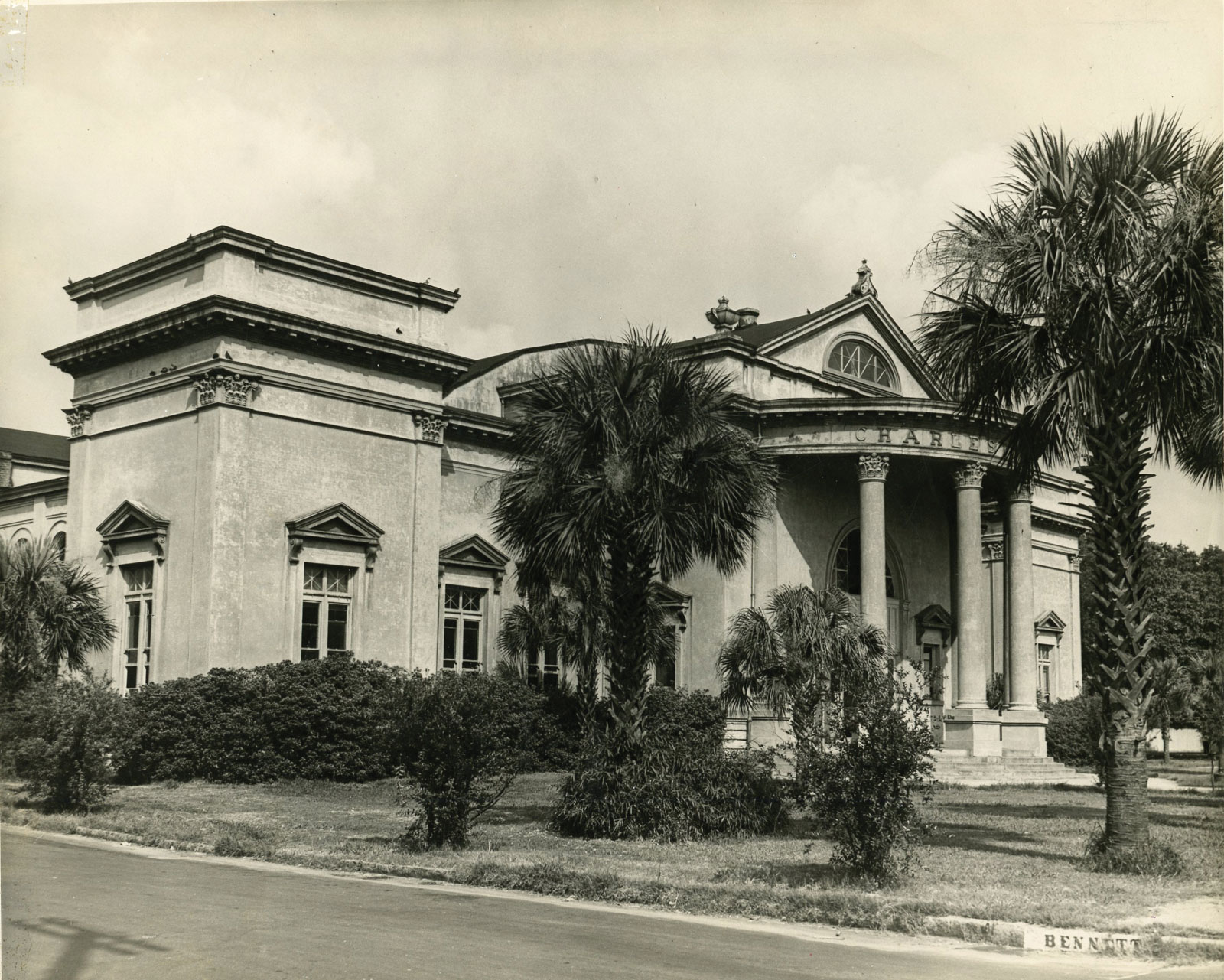 Howard Rivers Jacobs (1885-1974), photograph of the old Charleston Museum on Rutledge Avenue, ca. 1940. Jacobs shot the image from Bennett Street.
The Charleston Library Society was inspired by the opening of the British Museum, a free, national, public museum that opened its doors to “all studious and curious persons” in 1759. The museum now houses nearly eight million objects covering two million years of human history.
Before there were museums, there were collections. One of the earliest collections is dated to 530 B.C. in Sumeria and contained objects from 2500 to 2000 B.C. In his “History of Museums” for Museologica, John Edward Simmons observes, “The modern museum dates to the time when collections began to be made for the specific purpose of exhibiting the objects to the public, but this is not an easy-to-define moment.”
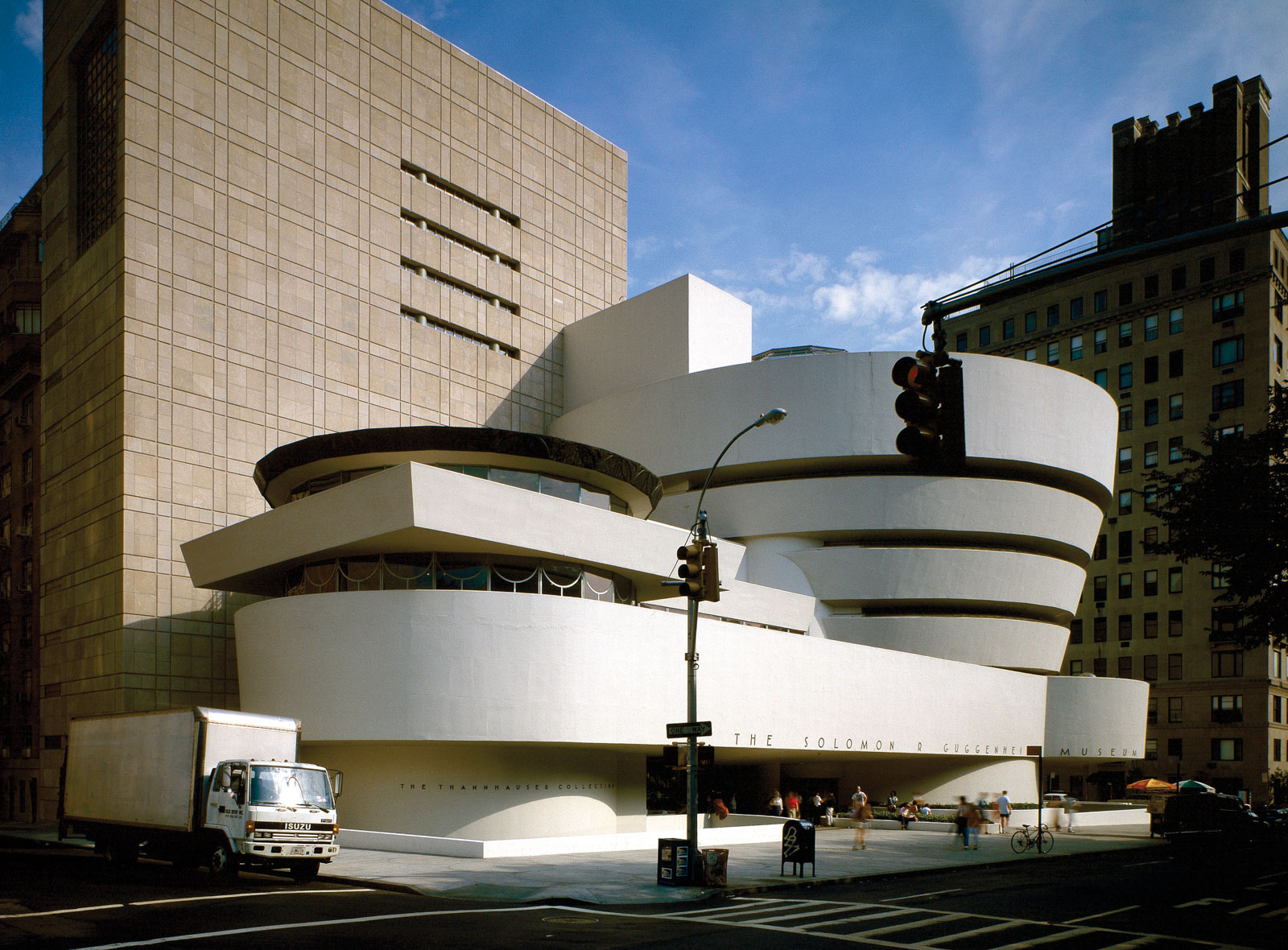 The Solomon R. Guggenheim Museum in New York, designed by Frank Lloyd Wright and opened in 1959. Behind it is an eight-story tower addition, designed by Gwathmey Siegel and Associates Architects that opened in 1992. Photo: David Heald © Solomon R. Guggenheim Foundation
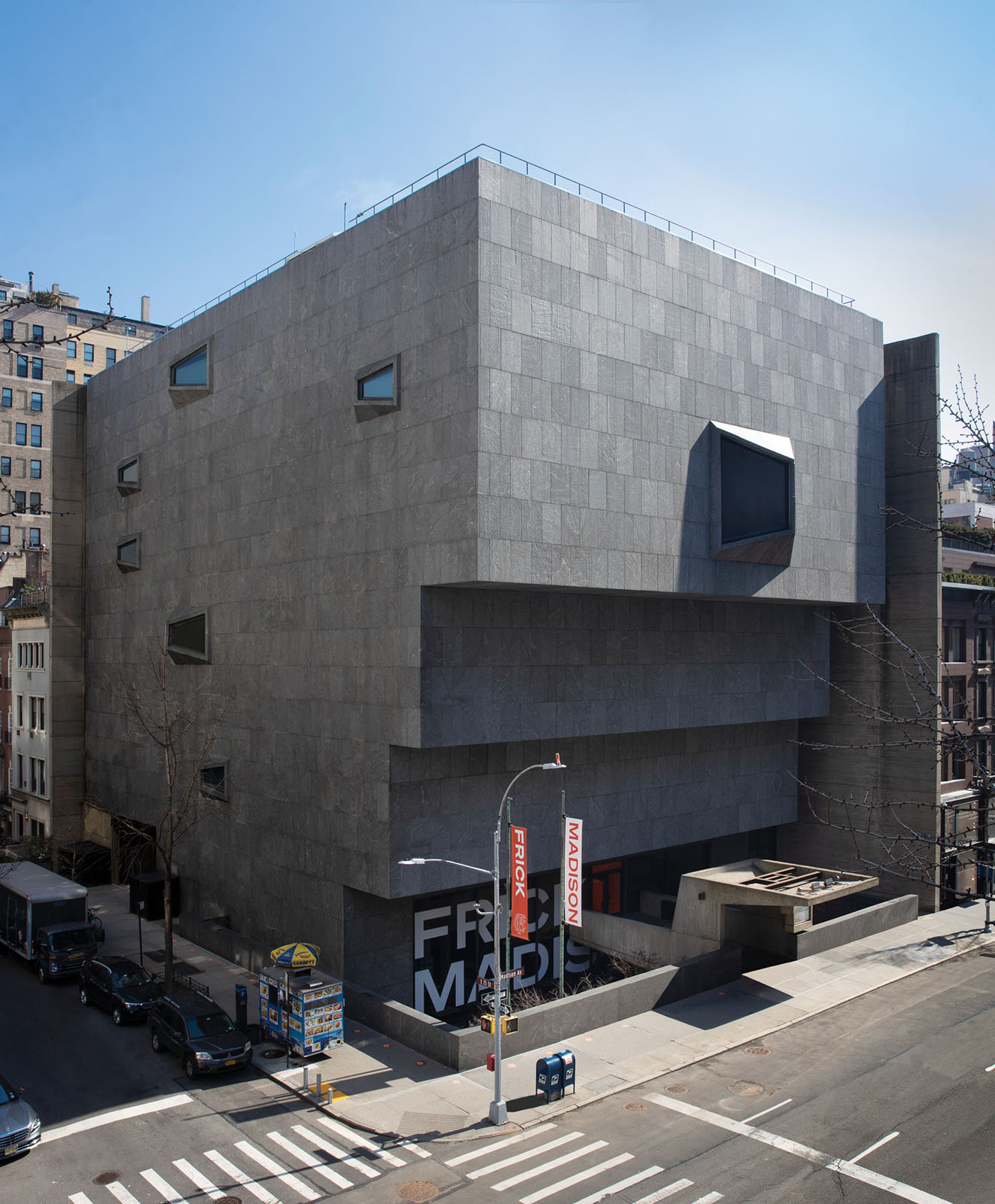 Exterior of the iconic Marcel Breuer building that houses the Frick Madison, the museum’s temporary home. Photo: Joseph Coscia Jr.
Simmons quotes John Henry Parker, the curator of the Ashmolean Museum, which had been established at Oxford in 1683. In 1871, Parker wrote, “I do not wish to exclude curiosities from [the museum]; they attract people, and when they are brought hither by curiosity, they may stop to learn something better; they may want to know something of the history of the curiosities they have come to see.” Collecting, conserving, exhibiting and educating (or entertaining) has been the backbone of the museum experience.
The Charleston Museum was later housed in a classical revival building, a style that became de rigueur for decades. In the late 20th century, museum buildings became works of art themselves.
The Solomon R. Guggenheim Museum hired Frank Lloyd Wright to design its Fifth Avenue building in New York which opened in 1959. In 1992, Gwathmey Siegel and Associates Architects added a tower to the museum. In 1997, it opened its futuristic structure by Frank Gehry in Bilbao, Spain.
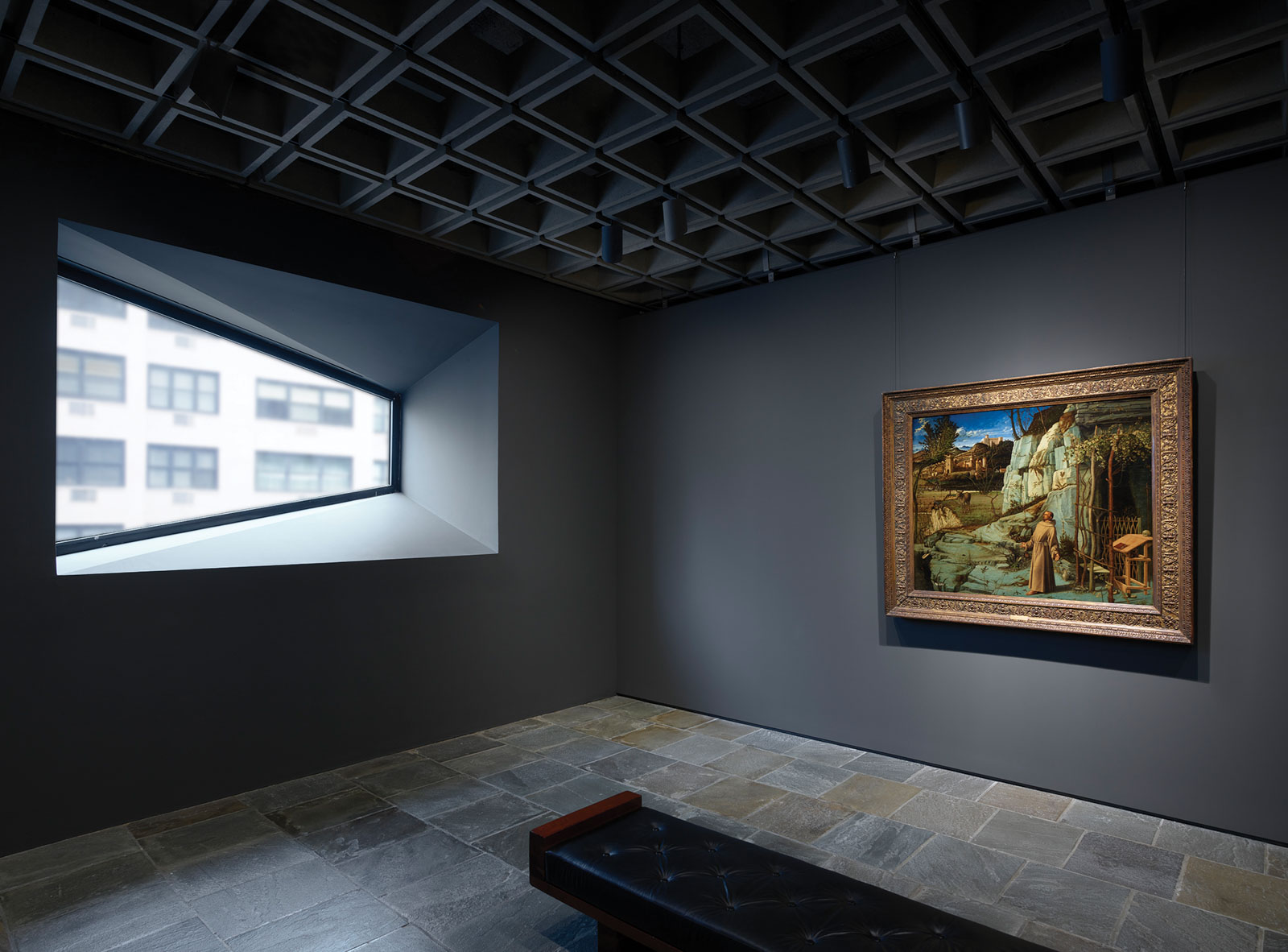 Bellini’s St. Francis in the Desert, one of the Frick’s most important and loved works, shown in a chapel-like space at Frick Madison. Photo: Joseph Coscia Jr.
In 1966, the architect Marcel Breuer completed the Whitney Museum of American Art on Madison Avenue in New York. At the time, the modernist inverted granite ziggurat was described as somber, heavy and brutal. Admiration of its light filled spaces grew over the years and it became a sought-after space to display art. When the Whitney outgrew the building and moved to lower Manhattan, the Metropolitan Museum of Art began showing its contemporary collection in what became known as the Met Breuer. In 2021, the Frick Collection moved into the New York City building now called Frick Madison.
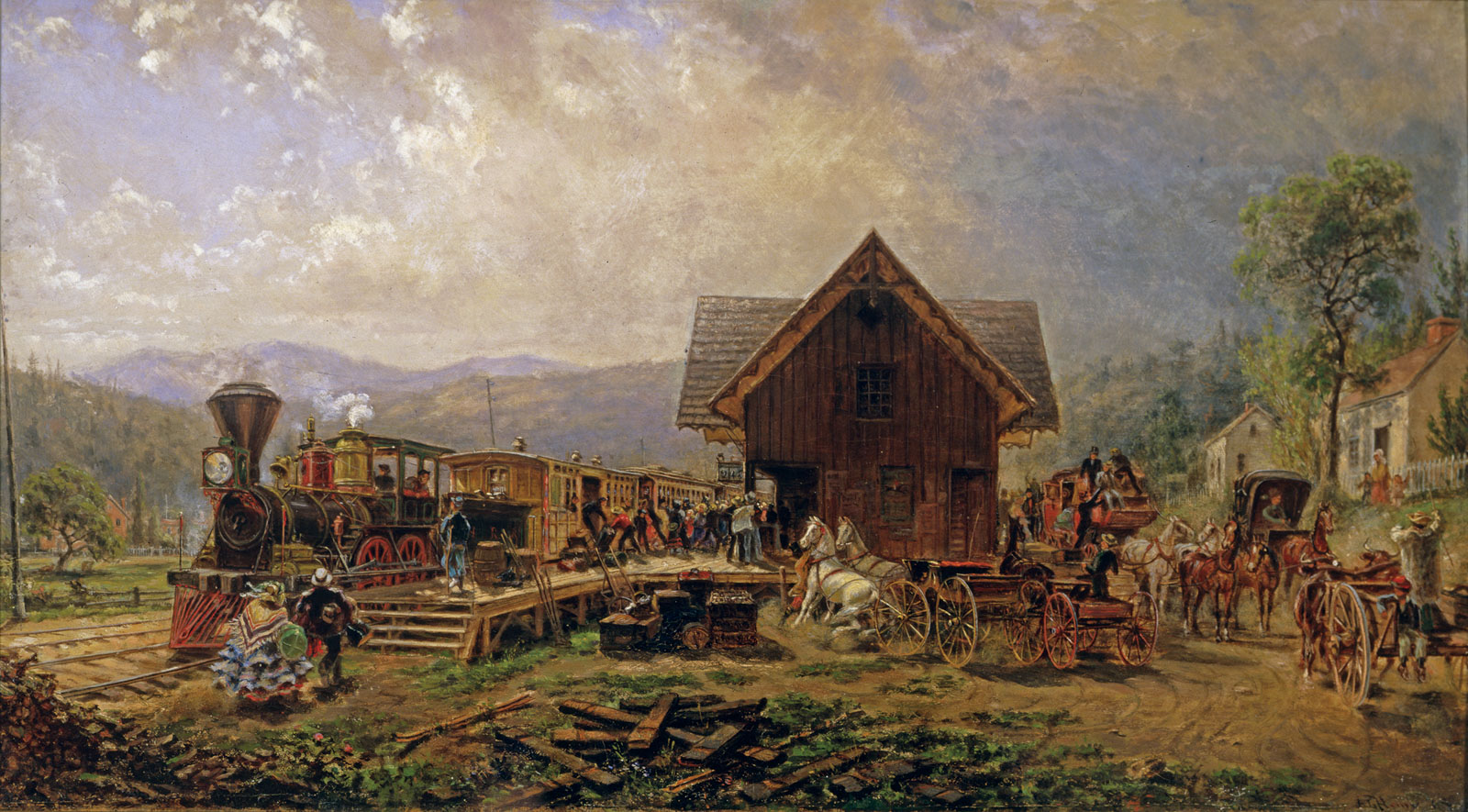 Edward Lamson Henry (1841-1919), 9:45 A.M. Accommodation, Stratford, Conn., 1864. Oil on wood panel, 11½ x 20 in. (P-102-88). The Charles Hosmer Morse Museum of American Art.
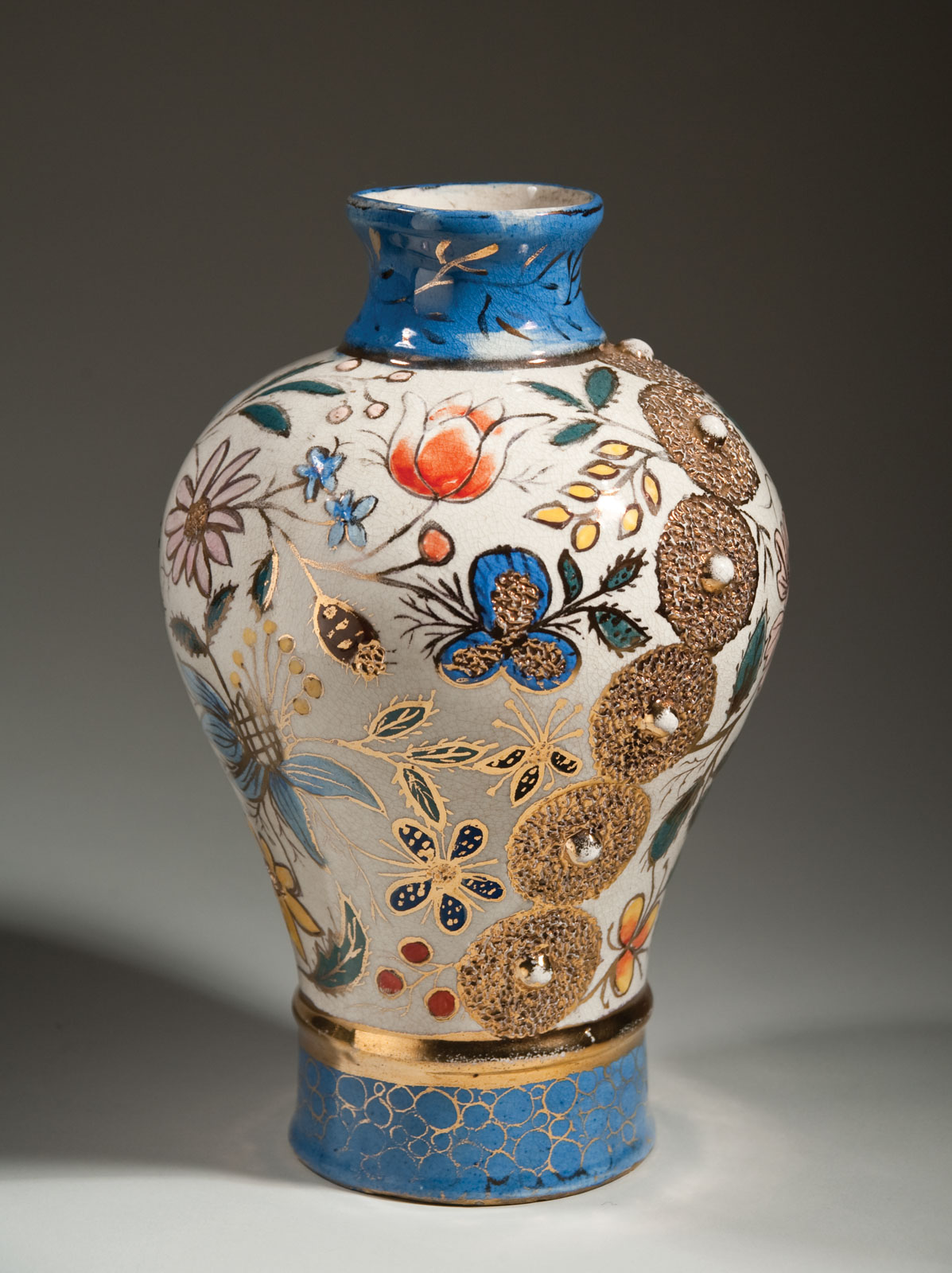 The Cincinnati Art Pottery Co., Cincinnati, Ohio (1879-91), Vase, 1887. Glazed white clay, gold paint; 10 in. Gift of Herbert O. and Susan C. Robinson (PO-012-88). The Charles Hosmer Morse Museum of American Art.
The collection’s home is the mansion of Henry Clay Frick on East 70th Street which became a museum after the death of his wife in 1931. It is undergoing a major expansion to accommodate a collection that has grown, conservation labs and facilities for a growing number of visitors.
Frick Madison offers the opportunity to see the collection literally in a new light, out of the museum’s elegant home setting and displayed in new juxtapositions, hung sparsely against neutral gray walls Museums display their collections and host travelling exhibitions of other art. They also promote art by younger and lesser-known artists in periodic juried exhibitions. Ironically, the Whitney Biennial, begun in 1932 by the museum’s founder Gertrude Vanderbilt Whitney, is one of the most prominent. More than 3,600 artists have participated in what was an annual exhibition that now occurs every two years. The next biennial will be in 2024.
Today there are more than 35,000 museums in the United States. The Institute of Museum and Library Services includes in the term “museum,” arboretums, botanical gardens, nature centers; historical societies, historic preservation organizations and history museums; science and technology centers; planetariums, children’s museums, art museums, general museums, natural history and natural science museums; and zoos, aquariums and wildlife conservation centers.
In the remainder of this special section, a selection of museums highlight an upcoming historic American art exhibitions that will be of particular interest to our readers.
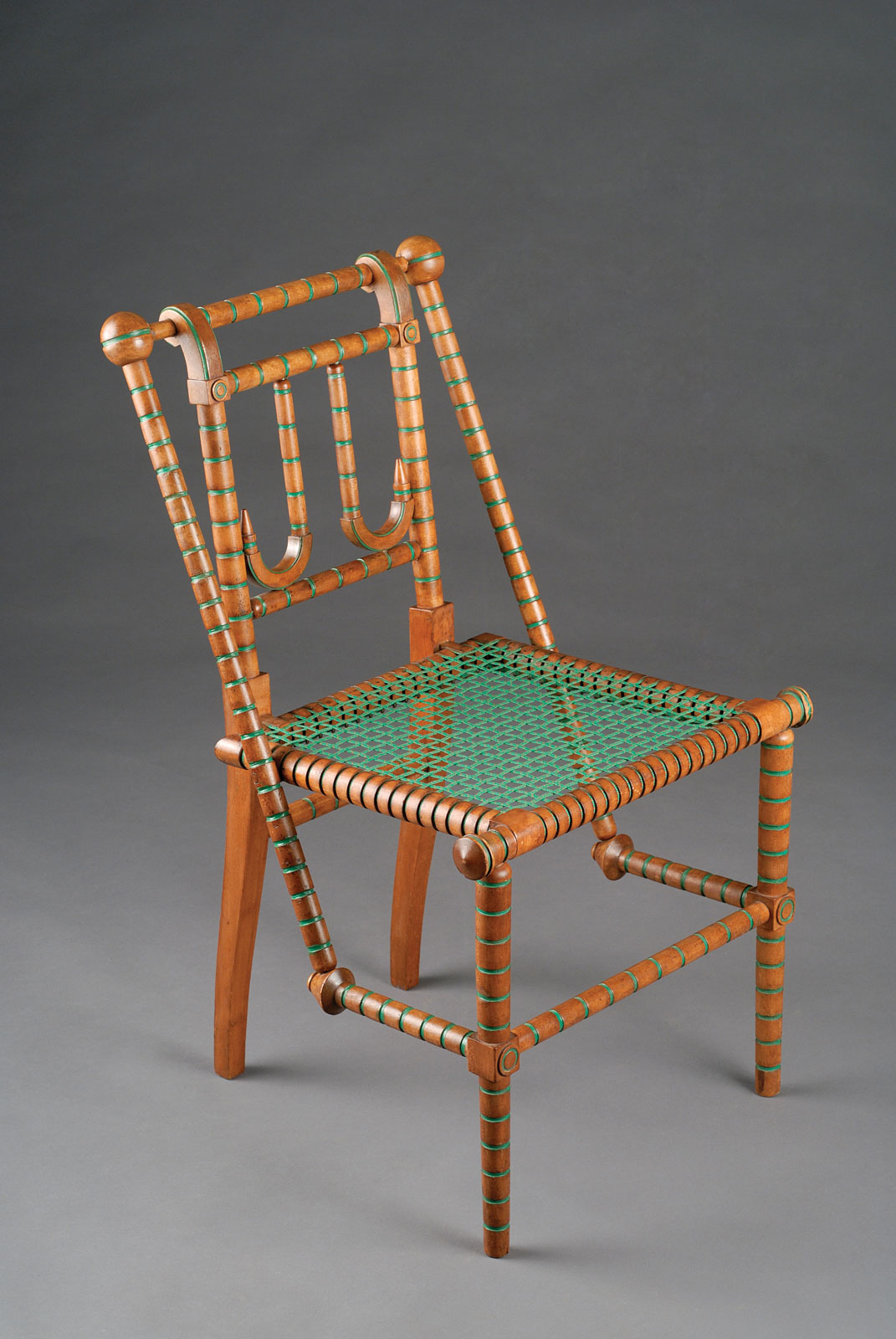 George J. Hunzinger (1835-1898), Side Chair with Wire Seat, ca. 1876. Polychromed maple, cotton-covered metal wire. Collection of the Thomas H. and Diane DeMell Jacobsen Ph.D. Foundation. L2022.48.12. Mint Museum Uptown.
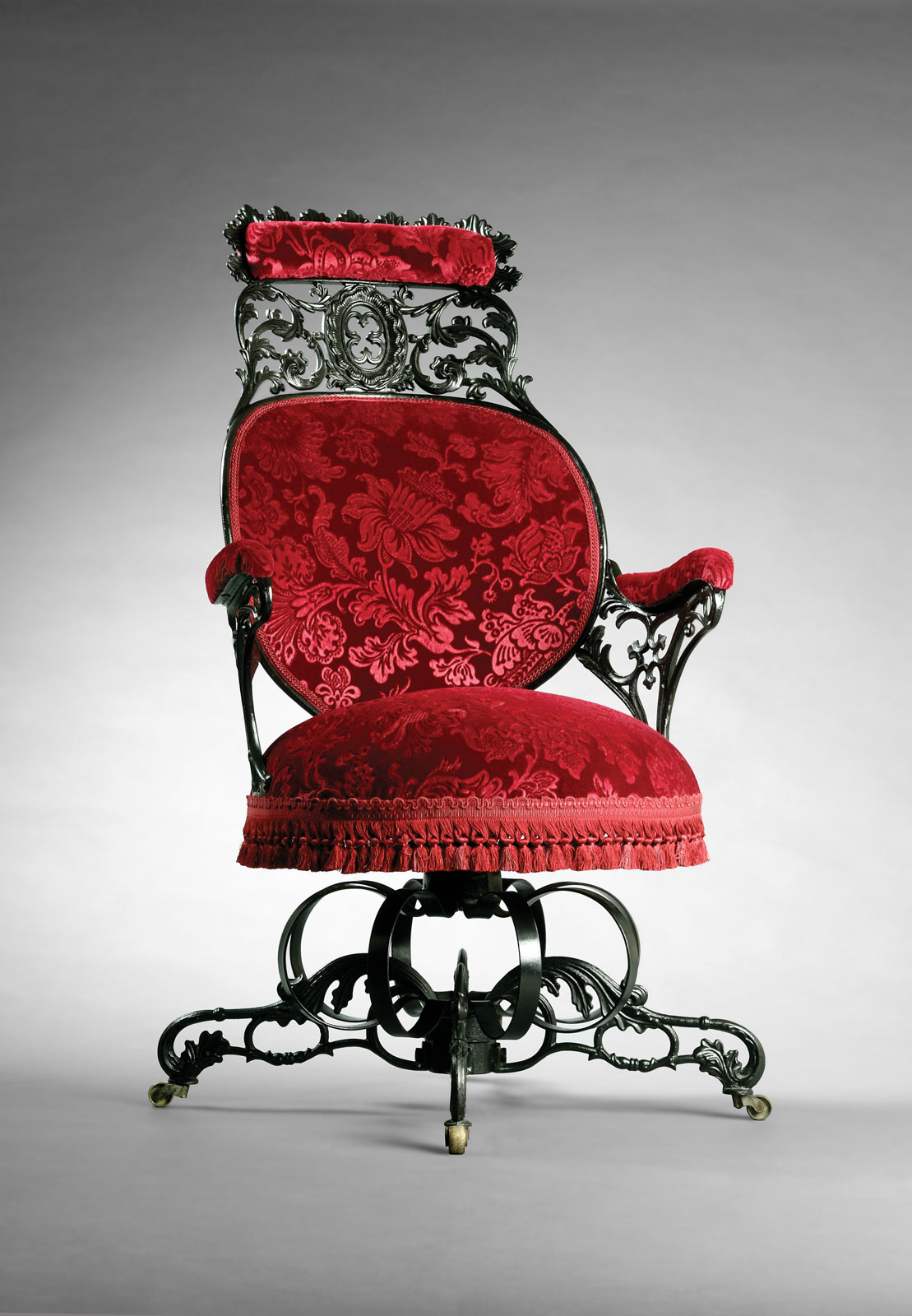 Thomas E. Warren (1808-?), American Chair Company (1829-58), Centripetal Spring Arm Chair, ca. 1850. Cast iron, steel, wood, sheet metal, reproduction gauffrage velvet upholstery, faux bois rosewood, metal casters. Collection of the Thomas H. and Diane DeMell Jacobsen Ph.D. Foundation. L2022.48.5. Mint Museum Uptown.
The Charles Hosmer Morse Museum of American Art in Winter Park, Florida, will open its 2023-2024 season on October 17 with Fascinating Clutter: American Taste during the Reign of Victoria, which explores the rich aesthetic landscape of Victorian America. In the 19th century, the young republic of the United States followed Great Britain’s imperial and industrial example and eagerly pursued the romantic trends sparked by her young queen. The reckonings of youth, industry, expansion and war kindled forms of visual expression in American culture—innocence, nostalgia, mourning, revivalism and more. As seen in this exhibition, far from its stilted and chaste stereotypes, the Victorian era featured a wide range of styles that emerged from a dynamic environment in which modes of personal and artistic expression were transformed on both sides of the Atlantic.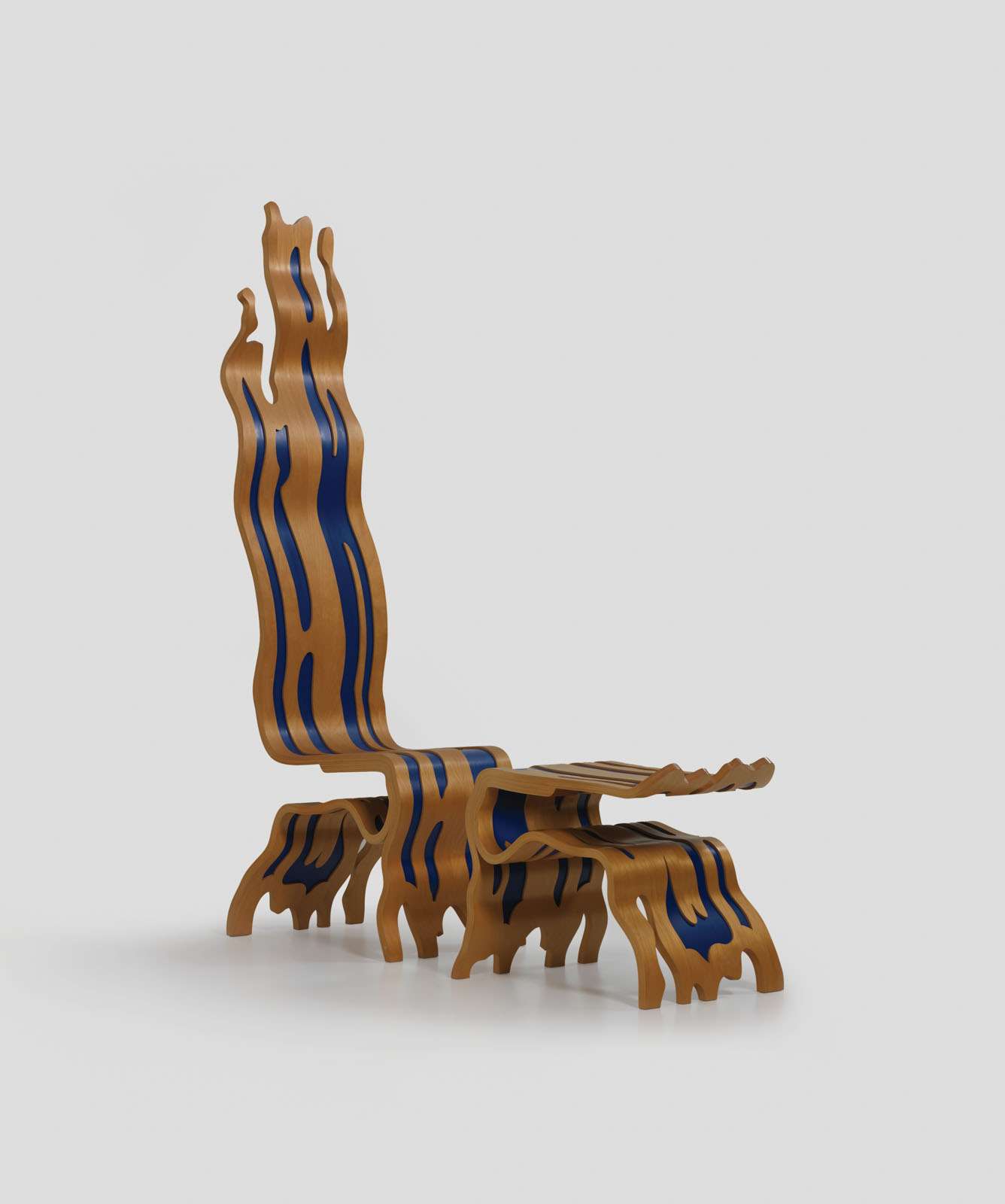 Roy Fox Lichtenstein (1923-1997), Graphicstudio, University of South Florida (1968-), Beeken Parsons, Brushstroke Chair and Ottoman, 1986-88. Laminated white birch veneer, paint, clear varnish. Collection of the Thomas H. and Diane DeMell Jacobsen Ph.D. Foundation. L2023.63.4a-b © Estate of Roy Lichtenstein. Mint Museum Uptown.
Despite their everyday use, few objects are taken for granted quite as much as the humble chair. The Art of Seating: 200 Years of American Design opening at the Mint Museum Uptown in Charlotte, North Carolina, on September 16 and on display through February 25, 2024, takes these ubiquitous objects and analyzes them as fascinating sculptural objects with rich stories to tell. The exhibition, which has toured more than two dozen locations, includes more than 50 selections from the rich holdings of the Thomas H. and Diane DeMell Jacobsen Ph.D. Foundation. Featuring many of the most iconic designs and designers from the past two centuries, The Art of Seating encourages visitors to reconsider chairs as not just functional objects, but as works of art that tell stories of United States history. These stories range from the contributions of immigrants to changing tastes in style and aesthetics to new innovations in technology and materials.
Featured Museums
The Charles Hosmer Morse Museum 445 N. Park Avenue, Winter Park, FL 32789 t: (407) 645-5311 www.morsemuseum.org
The Charleston Museum 360 Meeting Street, Charleston, SC 29403 t: (843) 722-2996 www.charlestonmuseum.org
Frick Madison 945 Madison Avenue, New York, NY 10021 t: (212) 288-0700 www.frick.org
Mint Museum Uptown 500 S. Tryon Street, Charlotte, NC 28202 t: (704) 337-2000
Solomon R. Guggenheim Museum 1071 Fifth Avenue, New York, NY 10128 t: (212) 423-3500 www.guggenheim.org
Powered by Froala Editor