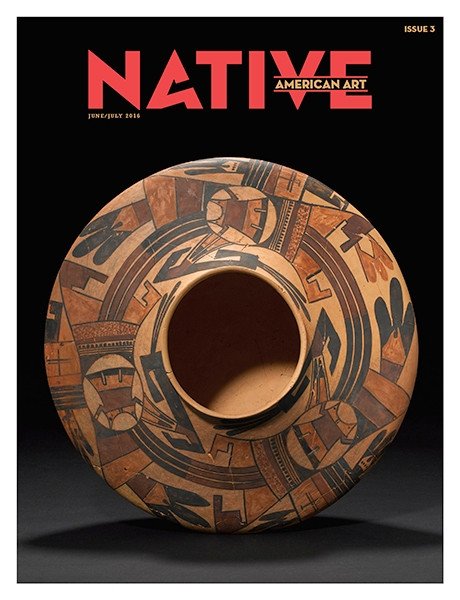
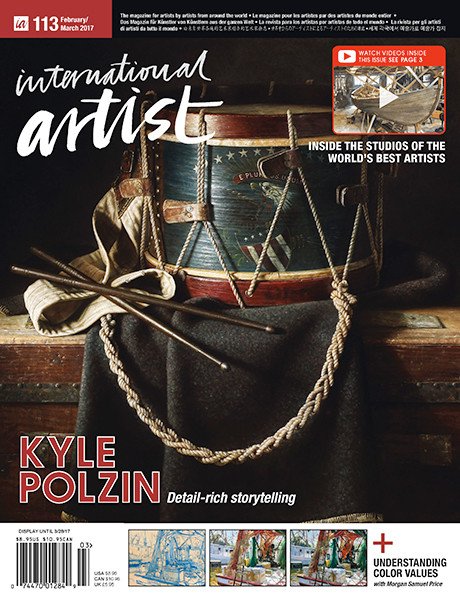
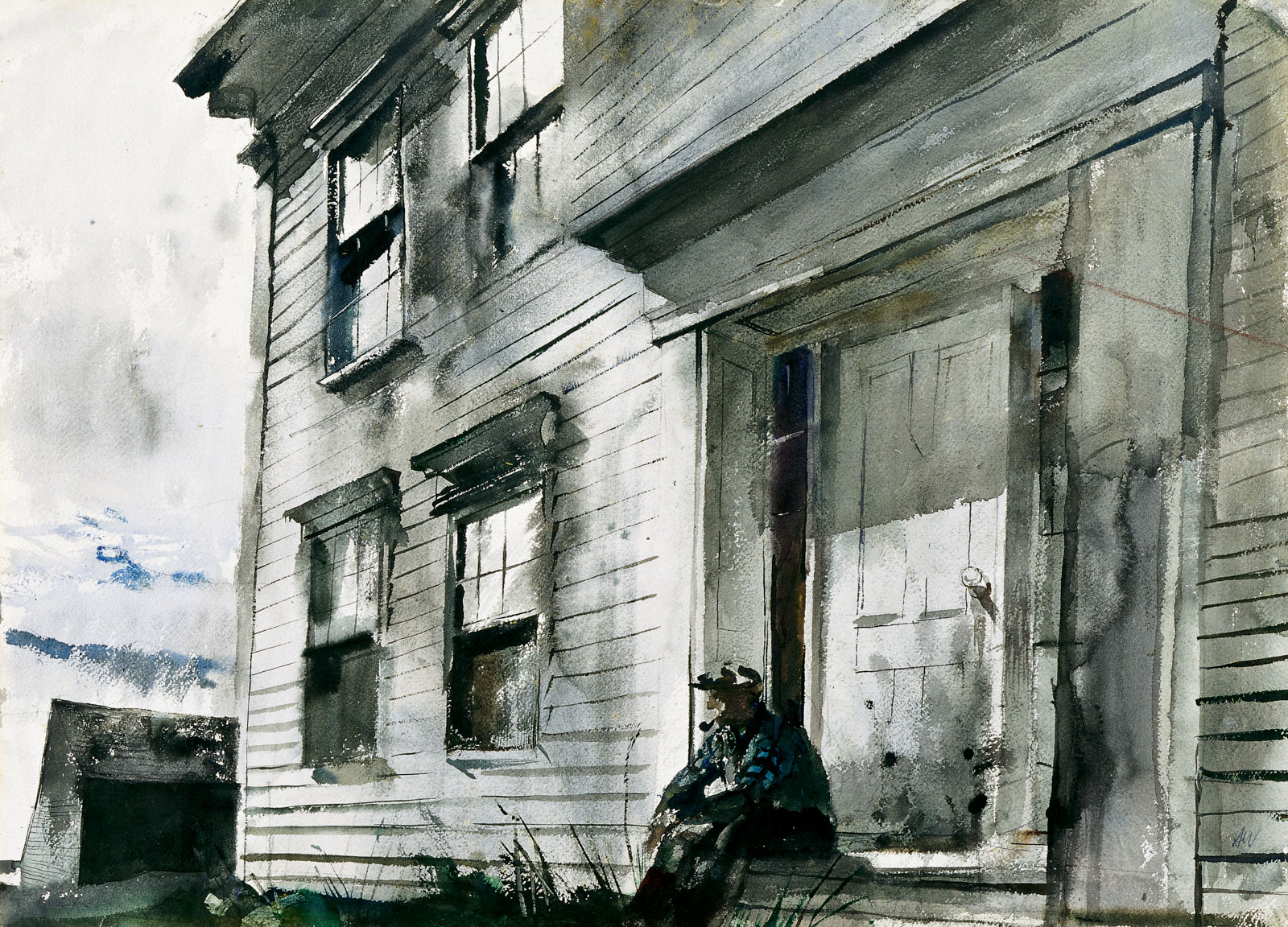
 Andrew Wyeth (1917-2009), Alvaro on Front Doorstep, 1942. Watercolor on paper. Collection of the Marunuma Art Park. © 2023 Wyeth Foundation for American Art/Artists Rights Society (ARS).
The James family had summered in Cushing since 1931, and in 1946 they moved there. Betsy helped Christina around the house, braided her hair and listened to her stories about her ancestors in Cushing.
Christina was paralyzed from the waist down and crawled to get where she wanted to go. Christina’s World, which Andrew painted in 1948, has become an icon of American art.
In her book Andrew Wyeth, art historian Wanda Corn writes, “He is drawn to people who live on the fringes of modern life, whose circumstances of life have been limited, or who, like himself, may not have traveled far in their lifetime. Without the knowledge that comes from books or wider acquaintances, these people impress Wyeth with their rootedness, individuality and pragmatic wisdom. He also likes their country humor, unpretentious pride, and strangeness. And he likes their toughness in being able to survive.”
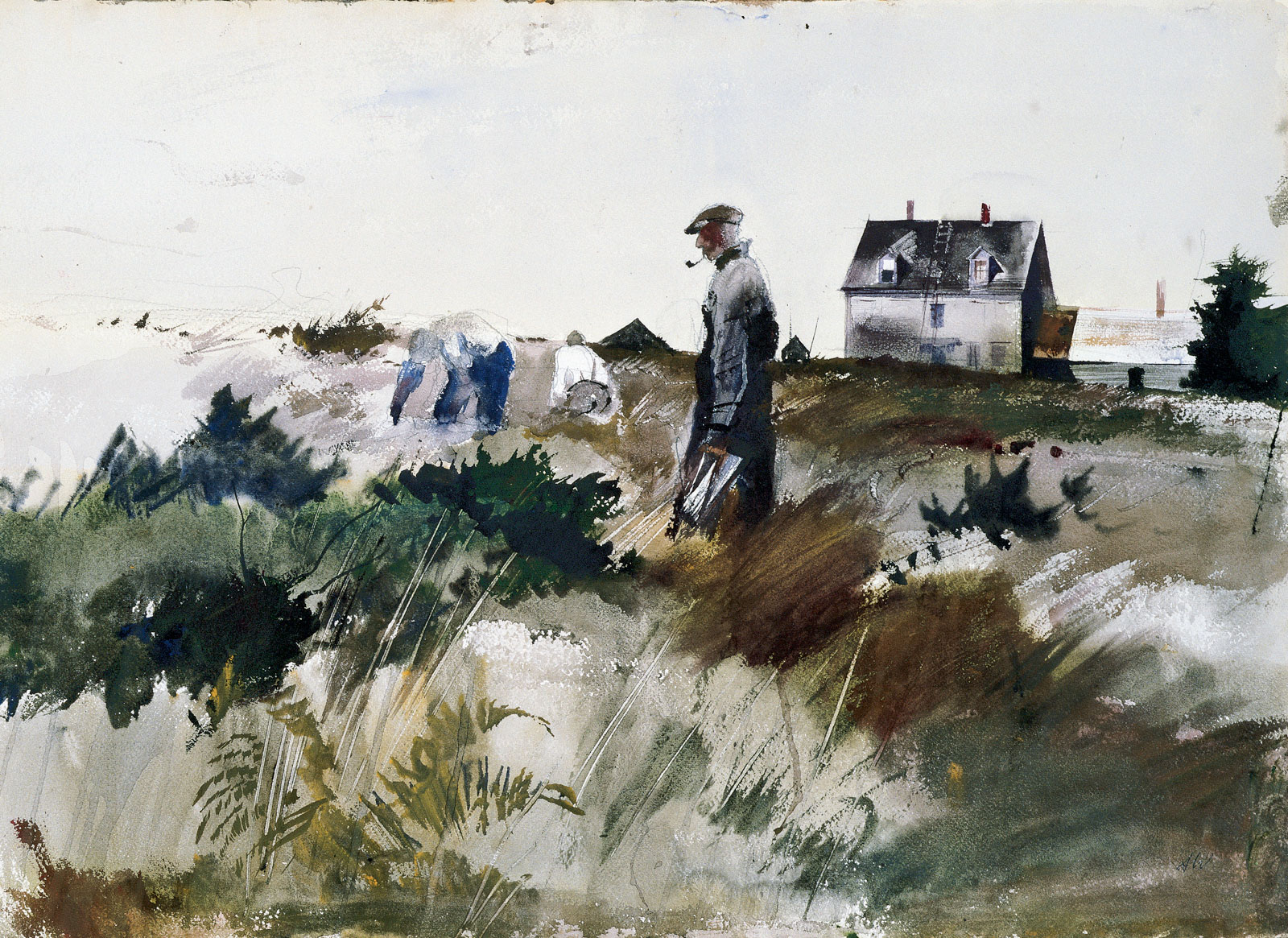 Andrew Wyeth (1917-2009), Alvaro and Others, Raking Blueberries, 1942, watercolor on paper. Collection of the Marunuma Art Park. © 2023 Wyeth Foundation for American Art/Artists Rights Society (ARS).
Christina’s world was also Alvaro’s world. He was a lobsterman and loved his life at sea. In 1922, however, his father became disabled and he returned to help at the family farm. He planted blueberries in the field as well as potatoes, peas and turnips in the garden, and often sold his produce to neighbors. After their father’s death in 1935, he and Christina lived alone in their house, welcoming the rest of their family on Christmas Eve. As Christina’s disability became more severe, Alvaro spent more time assisting her.
His few moments of relaxation were often spent in the front doorway smoking his pipe. Alvaro on Front Doorstep, 1942, depicts the fisherman-turned-farmer gazing down the hill and out to Maple Juice Cove and the sea.
The painting is part of the exhibition, Alvaro’s World: Andrew Wyeth and the Olson House, on view at the Farnsworth Art Museum in Rockland, Maine, through October 29.
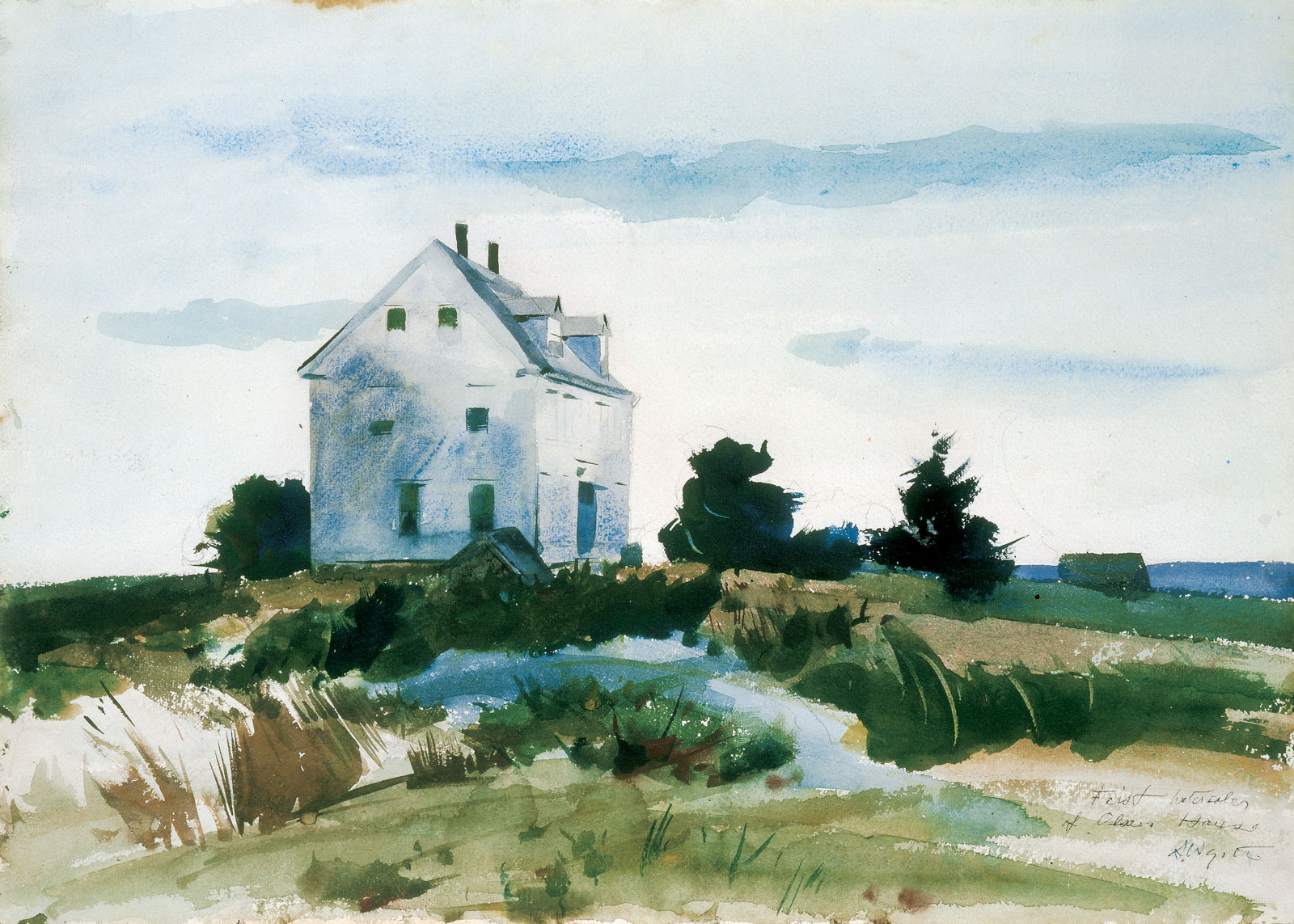 Andrew Wyeth (1917-2009), First Watercolor of Olson House, 1939. Watercolor on paper. Collection of the Marunuma Art Park. © 2023 Wyeth Foundation for American Art/Artists Rights Society (ARS).
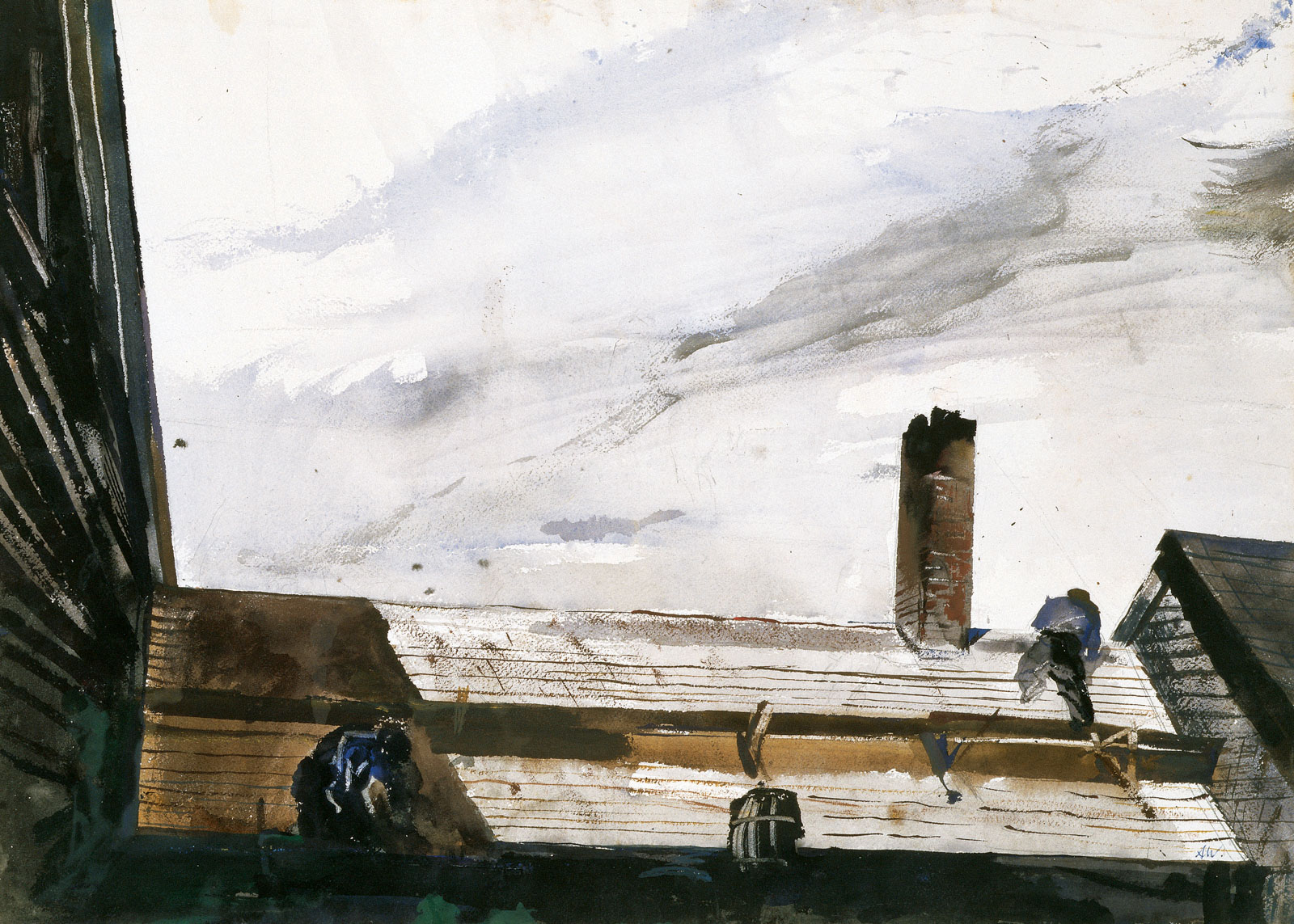 Andrew Wyeth (1917-2009), Reshingling the Roof, 1952, watercolor on paper. Collection of the Marunuma Art Park. © 2023 Wyeth Foundation for American Art/Artists Rights Society (ARS).
The museum notes, “This exhibition examines the perspective of Alvaro Olson, an unsung hero who managed the 1870s farmhouse and cared for his sister, through Wyeth’s watercolors. In the works on view, Wyeth captures Alvaro’s commitment to life on this remote peninsula, during a time when the Olsons were faced with rural poverty, environmental challenges, and regular upkeep of the farm.” The exhibition is drawn primarily from the Marunuma Art Park Collection in Asaka, Japan. In 1997, Katsushige Suzaki purchased a collection of Wyeth’s Olson House paintings for his Marunuma collection.
Another painting in the exhibition is Alvaro and Others, Raking Blueberries, 1942. I moved to Maine in 1968 to work at Bowdoin College as a staff writer. One of my first weekend day trips was to the Olson House with several friends. We sat out in the field and ate blueberries from Alvaro’s bushes and enjoyed the view of the cove. Christina had died not long before and someone, perhaps Betsy Wyeth, had kept her red geranium blooming in the kitchen window.
The association with Wyeth’s Christina’s World and other paintings was the initial draw to the site, but the house itself is what captured me. It too was “unpretentious” and demonstrated its “toughness in being able to survive.” The house’s elegant proportions and simple details are remarkable and worthy of recognition even without the Wyeth connection. At the age of 10, Betsy described her first sighting of the Olson House as, “looming up like a weathered ship stranded on a hilltop.”
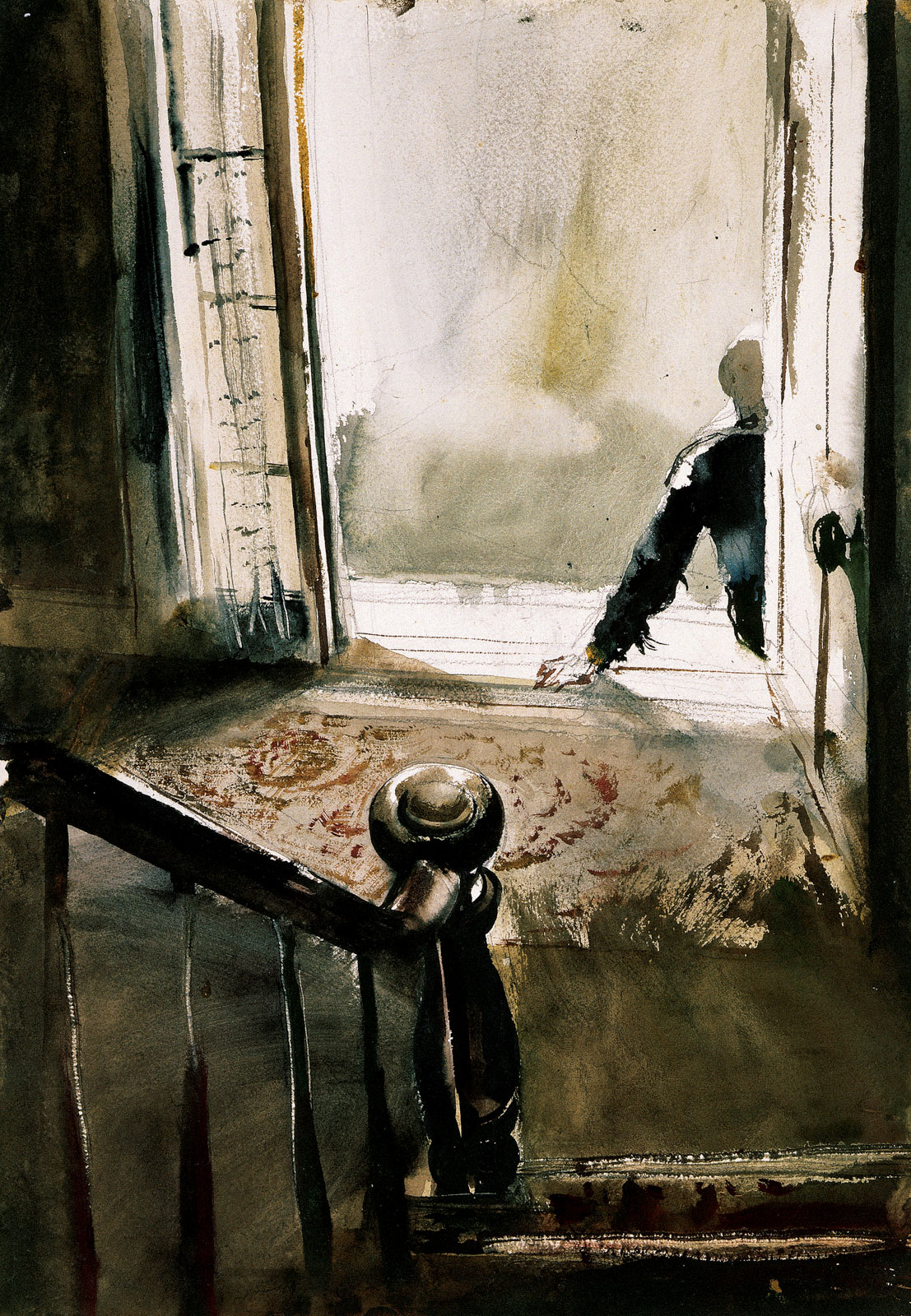 Andrew Wyeth (1917-2009), Stairway and Front Door, 1948, watercolor on paper. Collection of the Marunuma Art Park. © 2023 Wyeth Foundation for American Art/Artists Rights Society (ARS).
In Christina’s World and other of Wyeth’s paintings of the house, as well as in 1950s photographs of Andrew and Alvaro, there is a ladder on the roof. Alvaro and Christina’s father was a sailor from Sweden where there was the tradition of keeping a ladder on the roof to allow the chimney sweep to clean the chimneys regularly.
Buffeted by the ocean winds, the Olson House needs constant repair which Wyeth recorded in Reshingling the Roof, 1952.
Powered by Froala Editor