For the last couple of years, the Rollins Museum of Art, located on the campus of Rollins College, has amassed a significant collection of American art. With a combination of gifts and long-term loans, the collection has grown to include late 18th- to early 20th-century works that will be on display as a comprehensive exhibition titled American Visions.
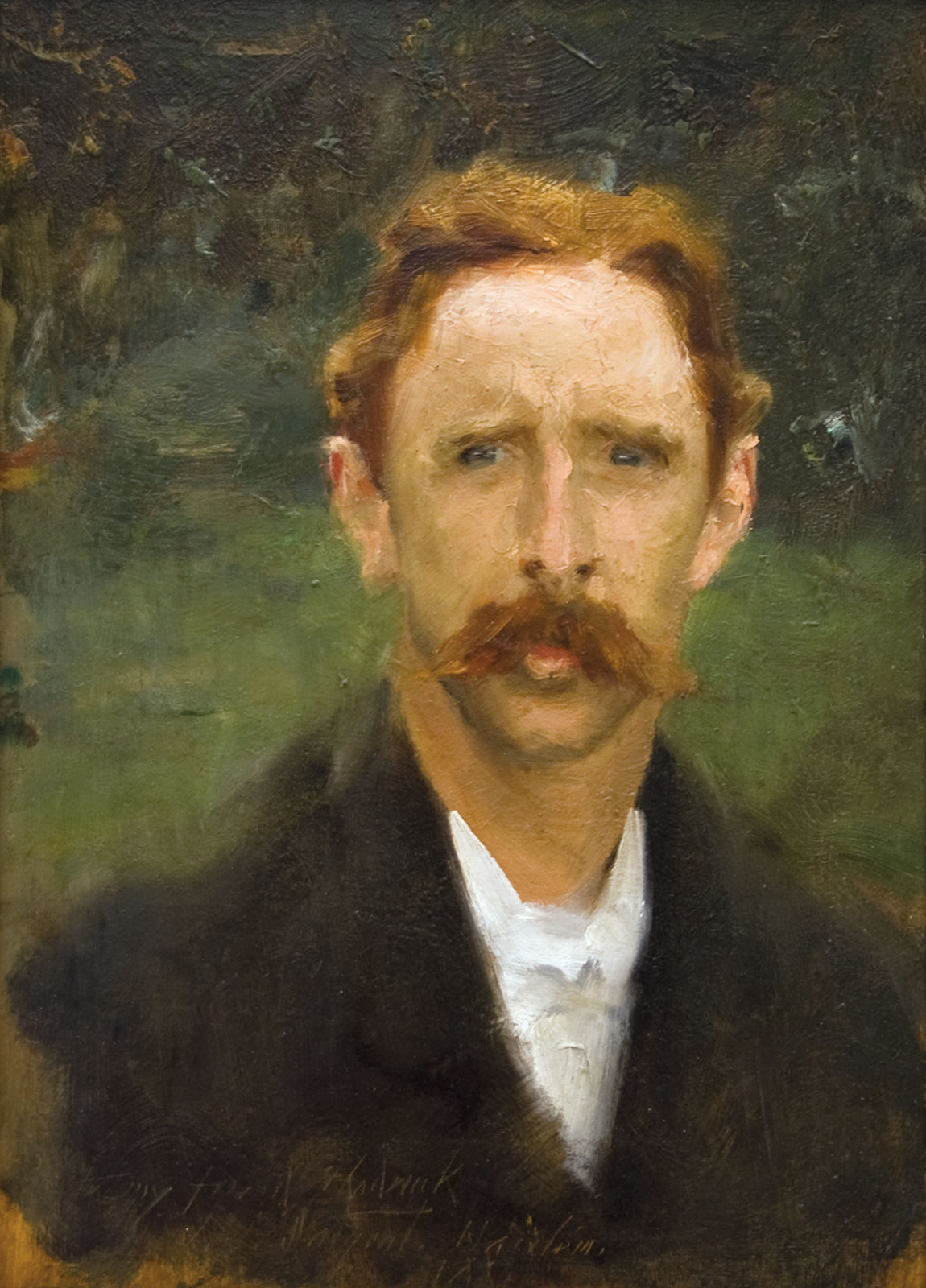
John Singer Sargent (1856-1925), Francis Brooks Chadwick, 1880. Oil on panel. Intended gift from the Martin Andersen – Gracia Andersen Foundation, Inc.
“These extraordinary gifts came as we were completing an in-depth research and reevaluation of the American collection made possible by a multi-year grant from the Henri Luce Foundation, and we realized they were both complementary and additive to the existing collection, bolstering areas of strength while also filling important gaps,” says Ena Heller, the Bruce A. Beal director of the RMA. “They deserved to be fully researched, exhibited and published—hence this exhibition and its accompanying catalog.”
Heller also shares that for the overall RMA American collection, the newly added American paintings featured in this exhibition are transformative. Some are by painters previously not represented in the collection—among them, major artists like Thomas Cole and John Singer Sargent as well as George Inness, George Luks and Richard Blakelock.
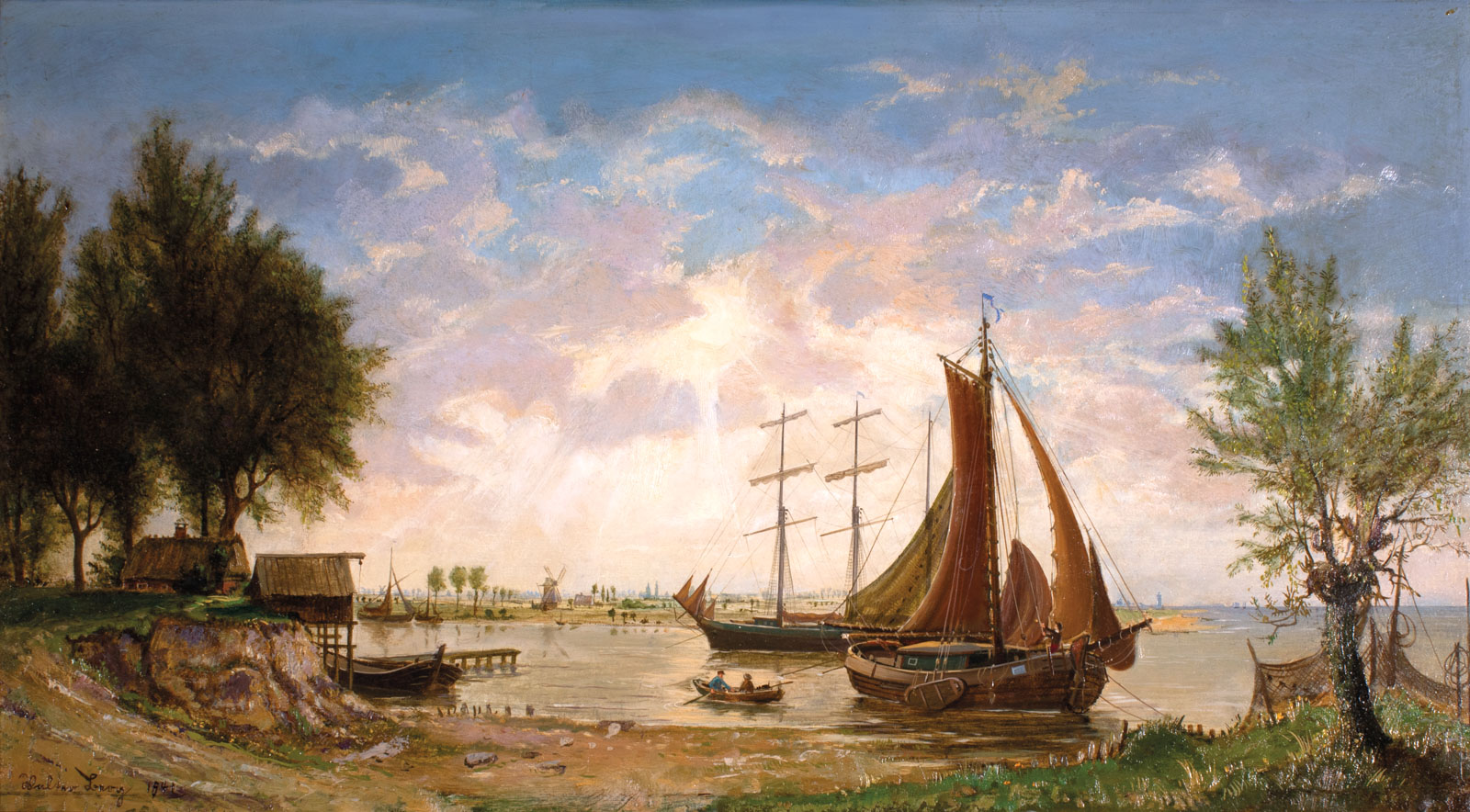
Elizabeth Emmet LeRoy (1794 – 1878), Boats on the Hudson, 1841. Oil on canvas. Intended gift from the Gary R. Libby Charitable Trust Collection.
An important highlight is Francis Brooks Chadwick, by famed portraitist John Singer Sargent (1856-1925). “This portrait depicts a friend and fellow artist with whom Sargent traveled to the Netherlands in 1880,” reads the exhibition catalog. “They went to Haarlem, site of the Frans Hals Museum, to copy works by the Golden Age portraitist, a favorite of Carolus-Duran and his students. Hals had been neglected by previous generations due to his loose, painterly brushwork, which was considered to give his works an undesirable, ‘unfinished’ quality. It was just this looseness which attracted the newer generation…In addition to its painterly quality and the frank, head-on depiction, this portrait demonstrates other attributes which would become hallmarks of Sargent’s practice as a painter.”
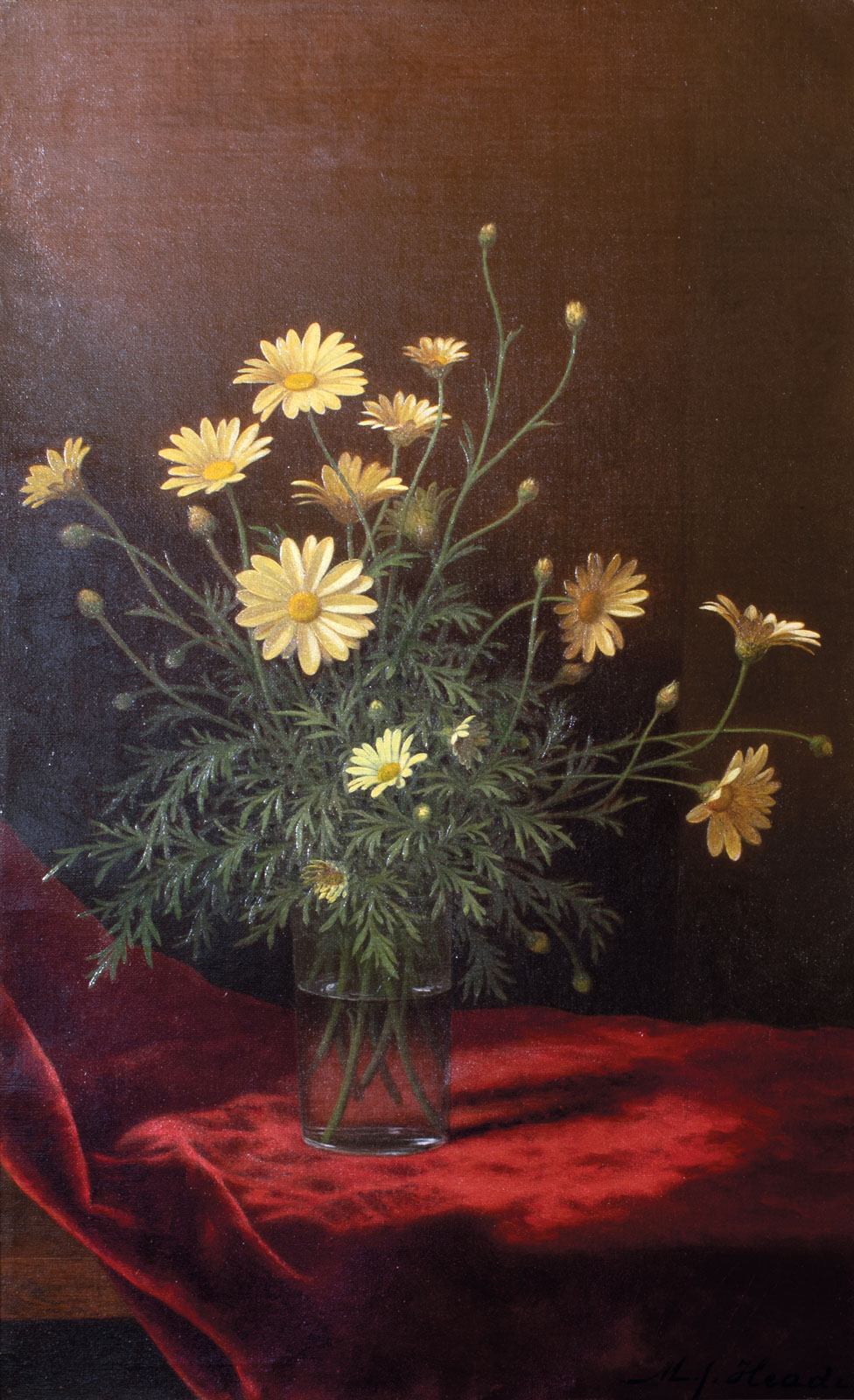
Martin Heade (1819–1904), Golden Marguerites, ca. 1883-89. Oil on canvas. Anonymous Gift. 2023.4.
Other artists in the exhibition collection are set to “strengthen periods and genres that were comparatively less represented,” says Heller. This includes still life and genre scenes and works by women. One such example is Boats on the Hudson, a stunningly lit scene of water, boats and sky, “with a crisp naturalism” by the talented Elizabeth Emmet LeRoy (1794-1878). “A number of boats, both human- and sail-powered, dot the area, which also includes a small pier and boathouse,” say museum reps. “In the distance, a windmill suggests something of the agricultural nature of the area. The painting shows an area that, by its 1841 date, would have been leaving behind such pre-industrial fixtures as windmills and sailboats in favor of steam-powered factories and shipping, and soon the railroad. LeRoy, who moved to the Hudson Valley just before the Erie Canal completely remade the area, would have witnessed all of these changes.”
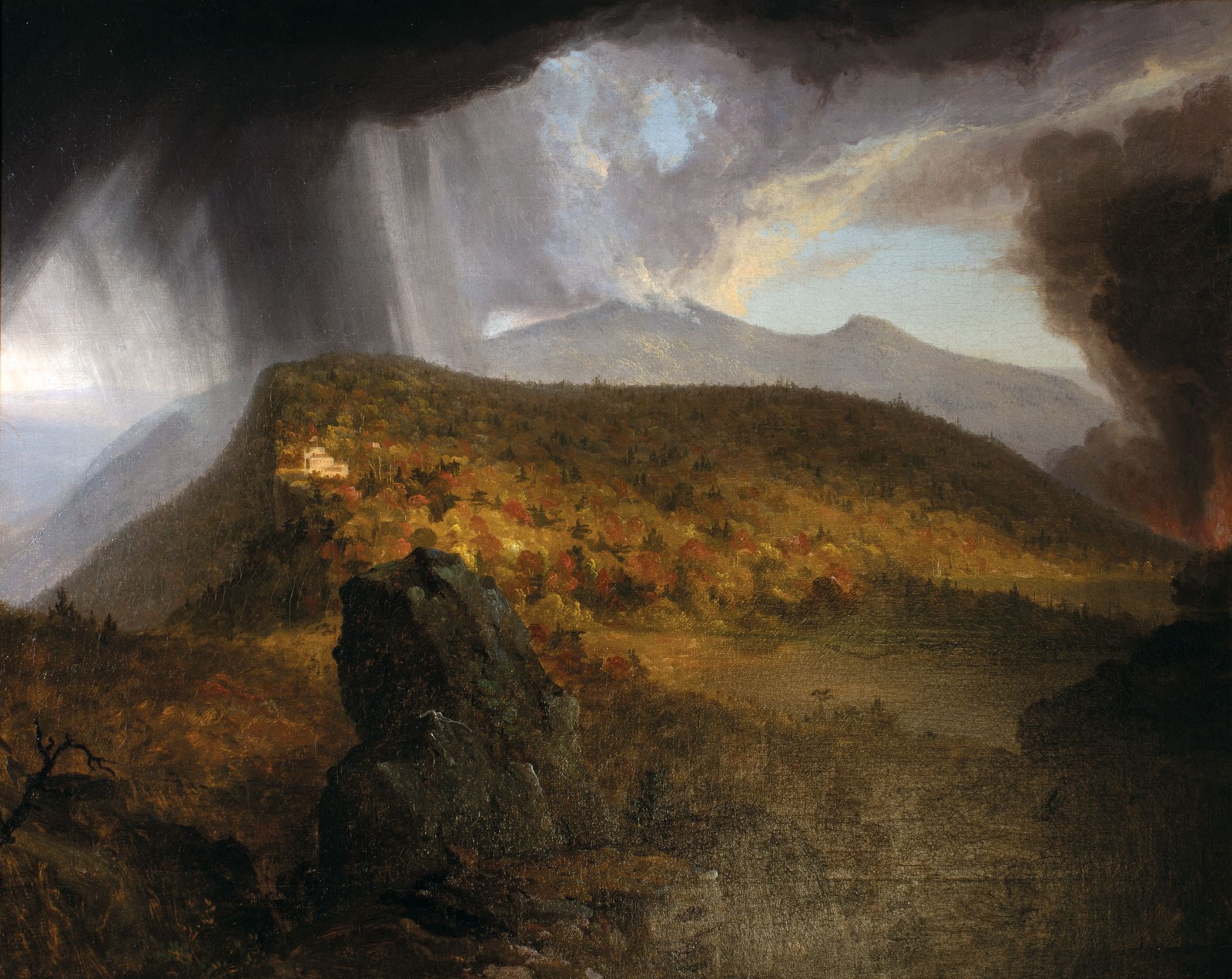
Thomas Cole (1801-1848), Catskill Mountain House, The Four Elements, 1843-44. Oil on canvas. Anonymous Gift. 2023.6.
Attendees of the American Visions exhibition, opening September 9, will be witness to 37 stunning illustrations of the “beauty and diversity of American art during the period featured,” Heller remarks. “It was a time when different influences came together in our young country, and several styles were defined, experimented with and refined. The artists included in the exhibition belonged to different generations and embraced a variety of genres—ultimately, though, they all illustrate the joy of painting, the beauty of color and texture, and of capturing fleeting moments.”
Powered by Froala Editor