In his collection of essays, The Gentle Art of Making Enemies, James Abbott McNeil Whistler (1834-1903), wrote, “Art should be independent of all clap-trap—should stand alone, and appeal to the artistic sense of eye or ear, without confounding this with emotions entirely foreign to it, as devotion, pity, love, patriotism, and the like. All these have no kind of concern with it; and that is why I insist on calling my works ‘arrangements’ and ‘harmonies.’
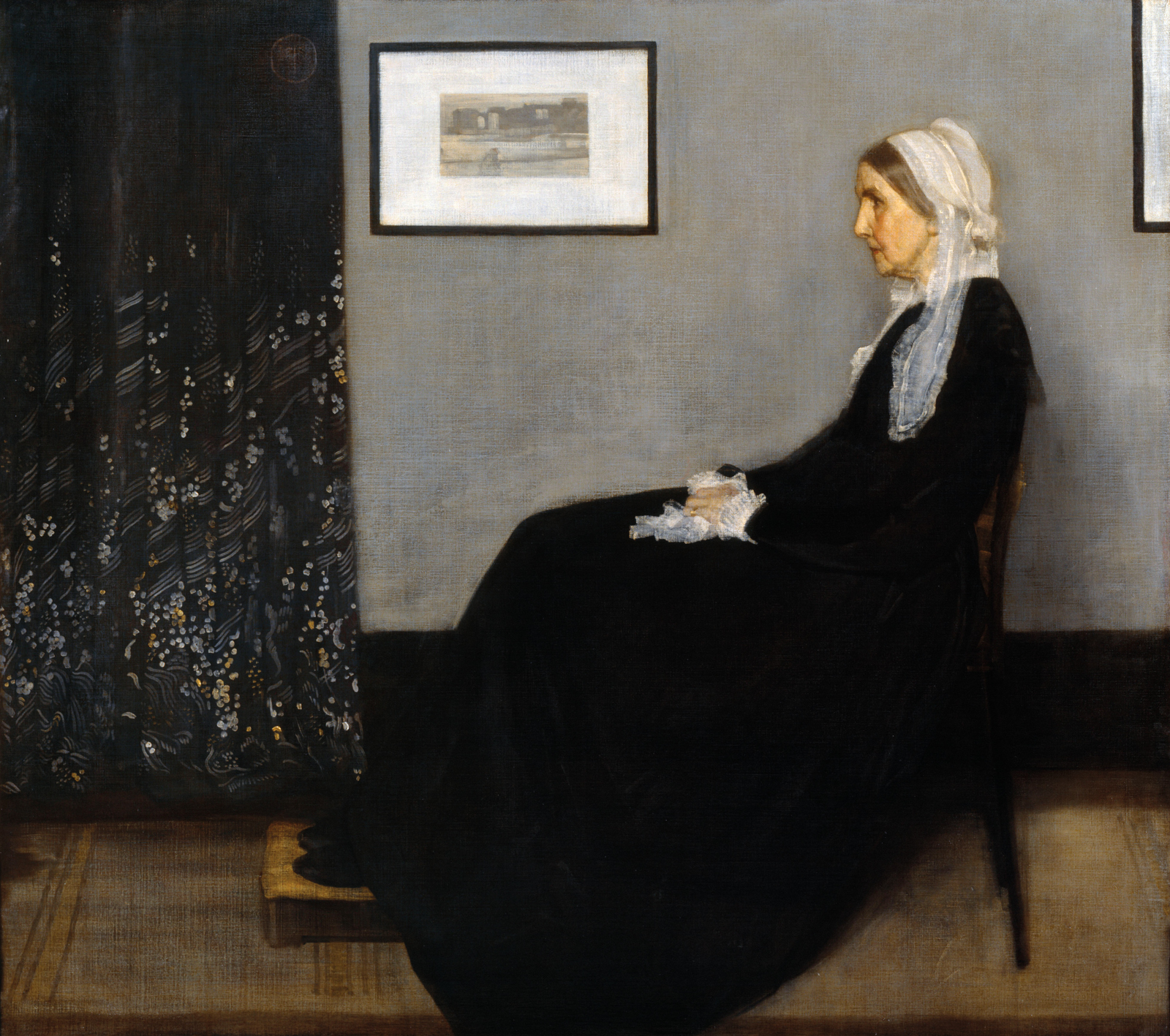
James Abbott McNeill Whistler (1834-1903), Arrangement in Grey and Black: Portrait of the Artist’s Mother, 1871. Oil on canvas, 5613/16 x 643/16 in. RMN-Grand Palais Art Resource NY.
“Take the picture of my mother, exhibited at the Royal Academy as an ‘Arrangement in Grey and Black.’ Now that is what it is. To me it is interesting as a picture of my mother; but what can or ought the public to care about the identity of the portrait?” The painting is now universally referred to as Whistler’s Mother.
When Arrangement in Gray and Black was exhibited at London’s Royal Academy of Art in 1872, critics and the public were outraged that a portrait of one’s mother could be reduced to a mere “arrangement,” its formal geometric composition running against the tradition of narrative paintings. In a 2015 essay in The New Yorker, Peter Schjeldahl explained the painting’s place in Whistler’s oeuvre: “The painting represents the peak of Whistler’s radical method of modulating tones of single colors. The paint looks soft, almost fuzzy—as if it were exhaled onto the surface.”
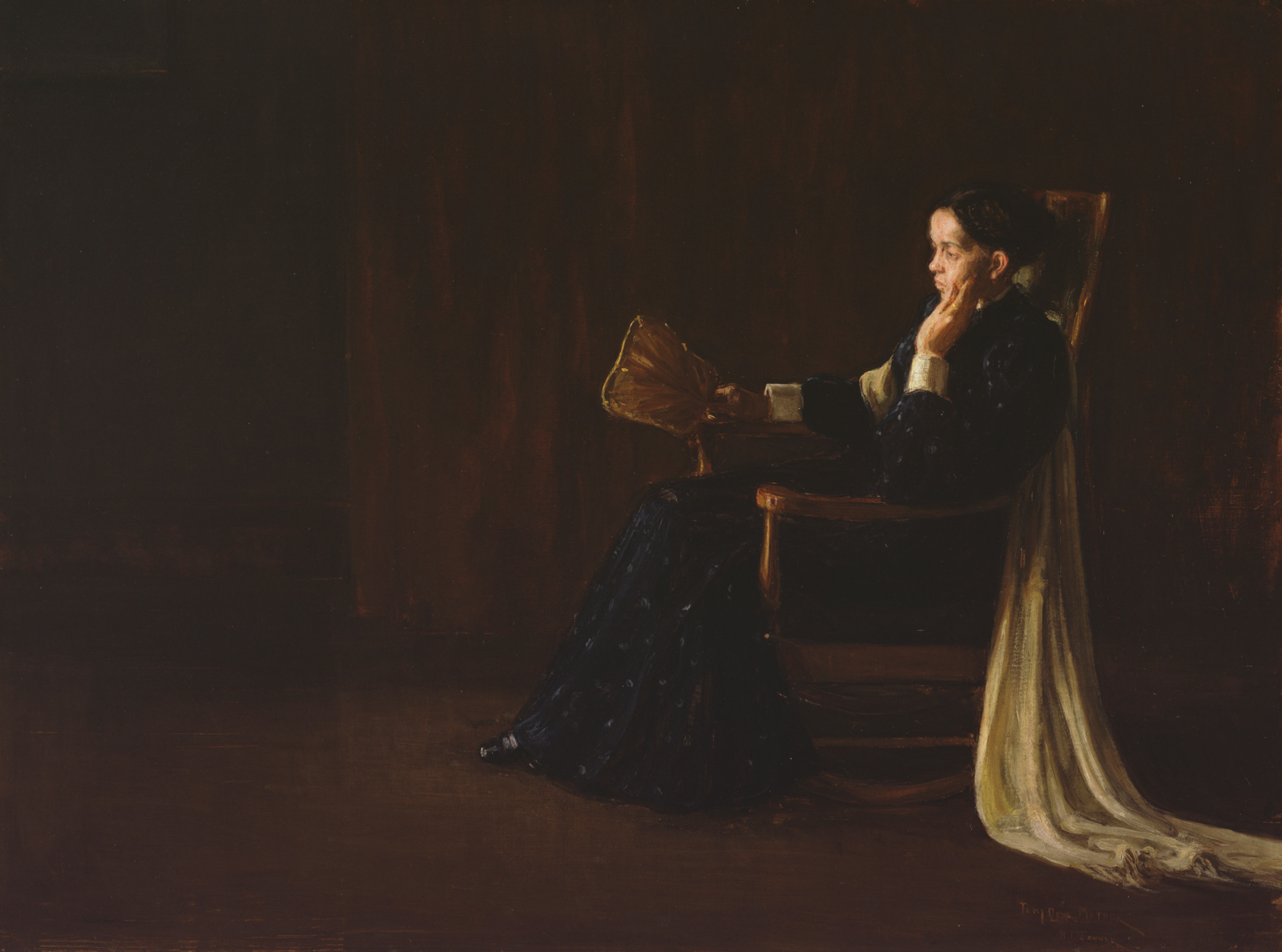
Henry Ossawa Tanner (1859-1937), Portrait of the Artist’s Mother, 1897. Oil on canvas, 29¼ x 39½ in., framed: 35¼ x 453/8 x 2½ in. Philadelphia Museum of Art: Partial gift of Dr. Rae Alexander-Minter and purchased with the W.P. Wilstach Fund, the George W. Elkins Fund, the Edward and Althea Budd Fund, and with funds contributed by The Dietrich Foundation, 1993.
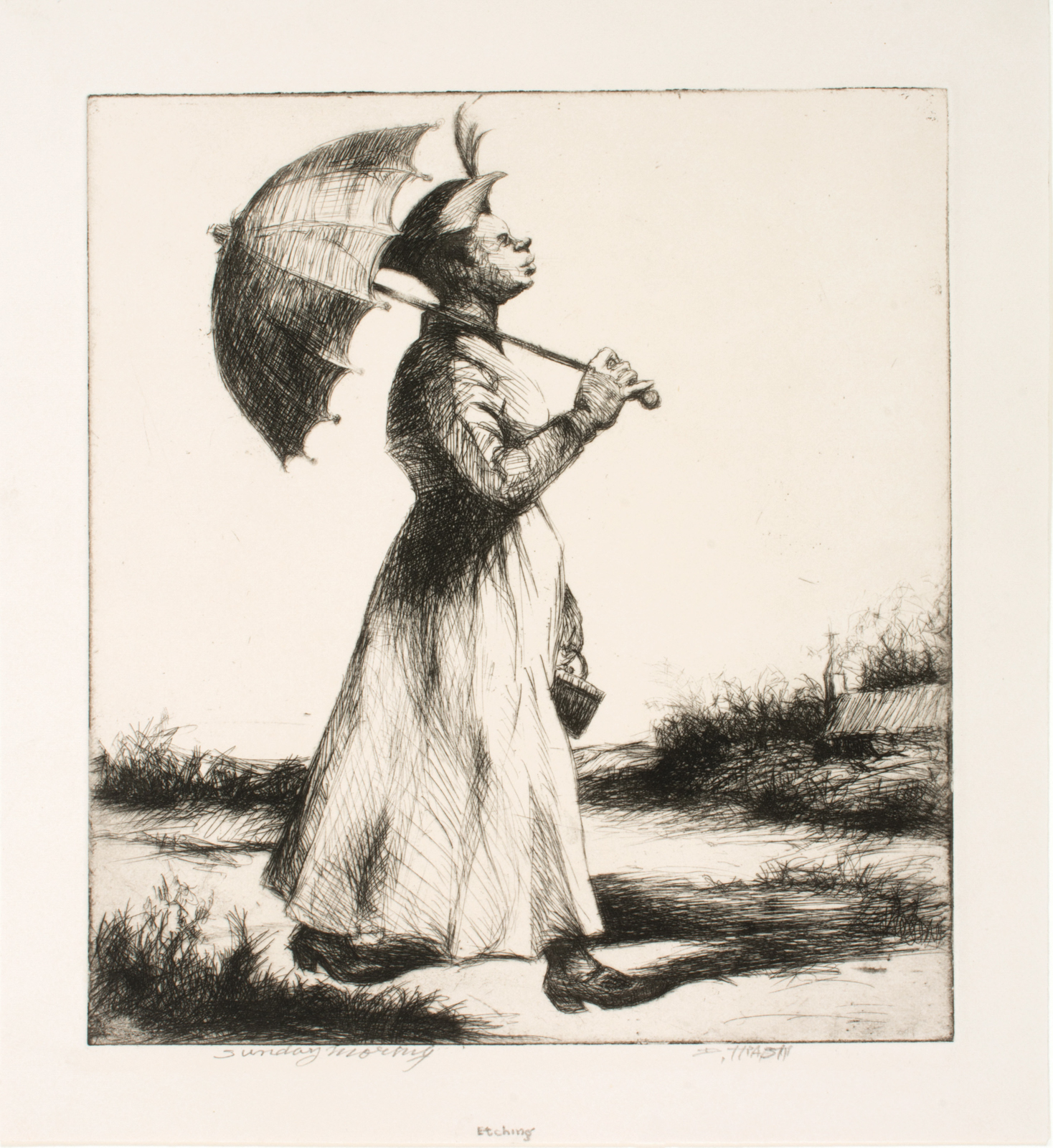
Dox Thrash (1893-1965), Sunday Morning, ca. 1939. Etching, plate: 87/8 x 8 in., sheet: 10¾ x 9⁵/8 in. Philadelphia Museum of Art: Purchased with the Thomas Skelton Harrison Fund, 1941.
The public, however, cared more about its being a portrait of his mother than its role in the history of art. Anna Matilda McNeill Whistler lived with her son in London from 1864 to 1875, taking charge of his studio and attempting to bring some order to her son’s life. Although he insisted the painting is an “arrangement,” his mother was important to him. After her death in 1881, he added her maiden name, McNeill, to his own and wrote that he saw in her face “grace wedded to dignity, strength enhancing sweetness.”
The painting was first shown in Philadelphia in 1881 and has since made several tours of United States museums after its sale to the French government in 1891. It is now in the collection of the Musée D’Orsay in Paris.
The Musée D’Orsay has loaned the painting to the Philadelphia Museum of Art for the exhibition The Artist’s Mother: Whistler and Philadelphia, which runs through October 29. The museum notes, “Philadelphia newspapers initially paid little attention to the painting, the second work by the Lowell, Massachusetts-born artist to be shown in the United States. Its title, Arrangement in Grey and Black: Portrait of the Artist’s Mother puzzled viewers, as did its somber palette and sparse details. The painting, however, exerted a powerful force on local artists.
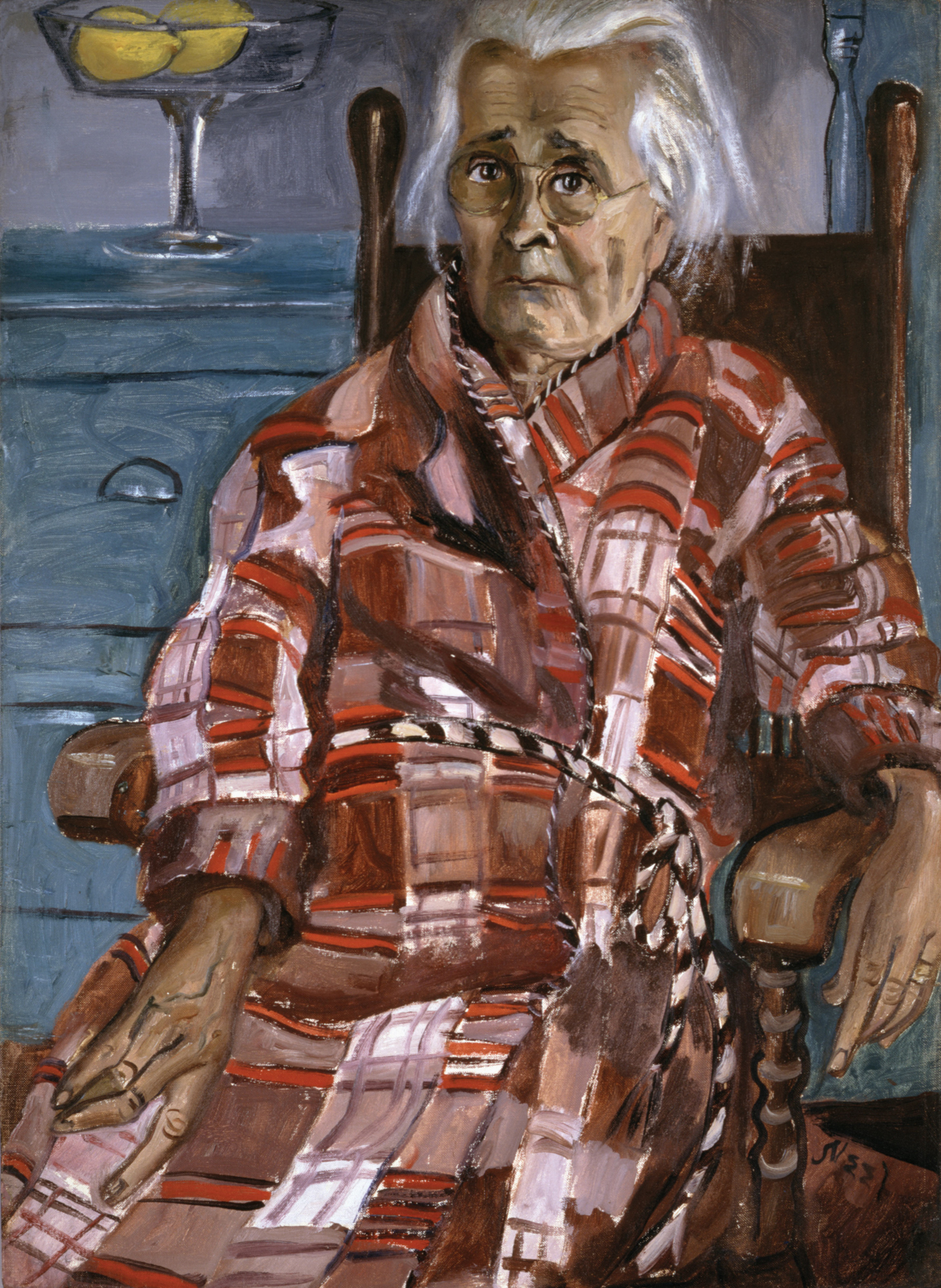
Alice Neel (1900-1984), Last Sickness, 1953. Oil on canvas, 30 x 22 in., framed: 317/8 x 23¾ x 2¼ in. Philadelphia Museum of Art: 125th Anniversary Acquisition. Gift of Hartley S. Neel and Richard Neel, 2003.
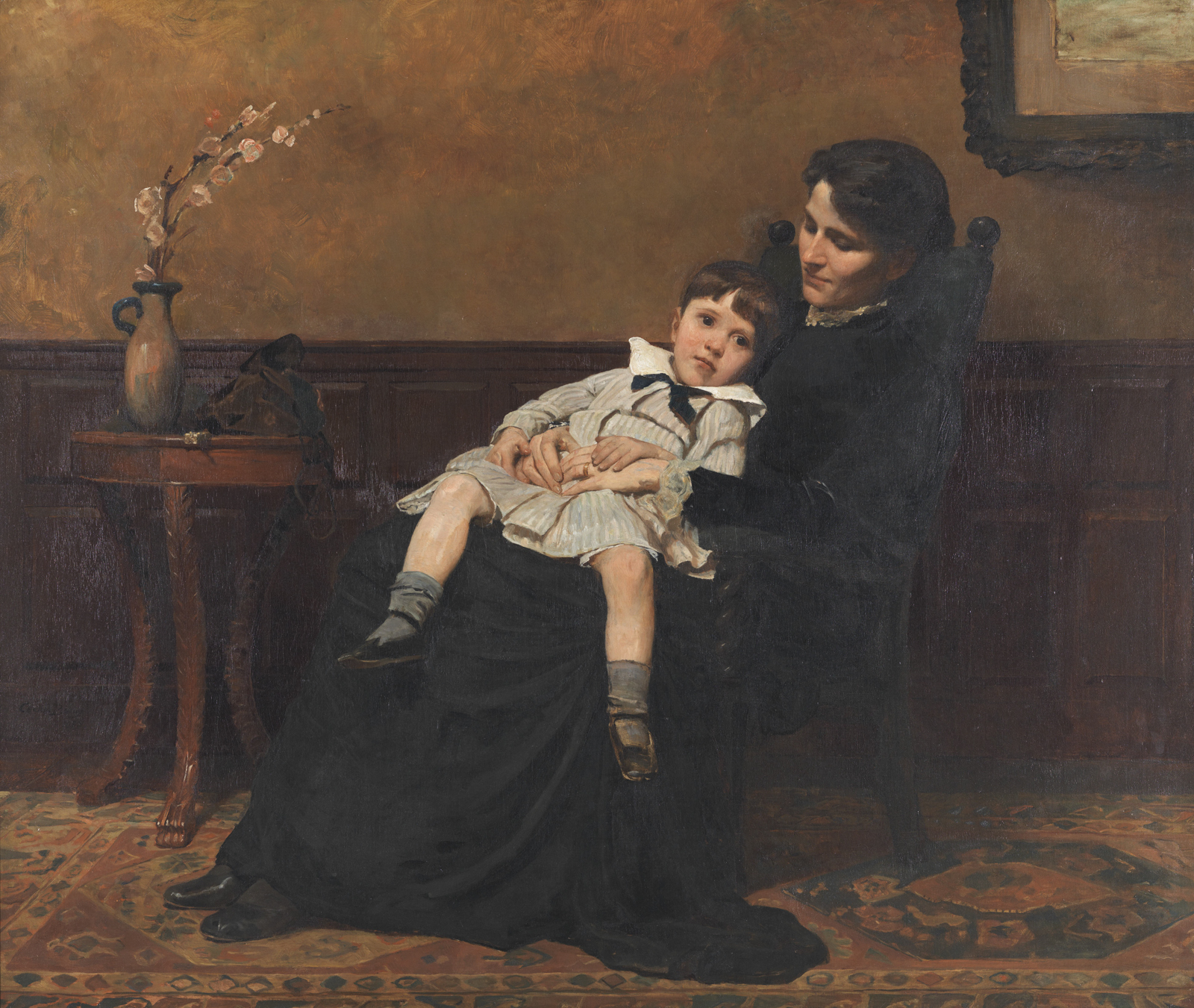
Cecilia Beaux, Les Derniers Jours d’Enfance (The Last Days of Childhood), 1883-85. Oil on canvas, 45¾ x 54 in. Pennsylvania Academy of the Fine Arts, Philadelphia. Gift of Cecilia Drinker Saltonstall.
“To celebrate this exceptional loan to the Philadelphia Museum of Art—the first time in 142 years that it will be seen in this city—the exhibition will explore the circumstances surrounding the portrait’s creation and its legacy in Philadelphia. Just as Whistler was inspired by Rembrandt’s etchings of his own mother, so too were local artists spurred by Whistler and their own ambitions to make depictions of their mothers. Some would respond directly to Whistler’s Mother while others took an entirely different approach. The installation will bring Whistler’s iconic portrait into dialogue with paintings, drawings and etchings by artists associated with Philadelphia—Cecilia Beaux (1855–1942), Henry Ossawa Tanner (1859–1937), Dox Thrash (1893–1965), Alice Neel (1900–1984) and others—and invite consideration of the individual women represented, and the relationship between artist and sitter, child and parent.”
Tanner responded more directly to the composition of Whistler’s painting. His Portrait of the Artist’s Mother, 1897, warms up Whistler’s cool “arrangement.” Sarah Elizabeth Tanner occupies the space in a similar manner to Whistler’s mother.
Tanner observed, “Many of the artists who have represented Negro life have seen only the comic, ludicrous side of it, and have lacked sympathy with and appreciation for the warm big heart that dwells within such a rough exterior.” His mother and her siblings had been sent to Pennsylvania to escape slavery. She and her husband raised seven successful children.
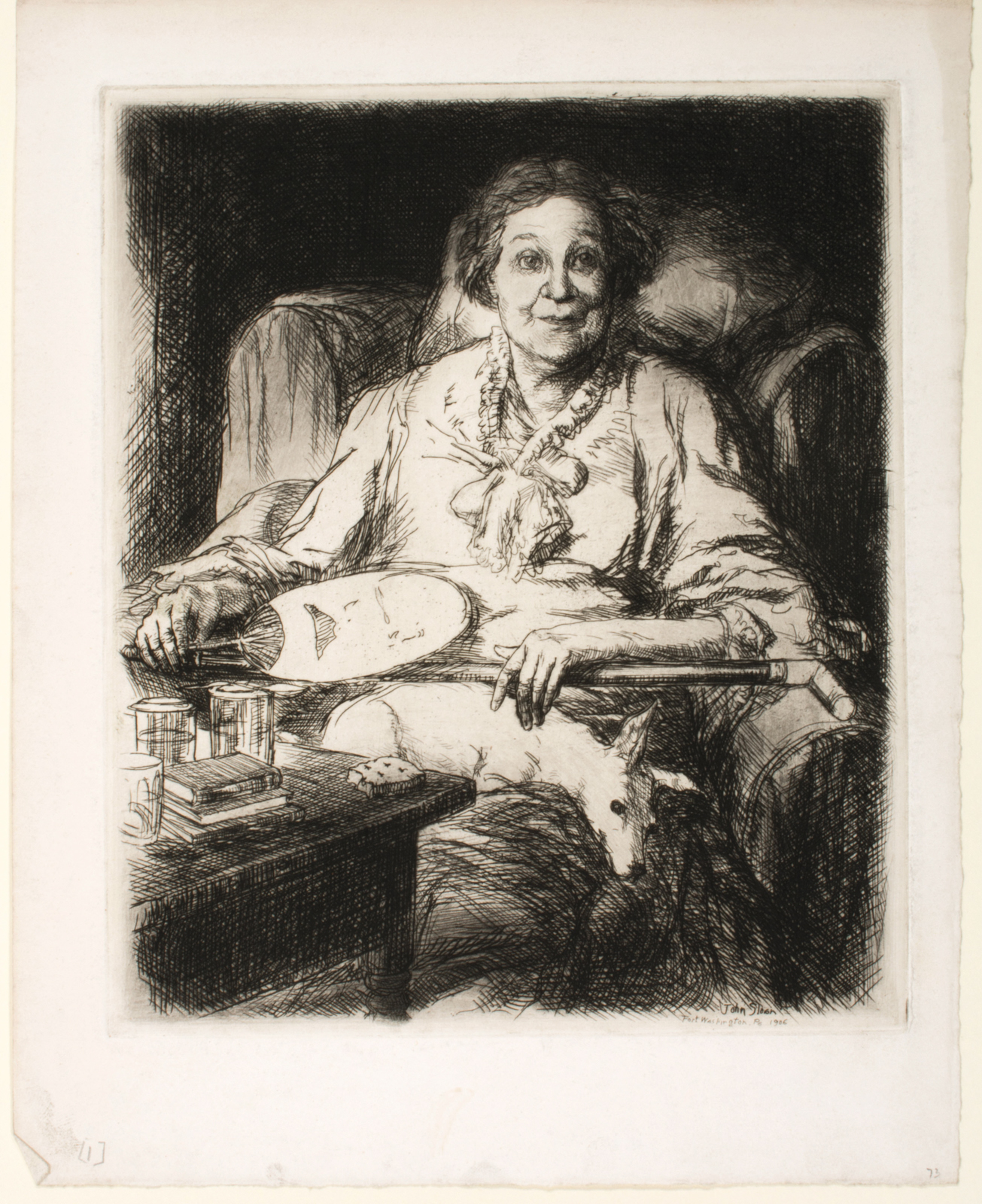
John Sloan (1871-1951), Mother, 1906. Etching, plate: 9 x 7½ in., 1/2 in., sheet: 11¹/8 x 87/8 in. Philadelphia Museum of Art: Purchased with funds contributed by Lessing J. Rosenwald and with the Katharine Levin Farrell Fund.
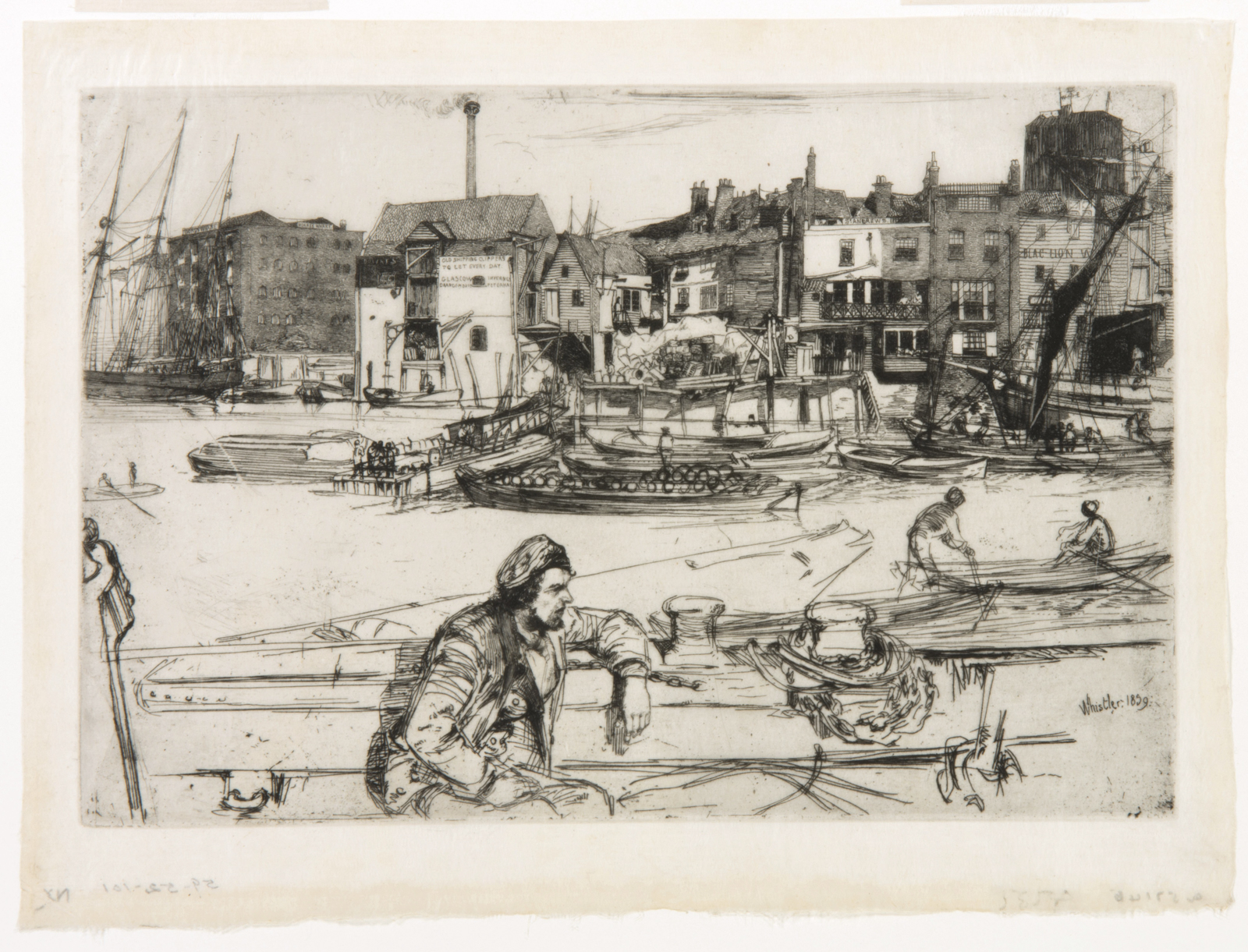
James Abbott McNeill Whistler (1834-1903), Black Lion Wharf, 1859. Etching, plate: 6 x 9 in., sheet: 7¼ x 9¾ in. Philadelphia Museum of Art: Gift of Bryant W. Langston.
Tanner studied with Thomas Eakins at the Pennsylvania Academy of the Fine Arts before moving to Paris in 1891 where he began to gain an international reputation for his paintings of religious subjects. He returned to Philadelphia to paint the portrait of his mother which he inscribed, “To my dear mother, H. O. Tanner.”
Dox Thrash was a Philadelphia print maker depicting everyday life in Black America. The museum describes his etching Sunday Morning, ca. 1939: “This woman bears a striking resemblance to the self-portraits Thrash made around this time. The artist may have intended it to portray his mother on her way to church, the way he remembered her when he was growing up.”
Alice Neel attended the Philadelphia School of Design for Women which is now Moore College of Art and Design. She is among the great American portrait painters of the 20th-century, painting colorful, expressionistic and insightful portraits of the unknown as well as the famous artists of her time.
Last Sickness, 1953, is a portrait of her mother, shortly before her death. Alice Hartley Neel was living with her daughter in New York. The tender portrait captures her mother’s wry expression and records matter-of-factly, the signs of age from her arthritic hands to her thin, whispy hair.
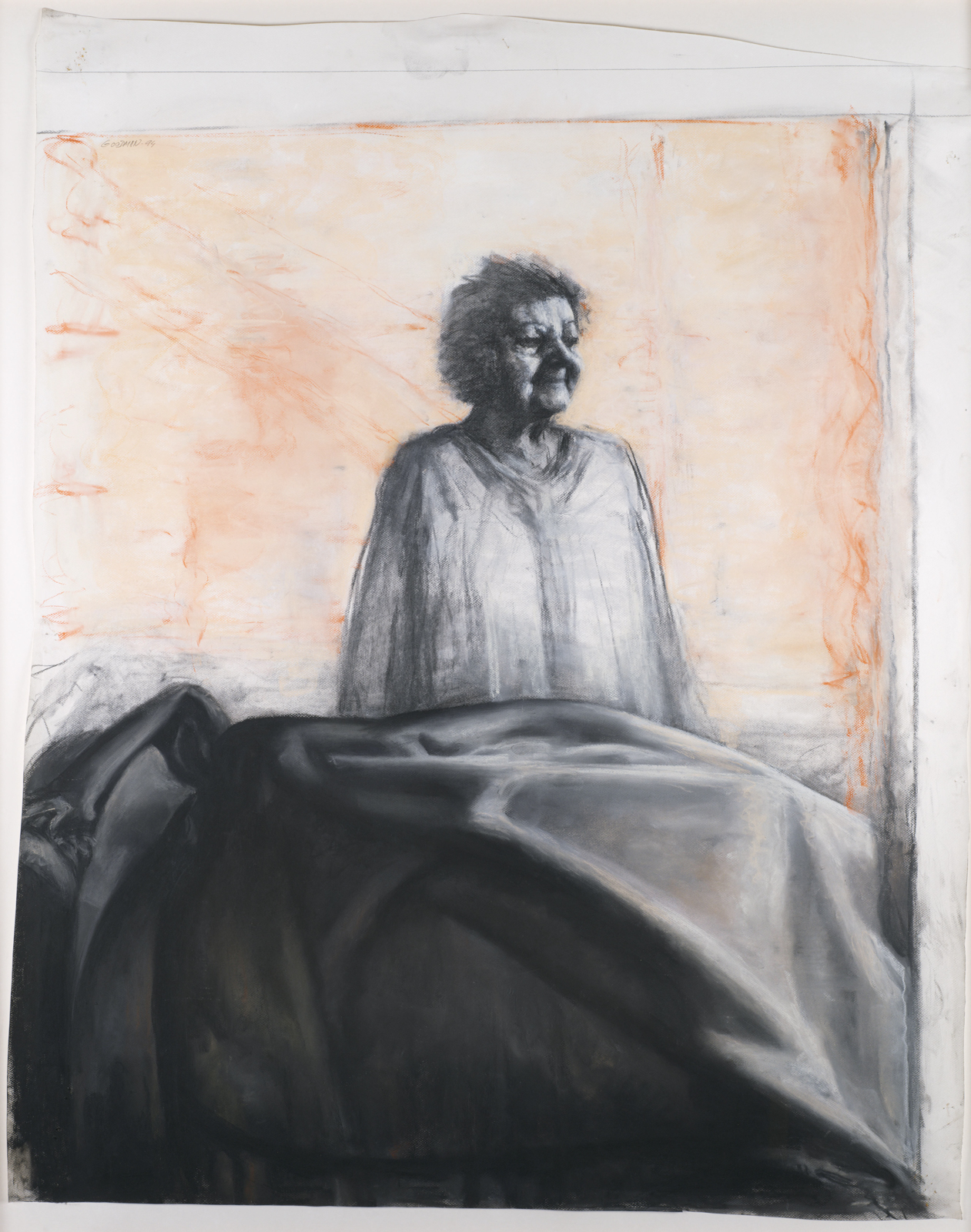
Sidney Goodman (1936-2013), Artist’s Mother I, 1994. Charcoal and pastel on cream wove paper, sheet: 52¾ x 413/16 in., 2009-216-1. Philadelphia Museum of Art: Gift of Frank and Betsy Goodyear in memory of a dear friend, Anne d’Harnoncourt, 2009.
Mother and child are together in Cecilia Beaux’s Les Derniers Jours d’Enfance (The Last Days of Childhood), 1883-85, a portrait of her sister and nephew. Her own mother had died just 12 days after her birth. Although she denied it, her composition seems to be influenced by that of Whistler’s Mother. She was celebrated during her lifetime as a great portrait painter. In 1933, Eleanor Roosevelt presented her with the Chi Omega fraternity’s Achievement Award, for “the American woman who had made the greatest contribution to the culture of the world.”
Powered by Froala Editor