Beginning July 1, Sydney Laurence’s unique approach to capturing the Alaskan wilderness will be on view at A.J. Kollar Fine Paintings, LLC, in Seattle. Laurence’s lush depictions of Alaska’s forests, northern lights, Mt. Denali, and riverside caches painted the landscape in luminescent color. In developing his artistic vocabulary for the region, Laurence (1865-1940) was a documentarian of the natural terrain, while simultaneously contributing to the burgeoning concept of Alaska as the “Last Frontier,” collaborating with railroad and steamboat companies to promote tourism to the area.
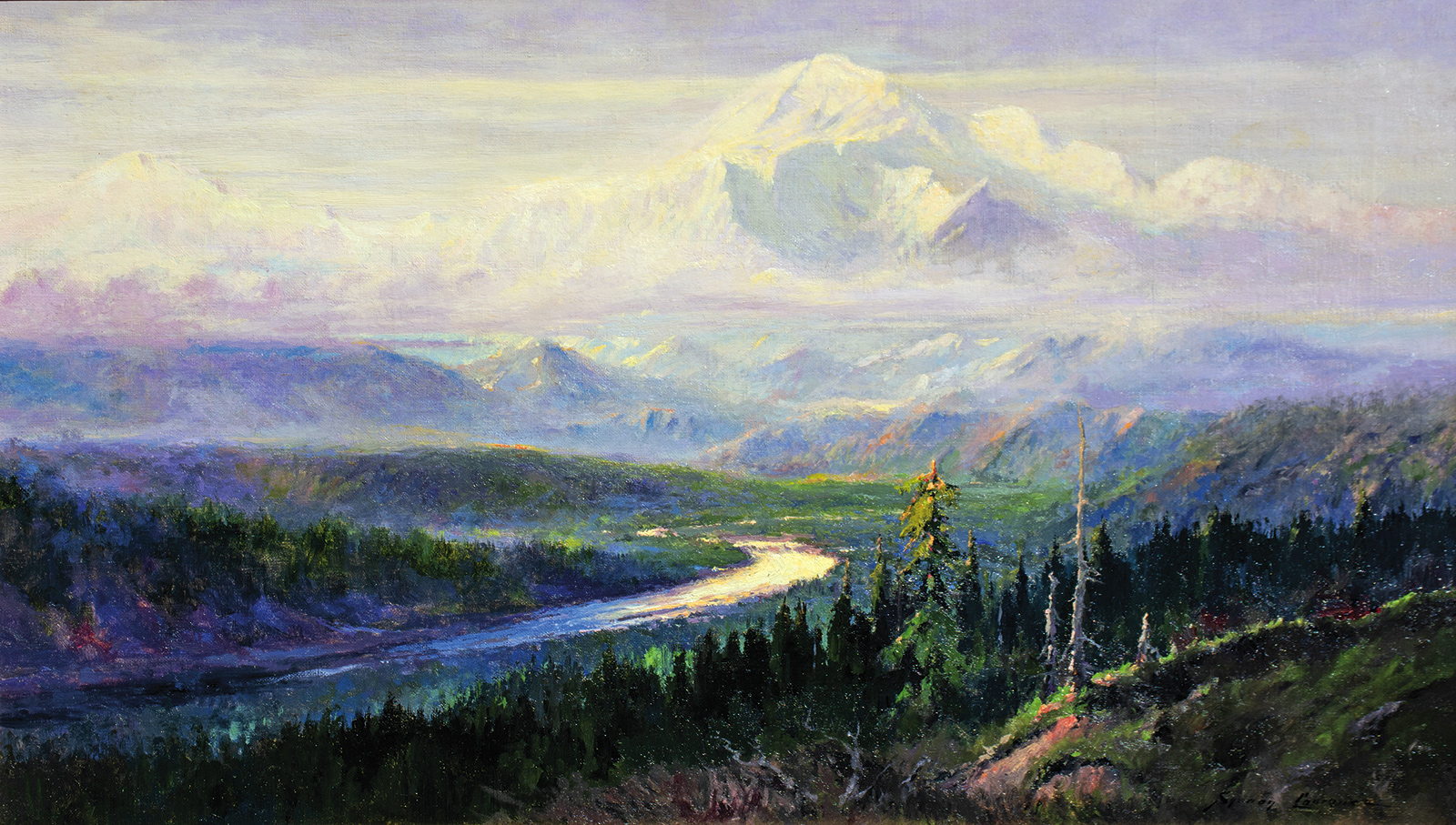
Sydney Laurence (1865-1940), Mt. McKinley from the Headwaters of the Tokacheetna River, ca. 1924. Oil on canvas, 14 x 24 in., signed lower right: ‘Sydney Laurence’.
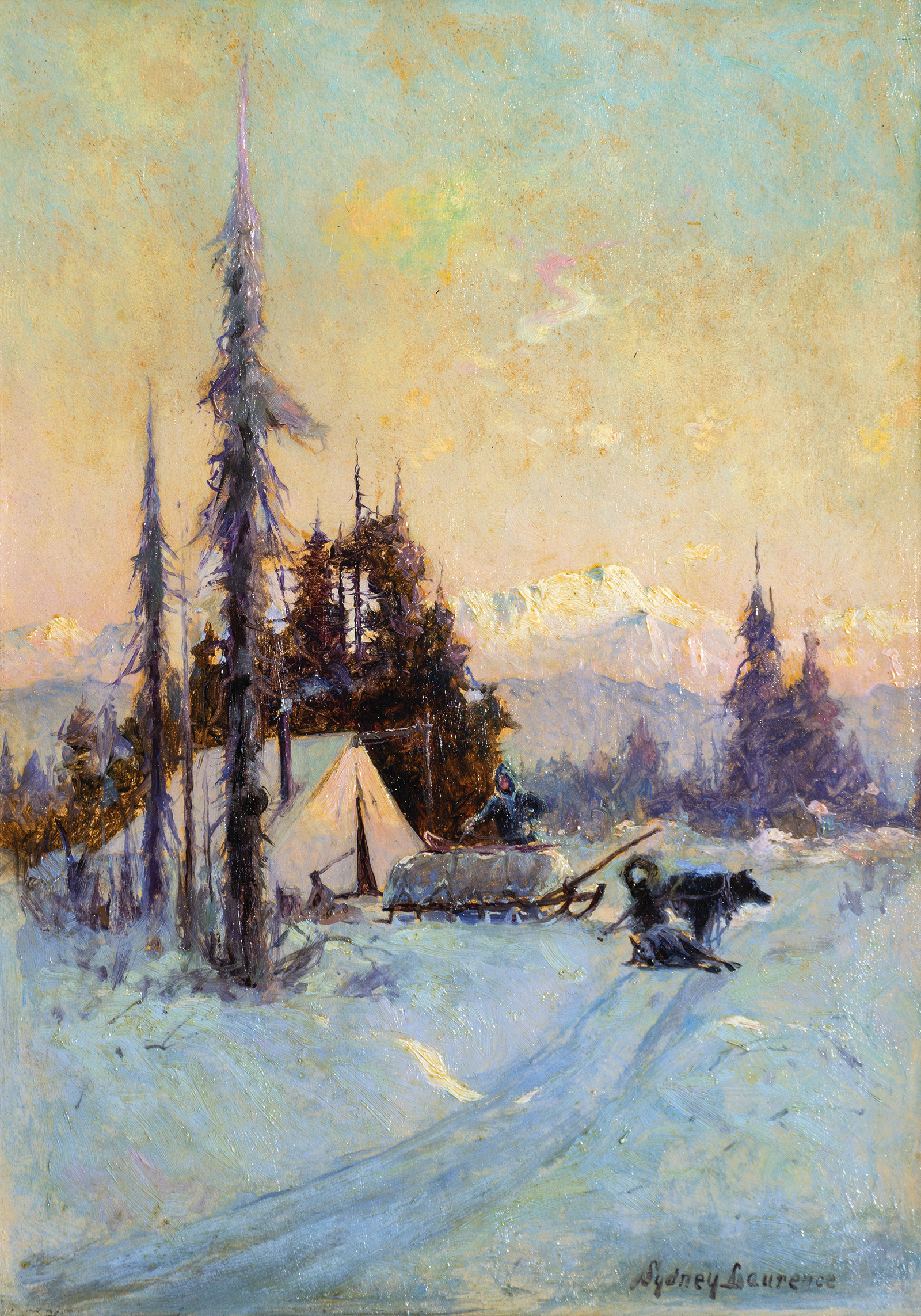
Sydney Laurence (1865-1940), Trapper’s Tent, ca. 1921. Oil on board, 14 x 10 in., signed lower right: ‘Sydney Laurence’.
Laurence recorded the landscape not only as it appeared in his sweeping depictions of Mt. Denali and the surrounding area, but also how it was used by the people living there. Laurence committed to a portraiture of the region as viewed from a human perspective, understanding the wilderness as being unbounded by human interference while at the same time being utilized by Indigenous peoples and travelers alike. Originally from Brooklyn, New York, Laurence developed his craft at the Art Students League of New York and the St. Ives Art Club. He exhibited prestigiously, including at the Paris Salon, the Art Institute of Chicago and the Royal Society of British Artists.
When he ventured to Alaska alone in 1903 to mine for gold, he was already a well-established and awarded artist. Though Laurence did not find any gold, he would stay in Alaska for the rest of his life. It was in Alaska that Laurence would take the techniques he was awarded for in traditional salons and apply them in a region where they had never been used. Laurence is best known for his paintings of Mt. McKinley (now Denali). Mt. McKinley from the Headwaters of the Tokacheetna River, circa 1924, is one of the most subtle and beautiful renderings of Denali that Laurence produced. Compositionally split into horizontal halves, the foreground of the painting is highlighted by spots of light filtering through the forest’s dark pigment. A river reflects the pastel sky, leading the viewer’s eye to a subtle mountain range made up of soft mauve, blues and violets, with the summit of Mt. Denali right of center. This painting is both documentation and delight, showing off the landscape as unearthly and untouched.
In addition to celebrating the natural wonders of Alaska, Laurence also showcased how the landscape was used. Trapper’s Tent, circa 1921, which employs the same soft renderings of competing pastels as Mt. McKinley, shows a sled dog preparing to pull a sled and rider—the same mode of transport Laurence himself employed to reach Denali. The dog, sled and rider are incorporated into the landscape, showing a symbiotic relationship between living beings and natural space. In Cache at Cook Inlet, 1922, painted at the peak of Laurence’s career, a figure stokes a campfire in front of a cache perched against a heavy wind. This painting was a gift for friends of the artist—he presented it to William Clyde and Elizabeth Steinmetz at their wedding to commemorate the walks the couple would take along the inlet.
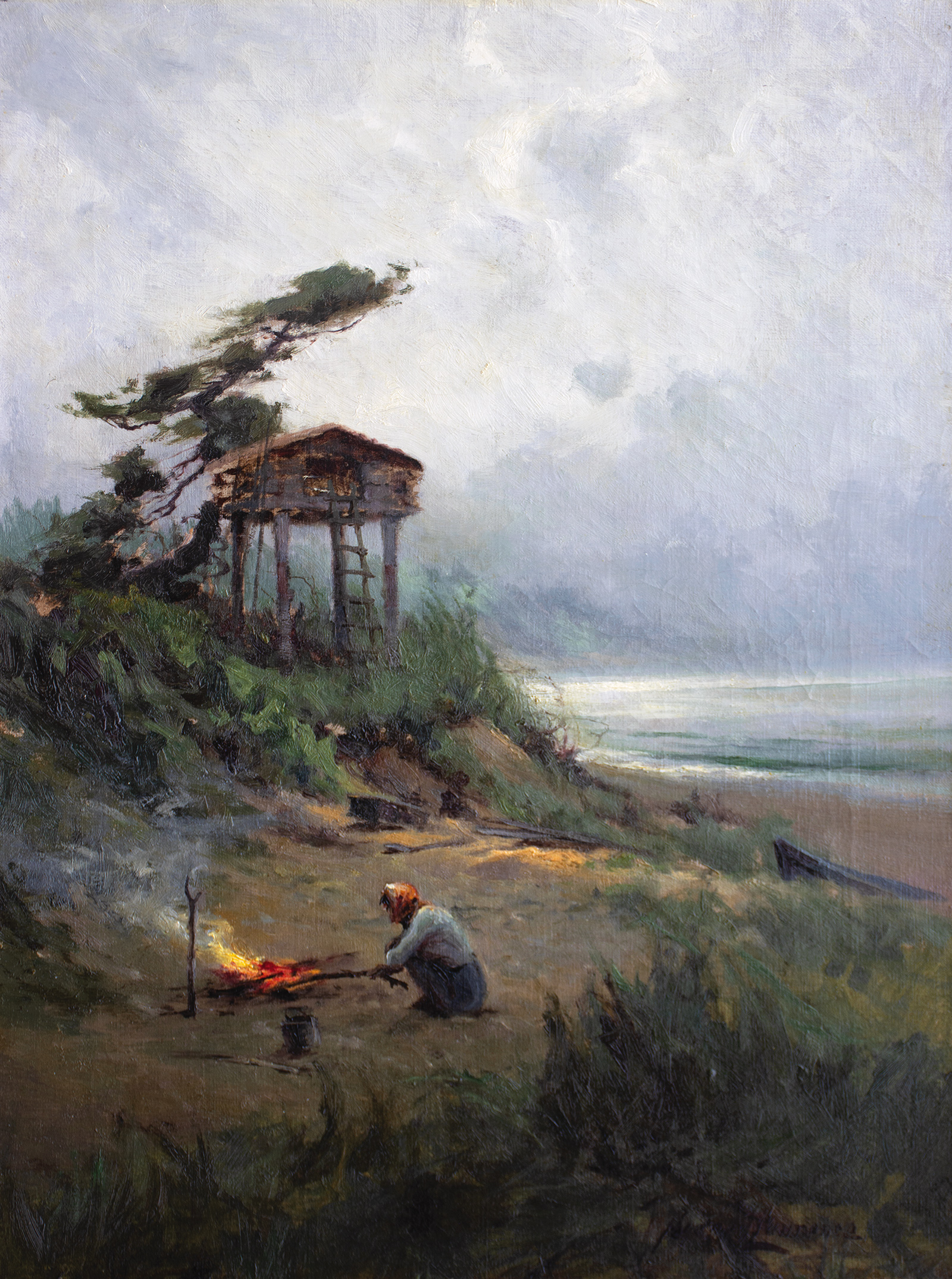
Sydney Laurence (1865-1940), Cache at Cook Inlet, 1922. Oil on canvas, 20 x 15 in., signed lower right: ‘Sydney Laurence’.
Used by hunters and travelers to store gear and food for long journeys, the cabin-on-post cache is a uniquely Alaskan symbol that has come to symbolize the invented “Last Frontier,” explains Susan W. Fair in her Perspectives in Vernacular Architecture article “Story, Storage, and Symbol: Functional Cache Architecture, Cache Narratives, and Roadside Attractions.” Symbolically, the cache is nearly as reproduced as Denali in Laurence’s oeuvre, and functions to situate Alaska as a landscape both magical and functional. The cache brings life into a dynamic landscape, painting the scenery from a human perspective. Many of Laurence’s paintings combined symbolic reflections of Alaska’s developing touristic identity with their beatific renderings of the wilderness.
Chilkat Longboat, To the Potlatch, 1939, depicts one of Laurence’s most popular subjects: Indigenous people crossing the water via longboat on the way to a potlatch. Kollar posits that this was a later image of Laurence’s, requested by a potential buyer. This is plausible: Laurence’s 1922 painting Off to the Potlatch was purchased for travel brochures distributed by the Alaska Steamboat Company, the Northern Pacific Railroad and the Alaska Railroad, according to Laurence scholar Kesler Woodward’s essay in The Big Wild Soul of Terrence Cole.
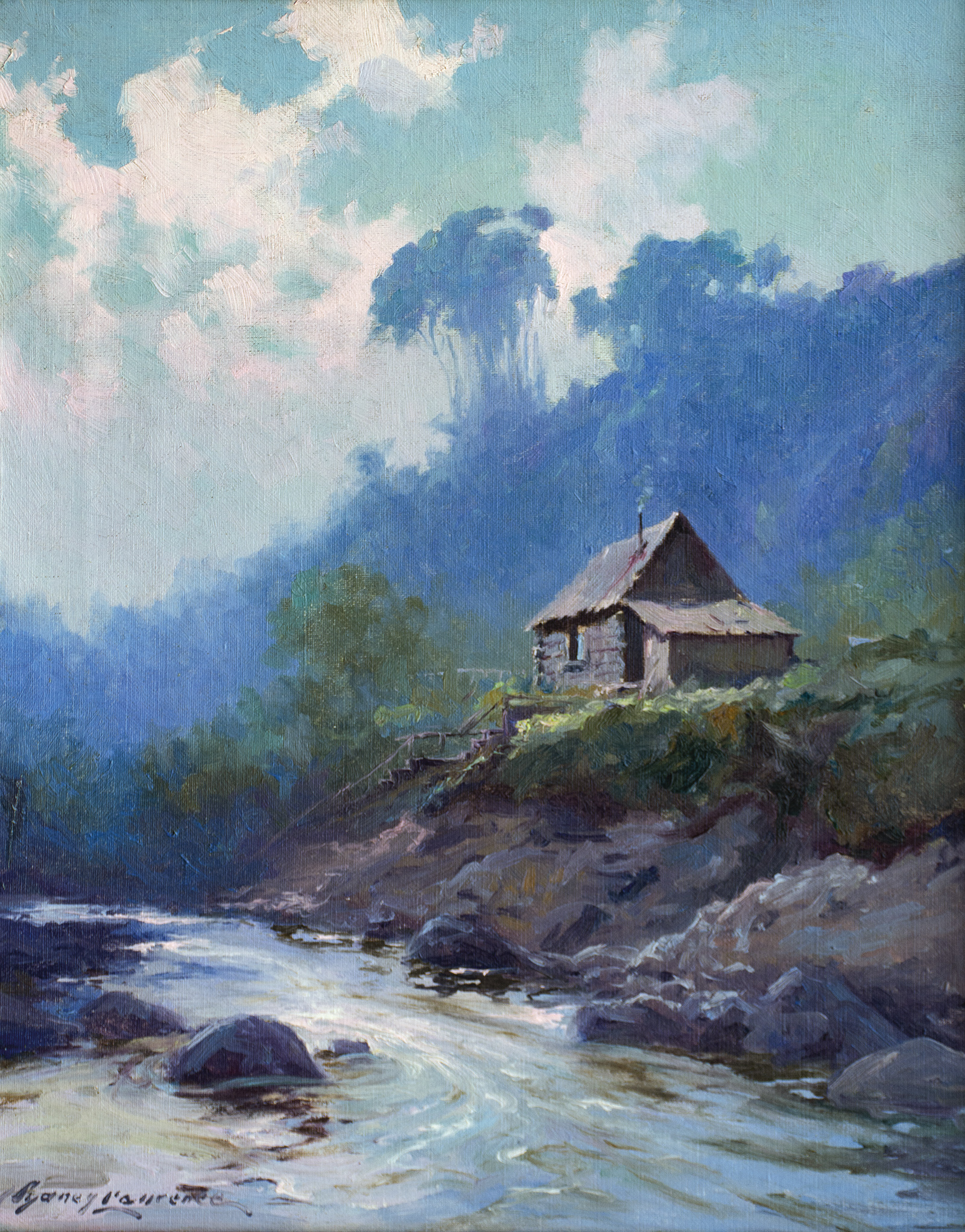
Sydney Laurence (1865-1940), Chilkat Longboat, To the Potlatch, 1939. Oil on canvas on board, 12 x 18 in., aigned lower right: ‘Sydney Laurence’.
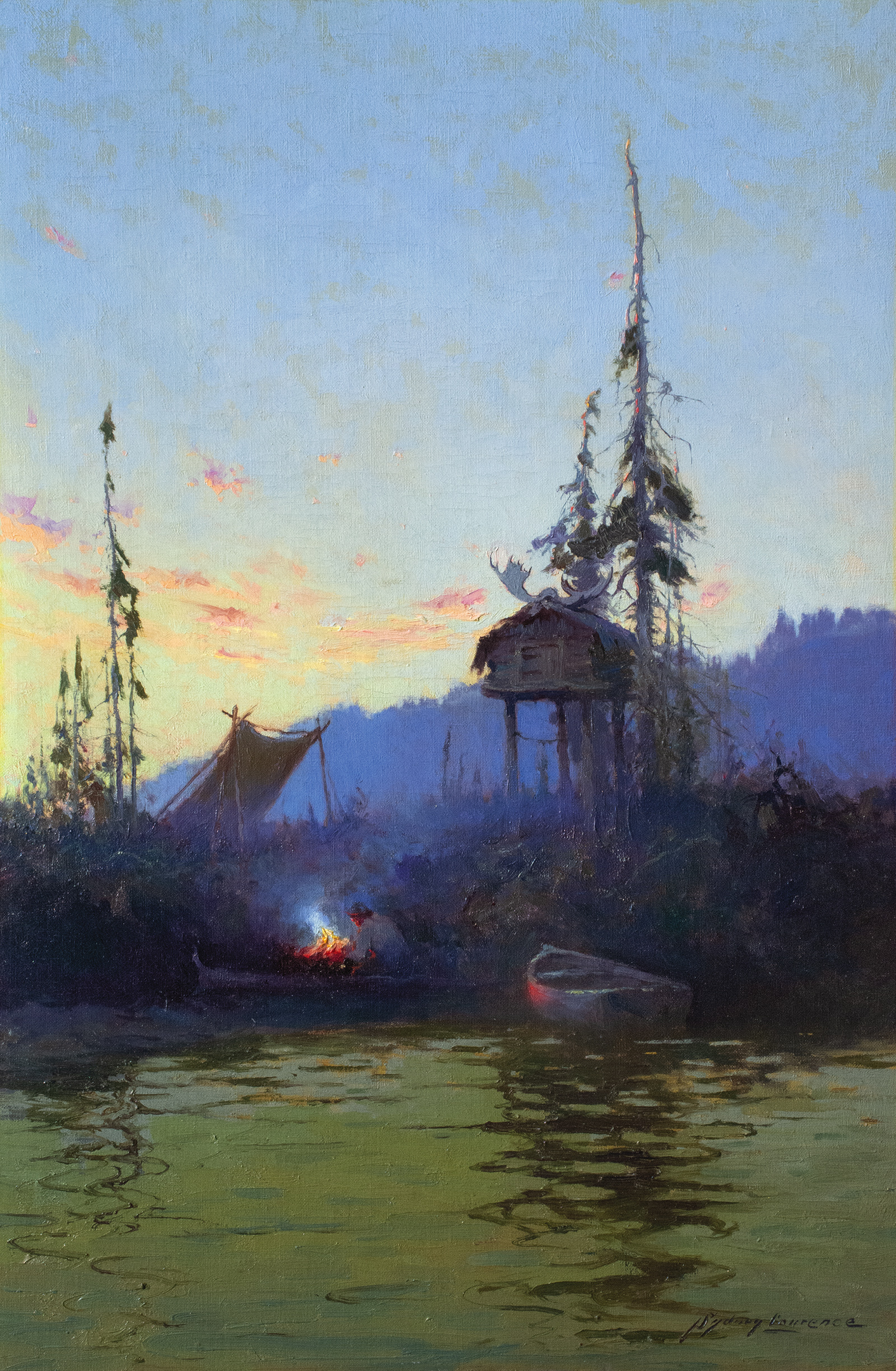
Sydney Laurence (1865-1940), Evening Cache by the Campfire, ca. 1922. Oil on canvas, 26 ½ x 17 ½ in., signed lower right: ‘Sydney Laurence’.
As Laurence was painting the landscape he loved and lived in, he was also producing works to enhance or display the majestic beauty of Alaska to potential tourists. Sydney Laurence’s role in depicting Alaska as the Last Frontier and his unique ability to capture its extraordinary beauty cannot be understated. Laurence’s paintings continue to remind us of the sublime wonder and mystery of the Alaskan wilderness, as a place simultaneously divine and deeply a part of human life.
Powered by Froala Editor